

Women's Color Coordination Guides
A color may work easily in one shirt and feel awkward in another pair of trousers. The difference can come from the size of the colored area, its lightness, the fabric surface and where it sits on the body. Rather than memorizing lists of compatible colors, start with an item you own, decide what you want to keep, and change one thing at a time. These guides help you choose a useful next step: understanding a shade, finding trousers for a top, choosing a top for trousers, or bringing the whole outfit together. Keep the actual garment in front of you while comparing possibilities.
Look at the shade before naming the color
Place the garment in soft daylight beside a relatively neutral surface. Look at whether it is light or dark, clear or muted. Dusty pink and neon pink share a color name, but they invite different levels of contrast. Filters can shift a blue or make cream look white. When buying something to match an existing piece, a photograph of the two actual garments beside each other is usually more useful than separate product photographs from different shops. Compare the same areas of the garments, rather than a brightly lit sleeve in one image and a shadowed hem in another.
For the relationship between color families, explore the color wheel before choosing a pair to test. Treat it as a way to generate possibilities, then return to the real garment. Neighboring colors can create continuity, while colors farther apart can produce a stronger focal point. Neither relationship guarantees a successful outfit on its own. Shape, surface and the setting still need to work for the way you want to dress. A small test with clothes you already own gives you something more concrete to judge than a color diagram alone.
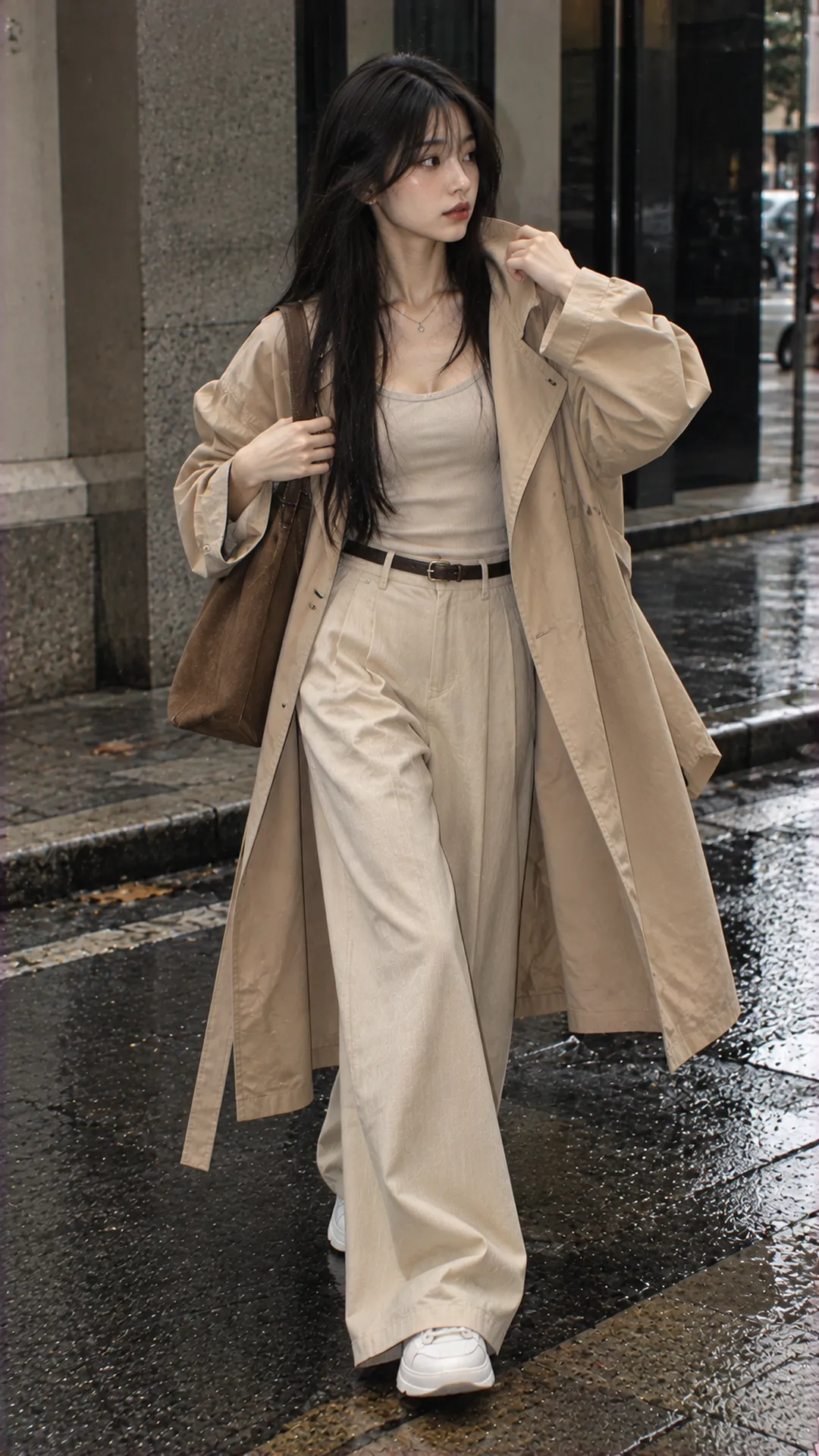
What Color Is Beige? Recognize Shades and Style Them
Identify beige through lightness, undertone and fabric rather than a name alone. Compare cream, ivory, taupe and nude, then try four practical outfit combinations.
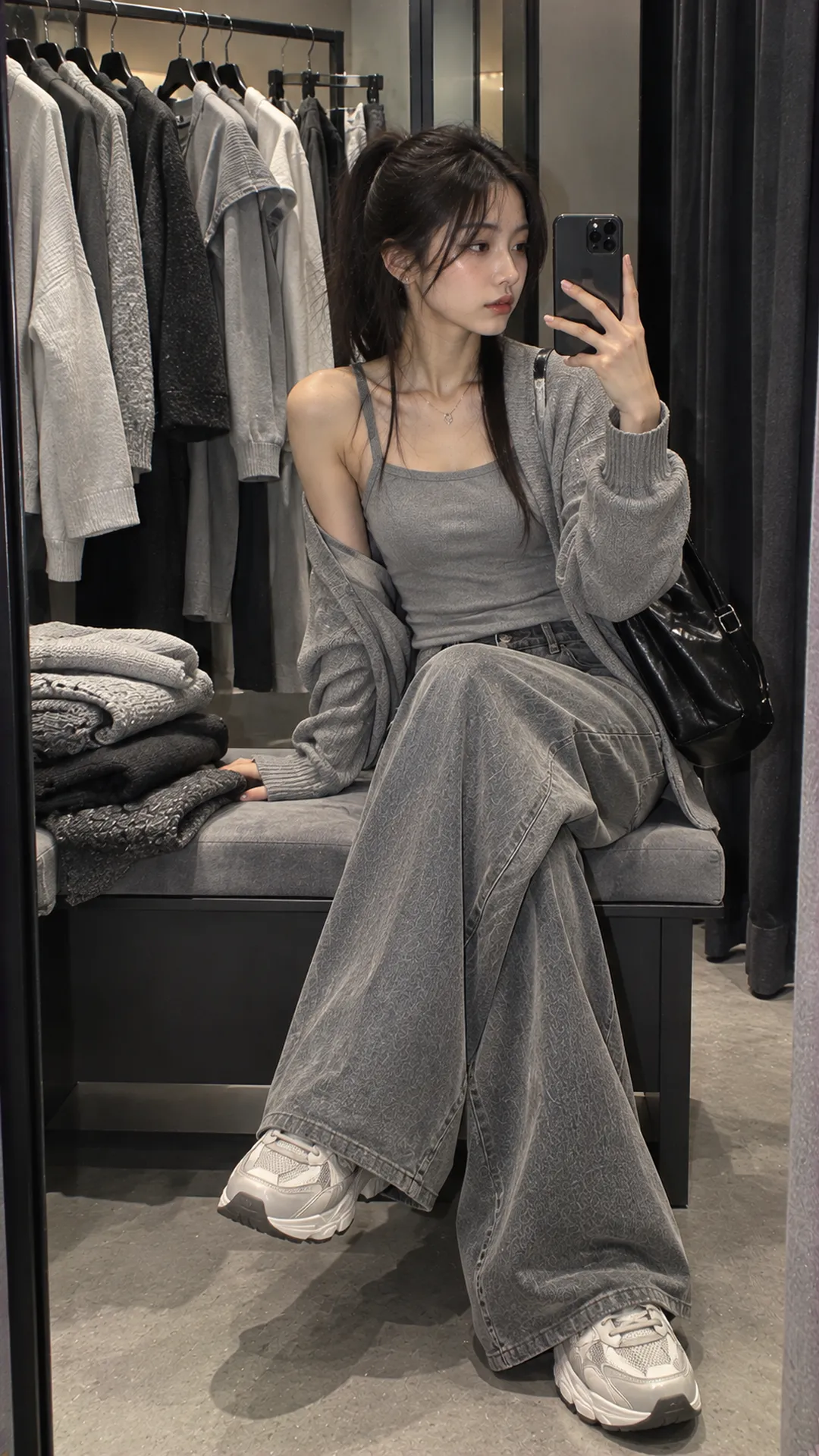
What Color Is Ghi? Understanding Gray Shades in Clothing
Understand Vietnamese ghi and xam color labels through lightness, undertone and surface. Compare blue-gray, greige, silver and heather before buying clothing.
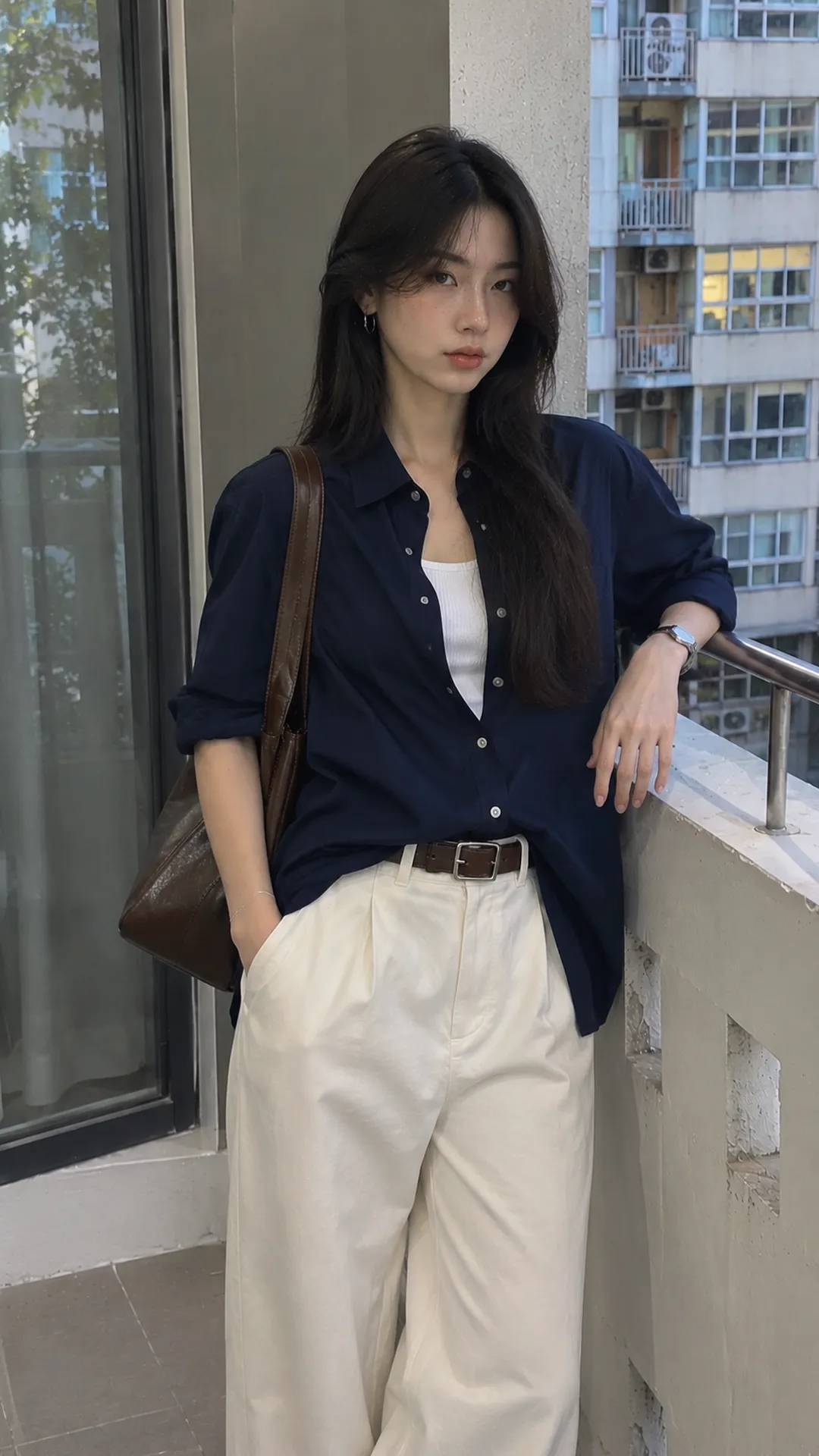
What Color Is Navy Blue? Identify It and Style Outfits
Distinguish navy from black, cobalt and denim through real-light comparisons. Choose its wardrobe role and style tops, trousers and skirts with intentional contrast.
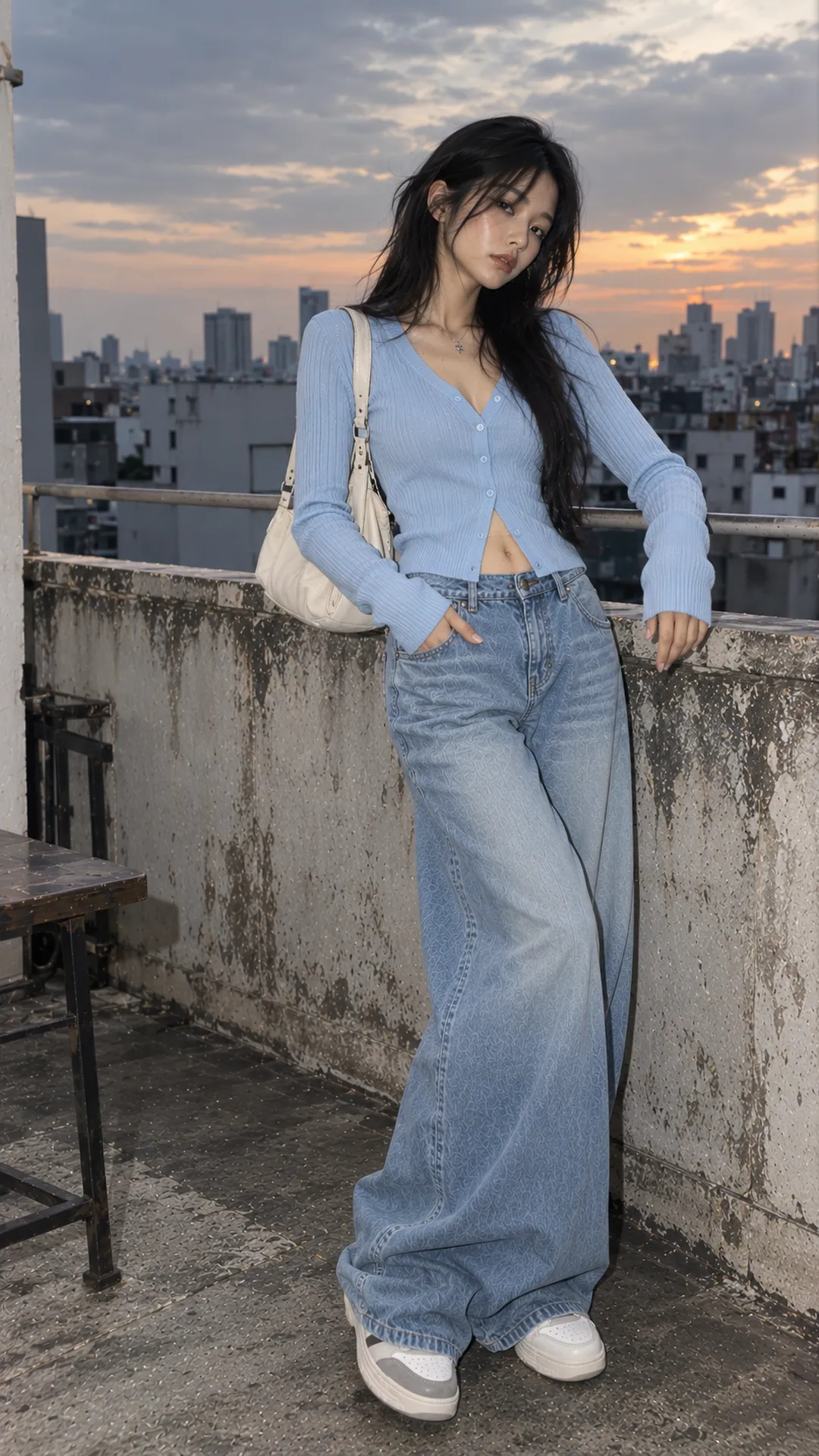
What Is Sky Blue? Styling Light-Blue Clothing
Understand the sky-blue label and try five palettes with ivory, gray, brown, denim and black. Adapt by top shape and check real color, light and coverage.
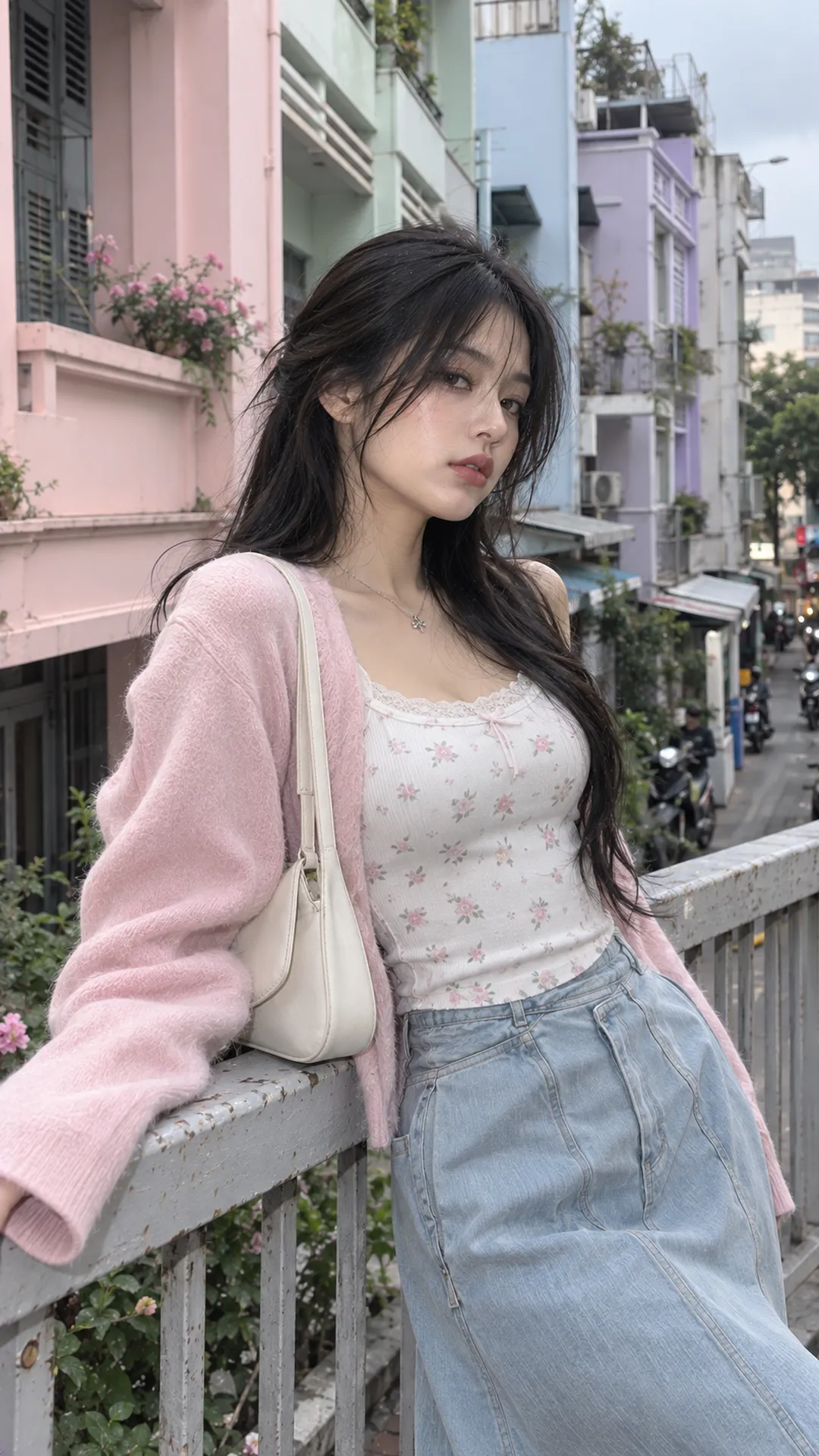
What Are Pastel Colors? A Palette and Women's Outfit Guide
Understand pastel shades and combine them with neutrals, black or another pastel. Compare color area, texture and contrast, with a practical palette table.
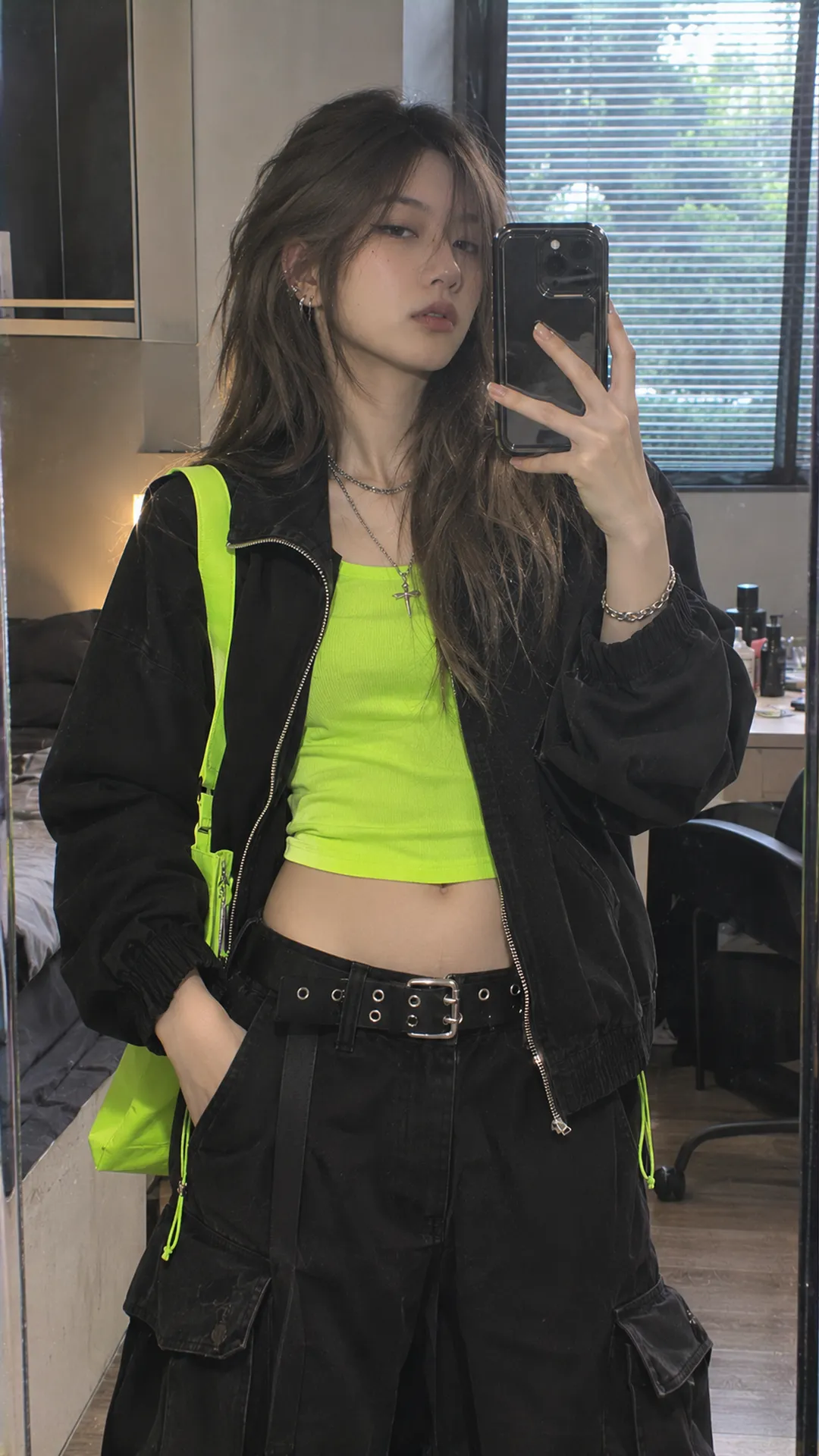
How to Wear Neon Colors: Outfit Ideas for Neon Green and More
Style neon green, pink, yellow, or blue with neutrals and denim. Choose how much color to show and try four outfits using pieces you own.
Choose a lead color and leave room around it
Your lead color does not have to be the brightest one. It might simply occupy the largest area: brown trousers, a black dress or a blue coat. Use that piece as your reference and keep the other items straightforward for the first try. If both top and bottom carry busy prints, it becomes difficult to tell whether you like the combination or just like the pieces individually. Starting with plain fabrics separates those questions before you introduce a pattern, jewelry or a strongly colored bag. You can add complexity once the basic relationship feels right.
With strong yellow, red, purple or blue, first decide whether you want to soften the color or let it stand out. A dark lower half can create a deeper base; a light one can make the outfit feel more open. The same two colors also change when their proportions change. A small red top under a black blazer is different from a red coat covering most of the upper body, even though both outfits contain red and black. Photograph the two versions in similar light so you are comparing the change you actually made.
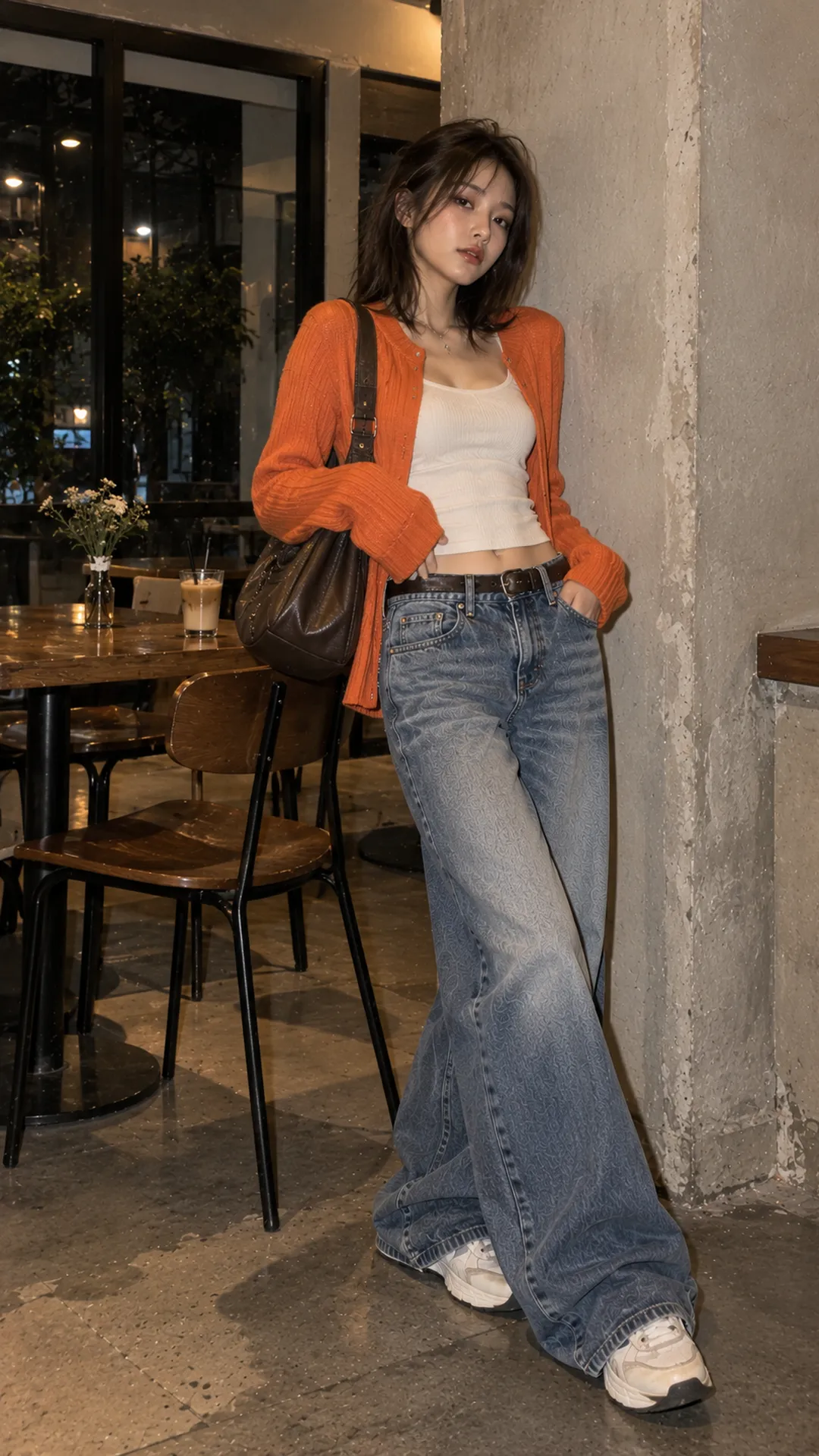
What Colors Go with Orange? Build Balanced Outfits
Pair peach, vivid or earthy orange with neutrals, denim, navy, pink or green. Adjust contrast and color area, then build three outfits from your wardrobe.
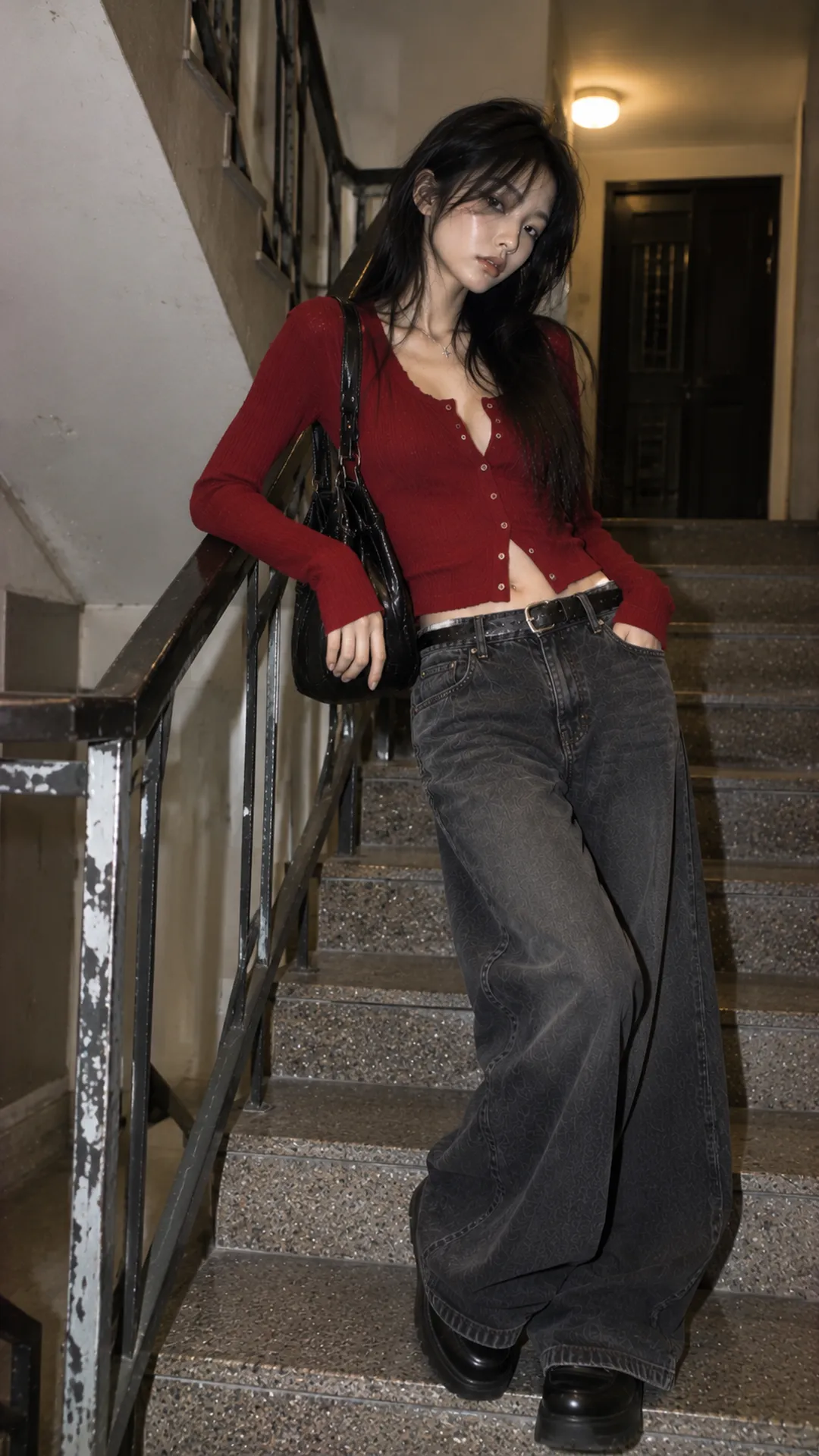
What Colors Go with Red? Balance a Standout Outfit
Combine red with ivory, cream, gray, black, denim, navy or brown. Explore pink and green, choose red's placement and fix intensity through area and texture.
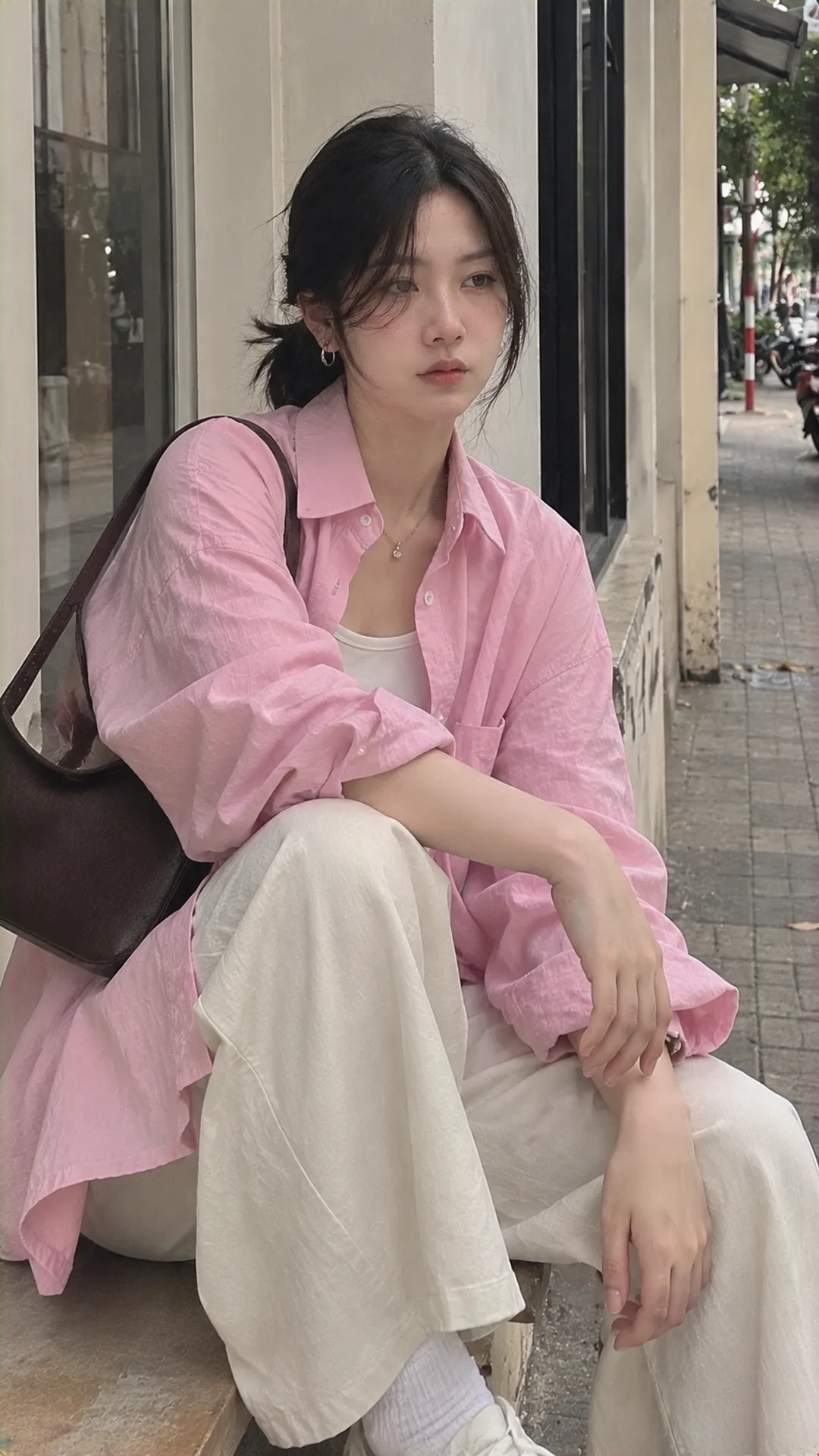
What Colors Go with Pink? Style Outfits by Shade
Pair pale, deep or vivid pink with cream, gray, denim, navy, brown or black. Explore red and green accents and adjust area, placement and texture for balance.
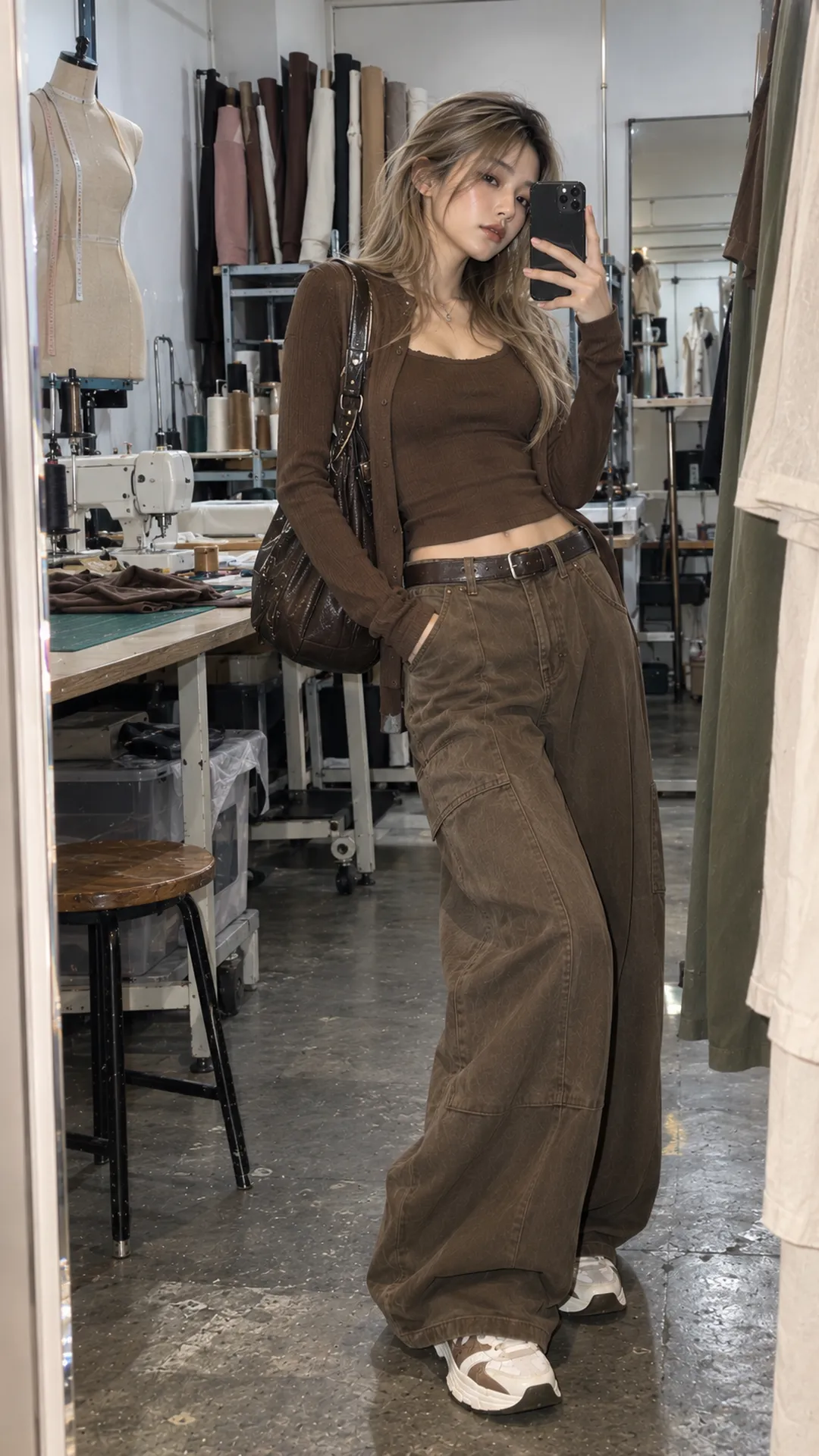
What Colors Go with Brown? Build a Clothing Palette
Combine brown with cream, white, black, denim, blue, olive or pink. Compare brown shades, vary lightness and texture and test reusable whole-outfit palettes.
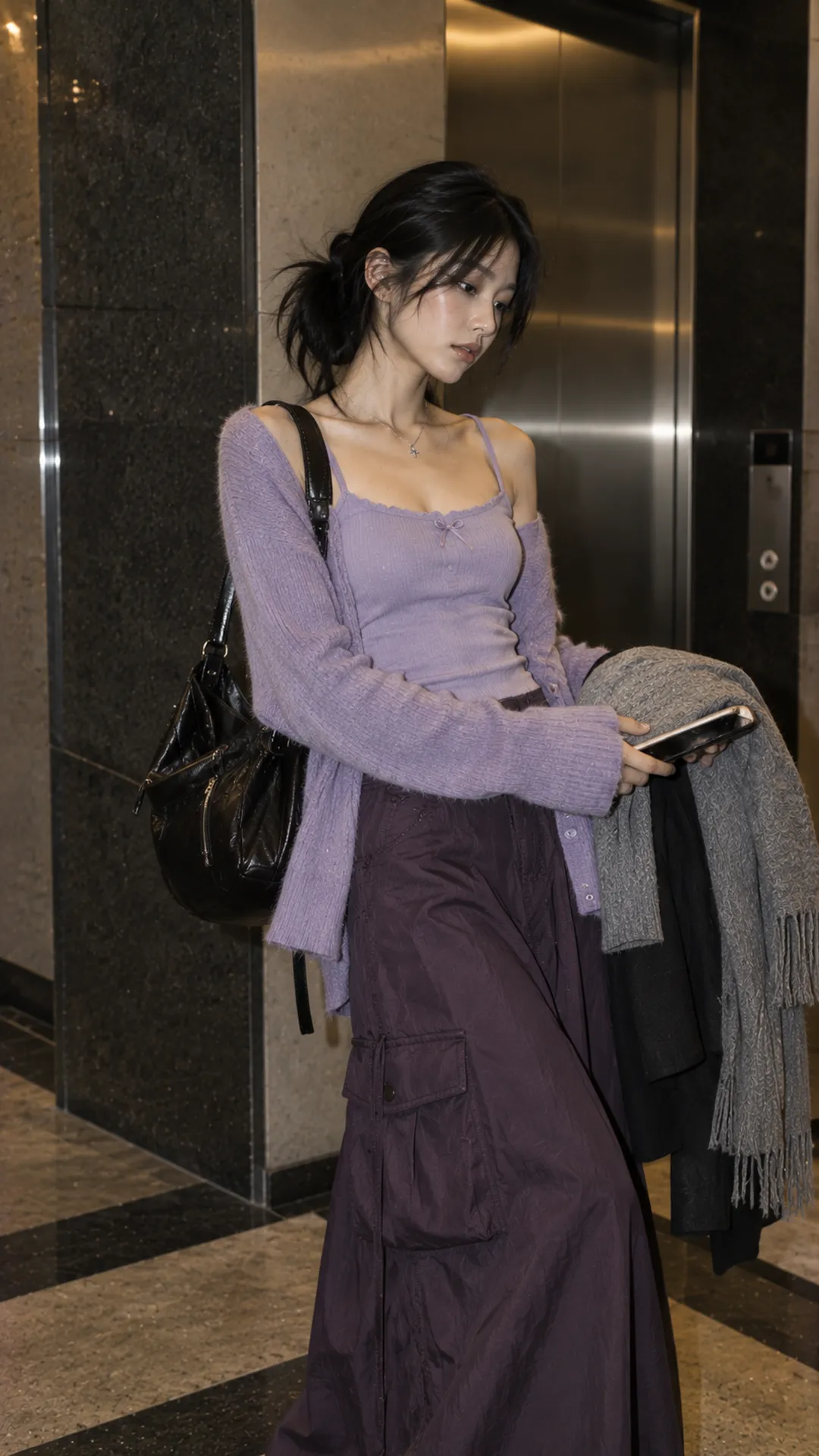
What Colors Go with Purple? From Pale to Deep Shades
Pair purple with ivory, cream, gray, black, denim or brown, then explore pink, green and yellow. Adjust shade, area and texture for tops, skirts and accessories.
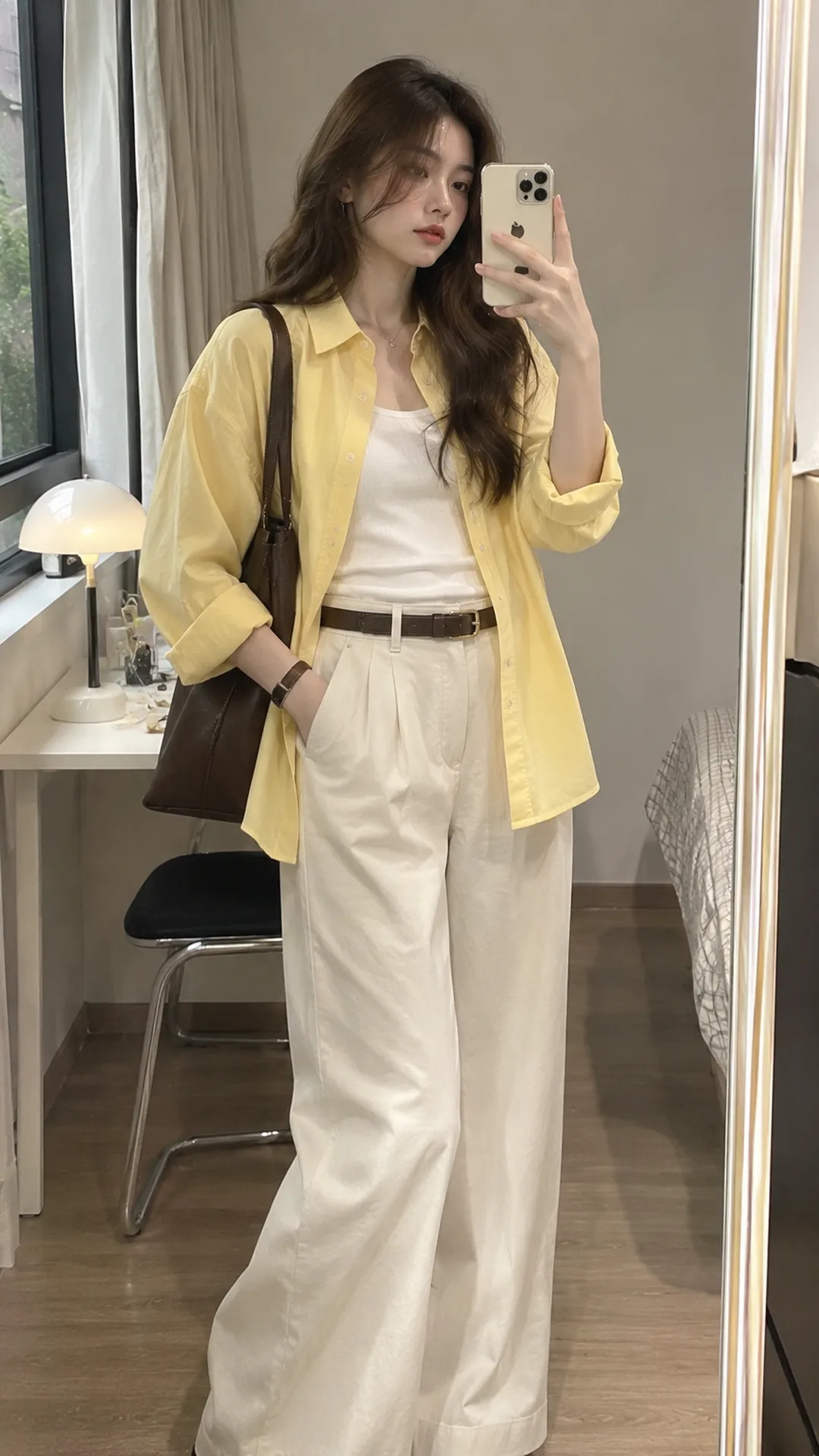
What Colors Go with Yellow? Women's Outfit Formulas
Pair yellow with neutrals, denim, navy, brown, green or purple. Choose your yellow shade and color area first, then adapt outfits for tops, trousers and dresses.
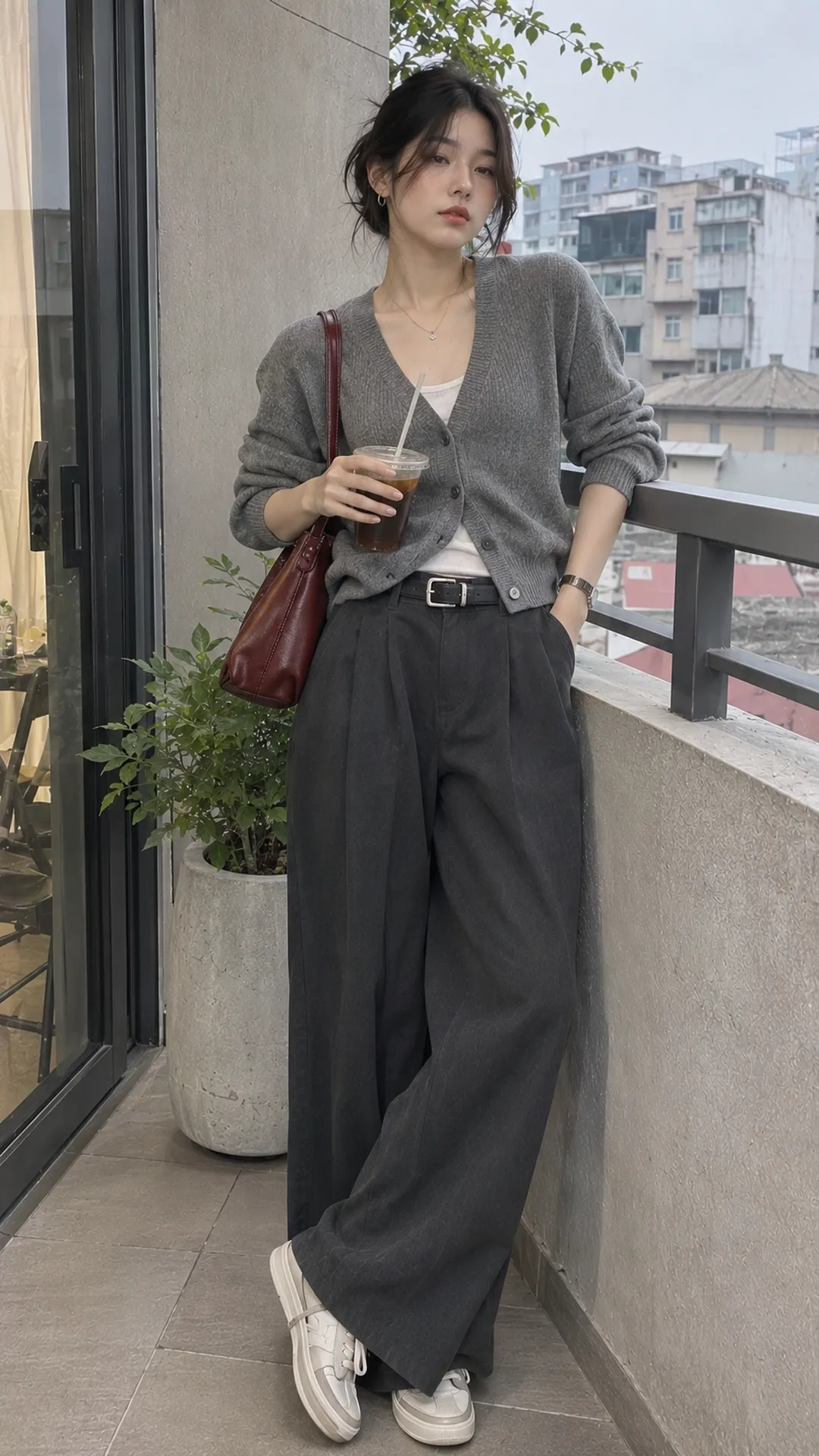
What Colors Go with Gray? A Women's Outfit Palette
Build gray outfit palettes with neutrals, denim, navy, pink, red, yellow or brown. Compare undertones and textures, then test color areas in your wardrobe.
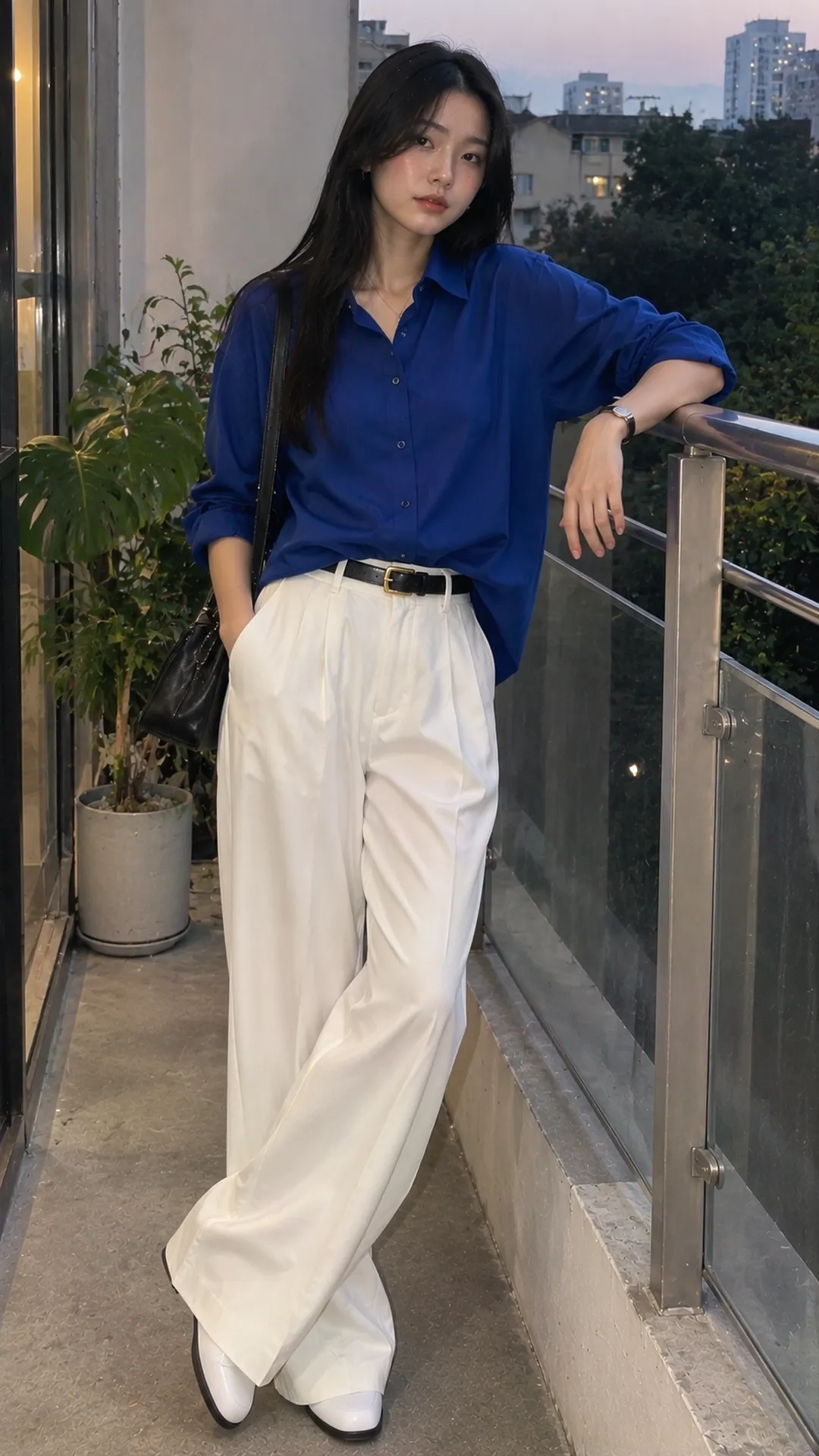
What Colors Go With Cobalt Blue? Outfit Ideas for Tops and Pants
Pair cobalt blue with white, black, gray, cream, or brown. Try tonal blues and small bright accents, and balance fabrics, layers, and accessories.
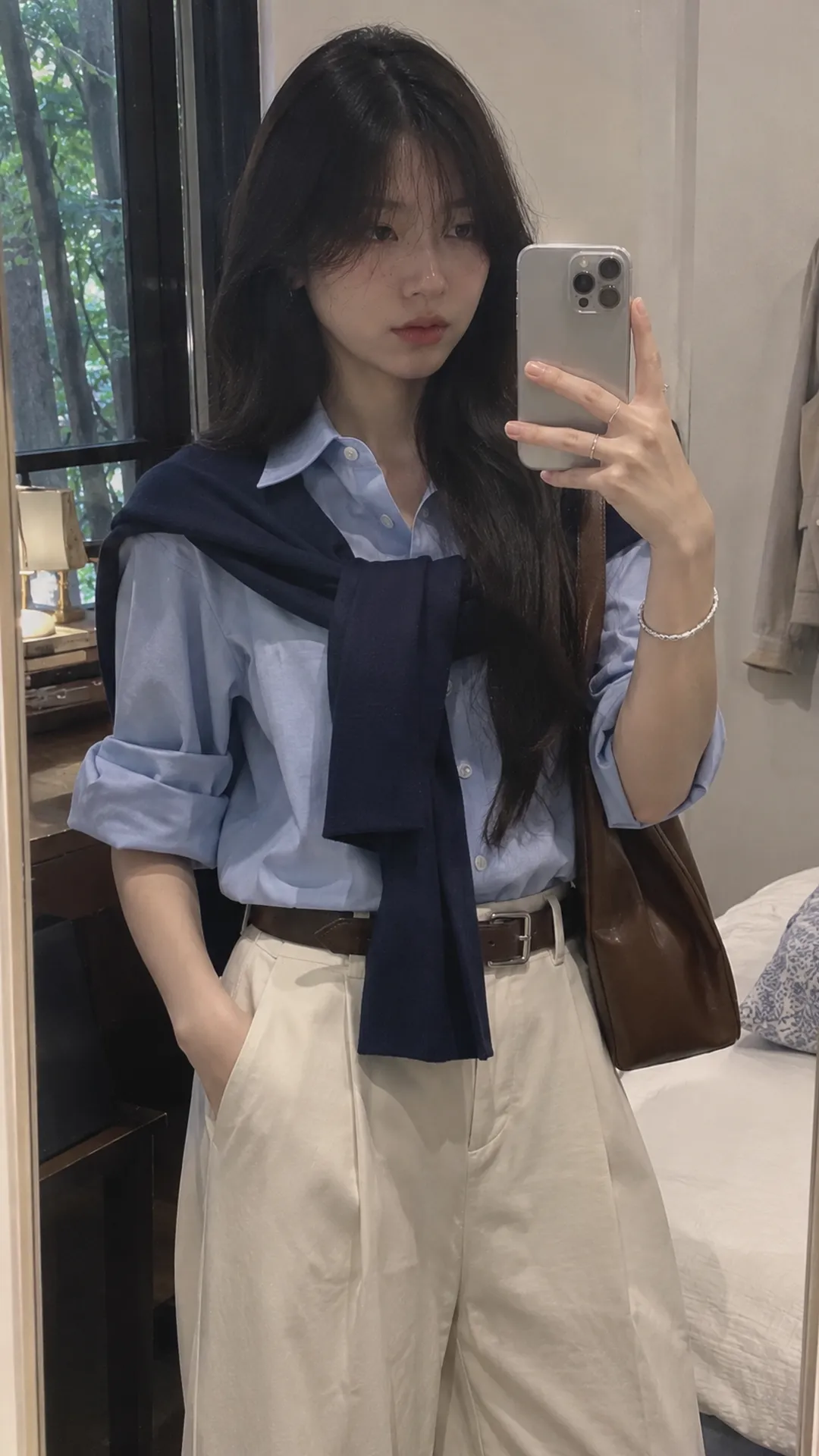
What Colors Go with Blue? Women's Outfit Combinations
Pair light, deep or vivid blue with neutrals, brown and pink, or add small red, orange and yellow accents. Compare color area, shape and texture in real outfits.
Starting with a top: check color and hem placement
Before choosing trousers, wear the top the way you intend to use it: untucked, tucked in, or open over a base layer. Its finishing point changes how much of each color is visible. A long top covering the waistband leaves the trousers as one lower block of color; tucking it in makes the boundary clearer. A combination that feels unbalanced with the hem loose may work after a small adjustment. Try that change before deciding the colors themselves are wrong. Your preferred waist position matters as much as a matching chart.
When choosing trousers for black tops, compare a light pair, a denim pair and a dark pair you already own. Use the same method with other tops, but keep their actual shade consistent. Moss green should not be replaced with navy in a reference image simply because both are described as dark colors. If a collar, trim or graphic introduces another color, include that detail in the comparison. The background color is only one part of what you see when the garment is worn.
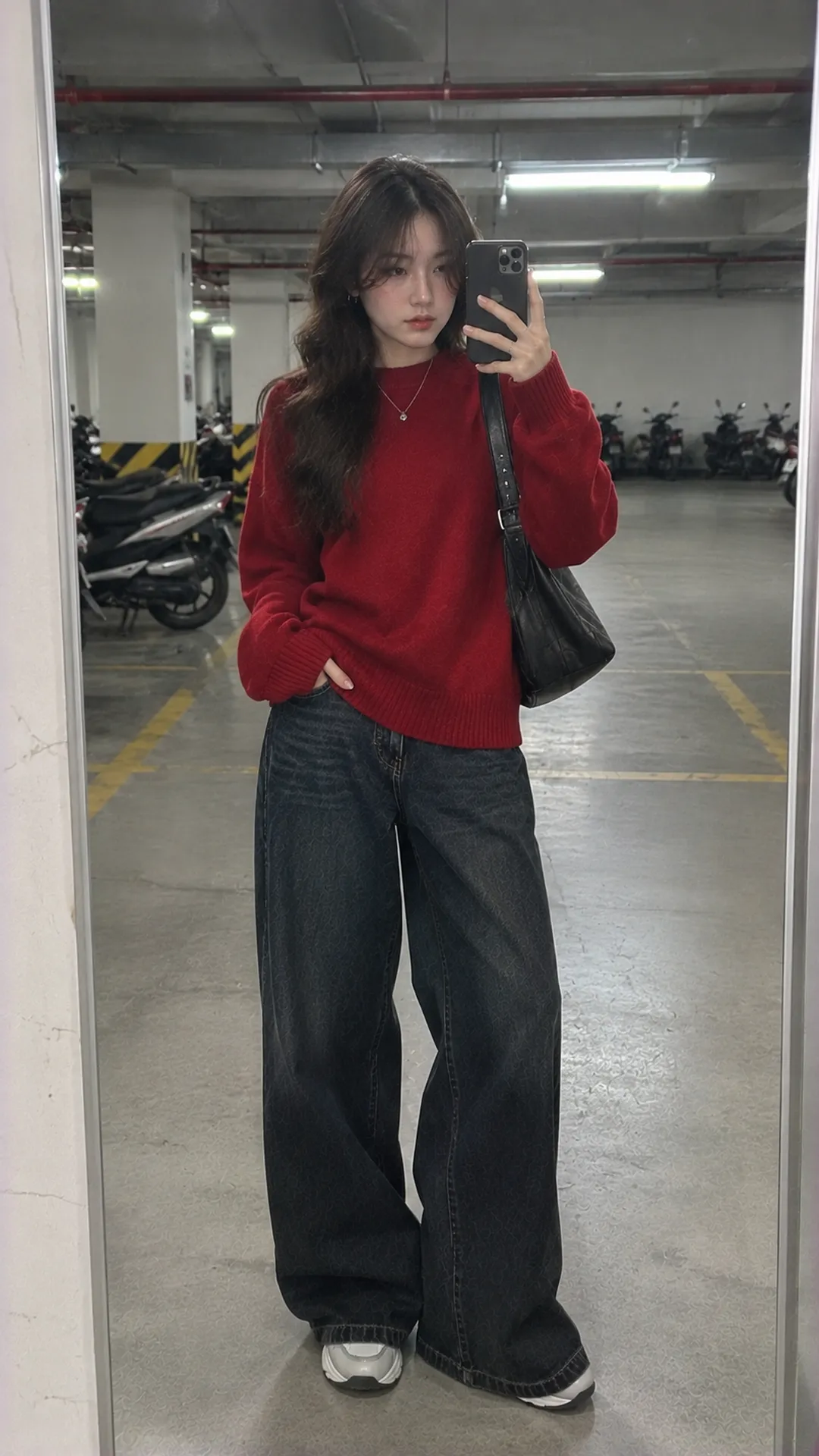
What Color Pants Go with a Red Top? Outfit Ideas for Women
Pair a red top with black, ivory, gray, denim, navy, brown, or beige. Choose by shade, fabric, and fit, then try three outfits.
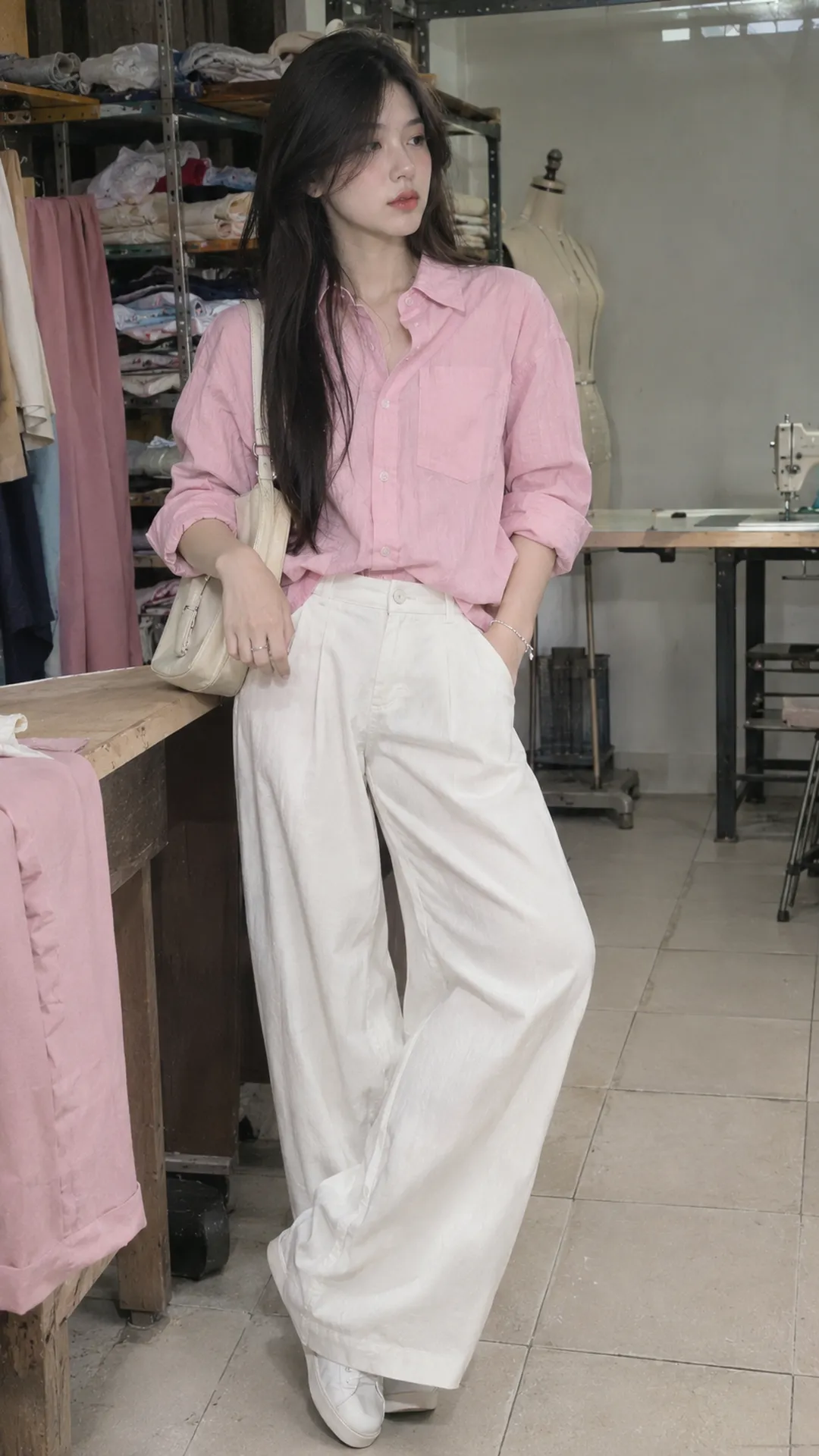
What Color Pants Go with a Pink Top? Pairings by Shade
Pair blush, dusty pink, and vivid pink tops with white, gray, black, denim, navy, or brown pants. Try three outfits for different occasions.
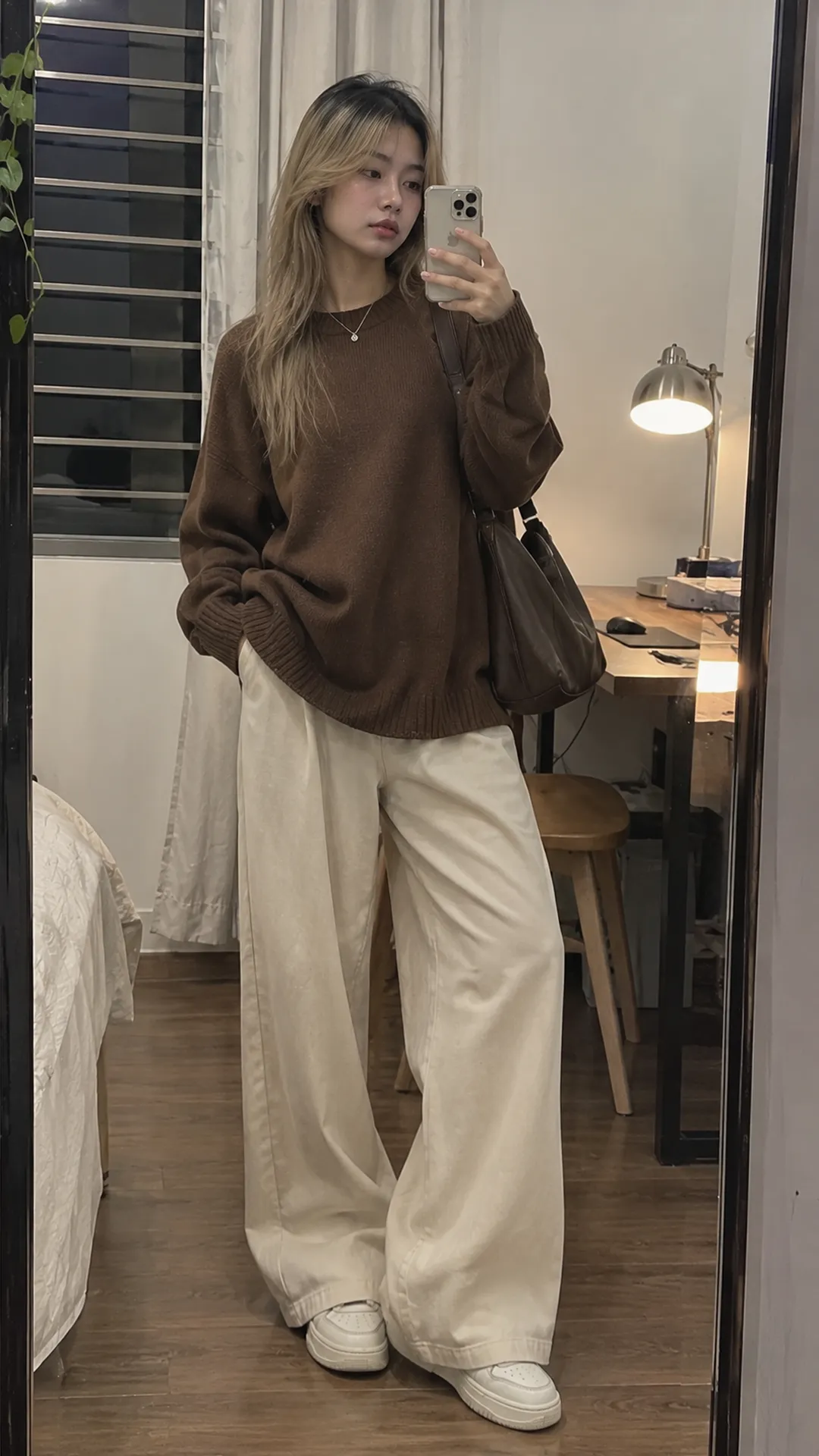
What Color Pants Go with a Brown Top? Light to Dark Outfits
Pair brown tops with ivory, cream, black, gray, denim, navy or earthy colors. Compare shades, proportions and accessories through five outfit ideas.
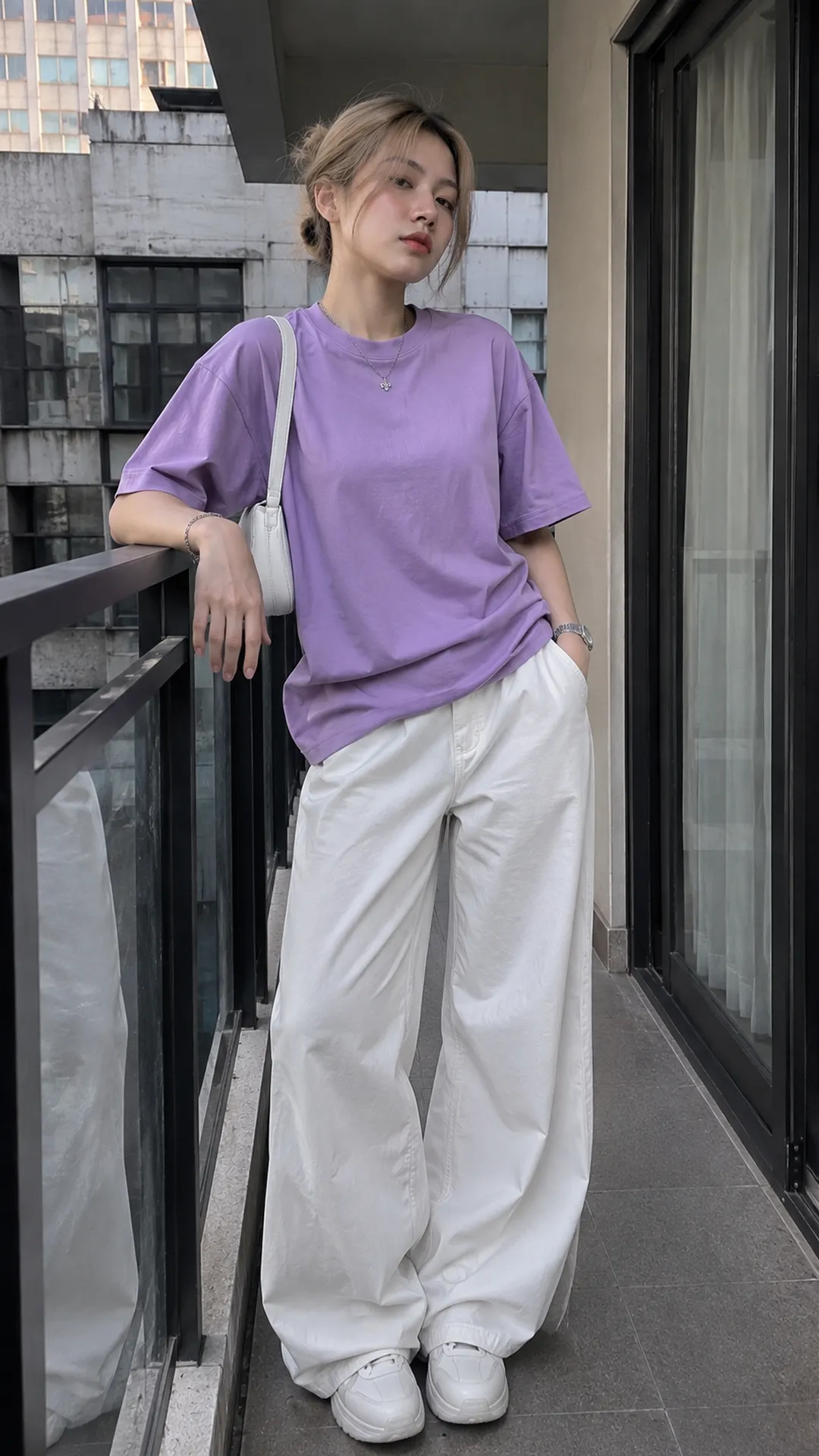
What Color Pants Go With a Purple Top?
Pair lavender, plum, and deep blue-purple tops with white, black, gray, beige, denim, or brown pants. Choose by contrast, cut, and occasion.
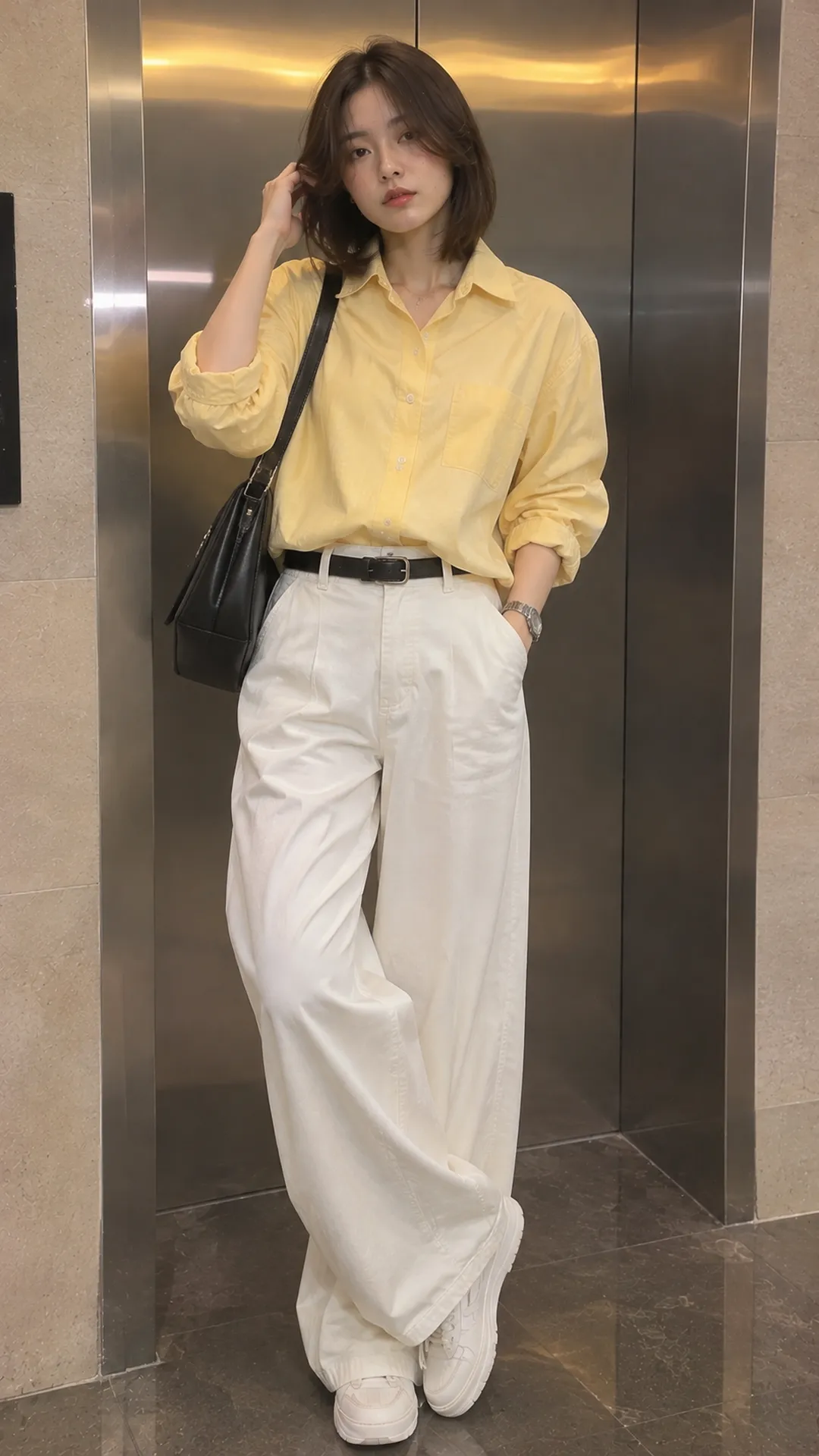
What Color Pants Go with a Yellow Top? Pairings by Shade
Pair pale, bright, and mustard yellow tops with white, denim, navy, gray, black, or brown pants. Try three outfits for different plans.
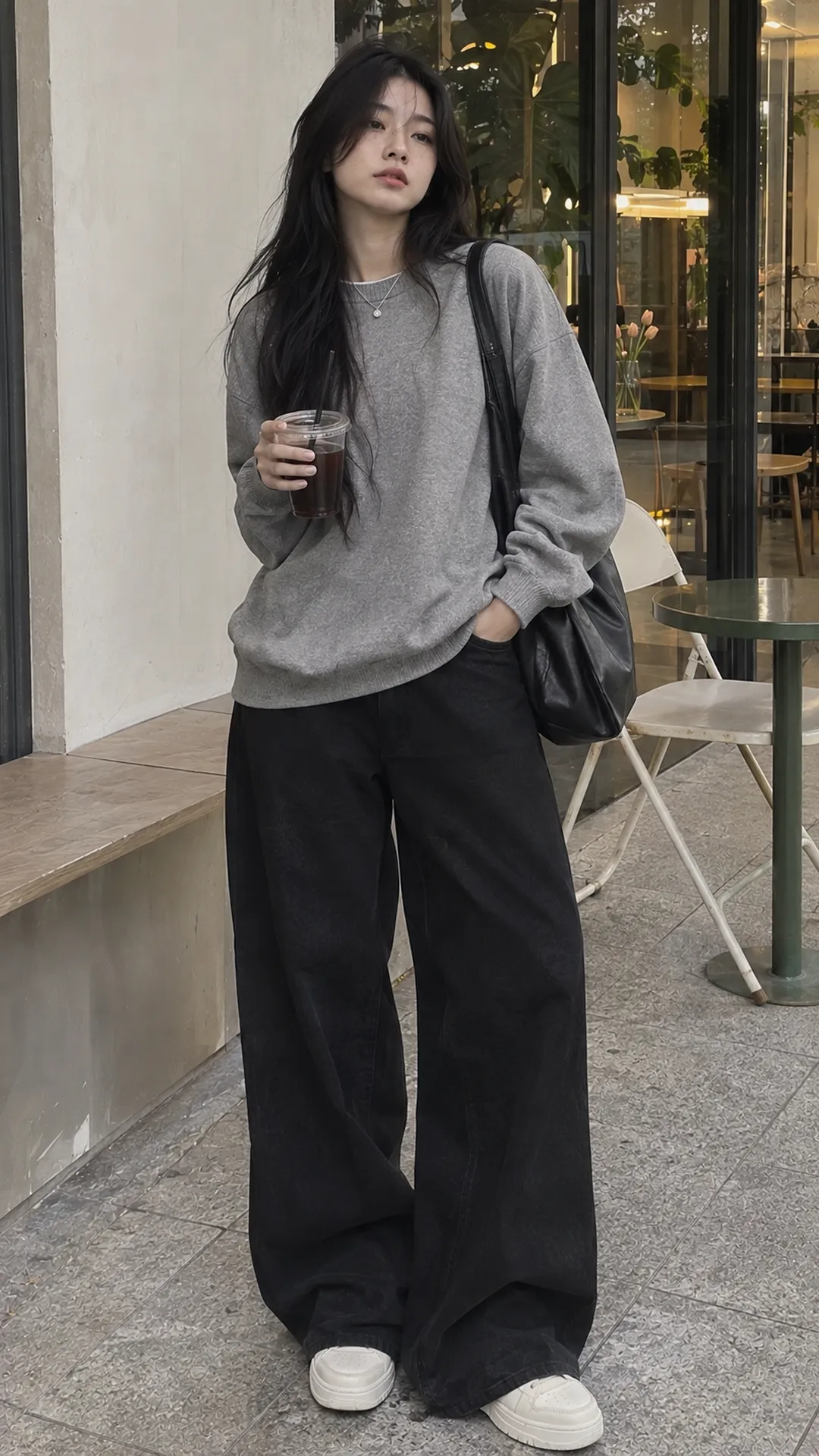
What Color Pants Go with a Gray Top? Outfits with Dimension
Style gray tops with black, ivory, denim, navy, beige or accent colors. Balance lightness, texture and fit across T-shirt, hoodie and shirt outfits.
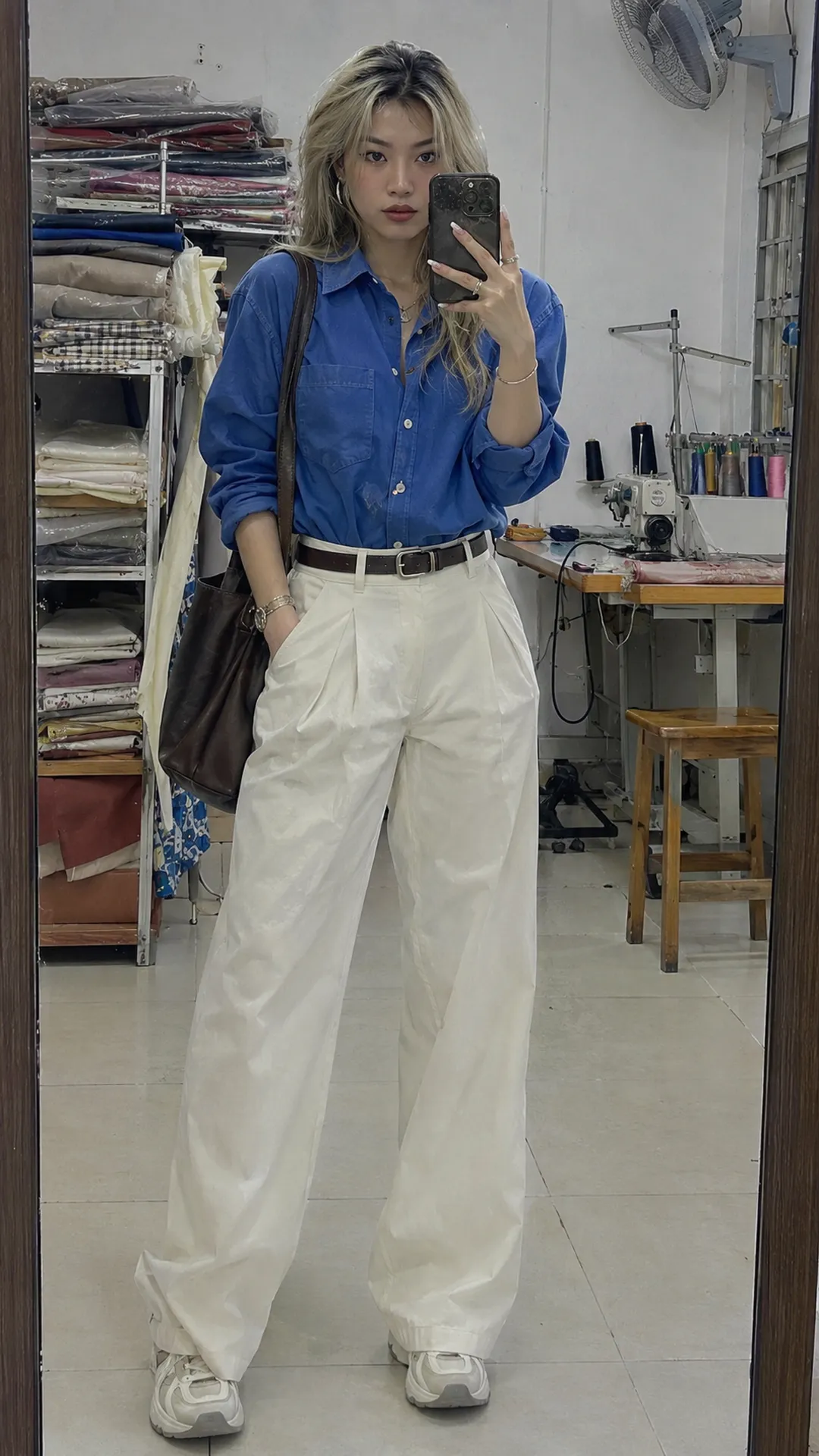
What Color Pants Go With a Blue Top?
Pair a blue top with black, white, cream, gray, denim, navy, or brown pants. Choose by shade, cut, and occasion.
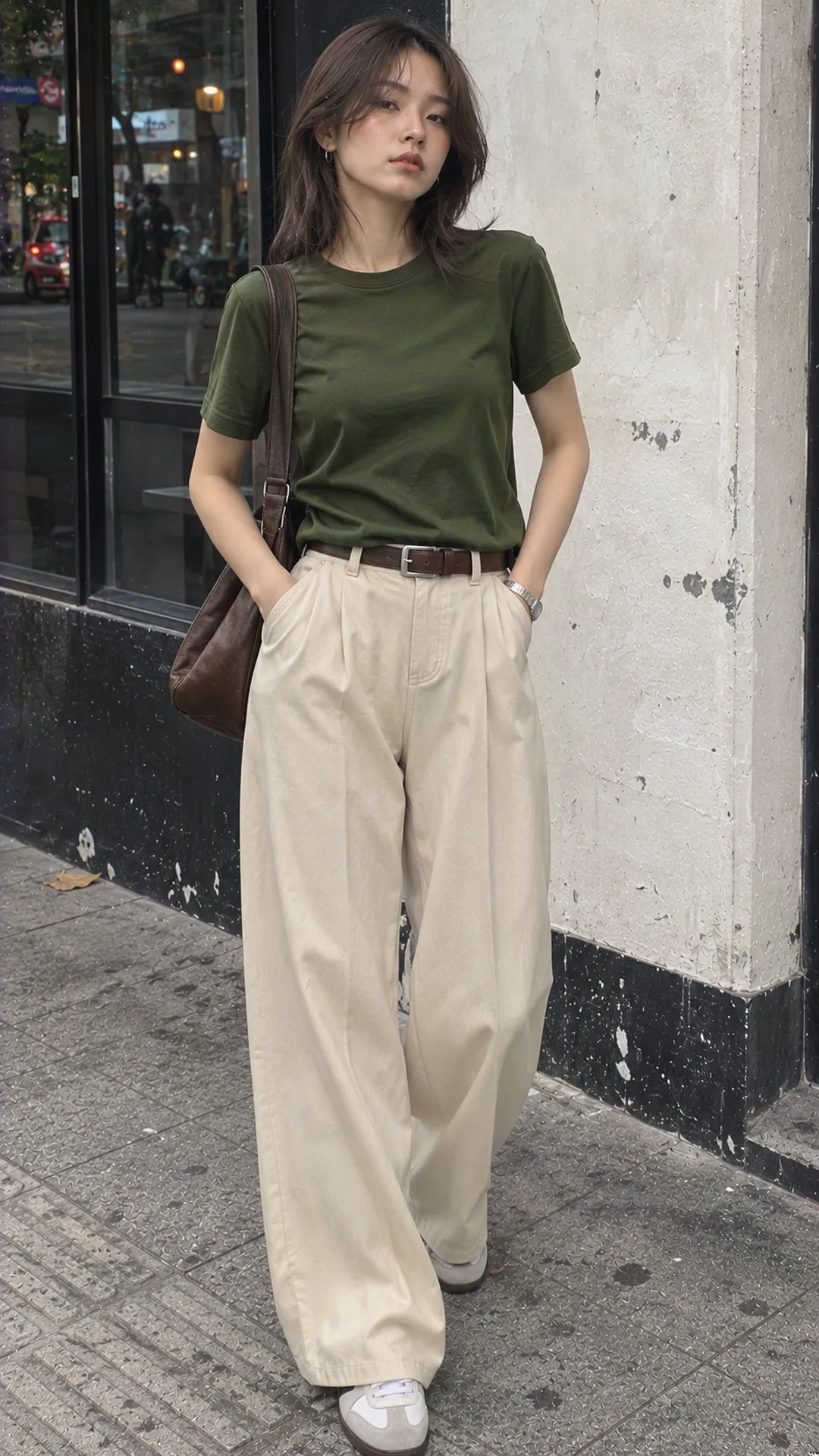
What Color Pants Go With a Moss Green Top?
Try cream, beige, black, gray, denim, or brown with a moss green top. Choose by undertone, fit, and how you plan to style your shoes and bag.
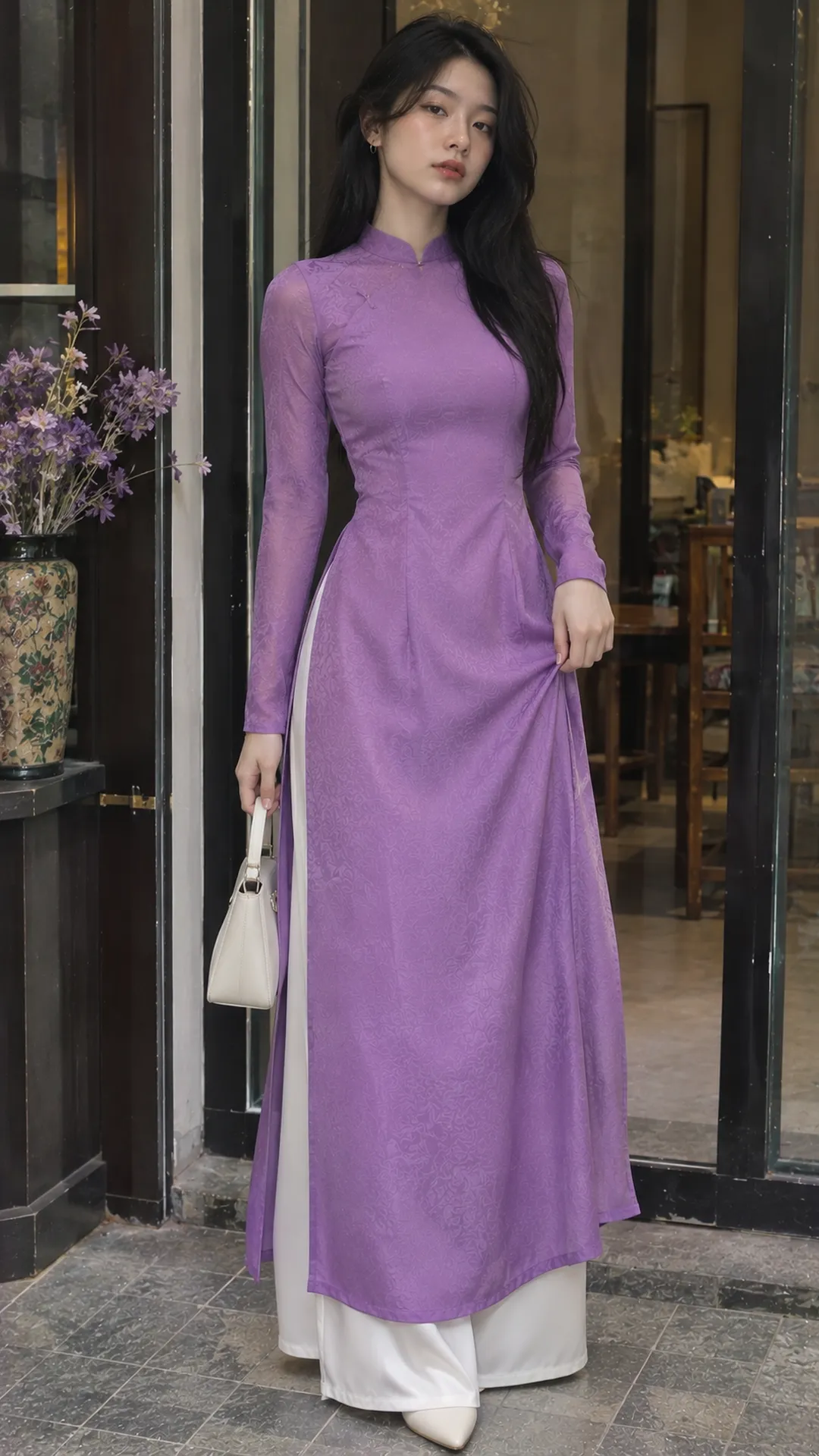
What Color Pants Go With a Purple Ao Dai?
Pair a purple ao dai with white, ivory, black, or tonal purple pants. Compare shades, drape, sheen, and fit with the shoes you plan to wear.
Starting with trousers: change tops on the same base
Keep the trousers fixed and begin with tops of roughly comparable lengths. Changing color, silhouette and shoes together makes it harder to see what caused the difference. With pale trousers, check opacity and the section of top tucked inside: a dark layer may show through a thin fabric. Cargo pockets or prominent seams also affect the overall impression. A quieter top can make the color relationship easier to assess in the first round. Once you understand that relationship, you can deliberately add a more detailed top.
Do not reject a top color just because its shape is not doing what you want. A crisp white shirt and a draped white tee can create very different proportions over pink or moss-green trousers. Separate the decision into two stages: do you like the color relationship, and do you like the outline? Once you have a practical combination, use accessories to connect the areas if that helps. A bag does not need to repeat every color present in the outfit. One well-placed connection can be enough.
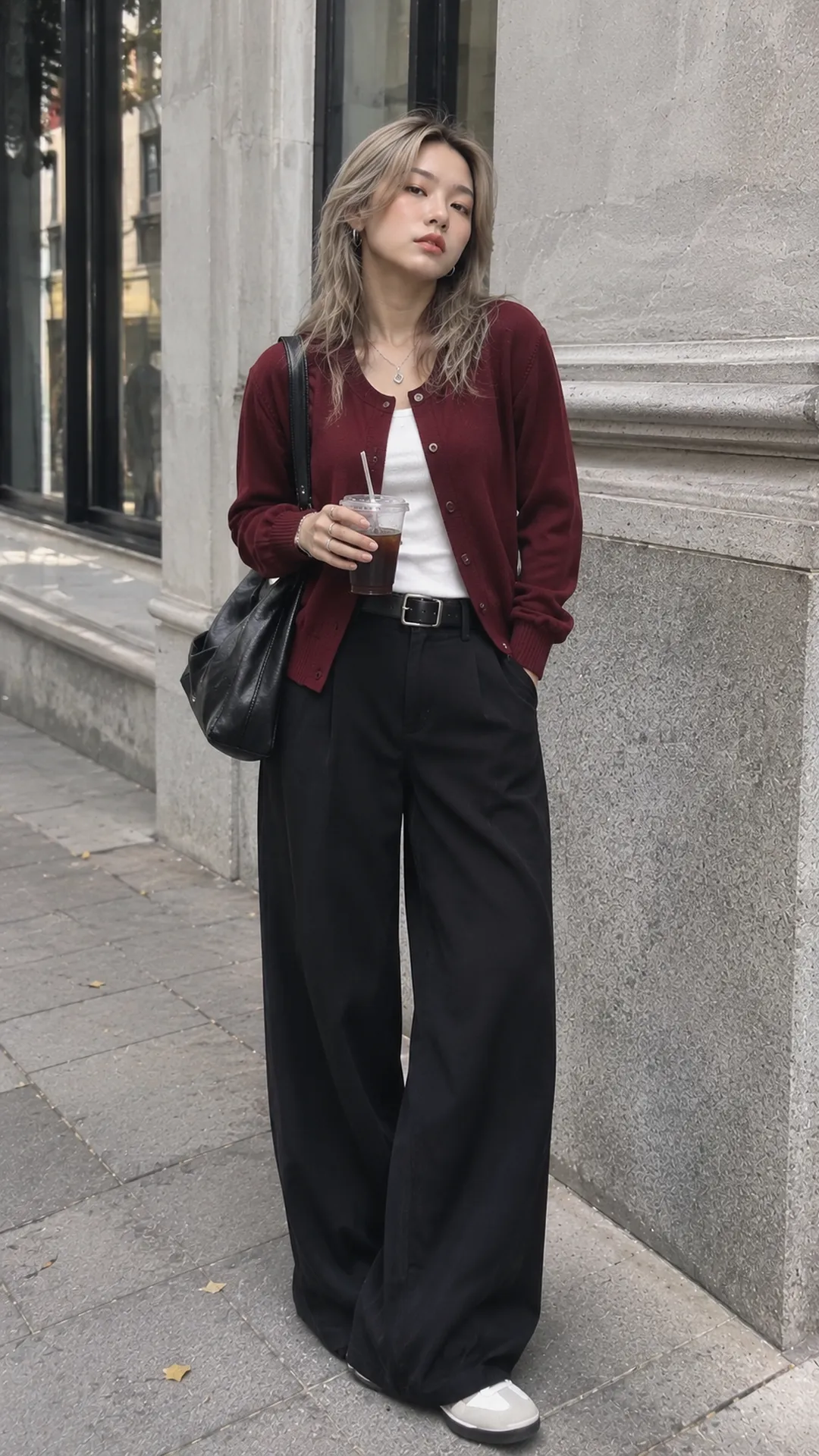
What Color Tops Go with Black Pants? Outfit Ideas for Women
Pair black jeans, tailored trousers, or cargos with white, cream, pastels, burgundy, olive, or brown. Try five outfits and adjust the fit and shoes.
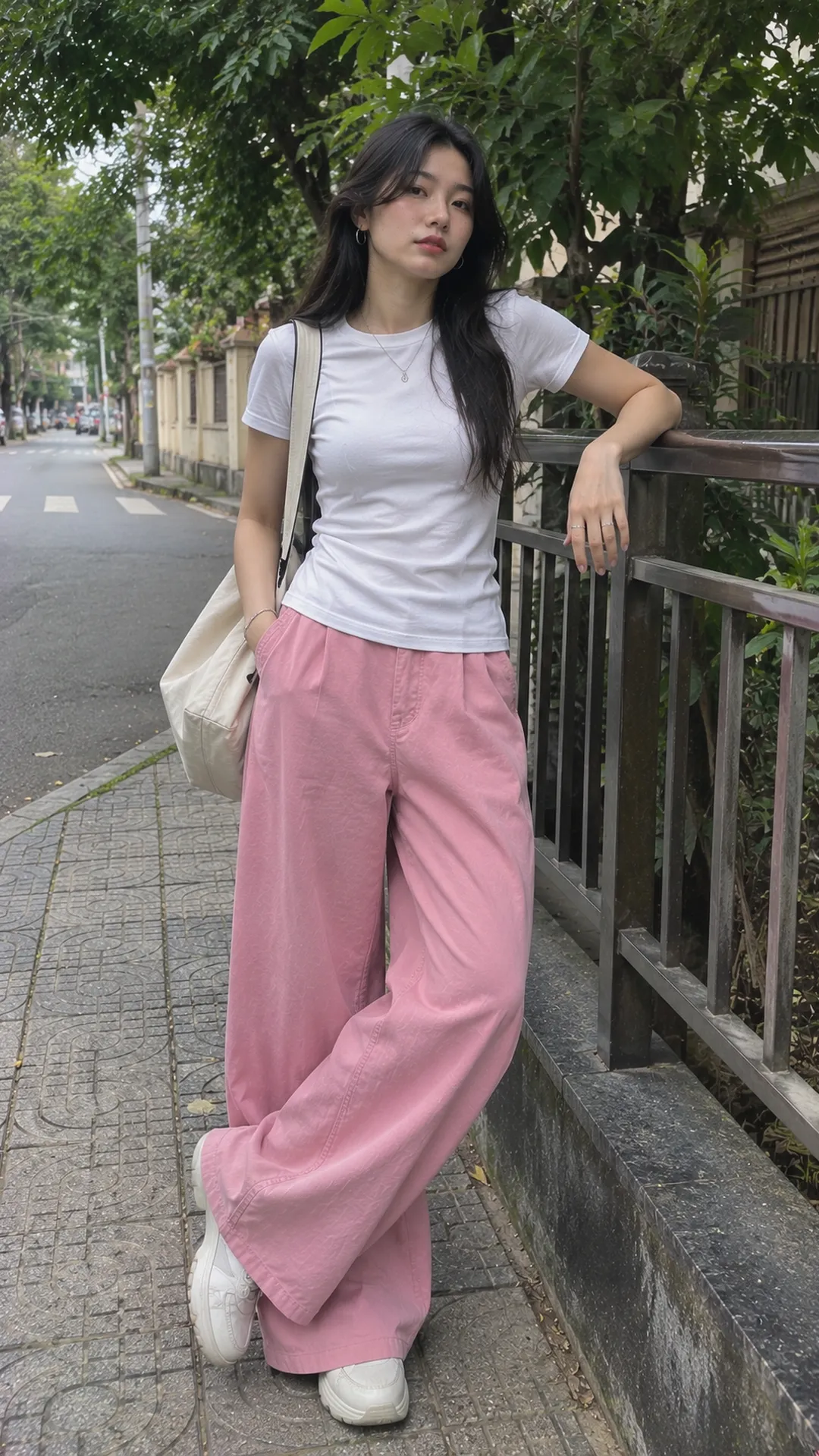
What Color Top Goes with Pink Pants? A Women's Styling Guide
Match pink pants with ivory, gray, black, navy or brown tops. Balance shades, silhouettes, shoes and bags with practical outfit ideas.
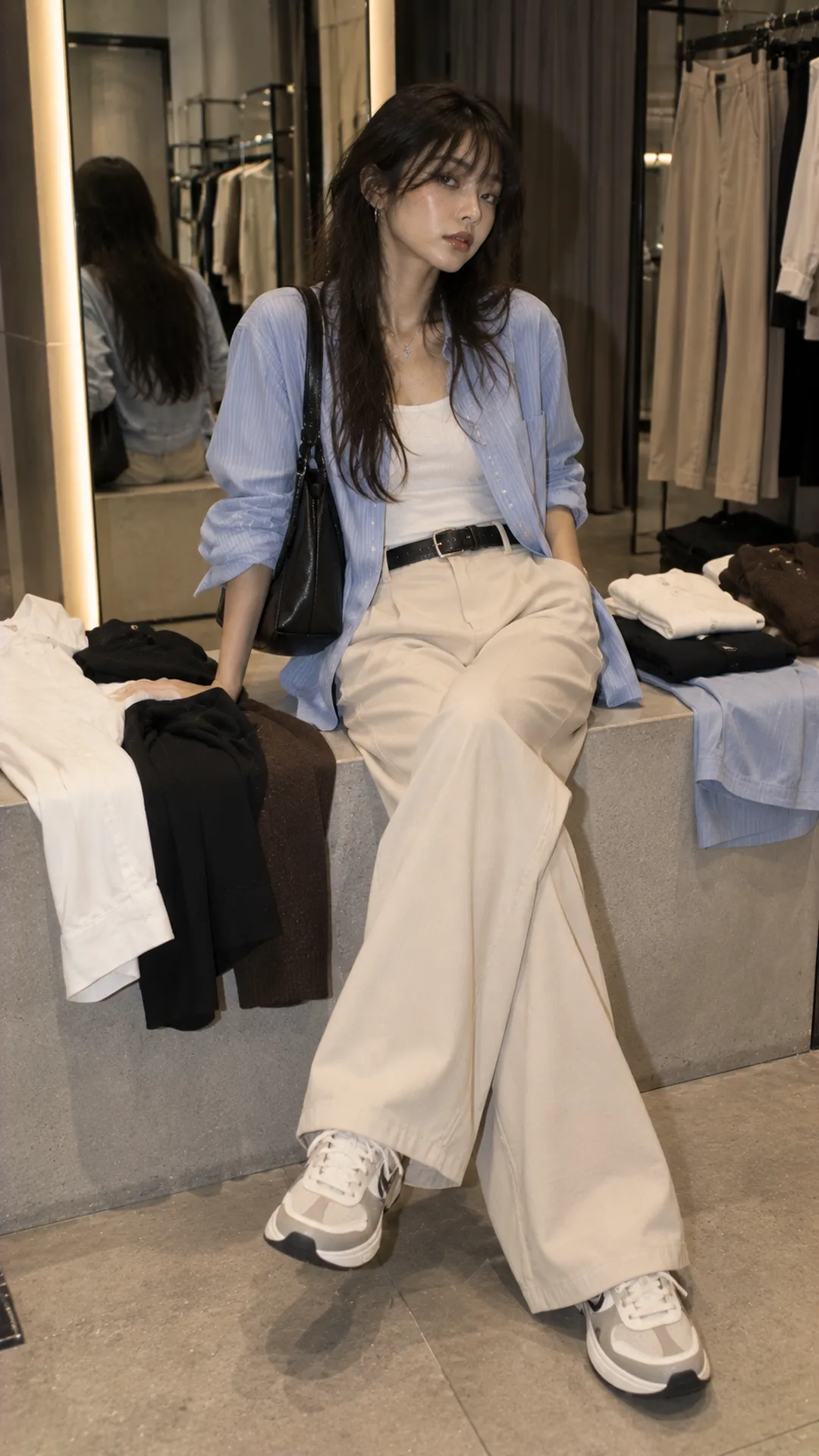
What Color Top Goes with Beige Pants? Women's Outfit Ideas
Choose tops for beige or cream pants using shade, contrast and trouser fit. Try neutrals, blue, olive, pink and deep red, then check shoes, hems and coverage.
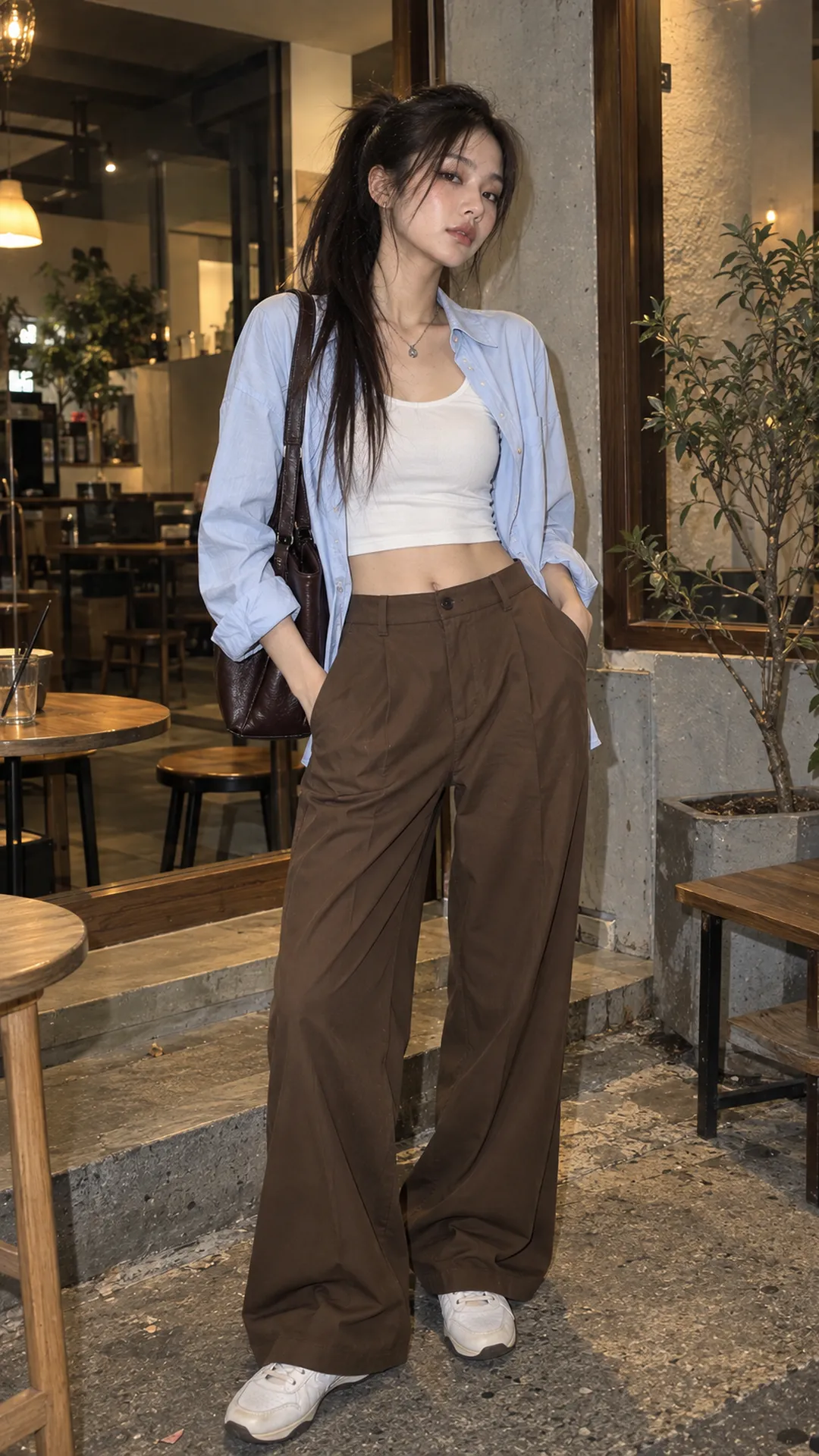
What Color Top Goes with Brown Pants? Women's Outfit Ideas
Pair brown pants with white, cream, black, pale blue, pink or richer colors. Adjust for chocolate, caramel and gray-brown shades, trouser shape and occasion.
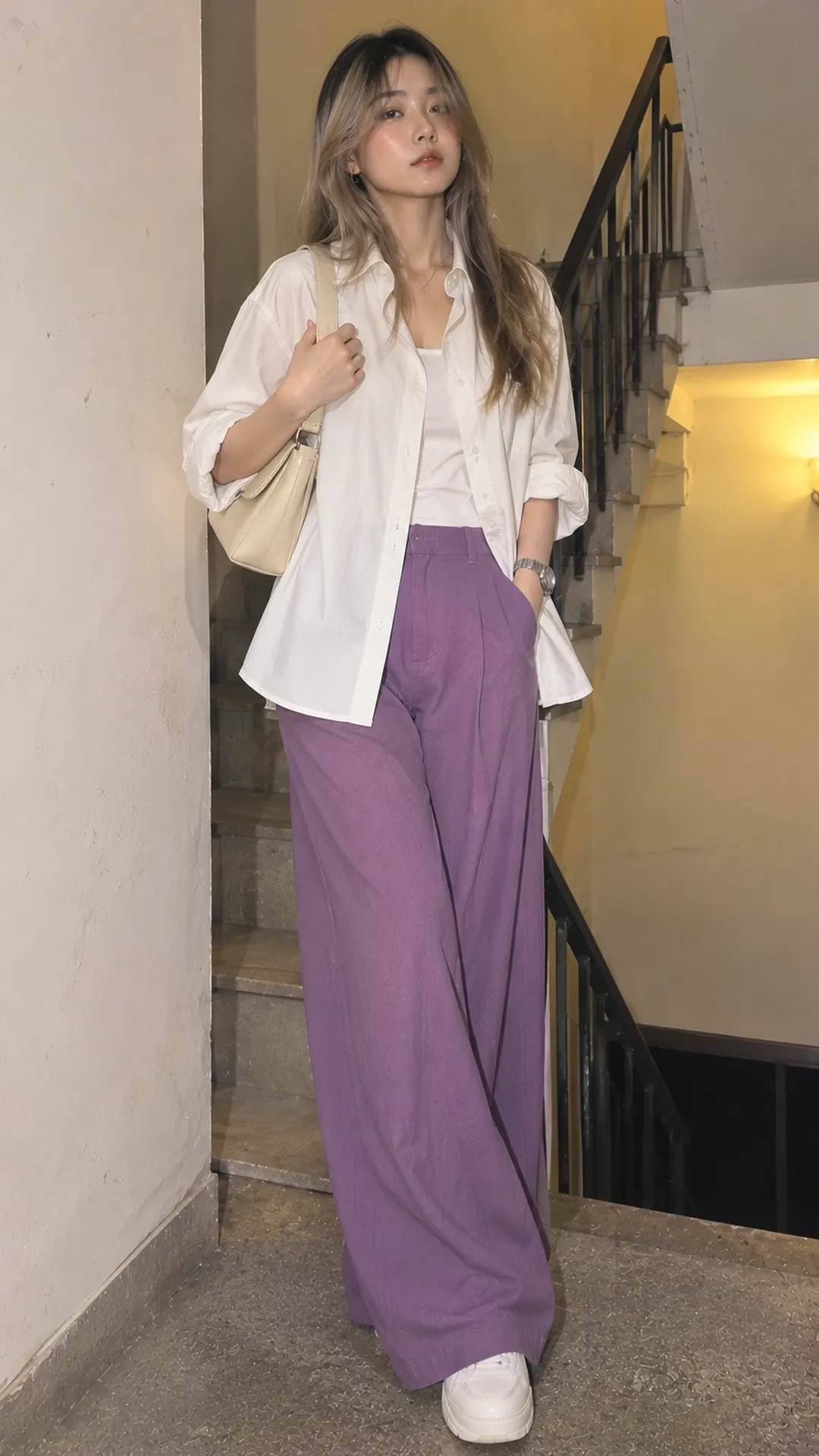
What Color Tops Go with Purple Pants? Pairings by Shade
Pair lavender, plum, and inky-purple pants with white, cream, gray, black, denim, or pastels. Choose the contrast, fit, and shoes you like.
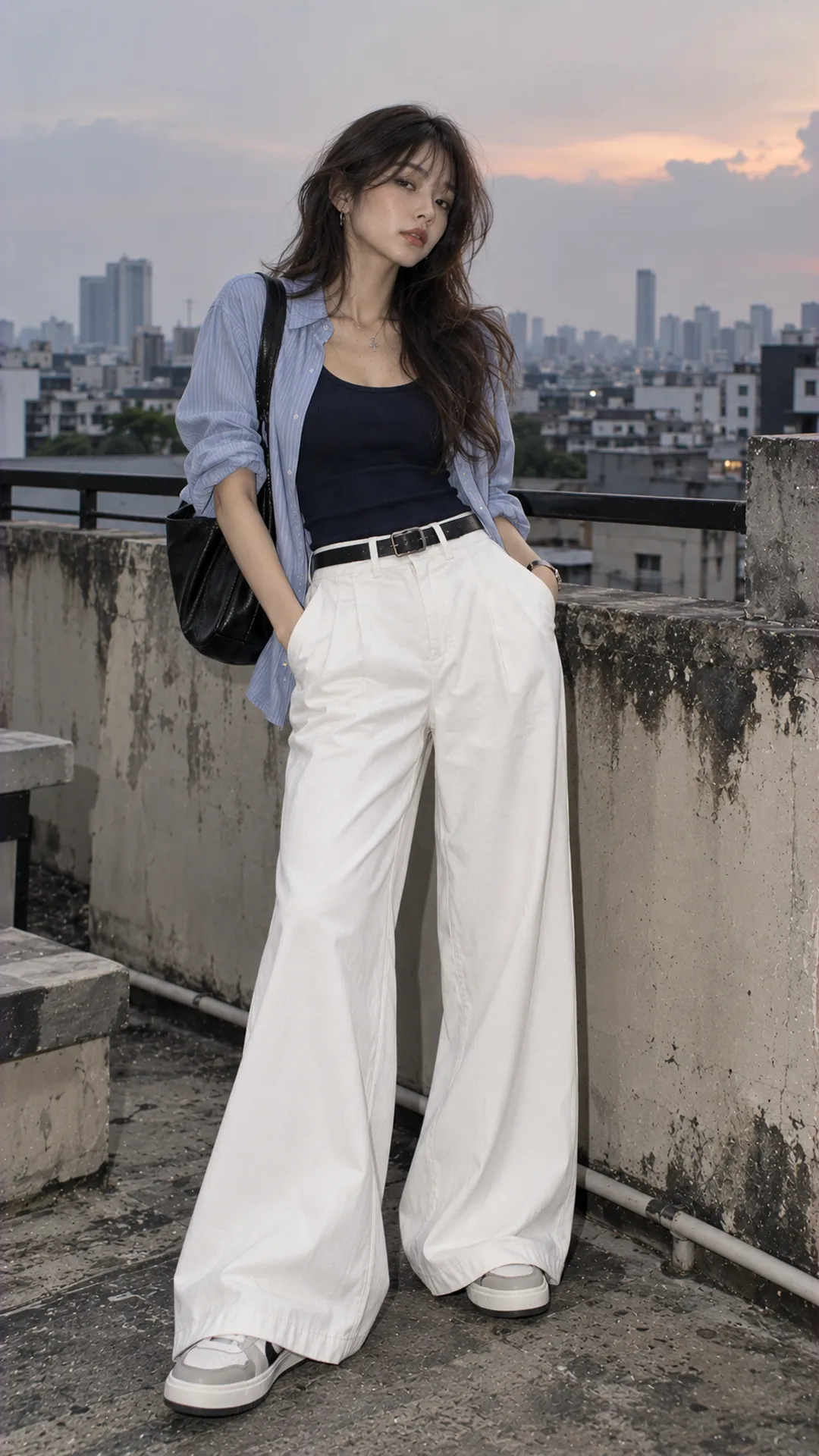
What Color Top Goes with White Pants? Women's Outfit Ideas
Choose dark, pale, vivid or white tops for white trousers and jeans. Balance wide legs and top length, then check lining, transparency, tucked fabric and shoes.
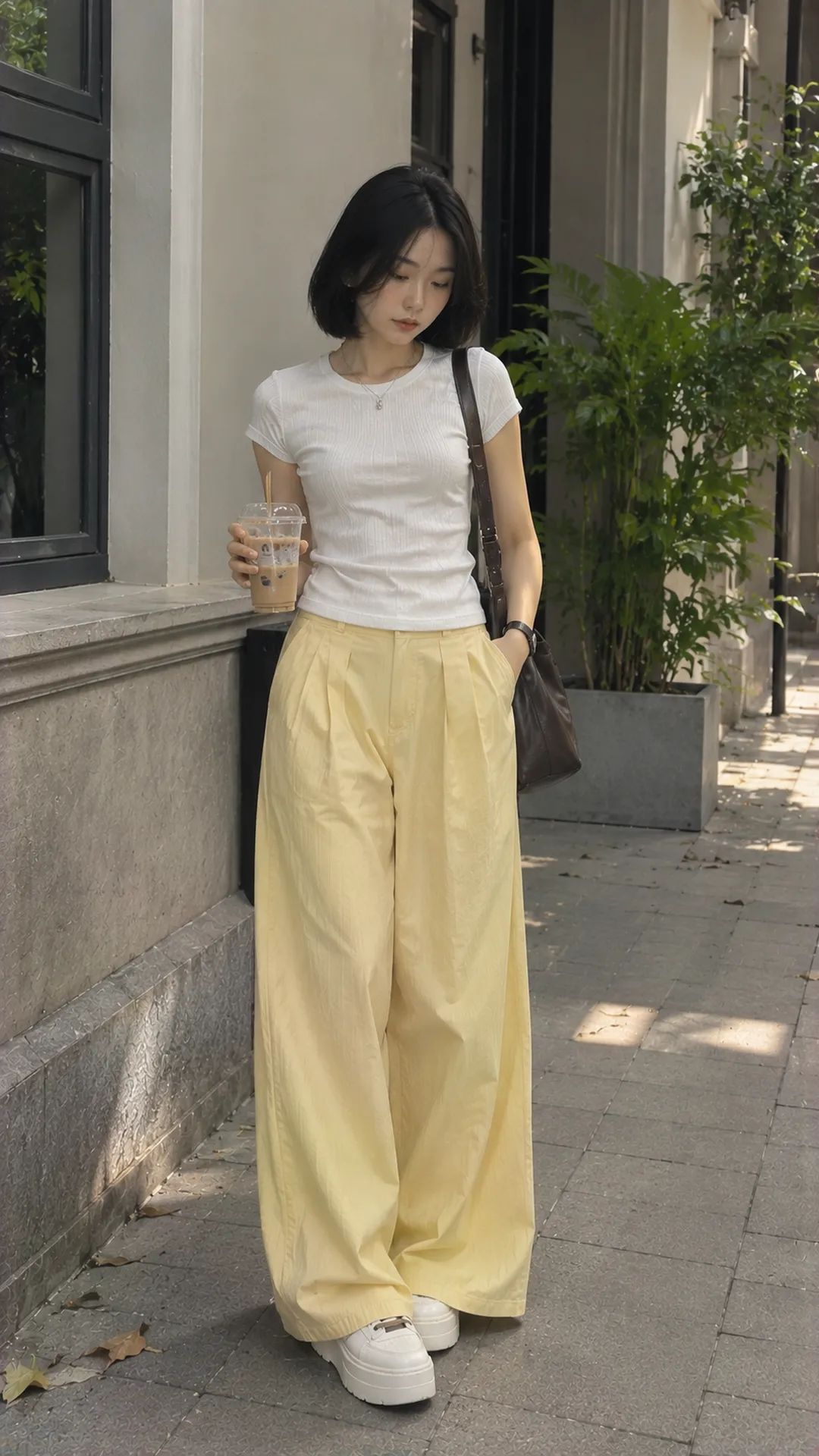
What Color Tops Go with Yellow Pants? Outfit Ideas for Women
Style butter yellow, lemon, mustard, ochre, and golden-tan pants with tops in white, navy, denim, brown, and more. Try four outfit ideas.
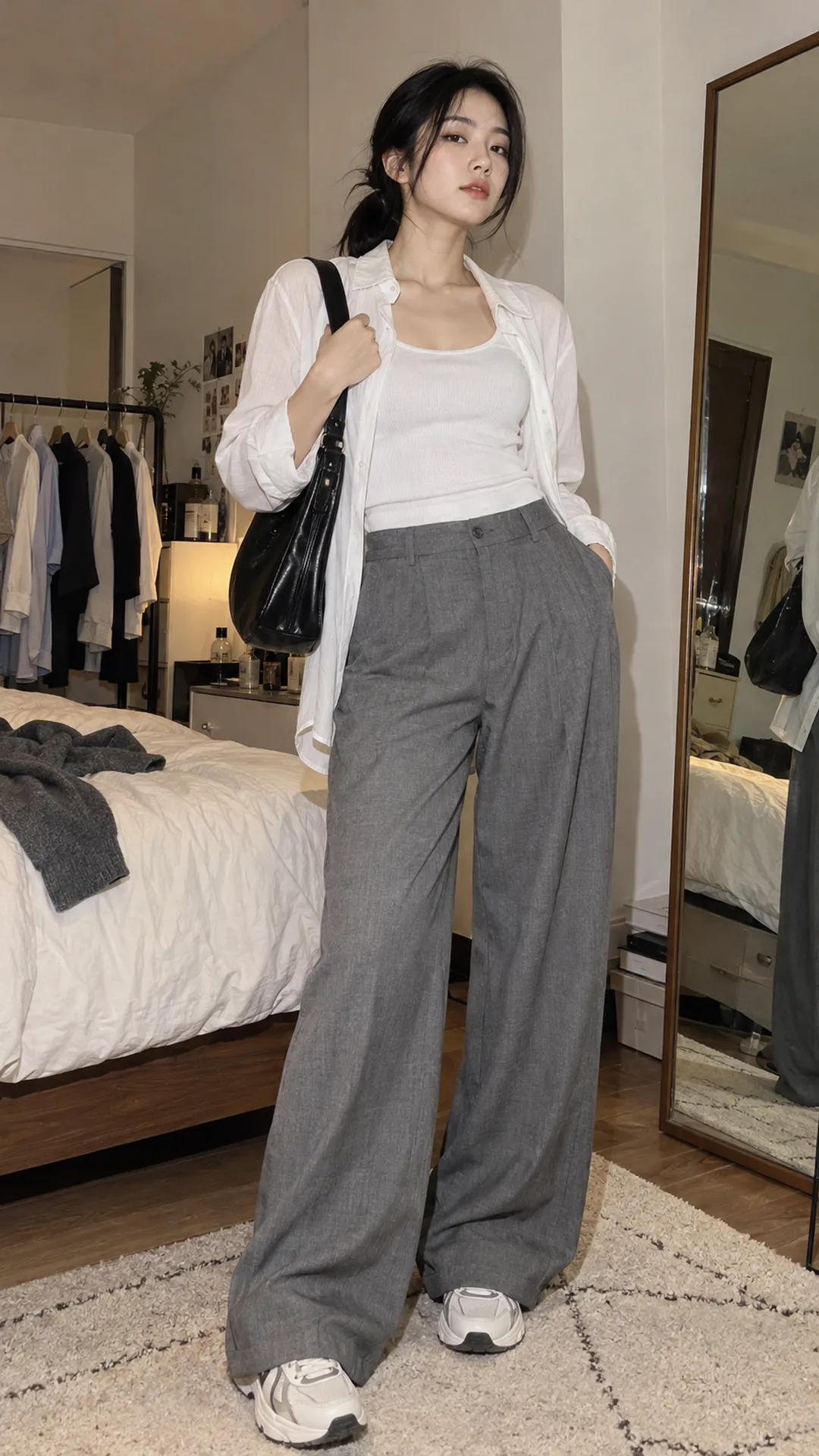
What Color Top Goes with Gray Pants? Women's Styling Guide
Pair gray pants with white, black, cream, blue, pink or burgundy. Compare gray depths and undertones, then adjust tops for jeans, chinos and wide-leg trousers.
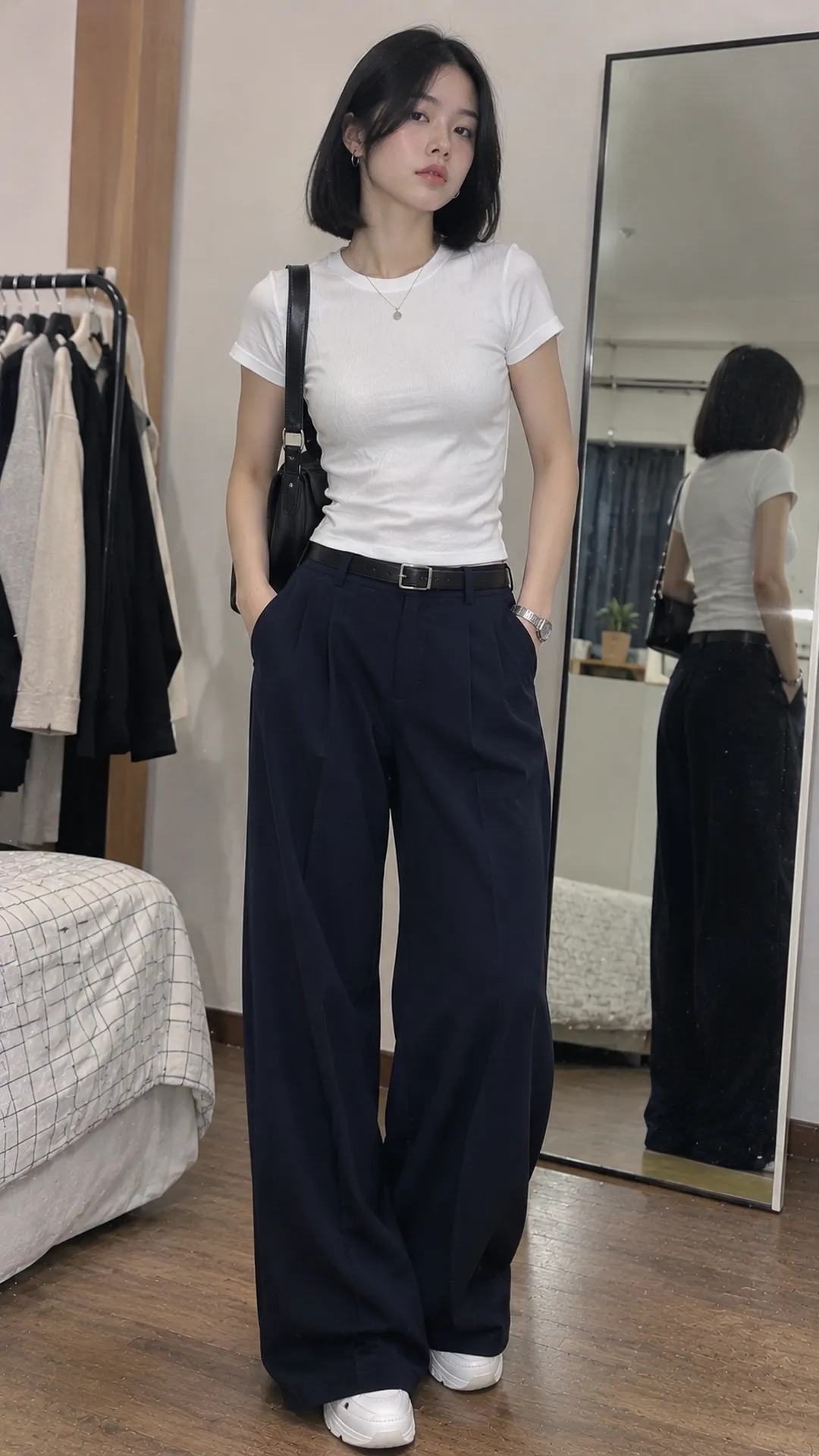
What Color Top Goes With Dark Navy Pants? 7 Outfit Ideas for Women
Try white, cream, gray, black, blue, pink, or burgundy with dark navy pants. Adjust the top, shoes, and accessories to the cut and occasion.
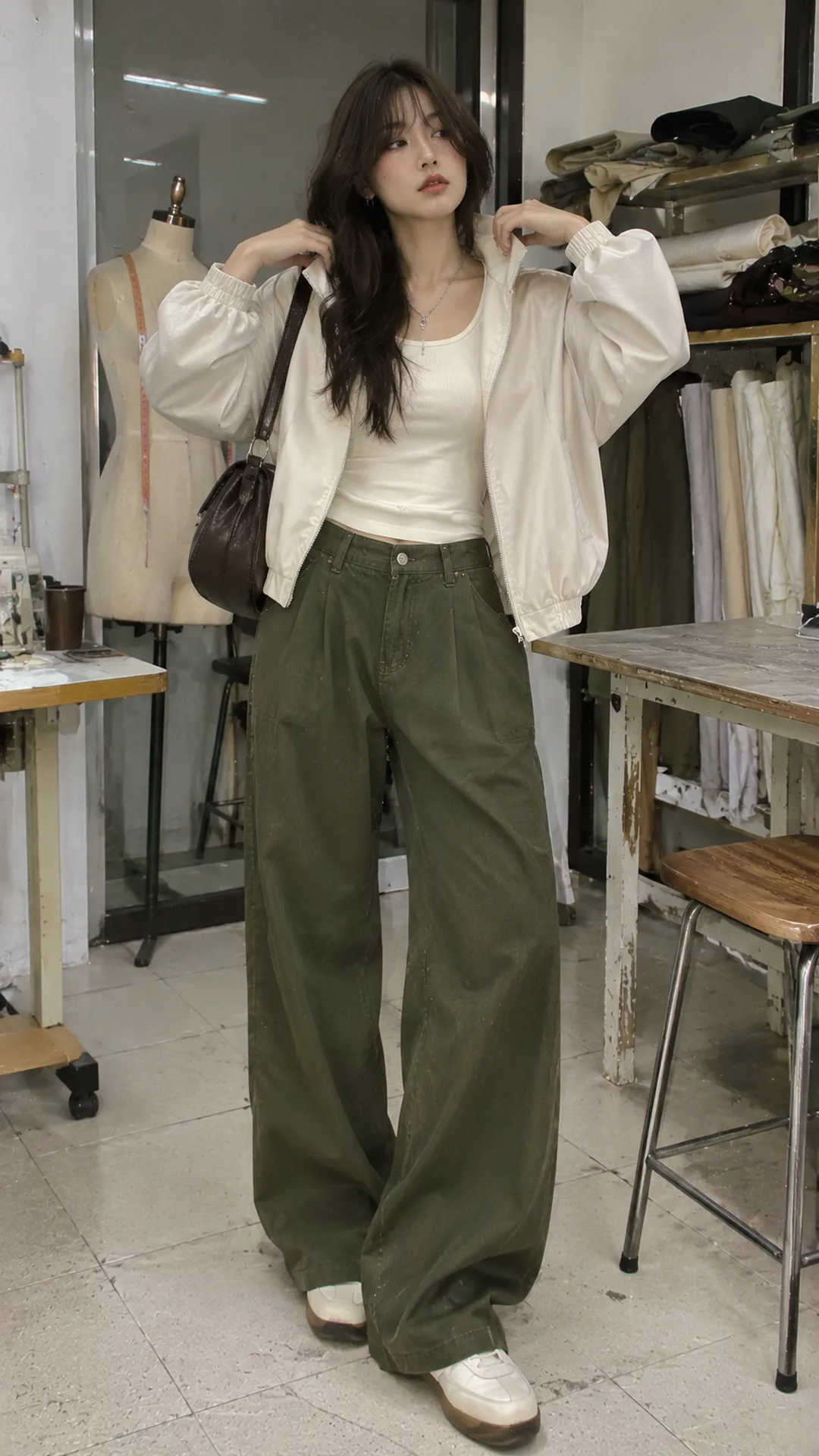
What Color Top Goes with Moss-Green Pants? Women's Outfits
Pair moss-green trousers with ivory, black, gray, beige, dusty pink, burgundy or navy. Compare undertones and adapt tops for chinos, cargos and softer cuts.
Read skirt color together with its surface
Burgundy velvet, satin and cotton can reflect light very differently. Matching a top to a flat color swatch on a screen may miss the quality that makes the actual skirt feel brighter or quieter. Place the top against the skirt, step back, and then try them on to see the folds. Those folds introduce light and shadow, so the color is no longer a single flat block. If the skirt already has a noticeable sheen, a matte top is one useful option to test, rather than an automatic rule for every shiny fabric.
With a yellow or brown skirt, look at the junction between the top hem and waistband before adding a belt. A bright metal detail makes that boundary more visible; a top close to the skirt color may create a longer uninterrupted area. Choose the effect you prefer rather than treating either approach as compulsory. The color-specific guides below help narrow your options. If the real difficulty is the amount of flare or the skirt length, resolve that first and return to color once the outline makes sense.
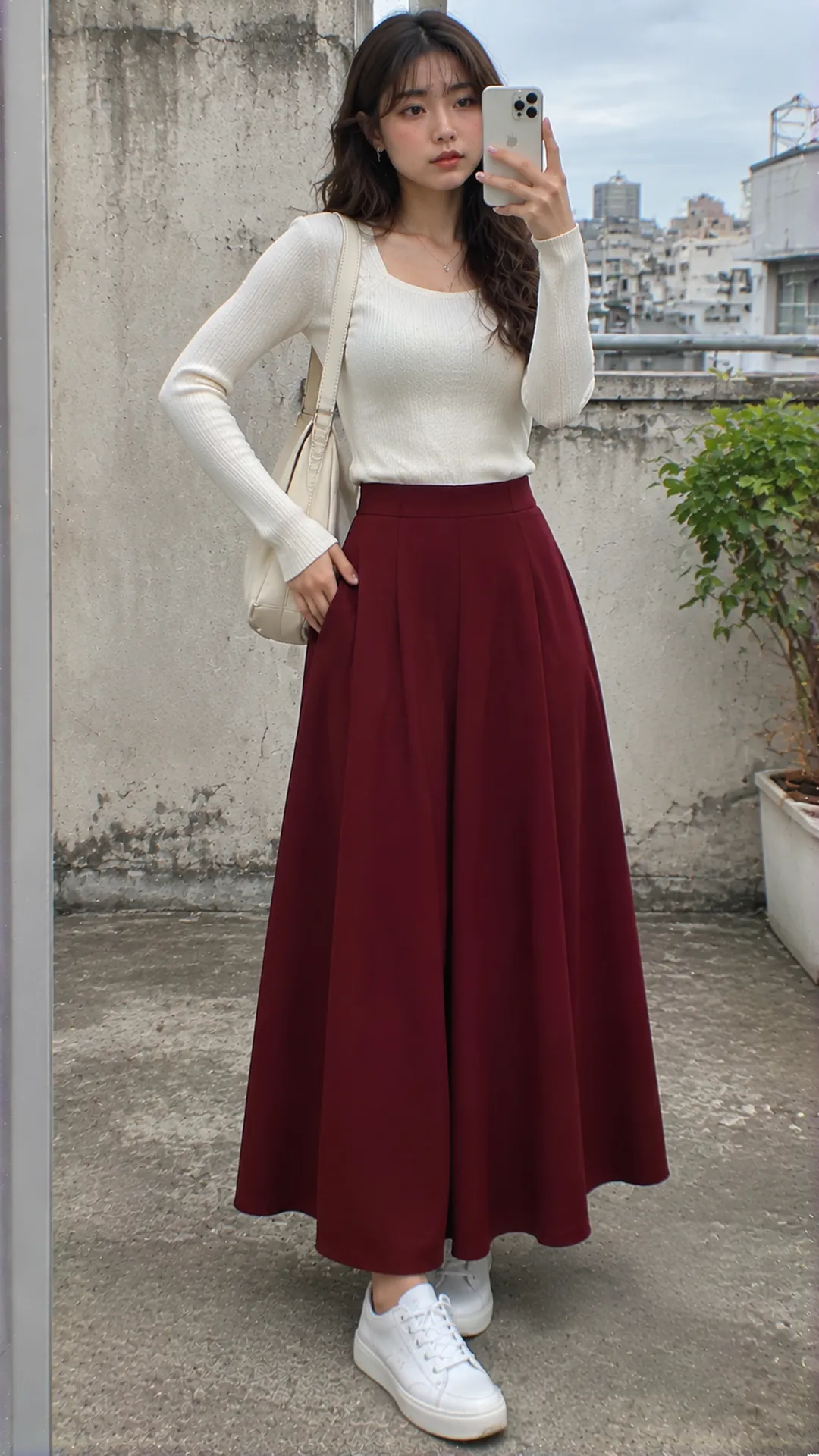
What Color Top Goes With a Burgundy Skirt?
Try ivory, cream, gray, black, denim blue, navy, or soft pink with a burgundy skirt. Choose the contrast, fabric finish, and fit you want.
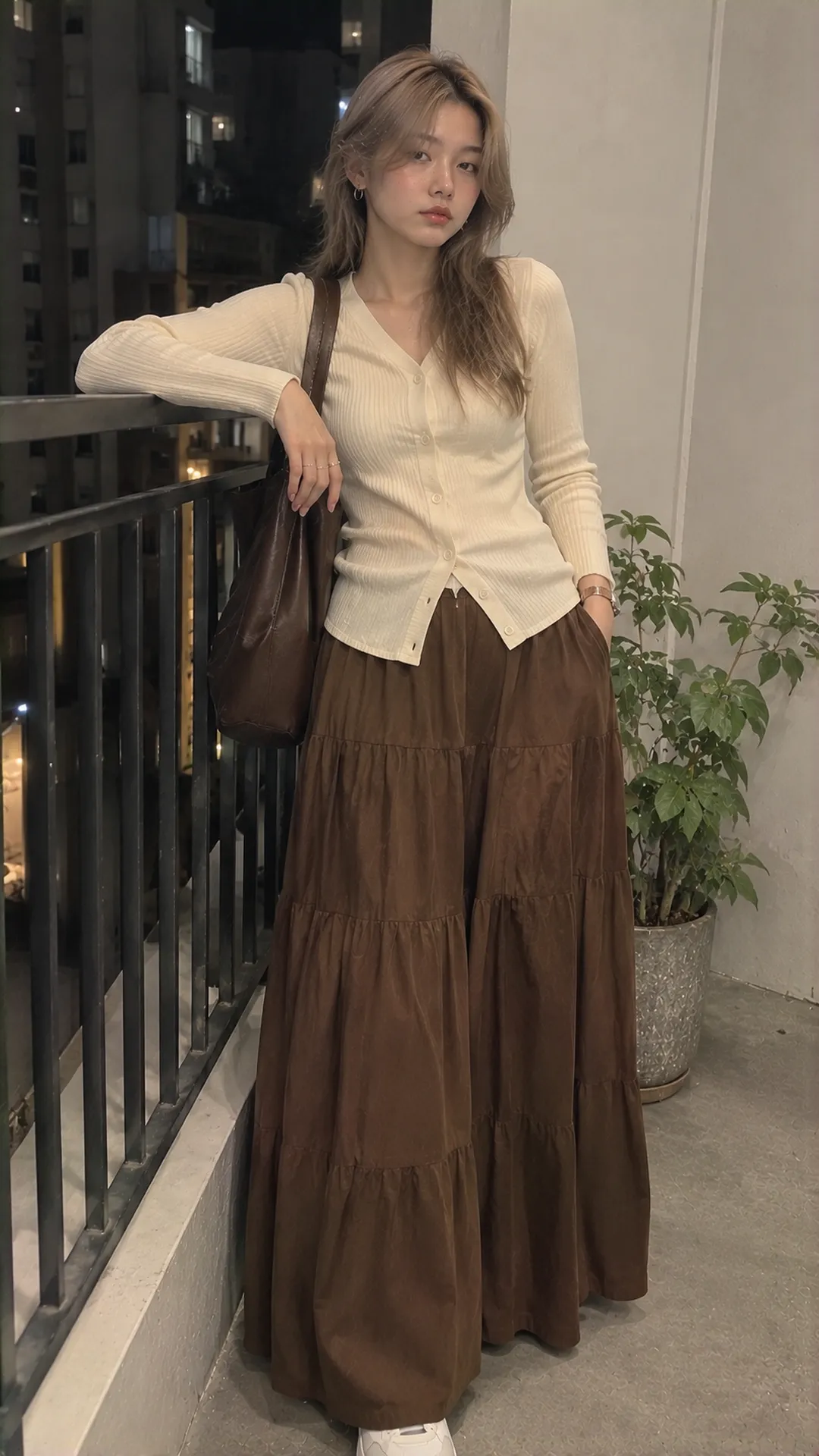
What Color Top Goes with a Brown Skirt? Style by Shade
Pair brown skirts with cream, black, pale blue, denim, olive or pink. Adapt top shape and length to A-line, fitted or pleated skirts and check shoes in motion.
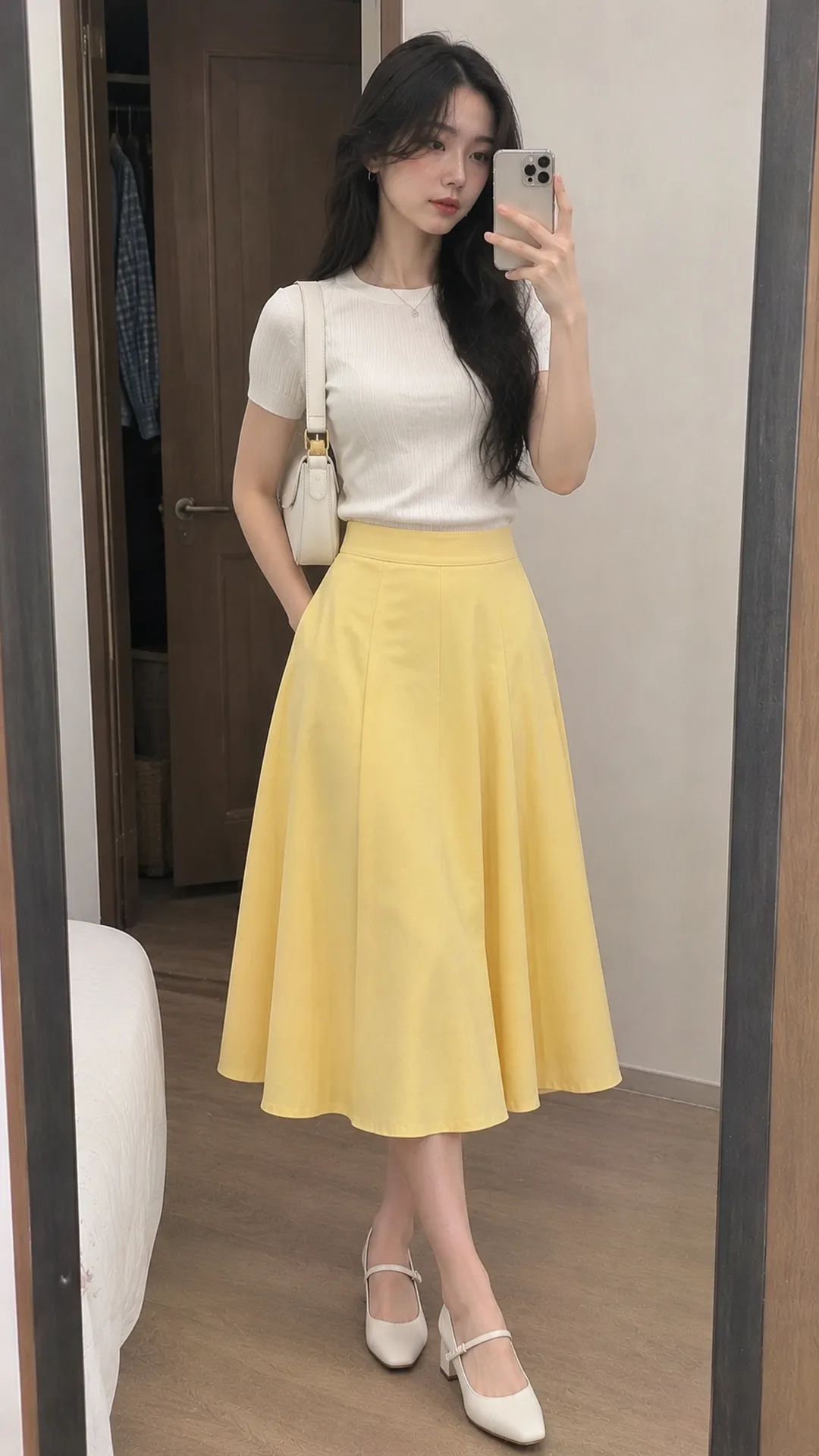
What Color Top Goes With a Yellow Skirt?
Style pale, bright, or mustard yellow skirts with six top colors. Choose by cut and fabric, then balance the shoes, bag, and outer layer.
Colors near your face and single-color outfits
For colors close to your face, test them in the conditions where you normally wear them and keep makeup and lighting reasonably consistent. One dim photograph is not a sound basis for restricting yourself to a single color family. The guide to trying colors on deeper skin focuses on contrast and preference instead of turning skin tone into a clothing limit. If you are not ready for a large area of a favorite color near your face, you can still use it in trousers, a bag or an outer layer. Notice how each placement changes the balance rather than assuming there is only one acceptable position.
An all-white or dark tonal outfit does not require every item to be exactly the same shade. In adding depth to all-white outfits, compare matte, textured and gently reflective surfaces. Small differences can make separate layers visible while keeping the outfit coherent. If bright hair or stronger makeup already introduces contrast, the guide to balancing hair with clothing helps you consider color beyond the garments as part of the same composition. You do not have to make every element equally noticeable.
Save combinations you have actually worn
After a useful try-on, record the specific pieces, the tuck, the shoes and where you wore the outfit. A note such as dusty-pink shirt with dark-blue jeans is easier to reuse than a general statement that pink goes with blue. If two related shades do not feel right, describe what bothered you: too little contrast, competing surfaces or a broken-up proportion. Next time you can adjust that one variable instead of beginning again or buying an entirely new set of clothes. Keep the note beside a photograph taken in ordinary light.
A light base, a dark base and a combination with one accent color make a manageable starting set. Each should work for at least one real part of your week, not just for a saved photograph. To expand, replace one item with a neighboring shade or move the accent to another position. The guides in the groups above support those specific choices. The aim is a comfortable outfit with proportions you enjoy, one that still works when you put the reference image away and use the clothes in daily life.
Color guides used in the examples
These focused guides bring the examples above into the same directory, so you can compare an individual shade or a tonal outfit before changing another part of the combination.
What Color Pants Go with a Black Top? Outfit Ideas for Women
Pair a black top with ivory, blue jeans, gray, beige, olive, burgundy, or pastels. Choose the contrast and shoes that suit your outfit.
The Color Wheel: Apply Color Relationships to Clothing
Use the color wheel for monochromatic, analogous, complementary and multi-color outfits, then adjust brightness, intensity, area and texture with real clothes.
What Colors Suit Tan Skin? Try Shades and Build Outfits
Compare clothing colors on tan skin in consistent light. Explore cream, navy, brown, gray and brighter shades, then build outfits around your preferences.
White on White: How to Give an All-White Outfit Depth
Build all-white outfits through undertones, fabric texture and clear proportions, with four practical formulas and accessories that finish the look.