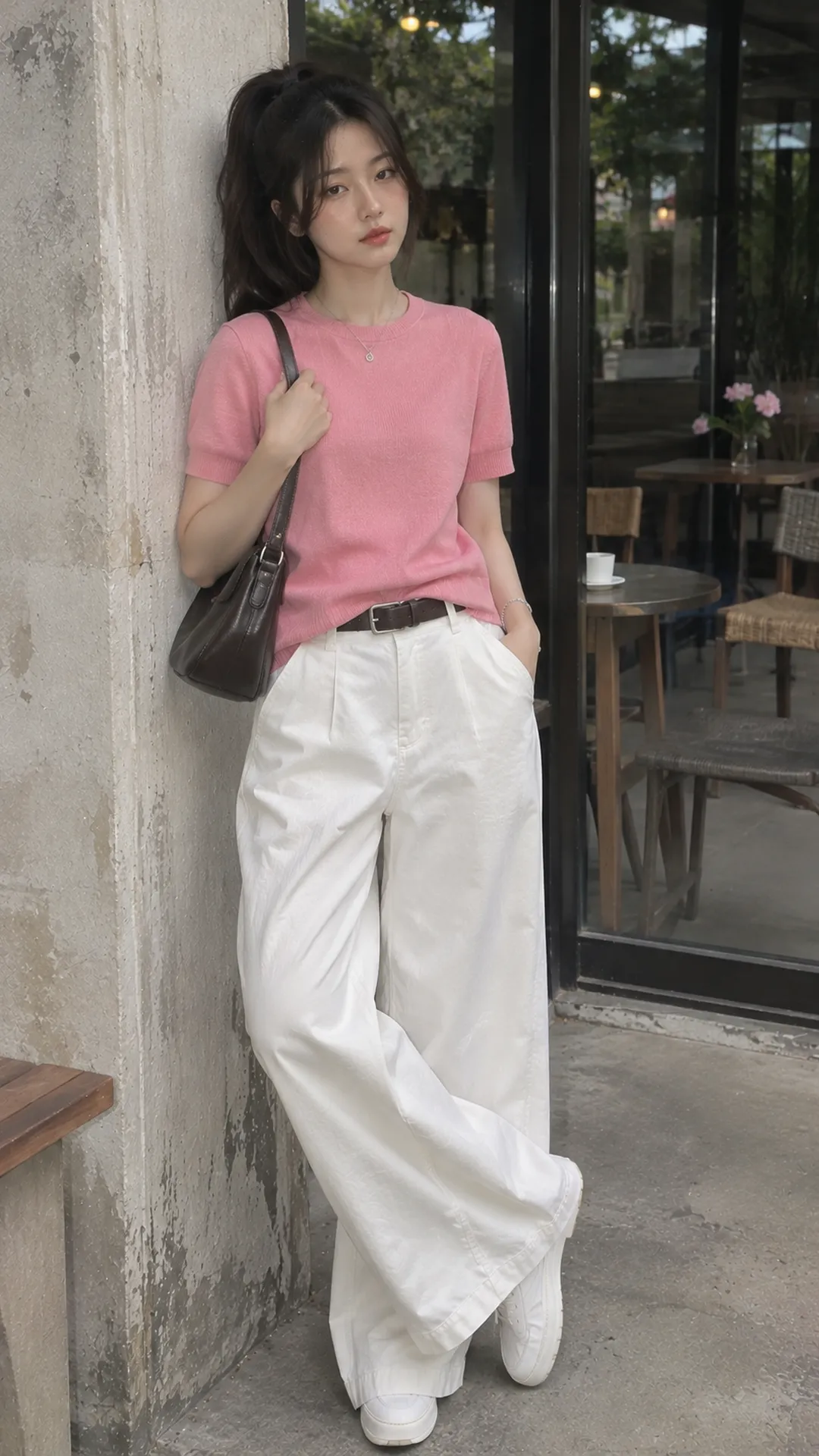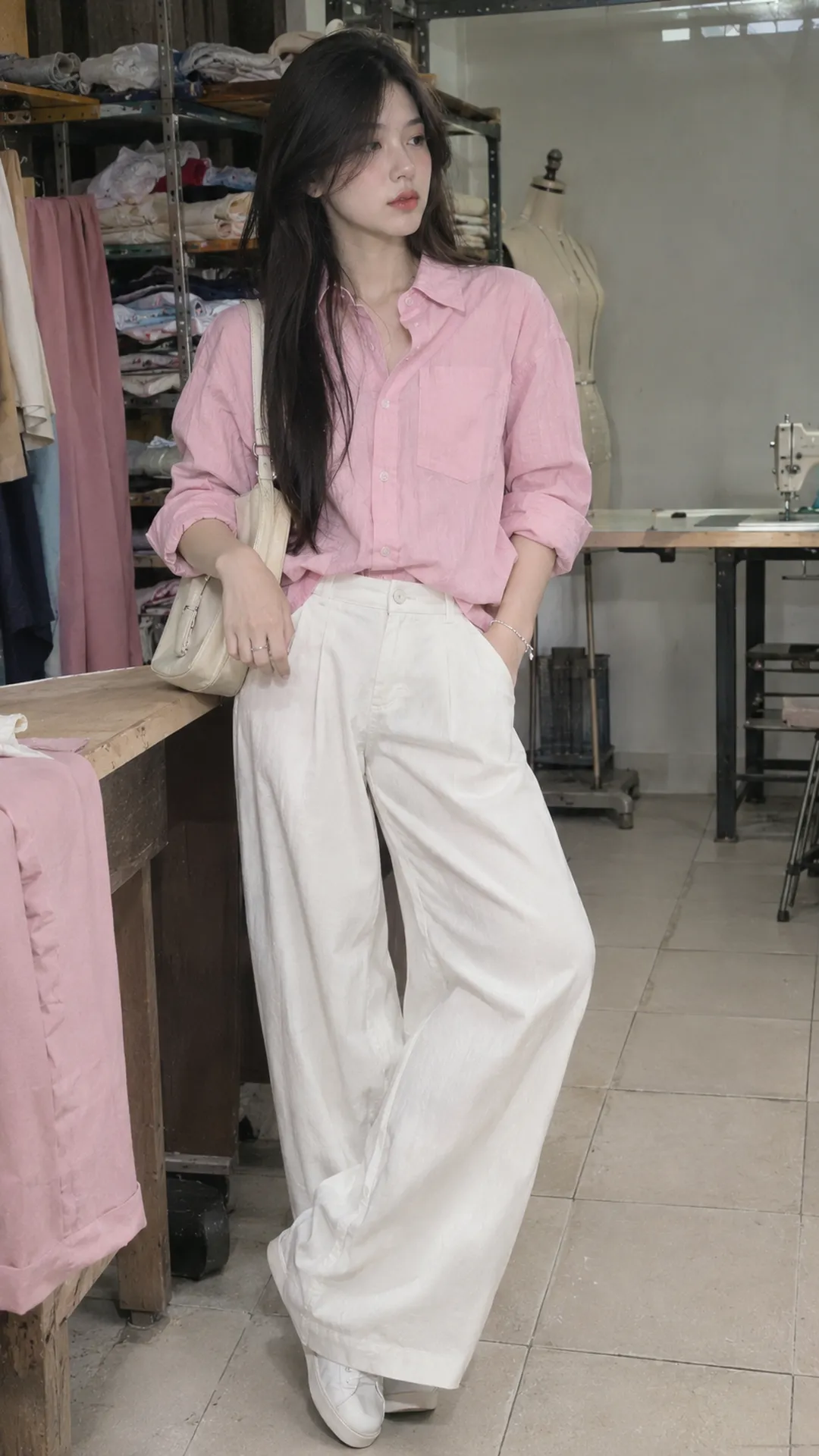
Compare shades of pink in the same light
Set the top beside the pants in indirect daylight or your usual dressing light. Pale peachy pink, gray-pink, and lilac pink can all be sold as blush, yet look different when worn. Use the color name as a guide and compare the actual pieces.
Check how light and how vivid the pink looks. A light, muted pink can feel soft, while saturated deep pink tends to draw the eye. If the top already stands out, start with simple pants and add contrast gradually.
Fabric affects how you see the color. A smooth pink shirt, matte tee, and shiny top can look different even in a similar shade. Compare the outfit from a few steps away as well as up close.
White or cream pants make a light outfit
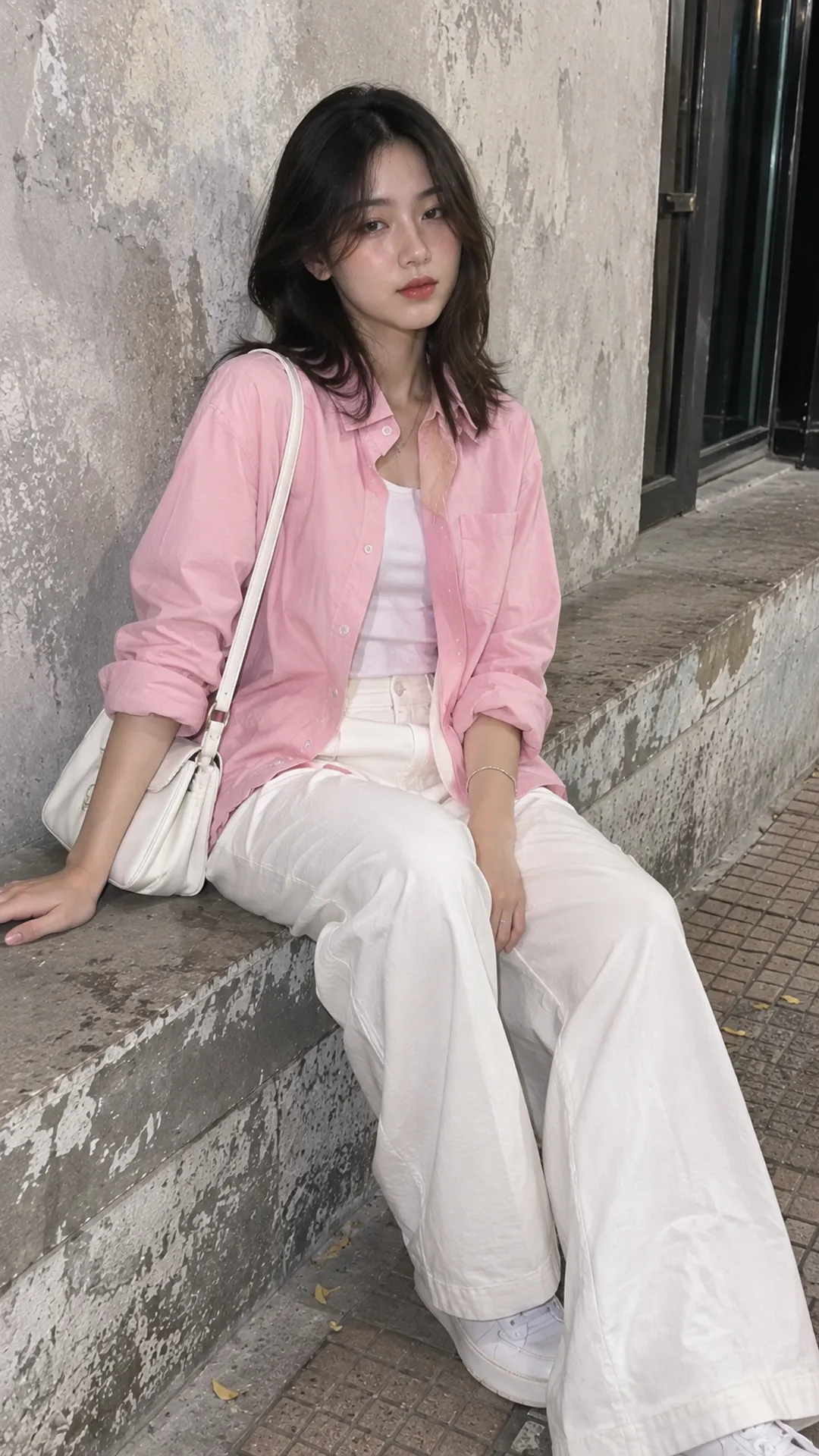
Blush and white make a light palette for coffee or a school day when uniforms aren’t required. If the top is loose, straight trousers and a visible waistband give the outfit some definition. With two very loose pieces, try streamlined shoes or a shorter top and compare the proportions.
Cream and ivory give a different contrast from cool white. Check the pants next to the top to see how yellow the cream looks. Keep that difference if you like it. The shade of white can change the effect.
White pants create two clear areas of color with a deep pink top and make the pink more prominent. White or neutral shoes keep the lower half simple. If the top stands out more than you want, try medium gray pants before adding accessories.
Check pale trousers for coverage in the light and positions you’ll be in. If the lining or pockets show more than you want, choose another cut or fabric. You can use a different pair of light trousers and keep the same palette.
Use gray to adjust the contrast
Light gray gives pale pink a soft transition. To keep the silhouette clear, try a top with a defined neckline or hem, trousers that hang neatly, and shoes with a recognizable shape. A bright accessory is optional.
Try medium gray if white feels too bright and black too sharp. A pink shirt, straight gray trousers, and simple shoes make a polished combination. Decide whether to tuck the shirt based on its length.
Charcoal makes the bottom half dark without the sharp break of deep black. Try it with mauve or dusty pink, then look at the colors indoors and in daylight. Shiny charcoal fabric will look different from matte fabric in a similar shade.
Black pants let the pink top stand out
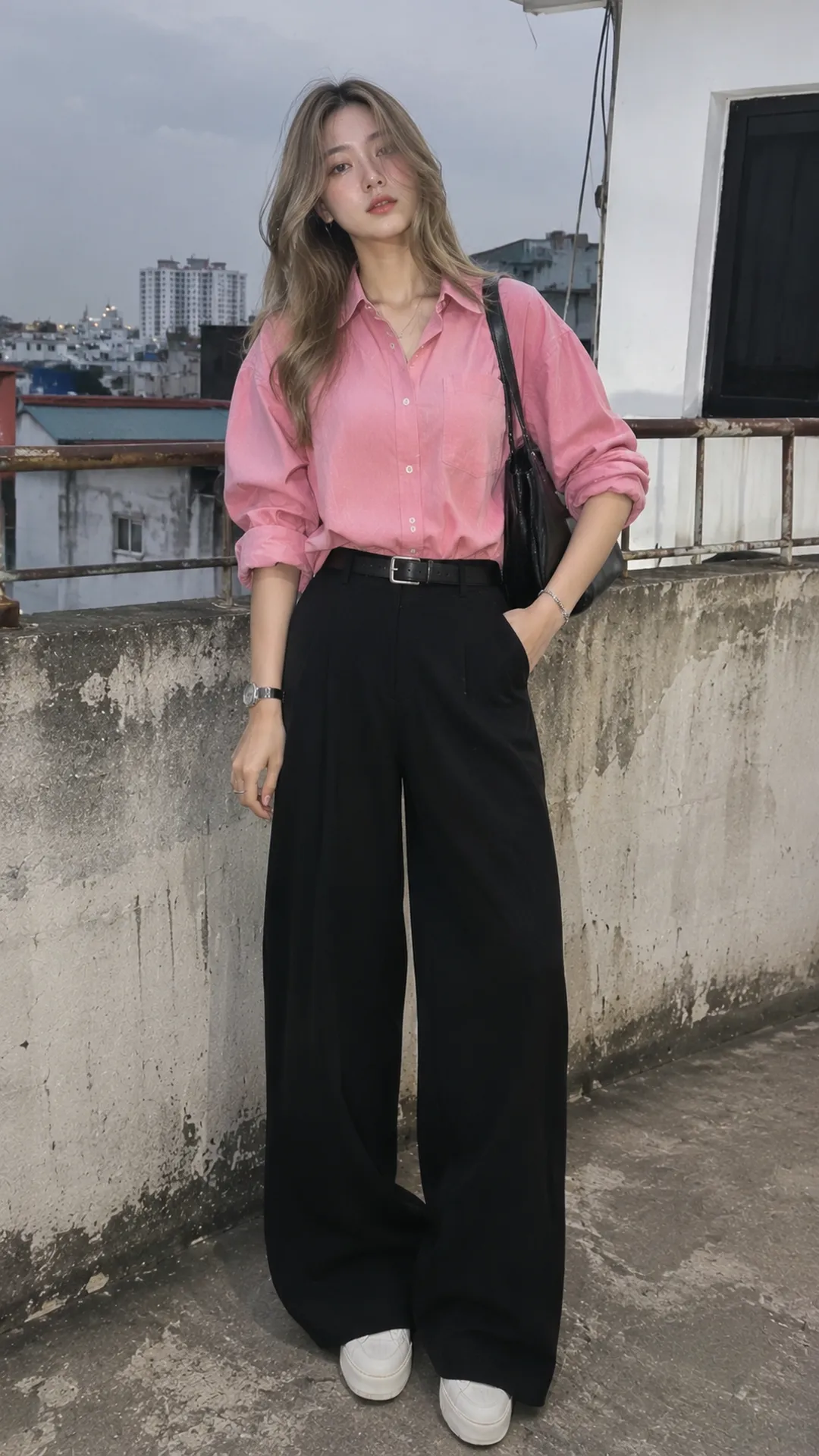
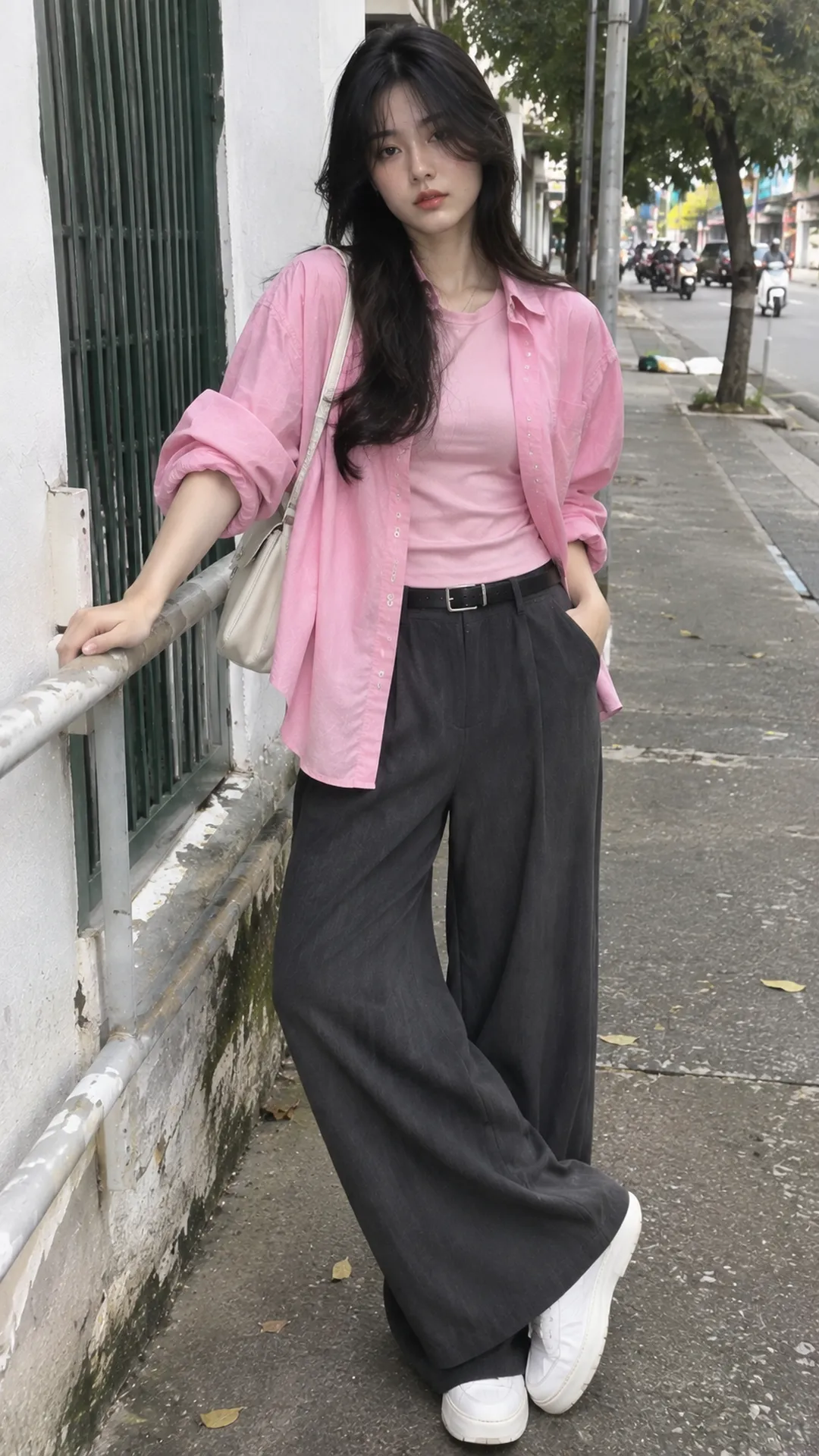
Pink and black make the proportions easy to see. A top that ends at the waistband creates a strong break at the waist. For a softer transition, try an open jacket or a longer top and check how much fabric sits at the hips.
Plain black pants keep the focus on a vivid pink top. A metal belt, a bag with hardware, and chunky shoes each create another focal point. Add them one at a time and see how much detail you want.
Black trousers give blush pink a stronger contrast. Try a fitted tee with wide pants or a loose shirt with straight trousers. Our guide to alt fashion for beginners helps you choose one focal piece and build the outfit around it.
Blue denim and navy give different effects
Light-wash jeans give a pale pink top a casual feel. If the top has ruffles, a bow, or a print, try denim with subtle fading. Use light shoes to keep the outfit airy or dark shoes to define the lower half.
Dark blue jeans create deeper contrast with dusty, blush, or vivid pink. Check the cut as well as the wash. Straight jeans and very wide jeans change the proportions of the same top. Our women’s trousers styling guide helps you compare the leg line and rise.
Navy trousers give you a fairly even area of blue, unlike faded denim. Try a pale pink shirt, straight navy trousers, and dark brown or black shoes for a setting that calls for a polished outfit. Check the dress expectations for that setting.
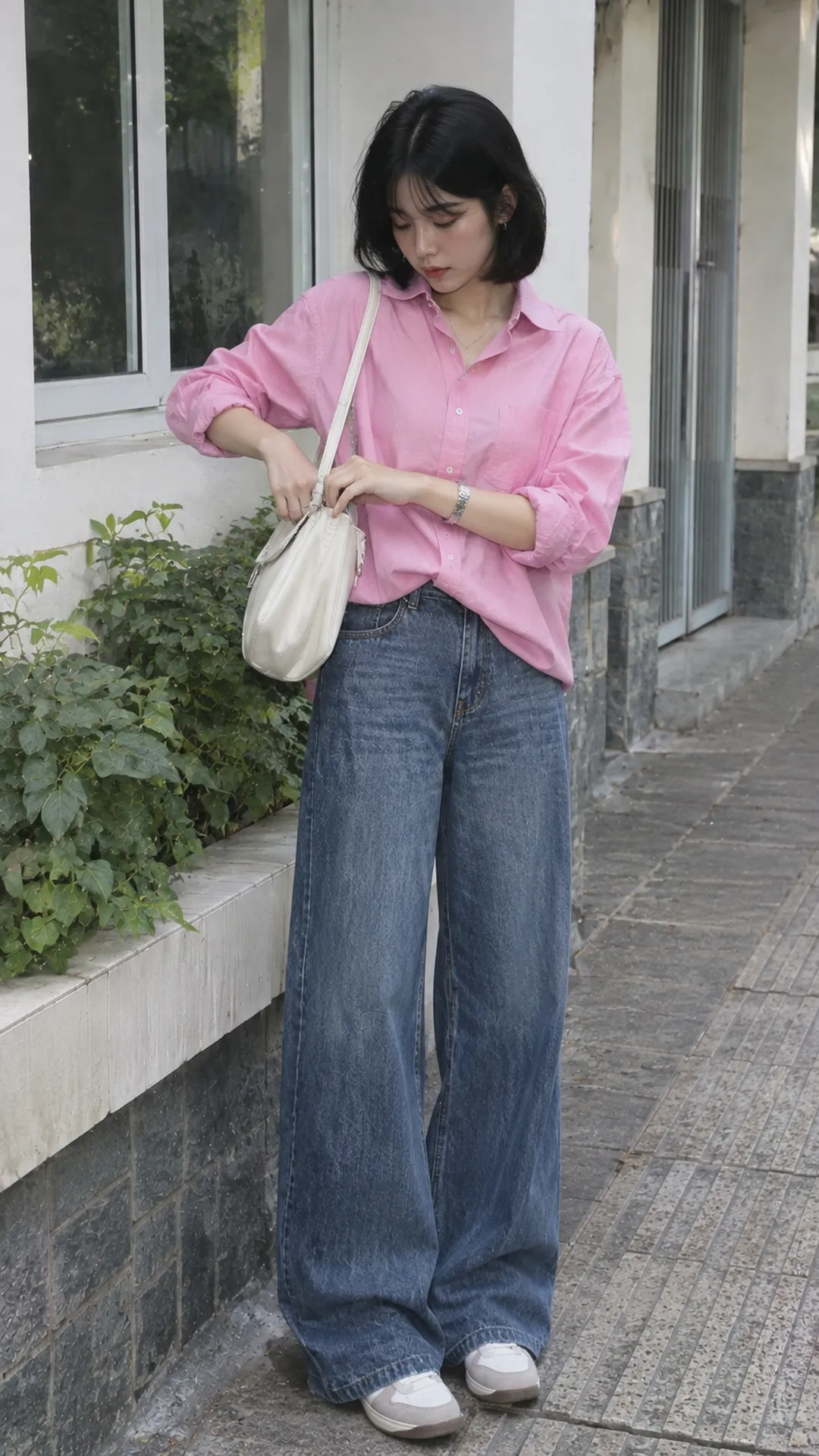
Choose enough contrast between pink and brown or beige
Dusty pink and brown can give a warm palette. If the shades are similar, they can blur the waistline. To define it, try darker trousers or a more fitted top. Keep the shades close if you prefer a continuous line.
With beige pants, compare a peachy pink and a grayish pink. Keep the same accessories and lighting for both photos so you can see which shade you prefer near your face.
Brown shoes and bags can differ in shade from brown pants. A deeper tone can give the outfit a clear endpoint. If you already have several warm shades, a simple neutral accessory can give them some space.
Start with one bold color pairing
Pink and green can give strong contrast. Start with one muted shade, such as a pale pink top and soft green pants, and keep the shoes and bag simple. If you prefer two vivid colors, wear them as a deliberate statement.
Pink with red or purple gives other effects, depending on the shades. Set the pieces next to each other, then try the full outfit. Test colors you own before buying trousers based on an edited photo.
Our guide to making a fashion moodboard you can use helps you pick out recurring colors and proportions. Save a few outfits with tops close to the one you own, then see whether you like the pants color, the cut, or both.
Style pink shirts and tees differently
A shirt has a collar, button front, and sleeves that give it more structure than a plain tee. Try a full tuck, partial tuck, or wear a long shirt open over another top. Gray, navy, or denim can all work. Sit down to check how much fabric gathers at the waist.
A fitted pink tee can balance wide-leg trousers. With a large print, choose pants that pick up the background or one print color. With an oversized tee, try a few hem positions before changing the pants color.
A shiny or textured pink top already draws attention. Try matte pants for contrast and simplify jewelry near a detailed neckline. Our guide to choosing alternative accessories for women helps you choose where to put another accent.
Three outfits to try for different occasions
School or coffee: a pale pink tee, straight blue jeans, familiar sneakers, and a compact bag. To make it more expressive, change the bag or shoes first. Check the lengths of both garments before adjusting the colors.
A flexible workplace: a blush shirt, straight gray or navy trousers, and comfortable shoes. Choose the coverage and fit for the setting. The collar, tuck, and trouser hem already give the outfit much of its shape.
An evening out: a vivid pink top, plain black pants, and a small metal detail. If the fabric is shiny, look at it in light similar to the venue. Our alternative going-out outfit guide can help you plan for the trip as well as the look.
Change one detail at a time
Keep the top on and try white, gray, then black pants if you have them. Once you choose the contrast you like, try another shoe or bag. Keeping most pieces the same shows which change made the difference.
If one pair feels off, check the top length, pants shade, and fabric finish. Changing one of those details may give you a combination that works with the pink top you already have.