

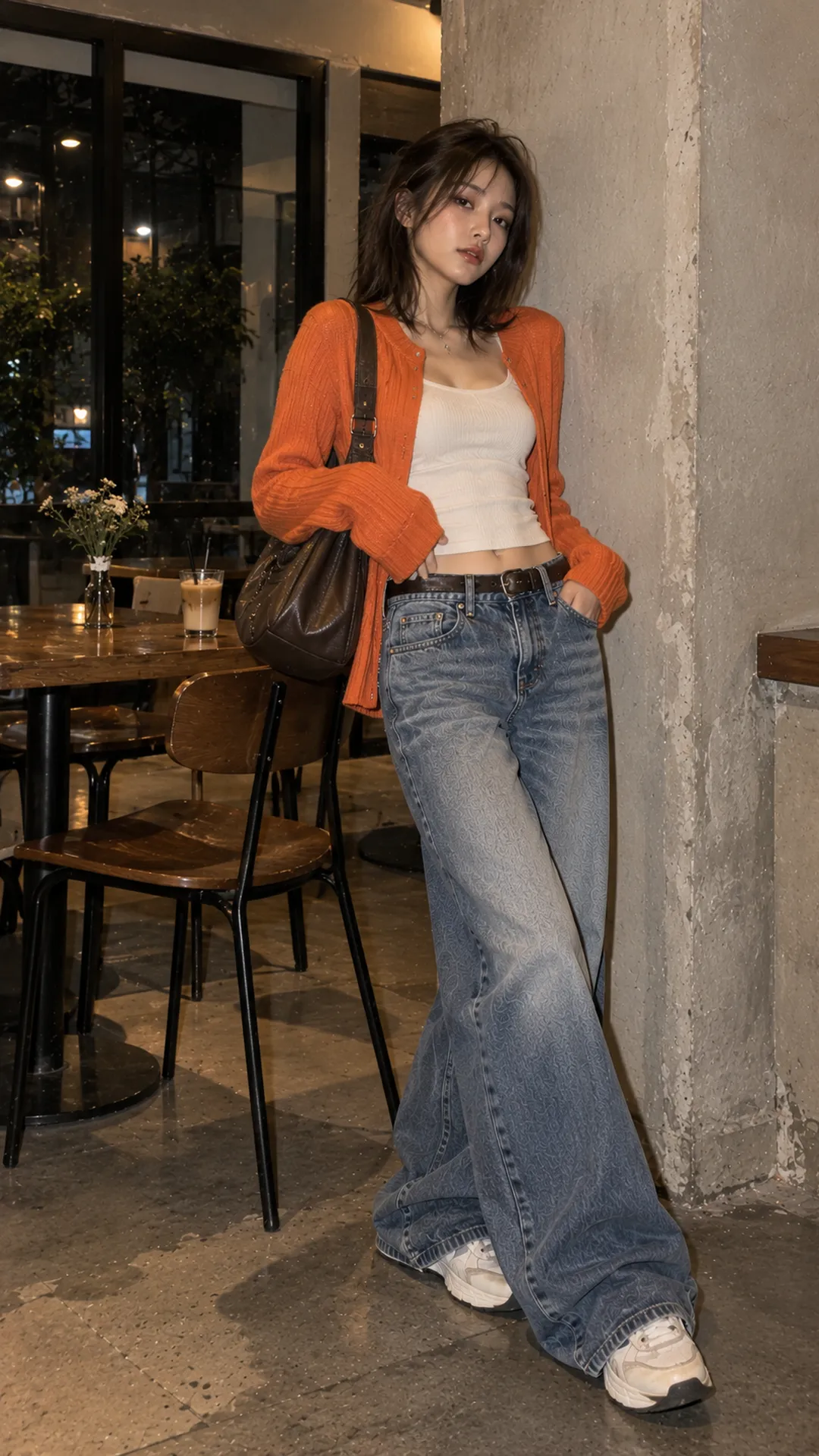
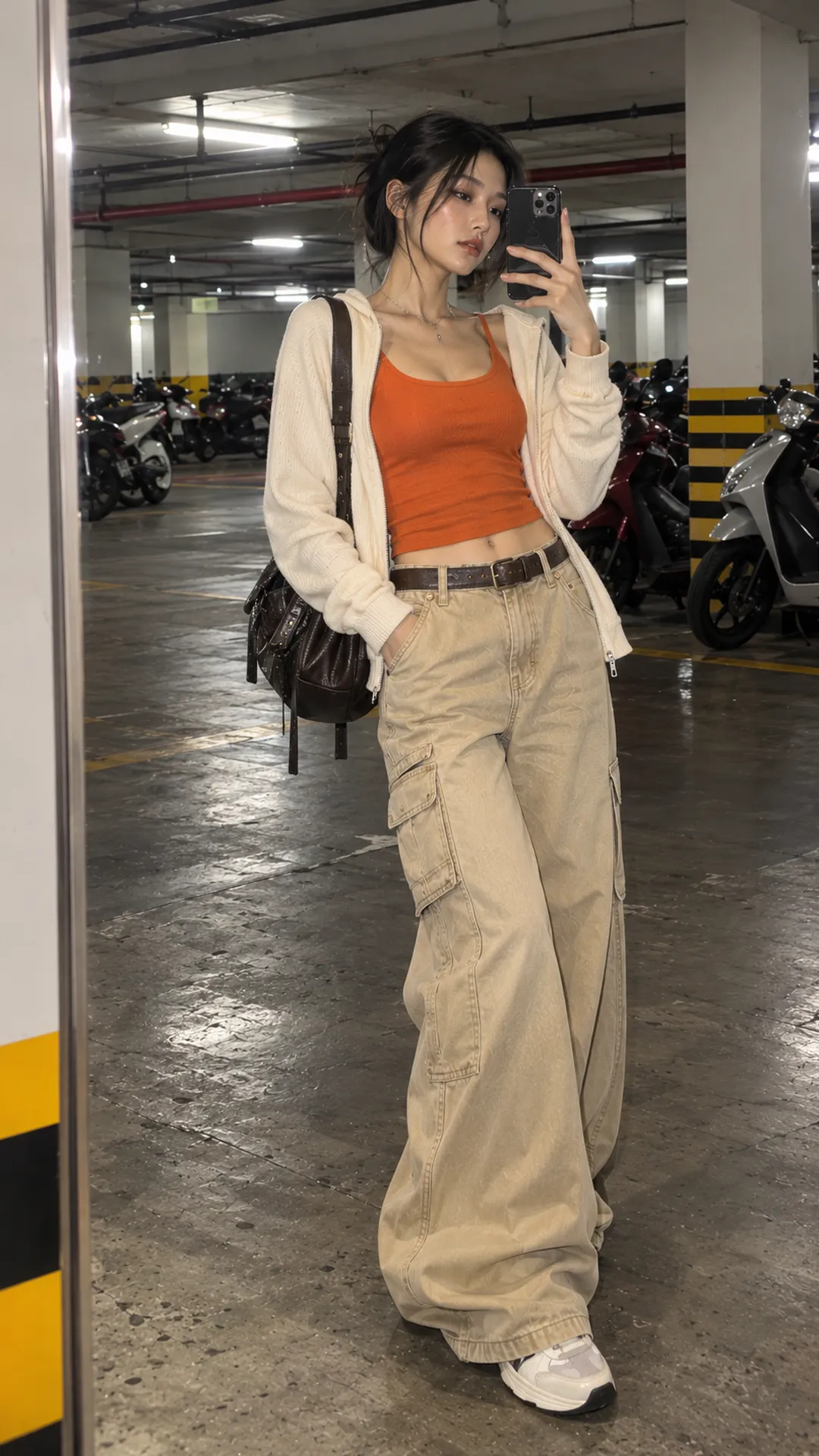
Distinguish three orange families
Peach or pale orange is easy to try with cream, soft white and light denim. For lightness, keep other pieces at relatively similar depths. For definition, add one dark item such as a brown bag or black shoes rather than necessarily introducing another vivid color.
Vivid orange already attracts attention, so even a small top can lead. With a large area in trousers or a skirt, simplify the top and accessories first. Several colors are possible, but identify where you want attention first.
Earthy or brick orange feels more subdued and works as a trial with chocolate, cream and deep blue. This helps when you like orange but own mostly neutrals. Shop names are only references: two earthy-orange items may differ considerably in red, yellow or gray content.
Orange with ivory, cream and beige
Orange and ivory: visible color without excessive intensity
A vivid-orange top and ivory trousers create clear roles: accent above, light base below. Try a light-brown bag or white sneakers for simplicity. With ruffles, drawstrings or puff sleeves, plain trousers avoid another layer of pattern.
A white top and orange skirt reverse the arrangement. Color then sits below, with length and flare determining its area. A neat or tucked top makes the transition visible with a long wide skirt. This adjusts garment proportions rather than forcing your body into one cut.
Orange with cream and beige: reduce the difference between areas
Earthy orange with cream feels softer than vivid orange with bright white. Try earthy orange, beige trousers and brown shoes, checking whether all three are too similar in depth. Deepen shoes or bag for an anchor if needed; black is unnecessary if the outfit already reads clearly.
With pale orange and light beige, varied surfaces separate layers. Ribbing with matte trousers reads more clearly than equally smooth, equally light pieces. Thick layers are unnecessary just for texture; seams, folds or a small accessory can provide it.
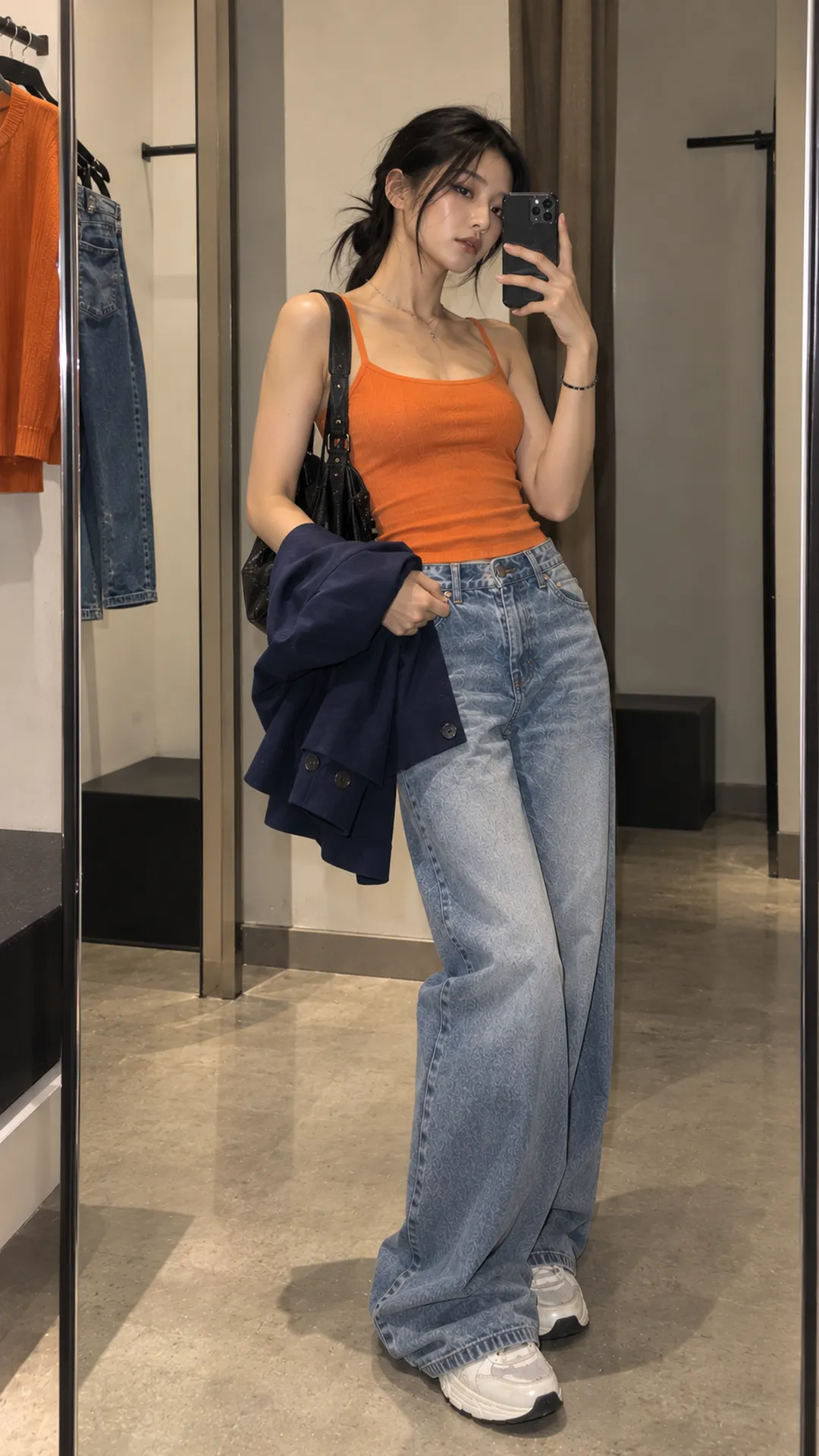
Orange with denim and navy: two contrast levels
Blue denim is practical because you can use existing jeans. Peach with medium blue feels light; vivid orange with dark jeans separates more clearly. With a strong wash, reduce top patterns so orange does not compete with many light-dark areas.
For a weekend, try an orange tee, straight jeans and cream sneakers. Tuck gently if needed to define the waist; a waistband-length top can stay untucked. See choosing women's trouser shapes to address width and length before changing the palette.
Navy keeps orange visible without an entirely bright outfit. Try earthy orange with navy trousers and a brown bag, or an open navy shirt over a small orange top. The latter concentrates orange centrally for a defined accent without a large area.
Check very deep navy and vivid orange under your intended light. Navy may look nearly black indoors, making contrast stronger than expected. Compare actual garments rather than screen swatches alone.
Orange with brown or black: choose softness or sharpness
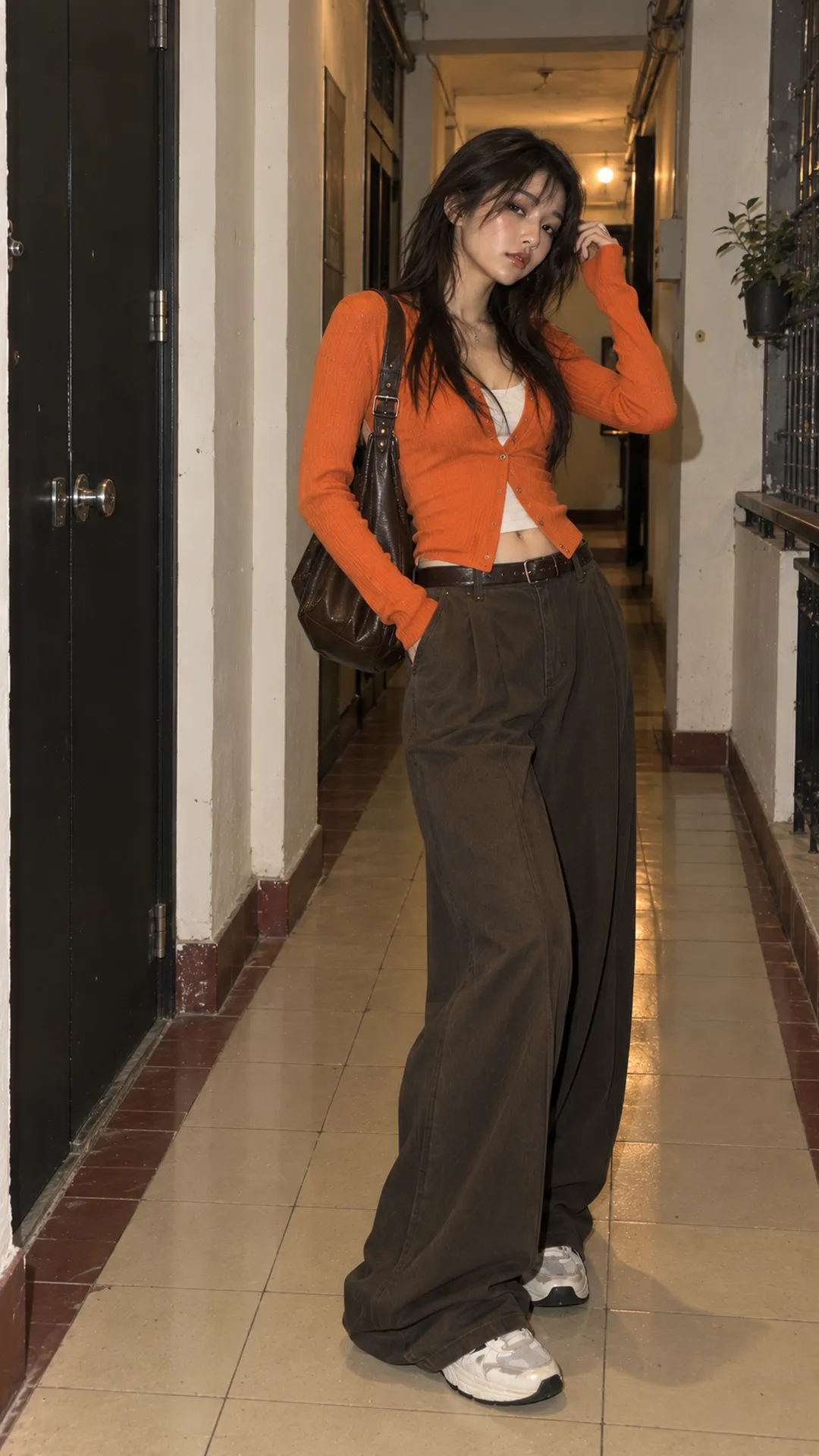
Earthy orange and chocolate share a warm impression. A brick-orange top, brown skirt and deep-brown shoes create several depths without many color families. Open neckline space or a cream bag can lighten a dense result; white is not compulsory.
Orange and black define stronger boundaries. If you dislike a holiday-costume association, keep orange in an inner top, bag or socks over black. Use everyday tees, straight trousers and sneakers rather than adding several themed decorations.
For an alt wardrobe, an earthy-orange top beneath an open black shirt can make a sufficient small change. A strong color does not require chains, patterns and many layers. The Alt Fashion styling guide for beginners helps retain one main piece and check whether the others support it.
How to start combining orange with pink or green
Peach pink and pale orange can create related colors, but retain visible separation. With similar lightness, try a structured shirt and soft skirt. Cream shoes finish more gently than a third vivid color.
Vivid orange and deep pink intentionally attract attention. Begin with a colored top and small bag rather than equal areas of orange top and pink trousers. Increase the supporting color as you become comfortable. Gradual trials reveal preferences without a full new outfit.
With green, start with olive or a deep shade if your wardrobe has little color. Earthy orange, olive trousers and brown shoes are one example. Bright orange and bright green benefit from simple shapes and neutral accessories because intensity already provides emphasis.
No percentage ratio is mandatory. One large and one small area is a starting point to adjust in the mirror. A small bag in front of the body may stand out strongly because position and contrast also matter.
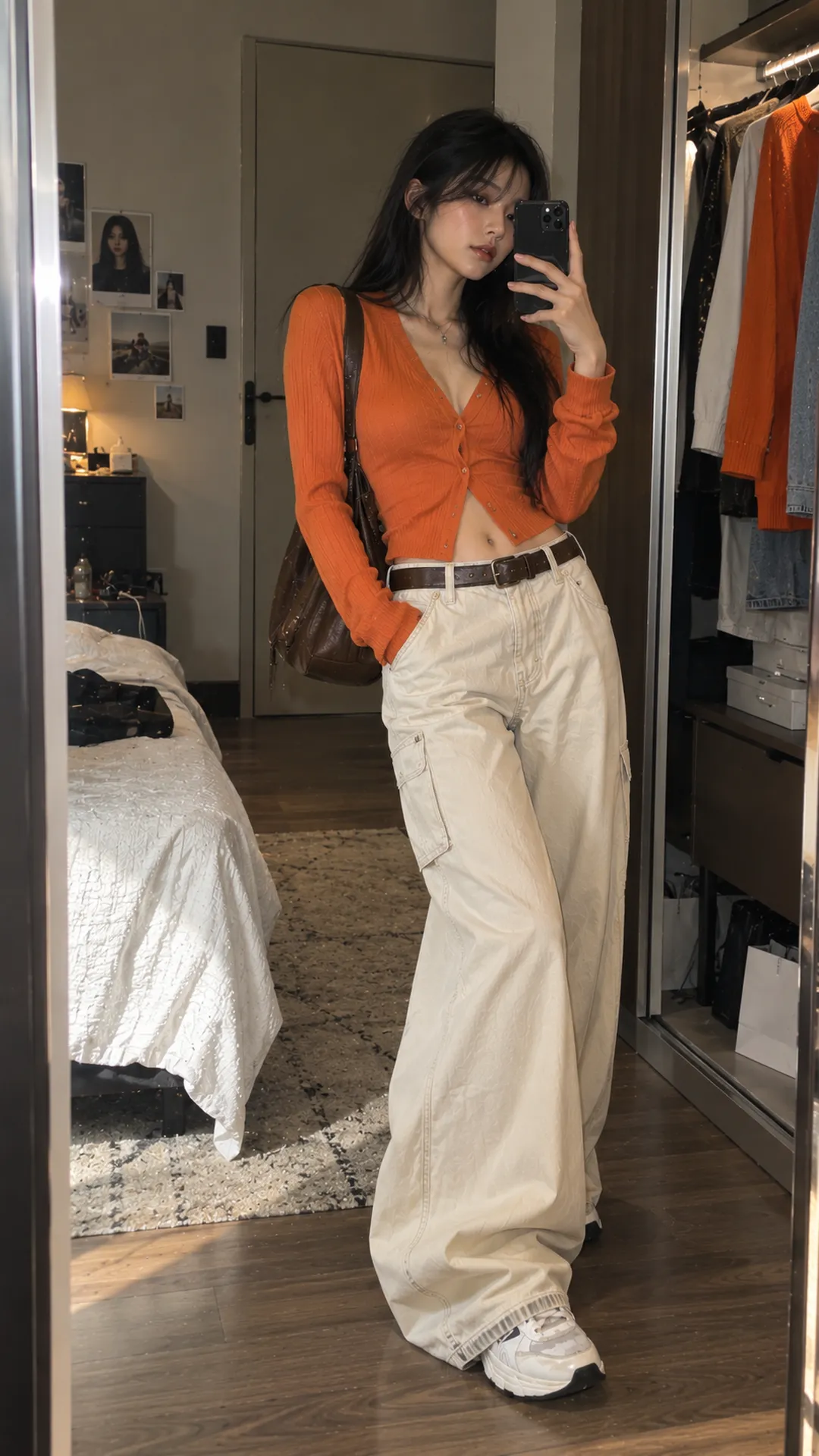
Three outfits for everyday plans
School or work without a special dress requirement
Try a pale-orange shirt, straight navy trousers and brown loafers. Neat collar, sleeves and waistband structure the palette. Adapt cut and coverage to the destination's rules; color alone cannot determine suitability.
Weekend coffee and walking
An orange tee, medium-blue jeans, cream sneakers and plain canvas bag give a useful base. For long outdoor movement, prioritize ventilation and comfort; orange does not itself make fabric weather-appropriate. Sit, stride and carry the bag before deciding.
An evening with moderate color emphasis
Use earthy orange, black trousers and a small dark bag. With a light-catching top, keep other surfaces matte. Small earrings can replace a large necklace when the neckline already has details. The guide to choosing expressive women's accessories balances bag, footwear and jewelry weight.
Adjust orange outfits that miss your aim
Too intense: reduce orange area or mute another piece with a deep neutral. Do not assume orange is impossible for you; top, bag and shoes may all be bright. Keep the orange top and change two supporting items to identify the source.
Too pale: add light-dark contrast through shoes, belt or a thin jacket. Peach and light beige may lack boundaries without requiring a more vivid color. A small brown bag may make the composition readable.
Compatible colors but a busy outfit: review patterns, width and length. A detailed top, strong denim wash and large bag hardware create several centers. Remove one detail group while preserving colors to distinguish color from structure issues.
Choose a reusable orange palette
Place your orange item beside three regularly worn pieces and record the two easiest outfits. If it works only with something unbought, there is no need to buy immediately. Try accessories or another existing top cut. Build options that genuinely fit your routine.
Save references with an orange close to your actual item and similar wearing conditions. Creating a fashion moodboard separates color, shape and surface instead of copying everything. A useful palette can be reworn with a few substitutions while retaining your preferred emphasis.