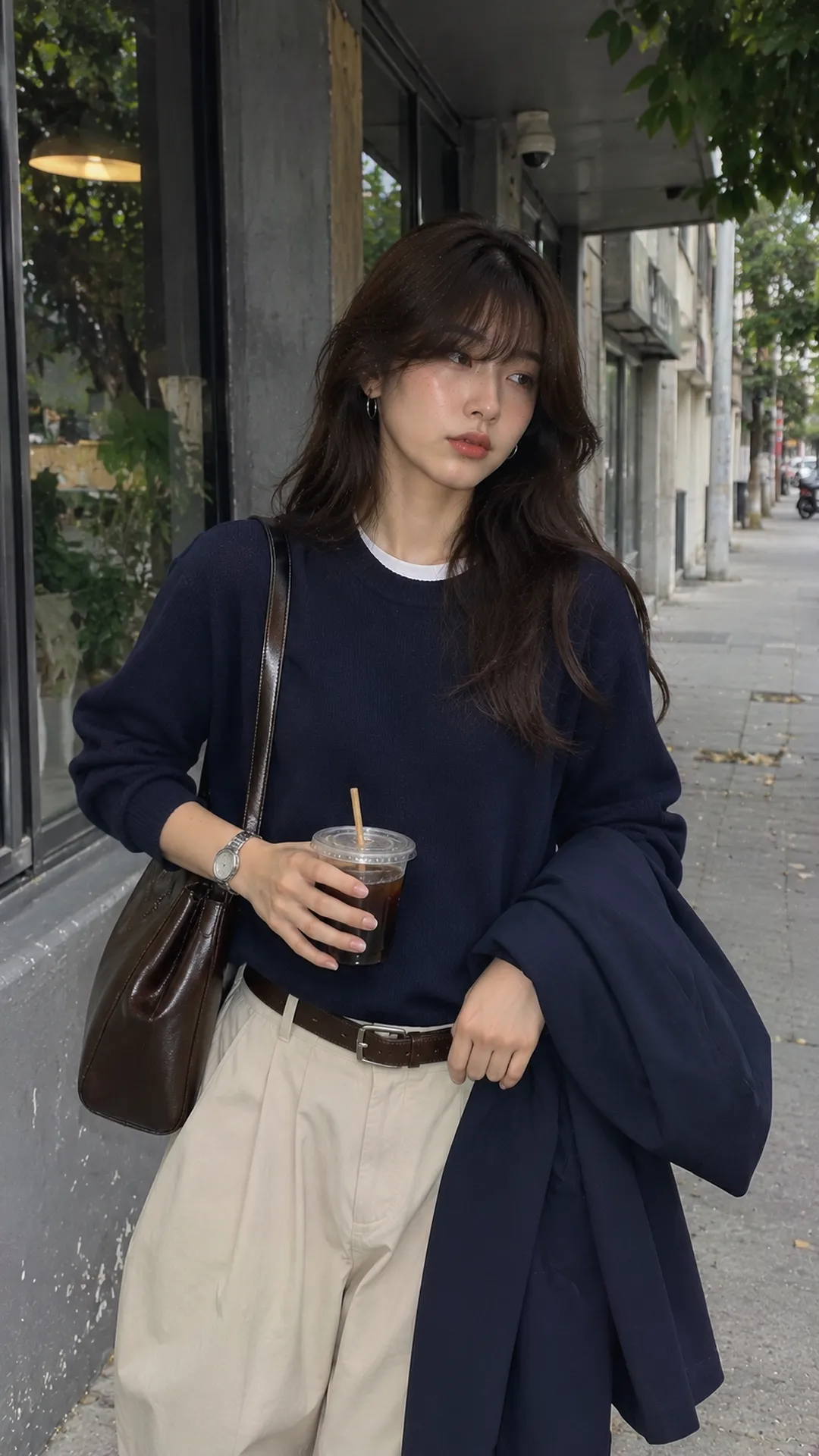
What does navy blue mean in clothing labels?
Merriam-Webster defines navy blue as a very dark blue. Navy and navy-blue clothing labels therefore generally indicate a dark-blue variation, not a color family entirely separate from blue.
Navy labels cannot guarantee identical products. One may look nearly black, another clearly blue. Fiber, surface, photography light and editing complicate screen comparisons.
Light navy and dark navy often distinguish relative versions within one seller's range, not standardized levels across shops. For matching separates, photos together are more useful than independent color names.
Navy does not determine style. Pleated tailored trousers, a tee and a glossy dress differ despite sharing it. Read cut and fabric instead of assuming navy is always formal or only for work.
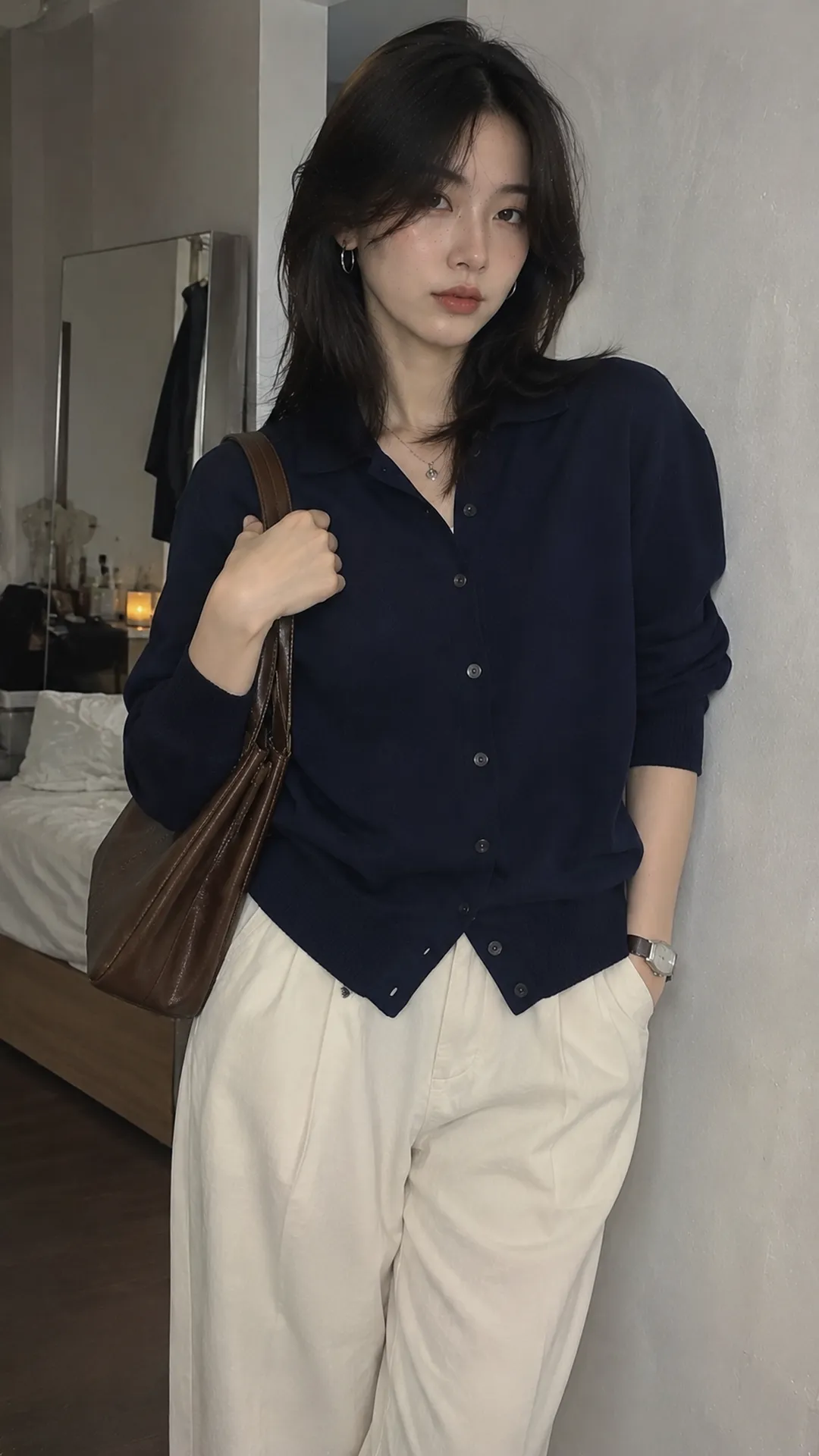
Distinguish navy from black, cobalt and denim
| Common color or label | Comparison clue | Clothing selection note |
|---|---|---|
| Navy | Very deep blue, sometimes near-black | Use clear light to reveal the blue |
| Black | Lacks navy's dominant blue hue | Compare beside navy rather than separate photos |
| Cobalt | Generally lighter and more vivid | Creates a more prominent color role |
| Denim blue | Often varies through wash, surface or yarn colors | A fabric-linked description, not one shade |
| Dark blue | A broad label covering many deep blues | Not every deep blue is consistently called navy |
Compare navy and black together on a light background, avoiding glossy highlights. Alone in a dark room, trousers may look black; the difference may emerge only beside black clothing in brighter light.
For denim, do not let faded areas represent the entire garment. Consider deep and washed portions, which create more levels than solid navy cloth. This can separate similar-colored pieces usefully.
Three color checks before buying
Compare directly with black and white
Use a familiar black item and white reference. Inspect flat fabric, then folds. The brightest patch on gloss does not represent the garment's full wearing impression.
Check outdoor and indoor light
Where possible, try two conditions you regularly use. Navy can be clearly blue by day and near-black under weak lamps. Neither is incorrect; establish whether the actual setting gives your desired image.
Request a shared photo for matching tops and trousers
Separate photos may have different lighting, so screen comparison cannot establish a set. View both together or choose coordinated separates sold together, then still inspect on arrival.
For slight mismatches, a light intermediate layer or clearly different textures can make separation intentional. If exact matching is the goal, address selection rather than relying on accessories afterward.
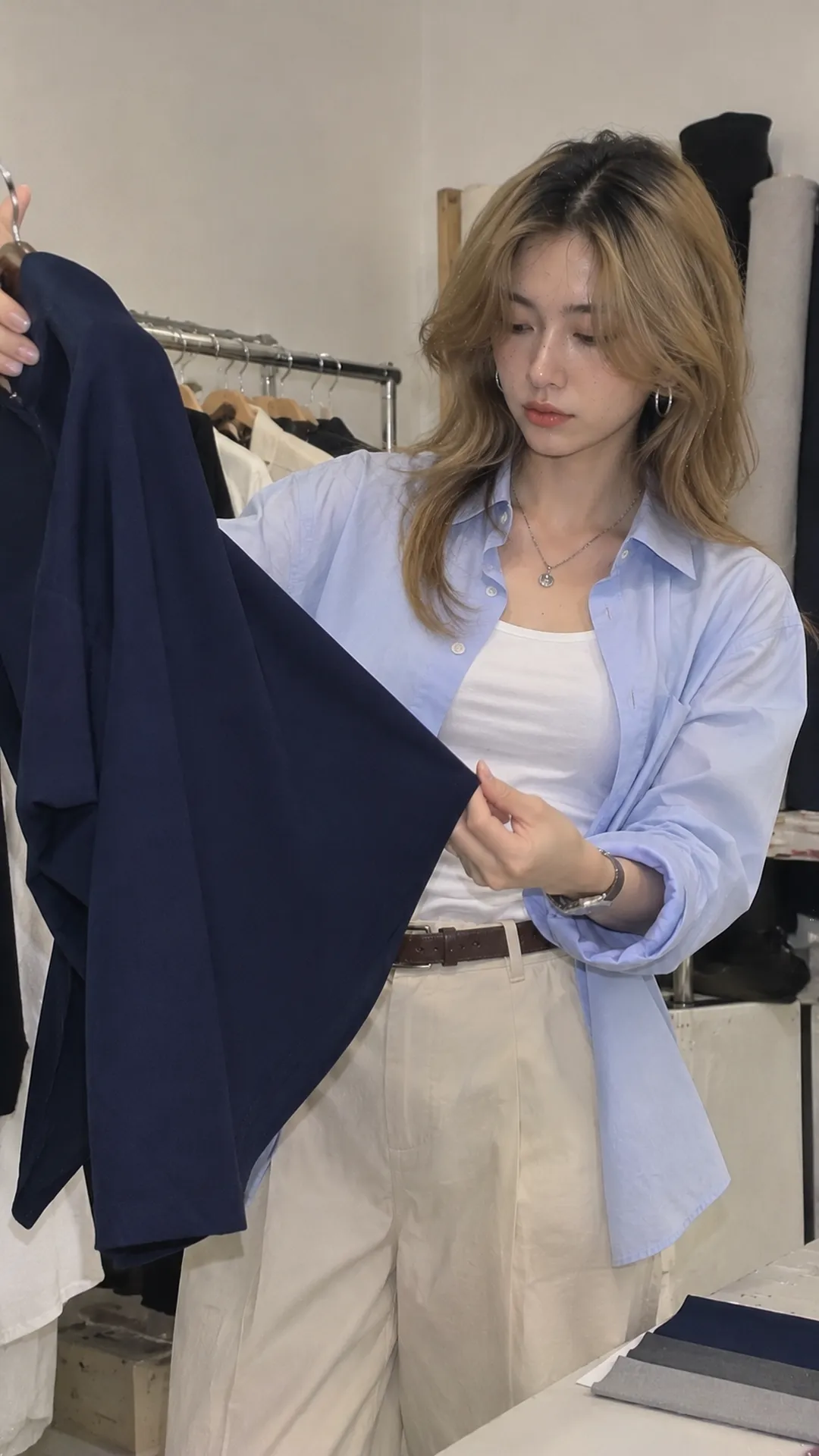
Choose navy's role in your wardrobe
Replace one black base piece: navy trousers or outerwear can join existing light tops. Test three frequent tops for wardrobe usefulness. Your entire black collection need not change.
Build a subdued limited palette: use navy across much of the outfit and separate through drape, seams and accessories. This keeps low contrast while revealing structure.
Anchor light clothing: a navy jacket or bag can define cream, white or pale-blue outfits. If your wardrobe is mainly light, accessories trial the color without changing your dressing habits.
Before another purchase, use a moodboard based on color, fit and surface to record that role. Attractive navy photos without equivalents in your actual wardrobe are harder to turn into outfits.
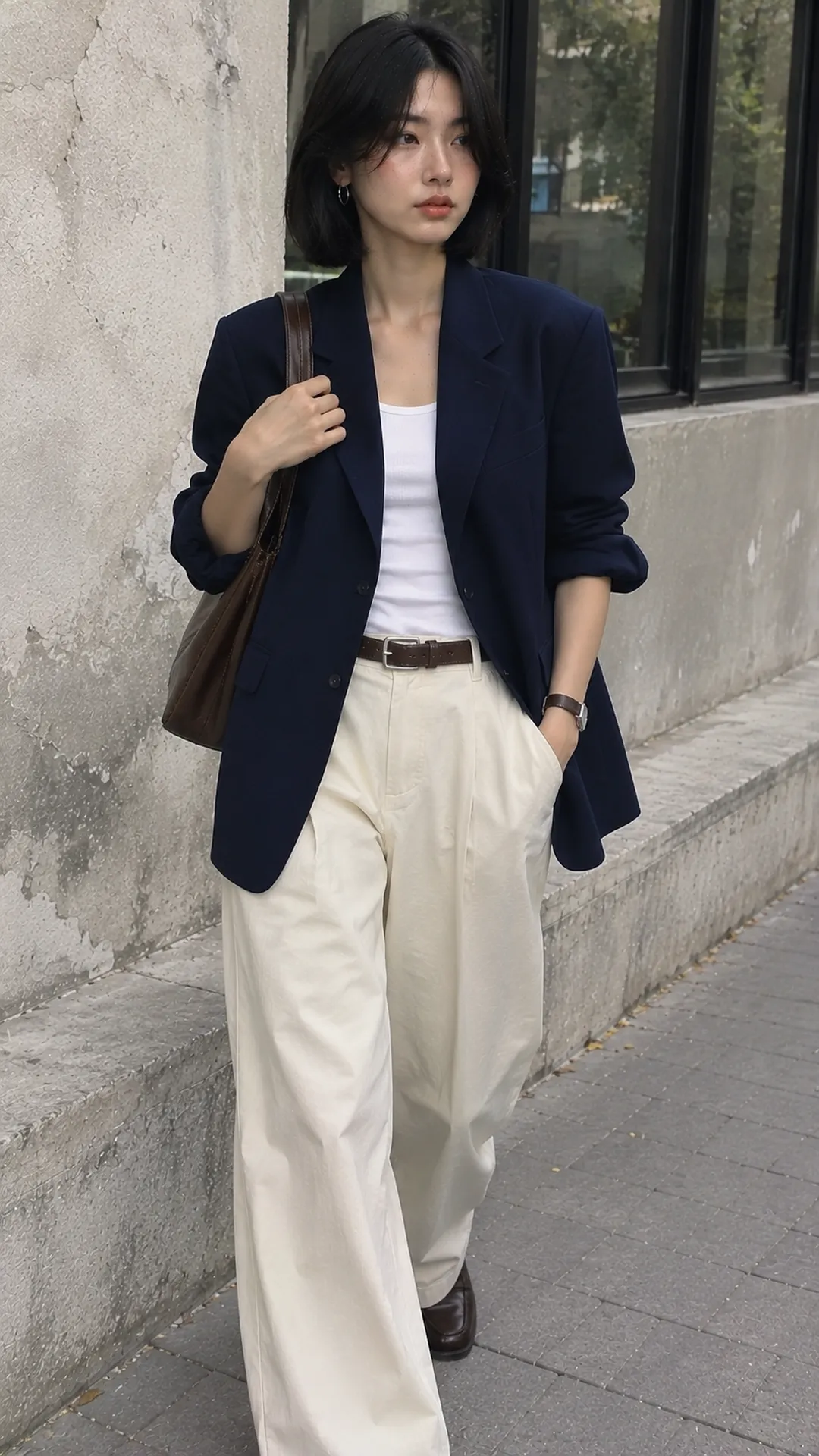
Navy tops: choose bottoms and neckline treatment
Navy above white or cream defines the waistband through light-dark contrast. For a continuous leg line, try a tuck or near-waistband top. With a loose top, pleated trousers and visible shoe toes retain lower structure.
Gray trousers create a more subdued result. Light gray separates clearly; charcoal reduces contrast. With two dark, similar surfaces, a moderately open neck or small light accessory can clarify the face area.
Navy can also join blue denim with intentional differences. A plain deep top and light wash distinguish more easily than near-matches. For close colors, vary cut or surface so the result does not depend only on hue.
With a cardigan or shirt, inspect each neckline and hem edge. Women's layering by each layer's role adds actual function instead of another top solely for compatible colors.

Navy trousers and skirts: place light colors deliberately
Straight navy trousers and pale sky blue connect within blue through lightness difference. White gives clearer contrast; cream softens. Choose the image you want rather than one universal formula.
A navy skirt and pale pink add gentle color. Keep a pleated skirt's waistband visible; a straight skirt can accommodate a slightly looser top. Pale color cannot repair proportions if the top hides the main design.
Burgundy or deep brown keeps the outfit subdued and needs material separation. Start with simple shoes or bag. If top and skirt already have seams or folds, fewer accessories reveal them.
For expressive navy-trouser outfits, retain familiar cuts and change one accent in shoes, belt or bag. Alt Fashion for beginners builds from base items; navy can participate without all-black clothing.
Can navy work with black?
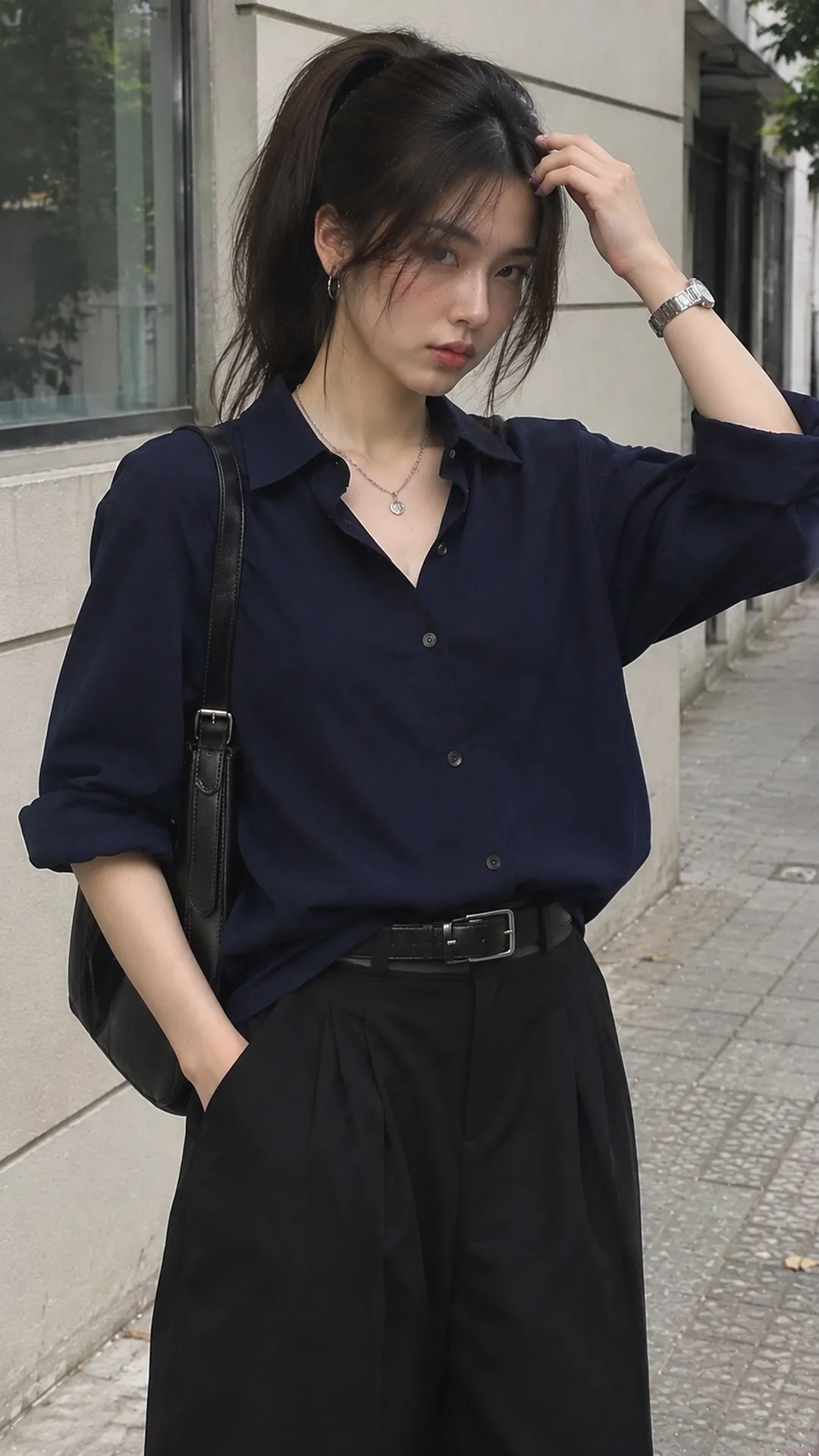
Yes. They create a subdued outfit with subtle difference. Decide whether separation or near-continuity is wanted. For separation, try a navy knit with smooth black trousers or a plain navy top with washed black denim.
For continuous darkness, keep accessories small and inspect shoulder, neck and waist lines. Clear design does not need forced light color to satisfy a rule. Suitable shoe shape finishes without changing the palette.
A common surprise is assuming both garments are black and discovering navy outdoors. Check beforehand for occasions requiring uniformity. Deliberately chosen navy-black contrast can instead add interest.
Accessories and long-term outfit use
Silver, gold-toned or brown accessories work according to surfaces and design. Let one detail lead and others support. Zoning in the expressive women's accessories guide avoids concentrating highlights around face and neck.
Do not choose washing by navy color alone. Read each composition and care label, particularly across knits, denim and lined garments. Shared color can require entirely different processes.
Photograph two or three reliable everyday navy outfits. Note tops, shoes and when outerwear is needed. This clarifies whether a new item adds combinations or repeats an existing role. Correct shade and purpose often matter more than many near-identical navy variations.