

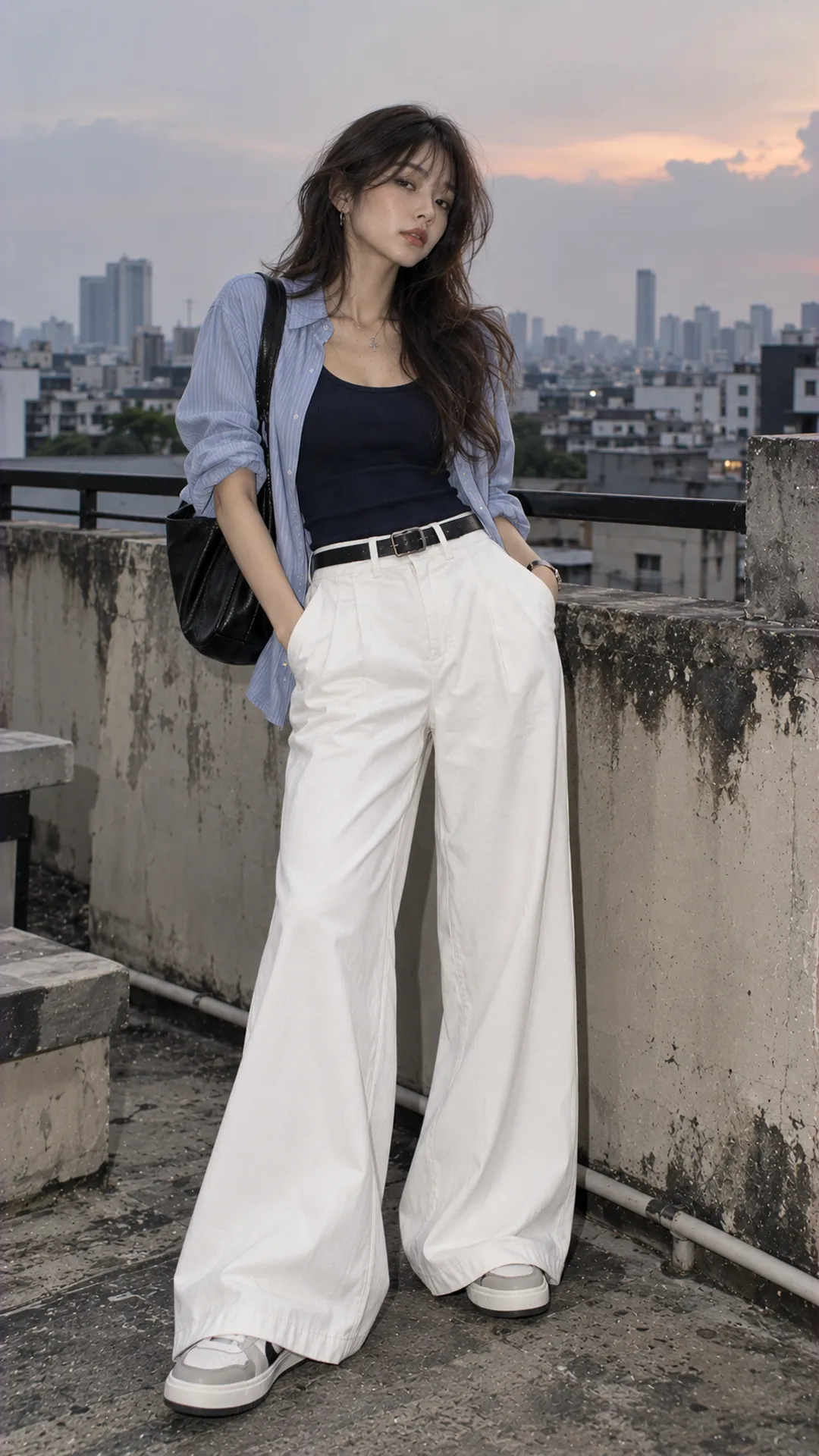
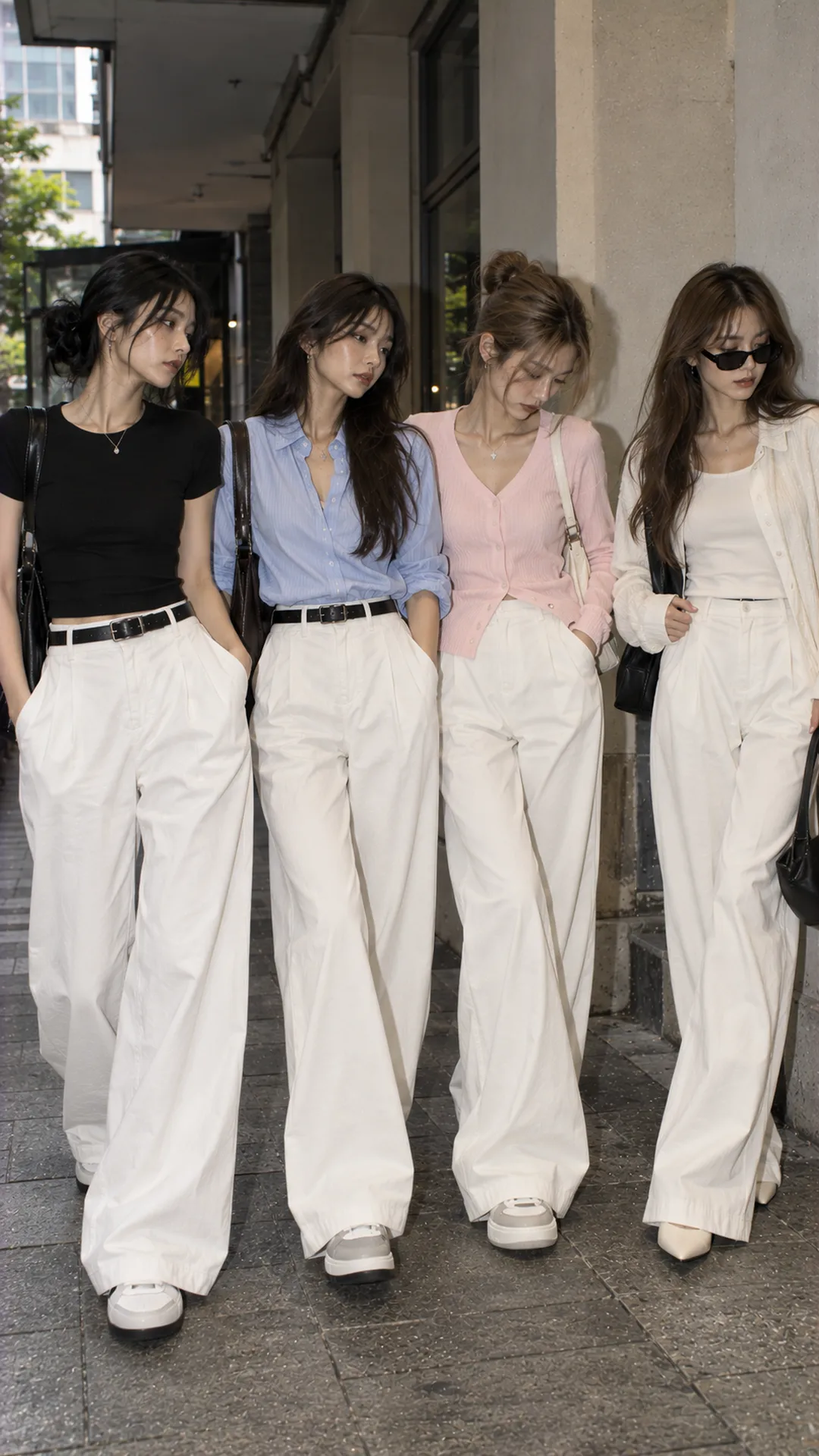
Choose clear contrast, light color or near-white first
For distinct upper and lower halves, start with black, navy or deep brown. For brightness, try pale blue, blush or light gray. For near-tonal styling, compare white or ivory surfaces.
Rigid rules about how colors supposedly make people look are unnecessary. You may want the top to lead, the trousers to stand out or an uninterrupted light outfit. These aims produce different choices with the same pair.
Inspect the white itself. Bright white, ivory and grayish white differ beside tops. A reference with ivory may translate differently to your bright white. Test the formula, with actual clothes the final basis.
Black, navy and deep brown for defined boundaries
Black: simple, but proportions matter
A neat black top and straight white trousers create readable roles. Black shoes repeat the top as an endpoint; pale shoes keep the lower half light. With long wide legs, try a waistband-length top to reveal rather than cover trouser construction.
A loose black top can partly tuck or remain out if you like. Check the side for fabric bunching. Tucking is not always better; the aim is a transition compatible with actual thickness.
Navy: another dark option to rotate
A navy shirt, white trousers and brown shoes give a neat school or work formula where permitted. With stripes, inspect scale and contrast before a patterned bag. Plain navy generally leaves more footwear and bag options.
Deep brown: a warm, subdued area
Chocolate with ivory differs from black with bright white. Brown bag or shoes can repeat the top without chasing exact screen matches. Clear accessory shade differences may look more intentional than slight mismatches.
Pale blue, blush and gray for light outfits
Pale blue and white create a usable bright palette. Shirt plackets and collars add structure; with a tee, a structured bag can supply lines. Choose shoes for activity without requiring heels.
Pale pink and white offer gentle contrast. For less softness, add one small dark piece or a sharper top cut before replacing the palette. Neckline, sleeves and drape may cause the effect rather than pink itself.
Light gray can approach white in lightness. Separate through texture, such as ribbing with plain trousers. Charcoal contrasts more strongly; compare both while retaining trousers and shoes to isolate the difference.
Red, vivid blue or prominent patterns
White trousers clearly support vivid tops. If red leads, begin with neutral bag and shoes. Red need not repeat everywhere; one small detail can connect if desired.
With vivid blue, consider volume and surface. A loose strong-colored top and wide legs create substantial prominence, valid if intentional. To reduce intensity, choose a neater top or expose blue beneath a neutral outer layer.
Read a patterned top's background first. Pale backgrounds with small motifs differ from dark backgrounds with broad prints. Repeat one existing shade in shoes or bag without reproducing every color. Let white trousers provide breathing room.
Save references with trouser shapes close to yours. Creating a fashion moodboard separates top color from lighting, posing and accessories, avoiding confusion between enjoying a photo and liking the color formula.
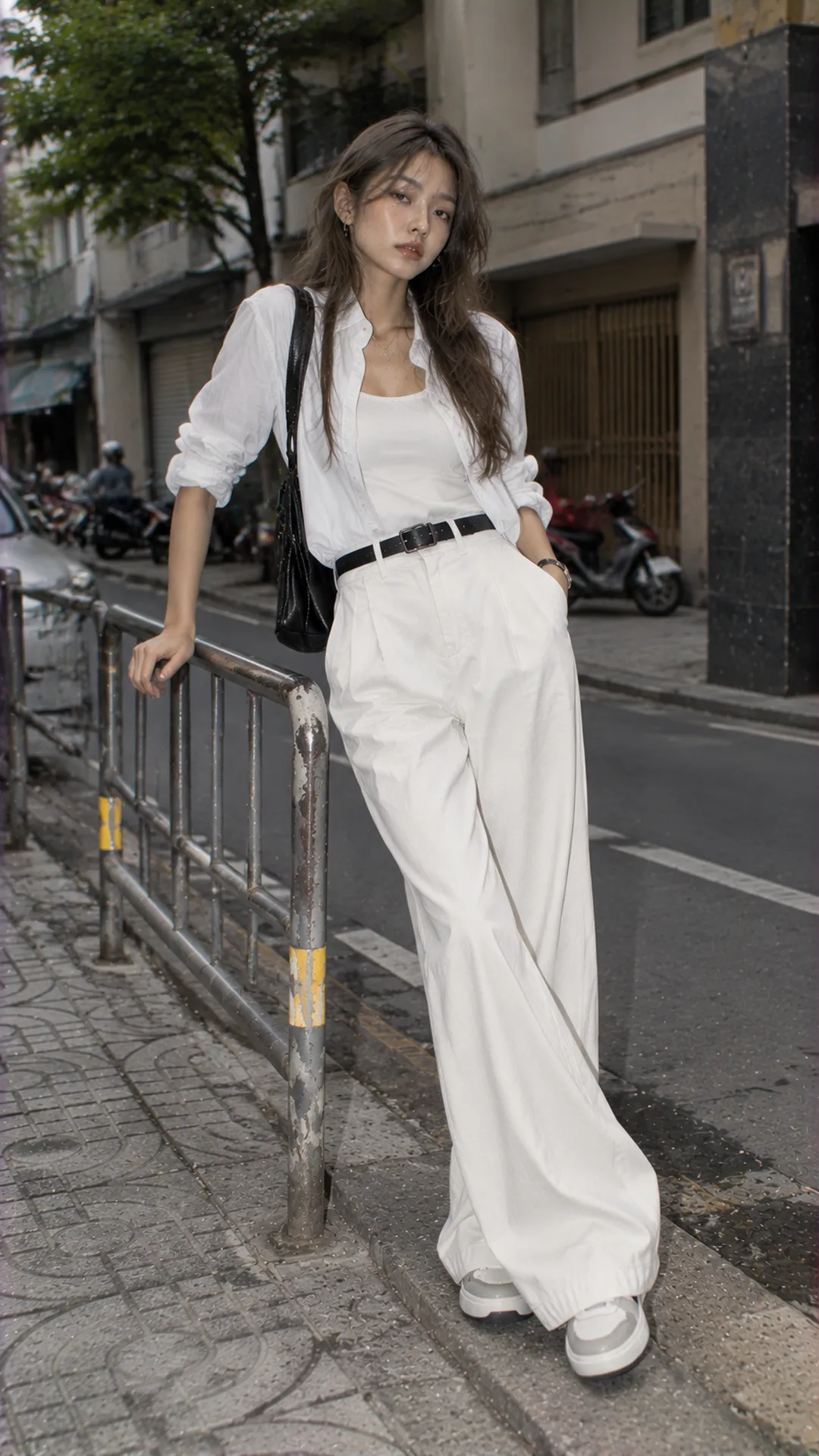
Give white-on-white structure
Exact matching is unnecessary, but assess the difference clearly. Ivory and bright white can work through distinct cuts and surfaces. If the mismatch bothers you, choose clearer cream or gray rather than keep pursuing a near-match.
Use cut to define layers: a clear collar, neat sleeves or visible waistband. Two soft, wide, equally light garments may merge. If unwanted, add one structured bag or shoe; a belt is unnecessary merely to prove a waist exists.
Texture is another option: knit, a creased shirt or matte tee against white denim reads differently. In heat, choose appropriate thickness rather than many layers. One surface difference can prevent monotony.
What tops work with wide white trousers?
Start with length and waistband. Long wide trousers often need an easily read top hem so lower construction stays visible. A neat top, waistband-length cut or tucked shirt are three trials rather than one universal answer.
For a loose top with wide legs, keep shoulder and neck lines neat and assess movement. Exposed neck or wrists can open the look without changing all volume. See the women's trouser-shape guide for width, rise and length details.
Try shoes with the actual hem. If mostly concealed, sole shape and trouser length may matter more than color. With short hems, footwear is a distinct area. Do not choose a top only from a half-body photo and ignore the endpoint.
White jeans and straight trousers create different bases
White jeans have their own pockets, seams and denim construction. Try a plain tee, shirt or neat knit according to structure. Not every white jean is thick or opaque; inspect the actual model.
Straight white trousers may have pleats, a defined waistband or softer surface. A neat shirt preserves the waist; a tee relaxes it. For neckline and length, the women's tops styling guides address the specific item.
For an expressive wardrobe, start with white trousers, black top and one structured accessory. Many straps or buckles are unnecessary. The Alt Fashion guide for beginners chooses a main piece and adds sufficient signals to taste.
Check underlayers, pocket bags and tucked fabric
Try clear light with actual underlayers and inspect front, back and side. Observe outlines, pocket bags and seated fabric tension. White alone cannot establish coverage; identical colors can have very different constructions and linings.
A dark top tucked into thin trousers may show as an area below the waist. If unwanted, try a waistband-length top, different tuck or more suitable trousers. Excess underlayers may restrict movement or add unwanted heat.
Bend, stride and sit too. A standing look may pull the waistband or release the tuck in movement. Fix fit before new accessories; a top-color change cannot resolve uncomfortable trousers.
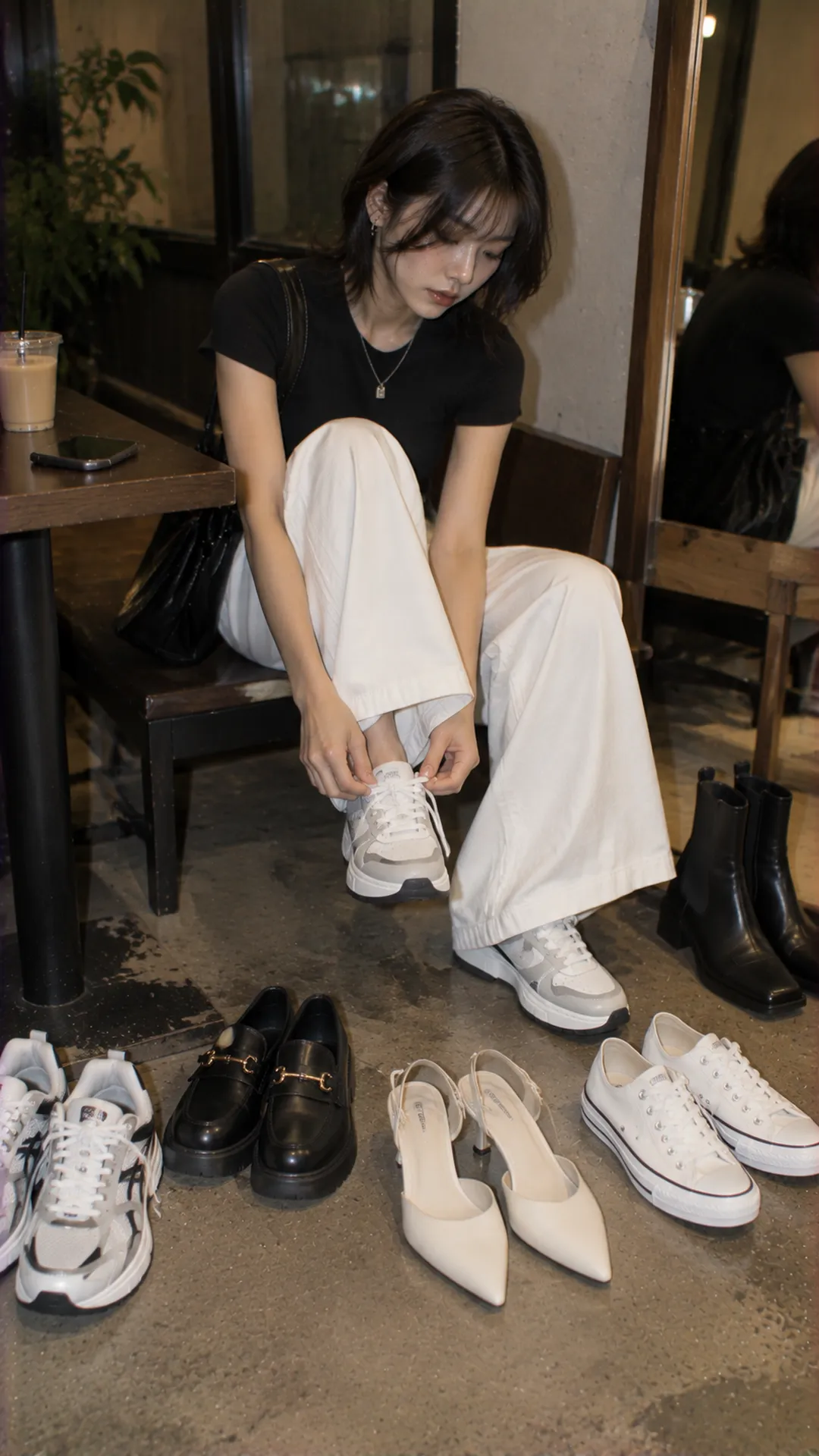
Finish with shoes and a simple comparison
White or cream retains lower-body lightness; black or deep brown gives an endpoint. Use choosing shoes for an outfit to balance sole thickness and hem gaps. Even a color-compatible shoe can be too heavy for very soft trousers.
Build two outfits with the same trousers: a dark and a light top. Photograph full-length in consistent light with fixed accessories. Save the one matching your goal with tuck and shoe notes. Two tested formulas reduce morning color guesswork.