

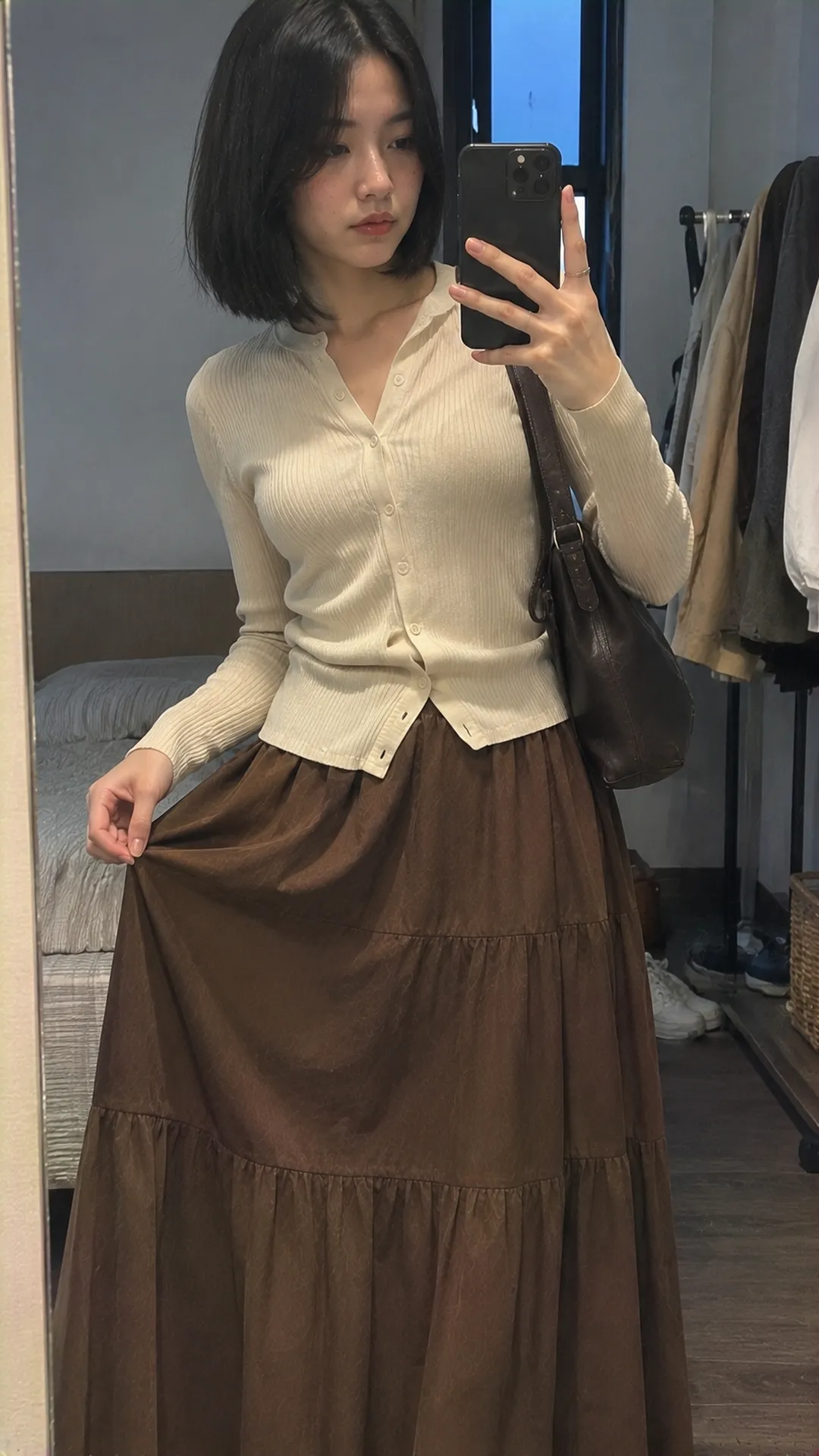
Identify the skirt's brown shade and surface
Compare with white or a neutral. Observe depth and yellow-red or gray lean. Exact naming is unnecessary; establish which tops emphasize, transition gently or merge.
Chocolate is generally deep enough to contrast with cream or pale blue. Earthy brown can work with olive, black and ivory. Beige-brown needs attention beside equally light cream. Shop names do not guarantee identical shades.
Gloss, matte, weave and folds change the same brown. A reflective skirt already varies in lightness, so a plain top supports its focus. A simple matte skirt can gain separation through ribbing or a textured accessory without new color.
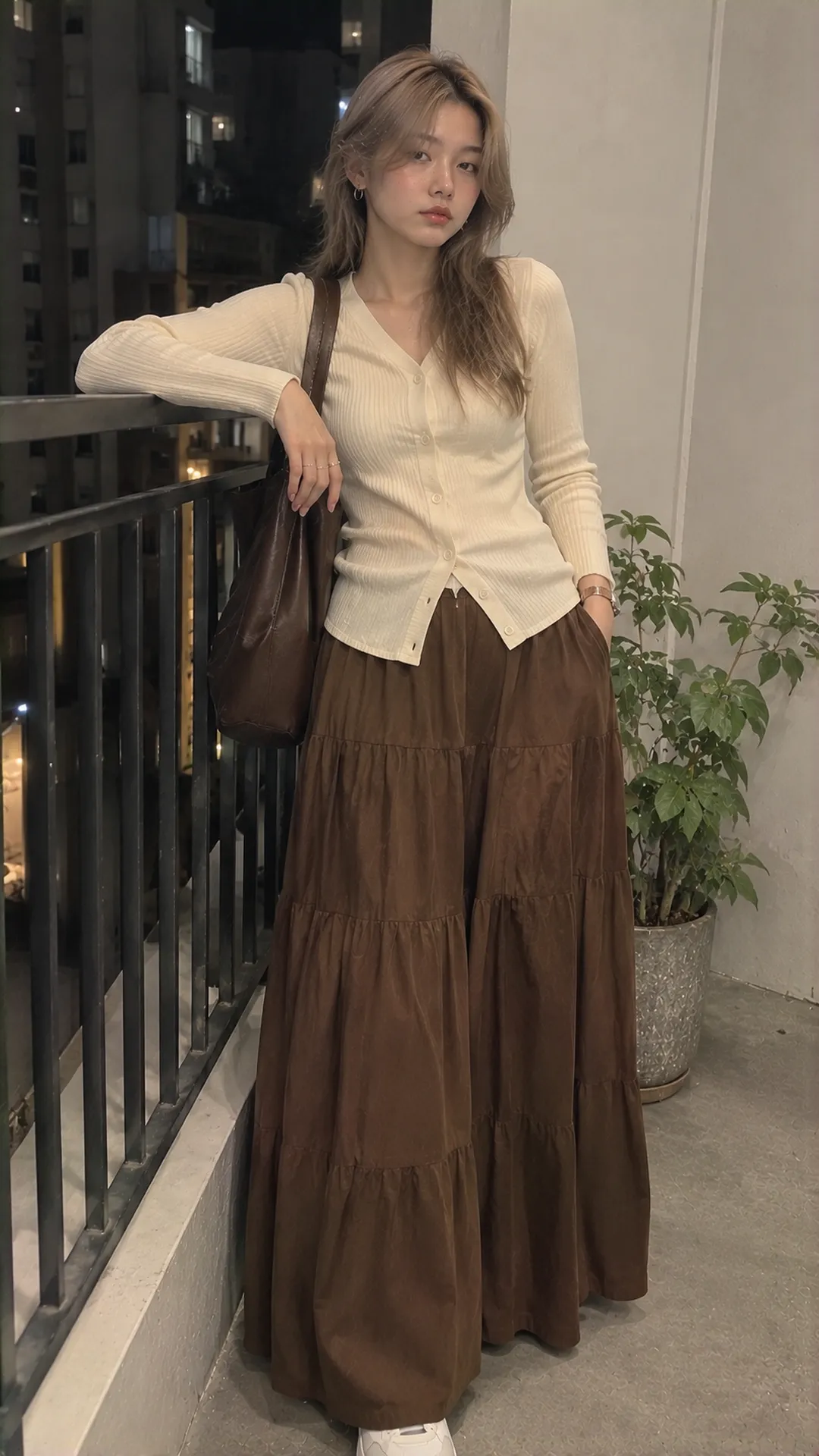
Cream and ivory: start easily but preserve separation
Cream and dark brown give readable contrast. Try a neat tee with an A-line or cream shirt with a simple long skirt. Deep-brown shoes keep the finish subdued; cream lightens it. Choose for your routine.
For light brown, check whether cream differs enough. Keep close colors for softness with waistband or texture separation. For definition, lighten the top or add a deep accessory. Belts are optional.
Bright white may separate more strongly than ivory. Compare both with the actual skirt. For many pleats or decorative seams, plain white is a convenient start before bold earrings, scarf or bag.
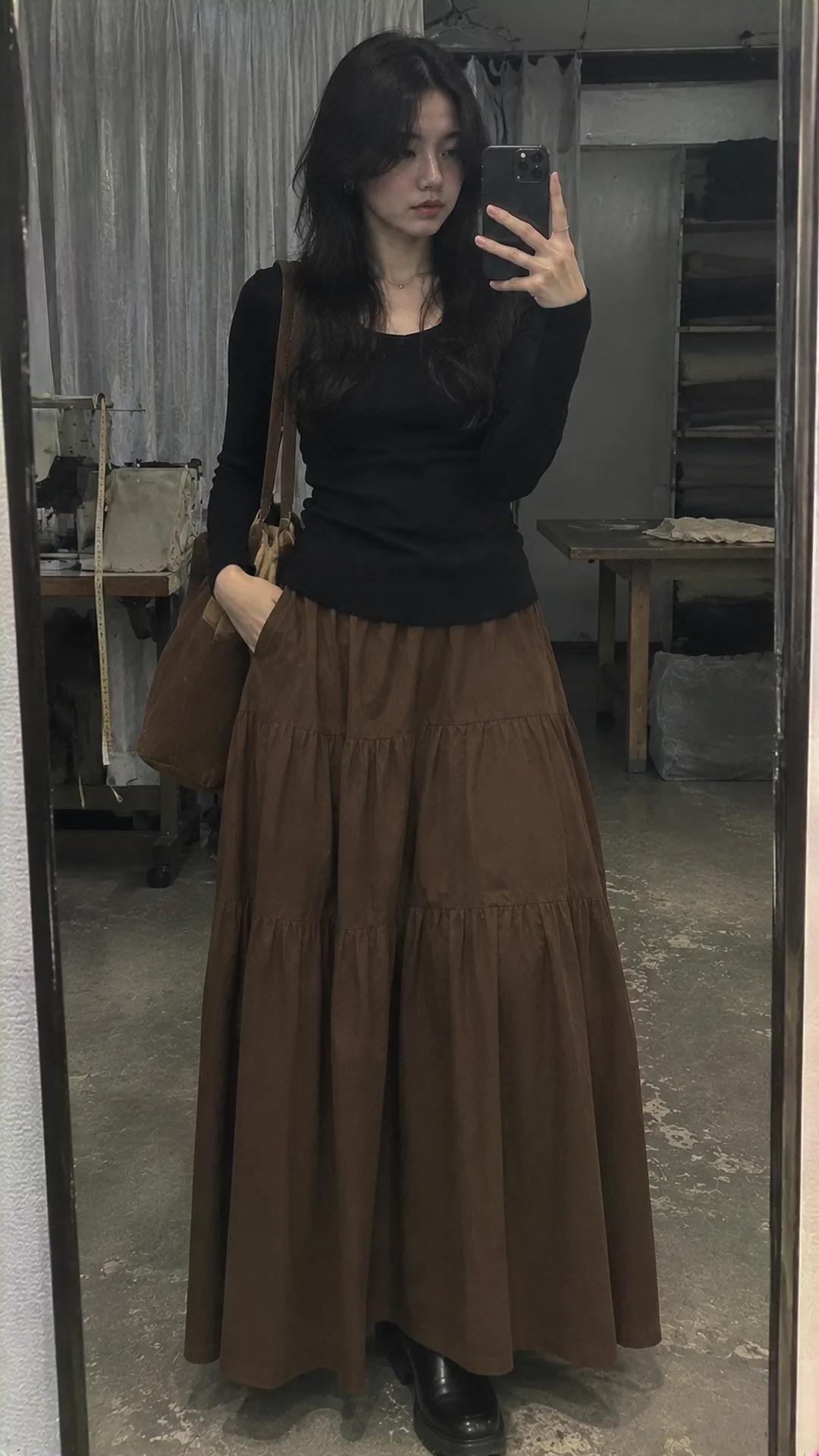
Black: direct attention through contrast
Black and medium or light brown create clear areas. A neat simple-neck top, A-line skirt and black shoes can work daily. For lighter feet, try brown or cream and assess full-length.
Very deep brown and black can merge in dim rooms. For separation, vary surfaces or add one small linking detail; ribbing beside a plain skirt is one example. Light color is unnecessary for an intentionally continuous dark base.
For character, choose one structured shoe or bag clasp and simplify the rest. Alt Fashion styling for beginners builds through shape and a main piece rather than treating black as sufficient for every aesthetic.
Pale blue and denim: change the effect through lightness
A pale-blue shirt and chocolate skirt brighten above. Tuck neatly for a visible waist. With long soft shirts, try a partial tuck and inspect side bunching. Brown or black shoes can follow existing accessories.
Beige-brown and very pale blue may lack your preferred boundary. Deepen blue or add a dark-brown bag. For lightness throughout, retain colors but use a defined collar or placket. Structure also emphasizes.
Denim shirts contrast visibly with brown skirts. Inspect actual wash and thickness: strong fading plus many skirt folds may add unintended complexity. Start with quieter denim and a plain skirt if unfamiliar.
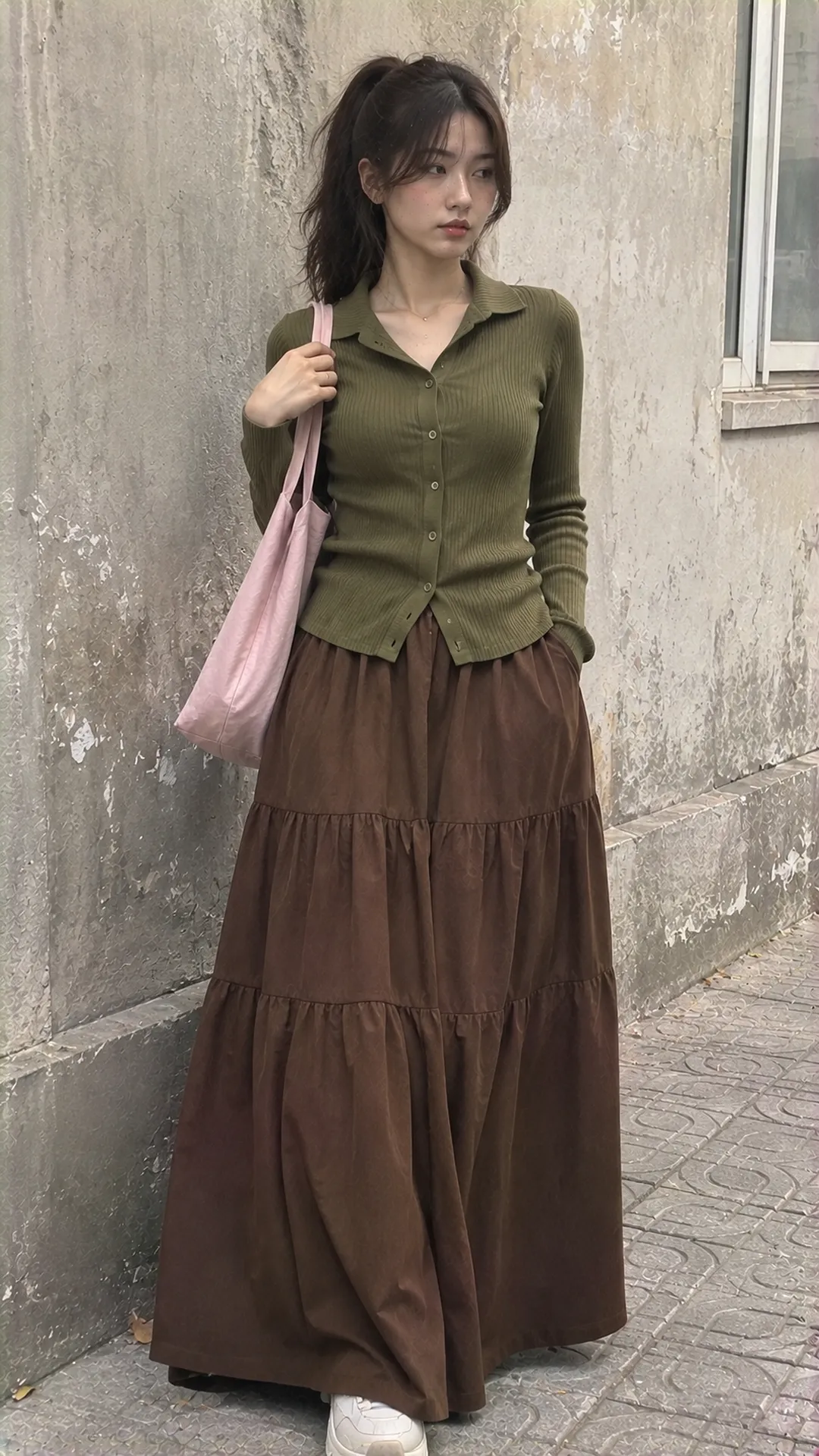
Blush, olive and related browns
Blush and deep brown feel soft but distinct. For less gentleness, choose a clean-cut top or firm bag. Pink need not change for personality; volume can do that.
Olive with earthy or pale brown creates a muted direction. Make one lighter for separation. If both pieces have pockets, fasteners or seams, reduce accessories first. Two quiet colors do not automatically mean few details.
Brown tops and skirts can work through deliberate depths. Try beige-brown above chocolate and dark-brown shoes. For unintended near-matches, a clearer depth difference is generally easier than exact matching through photos.
Keep the top color, adapt to skirt shape
A-line or flared skirts
Neat or waistband-length tops reveal flare. A loose top can partly tuck or shorten without tightness throughout. With strong skirt volume, oversized sleeves add more; choose the main emphasis.
Fitted or straight skirts
A moderately loose top contrasts with a neat skirt; a fitted top retains continuity. Sit and walk for waist and hip comfort. If the top pulls out or placket strains, review fit before accessories.
Long or pleated skirts
Long skirts create larger brown areas, strengthening the top color's effect. Plain tops reveal pleats. The skirt-shape guides address length, drape and flare before final color.
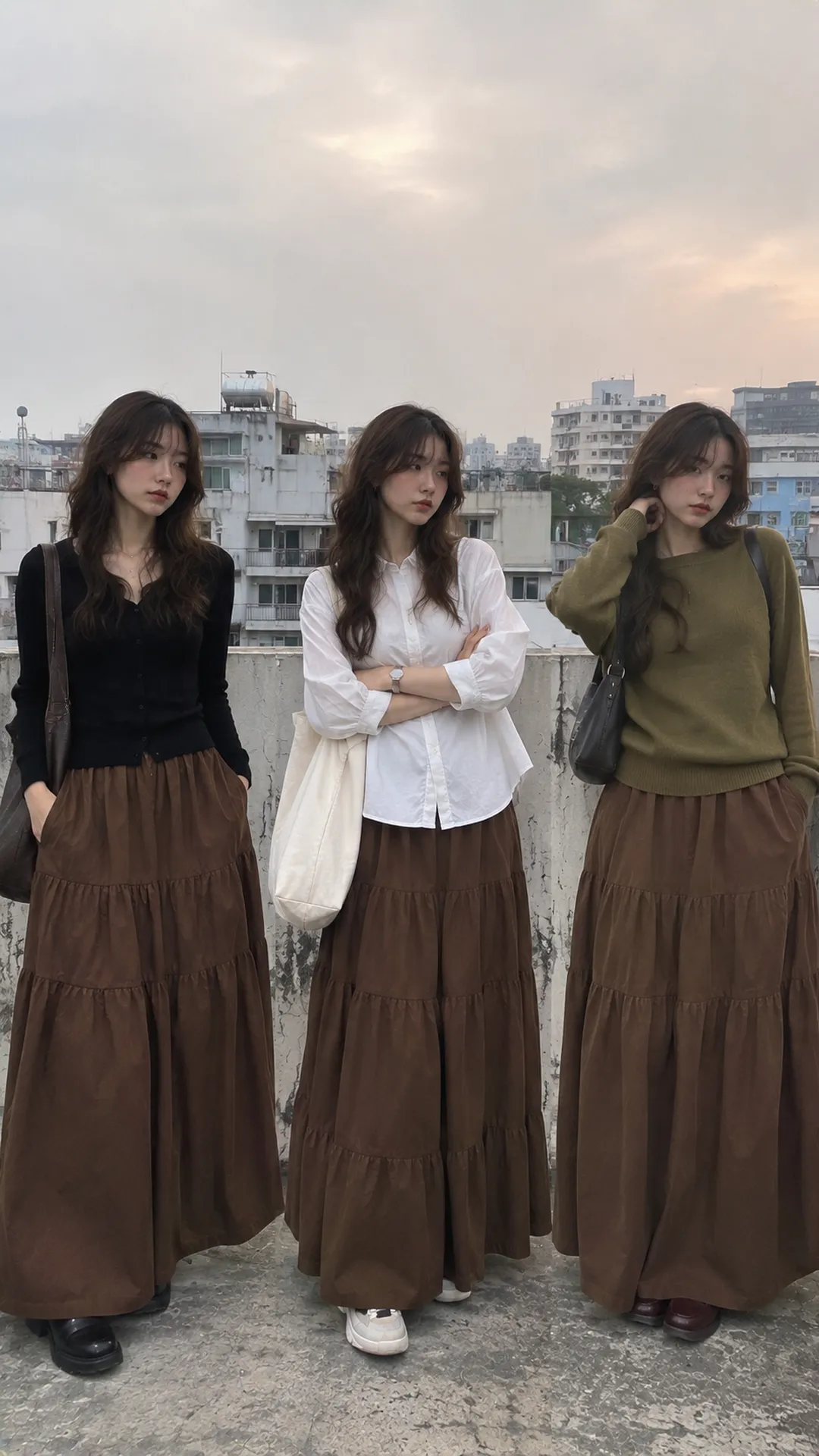
Three outfits from existing pieces
A polished day
A pale-blue shirt, straight brown skirt and neat shoes offer an adaptable base. Arrange collar, placket and waistband as designed. Destination rules govern length and coverage; color cannot replace them.
Weekend coffee or walking
A cream tee, brown A-line skirt and light sneakers test a simple palette. Choose a practical bag that does not hide most of the waistband. For much walking, try hems and shoes with longer steps, not only a mirror pose.
A subdued evening
Try a neat black top, textured deep-brown skirt and small plain bag. With neckline details, reduce necklaces to reveal design. Black shoes give a strong endpoint; near-skirt brown gives continuity.
Using patterned tops
Place the pattern beside the skirt and step back. If its background remains visible, it offers an easy connecting area. If small colors blend at that distance, choose accessories for the overall effect rather than one tiny close-up-only detail.
Read background before motif scale. Cream with small brown patterns differs from dark with a large print. Plain brown gives a pause, but inspect fit and length so patterns do not bunch at the waist.
Repeat one pattern color in shoes or bag without using all of them. With pleats, pockets or strong shine, begin with smaller motifs. For neckline and sleeves, use the women's top-type guides to separate cut from color questions.
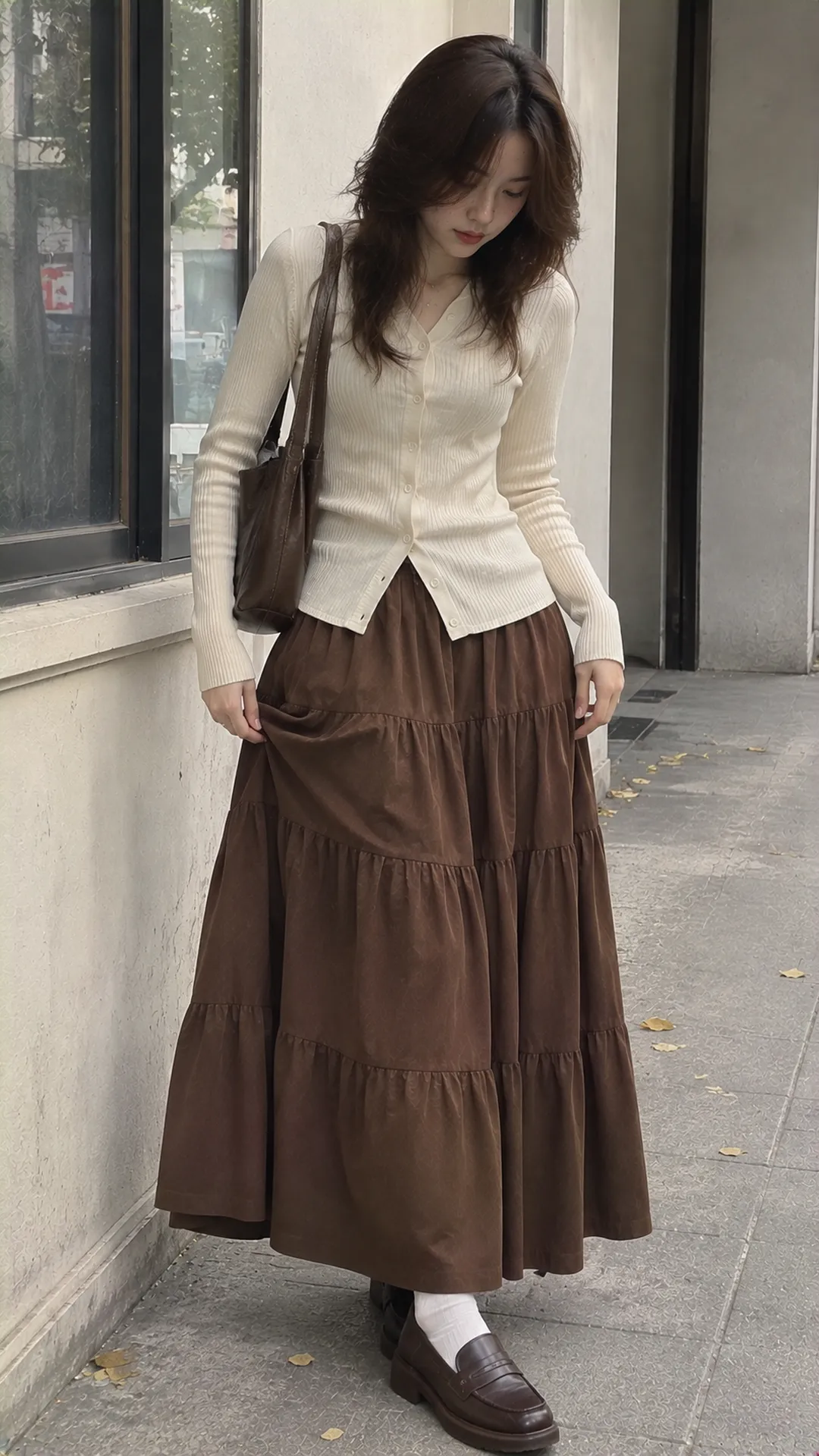
Shoes, skirt hems and the final check
For slits, inspect walking exposure because feet and shoes appear differently from standing. With pleats, check their return after sitting. Movement changes volume more than a tiny difference between cream tops. Set comfortable length and wearing method before final color refinements.
Shoes determine brown's endpoint. With concealed footwear, sole shape and hem length may outweigh small color differences. Short skirts expose shoes as a larger accent. Try the intended pair before deciding balance.
Choosing shoes for an outfit considers weight, gaps and movement. If top and skirt colors work but the outfit feels heavy, change shoes or bag first. Color pairs are not every problem's cause.
Compare one light and one dark top with the same skirt, shoes, bag and lighting. Save a reusable result in a fashion moodboard with tuck and length notes. Two tested outfits are more useful than a long unworn list.