

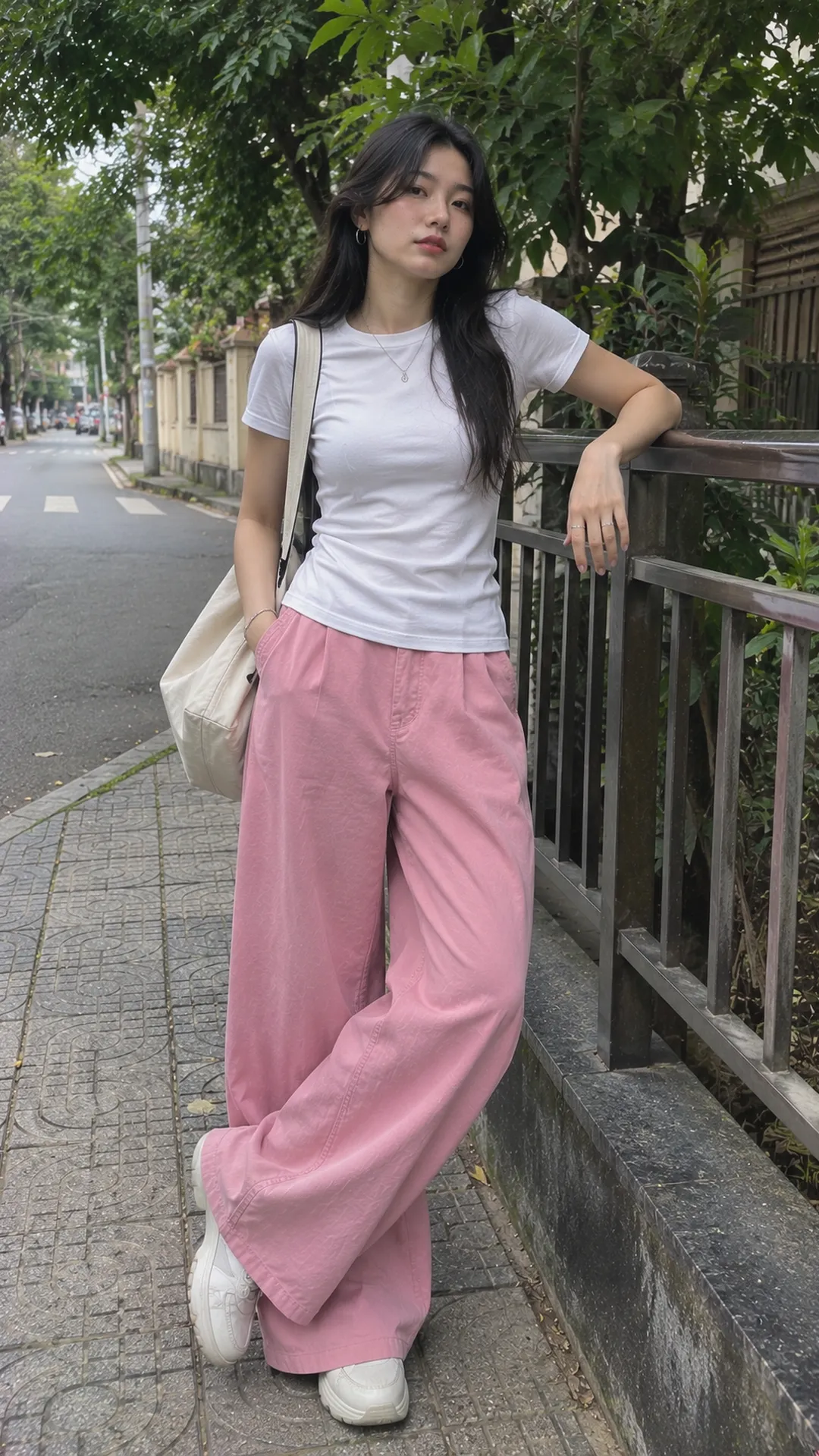
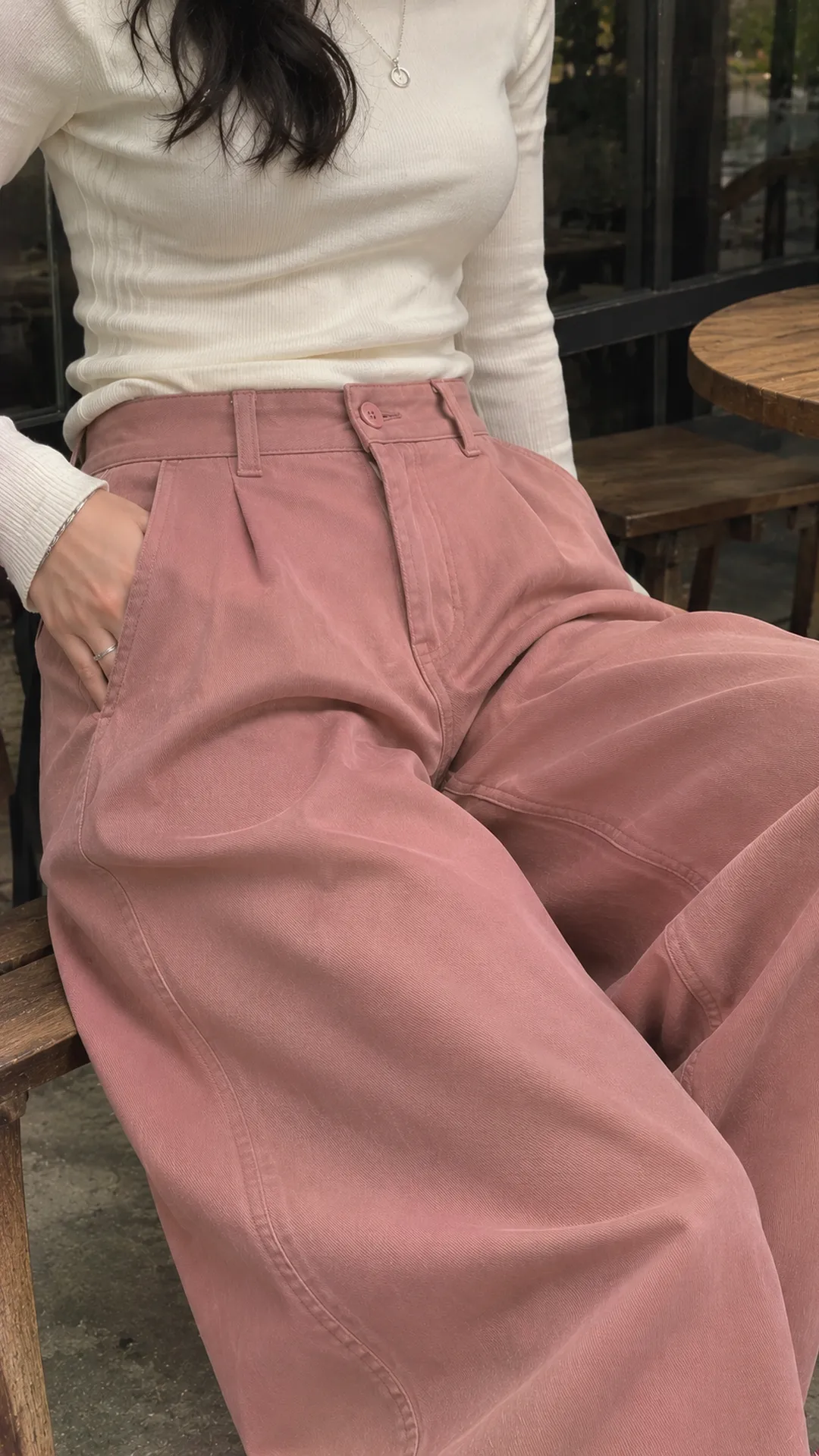
Identify the shade of pink first
Do not rely on the color name on the label. Look at the pants in daylight: are they light or deep, muted or vivid, orange-leaning or purple-leaning? Muted dusty pink feels different from bright candy pink, even though both are pink. Filtered photos can mislead you when matching actual garments.
The surface matters too. Shiny fabric can make pink more prominent in the light, while washed denim or a matte finish creates a different effect. Check the color while standing, sitting and turning, rather than judging only a flat piece of fabric on a table.
If you are new to bold colors, try the approach in our beginner's guide to alternative fashion: choose one key piece and build a supporting base. Here, the pink pants are that piece; your top and accessories should support the level of impact you want, without all demanding equal attention.
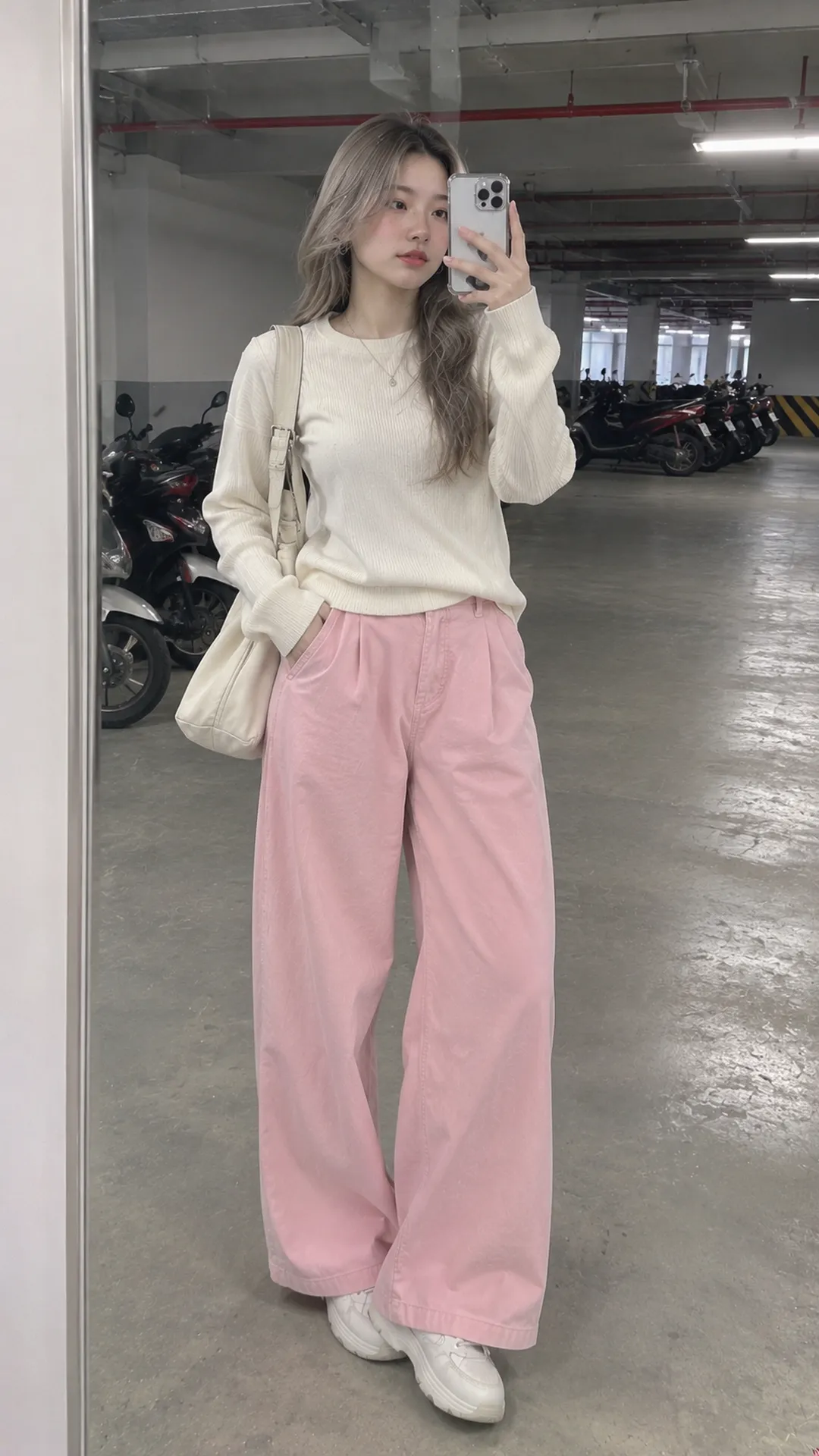
Ivory and cream for a light outfit
Pale pink pants and an ivory top create gentle color contrast. To keep the two areas from merging into a shapeless block, tuck the top neatly or choose a defined hem. Structured pants contrast with a soft top; if both pieces are very soft, pay attention to the waistband and shoulders.
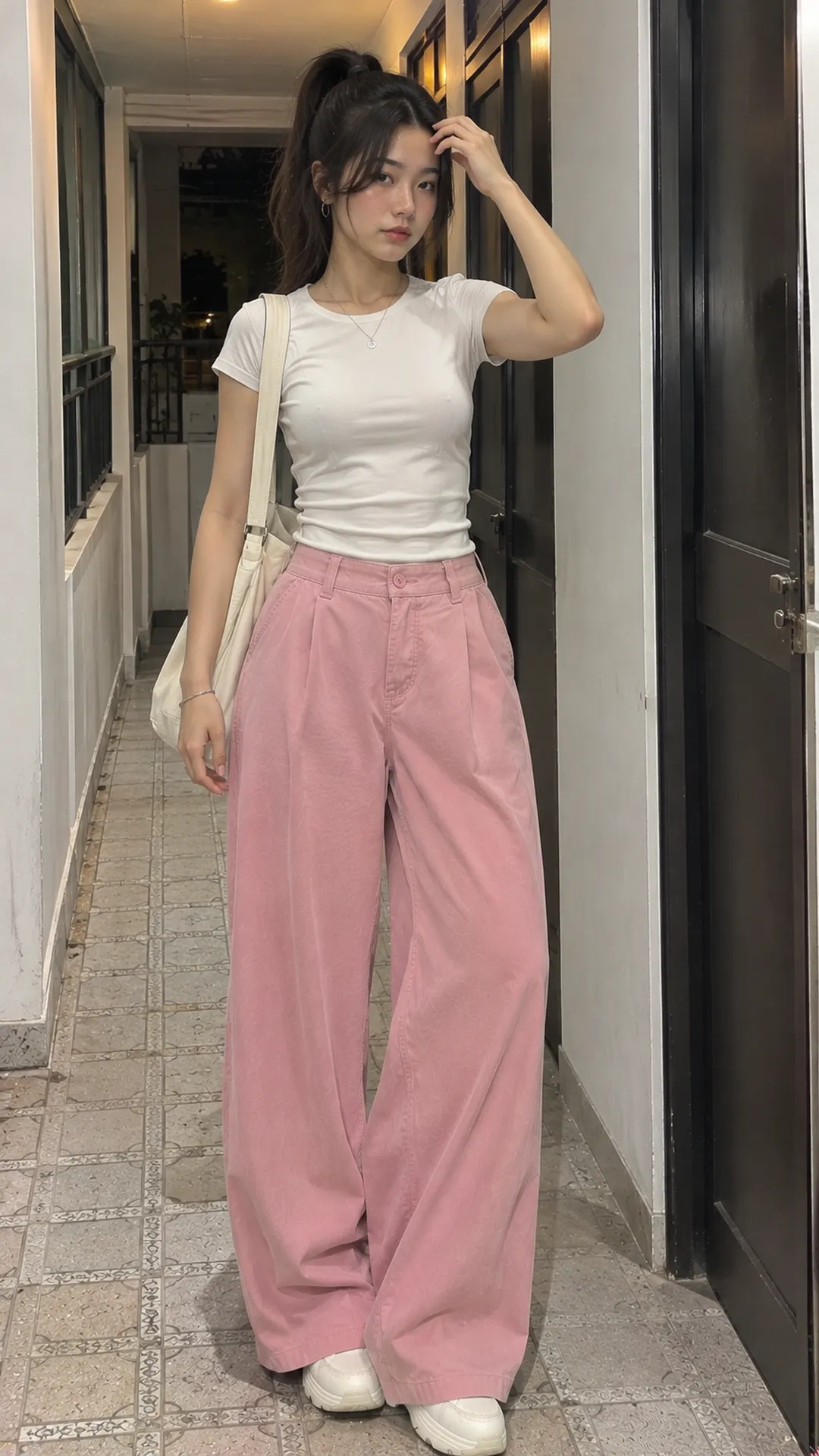
With vivid pink pants, a white top keeps the upper half bright and relatively simple, making the pants' color easy to see. A plain T-shirt or minimally detailed shirt is an easy starting point. Large lettering or contrasting prints on the top introduce another focal point competing with the pants.
Yellow-toned cream can feel warmer beside dusty pink. The name “cream” does not guarantee the same result in every garment, though. Try the actual top with your pants, hair and shoes. If the colors blend too much, finish with dark brown shoes or a clearly shaped bag.
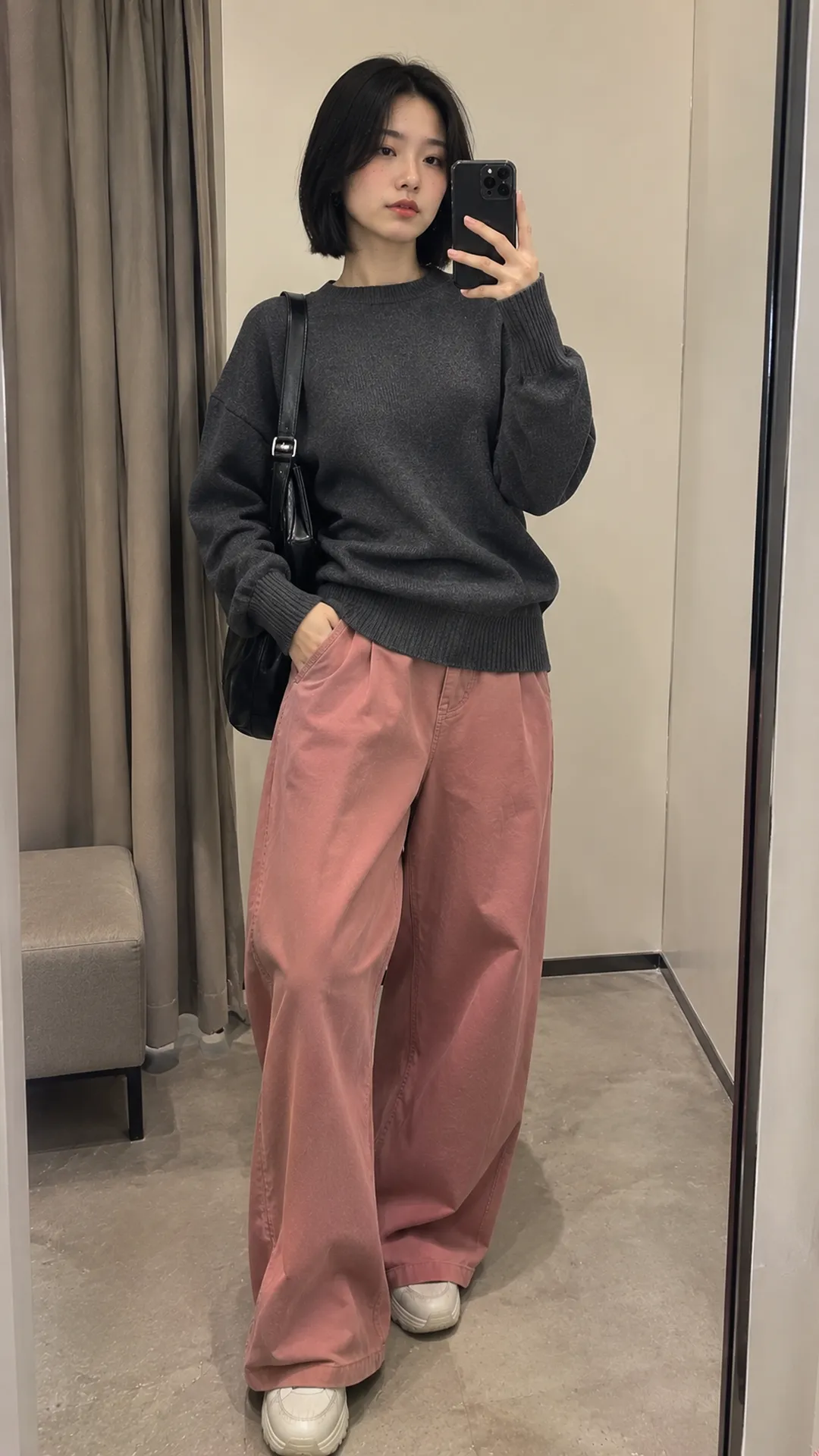
Gray and black: two levels of contrast
Light gray or charcoal
Light gray with pale pink creates a soft palette when you want to try color without making your lower half too prominent. Try a fitted top with wide-leg pants, or a moderately loose top with straight legs. Check that the hem does not hide all the waistband structure.
Charcoal creates a darker block with a different feel from crisp black. Try dusty pink pants, a charcoal top and black shoes to connect the upper and lower halves. For a lighter result, switch to gray or light-colored shoes. Change just one piece so you can see which option brings the outfit closer to your goal.
Black to make the pants the focal point
A black top and deep pink pants can create strong contrast. When the color is already striking, a minimally detailed top makes the outfit easier to read. If your black top has lace, cutouts or multiple straps, decide whether the pants' color or the top's construction should attract attention first, then simplify the other piece.
Pale pink pants also work with a black top. The light-dark contrast can clearly separate the upper and lower halves; black shoes can reconnect them, while light shoes keep the lower half softer. Both are choices about color proportions, rather than compulsory rules.
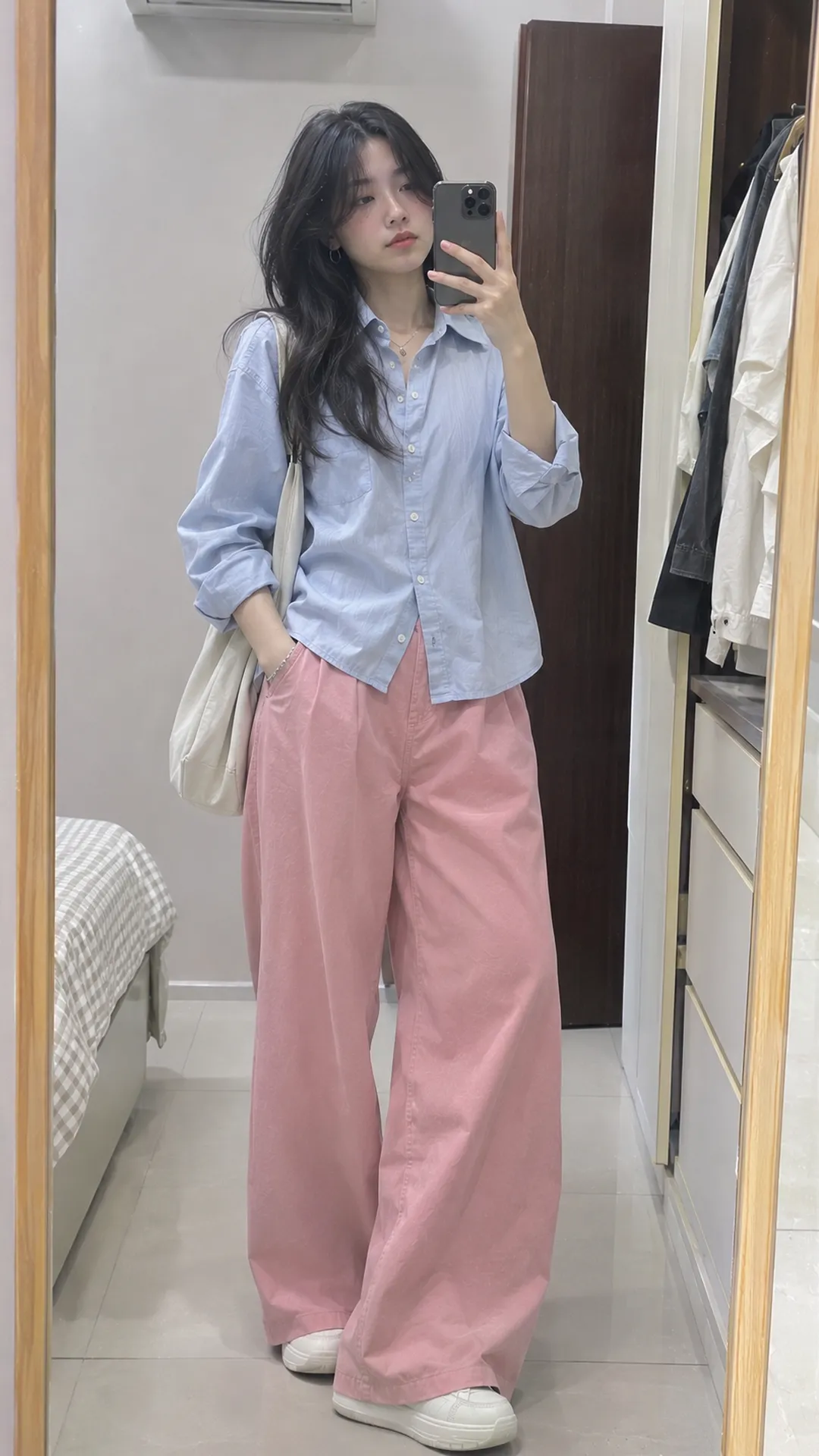
Light blue and navy beyond familiar neutrals
A light blue shirt and muted pink pants are an easy combination for classes or work where the dress code allows. Keep the shirt fairly plain and limit shoe and bag colors so the blue and pink remain clear. When tucking in, check for excess fabric ballooning above the waistband.
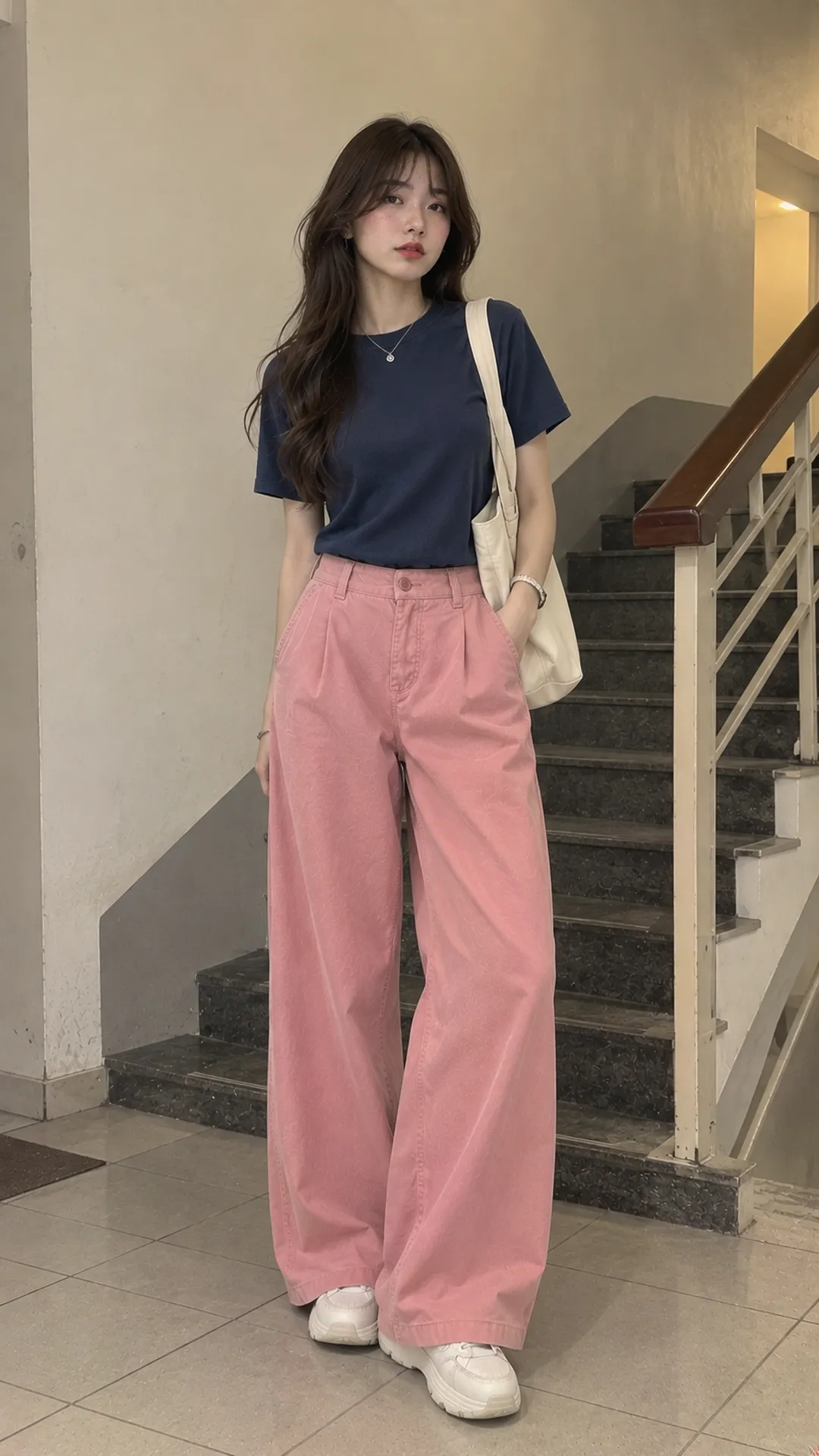
Navy provides a dark foundation with a different feel from black. A thin navy knit, dusty pink pants and brown shoes can create a subdued outfit. If the pants lean strongly purple, compare them directly with navy: two deep or dark pieces may not give the distinction you want.
With a denim shirt, the wash and stitching contribute to the palette too. Heavily faded panels stand out more than a plain blue shirt of similar lightness. To keep the pants in the lead, choose minimal detailing and a simple base layer when wearing the denim shirt unbuttoned.
Brown, tonal pink and more deliberate color combinations
A brown top and dusty pink pants offer a muted direction that accessories can easily change. Try chocolate brown for a clearly darker upper half, or light brown for a softer palette. When the pieces are similarly light, a knit top against structured pants can help define their outlines.
You can pair a pink top with pink pants, but assess them as two separate shades. A lighter pink top creates a tonal transition; matching shades can be separated through texture or the waistband. If the colors are close without truly matching, check them in different lighting before deciding.
For a green or red top, start with minimal pattern and let accessories provide a quiet base. Two clear color blocks on the top and pants already create character. Your shoes, bag and glasses do not all need separate colors unless that multicolored effect is intentional and you have tried the whole outfit.
Once the colors work, check the silhouette
Wide-leg pants
With wide-leg pink pants, a fitted top or one ending near the waistband makes the pants' shape easier to see. A loose top can work if you manage its length: try a partial tuck or a structured hem. There is no need to force a very tight fit if it restricts movement.
Straight-leg or tailored pants
Straight-leg pink pants work with shirts, T-shirts and knits. If you like their pleats and defined waistband, avoid covering everything with an overly long top. For an untucked look, keep the hem flat and check that the pockets do not push the top outward at the sides.
Slim or tapered pants
A moderately loose top offers another option with slim pants, but choose its length for the body proportions you want. Check the side and back views too. With tapered hems, watch the space between pants and shoes so the hem, socks and shoe collar do not all bunch around the ankle.
Read our guide to styling different women's pants to compare silhouettes before adjusting color. Changing color and proportions in the same try-on makes the problem harder to identify. Keep the pants and shoes fixed, then change tops one at a time.
Three outfits to build from what you own
Classes or daytime plans: straight-leg pale pink pants, an ivory T-shirt, simple sneakers and a gray bag. The lower half has color while the overall effect stays light. Match the hem length to the shoes you will wear so you do not have to lift the pants while walking, and check your destination's dress code.
Weekend coffee: dusty pink wide-leg pants, a fitted gray top and black shoes. A neat upper half makes the pants' width clear; a small structured bag finishes the look. If you dislike fitted tops, try a moderately loose T-shirt with a front tuck.
A bolder evening look: deep pink pants, a plain black top and streamlined shoes. Add one small metallic detail if you want a highlight. The pants already occupy a large area of color, so a black or neutral bag can finish the outfit without a third bold color.
Do shoes and bags need to match your top?
They do not. Repeating the top's color in your shoes creates a connection, but shoes with a similar lightness to the pants can also make the lower half more continuous. Compare both options with the outfit on and take full-length photos; do not decide from separate shoe photos alone.
Our guide to styling women's shoes helps you compare shoe volume with leg width. Chunky shoes and wide pants together can make the lower half feel heavier, while small shoes beneath a very wide hem may almost disappear. Choose the effect you want instead of applying one formula to every cut.
Bag placement also affects the color blocks. A crossbody bag sits over the top and draws attention to the upper body, while a handheld bag appears nearer the pants. Test the color in the position you intend to carry it, with your belongings inside: an empty bag may have a different shape.
Fixing an outfit that feels off
If the pants feel too bold, try a plain neutral top and remove one accessory. If the outfit feels washed out, increase contrast in the top or shoes. If the colors work but the outfit still feels busy, check hems, tucking and textures before buying another color.
Save the combinations you can actually wear. A full-length photo with brief notes on top color, length and shoes is more useful than many looks you cannot recreate. Use our fashion moodboard guide to group options by lightness, darkness and how prominently the pants stand out.
Once you have two or three tops that suit your pink pants, try them for different plans. The same colors produce different results when you change the top's cut, tuck or shoes. Choose an outfit that lets you move comfortably and gives you the level of impact you want.