

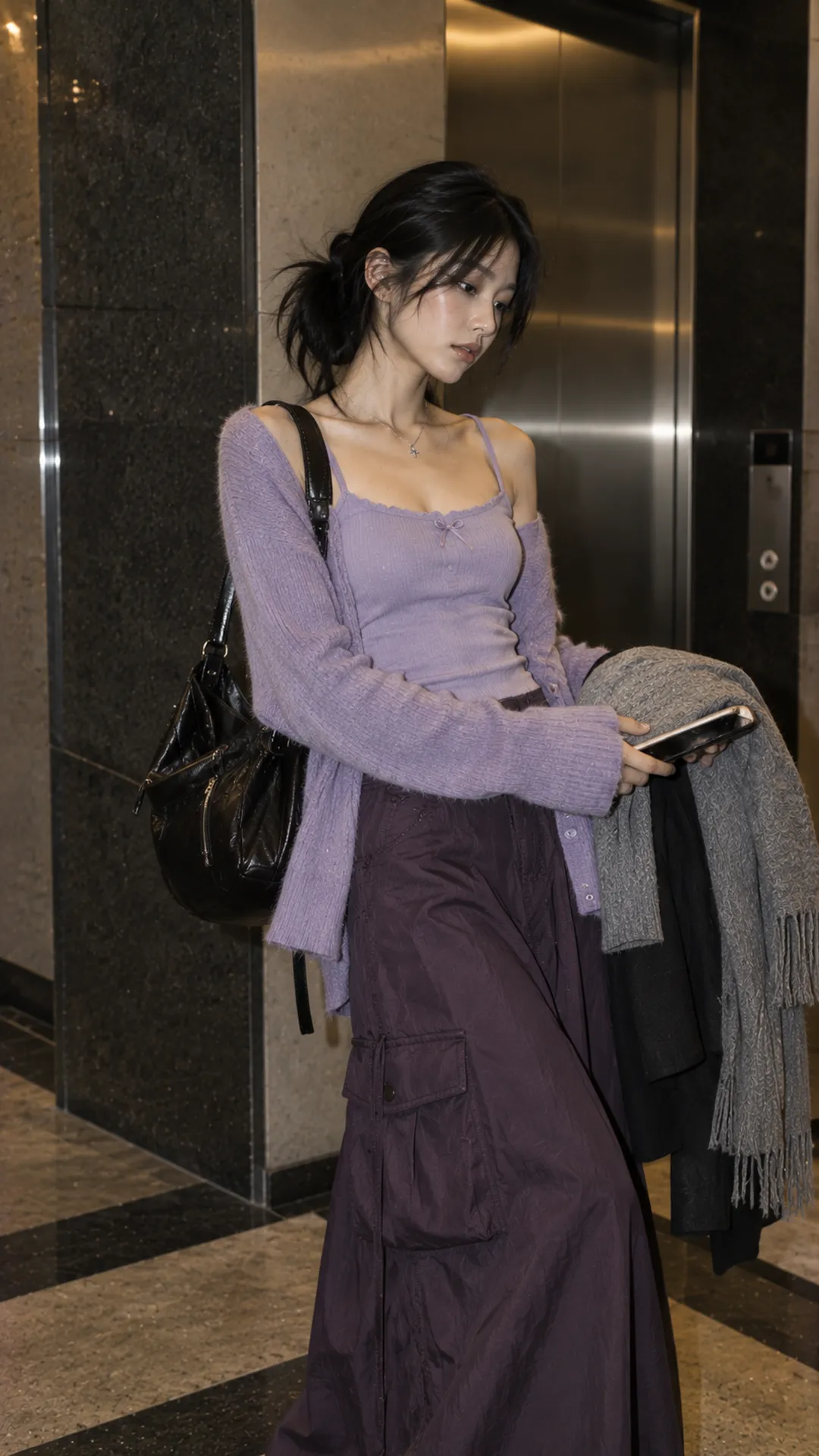
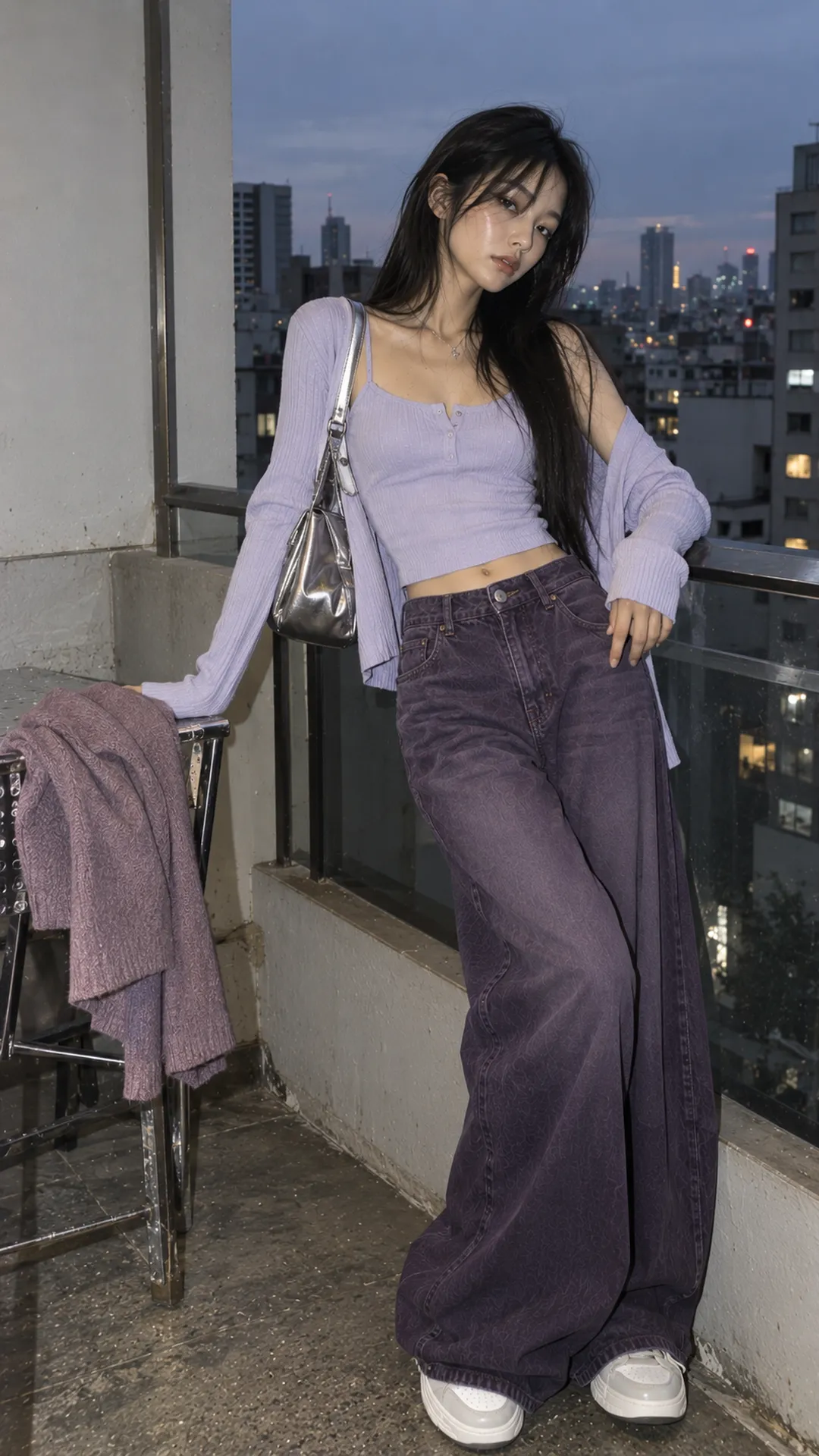
Start with pale, deep or pink-leaning purple
Pale purple may appear as pastel purple or lilac in listings, but those are not one fixed swatch. Grayish pale purple differs from clear pale purple. Compare with white and gray to notice differences.
Deep purple may resemble plum, grape or a bluer shade. With black it may merge in dim light; with cream it becomes clearer. Decide whether you want strong contrast or an overall dark effect before other pieces.
Pink-leaning purple generally differs from blue-leaning purple, especially when vivid. With a very prominent top, first try plain trousers and neutral accessories. Exact names are less useful than seeing relationships between actual adjacent garments.
Purple with ivory and cream: two light approaches
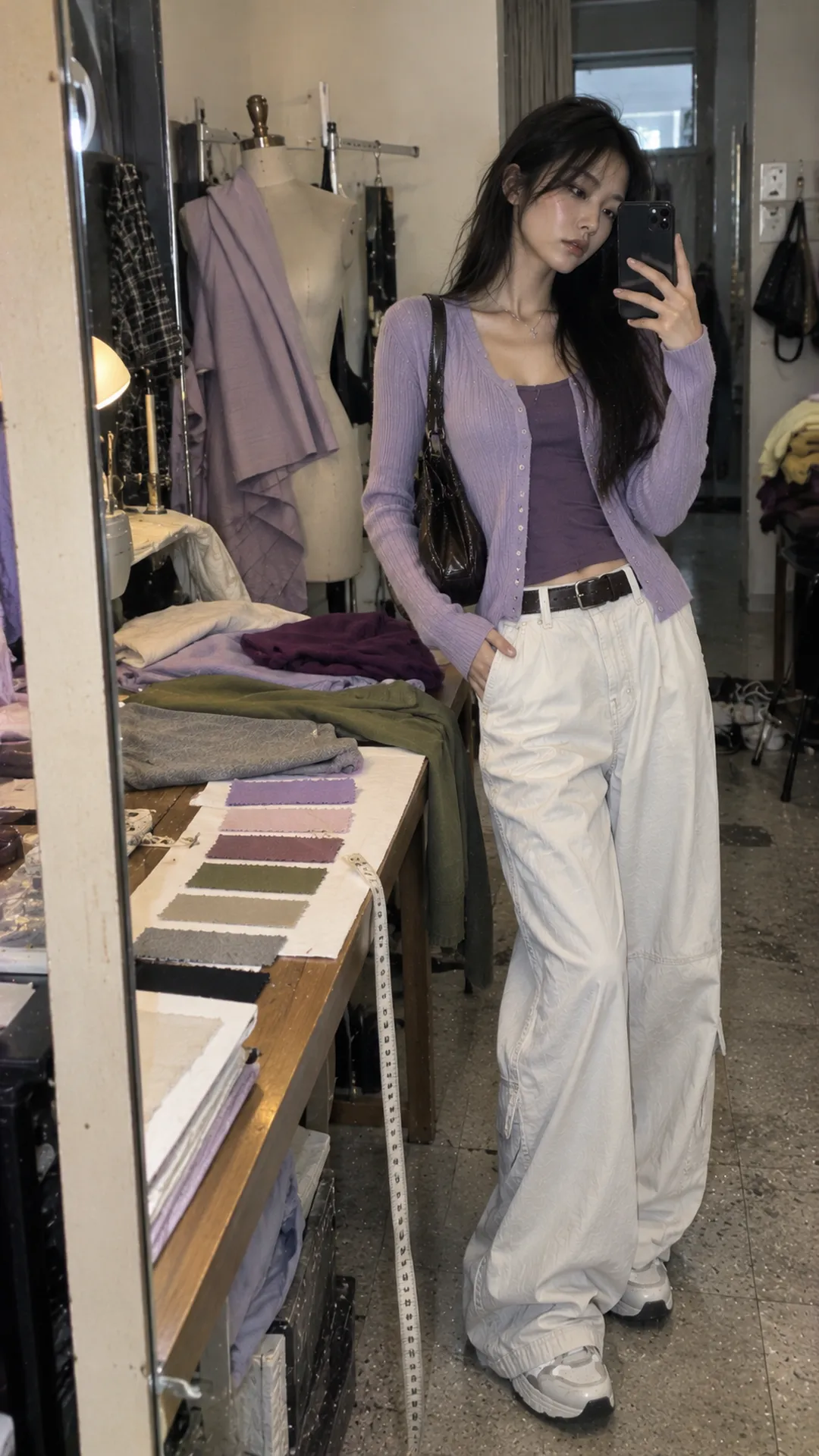
Pale purple with ivory trousers is an accessible start. White sneakers or cream shoes keep everything light; dark-brown shoes or bag provide an anchor. One visible dark point can suffice without repetition in both belt and jewelry.
Deep purple and cream separate more clearly. Try plum, cream trousers and brown shoes, or a purple dress with a thin weather-appropriate cream jacket. With many purple folds or details, keep cream neat so the main shape remains visible.
Bright white may emphasize purple more, while cream often softens it. Neither always wins. Try indirect daylight and include bag and shoes rather than deciding only from two fabric pieces on a table.
Purple with gray or black: control contrast
Gray supports several purple depths
Pale purple and light gray create low contrast. For definition, add dark shoes or a firm-shaped bag. Vivid purple against charcoal makes the top central. Gray depth changes how purple reads.
For school, try a pale-purple tee, straight gray trousers and white sneakers. With a loose top, use a waistband-length hem or gentle tuck. With many trouser folds and large pockets, start with a plain top. Accessories need not all match purple.
Black creates a strong boundary or dark base
Black with pale purple gives clear light-dark contrast; black with deep purple feels richer and darker. If they merge, vary one surface through ribbing, matte trousers or a slightly reflective bag. One change can reveal layers.
For an alt wardrobe, try purple under an open black shirt or purple accessories on black, then assess whether more hardware is needed. Alt Fashion outfits for beginners builds from cut and the main piece rather than assuming purple plus black completes an aesthetic.
Denim and brown bring purple into everyday wear
Existing well-fitting jeans make denim practical. Pale purple and medium blue transition gently; deep purple with light denim separates clearly. With a strong wash, reduce top details. Cream shoes can connect light areas without a new color.
With brown, start with a clear depth difference. Pale purple and chocolate contrast; deep purple and very dark brown may need a light inner layer or bag. An entirely subdued base is valid too, using cuts and texture for structure.
Do not force brown bag, shoes and belt to match exactly. Repeat a main brown with another depth in a small piece. If accessories have too many colors, see choosing expressive women's accessories to assign leading and supporting roles.
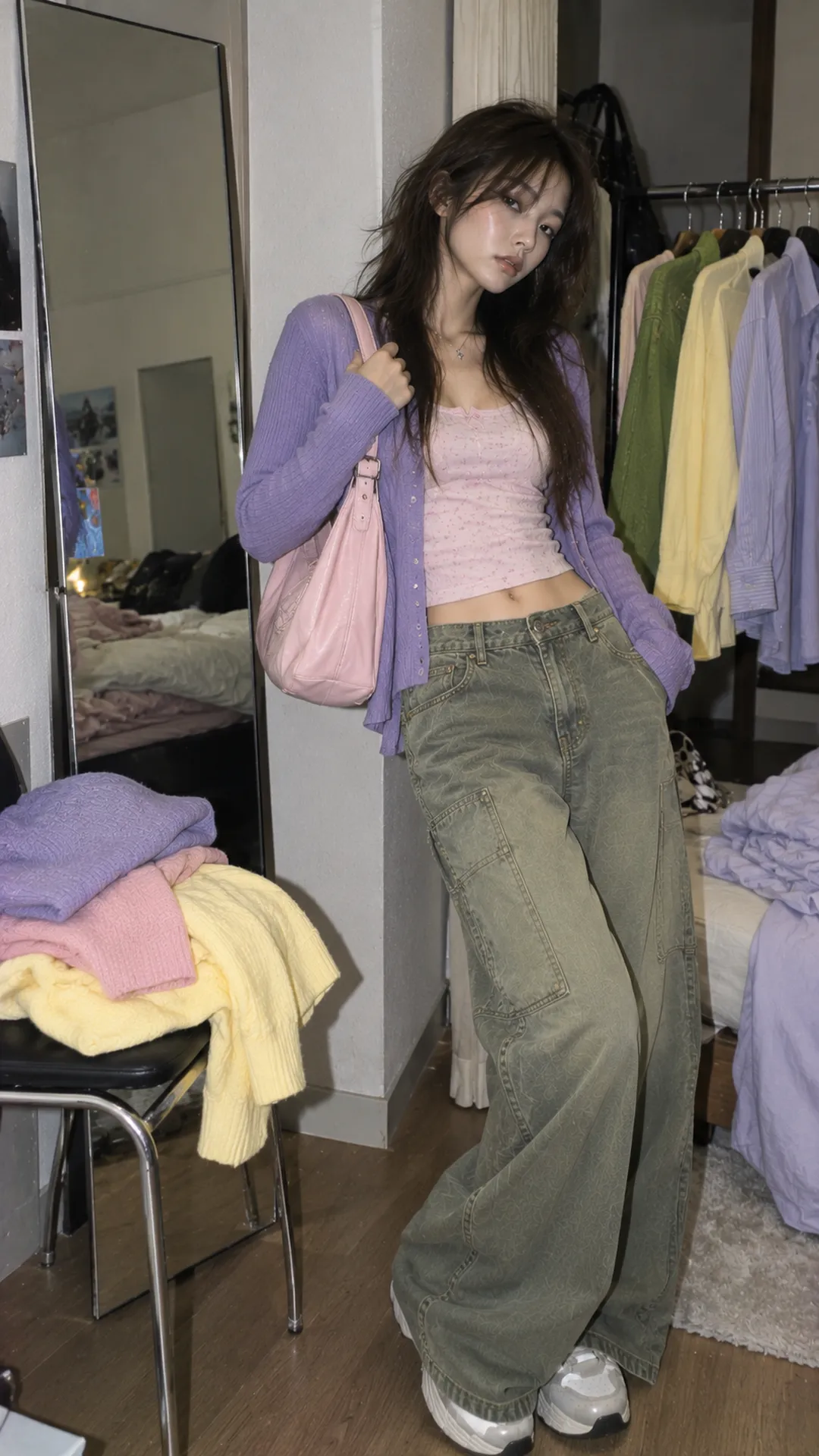
Combine purple with pink, green or yellow
Purple and pink: if both are pale, vary shape or add a dark accessory against flatness. With vivid pink-purple, start with cream and one small pink detail. Equal vivid areas create a strong effect when intentional.
Purple and green: try pale purple and olive, or deep purple with a small green accessory. Begin with one color occupying most area and the other accenting. A scarf, socks or existing bag can test the pair without new colored trousers.
Purple and yellow: consider intensity and area. A small pale-yellow piece on purple differs from vivid-yellow trousers with a vivid-purple top. To reduce intensity, use cream as the base, purple in the top and a small yellow detail. The boldest pairing is not mandatory.
Before adding a third color, remove an accessory to avoid endlessly increasing accents. Neutrals cannot automatically solve large patterns in top, trousers and bag. Assess full-length, not only isolated color pairs.
What top goes with a purple skirt?
Ivory, cream and gray are accessible with pale purple. A deep-purple skirt separates with cream or retains a dark base with black. With pleats or substantial flare, a plain top gives the skirt clear focus.
Top length matters as much as color. A hem near the waistband defines halves; a longer untucked top creates another composition. Both work, but test actual shoes. A large sole changes proportions compared with a neat shoe even in the same color.
For a patterned top, try a little purple or a background related to the skirt. Exact tiny shade matches are unnecessary; consider the largest color area. With a detailed top, a plain bag is generally clearer than another pattern.
Three formulas by emphasis level
Gentle: pale purple, denim and cream
A pale-purple top, medium-blue jeans and cream sneakers test color without replacing the wardrobe. Use a plain bag and tuck or a waistband-length top as appropriate. Add a small dark piece for clarity rather than intensifying everything.
Moderate: deep purple, gray and black
Deep purple leads above gray trousers, with black shoes as an endpoint. For neat settings, also inspect neckline, trouser creases and destination requirements; color is only part of suitability.
Bold: dominant purple and one clear supporting color
Choose a large purple item, then a pink bag or small green detail. Start with neutral shoes and other accessories. If you like it, increase supporting color next time to identify what produces the desired effect.
Shine, lighting and underlayers
Glossy purple may vary more across highlights and folds than matte purple. If a top or dress catches light, reduce competing shine to let it lead. A texture-rich outfit can still benefit from one quieter background surface.
With thin pale-purple fabric, test transparency with your actual underlayer instead of a product photo alone. Check deep purple indoors too, where it can appear near-black. Adequate lighting avoids accessory changes based on misread color.
Choose a reusable purple palette
Try one purple item against light and dark bases, retaining shoes initially to isolate clothing differences. Then change accessories. Record specific preferences such as pale purple standing out on charcoal or deep purple softened by cream.
For further development, use a fashion moodboard to save color, shape and surface together. For neckline or length issues, see the women's top-type guides. A useful palette also needs your preferred proportions and actual wearing conditions, beyond attractive swatches.