

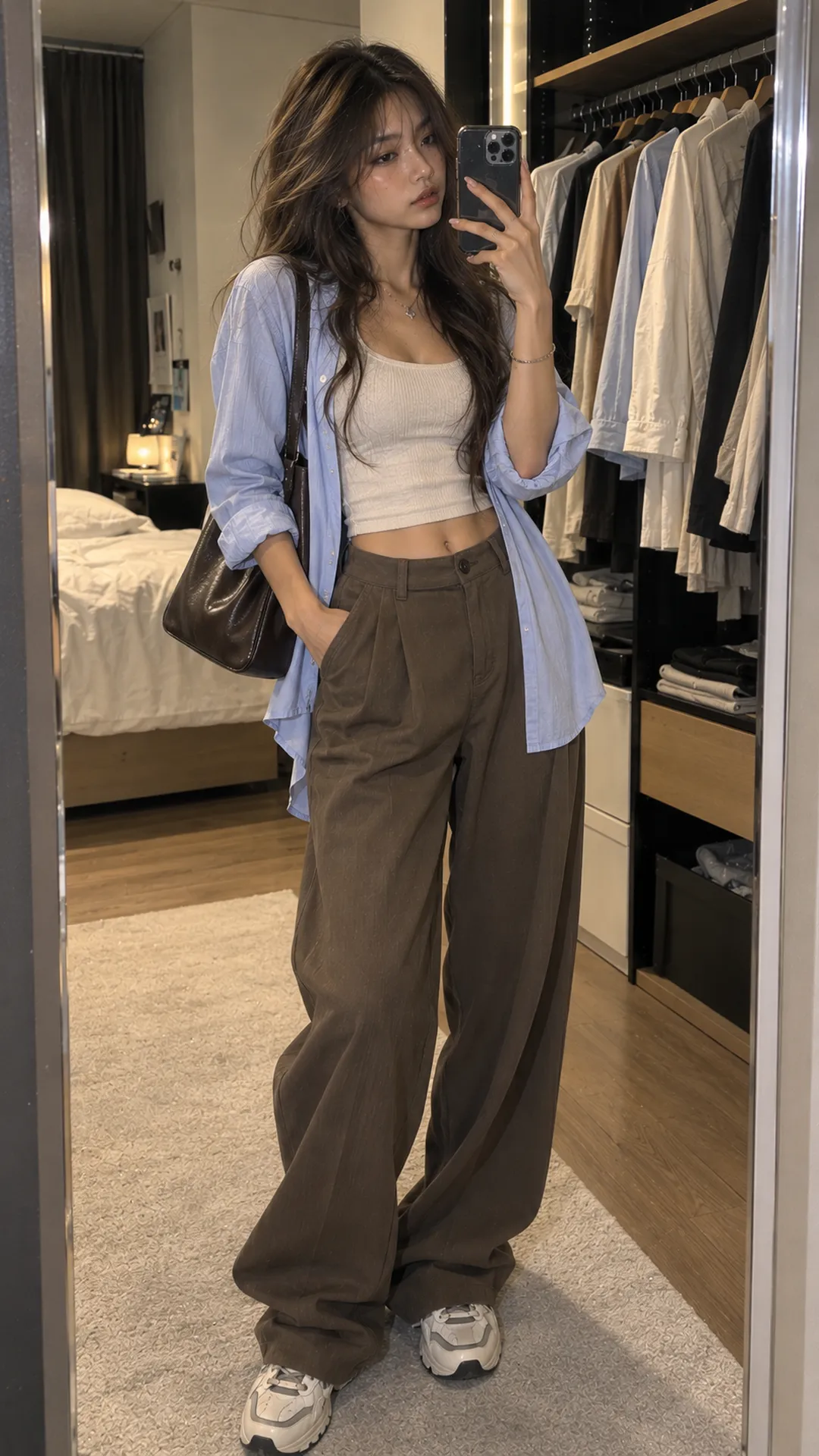
Start with the effect you want, not a list of forbidden colors
Searching for colors that make tan skin look brighter often reflects a wish for a clearly defined face and clothes that do not overpower the wearer. A top does not change your actual skin color. You might enjoy the strong contrast of white, the muted effect of brown or an uninterrupted black outfit; looking lighter need not be your only standard.
Distinguish three choices. Light colors such as cream place a bright area near your face. Deep colors such as navy create a rich background. Vivid colors such as cobalt draw attention to the clothes themselves. None is automatically better; decide whether you want people to notice your face, the outfit's lines or its color first.
Tan describes skin depth; it does not establish that only warm colors suit you. Warm, cool and neutral undertone categories can provide useful vocabulary, but avoid deciding your entire wardrobe from one vein check or jewelry test. Observing fabric beside your face is more useful than forcing yourself into a category.
Test top colors in minutes with clothes you own
Prepare three tops at different lightness levels, such as ivory, chocolate brown and navy. Stand by a window with evenly diffused light, avoiding direct sun on one side of your face or strongly colored indoor lighting. Keep your hair and makeup the same throughout the comparison.
- Hold each top around your neck and shoulders, observing both your face and exposed neck.
- Look at the overall effect in a mirror first, then take a reference photo if useful. Turn off beauty filters and keep the camera position fixed.
- Compare two shades within a color family, such as light gray and charcoal, before concluding that no gray suits you.
- Try a complete outfit with trousers or a skirt you regularly wear; a color that looks good beside your face still needs to work with your wardrobe.
Phones may adjust exposure between photos, so treat pictures as reference notes. If the mirror and screen disagree, try the outfit under the lighting where you will actually wear it. Check a work top in office lighting, not only in a fitting room.
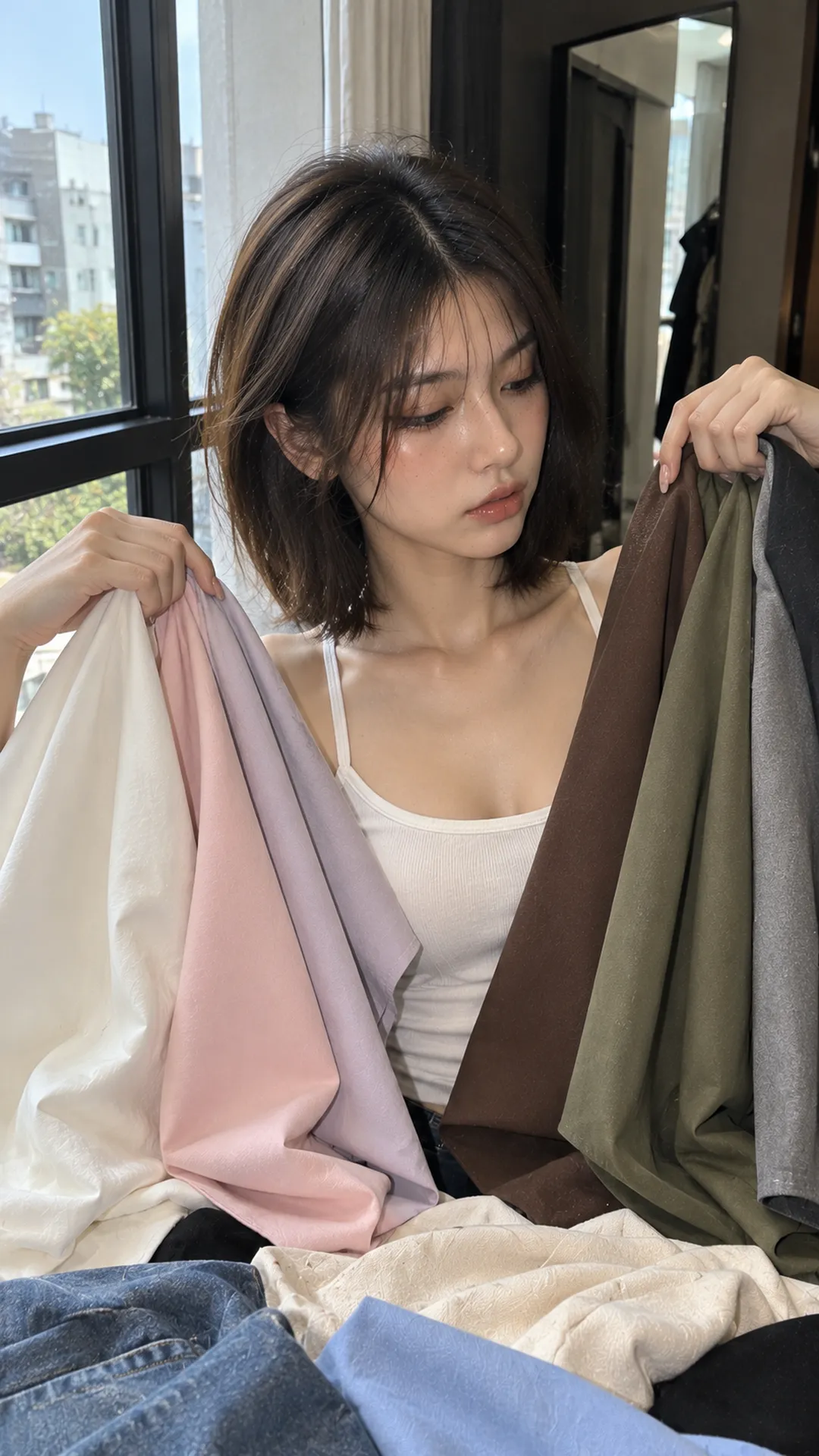
Color families to bring into your wardrobe
Ivory, cream and pure white
Start with ivory or cream if you want a gentle light area. A cream top, medium-blue jeans and dark shoes create a simple outfit without many additional colors. Pure white creates stronger contrast; if you like a crisp look, try a white shirt with black trousers. Compare the actual whites rather than rejecting a top by its color name.
Navy, teal and cobalt
Navy works easily as a background color in a shirt or blazer. Teal adds a green note when you want a change from black while keeping a subdued feel. Cobalt stands out more; try a plain top with charcoal trousers. These offer three levels of emphasis, even though they may all be described as blue.
Burgundy, brick red and distinct pink shades
Burgundy with black feels rich, while brick red with denim feels more casual. If you like pink, compare dusty and deep pink to decide whether you want a softer or more striking result. You need not choose earthy pink simply because someone calls it the only option for tan skin.
When choosing outfits for different women's tops, consider the neckline and how much color is visible. A cobalt turtleneck creates a much larger blue area than a camisole in the same shade, changing its effect beside your face.

Can you wear brown and gray with tan skin?
Yes. With brown, try separating the light and dark areas: a chocolate top, cream trousers and a dark-brown bag are an easy starting point. If the top is close to your skin color and you want more definition, choose a deeper brown, open the neckline or add a light border. This adjusts the composition; it does not fix a supposedly difficult skin tone.
Compare silver gray, medium gray and charcoal. A light-gray top can work with black trousers and small silver earrings; a charcoal top with a denim skirt gives a more subdued result. Brown-based and blue-based grays also differ, so one unsuccessful try is no reason to reject the whole family.
Texture can separate similar colors. A brown ribbed top with smooth straight-leg trousers differs from a head-to-toe plain brown outfit. In a gray outfit, try swapping one piece for faded denim to create a transition, rather than adding a bright color solely to rescue the look.
Pastels, neon and black: change the area before rejecting the color
Pastels do not automatically make tan skin look washed out. A neatly cut pale-purple top with dark trousers produces a different effect from a loose, all-purple dress. If you dislike a color near your face, try it in a skirt, bag or a partly visible inner layer.
With neon, ask whether you want the color to be the focal point. A vivid-green bag on a black outfit makes a small accent; a vivid-green top covering most of the upper body makes a stronger statement. Tan skin does not require less color, but choose its visible area to suit the occasion.
Black remains a good option if you like dark outfits. Combine matte cotton with denim or a small metallic detail for depth. If the neck area feels too closed, swap a high crew neck for a moderately open neckline, or try women's layering to reveal a light inner layer.
Three outfit formulas to try now
School or a city walk: a cream top and blue denim
Choose a cream top that fits at the shoulders, straight-leg jeans and sneakers repeating a color from your top or bag. The light area stays on the upper body, with familiar denim as the base. If the top is loose, partly tuck it or choose a shorter length to reveal where the trousers begin; extra accessories are not necessary for an intentional look.
Work: a teal top and charcoal trousers
A teal shirt places color near your face while charcoal trousers keep the lower half subdued. Add black shoes and a simple bag for a restrained workplace outfit. If adding a blazer, try navy before introducing a third color; two close dark shades can create a subtle transition without breaking up the outfit.
An alt-inspired outing: burgundy, black and silver
A burgundy top, black skirt and shoes with substantial soles concentrate the color in one place. Use silver earrings or a bag clasp to repeat metallic shine in two small areas. If the skirt has many straps or buckles, keep the top plain so those details stand out. Black cargo trousers can replace the skirt while preserving the same color logic.
To change pieces while keeping the composition, use the item-by-item styling guide: keep each color's role, then adapt the tops, bottoms and shoes to your plans.
What áo dài colors suit tan skin?
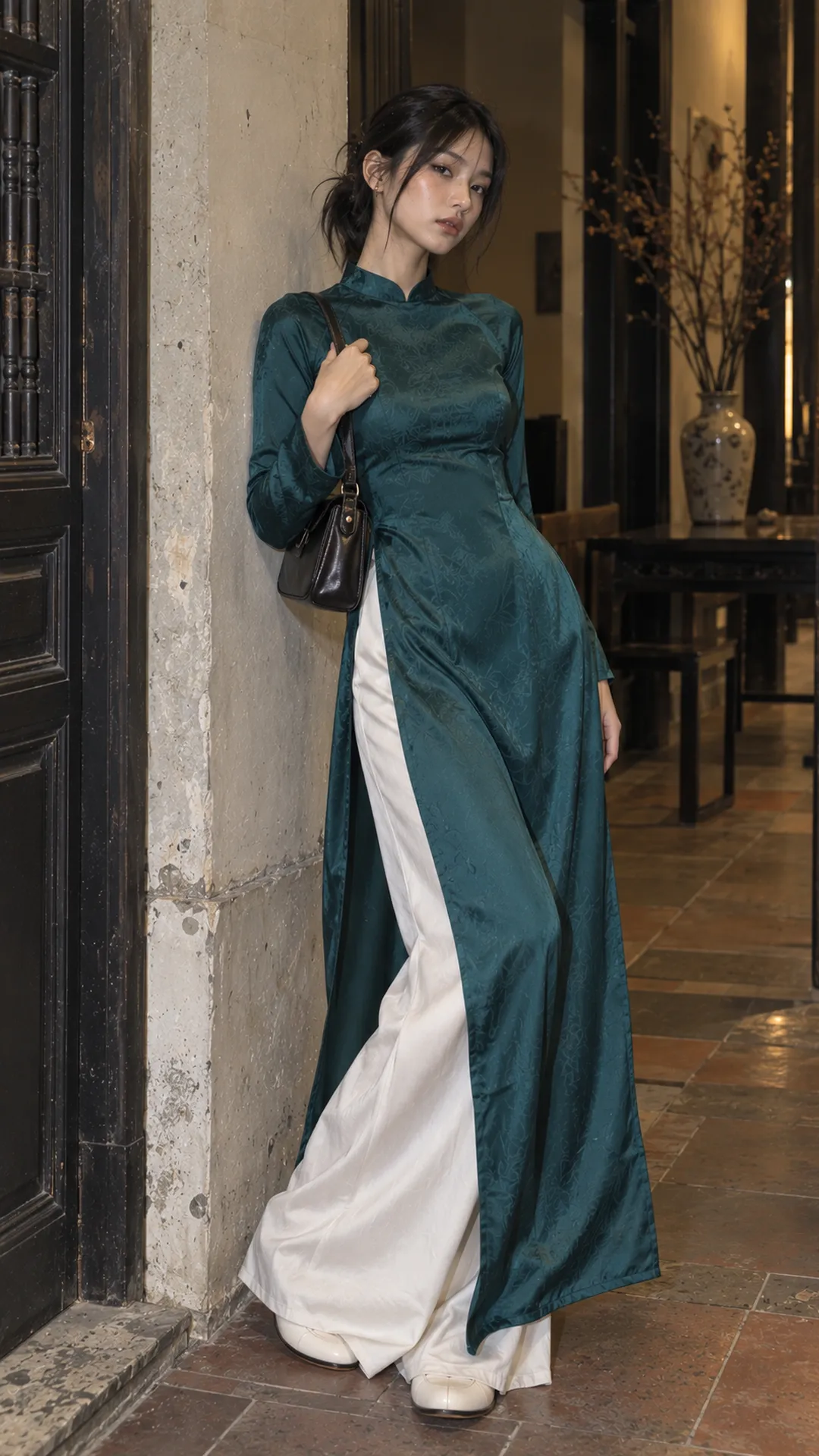
Ivory, burgundy, deep jade and plum are worth trying on. If you prefer a brown or gray áo dài, try it with the trousers you plan to wear. An áo dài creates a large, continuous area of color, so its shade and surface have a stronger effect than they do in a short top.
Do not choose from a tiny fabric swatch alone. Hold a sufficiently large piece near your neck and examine the outer fabric, lining and shine as you turn. Matte and glossy versions of the same red can look very different under event lighting. Patterns at the chest or collar also shift the focal point.
For an event with a dress code, establish the required color first, then choose a shade within the permitted range. For an unrestricted occasion, light trousers create a transition at the panels, while tonal trousers preserve continuity. Bring your planned shoes and accessories to assess the complete áo dài outfit.
Build your palette without replacing your wardrobe
Choose two base colors you already own in quantity and one accent you have tried and enjoyed. For example, black and denim can support burgundy, while cream and brown can support teal. Before buying a top, pair it with at least two existing pieces and shoes you often wear.
Save a few photos of outfits you have actually tested, adding brief notes on shade and fabric. A note such as 'charcoal, matte fabric, open neckline' is more useful than 'gray suits me.' When making a fashion moodboard, use those notes to distinguish what you like about the color from what you like about the lighting or model.
Your answer to which top colors suit tan skin will become more specific: the colors you like near your face, shades that combine easily and tops that suit daily life. That gives you a usable everyday palette instead of a list of rules.