

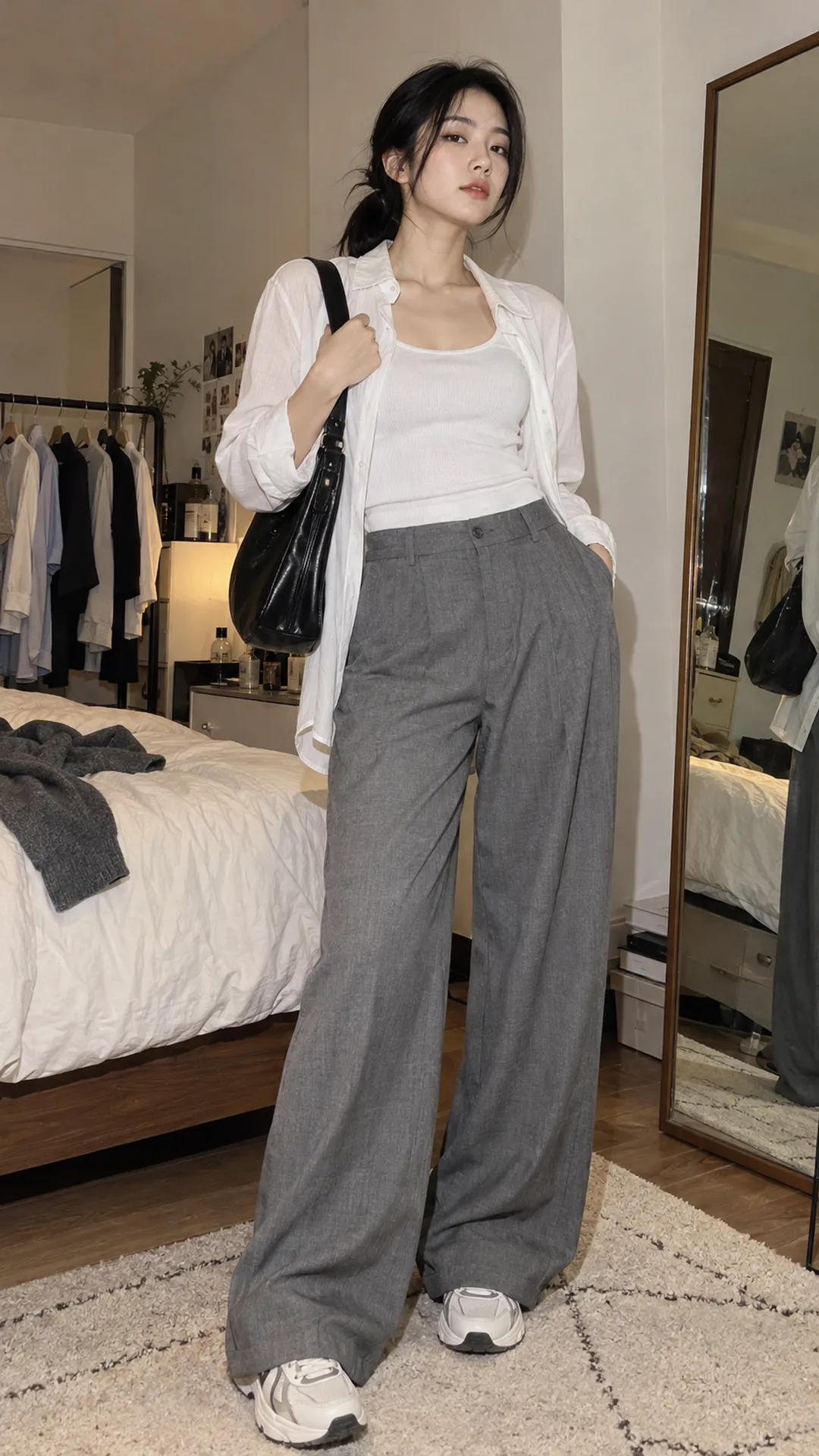
Read the gray pants you actually own
Look at the pants in natural light and classify them as light, medium or dark. Near-white gray emphasizes the lower half; near-black charcoal provides a deep base. Start here because it determines light-dark contrast between top and trousers.
Next, notice undertones. Some grays lean blue, others brown or beige. Compare with white and cream tops to make the difference clearer. An exact color code is unnecessary; establish which pairing gives the effect you want.
Finally, consider surface. Washed gray jeans have faded areas and seams that create more variation than smooth tailored trousers. Structured chinos differ from draping fabric. A color match can still feel wrong if thickness, shine and formality do not relate.
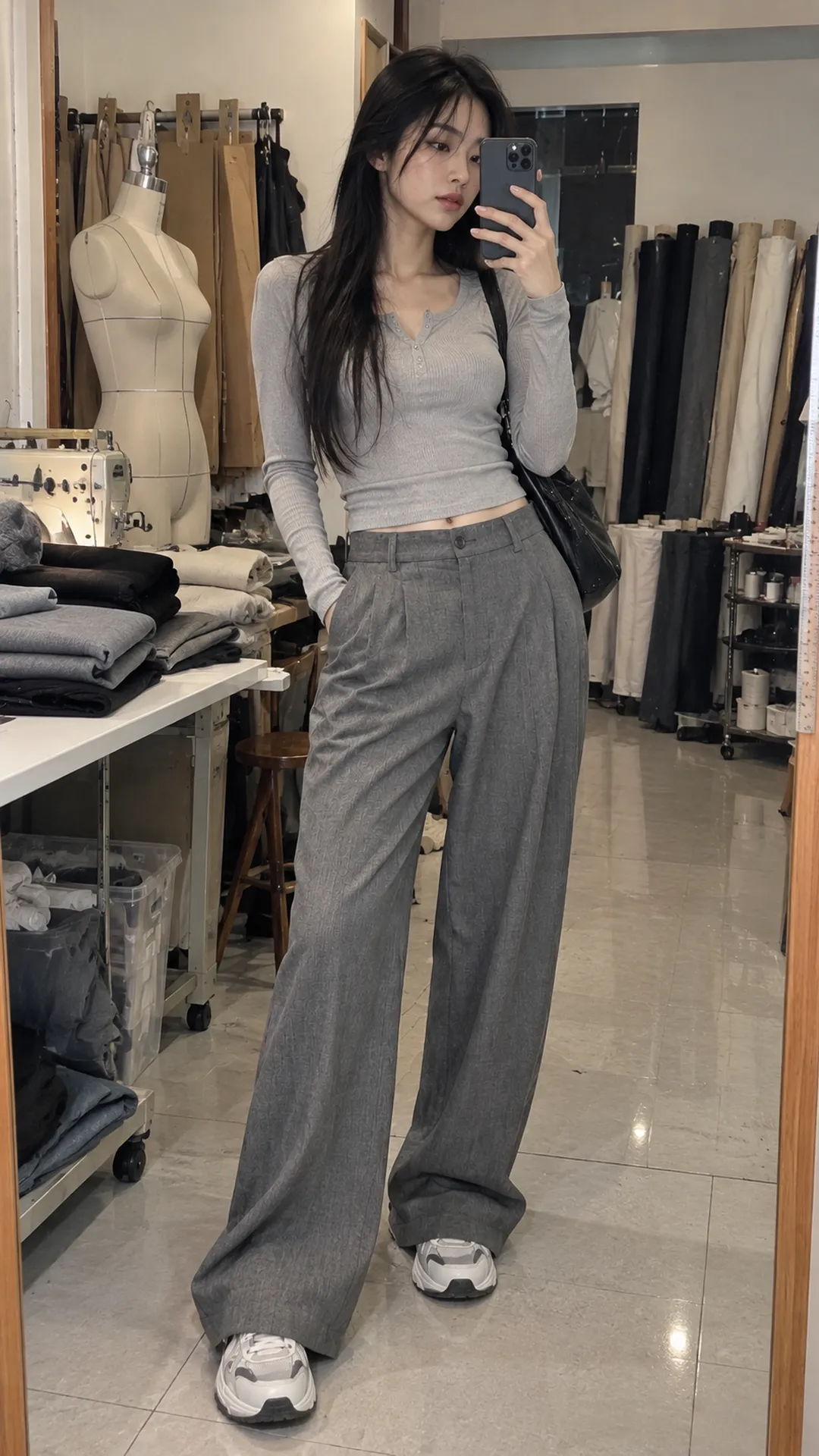
Choose a top color for your desired effect
| Top color | Try with | Effect | What to balance |
|---|---|---|---|
| White | Medium gray, charcoal, gray denim | Lightness and a clear upper half | Coverage and top length |
| Black | Light or medium gray | Clean contrast and defined lines | A connection between shoes and top |
| Cream | Warm gray, pale gray | Soft color transition | Whether the shades merge too much |
| Blue | Medium gray, charcoal | Adaptable from casual to polished | Pale blue or navy for the desired contrast |
| Pale pink or purple | Light gray, charcoal | Color without intense brightness | Keep accessories simple |
| Burgundy | Light or medium gray | A deep accent | Avoid making every accessory prominent |
| A different depth of gray | Any gray family | Tonal shades within one family | Separate through lightness or surface |
These are starting points, not a chart forbidding other colors. Green or yellow can also work when you control intensity and area. Choose the effect first: light, strongly contrasting or one distinct color accent.
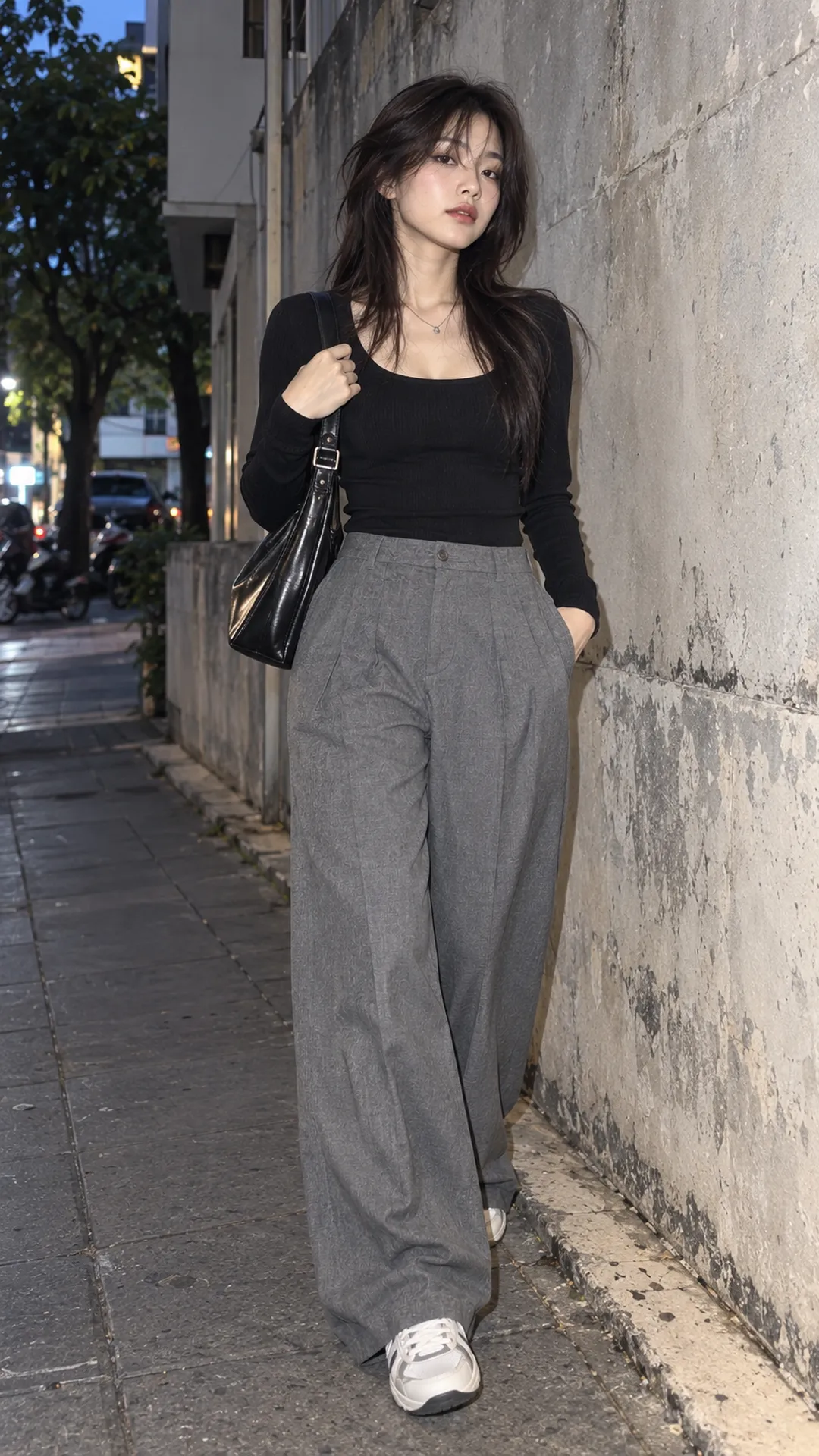
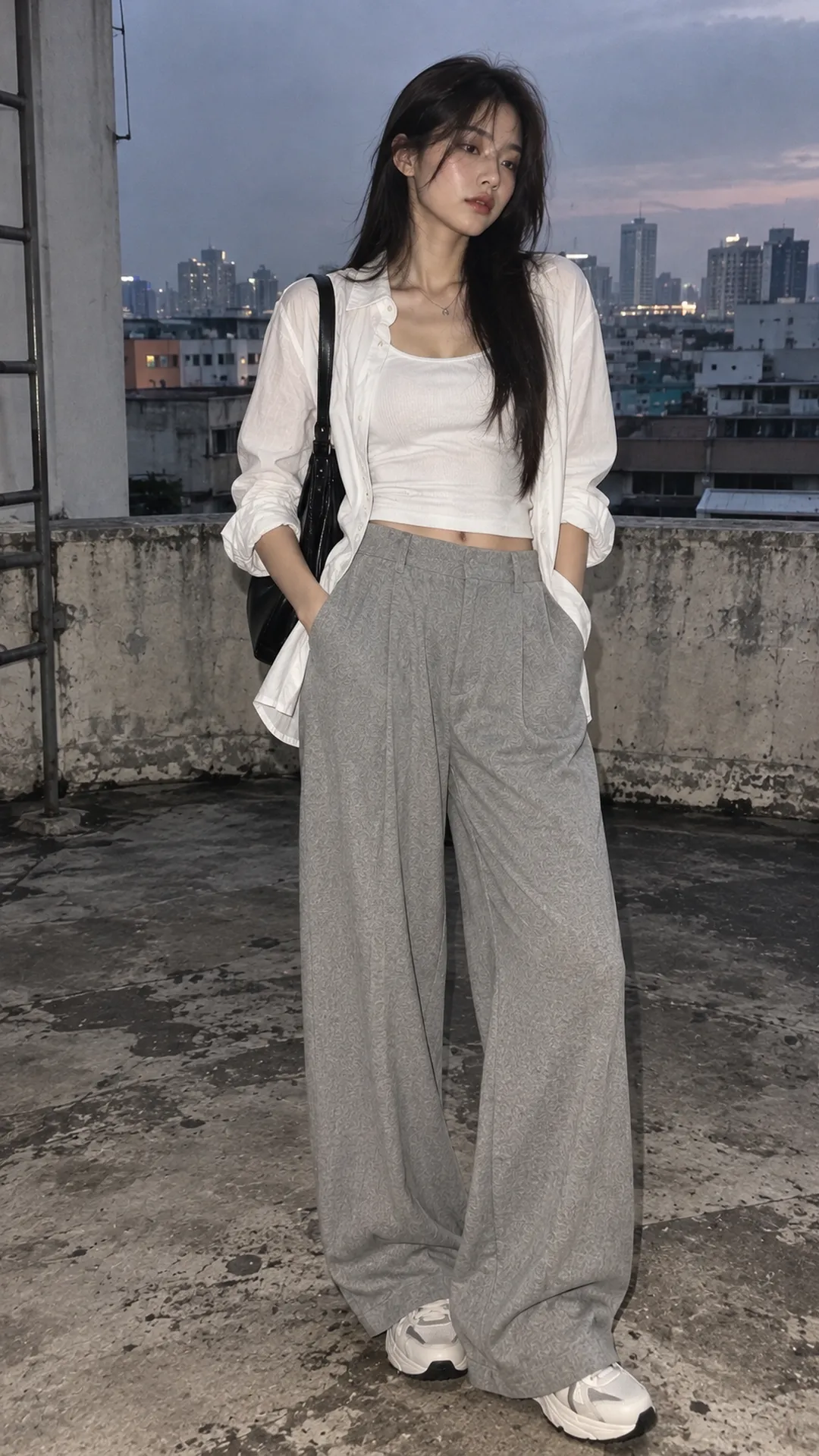
White, black and cream: three different choices
White creates a clean, readable highlight
White with charcoal gives clear light-dark contrast for a limited palette with depth. With wide legs, choose a waistband-length top or front tuck. With straight legs, a slightly looser top can still preserve the torso's outline.
Very pale-gray pants and white create a lighter outfit but need differences in surface or cut. A neat white tee with pleated trousers reveals structure more clearly than two loose, thin, equally draping pieces.
Black emphasizes shape and the waistband
A neat black top and pale-gray wide-leg pants define a smaller upper half against a wider lower half. Repeat black in the shoes to connect the endpoints. With light shoes, a small black bag can repeat the top instead.
Dark-gray pants and black offer less color separation. Vary texture: a fine knit with washed jeans, or a matte tee with creased trousers. You need not add a light color if a dark outfit is intentional.
Cream gives a softer transition
Cream is easy to try with warm-leaning gray. Dark-brown shoes or a tea-colored bag can provide an endpoint. Cream can also work with blue-gray, but inspect it directly because warm-cool contrast is stronger than with neutral white.
If an all-light outfit lacks focus, adjust the waistband or neckline, or add a small deep-toned accessory. Do not assume cream is wrong for a particular skin tone or body; placement and cut offer many adjustments.
Add color with blue, pink, purple or burgundy
Pale sky blue with medium gray looks light with less contrast than pure white. Try a neatly tucked shirt or crew-neck tee. For more formality, use navy and keep the pants light so the pieces do not merge into a dark area.
Pale pink stands out against charcoal without needing a large area. A top ending at the waistband, straight trousers and black bag suffice for daily wear. Pale purple follows the same logic; avoid excessive bows, metal and prints if your aim is a neat outfit.
Burgundy with medium gray gives a deeper accent. Try a well-fitting top, creased trousers and black shoes. With a glossy top, keep bag and shoes less reflective so the color remains the focus.
Compare three tops with the same trousers and photograph them in consistent light. The guide to creating a fashion moodboard records both color and proportions, avoiding a collection of attractive references that never clarify which top suits your pants.
What tops define proportions with wide gray pants?
With wide legs, color and top length belong together. A white top may have the right color but hide the waistband if very loose and hip-covering. To show the leg line more clearly, choose a hem near the waistband or a partial tuck.
Fitted tops are not the only option. A loose shirt works with a moderately open neck, neat rolled sleeves or a waist break. Avoid multiple billowing areas without anywhere to recognize the structure.
Try wide gray trousers, a black square-neck top and shoes with toes visible beneath the hem. Or light-gray trousers, a tucked pale-blue shirt and dark bag. Both use color contrast differently while retaining a visible waistband.
With a cardigan or blazer, assess the outfit both open and closed. Length principles in women's layering help the outer piece add vertical lines instead of concealing the proportions you just created.
Adapt for gray jeans, chinos and tailored trousers
Gray jeans: use the wash
A pronounced wash already places several lightness levels on one surface. Plain white, black or pale pink lets it show. With a graphic top, keep the print moderate and avoid an elaborate belt if the denim is heavily ripped or distressed.
A neat black tee, wide gray jeans and substantial-soled shoes can form an expressive base. For further development, see building Alt Fashion outfits from existing pieces to add a specific accent rather than replace your wardrobe.
Gray chinos: balance the fabric's structure
Structured chinos contrast with a well-fitting tee, thin knit or softer shirt. With large cargo pockets, reduce top details at the waist. Cream, navy and white are all worth trying depending on the actual gray.
Gray tailored trousers: beyond office wear
A white tee and simple sneakers make tailored gray trousers more casual. For polish, switch to a V-neck or shirt and occasion-appropriate shoes. Creases, hem length and the tuck often determine neatness more than a color change.
If unsure which top shape suits the pants, use the Women's Tops Item Guide to access individual garment guides. Choosing the top type first and narrowing color afterward is easier than considering everything at once.
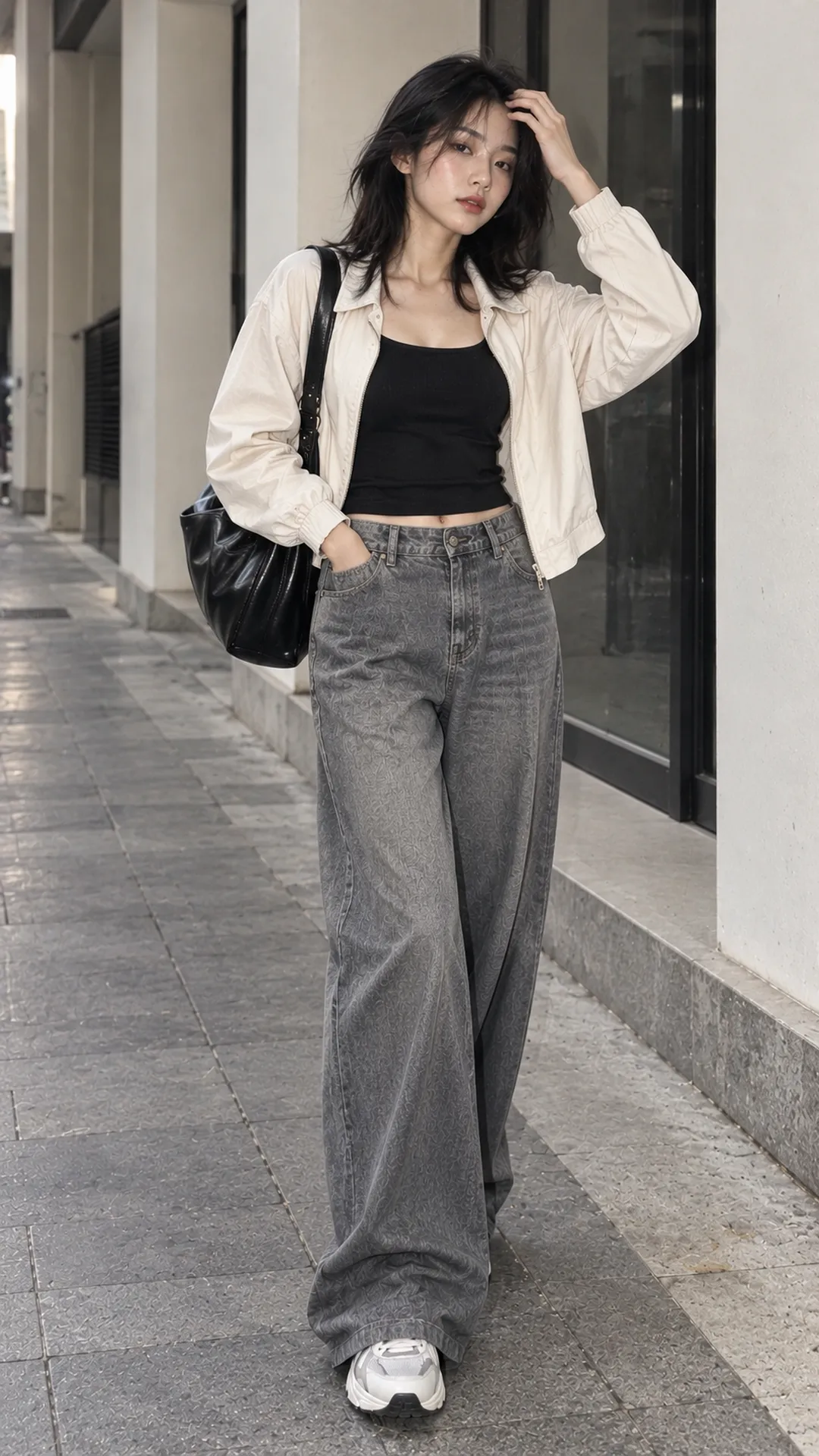
Finish with shoes and a bag without adding too many colors
Black shoes finish light-gray trousers clearly or connect with a black top. White lightens the lower half, especially with a light top. Dark brown can bridge to cream, but check the whole outfit so it does not become an isolated area.
The bag need not match the shoes. If the top is the accent, a neutral bag keeps things manageable; if both garments are neutral, the bag can carry color. One clear connection in color, shine or metal detail is enough.
A quick check before going out
With stripes, choose one stripe color that relates to trousers or accessories. White-and-navy stripes with medium gray already create three lightness levels, so a plain bag is easier than a patterned one. With florals, examine the background before flower colors. This lets you use patterned tops even though gray-pants examples often show plain ones.
View the outfit from a distance to see whether top or trousers stand out more. If that differs from your aim, change the top's lightness or reduce supporting detail. Then sit and walk to test hems, tuck and top comfort.
If choosing among colors remains difficult, return to three clear options: white for brightness, black for sharpness and cream for softness. Once a top shape suits the pants, try blue, pink or burgundy on the same structure. You can see what the new color changes without rebuilding the outfit.