

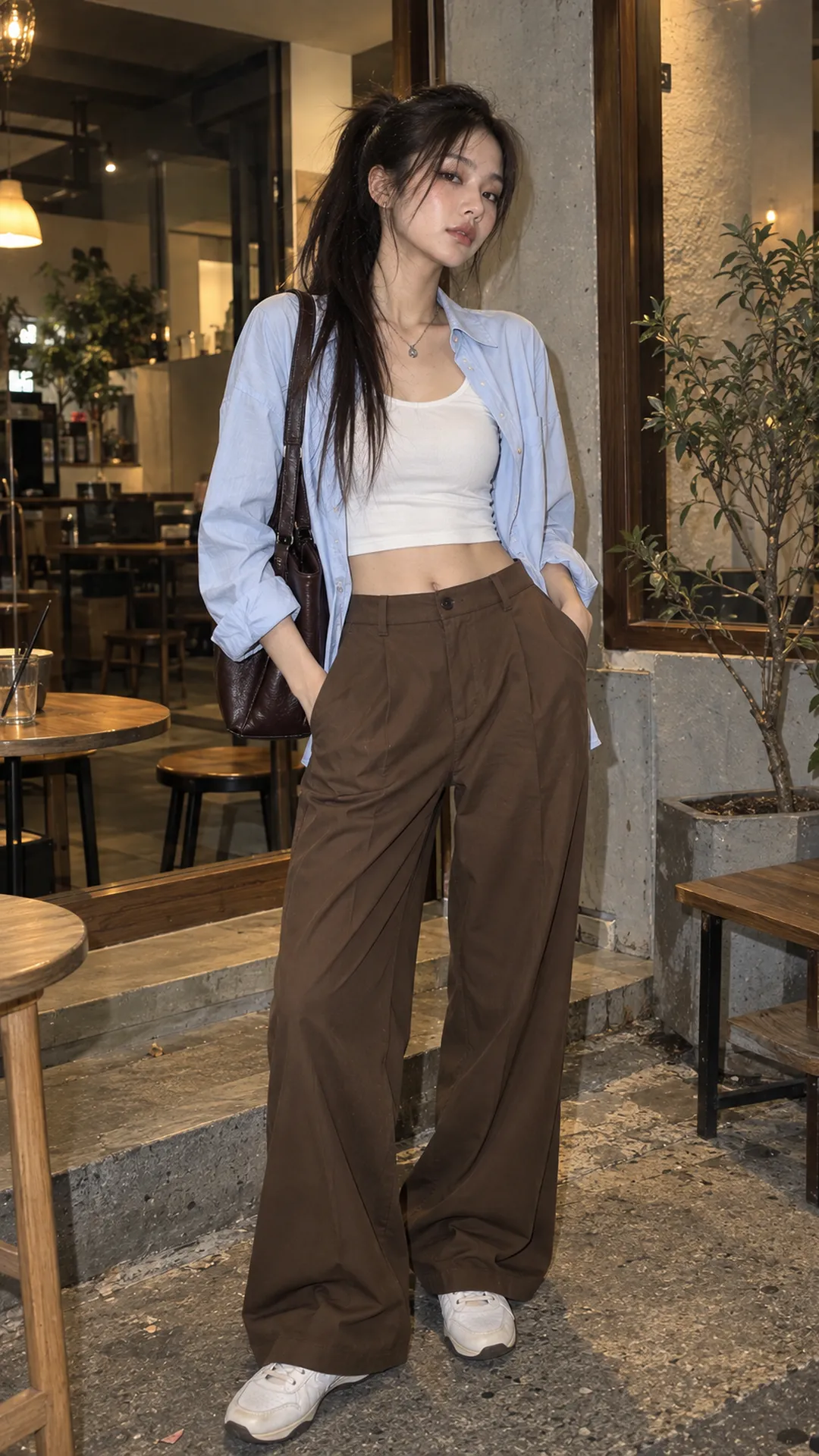
Identify the brown shade before choosing a top
Chocolate, caramel and gray-brown feel different despite all being called brown. Chocolate is dark, caramel has stronger yellow or orange notes, and gray-brown is generally muted and less warm. Shop names are only references; lighting and screens affect the apparent color.
Place the pants beside white paper to see whether they lean yellow, red or gray. You do not need an exact color code. Identify the dominant quality so you can avoid a top shade that takes the outfit away from your intended effect.
Caramel pants and a cream top create a soft transition, while the same pants with a pale-blue shirt have clearer separation. Gray-brown pants with cool white feel clean; switching to a strongly yellow-toned cream warms the palette considerably.
If you save reference photos but struggle to apply them, see how to create a fashion moodboard. For brown pants, retain three elements: a brown close to your actual garment, one main top color and shoes you can wear.
Six starting color options, from subtle to bold
White: define the waistband and trouser shape
White is a convenient start for brown tailored trousers, jeans and chinos. Bright white contrasts clearly with dark brown, defining the top-to-bottom transition. For a softer result, try ivory instead of pure white.
With wide-leg pants, a well-fitting white T-shirt or neatly tucked shirt preserves waist definition. The top need not be tight. A loose one also works when the hem does not bunch at the waistband and the sleeve length suits the overall look.
Cream and beige: related colors with a visible boundary
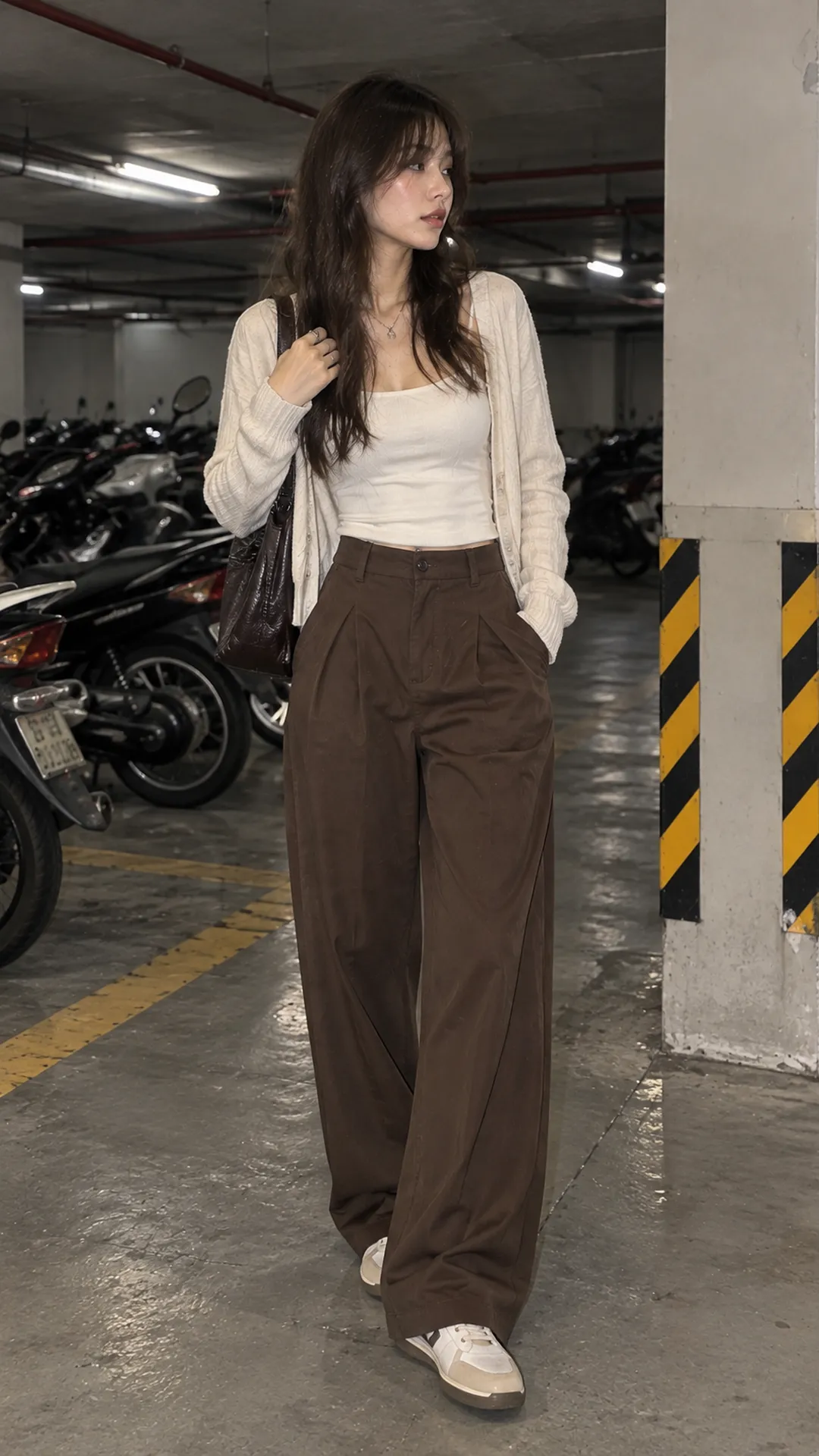
Cream with brown creates a low-contrast palette. To prevent the pieces merging, choose a noticeably lighter top or vary surfaces: a ribbed knit with smooth tailored trousers, or smooth cotton with brown corduroy.
If the shades are almost identical, a belt can mark the waistband. Do not add one merely because a formula calls for it. If you like an uninterrupted straight silhouette, wearing the top neatly untucked is intentional too.
Black: a sharp, focused effect
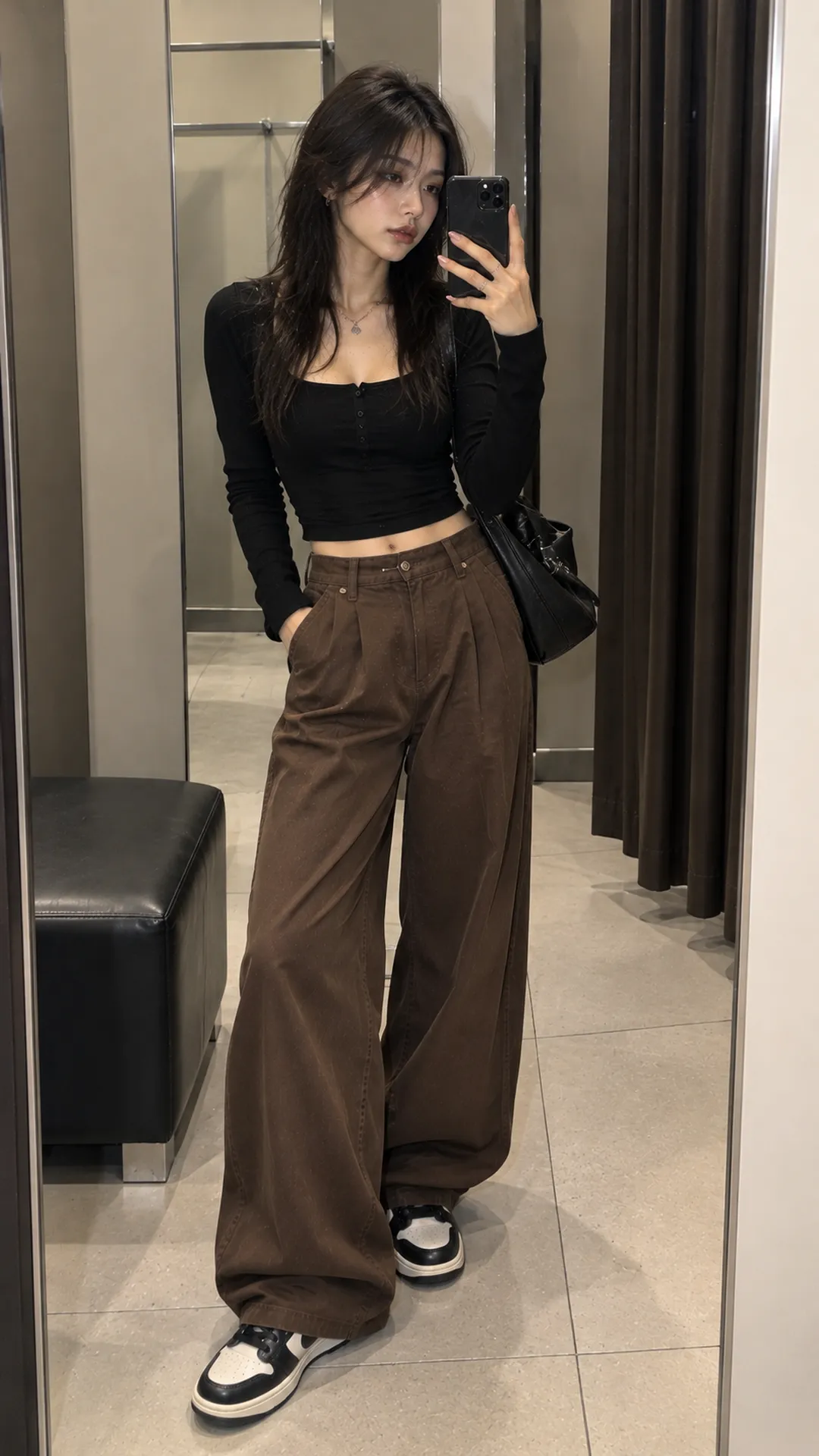
Brown pants and a black top suit a subdued palette. With very dark chocolate, consider texture because the colors may blend under dim lighting. A finely ribbed black top and matte-brown pants separate more clearly than two equally dark, flat surfaces.
A neat square-neck or crew-neck black top with straight brown pants is a simple evening formula. Try black shoes to repeat the top color below. If it feels too heavy, switch to a cream bag rather than adding many colors at once.
Pale blue: open up the palette
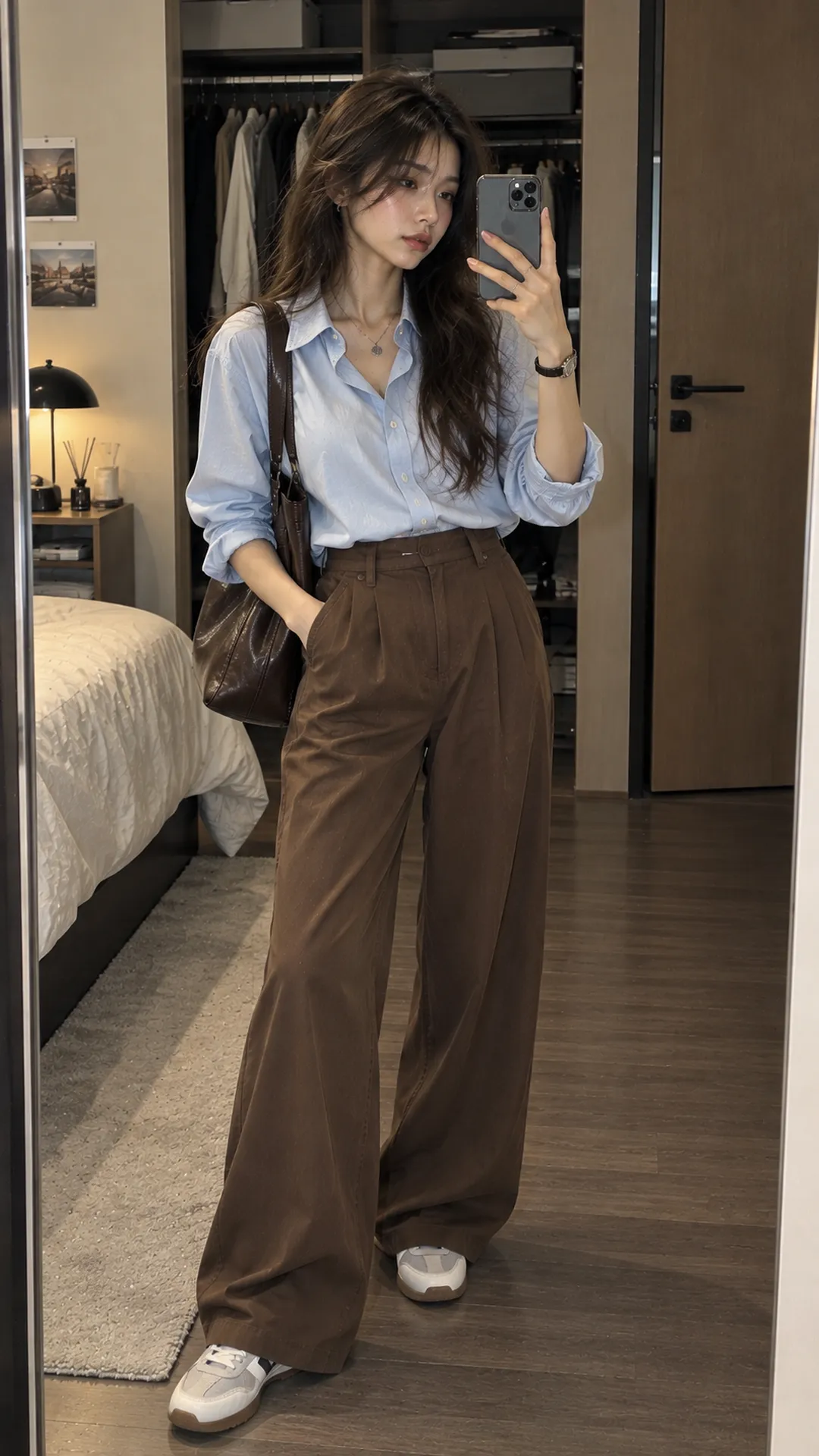
A pale-blue shirt and brown pants work for school or workplaces with compatible dress codes. Blue creates lightness on the upper body while brown keeps the lower half subdued. Against caramel, the color separation is usually clear.
Try a plain shirt before stripes. With blue-and-white stripes, keep shoes and bag simple so the pattern does not compete with others. Open a few collar buttons to the coverage you find comfortable.
Blush pink: soft without being overly sweet
Blush pink with chocolate pants creates clear light-dark contrast. For a less soft effect, add creased trousers, loafers or a structured bag. A pink bow top and draping pants instead push the look in a more feminine direction.
Distinguish low-saturation blush from neon pink. They share a color family but differ greatly in prominence. Online, look for real daylight photos rather than relying only on color-edited images.
Burgundy or olive: add color deliberately
Burgundy with brown creates rich color for people who enjoy subdued outfits beyond black. Olive with caramel leans toward earth tones. Try either directly, since different browns interact differently with the top's red or green notes.
If unfamiliar with these combinations, start with a plain top, neutral shoes and a small bag. Avoid adding a multicolored scarf, bold belt and contrasting shoes on the first attempt. Fewer variables make it easier to see what helps or complicates the outfit.
The same top color styles differently with different pants
Brown tailored trousers: consider pleats and drape
Brown tailored trousers with a white or pale-blue shirt or neat black top are easy to adapt to the occasion. With front pleats, tuck in a thin top to avoid excess fabric around the stomach. A long, thick top can disrupt a smooth waistband even when the colors work.
Try the hem with your actual shoes. Excess length pooling into folds changes the outfit from a reference photo with straight-hanging trousers. The guide to choosing women's pants by cut and rise helps address proportions before accessories.
Brown jeans: include the wash in the palette
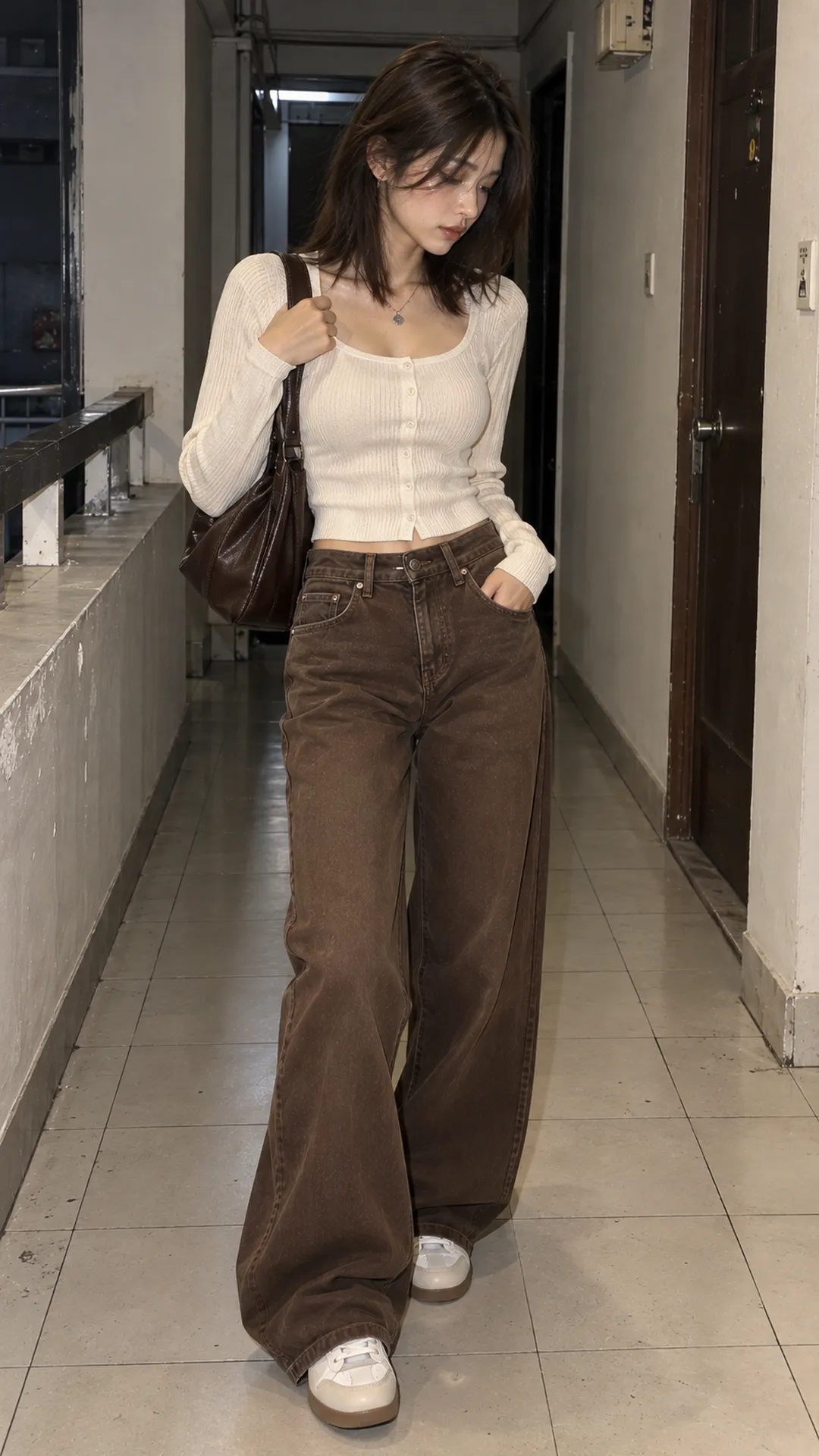
Brown jeans may have faded thighs, prominent stitching or uneven color. Since they already contain detail, a plain white top or minimally printed black top provides an easy base. With light-brown jeans, a cream baby tee makes a neat outing outfit.
If you like graphics, choose a print with one shade repeating the brown or your shoes. The entire print need not match the pants. One small link is enough; trying to match every color can make choosing clothes feel forced.
Brown chinos and cargo styles: balance pockets and width
Cargo pockets or a loose cut add volume at the hips and legs. Try a well-fitting T-shirt, tank or short shirt to avoid excess fabric above. If you prefer a loose outfit throughout, reveal the wrists or waistband to create a break.
With brown chinos and an olive top, cream shoes can reduce a uniform-like effect. For an outer layer, choose a length clearly different from the inner top; hems that differ only slightly can look unresolved.
Three complete outfits for your plans
School or a relaxed workday: straight brown pants, a pale-blue shirt, neat white sneakers and a plain tote. Moderately rolled sleeves create openness; keep hems off the ground for easy movement. Check the destination's dress code before choosing a very short top or wide neckline.
Coffee: brown jeans, a cream top ending at the waistband, dark sandals and a small shoulder bag. The waist transition and space around the ankles are the main features. If you dislike short tops, use a hip-length one with a neat partial tuck, avoiding thickly rolled fabric.
Dinner: dark-brown tailored trousers, a black top with a defined neckline, black shoes and small jewelry. A burgundy bag can add color. This relies more on fit and surface than abundant decoration; check indoor lighting to ensure the dark pieces remain distinct.
To add personal character to these formulas, use the beginner's approach to alt fashion styling to choose one accent. A distinctive belt or shoes may be enough without replacing your existing clothes.
Choose shoes, bags and belts by their role
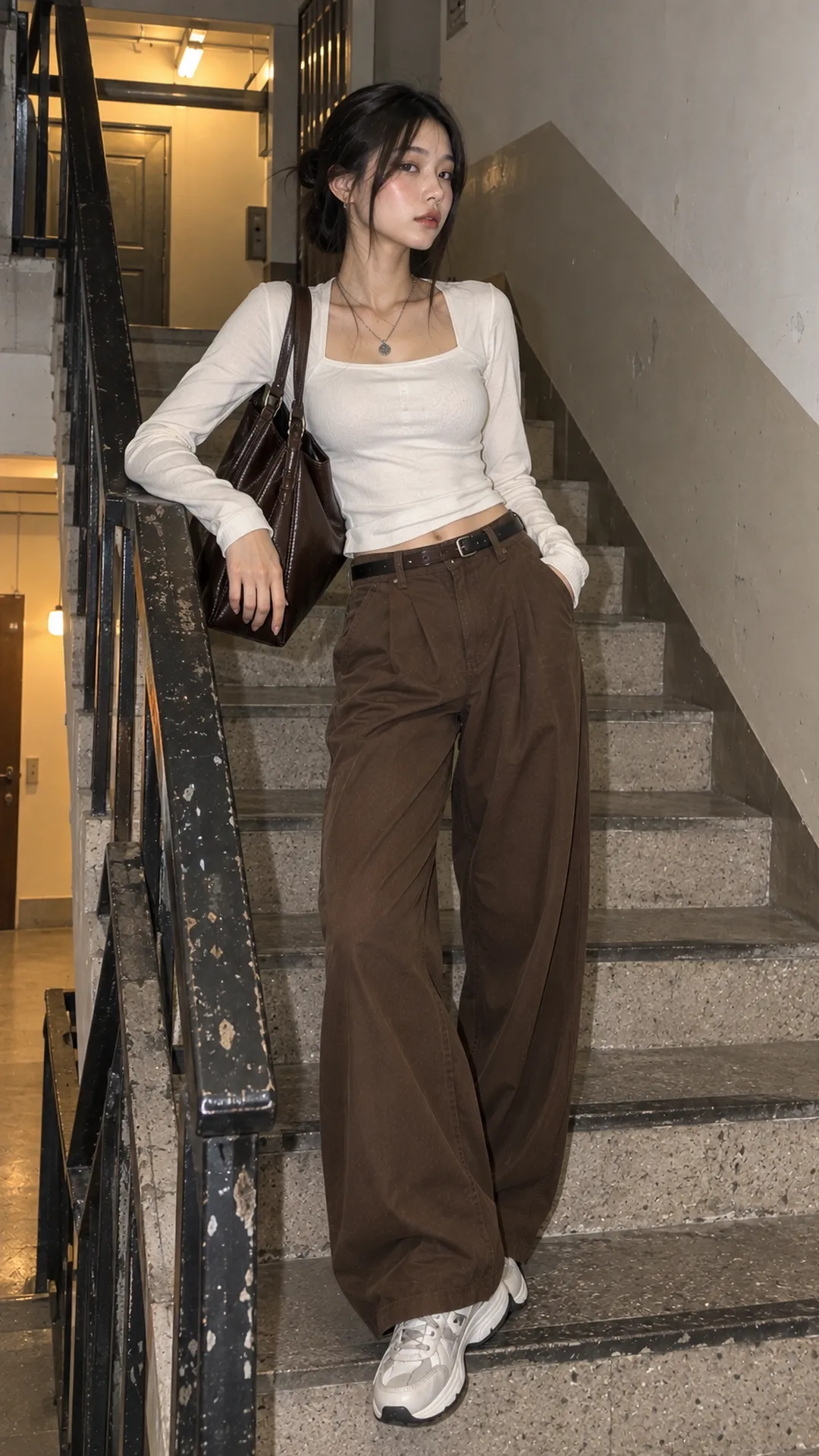
Black shoes connect with a black top or belt; cream shoes add light below; brown shoes close to the pants continue the color downward. These are three options, not a rule requiring shoes and bags to match.
Check how much of the shoe shows under the leg. Small shoes may disappear beneath very wide pants, while oversized soles can overpower a neat cut. See how to choose footwear for an outfit if the colors work but the lower section still feels unbalanced.
A bag should serve your plans before color. For a laptop, choose adequate capacity and test the strap against your top's shoulder. For dinner alone, a small bag removes a large area from the palette. A belt is most useful when it actually holds the trousers or emphasizes the waist.
Fix an outfit without replacing everything
If the outfit feels too dark, change one substantial element to a lighter color first: the top or shoes. If colors work but the silhouette feels heavy, check top and trouser hem lengths. If there are too many focal points, remove an accessory or replace a patterned top with a plain one.
Take a full-length photo from sufficient distance and compare it with the mirror. Do not conclude that brown does not suit you because one pair has the wrong length. Separate color, fit and accessory issues to adjust the right area while keeping pieces that still work.