

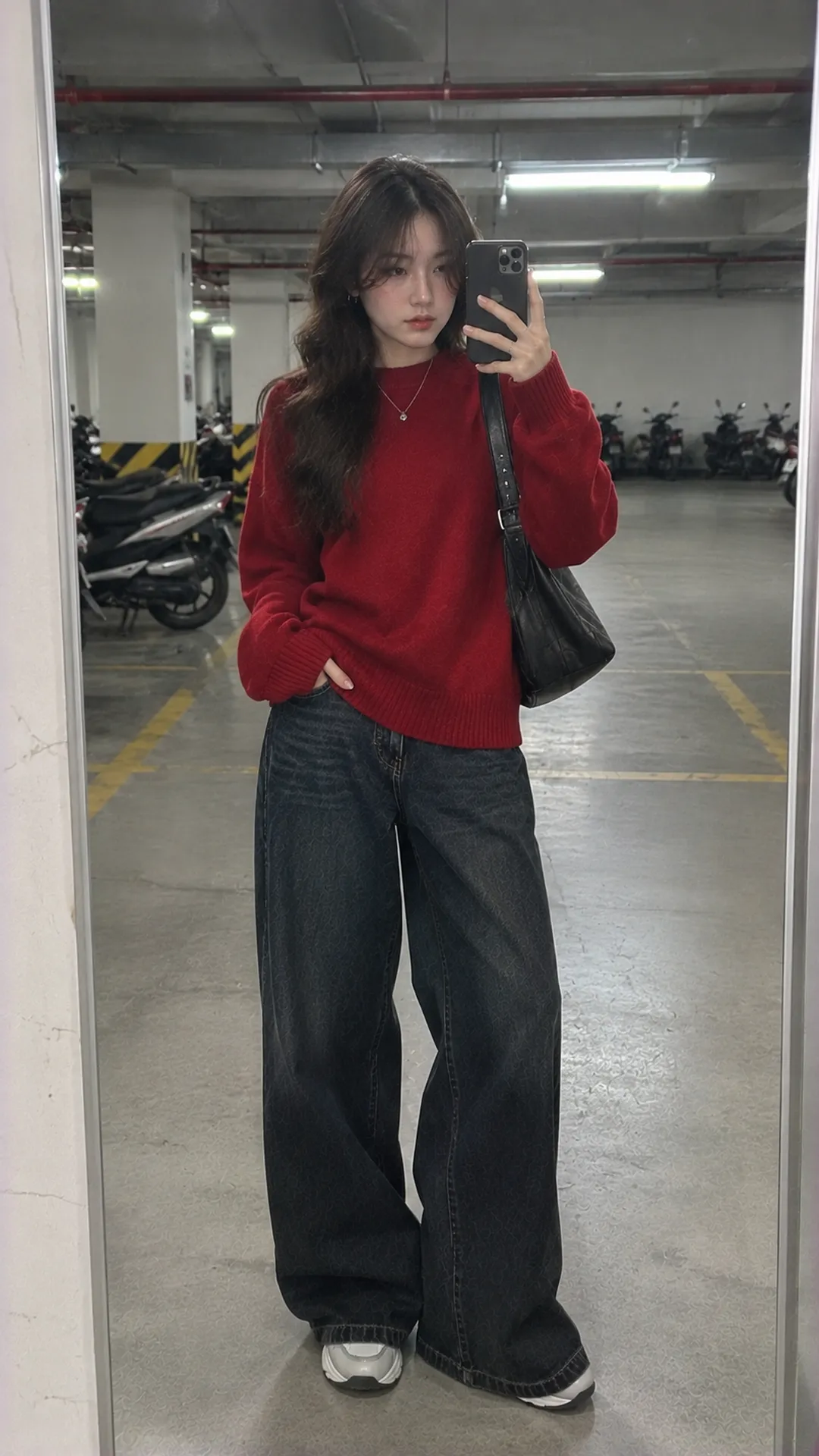
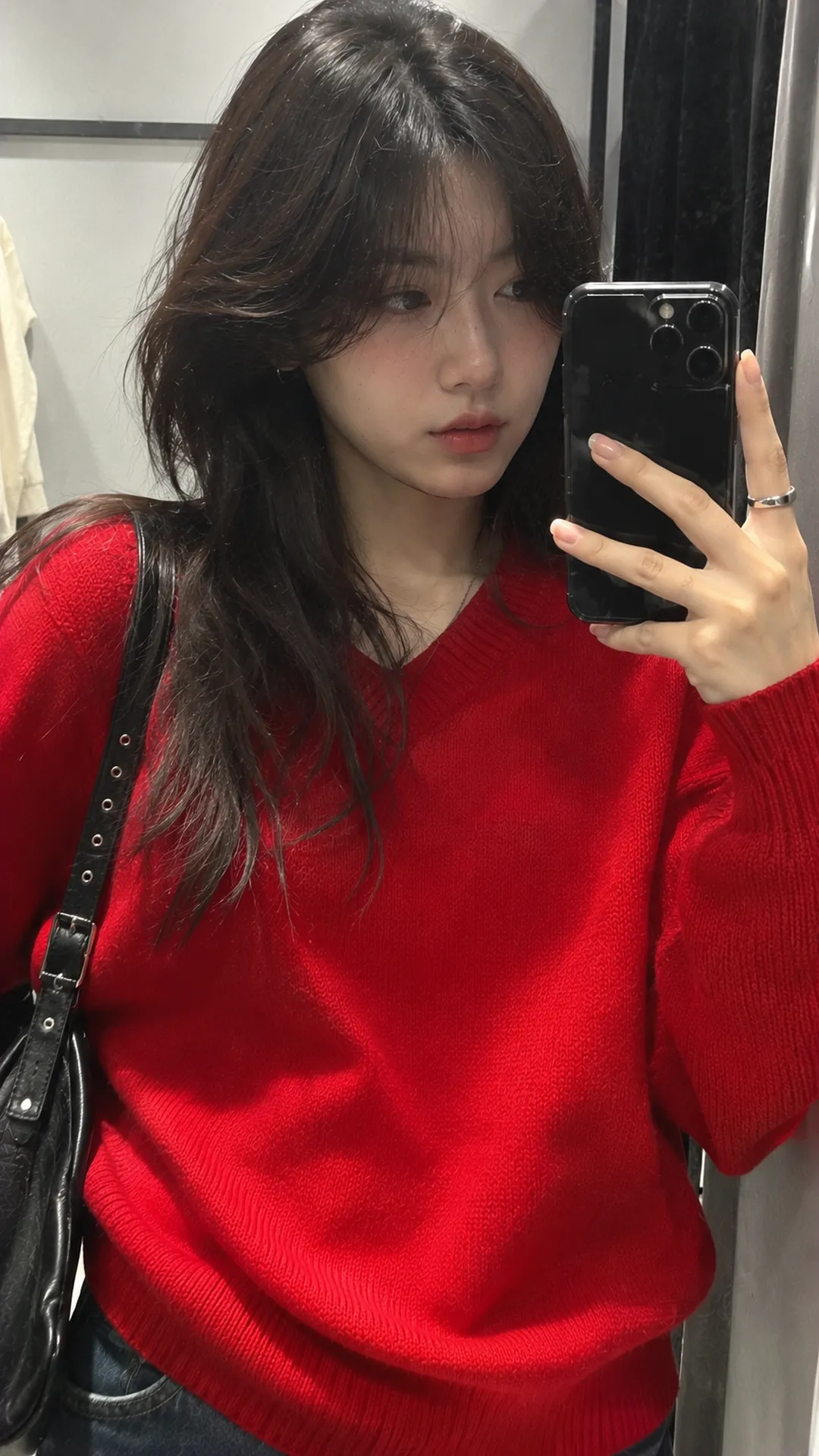
Identify bright red, burgundy, or plum red
Look at the top in daylight next to a familiar white or gray garment. See whether the red leans orange, purple, or fairly neutral, then consider how light, vivid, or muted it is. Two tops labeled burgundy can look different, so use the name as a rough guide.
Bright red stands out against neutral pants. Burgundy usually gives a deeper, quieter effect, while plum red can look distinctly purple in some light. You can compare the actual top and pants without identifying a precise color code.
Texture changes how the color reads. A shiny fabric reflects more light than a matte tee, and a raised knit has more visible detail than a smooth top. If color and texture already stand out, try simple pants first and add one detail at a time.
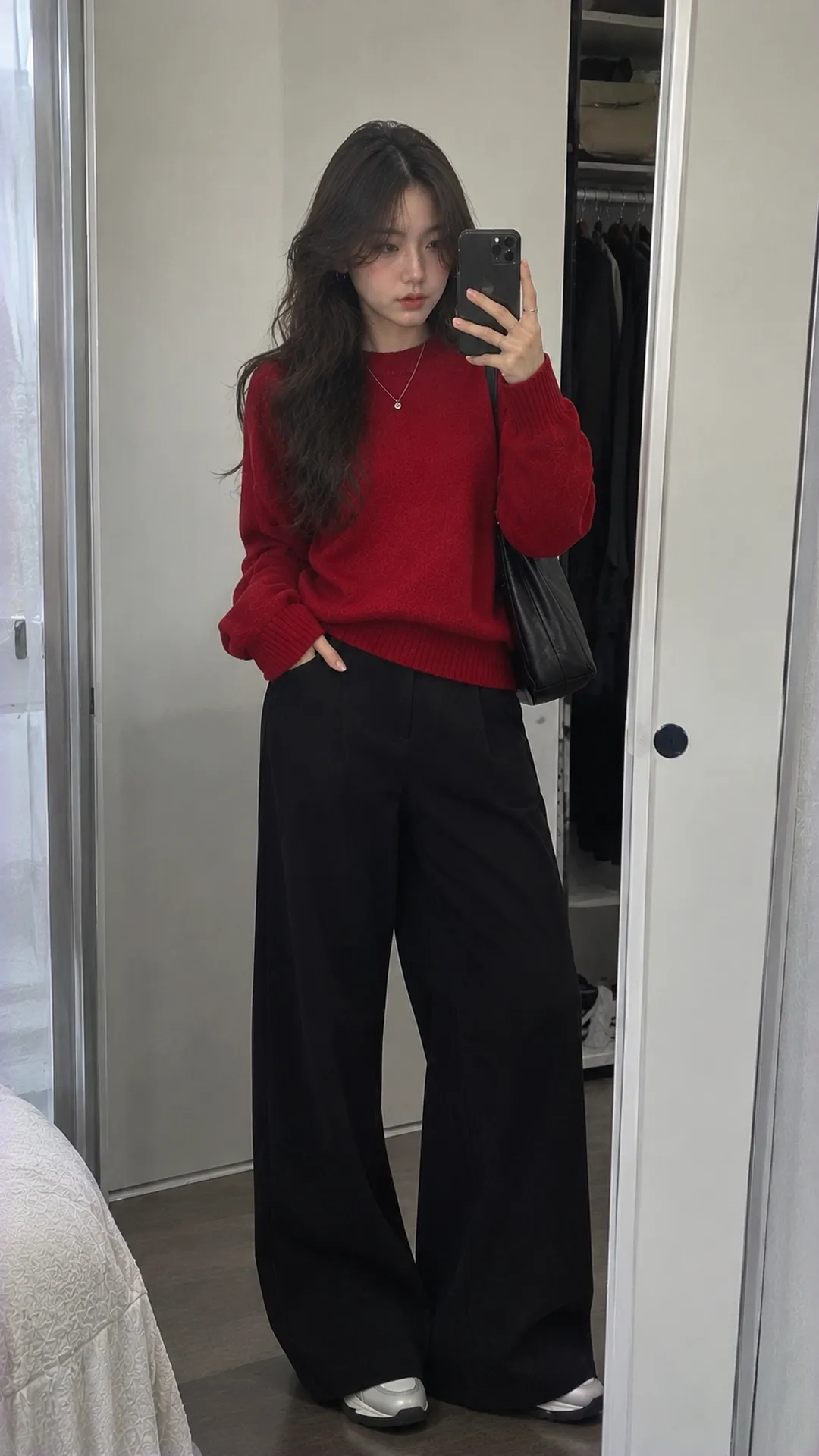
Black pants let the red top lead
Try red and black with pieces you own. A fitted red tee and straight black pants make an everyday base, while a red button-front shirt with black tailored trousers feels more defined. Choose cuts that suit where you’re going.
A vivid red top and glossy black pants can both draw the eye. Keep the effect and simplify the jewelry or bag if you like it. For a softer look, try matte black pants before switching colors. The finish can make a bigger difference than the pairing itself.
Black pants darken the look of a burgundy top. If the waistband and hem are hard to distinguish, try a light detail on the shoes or a top with a different texture. If you prefer a continuous dark palette, check that the shapes are still visible from head to toe.
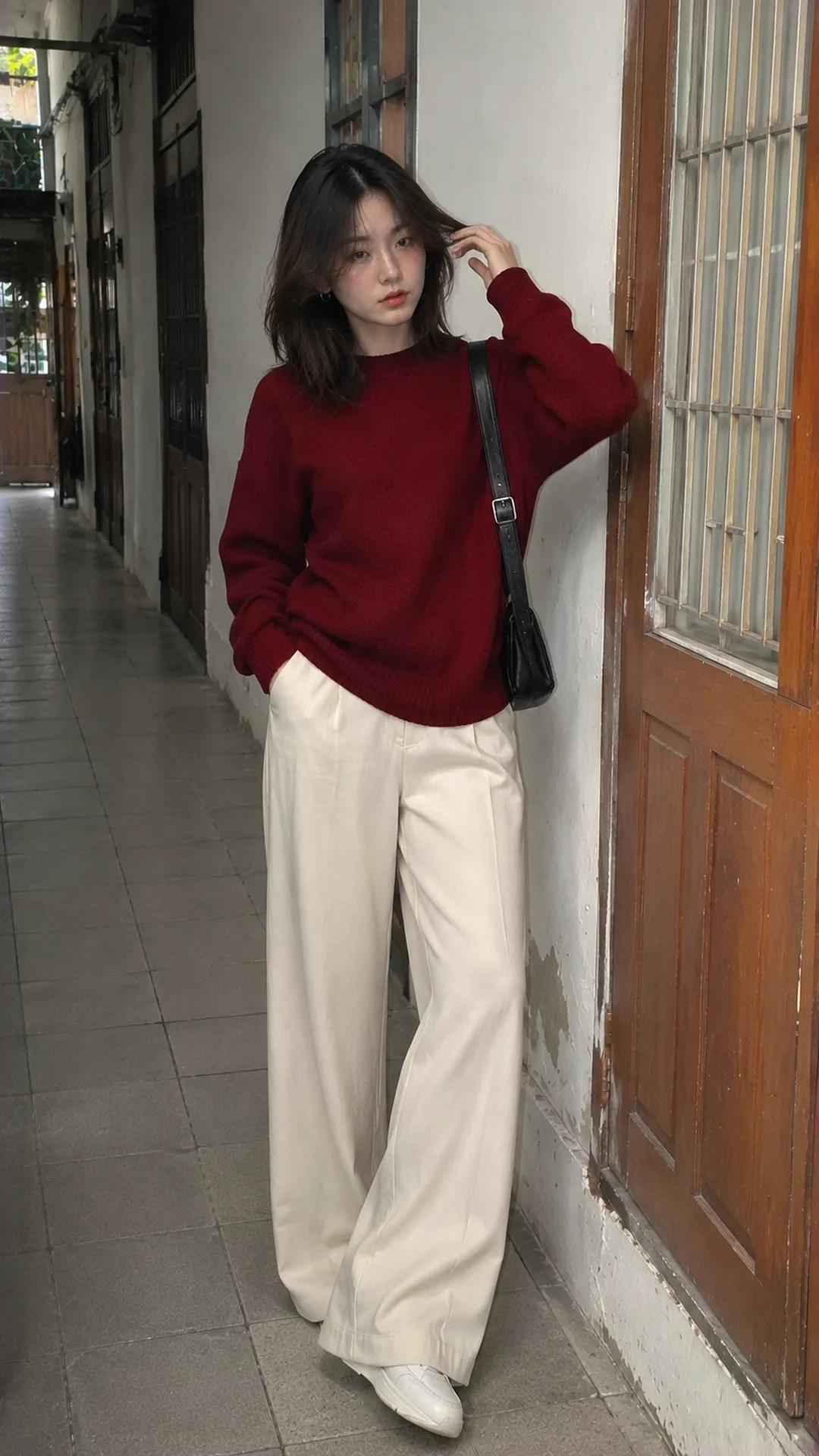
Ivory and cream pants brighten the outfit
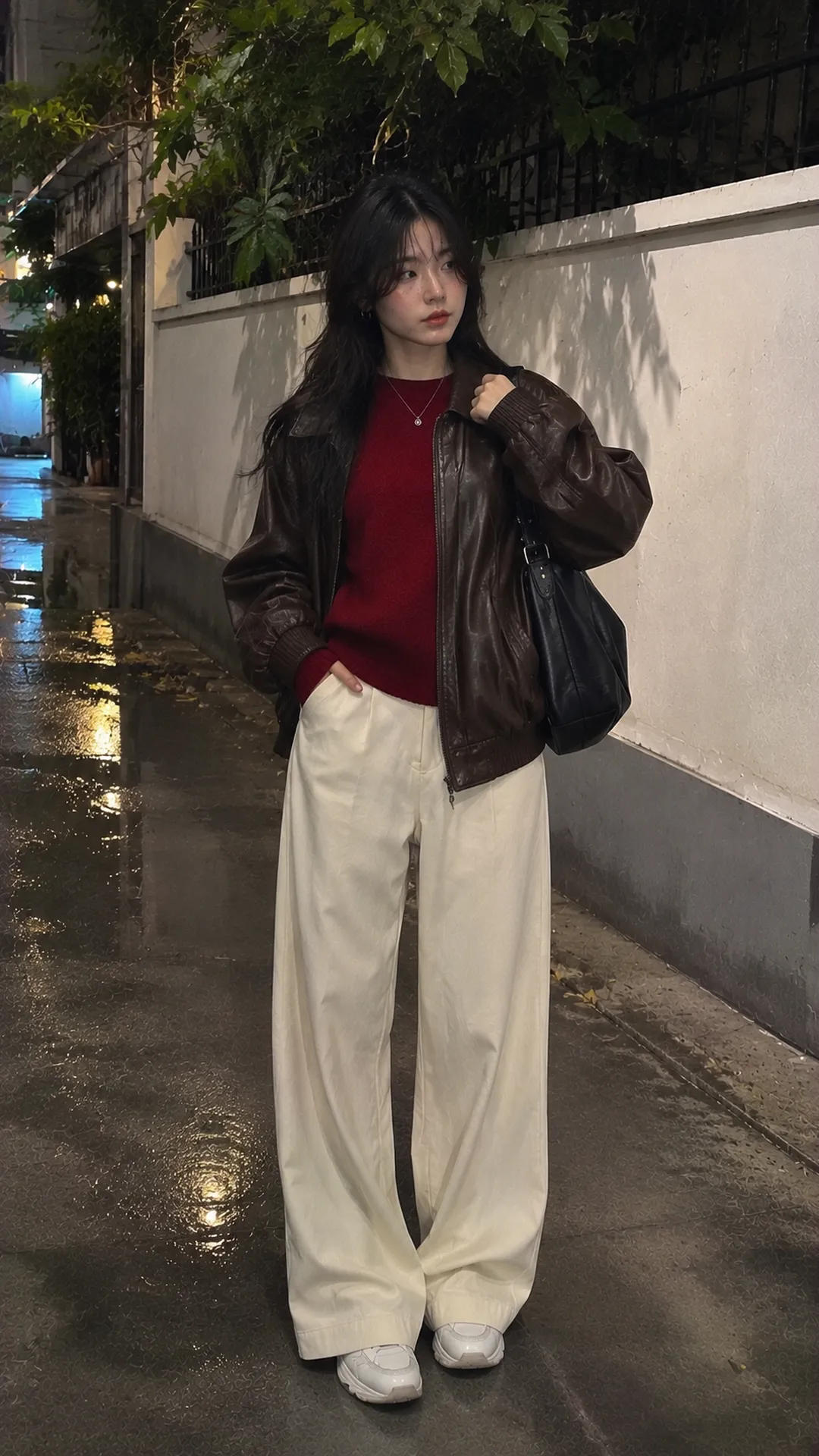
White or ivory pants create clear contrast with red. Try them when you want a brighter outfit and the red to show immediately. Structured pants give a defined line, while a softer fabric hangs more loosely. Check for sheerness and visible underlayers in the light you’ll actually be in.
Burgundy and cream give a softer effect than vivid red and crisp white. If the top has a collar or button front, keep accessories around your face simple. Brown and black shoes give the outfit different endpoints. Try both while wearing the whole outfit.
Light pants can make seams, pockets, and linings more visible. Sit down and turn to check how they look. If you keep having to adjust the fit, another pair in the same color may work better than a jacket worn to cover the problem.
Gray and navy give different dark backgrounds
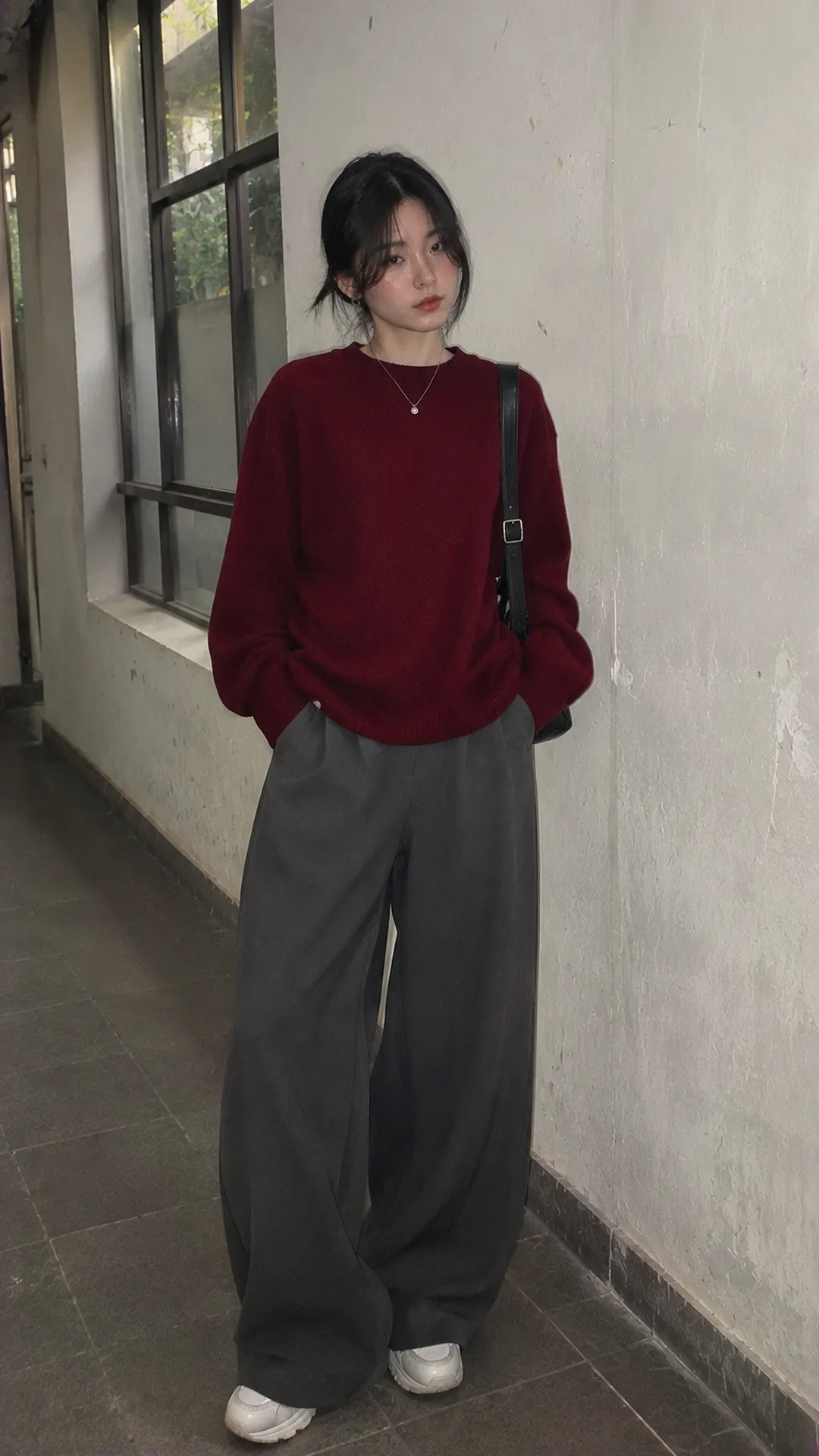
Red tops with gray pants
Light gray keeps the outfit brighter. Charcoal gives a dark base with a softer effect than black. A red tee and straight gray pants are easy to wear again in other outfits. Try simple shoes if you want to see the contrast between the two garments clearly.
Step back to look at striped, textured, or mélange gray pants. A prominent pattern on both pieces can compete for attention. Try one plain piece or a lower-contrast pattern, and decide where you want the focus.
Red tops with navy pants
Navy gives you a dark base with a blue undertone. Try a muted red shirt with straight navy trousers and brown shoes, or a bright red top with very dark blue jeans. When both pieces are dark, compare them in ordinary lighting so you know you can tell them apart outside a product photo.
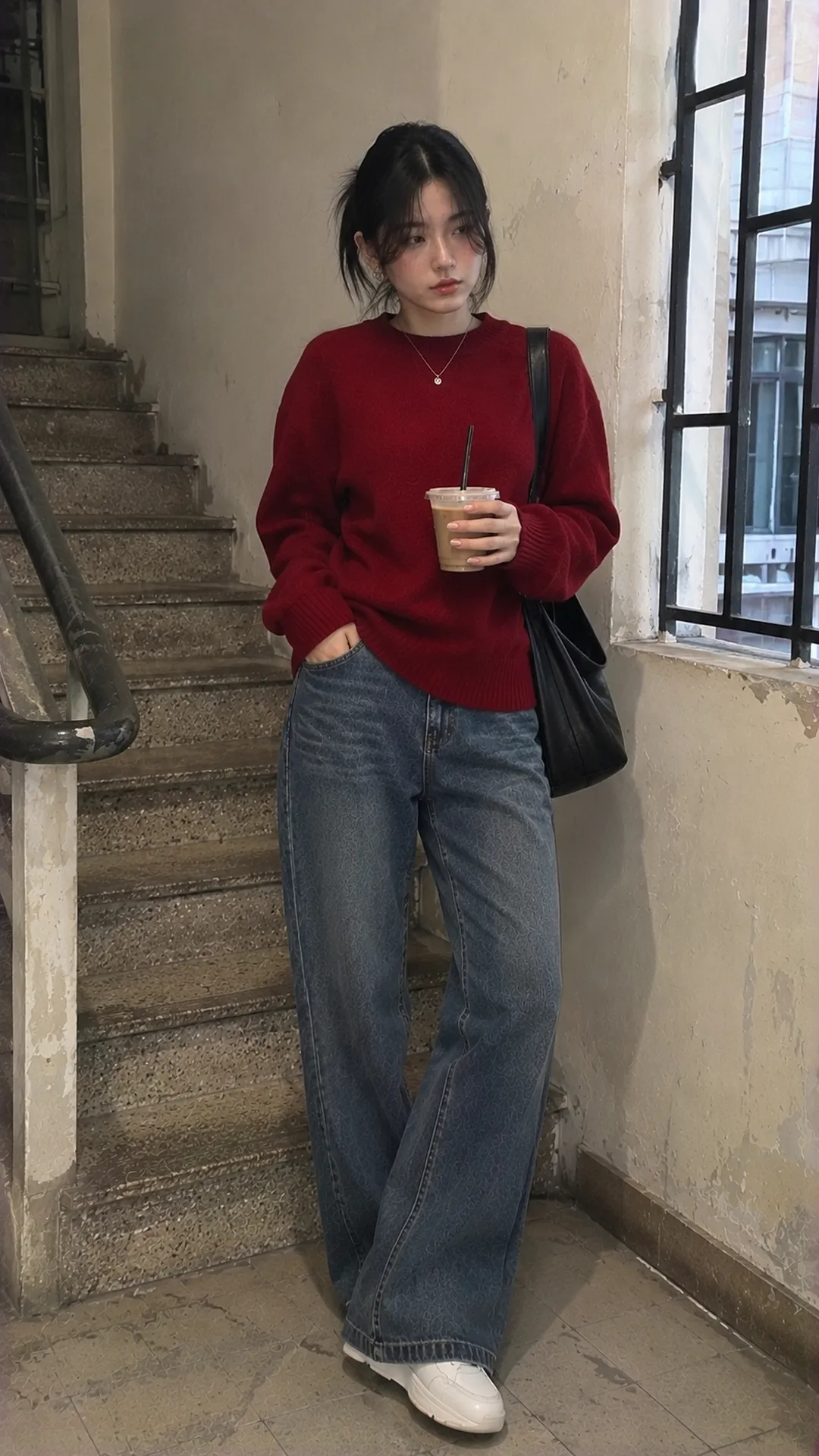
Match the denim wash to the shade of red
A red tee and blue jeans are an easy starting point. Light-wash denim brightens the lower half, while dark denim gives a quieter look. Heavy fading, distressing, or bold stitching adds detail, so a plain red top can keep the outfit balanced.
With a burgundy top, try a medium wash before going very light. Shoes and top length affect how much contrast you see. A short top over a defined waistband gives different proportions from a long top worn loose with the same color jeans.
If you’re still deciding on the cut, see our women’s pants guide by style. Pick a shape first, then compare washes. Changing color, leg width, and rise together makes it harder to tell what improved the outfit.
Try brown or beige with burgundy and plum red
Chocolate-brown trousers and a burgundy top can create a low-contrast outfit. To give the top definition, try a soft fabric with structured trousers or a plain surface with pleats. If you like the two dark shades together, simple shoes and a bag can keep the shapes clear.
Beige brightens the lower half and makes the contrast with red easier to see. Yellowish beige and grayish beige can give different effects. Try the pants and top together with your shoes and usual hairstyle before deciding based on a neutral-color label.
With plum red, compare gray or navy pants with brown. Choose the combination you like and try it during a normal day. Focus on the amount of contrast and where you want the eye to go rather than ruling out a shade based on skin tone.
Adjust proportions for tees, shirts, and loose tops
A fitted red tee can stay untucked over straight pants if it leaves enough of the waistband and cut visible. With wider trousers, try a slight tuck to define the waist. Check where any graphic sits so you don’t tuck part of the design out of sight.
A red shirt can be buttoned or worn open over another top. An open shirt adds a second color and two vertical lines, so plain pants are a simple match. If you button it, sit down and reach forward to check for pulling around the bust, shoulders, or waist.
A loose red top can work with wide pants when the shoulder line and hems are clear. Choose lengths you can wear comfortably without extra fabric getting in the way. Our women’s tops guide by fit can help you compare styles before buying another pair of pants to change the proportions.
Three outfits to try for different occasions
School or daytime errands: A plain red tee, medium-wash jeans, and ivory sneakers. Simple denim lets the tee stand out. Try the hems with the actual shoes, pick a bag that fits what you carry, and adjust coverage for the setting.
Coffee or meeting a friend: A burgundy top, straight cream pants, and brown shoes. The light and deep colors clearly separate the two halves. A plain bag may be enough with a textured top. For a simple top, small earrings or a fine necklace can add a detail.
A darker palette: A plum-red top, charcoal pants, and black shoes. Choose textures that let you see where the waist and hems sit. For an edgier detail, pick one piece with a clear role using our guide to getting started with alt fashion.
Should the shoes or bag repeat the red?
They can if you want the connection. A red bag or pair of shoes can also make red more prominent than you want. Start with a neutral pair of shoes or pick up the pants color in an accessory. See whether the top stands out as much as you intended.
Size matters along with color. A small red bag gives a different balance from a large one, and chunky black shoes look different from streamlined black shoes. Wear the bag where you normally carry it, fill it as usual, and look at the outfit as a whole.
Change one thing at a time
If the top feels too bright, simplify the pants and accessories first. If the outfit feels too dark, try lighter pants or change shoes. If you like the colors but find the outfit awkward, check top length, rise, and trouser hems before trying another color.
Save a few photos of combinations that work with your actual red top. Use our fashion moodboard guide to group ideas by light pants, dark pants, and denim and add notes about the cut. Keep references you can recreate with the pieces you own.
Once you’ve picked the pants, sit down, walk, put on your bag, and add a jacket if you’ll wear one. Choose a combination that works in your routine. You can keep the red top as the focal point and change the rest for different settings.