

A quick choice based on your top
| Your brown top | Pants colors to try first | Intended effect |
|---|---|---|
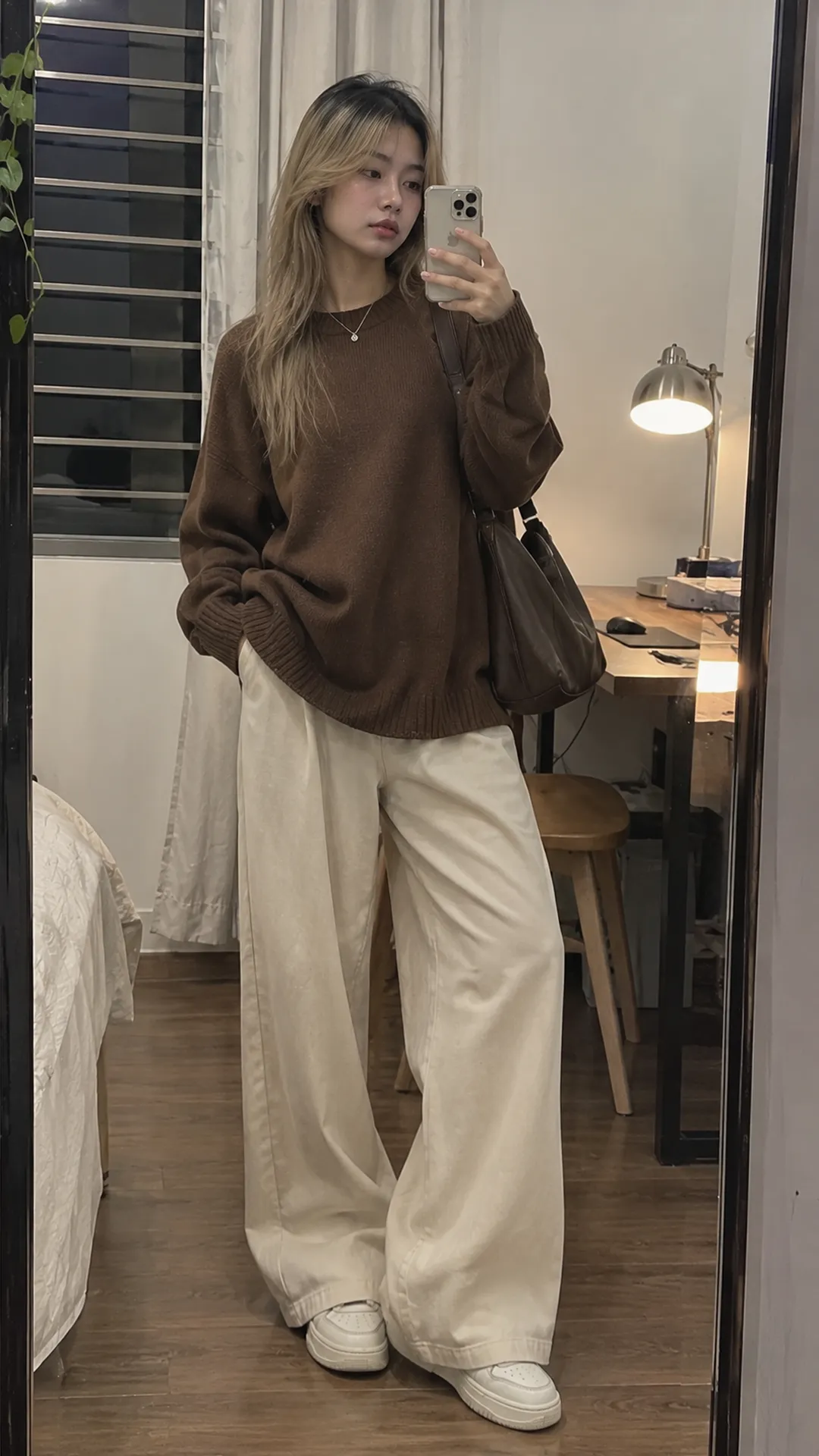
| Dark brown, smooth surface | Ivory or cream | Clear light-dark separation that shows the silhouettes |
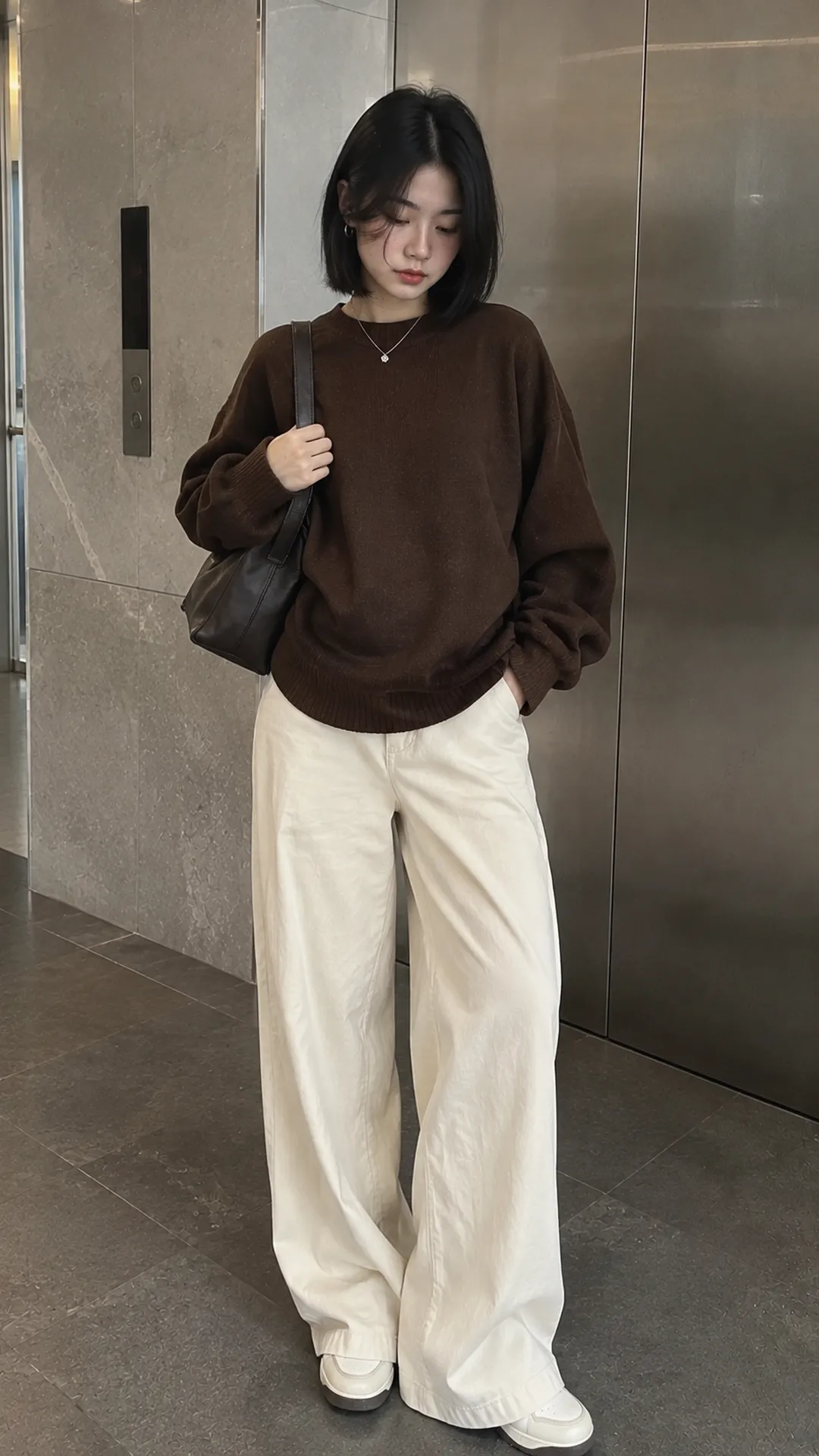
| Light brown, soft silhouette | Black or dark blue denim | More visual weight below for a grounded outfit |
| Red- or orange-leaning brown | Gray, black or blue denim | Keeps the top's color as the focal point |
| Gray-leaning brown | Cream, navy or gray in a different lightness | A soft palette separated through tonal differences |
| Patterned brown | A solid color taken from the pattern | Fewer competing focal points |
These are options to test, rather than rules about skin tone or body shape. A combination that feels comfortable and suits your destination is more useful than forcing a photo's palette that does not work with your actual wardrobe.
Compare the top and pants under the same light. Yellow lighting may make them look more similar than they do outside; product photos also reflect how they were taken. You do not need the precise shade name: identify whether the top is light or dark and compare it with what you will wear.
Three directions: light, subdued or more colorful
For a lighter look: ivory and cream
Ivory or cream pants make a dark brown top's hem, shoulders and tuck easier to see. Try this when you want visual lightness while keeping the top central. With light brown, check that the pants differ enough in lightness to avoid the two halves merging.
Pure white also works if you prefer stronger contrast. When trying light pants, check coverage at the hips and pockets in natural light. Matching colors is not enough if you need bulky extra layers or constantly worry about unwanted details showing through.
For a subdued look: black, gray and navy
Black pants with a brown top make use of a dark wardrobe. If the top is very deep chocolate, the pieces may blend from a distance; try contrasting textures or a small belt if you want a clearer waistline. Every outfit does not need a light color.
Light gray creates a softer light area below than white, while charcoal makes the outfit more subdued. Navy is another understated alternative to black. With a dark brown top and dark navy pants, test in the lighting where you will wear them to see whether the distinction suits you.
For more color: blue denim, moss green and burgundy
Blue jeans add texture as well as color, so the wash matters as much as the blue shade. Light denim feels more distinctly casual; dark denim with little fading makes the outfit cleaner. If the top has many details, pants with fewer rips and faded panels are easier to rewear.
Moss green creates an earthy direction to try with a plain brown top. Burgundy gives a deeper accent, especially when the top is not heavily patterned. For both, start with simple shoes and a bag so you can assess the clothing combination before adding a third color.
Five outfits starting with a brown top
Light brown T-shirt, straight-leg blue jeans and sneakers
This is an easy formula for classes or coffee. Choose a top length suited to the waistband, leaving it untucked if the hem is neat or tucking to define the waist. Straight-leg jeans offer comfort without requiring a very fitted top.
Ivory shoes can add brightness, while dark shoes make the outfit more subdued. A plain bag with useful capacity suits books or a laptop better than an undersized one. Choosing accessories for your plans keeps the outfit useful beyond the photo.
Chocolate blouse, pleated cream trousers and loafers
The blouse's drape contrasts with the trousers' structured pleats. Tuck it if the fabric is not too thick, and check that the waistband stays comfortable when sitting. Light trousers define the dark top; black or dark brown loafers finish with an accent at the feet.
This may work in offices that allow it, but check the specific dress code first. Test the buttons, neckline and trouser opacity through real movement. A polished outfit should not require holding your top every time you bend.
A neat brown top, wide black pants and clearly shaped shoes
A neat upper half reveals the pants' width, while brown creates a subtle difference against black. The top can end at the waistband without exposing your midriff. For a longer top, try a partial tuck or pants with a neater hip area to avoid excessive fabric gathering.
A structured bag or small metallic detail can finish the outfit. To develop a more individual style from these basics, Alternative Fashion for Beginners offers next steps using your existing wardrobe.
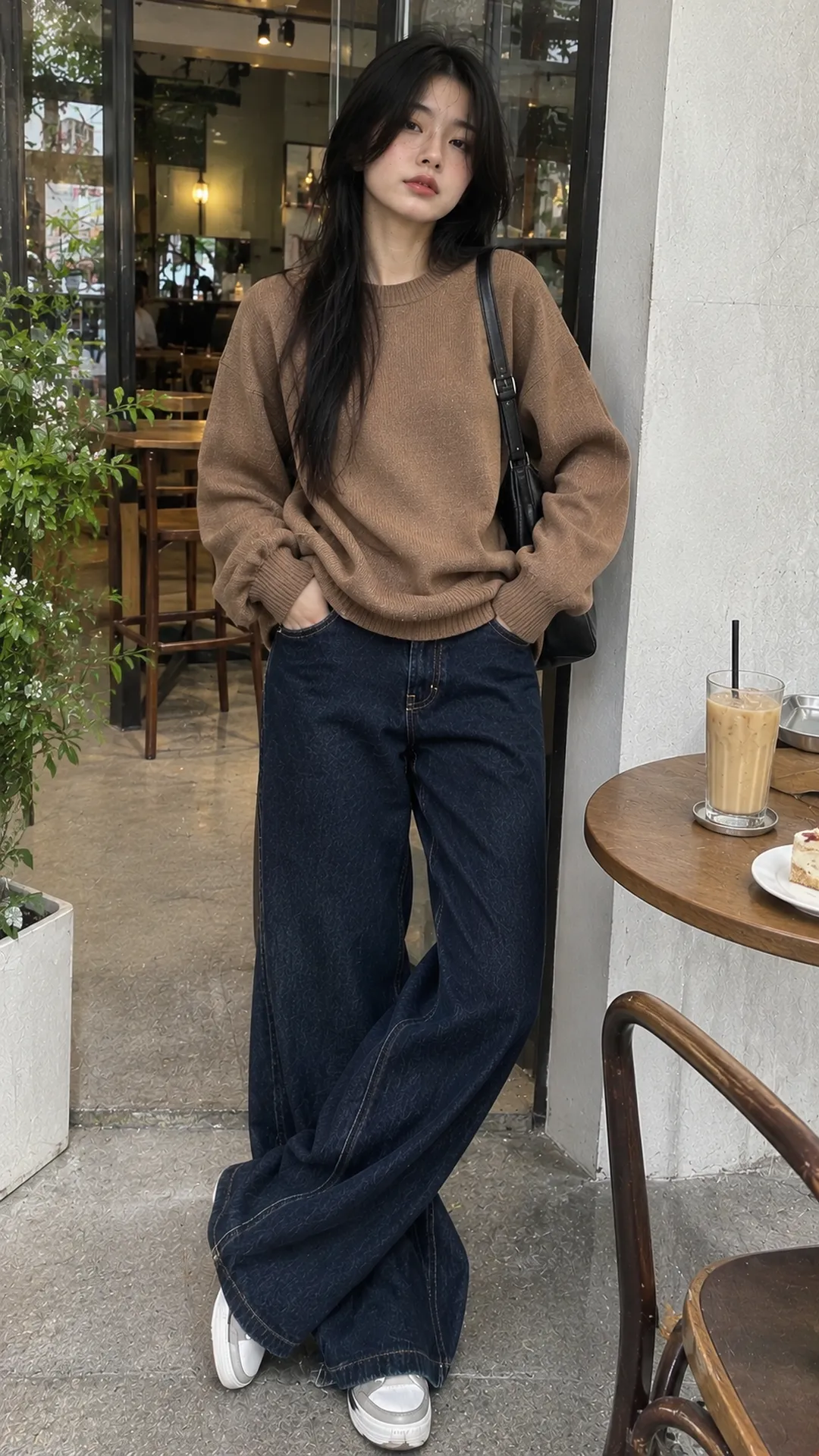
Brown shirt, light gray pants and flats
Choose a shirt that fits the shoulders or is deliberately loose, with straight pants and few prominent pockets. Light gray creates brightness while keeping the palette soft. Button the shirt neatly or open a few neck buttons as comfortable; a large bow or necklace is not necessary for interest.
If wearing the shirt over a base layer, include that layer's color in the overall palette. A plain inner top can connect with the shoes or pants. For different top options, our Women's Tops Guide helps you reassess shape and use before adding layers.
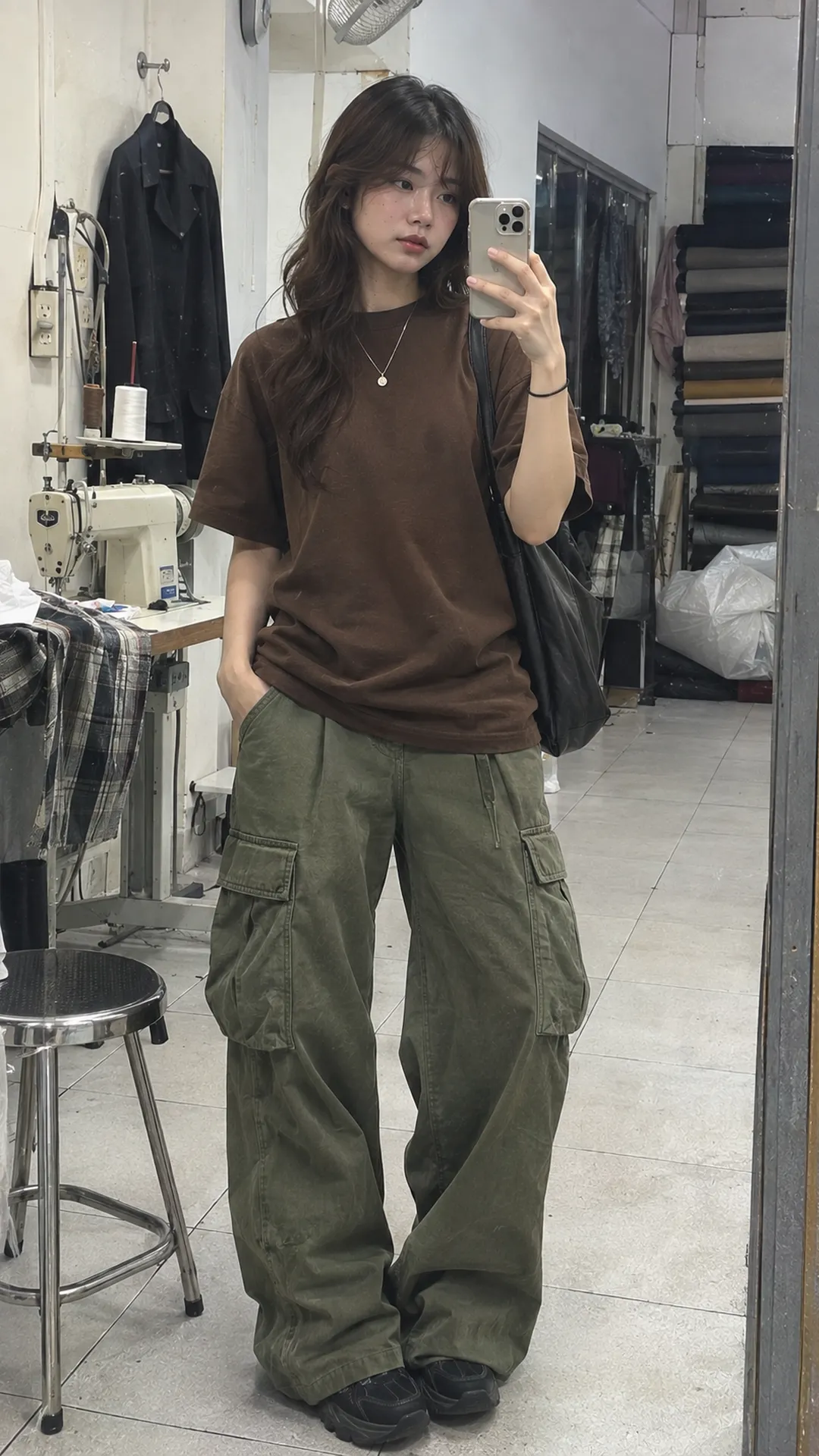
Plain brown top, moss green cargo pants and dark sneakers
Keep the top simple to give the cargo pockets room to stand out. With wide cargo pants, choose a top length that leaves the waistband and upper pockets visible. If the top is loose too, try a defined hem or neat tuck instead of assuming you must replace it with something tight.
A plain shoulder bag can work here. When the pants already have multiple pockets and seams, a chain or prominent belt is optional. Try additions individually to see whether they clarify the outfit or simply add more detail.
Once the colors work, check proportions and texture
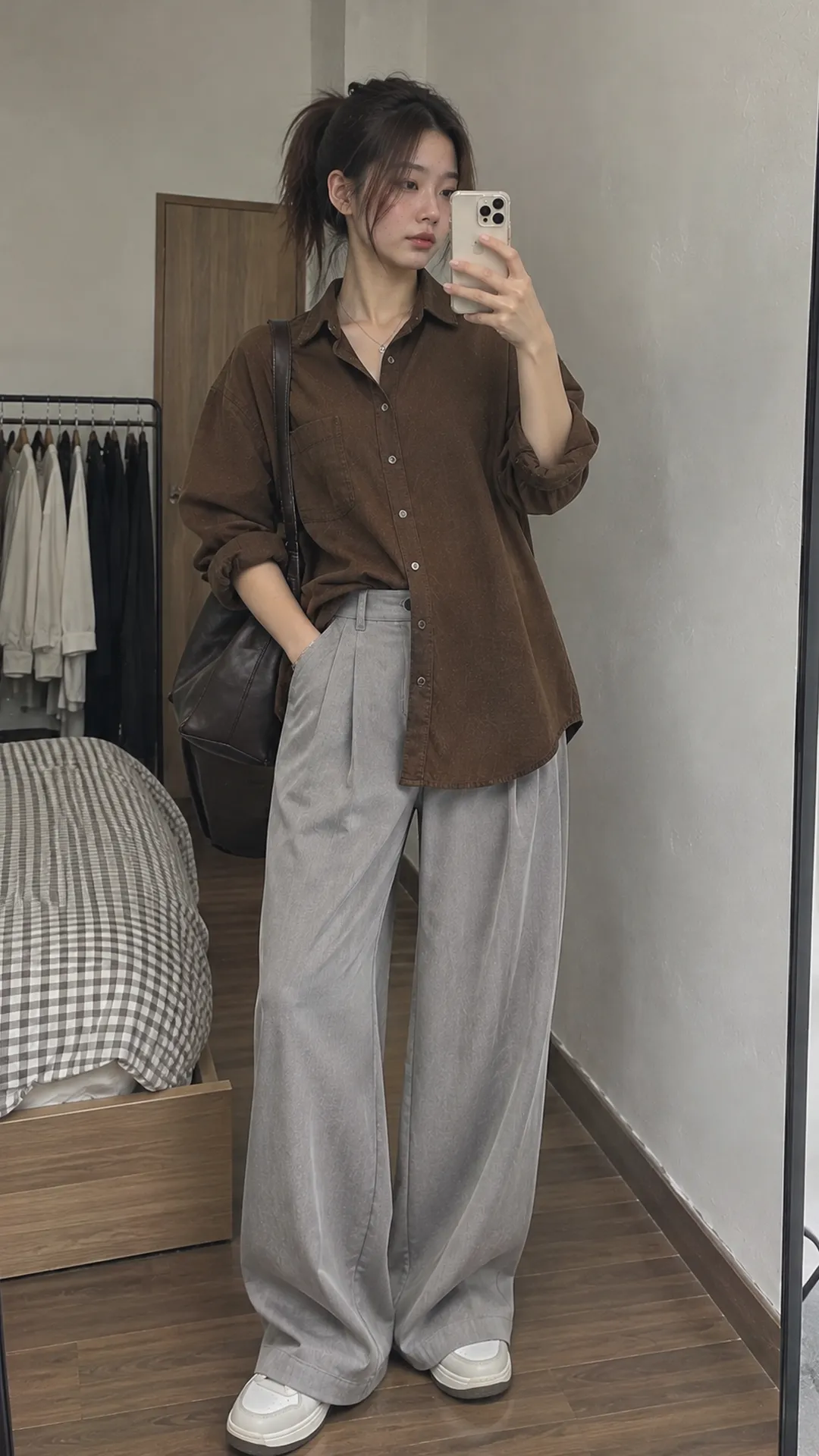
A brown ribbed knit, smooth T-shirt and structured shirt do not produce the same result even in similar colors. With a textured top, plain pants are a useful starting point. With a very simple top, pleats, leg width or denim texture can provide the difference.
Length comes next. A top ending at a protruding pocket can be pushed outward; an overly long top can hide the waistband you want visible. Raise the hem to different positions in the mirror to see what helps before deciding to alter the garment or change how you wear it.
If choosing between straight and wide legs, assess the hips, thighs and hems separately. Two pants labeled wide-leg can have significantly different shapes. Our Women's Pants Guide helps turn the color question into choices about waistband and width.
Shoes and bags: give each a clear role
With a brown top and cream pants, dark shoes give a definite finish, while light shoes keep the look lighter. With a brown top and black pants, a bag close to the top's brown creates a connection; a black bag lets accessories recede. You do not need an exactly matching shoe-and-bag set.
A belt helps emphasize the waistband or keep pants in place. If the top already has hem details, a large buckle may compete for attention. Our guide to choosing statement accessories for women suggests balancing placement and prominence instead of adding everything at once.
Fixing three common outfit issues
Everything is too similar in lightness: try lighter or darker pants before adding accessories. If keeping both garments, use texture or a tuck to define the boundary. Low contrast does not always need fixing; change it only if it differs from your intention.
The brown leans orange and the pants are also very bold: keep your favorite color, then try a more muted version of the other piece. For example, swap bright pants for dark denim to keep the top central. If you deliberately enjoy multiple colors, simple shapes and accessories make the result easier to manage.
The colors photograph well but are difficult to wear: check fabric, coverage and shoes first. White pants needing constant adjustment or shoes unsuitable for the walking involved make an outfit less usable. The palette is not the issue here, so buying more tops may not solve it.
Turn one brown top into three familiar options
Take one well-fitting brown top and pair it with three pants you own: one light, one dark and one blue denim. Use the same shoes, camera angle and lighting, then note which outfit suits classes, work or leisure. Only then change the bag to assess its actual effect.
For reference images, choose outfits whose brown shade and top shape resemble yours. Our fashion moodboard guide helps filter inspiration into wearable choices. A small usable board is more helpful than many attractive photos requiring a whole new wardrobe.