

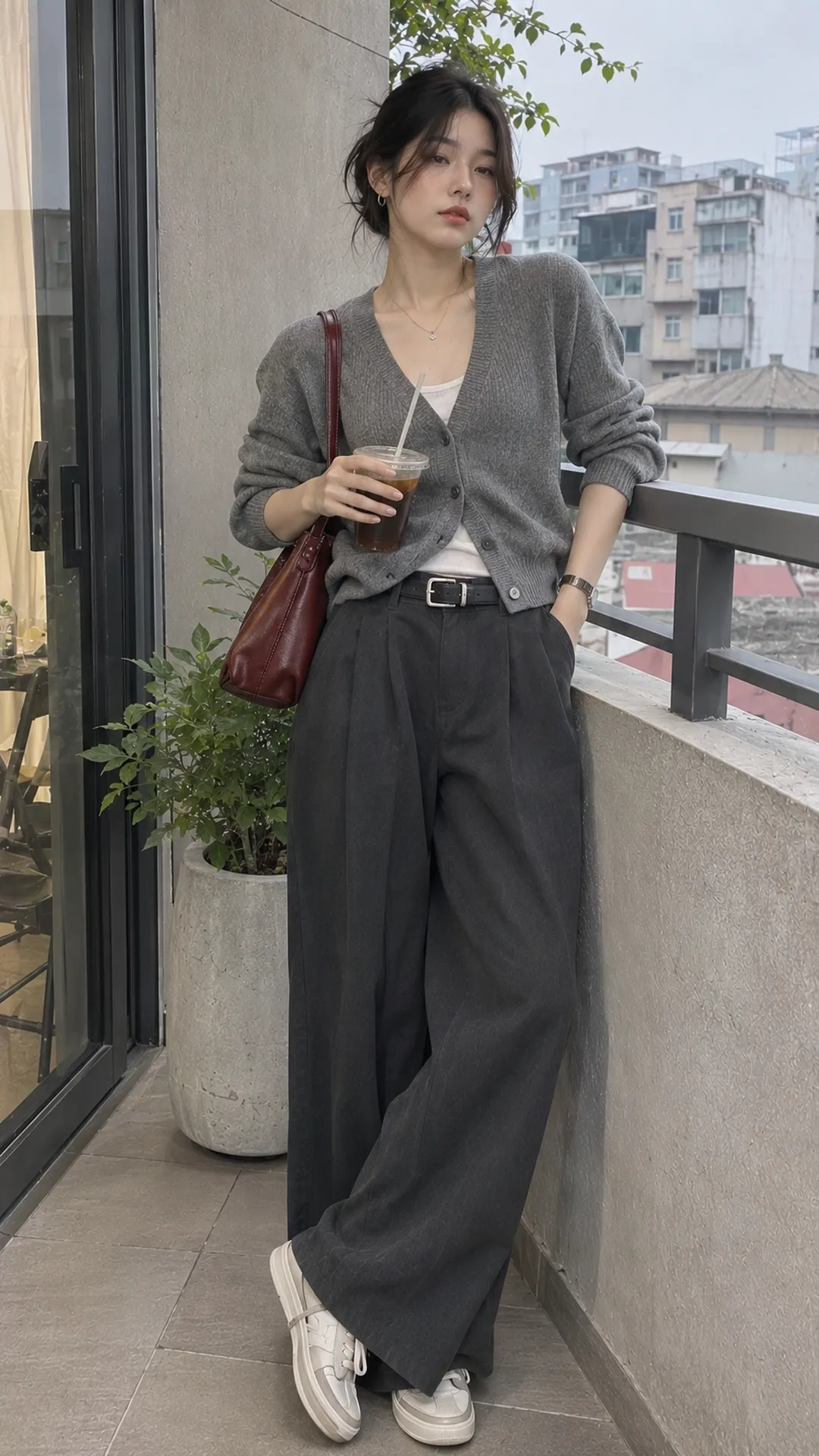
Read gray through lightness and undertone
Place gray beside white and black under one light source to judge its depth. Then observe whether it leans blue, purple, brown or fairly neutral. An exact code is unnecessary; recognize why two gray-labeled pieces differ together.
Melange gray has fibers or colored flecks producing a mixed effect, unlike a solid gray area. Shine also reflects differently from matte fabric. Compare both surface and shade when pairing gray tops and bottoms. For a uniform set, buy or try them together rather than ordering separately by color name.
Do not judge undertone only through filtered photos. Trousers appearing cool gray on a phone may lean brown in another light. With existing pieces, direct comparison is most useful. Online, prioritize real photos and returns over guessing from one studio image.
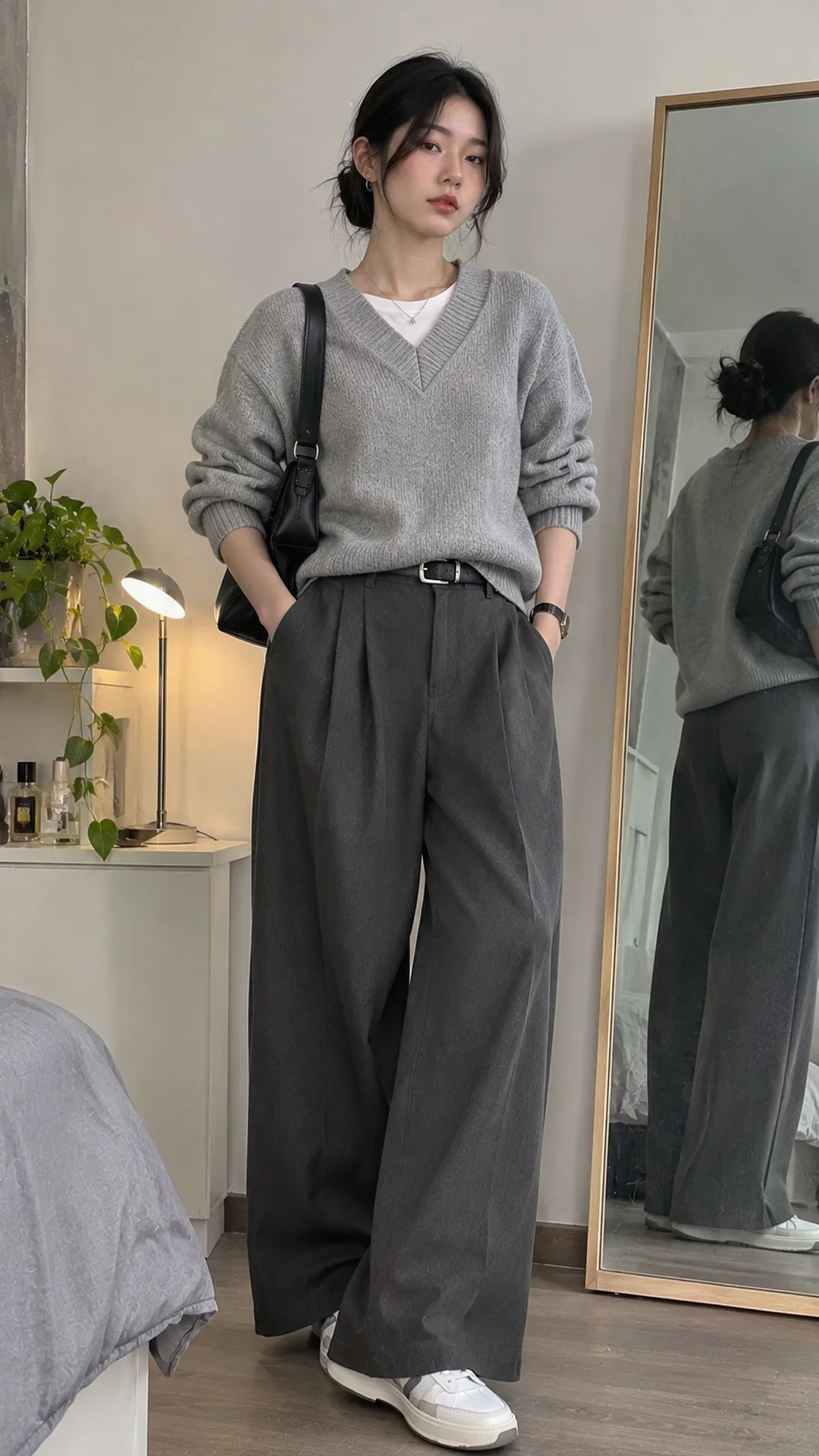
A gray clothing color-pairing table
| Gray base | Companion colors | Effect and starting point |
|---|---|---|
| Light gray | White, pale cream | Light; add dark shoes or a bag if an endpoint is needed |
| Medium gray | Blue denim, navy | Easy everyday wear; distinguish top and bottom surfaces |
| Charcoal | Black, white | Defined shapes; use a small white layer for brightness |
| Light or medium gray | Pale pink, pale blue | Gentle; let one color lead and the other support |
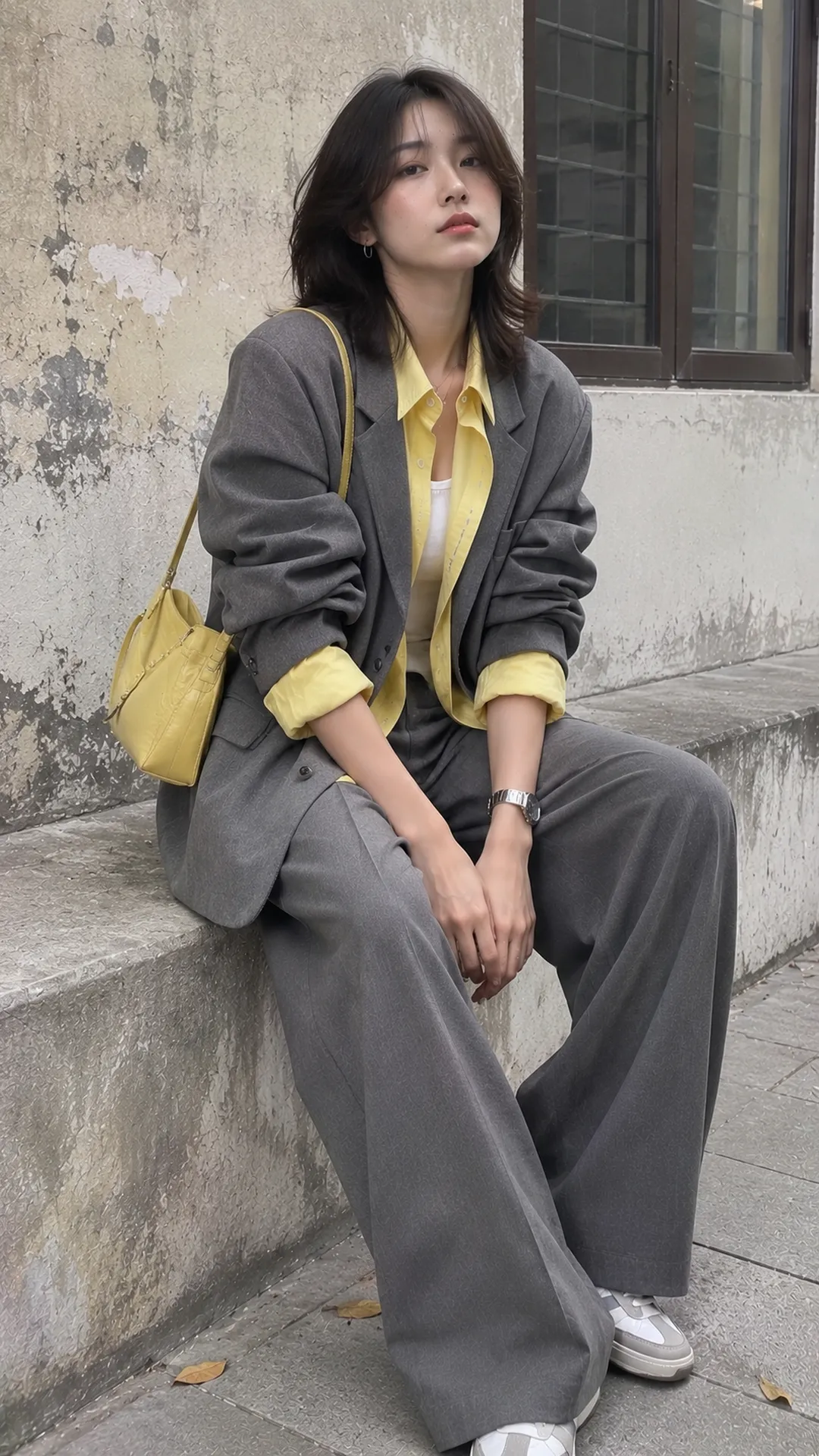
| Medium gray or charcoal | Red, yellow | Clear accent; start with an inner top or accessory |
| Warm-leaning gray | Brown, cream | Soft transition; inspect the actual shades together |
These are options, not rules. For an unlisted pairing, inspect area and lightness before dismissing it. Many outfits feel busy because several accents compete, not because a color is forbidden beside gray.
Gray with white and black: build the base
Light gray and white for a light outfit
Try a white top, light-gray trousers and white sneakers. Similar lightness creates a gentle transition; a black or dark-brown bag can add focus if you find it too pale. Extra contrast is unnecessary if you prefer few divisions and a light feel.
With a gray jacket, white underneath creates a central light area when open. Check neckline, sleeves and hem so white appears intentionally. An excessively long inner top creates a broad hip-level band; change length or tuck if that is not your aim.
Charcoal and black for a deep dark base
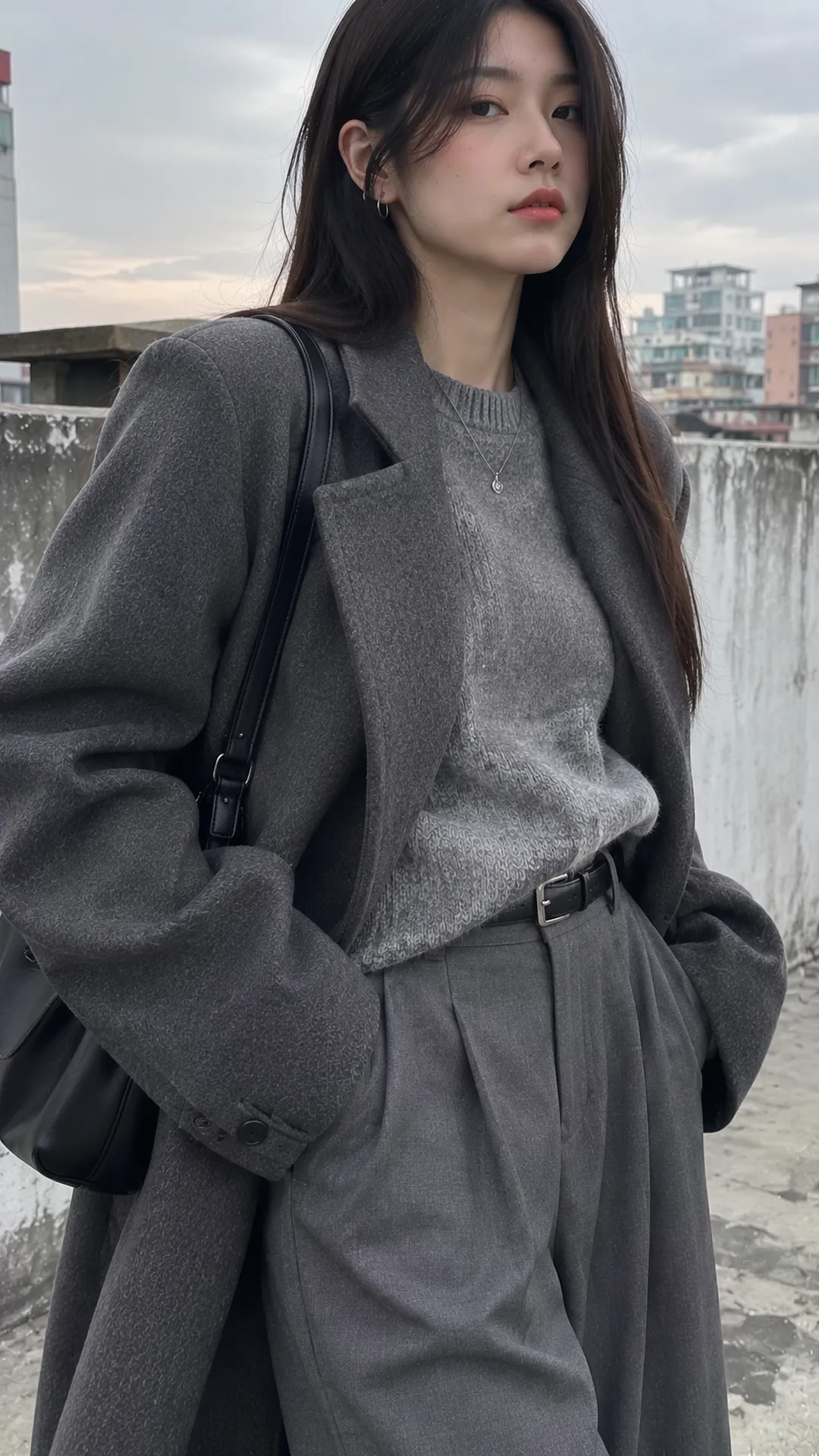
Charcoal trousers with black differ from all-black through a subtle tonal shift. Separate them with a smooth top and textured trousers or a structured jacket. A small metal bag clasp or jewelry detail may suffice without many light colors.
Surface is useful when colors are close. Washed denim, knitwear and glossy materials create different visual areas, but all need not appear at once. Let one stand out and simplify the rest, especially for long school or work days.
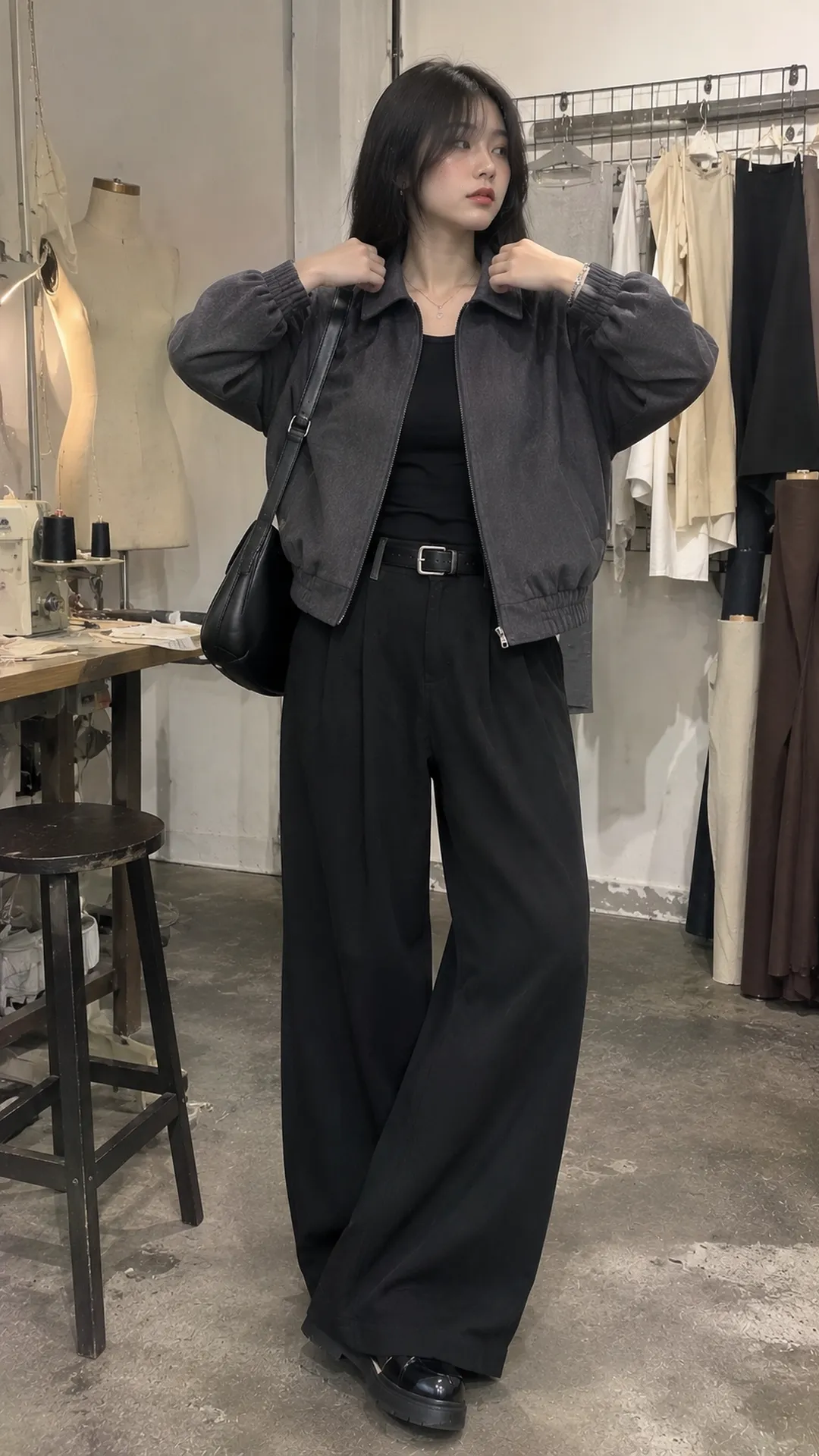
Gray with denim, navy and pale blue
A gray top and blue jeans need few special accessories. Light denim with light or medium gray transitions softly; dark denim with light gray brightens the upper half. With strong washes, start with a plain top to limit surface complexity.
Navy and gray provide a polished base: a navy top, gray trousers and black shoes can finish with a similarly dark bag. Cut and dress code still matter. A loose tee and sweatpants differ from a shirt and pleated trousers in the same colors.
Pale blue and light gray feel gentle, but check your preferred separation. If both are very pale, try a navy bag or dark shoes. For a smaller dark area, use trim or one accessory. Changing area is often easier than replacing the garments' colors.
Add pink, red or yellow without clutter
Pink: choose gentle or bold from the start
Pale pink inside a light-gray cardigan transitions softly; deep pink on charcoal contrasts more strongly. Both work toward different aims. For gentleness, keep shoes and bag quiet. For pink to lead, reduce neckline and bag detail so it has space.
Pink need not mean one fixed feminine style. Pink with wide gray trousers and substantial shoes differs from pink with a pleated skirt. Consider silhouette before accessories. The women's trouser-shape hub helps change proportions while preserving the palette.
Red: start with one small area
A red bag over a gray top and black trousers gives clear focus with few new pieces. If you own a red top, gray trousers provide a larger base and neutral shoes finish it. Red can repeat in lipstick or accessories, but try gradually; repetition is not obligatory.
Deep and vivid red create different effects. Compare with gray in everyday light. If both are dark, a small white layer separates them. If red is already bright, keep other surfaces less shiny for easier control.
Yellow: adjust area by shade
Pale yellow with light gray works for daytime; vivid or lemon yellow stands out more against charcoal. Start with an inner top, bag or scarf if unfamiliar. With an entire yellow jacket, keep lower lines simple to avoid several accents at once.
Can gray work with brown and cream?
Yes. Start with warm gray, brown and cream, then adapt to the actual pieces. Gray with chocolate trousers and black shoes feels subdued; cream with gray trousers and a light-brown bag feels lighter. Do not reject brown because references commonly pair gray with black.
If gray and brown feel wrong, change one factor first: lighten the top, darken trousers or reduce accessories. With wool, leather and denim textures, assess the full outfit rather than isolated pieces. Individually compatible colors may not retain your desired emphasis across three surfaces.
All-gray outfits: vary shade or surface
An easy start is a light-gray top with charcoal trousers. The lightness difference distinguishes halves within one family. With a medium-gray jacket, make layer lengths clear. The guide to women's layering explains length differences that prevent an unclear mass.
With similar shades, vary surfaces for depth: knit with smooth trousers or a fine shirt with gray jeans. Do not insist on calling accidental shade differences a matching set. Make them intentional through an intermediate layer or clearer contrast.
Black shoes and bag anchor all-gray; white lightens it; one vivid shade focuses accessories. Choose one direction and reassess. For an Alt direction, try the one-statement-piece principle in the beginner's guide to expressive outfits instead of adding many chains and metal details together.
Test the palette with your actual wardrobe
Take your most-worn gray item and pair with three existing colors. Photograph in consistent light with the same shoes at first. Once you choose the favorite pair, change shoes or bag. Varying one factor reveals whether color, proportions or accessories improve the look.
Save genuinely wearable outfits with brief notes such as 'top lighter than trousers' or 'red bag leads.' The guide to making a moodboard from references turns inspiration into reusable principles. Many photos add little if they repeat one look unsuited to your routine.
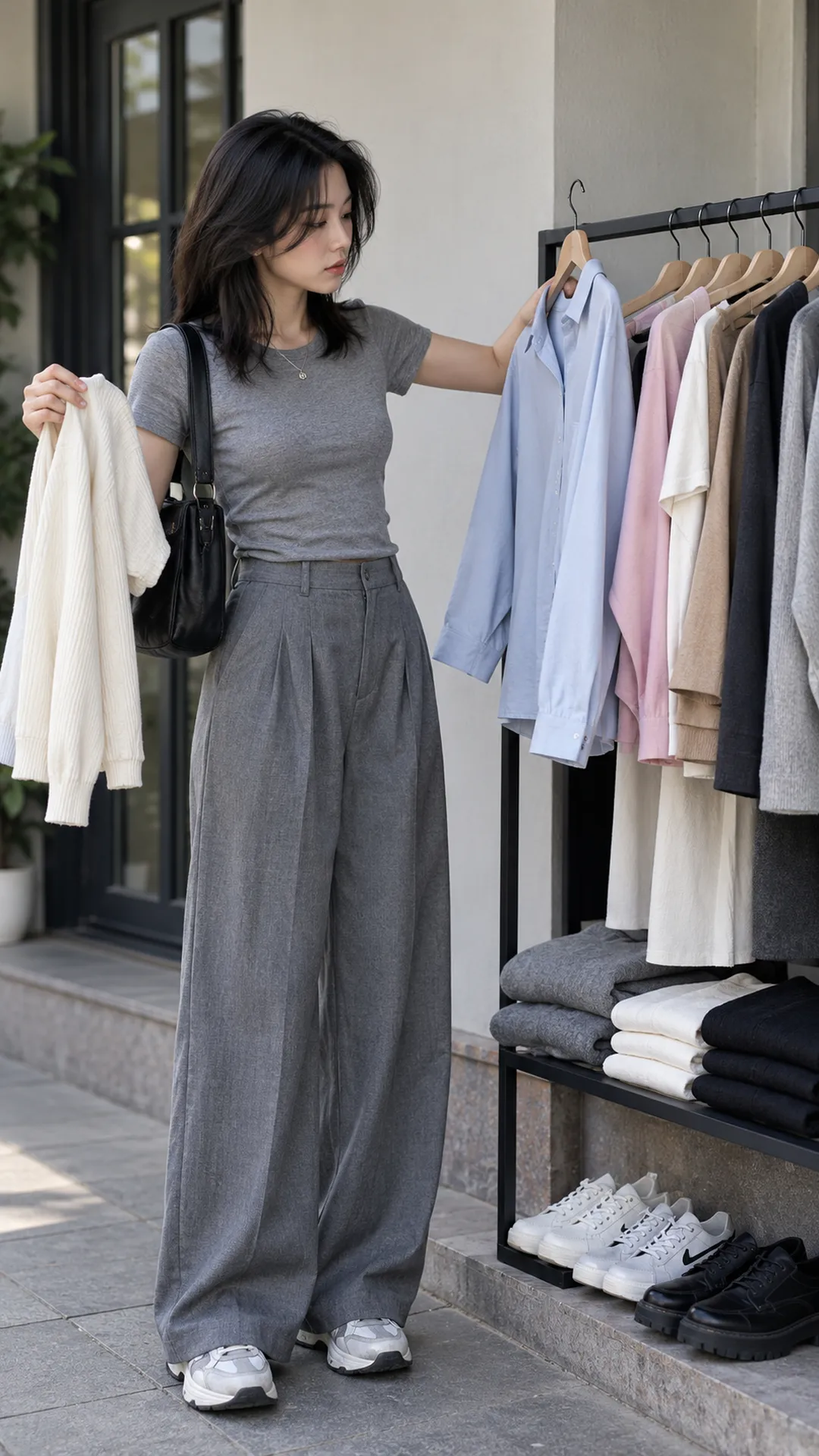
If unsure what goes with gray, begin with white or black, then a color you already like. For flatness, vary lightness or texture; for clutter, reduce accents. Gray is flexible, but a complete outfit still needs suitable fit, setting and regular-wear comfort.