

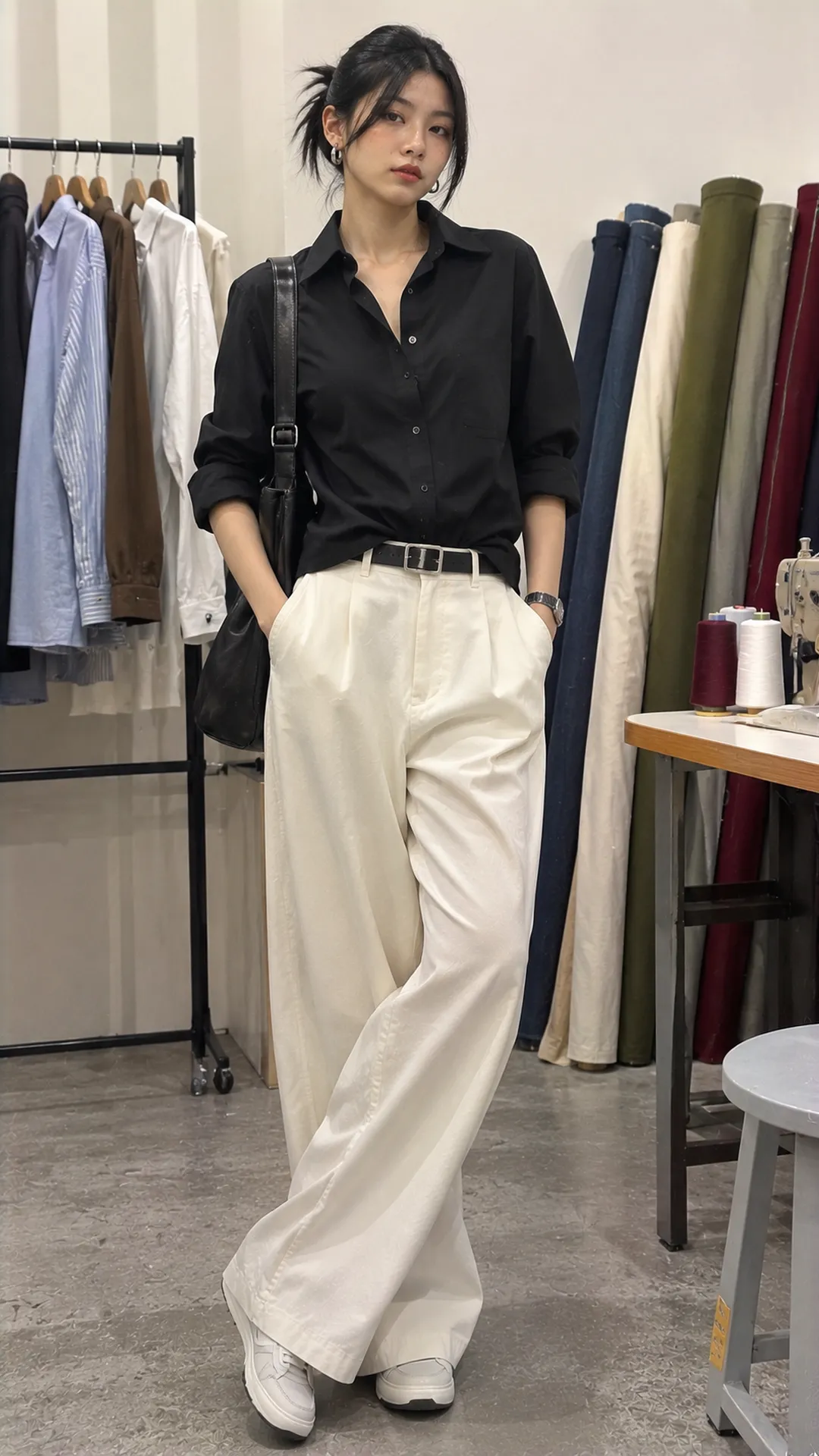
Choose a pants color for the effect you want
Before trying anything on, decide whether you want to brighten the outfit, bring attention to the pants, or keep the palette dark while distinguishing the top from the bottom. This narrows your options faster than treating every color as equally suitable.
For a brighter outfit, start with ivory or cream. For a casual look, try blue jeans. For something understated, try gray or beige in a shade you like. If you want the pants to lead, try olive, burgundy, or a light color you already enjoy wearing.
Look at any print on the top. A large yellow or red graphic adds another color to a black tee. You can keep the pants plain or pick up one color from the print so the pieces feel related.
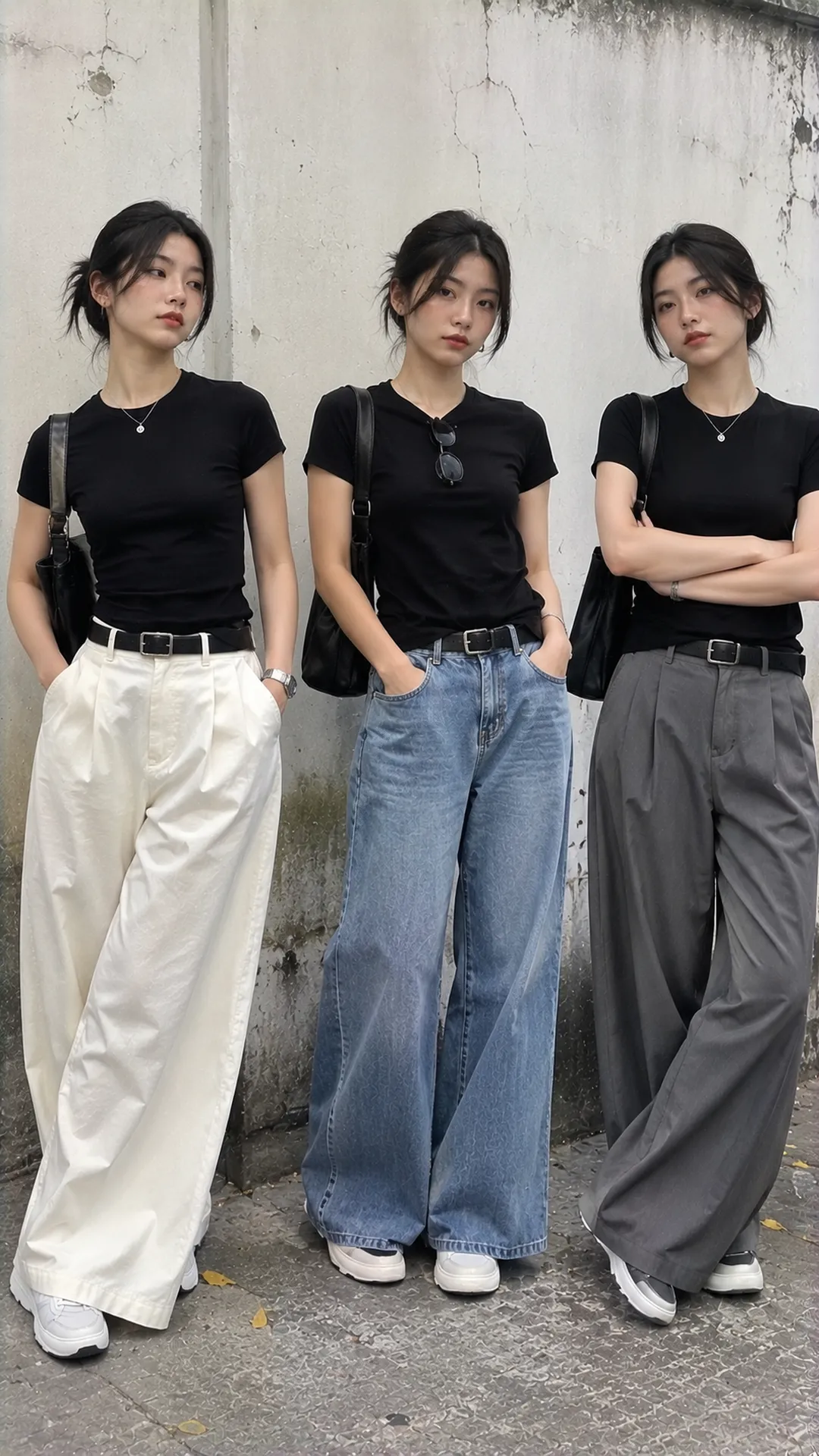
Ivory and cream bring out the shape of a black top
Ivory pants create a large light area below the top, showing off the hem, tuck, and shape of the upper half. Try straight-leg ivory pants with a fitted black top. With a loose top, check whether the hem hides the waistband you want to show.
Cream tends to look softer than pure white, but compare it with the top you’ll actually wear. Faded black and deep black give different effects against the same cream pants. Judge the colors together in front of you, since your top may look different from the one in a reference photo.
Try light-colored pants in daylight while standing and sitting. Look at the pocket linings, seams, and coverage around the hips. If you need several bulky layers underneath, look for a pair with construction that suits you better.
Try a black tee that ends at the waistband, straight cream pants, light sneakers, and a black bag. For a more polished version, swap the tee for a black shirt and the sneakers for loafers. Keeping the rest similar shows what those two changes do.
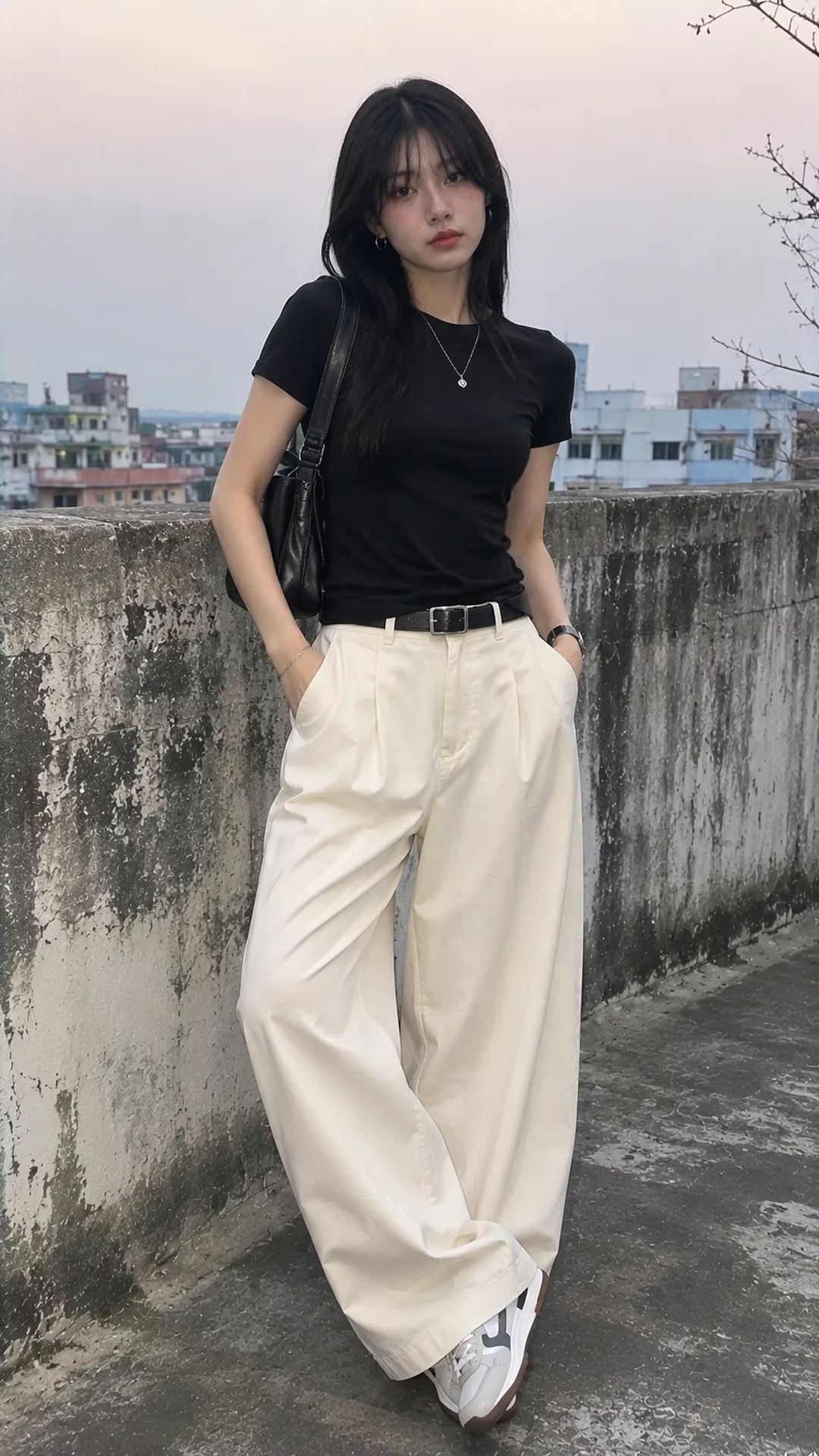
Blue denim: Change the wash to change the mood
Dark blue denim for a cleaner look
Dark blue jeans with little fading give a black top some separation without sharp contrast. A tee, blouse, or shirt can all work. Pick shoes for the distance you’ll cover: sneakers for lots of walking or loafers for a more defined finish at the feet.
With straight-leg jeans, leave a moderately loose top untucked if the hem isn’t too long. With wide-leg jeans, a top that ends at the waistband makes the transition easy to see. A close fit or exposed waist is optional. Adjust the proportions to suit the outfit you want.
Light blue denim for a more casual look
Light-wash jeans create visible contrast with a black top. If the jeans have heavy fading, distressing, or decorative pockets, try a plain top first. A large graphic can still work. Look at the whole outfit to see whether the two areas of detail compete in a way you don’t want.
Consider the denim’s feel as well as its color. Soft jeans with more drape and a stiff pair with more structure will change how the top’s hem looks. If you’re choosing a cut before a wash, our women’s pants guide helps you compare the rise, leg shape, and fabric separately.
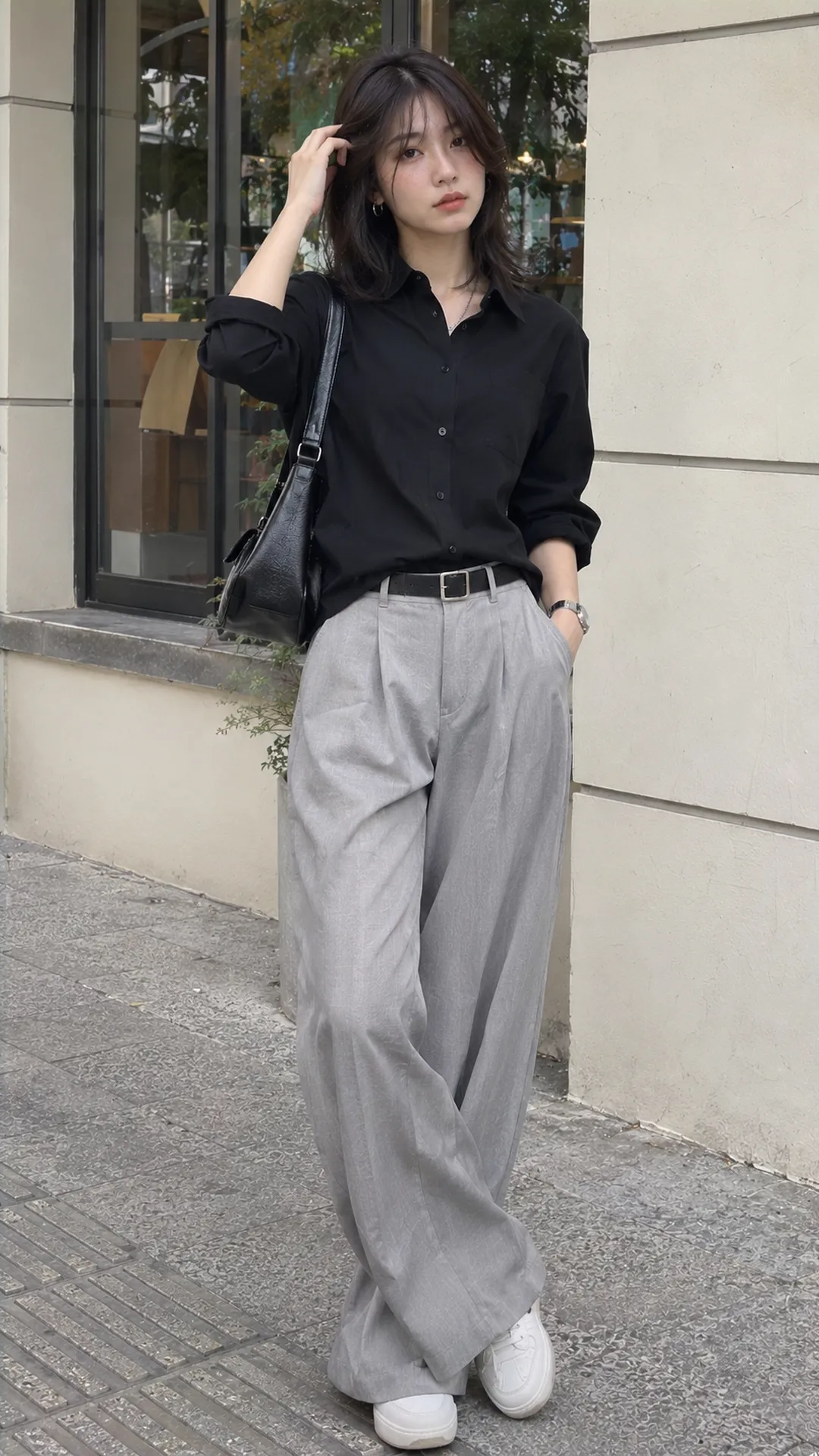
Gray and beige keep the palette understated
Light gray gives a black top clear definition with less glare than white. Charcoal makes the outfit moodier. For some depth, pair a smooth top with pleated trousers or subtly faded gray denim. You can keep the entire palette understated if you like the effect.
Light beige is an option when you want a warmer color below the waist. Structured beige trousers can contrast with a soft black top. If both pieces are very loose, try changing one length before changing the color. Too much fabric may be what makes the outfit feel less defined.
For a flexible workplace, try a black shirt, light-gray pleated trousers, flats, and a structured bag. Check the dress expectations, neckline, and coverage. Neutral colors make the pieces easy to combine, while the individual cuts still need to suit the office.
Use the black top as a backdrop for colored pants
Olive with a plain black top
Try olive cargo pants, a fitted black tee, and dark sneakers. If the pants have several cargo pockets, use a simple top and bag. With tailored olive trousers, try a soft black blouse and loafers for a different feel using the same two colors.
Burgundy for a deeper accent
Straight or relaxed burgundy trousers can lead the outfit under a black top. Keep shoes and bag in the same color family so you can see what the burgundy adds. If both garments are dark, check the contrast outdoors to see whether it looks as intended.
Pale pink or light blue for a softer outfit
A black top draws a clear line against pastel pants. Choose a top with a simple shape so the pants color can show. With shiny pink trousers, try less reflective accessories. A small metal detail can add a highlight to matte fabric if you want one.
Try shades you like and judge them in the setting where you’ll wear them. You may find a pale color easier to wear than a conventional neutral if it works with the pieces you already own. Age and skin tone don’t have to dictate the choice.
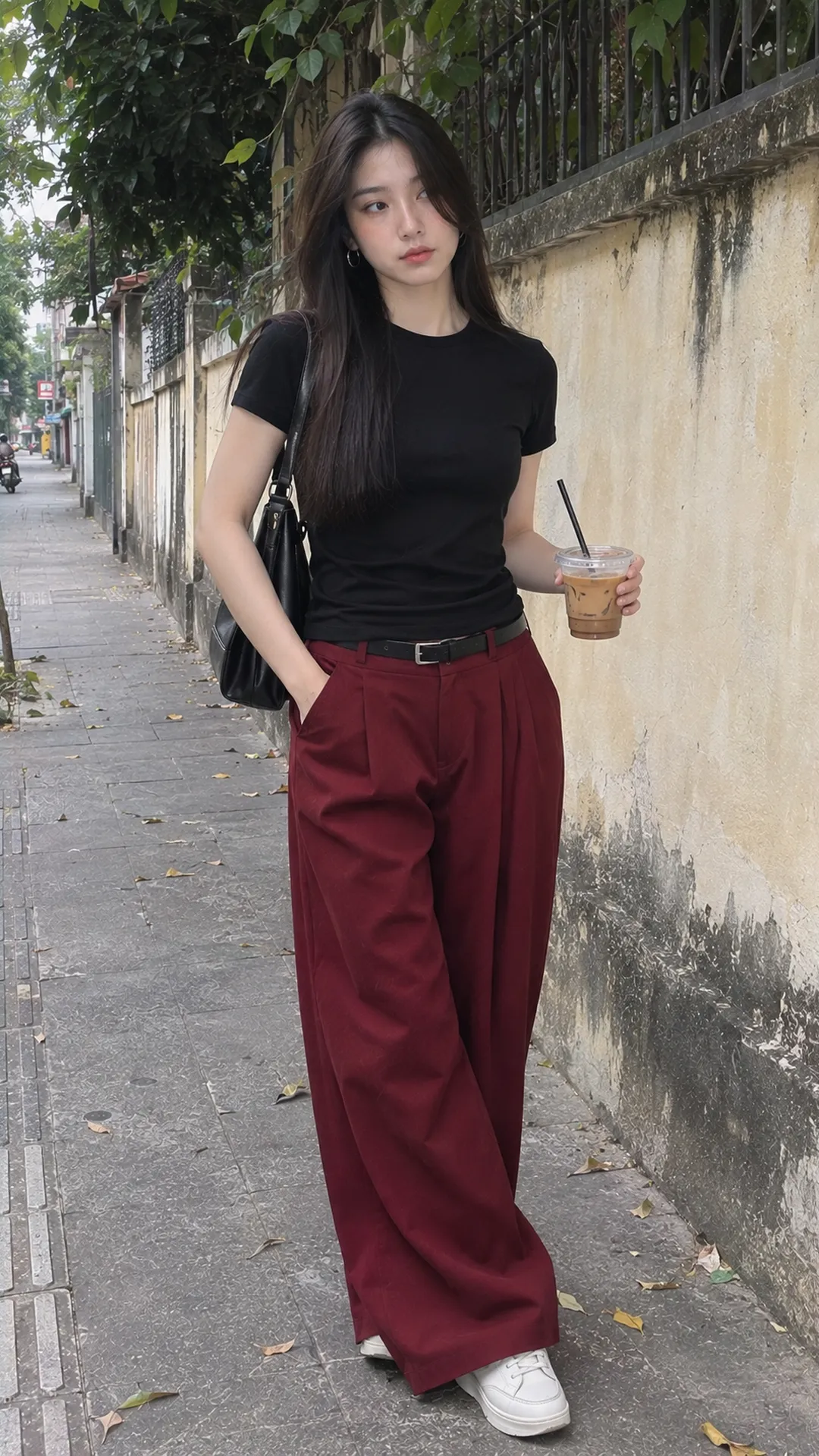
The same pants look different with a new top shape
Black T-shirt: Check body length and sleeve width. A fitted tee with wide-leg pants is an easy starting point. An oversized tee works too if you’re happy with where its hem sits in relation to the waistband. Try a partial tuck before shopping for a shorter top.
Black shirt: The stiffness of the fabric affects how much bulk you get at the waist. A tuck shows up clearly against light pants, so smooth out the shirt tails instead of bunching them at the front. If you’re rethinking the cut, our women’s tops guide covers construction and styling.
Black top with puff sleeves or a statement neckline: Try trousers with less detail to give the top some room. Plain straight-leg trousers can balance it if the top hits the waistband at a good point. See which areas draw your eye and decide whether that’s the effect you want.
Black hoodie: Light pants define the lower half. Check the volume around the hood, sleeves, and hem. Extra pockets or fabric pooling around the shoes can make the outfit feel heavy. Adjust the length first to see whether you really need a different silhouette.
Use shoes and accessories to connect the outfit
With a black top and ivory pants, black shoes repeat the top color, while light shoes extend the line of the pants. Both can work. Try them with the bag you’ll carry, since adding it can change the balance you saw in the mirror with empty hands.
Give a belt a job: hold the trousers up, define the waist, or add a detail you like. If the trousers already have several fasteners, pockets, and seams, a large buckle may be unnecessary. Our guide to alternative accessories for women helps you choose where to put an accent.
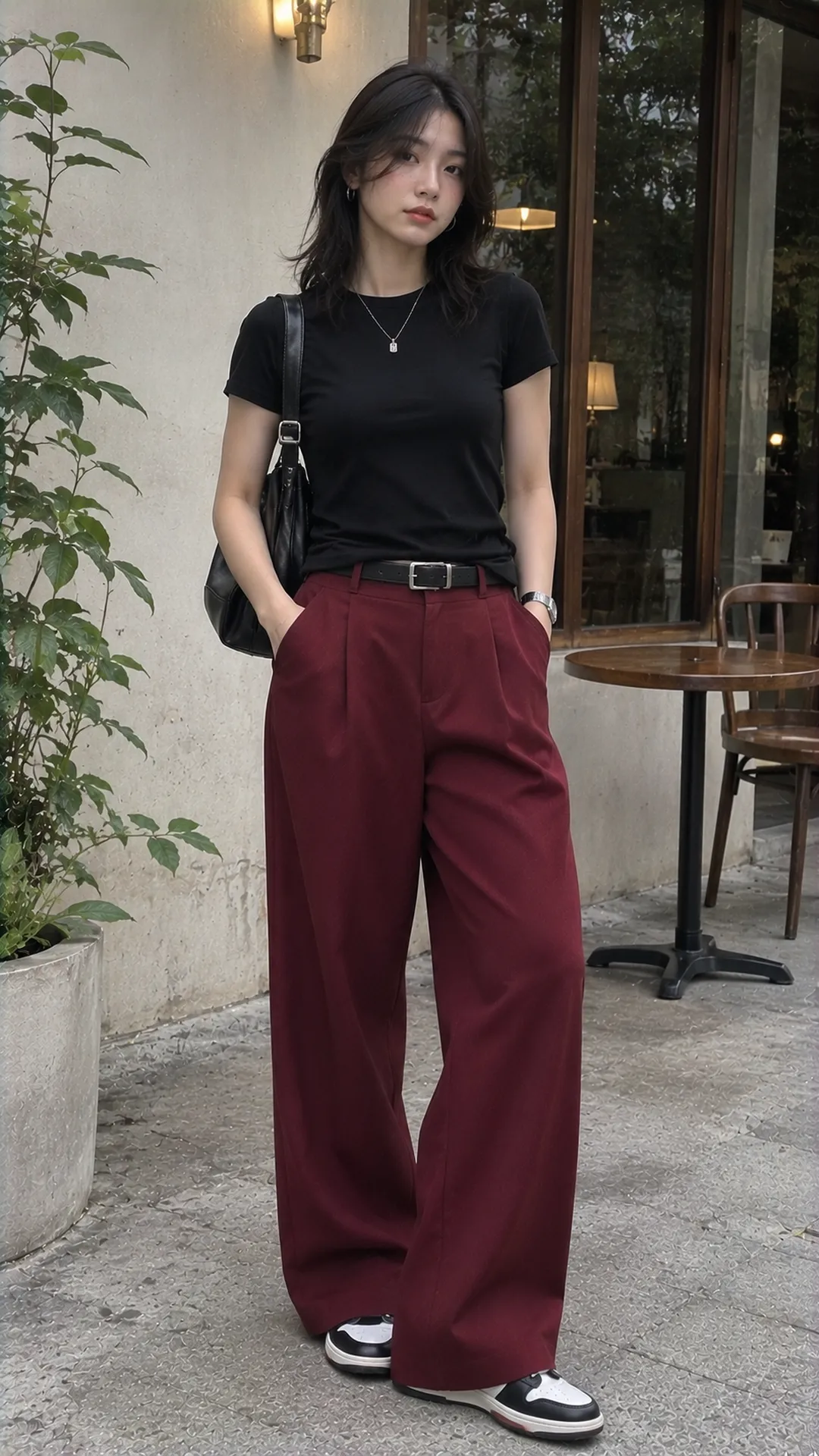
Try three combinations and pick one to wear
Take one black top and three pairs you already own: a light pair, blue jeans, and a muted or dark pair. Wear the same shoes and take photos in the same light and at the same distance. Keeping your hair, bag, and shoes consistent makes the difference in pants color easier to see.
Then sit, walk a few steps, and carry your bag. Check whether the top comes untucked, the pants pull at the hips, or the hems catch on the soles. If a combination looks good but needs constant adjustments, consider the size or length before looking for a different color.
When looking for reference photos, prioritize the same kind of top you own. Our fashion moodboard guide helps you sort images by color and proportion. For a more expressive look, see alt fashion for beginners and pick one small change you can use again.
With a small graphic, try picking up a secondary color from the print. A pale blue line can work with light blue jeans, while a cream detail can echo cream pants. The colors don’t have to match exactly. See whether they look connected in the way you intended.
When shopping for pants, bring or wear the black top if you can. A complete try-on shows whether the top covers the waistband, the pockets add bulk, and the hem works with your shoes. A color palette alone can’t answer those questions.
Look for a few pants colors that work with the black top you own. Once you know whether you like stronger or subtler contrast, it’s easier to choose what to wear next. A few combinations that look good and feel comfortable are enough to get started.