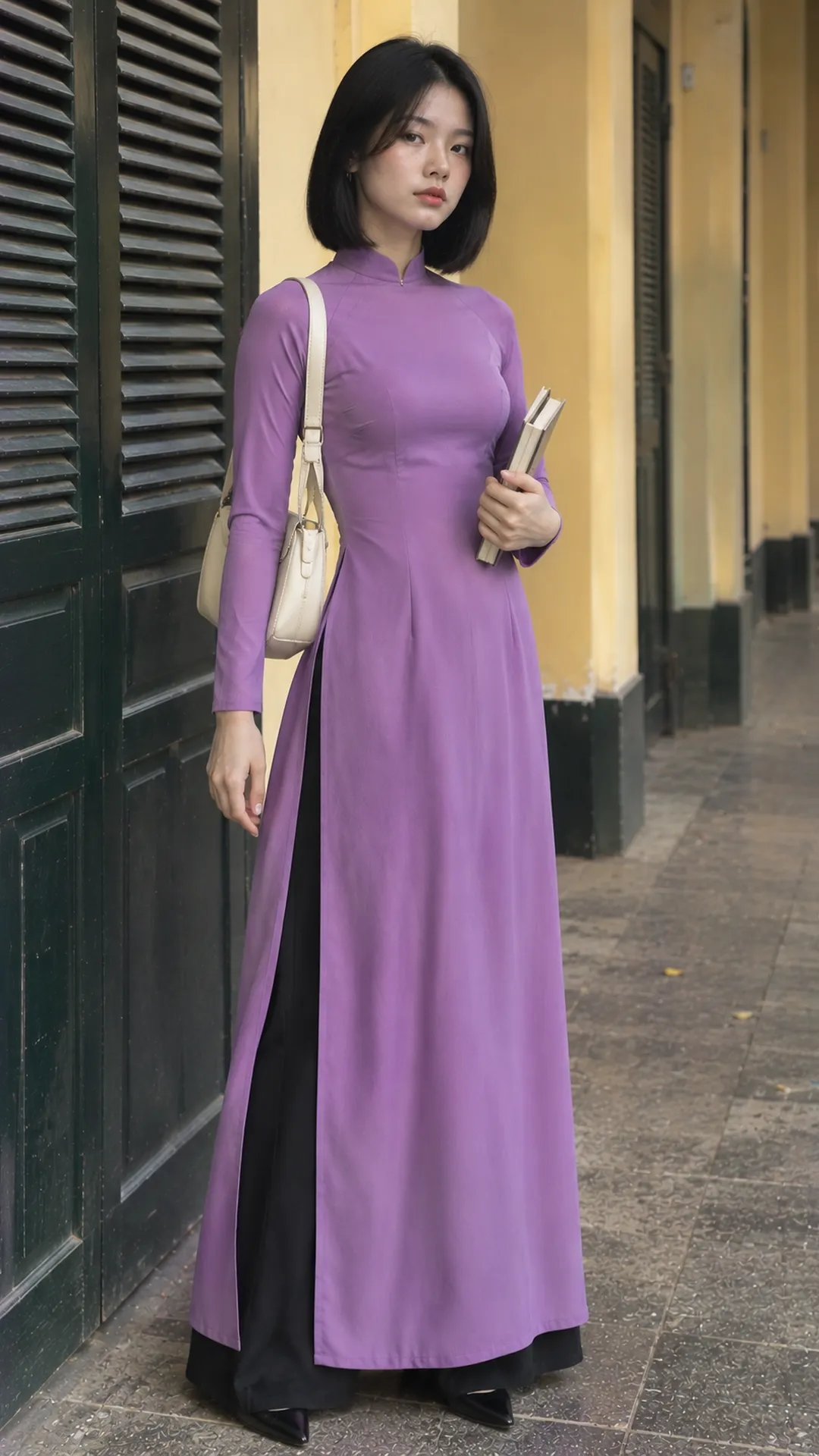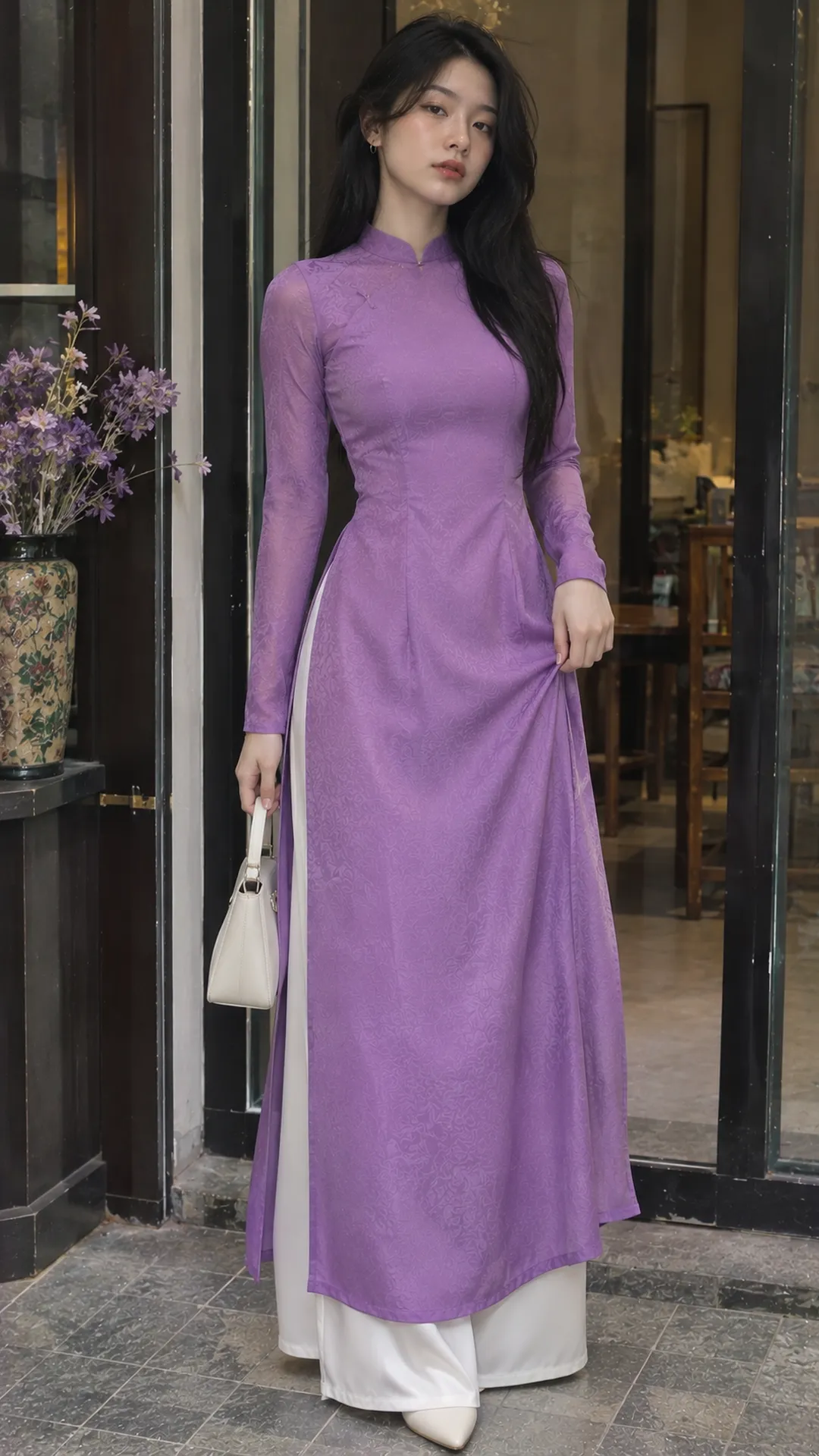
Start with the shade of purple
Pale lavender, pink-leaning purple, blue-leaning purple, and deep purple each give an outfit a different feel. Color names vary from seller to seller, so look at the actual fabric when possible. If you’re shopping online, ask for a photo in natural light and compare it with any heavily edited listing photos.
With pale purple, light pants tend to create a soft transition between the tunic and the lower half. Dark pants make the separation clearer, especially when the panels open as you walk. Decide whether you want the overall effect to be soft, bright, or sharply contrasted.
With deep purple, white pants can make the panels stand out, while black keeps the outfit subdued. If the tunic is patterned, look at its secondary colors as well as the background. Picking up a small color from the pattern can help you choose pants and accessories without introducing too many new shades.
White pants: crisp and easy to try
Try white pants when you want the purple tunic to be the focal point. The light-dark contrast is clear with deep purple, and the effect is softer with pale purple. Bright white and off-white can each work differently with a particular shade of purple.
Hold the pants near the patterned or trimmed part of the panel. If the tunic has ivory details and the pants are a very cool white, the difference can become obvious under strong light. Check it ahead of time so you can decide whether you like the contrast.
With light pants, check opacity, lining, and whether underwear lines show around the hips. Look beyond the parts covered by the panels when you stand still. More of the pants may show when you walk, sit, or catch a breeze, so check coverage and comfort across the entire garment.
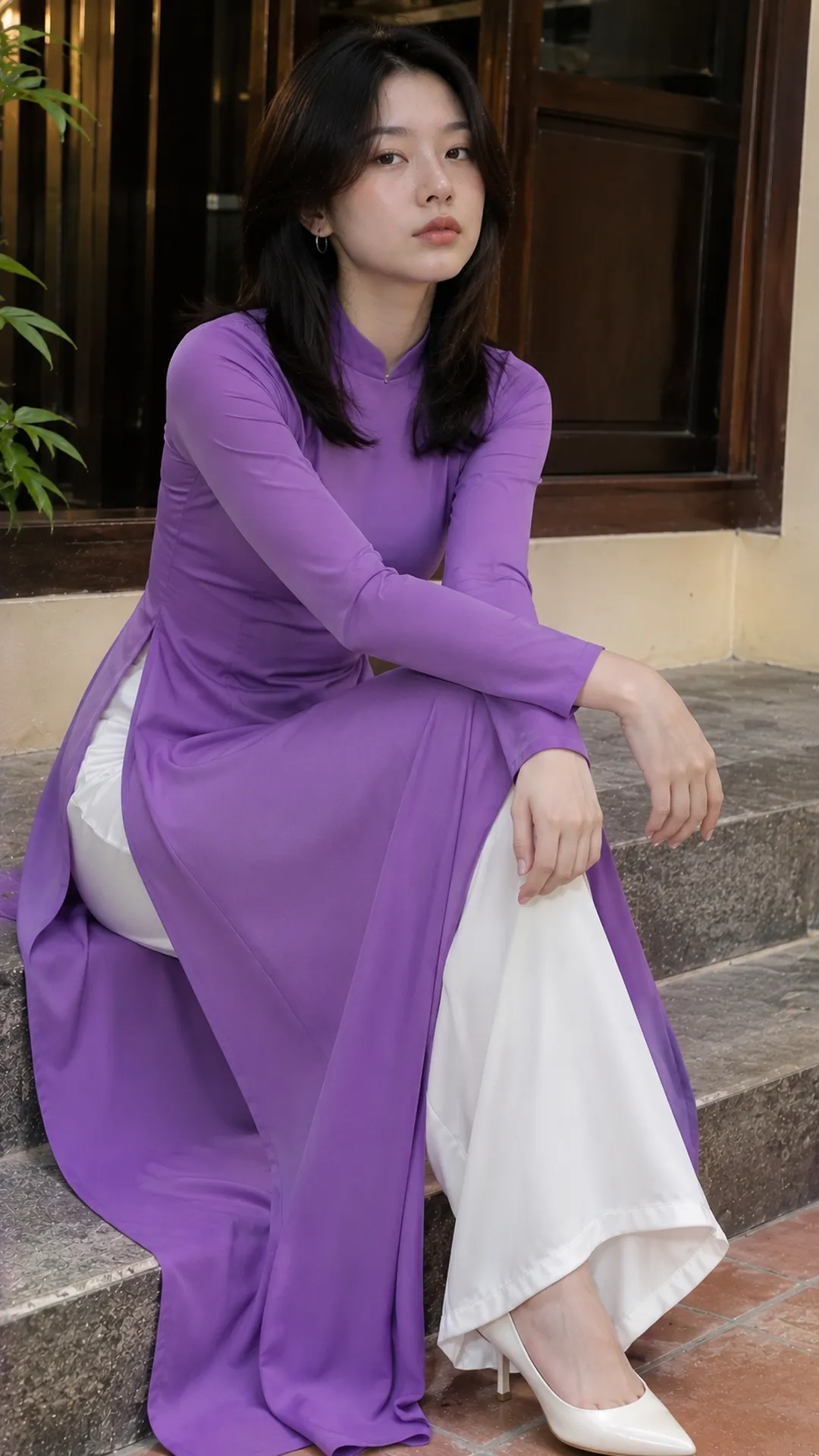
Cream or ivory pants: a softer transition
Cream, ivory, or very pale beige pants can soften the contrast you would get with bright white. Yellow-leaning cream and near-white ivory create different effects. Compare each against the tunic, since the result varies with the shade of purple.
A soft cream can complement a pink-leaning purple with warm-toned details. With a blue-leaning purple, you might prefer an ivory with less yellow. Use these combinations as starting points for comparing the actual fabrics.
Cream shoes and a cream bag can work in different shades. Check whether the difference looks deliberate or feels out of place. An easy starting point is to choose one accessory close to the pants and keep the other neutral.
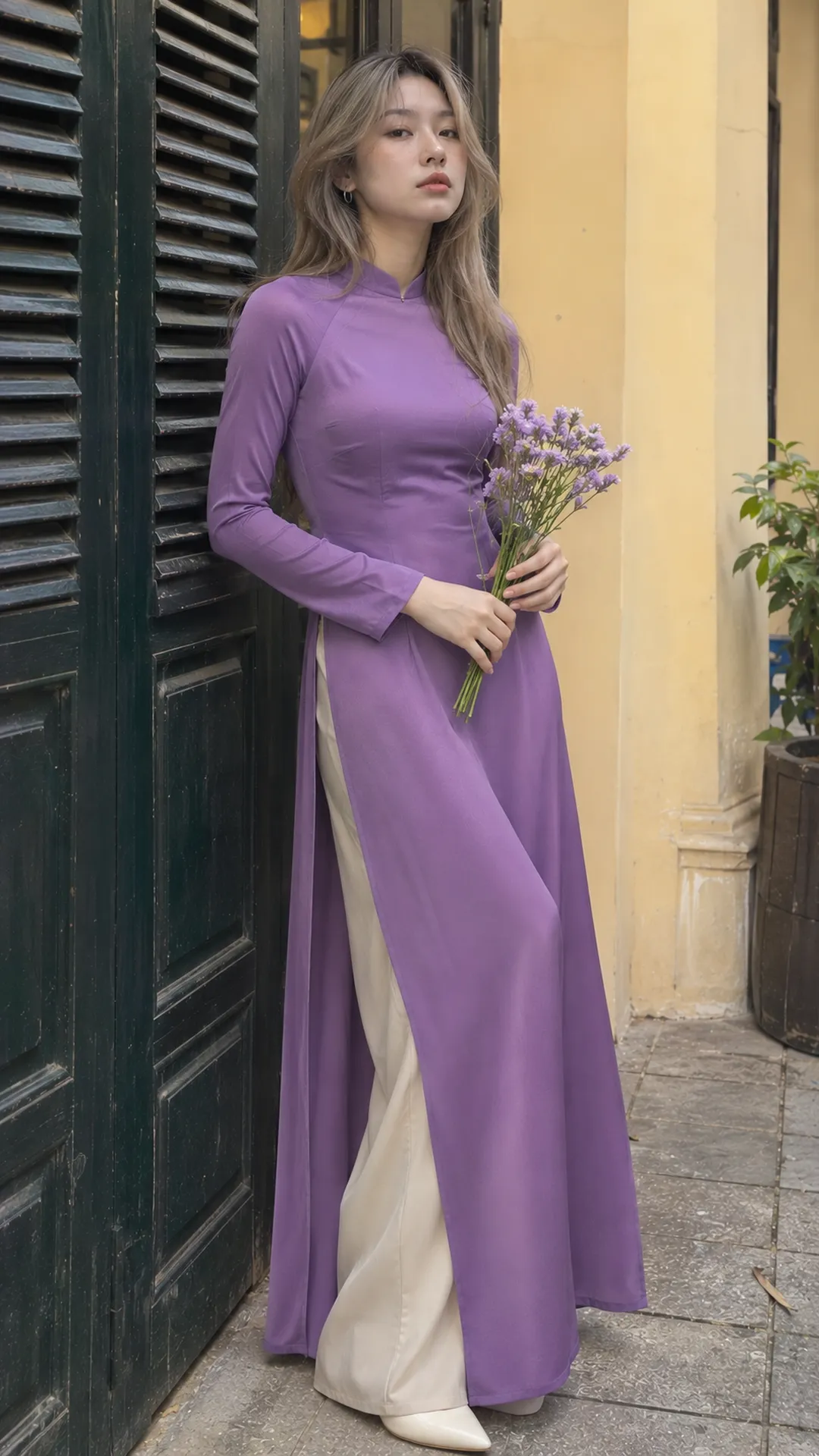
Black pants: a darker palette with contrast
Try black pants to make a light purple tunic or a bold pattern stand out against a dark lower half. With very deep purple, the contrast may be subtler and the overall look more subdued. Step back and check whether the details of the tunic are as visible as you’d like.
The width, length, and finish of black pants still shape the silhouette. If the pants are too long, bunch up over your shoes, or look much shinier than the tunic, they can draw more attention than you intended.
Black shoes can give black pants a continuous line. Another neutral can create a transition. A small bag that picks up a color from the tunic’s pattern can pull the outfit together with minimal jewelry.
Tonal purple pants and accent colors
Pants in a lighter or darker purple can keep the outfit in one color family while letting each layer show. For a nearly monochrome look, try both pieces on together. Different fabrics or dye lots can produce different shades even when the labels use the same color name.
If two shades almost match, try a more deliberate difference in lightness before searching for an even closer match on a screen. A mid-purple tunic with visibly pale purple pants may be easier to distinguish than two shades that only look slightly different under one type of lighting.
Test accent colors such as pale pink or soft yellow against the specific purple and pattern of the tunic. Judge the pairing on the actual garments as well as on a color chart. If the pants already make a strong statement, keep shoes, bag, and jewelry simple so the outfit has one focal point.
Balance sheen and drape as well as color
Two pairs of pants in the same color can photograph very differently if one is glossy and the other matte. A glossy finish catches strong highlights, which can make the color appear lighter from some angles. A still photo only shows part of how the pants and tunic panels look in motion.
If the tunic already has a textured surface, dense embroidery, or a busy pattern, try pants with fewer details. With a plain, fairly matte tunic, a finish with some sheen can add interest within the same color palette. Choose the surface effect you want across the two garments.
Check how the fabric falls as you walk. The pants should move comfortably under the panels without constant adjustment. Look at the hips, seams, and hem. A good color pairing works best with pants that fit and suit what you’ll be doing.
Choose a cut that works with the panels and shoes
Wide, flowing pants are a familiar option for an ao dai. Choose a width that works with the length of the panels and the way you need to move. Too much width or length can catch underfoot, while a close fit can restrict movement at the hips and knees.
Check the waistband standing and sitting to see whether it creates a ridge under the tunic. If the tunic fits closely through the waist and hips, bulky waistband or pocket details can show. Look for a smooth fit with enough room to breathe and move comfortably.
The guide to reading measurements when shopping for clothes online is useful if you’re ordering the tunic and pants separately. Ask for the pants length from the waistband, the hip measurement, and the leg width. Choose the best fit for each piece, even if the size labels differ.
Set the hem after trying on your shoes. Walk a few steps, step onto a low stair, and sit down to check whether the pants touch the ground or catch on your heel. If the pants need altering, take the shoes you’ll wear so the tailor can see how the hem falls.
Coordinating shoes, bags, and jewelry
Choose shoes around fit, pants length, and what you’ll be doing. If you’ll be standing or walking for a long time, wear a pair you’re used to. Long pants may cover most of the shoes while you stand, but the shoes will still show when you walk. Check how they look in motion as well as from the front.
A compact bag holds the essentials while staying clear of the panels. With a shoulder or crossbody strap, check whether it pulls the tunic or covers an important detail. If you choose a clutch, make sure you can handle it easily while moving, taking photos, or carrying other things.
A collar or raised embroidery can provide enough detail around the neckline. Try earrings or a bracelet as the focal point. Our guide to balancing accessories by placement can help you decide where to draw the eye so the collar, earrings, necklace, and bag have room to stand out individually.
Make a small color board before choosing
Start with a photo of the actual tunic, add two or three pants options, and place them beside a photo of the shoes you already own. The guide to creating a fashion mood board helps you look at color, material, and silhouette separately. A small board is enough to compare options for a purple ao dai.
For example, compare a pale purple tunic with white and ivory pants, using the same shoes for both. Once you’ve chosen a pants color, try swapping the bag or jewelry. Changing one element at a time makes it easier to see what improves the pairing.
If the tunic has a multicolored pattern, mark the background color and one secondary color you want to repeat. Picking it up in one small item can be enough. Giving the colors some breathing room lets the lines of the panels and the tunic’s details show clearly.
Test the outfit for the occasion
For a photo shoot, check the outfit in lighting similar to what you’ll have at the location. Take a few full-length photos standing and walking to see the pants between the panels. Keep edits to the test photos minimal so you can spot any issues with the outfit before the shoot.
For an outing or gathering that involves moving around, consider how far you’ll walk, where you’ll sit, and what you’ll carry. The guide to choosing outfits for different outings can help you factor in practical needs. If the event has a dress code, check it before choosing a bold accent color.
If you’re still unsure what color pants to wear with a purple ao dai, start with two clearly different options: one light pair and one dark pair. Keep the shoes, lighting, and poses similar. Choose the outfit you like both standing and moving, with enough coverage and a fit you can wear without constant adjustment.