

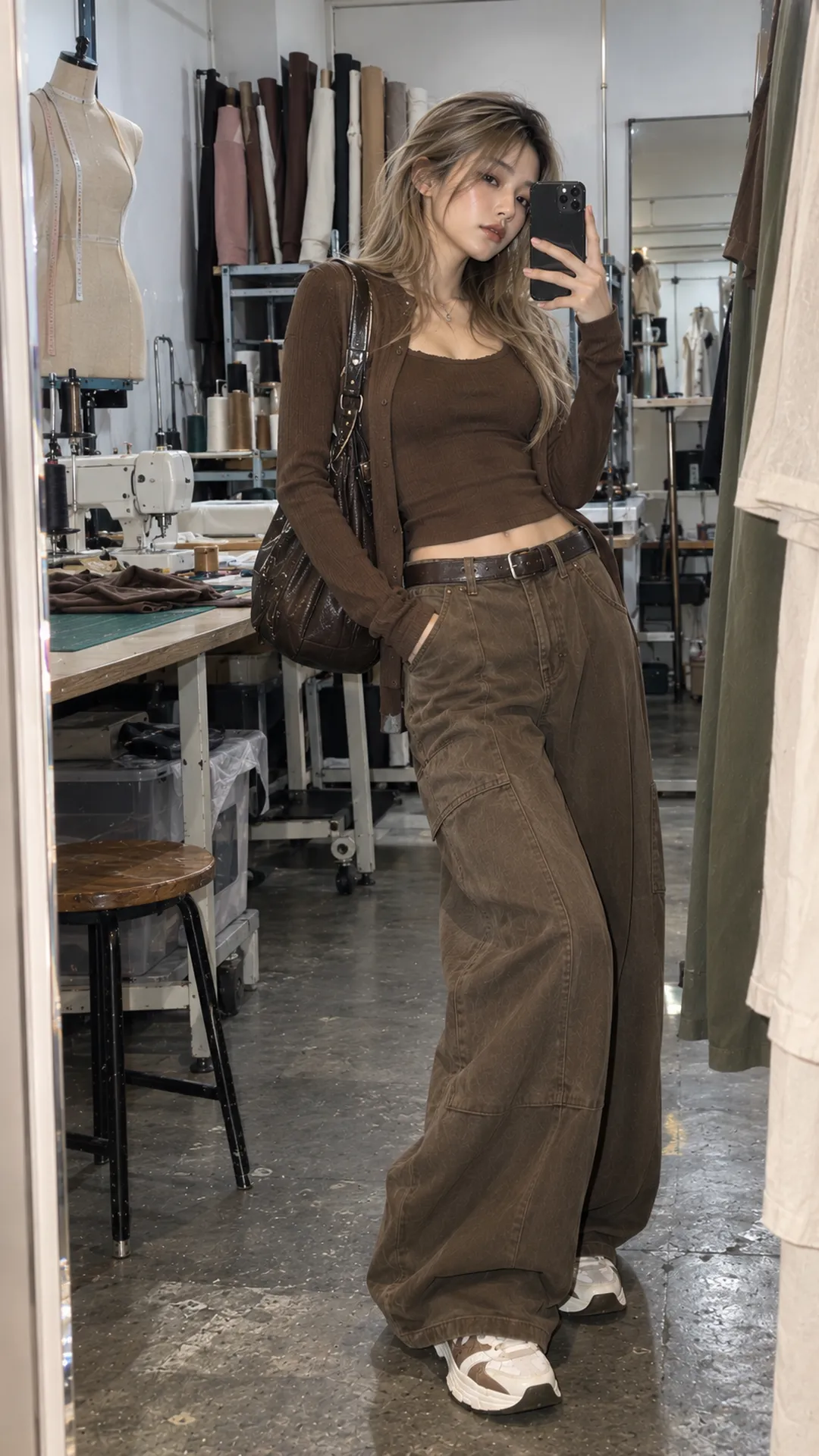
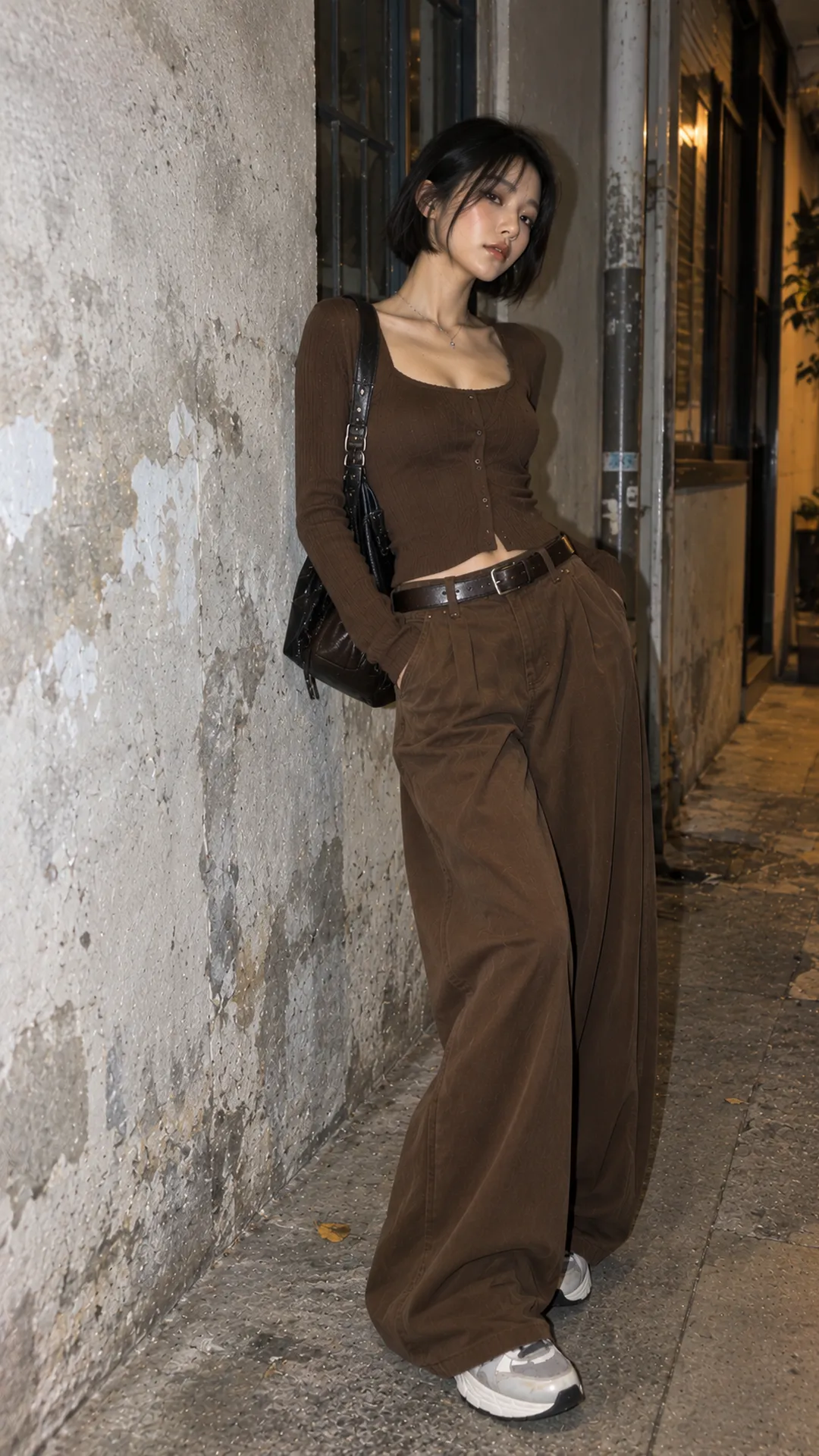
Read the brown shade before pairing
Place brown beside white or a neutral in indirect daylight. Ask whether it is light or dark, leans yellow-red or gray, and has a matte or shiny surface. Exact naming is unnecessary; distinguish it from its neighbors.
Deep brown can act as a dark base; pale beige-brown is closer to cream and some skin shades in lightness. Earthy brown suggests subdued combinations, but seller names do not guarantee matching shades. Online, request real photos beside neutrals if color matters.
Do not assume a skin tone may wear only one brown family. Change placement: use brown in trousers, bag or shoes if you dislike it near your face, or add a light collar layer to a brown top. This adjusts composition rather than restricts bodies.
Brown with cream and ivory: an accessible starting palette
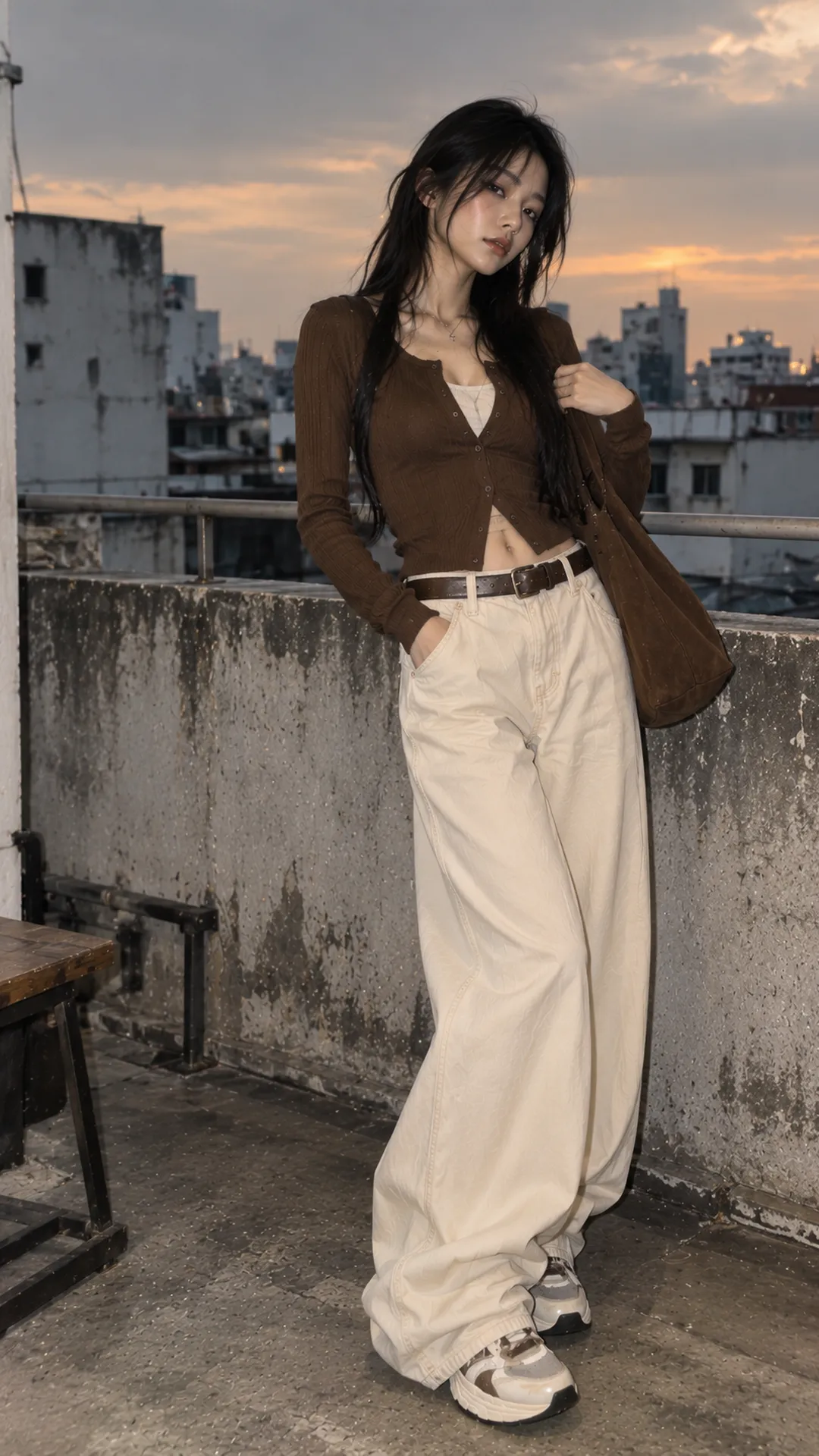
Chocolate and cream create clear light-dark contrast without many colors. Try cream above brown trousers with deep-brown shoes, or brown above cream trousers. The pair stays the same while the light area's position changes focus.
With beige-brown, use lighter cream or a deep-brown accessory for separation. If you enjoy a very light overall effect, retain close colors and distinguish through seams, folds and texture. A ribbed top beside plain trousers is a simple example.
Bright white often creates a stronger boundary than ivory with brown. Test both rather than treating them as interchangeable. If white makes brown seem too deep, try cream; if cream and brown lack definition, show a small white neck or sleeve layer.
Can brown and black work together?
Yes. They need not belong to separate wardrobes. Decide whether you want separation or a blended dark base. Medium brown and black distinguish easily; very deep brown may need texture differences or a little light space.
A matte deep-brown top and black trousers can merge. Try a small belt buckle, ribbed top or exposed cream collar, without needing all three. Reveal the structure you want rather than brighten the outfit at any cost.
For character, let brown support black in a bag, jacket or inner top. Establish one clear accent before hardware. Getting started with Alt Fashion styling checks the main piece's role and avoids details added only to make an outfit stronger.
Brown and blue: from familiar denim to lighter shades
Blue denim for everyday wear
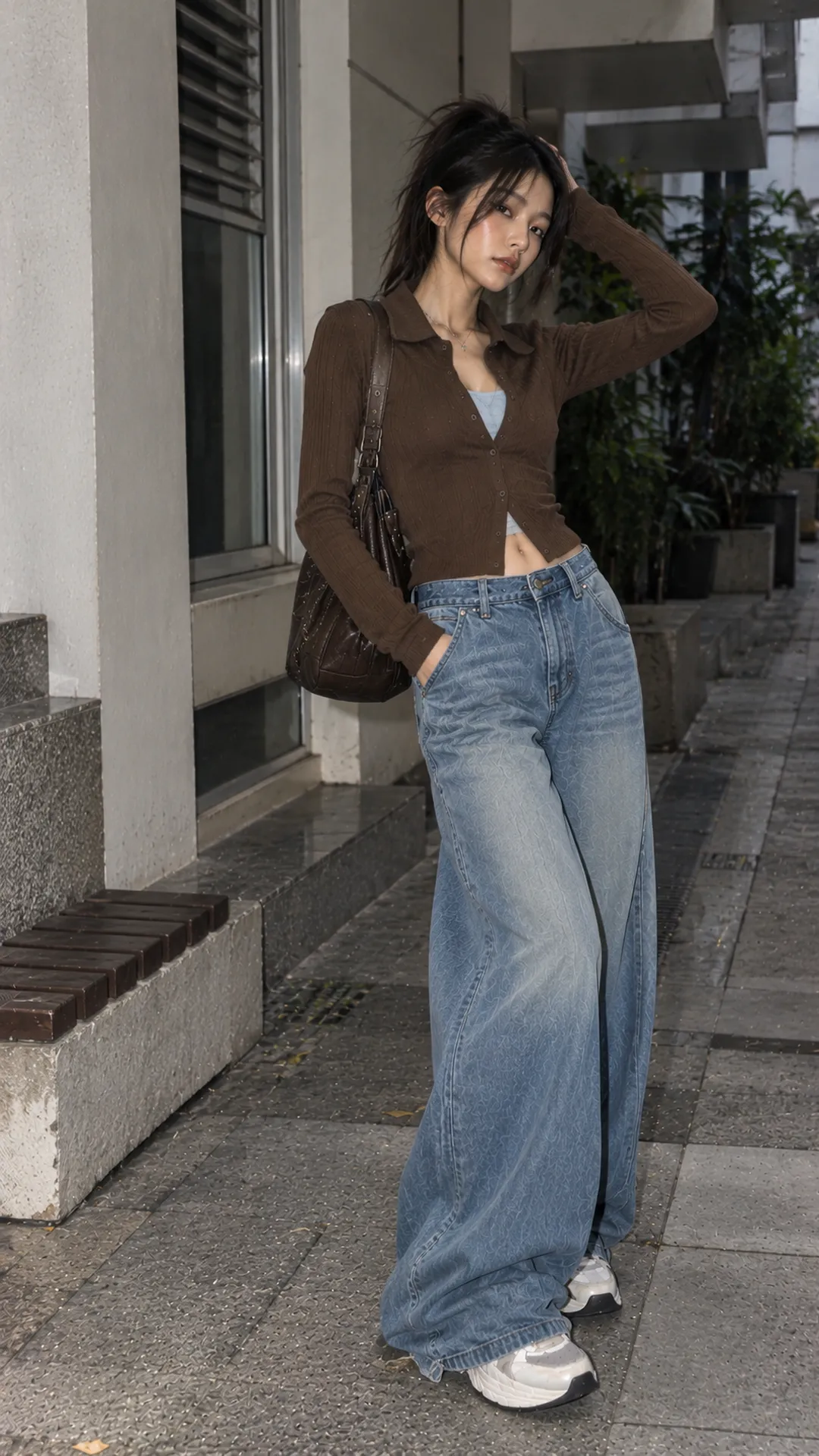
Brown and jeans are flexible because denim varies in depth. Chocolate with light jeans contrasts clearly; light brown with dark denim moves emphasis below. Cream shoes finish lightly; dark shoes preserve a connected lower half.
Consider wash too. Strong fading adds bright areas, making a plain brown top easier than many patterns. With large pockets or prominent seams, reduce bag details for breathing room.
Pale blue lightens a dense brown outfit
A pale-blue shirt with chocolate adds color without vividness. Place blue in the top or a small scarf. With beige-brown and very pale blue, check contrast; deep-brown shoes can anchor similarly light pieces.
Blue need not have one exact name. Compare the actual blue and brown, observing grayness or clarity. Grayish blue differs from a bright light-blue tee even under the same shop label. A screen color alone cannot guarantee a reference match.
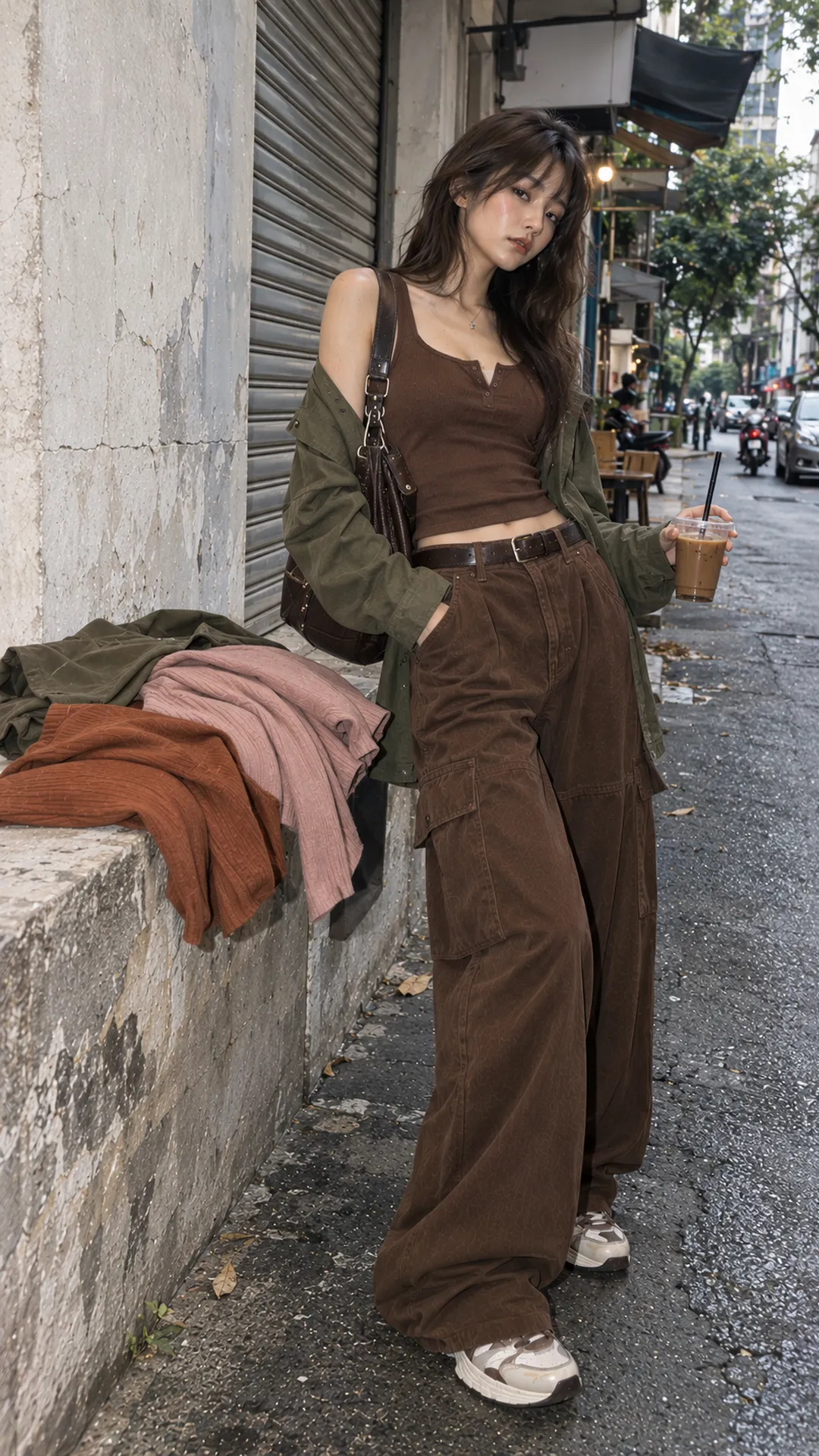
Olive, pink and earthy orange as supporting colors
Brown and olive: make one lighter. Muted olive and light-brown trousers separate more easily than two very dark pieces. Plain cuts and minimal detail keep it relaxed. Add cream in a base top or shoes if lightness is needed.
Brown and blush pink: use pink to lighten a deep-brown base. Pale pink, a brown skirt and dark-brown shoes are one example. For less overall softness, retain a structured bag or clean-cut top. Fit contributes alongside color.
Brown and earthy orange: these share a warm impression. Choose orange distinct enough not to resemble an accidental mismatch. An inner top or small scarf can carry orange while brown and cream occupy most area. Similar-depth earth tones throughout are unnecessary.
Before a third color, ask whether it forms a base, connects pieces or leads. A bag already combining brown and cream may connect better than another hue. If no role is clear, retry the two-color palette.
Wear several browns without one undifferentiated block
Consider light, medium and deep brown, without requiring all three. Two distinct levels suffice for top and trousers. Beige-brown above chocolate with a medium-brown bag creates a readable sequence. Shoes can repeat the darkest shade as an endpoint.
If similar-colored pieces are not a matching fabric set, decide whether the difference looks intentional. Increase texture contrast or lighten one. Do not force exact matching through separate online purchases; tiny unintended differences can be harder than clear contrasts.
Shiny and matte surfaces also separate layers. A matte-brown top and reflective brown bag can accent without another color. Shine across top, trousers, bag and shoes is much stronger. Choose where reflected light should concentrate and reduce competing surfaces.
With layers, check edge lengths too. The guide to women's layering combines color, length and texture. In heat, a thin exposed collar layer may separate browns without requiring a thick jacket.
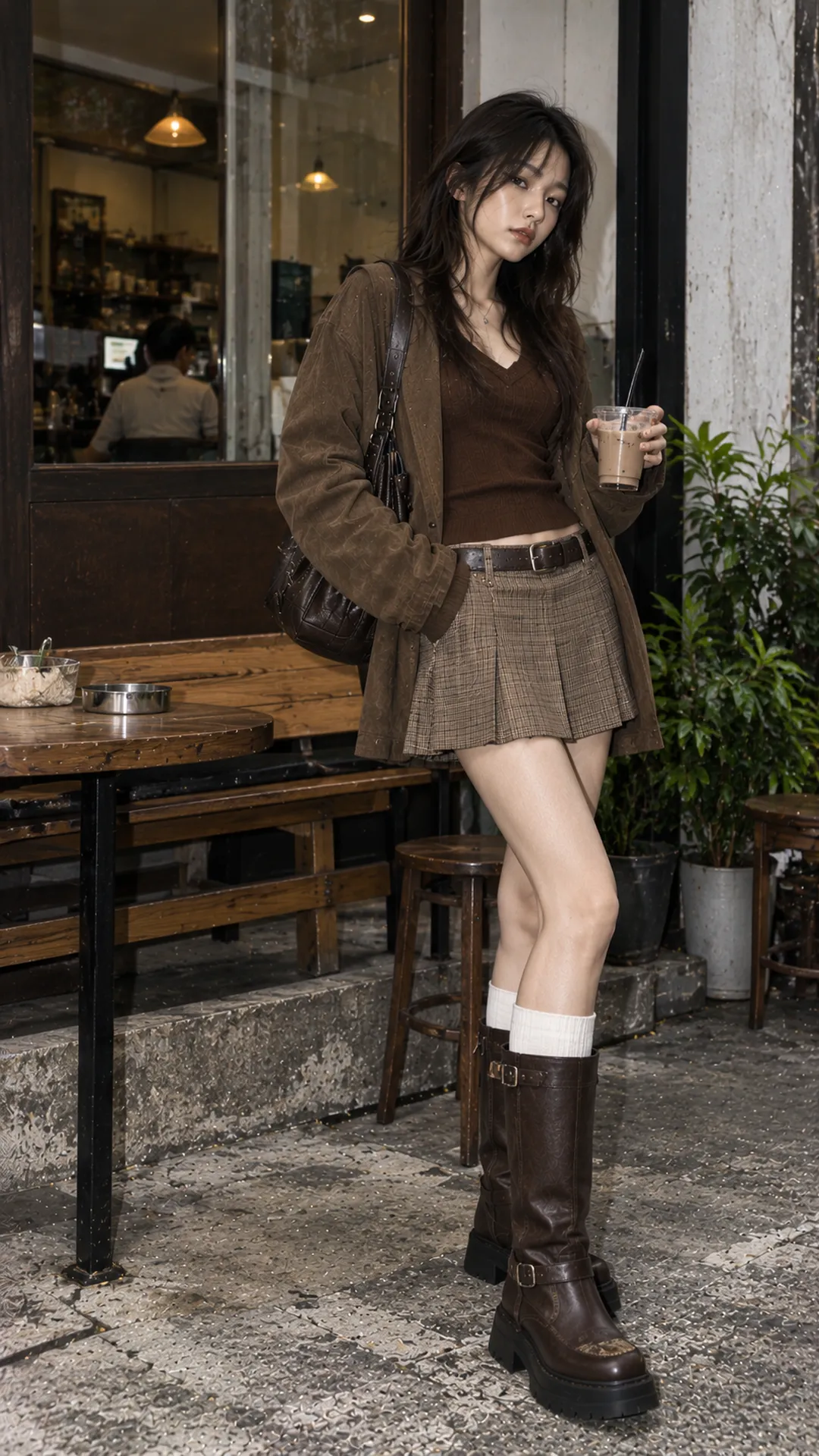
Move from palette to tops, trousers and skirts
Choose the palette, then assign the largest area. A brown dress establishes most of the outfit, leaving accessories to support it. A small brown top and wide light trousers reverse the roles. One area ratio cannot apply to every garment type.
For a main top, check neckline, body length and tuck in the women's tops guides. For main trousers, use the women's trouser-shape guide for rise and length. The brown palette remains transferable, while proportion follows the actual item.
With skirts, assess flare and length before top width. A long brown skirt already provides a large area; a cream top ending at the waist defines a break. With a loose untucked top, photograph full-length to see whether layers hide the structure you want.
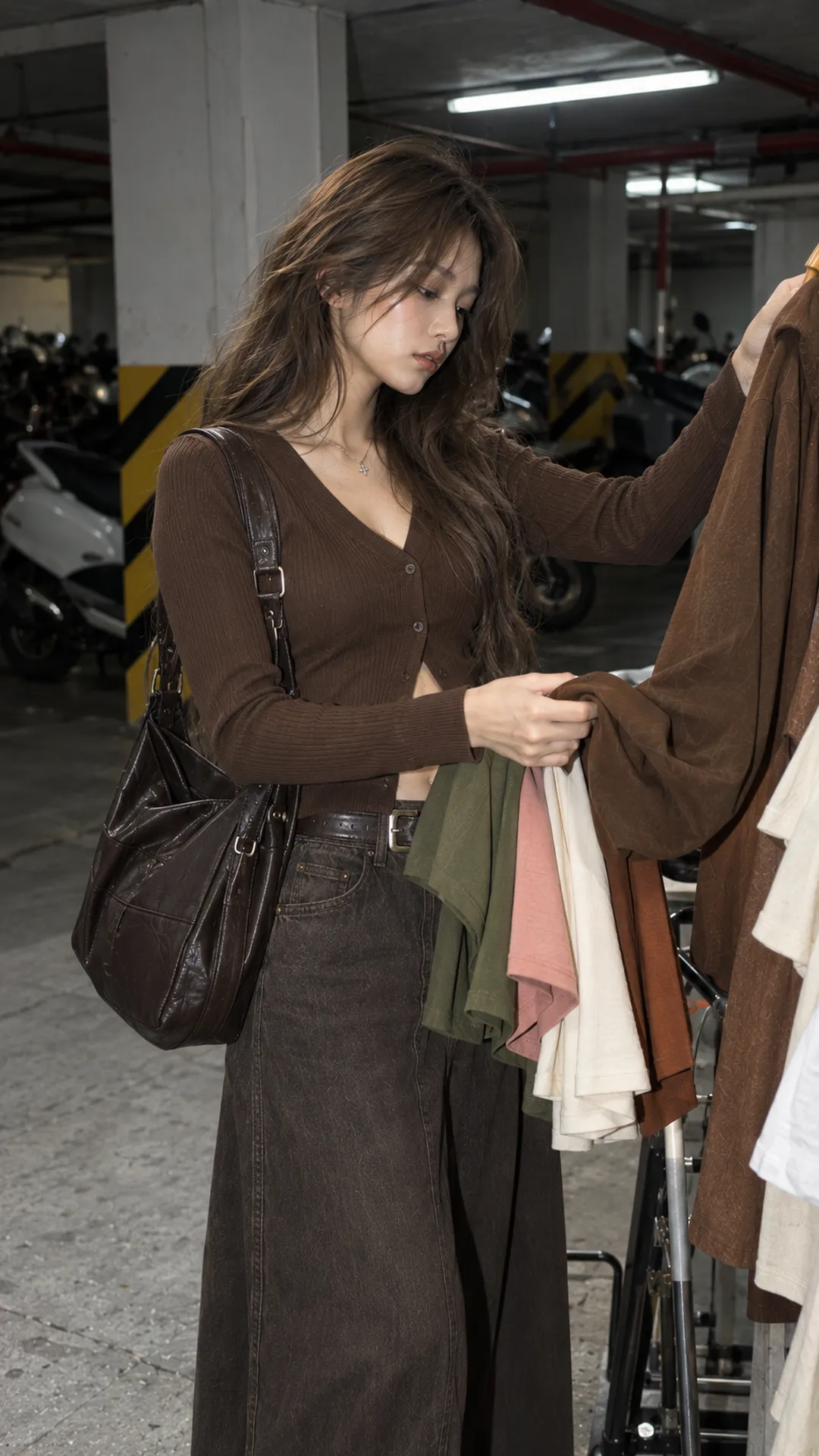
Test the palette before buying more
Keep two brown garments and change only shoes from cream to black or deep brown. This reveals the endpoint's impact without replacing clothing. Then keep shoes and change the bag. One variable at a time identifies the actual missing role. Sit and carry the bag too, because color positions differ from hanging garments.
Pair one brown item with three existing pieces and form two complete outfits with shoes and bags. Compare in similar light. If colors work but you would not wear it, investigate cut, heat or occasion rather than immediately buying another color.
Record color roles such as 'deep brown base, cream lightness, blue top.' A fashion moodboard stores reusable formulas. A few palettes compatible with your wardrobe are often more useful than a long unworn list of brown pairings.