

Read the blue shade before choosing its partner
Place blue beside white in daylight. Near-white pale blue can stay in a light outfit or gain definition from darkness. Deep blue separates with light clothing or accessories. Vivid blue also needs attention to other colors' prominence.
Blue labels do not guarantee identical shades. Some lean purple, others green; denim adds faded areas. Direct comparison reveals the relationship better than phone images affected by photography light.
Establish placement next. Blue tops emphasize the face area, trousers emphasize below and bags create small accents. A pair overwhelming in equal top-and-trouser areas may be easy when one appears only in shoes.
Choose colors for the feeling you want
| Companion color | Styling direction | Starting point |
|---|---|---|
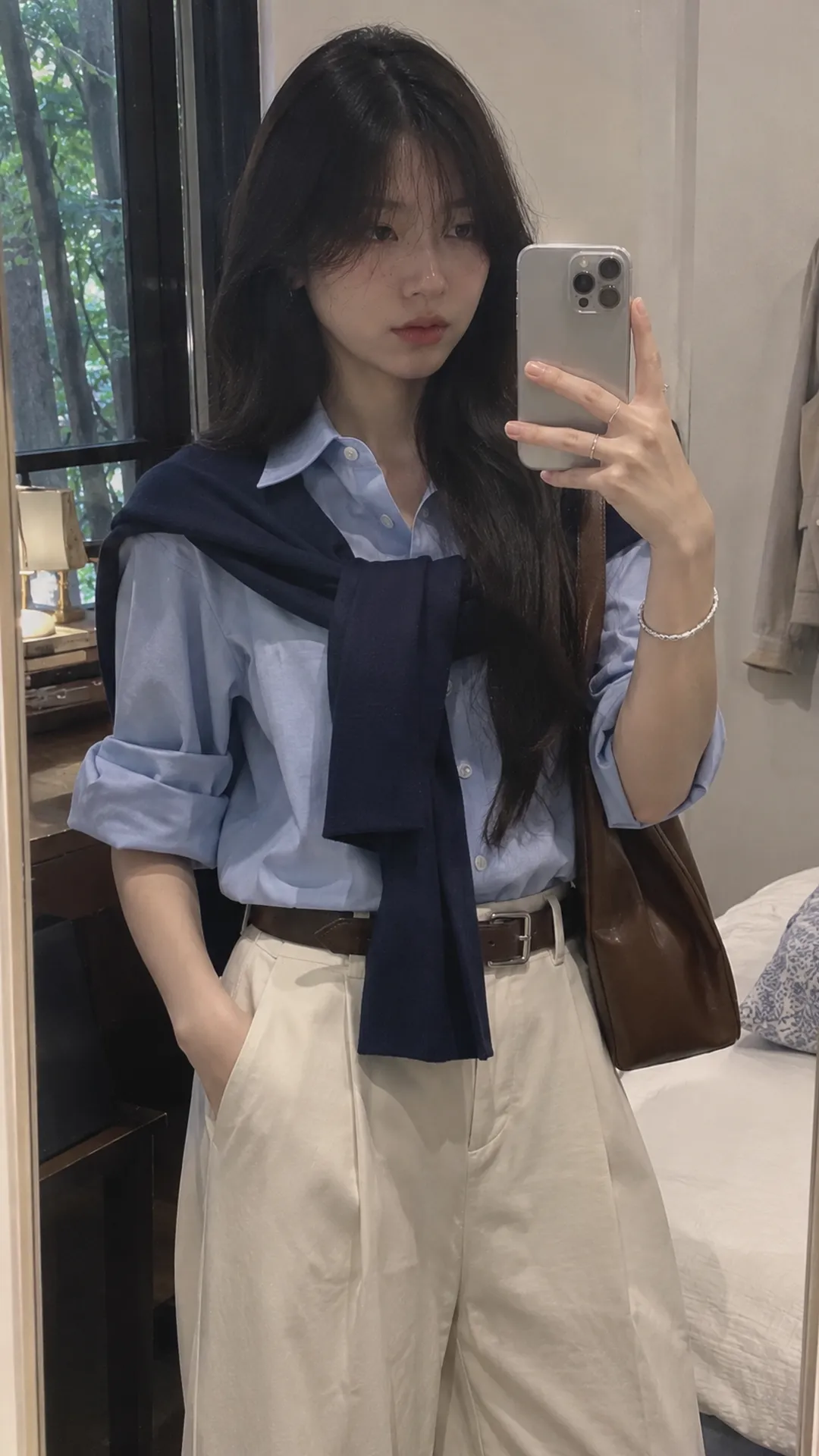
| White | Bright, defined lines | Blue top with white trousers or the reverse |
| Cream, beige | Soft, less stark contrast | Pale-blue top with a cream skirt |
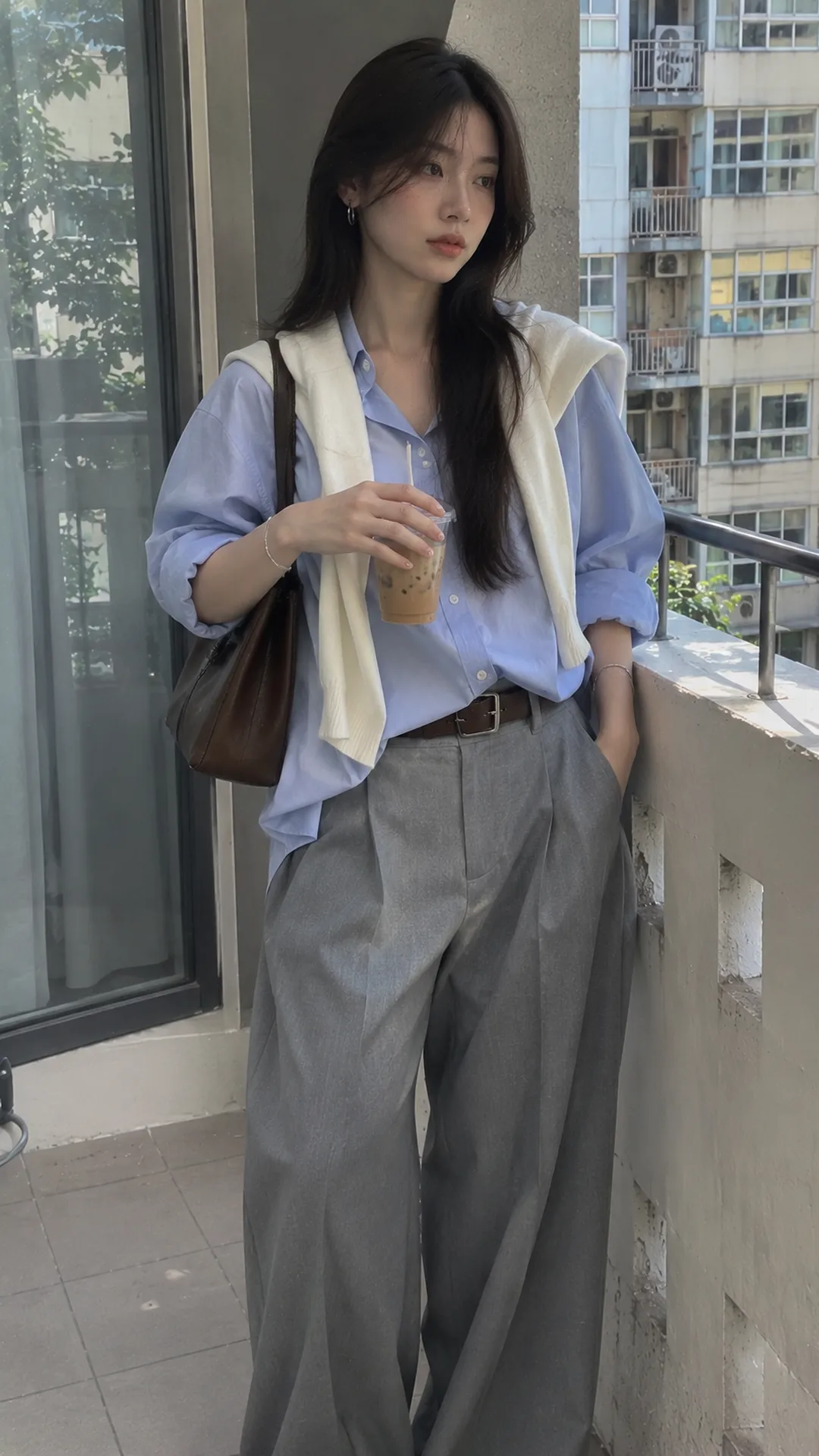
| Gray | Neat, versatile across settings | Blue top with straight gray trousers |
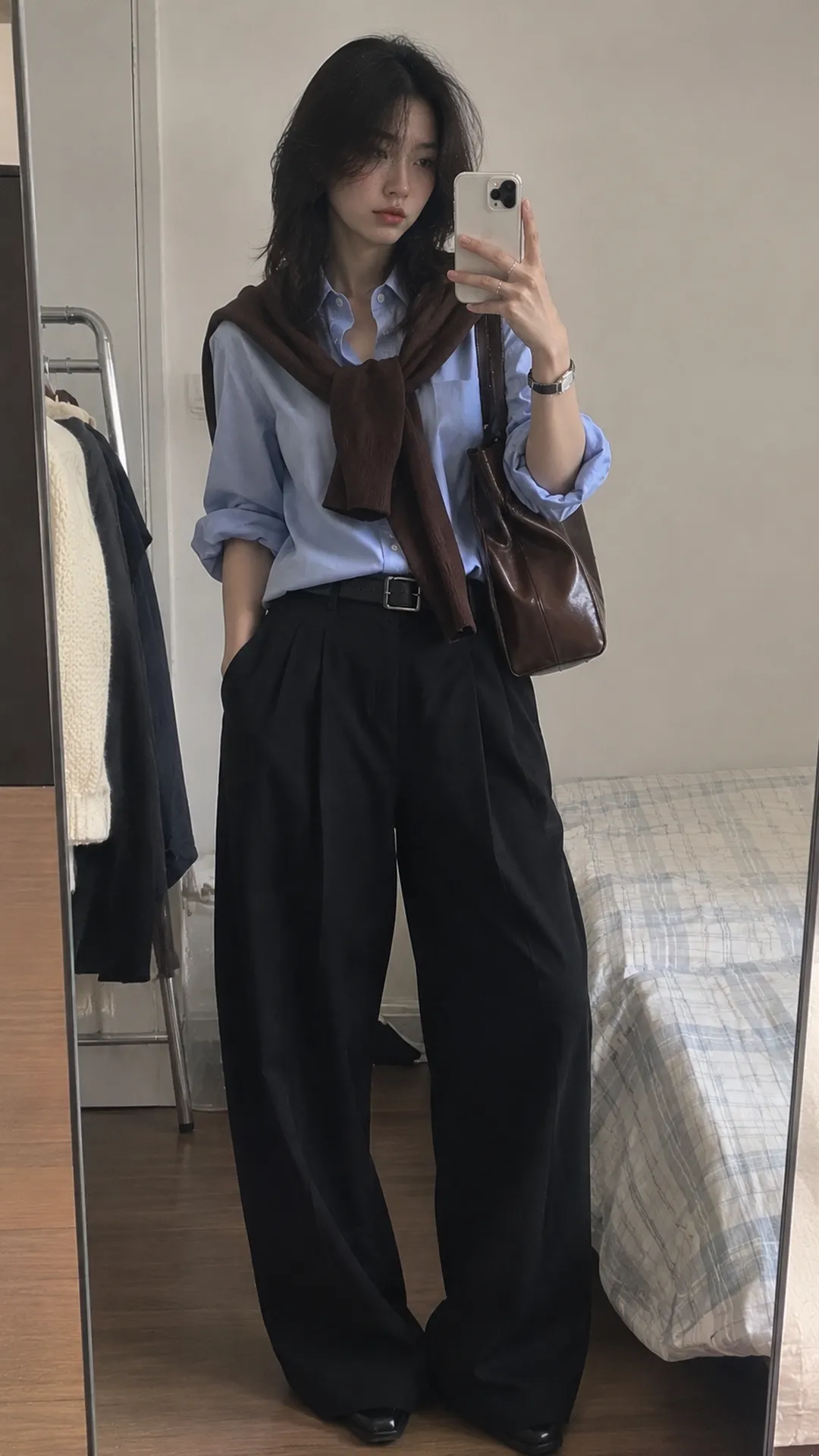
| Black | Sharp, with a clear dark area | Light blue above black trousers and bag |
| Brown | Contrast between two color families | Brown bag with a blue dress or denim |
| Pale pink | Gentle color without vividness | Pink top with medium-blue jeans |
| Red, orange, yellow | A prominent accent | Keep the accent in a bag, shoes or small scarf |
These are starting points rather than mandatory colors. Once a combination works, vary individual shades and fabrics for alternatives without replacing everything.
White, cream and gray: light bases for different blues
Blue and white
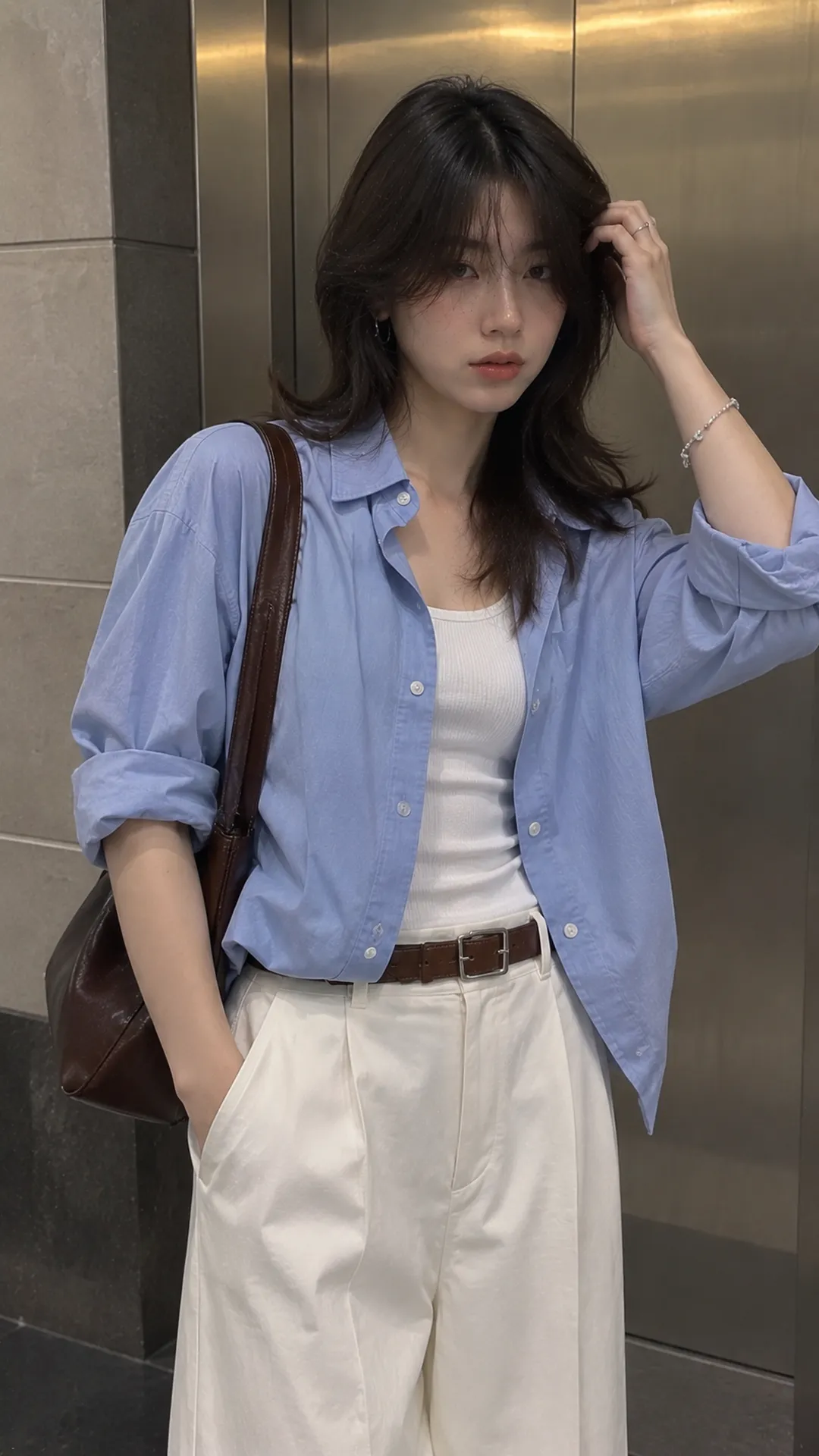
Blue above white forms recognizable areas. With vivid blue, plain white lets it lead. With very pale blue, pleats or structured trousers distinguish two bright halves through construction.
Reverse with a white top and blue trousers for a simple upper half. With wide denim, a waistband-length top or partial tuck defines the waist. White shoes relate to the top; dark shoes give an endpoint.
Blue and cream
Cream often feels gentler than bright white beside blue. Try sky blue, a cream skirt and small brown bag. Cream-family shoes preserve a limited palette. Check actual fabrics because cream varies in yellow content.
Deep blue and beige trousers contrast in lightness while warming the lower half. With a glossy top, choose matte trousers to reduce competing reflections. This can make an otherwise formal-feeling top more everyday.
Blue and gray
Gray is useful beyond white and black. Light blue with medium gray contrasts softly; vivid blue with charcoal feels stronger. If both are dark, expose a light collar or vary shoe surface for readability.
Blue with black or brown without excessive weight
Sky blue and black contrast even in simple designs. A pale-blue square-neck top, straight black trousers and small bag already focus above without needing many metallic details.
Deep blue and black also work. Use surfaces and cuts rather than forcing color separation: a blue knit, creased black trousers or washed black denim. With equally dark, similar surfaces, a small light area reveals layers.
Deep brown works in belts, shoes or bags beside denim. For a brown top and blue trousers, keep accessories plain to leave room for the main areas. Browns need not match exactly, but compare them together.
If accessories exceed your plan, return to accent distribution in the expressive women's accessories guide. A brown bag may already connect the outfit; adding belt, glasses and scarf simultaneously may not help.
What goes with light blue?
White, cream, light gray and blush create gentleness. An all-pale outfit benefits from defined cuts: neat top with wide trousers or a collar with a straight skirt. Proportions can show without strong color differences.
To make sky blue less soft, pair with black jeans, dark shoes and a neat bag. Light remains near the face while lower weight increases. With top ruffles or bows, reduce trouser decoration to limit competition.
For pale blue and pink, let one dominate. A blue dress and small pink bag are easier to control than equal pink-top and blue-trouser areas. For two large areas, use neutral accessories and simple fabrics.
Do not add a pastel jacket solely for related colors. Check whether it changes function or proportions. The women's layering guide manages hems and thickness, especially with a cardigan over blue.
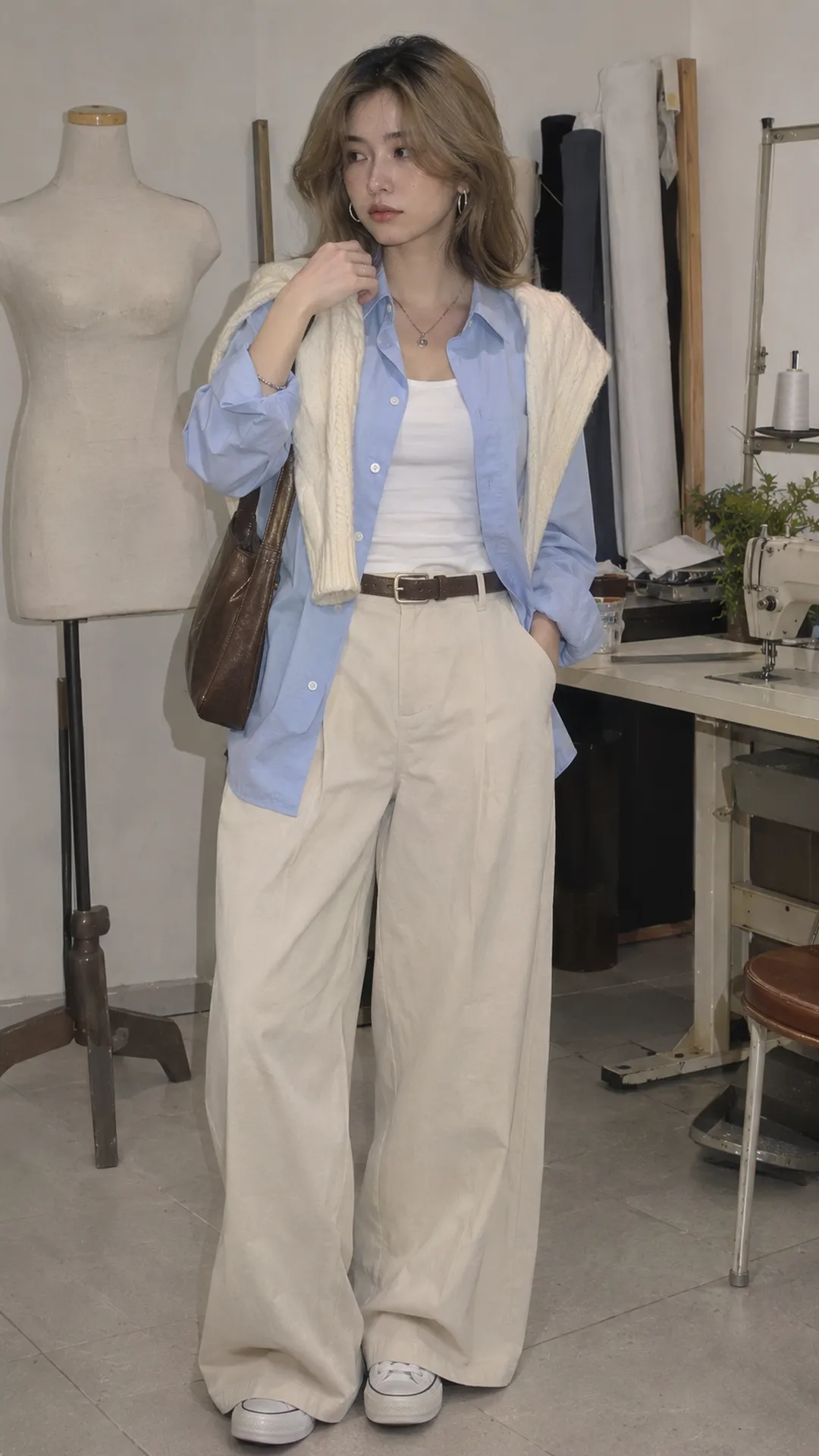
What goes with deep blue?
White and cream readily clarify deep-blue designs. A cream bag on a dress gives a small highlight; white above deep-blue trousers separates more strongly. Place light area where you want attention.
Gray, deep brown and black keep the palette subdued. Check neckline, waistband and shoes so everything does not merge. Slight accessory shine may suffice without vivid colors outside your preferences.
Not every deep blue is navy. In this broad guide, use actual shade and contrast; identifying navy specifically belongs to its own discussion. A label cannot decide how your real top or trousers should be styled.
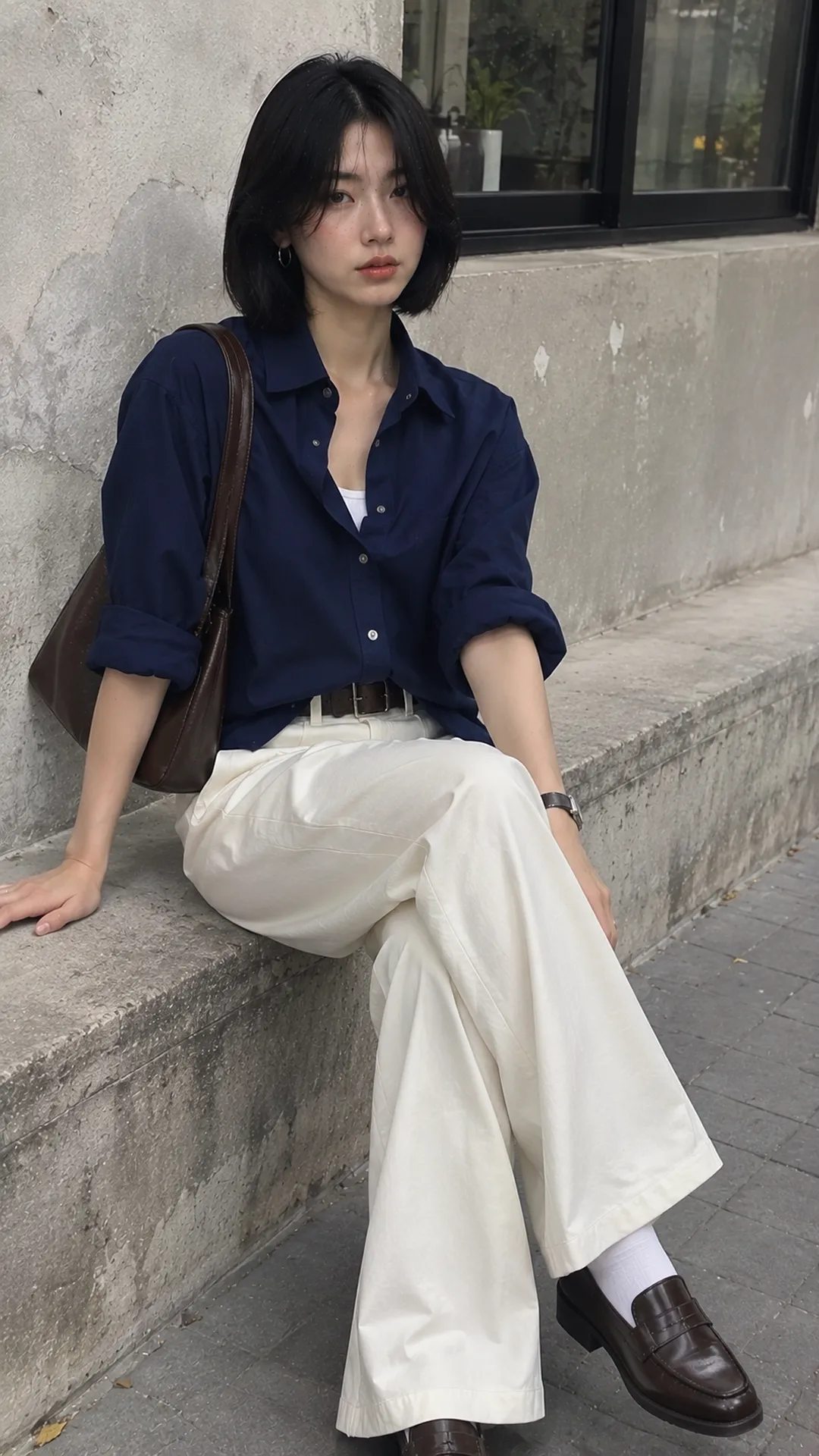
Add small red, orange or yellow areas
Denim with a red bag tests strong color without changing the top. Keep white or gray above and let the bag lead. To test red shoes instead, return the bag to neutral first.
Orange beside blue can be strong, so begin with a small scarf or top detail. Earthy and vivid oranges differ; one name cannot promise identical results. Reduce orange area before rejecting the pairing if too intense.
Pale yellow and sky blue feel gentler than vivid yellow and deep blue. Try a pale-yellow top with simple jeans or a yellow bag with a blue dress. No fixed percentages are required, only clear main and supporting roles.
Three outfits from familiar pieces
Neat workwear: pale blue, gray and black
A pale-blue shirt, pleated gray trousers and black shoes give structure. Tuck to reveal the waist. With a very loose shirt, neatly roll sleeves or moderately open the collar as appropriate for space above.
An outing: denim, white and brown
A well-fitting white top, straight blue jeans and brown bag provide a useful base. For more character, change shoes and add one metal detail. Building from basics in the Alt Fashion guide for beginners makes changes purposeful without a whole new set.
Evening: deep blue and one highlight
Try a deep-blue dress or blue top with dark trousers, then a small light bag. With shiny clothes, reduce accessory reflection; with matte throughout, one metal detail can finish. Shoes must suit actual walking distance beyond photos.
Test a color pair before buying
Place blue beside two existing items and photograph in consistent light, viewing the complete arrangement rather than fabric close-ups. Record whether contrast, proportion or material appeals. Building a moodboard from specific details helps repeat what works.
If unsatisfied, change one thing: white to cream, black to white shoes or one fewer accessory. This locates the cause. Imbalance may come from an overlong top or undersized-looking shoes beneath wide legs rather than a wrong blue pairing.