

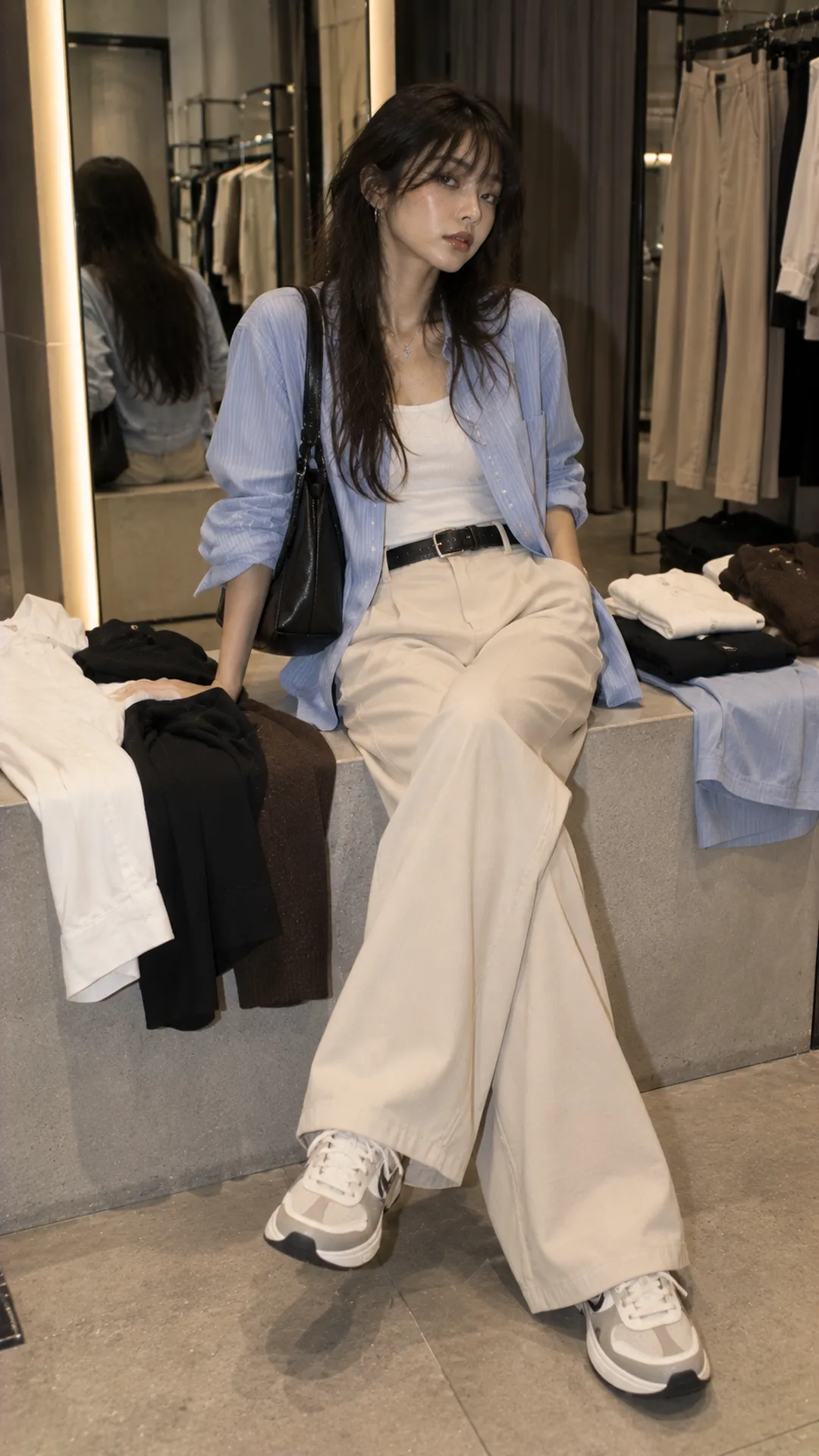
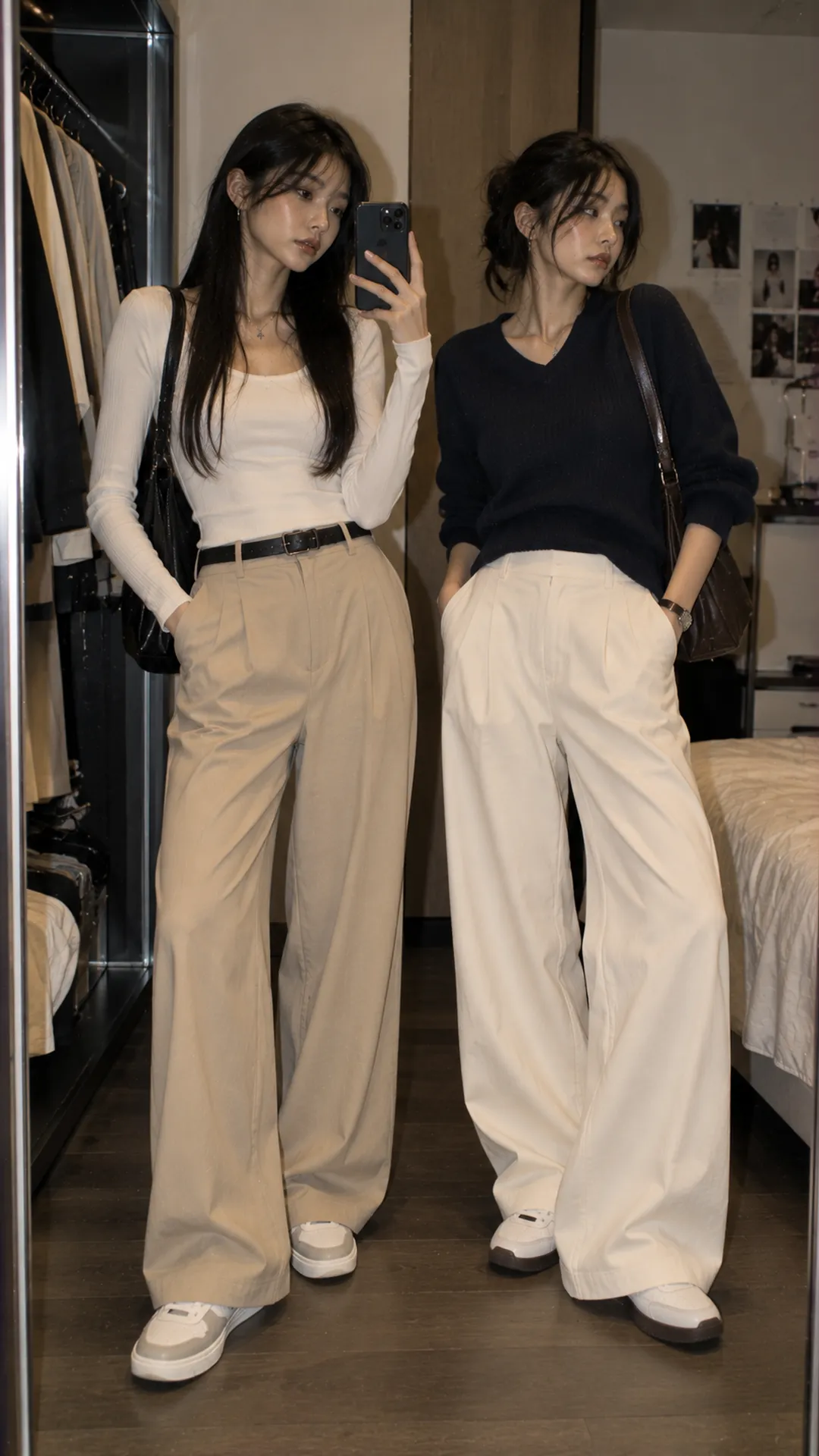
Beige and cream pants: similar options, different shades
Retail beige generally suggests a brown-influenced neutral, while cream suggests warm near-white. Names vary: a beige-labeled pair may be lighter than cream-labeled trousers. Compare real images or swatches.
Place trousers beside existing white, black and brown tops. Observe yellow, pink or gray undertones and depth. Absolute classification is unnecessary; identify which tops separate and which blend. This is more practical than a generic compatible-color list.
Online, request indirect-daylight photos or a white background if matching a particular top. Screens still vary, but additional evidence helps. Two cream labels do not guarantee a matching set.
White or ivory tops: reveal the beige shade
A plain white top with medium beige gives visible waistband separation. Try white sneakers, brown loafers or neat sandals according to plans. With pleats or large pockets, a simple top lets trousers retain structure without competing detail.
With very pale cream, white may blend more. If you like that, separate surfaces through ribbing and smooth trousers or a defined shirt placket and soft bottoms. For clearer division, use a small brown belt or dark top; belts are not compulsory.
Top length determines waistband visibility. A near-waistband top can remain out; a long thin one can tuck neatly. Thick fabric fully tucked may bunch. Test before attributing untidiness to similar colors.
Black and navy: establish light and dark areas
Black quickly defines pale beige. A neat black tee, straight beige trousers and black shoes connect upper and lower points. Cream shoes soften the endpoint and may make the trousers a more continuous light area.
Navy offers darkness beyond black. Try a navy shirt, beige trousers, brown shoes and plain bag. Very deep navy can appear black under intended light. Choose the actual effect rather than its name.
With wide beige trousers, a neat dark top clarifies silhouette contrast. For width throughout, inspect hem and shoulders; a partial tuck or shorter top can define the composition. Fitted above and wide below is optional, provided your proportions are intentional.
Brown and beige tops: intentional tonal combinations
Chocolate and pale beige use few families with distinct depths. Brown bags or shoes can relate without exact matching. One principal brown with clearly different smaller shades is easier than many near-matches.
Beige on beige needs lightness and surface attention. Unless designed as a set, try directly. Subtle undertone differences under varied light may miss your aim. Choose a clearly lighter or darker top instead of pursuing exact screen matching.
Cream above medium beige with deep-brown shoes gives three lightness levels: light overall but anchored. With two soft garments, a structured bag or neat waist adds definition without more layers.
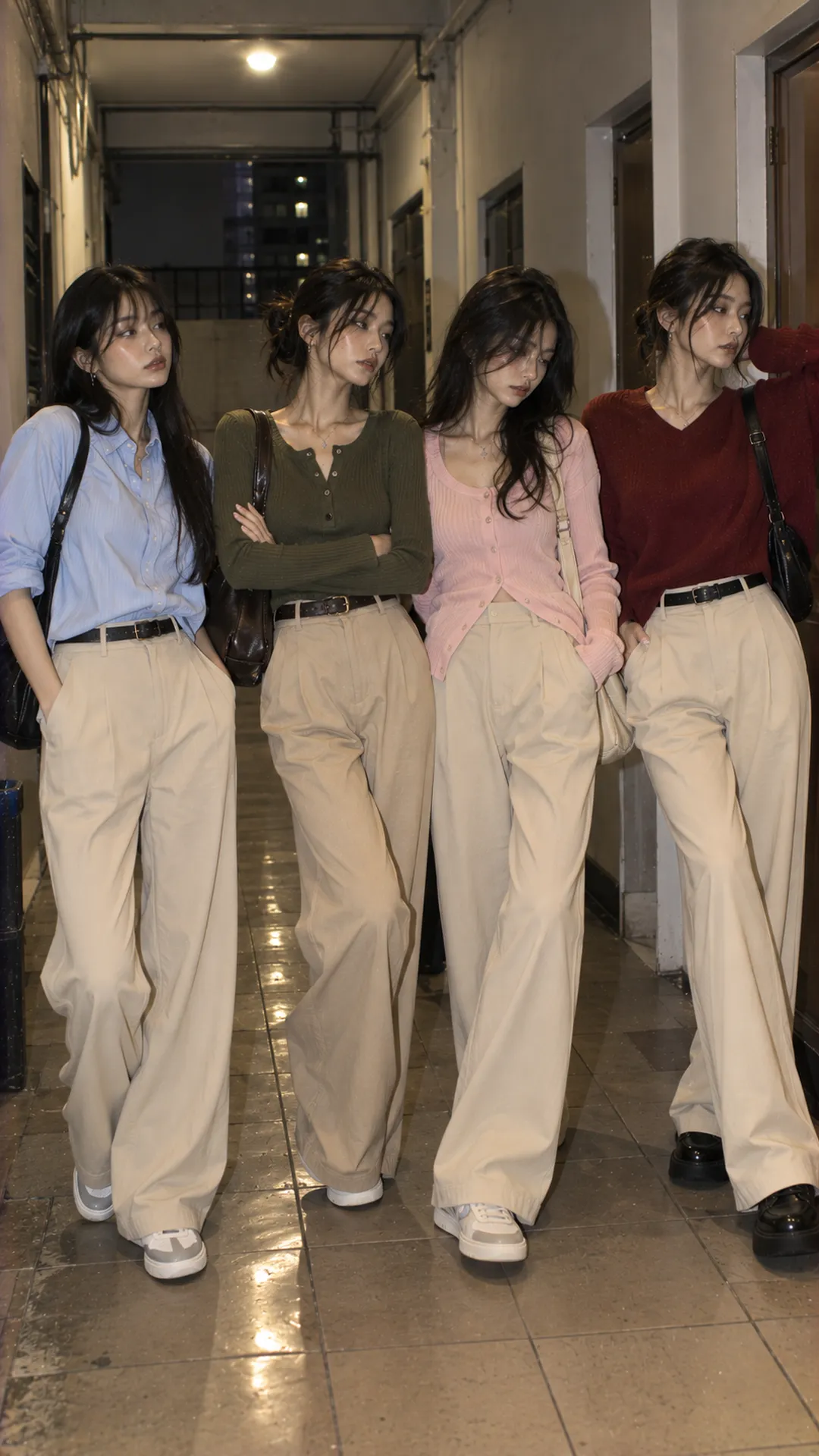
Pale blue, olive, pink and deep red
Pale blue adds a light color area
A pale-blue shirt and beige trousers adapt to your routine. Brown shoes relate to warmth; white sneakers finish brightly. If both garments are very light, add a small deeper item for definition when needed.
Olive creates a subdued outfit
Plain olive and structured beige offer muted color. Keep accessories simple. Cargo pockets do not require a boxy bag, large buckles and heavy shoes simultaneously; subdued color does not automatically reduce detail.
Pale pink or deep red as an accent
Pale pink and light beige give soft contrast. Deep red creates a stronger area, particularly with near-white cream. Choose your intended emphasis and let shoes and bag support it. No fixed skin-tone rule determines the top.
If unsure which color suits your wardrobe, photograph several tops beside the same trousers in consistent conditions. Creating a fashion moodboard records color, fit and surface rather than only other people's outfits with different trousers.
Keep the palette, adapt to trouser shape
Straight or wide beige trousers
Assess length and width from hips down. With long, fabric-heavy trousers, a clear top hem or neat tuck reveals the waist. A soft top can contrast with structured bottoms. The guide to choosing and styling women's trouser shapes explores rise, legs and proportions.
Neat-leg beige trousers
Narrower legs allow a wider top if you like. An untucked shirt or moderately loose tee differs from a fitted top. Assess length against the whole trouser; not every long top must tuck. Try a partial tuck if you want waist definition.
Large pockets or detailed surfaces
With beige cargos, a plain top shows pockets without clutter. For patterns, try small scale or one accent area. The Alt Fashion guide for beginners introduces beige to expressive wardrobes through shape and accessories beyond simply adding black.
Can beige pants work with patterned tops?
Yes. Examine background and scale first. Navy stripes on cream differ from many equally vivid flowers. With several top colors, choose shoes or bag from one existing shade instead of introducing another.
Broad checks with plain beige preserve one quiet area. With large lettering or graphics, simplify accessories around chest and waist. If top, trousers and bag all have strong construction, choose a center and reduce another piece.
Finish with shoes and a bag
Cream shoes keep the lower half light, black gives a clear endpoint and brown connects beige-brown tones. Also assess sole thickness and toe shape. Wide hems covering shoes differ from short hems exposing ankles.
If the palette works but the look feels heavy, change shoes before tops. The footwear-by-outfit guide balances visual weight and hem gaps. Choose a practical bag size; an oversized bag may cover the waistband you just defined.
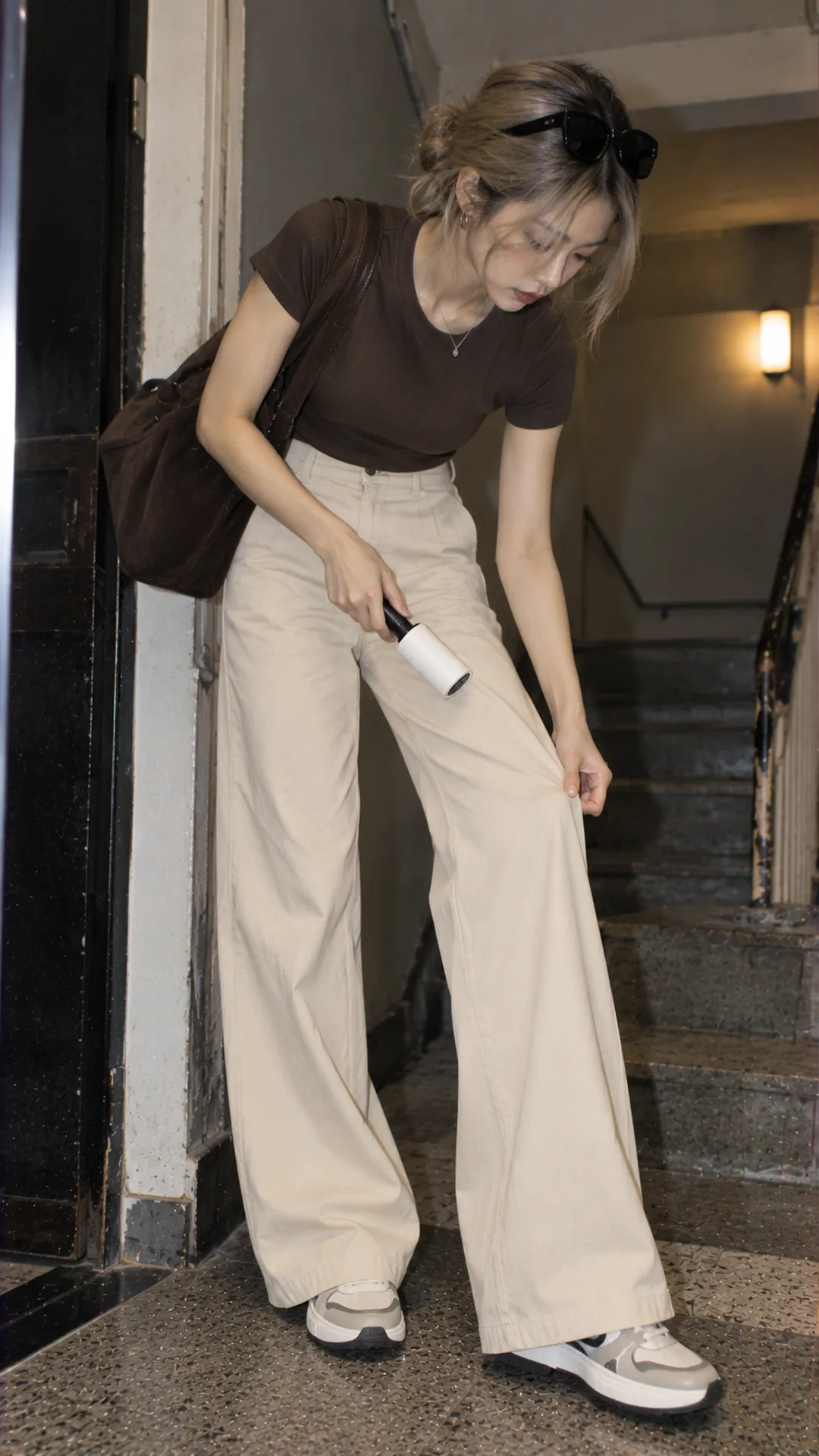
Check light trousers before going out
Use clear light and your real underlayer, then sit and walk. Inspect pocket bags, seams and transparency instead of assuming beige or cream is opaque. If a tucked top shows strongly, change the tuck or top.
Check hems with intended shoes. Dragging changes proportions and complicates cleanliness during travel. Care follows each trouser's label, not color alone. Clean, smooth trousers allowing activity often matter more than new accessories.
Build reuse with one light and one dark top. Test existing trousers, shoes and bag and record occasion suitability. For neckline or length adjustments, use the women's top-type guides. This gives actual outfits rather than compatible colors without a finished look.