

What Is Harajuku Style? Japanese Street Fashion Explained
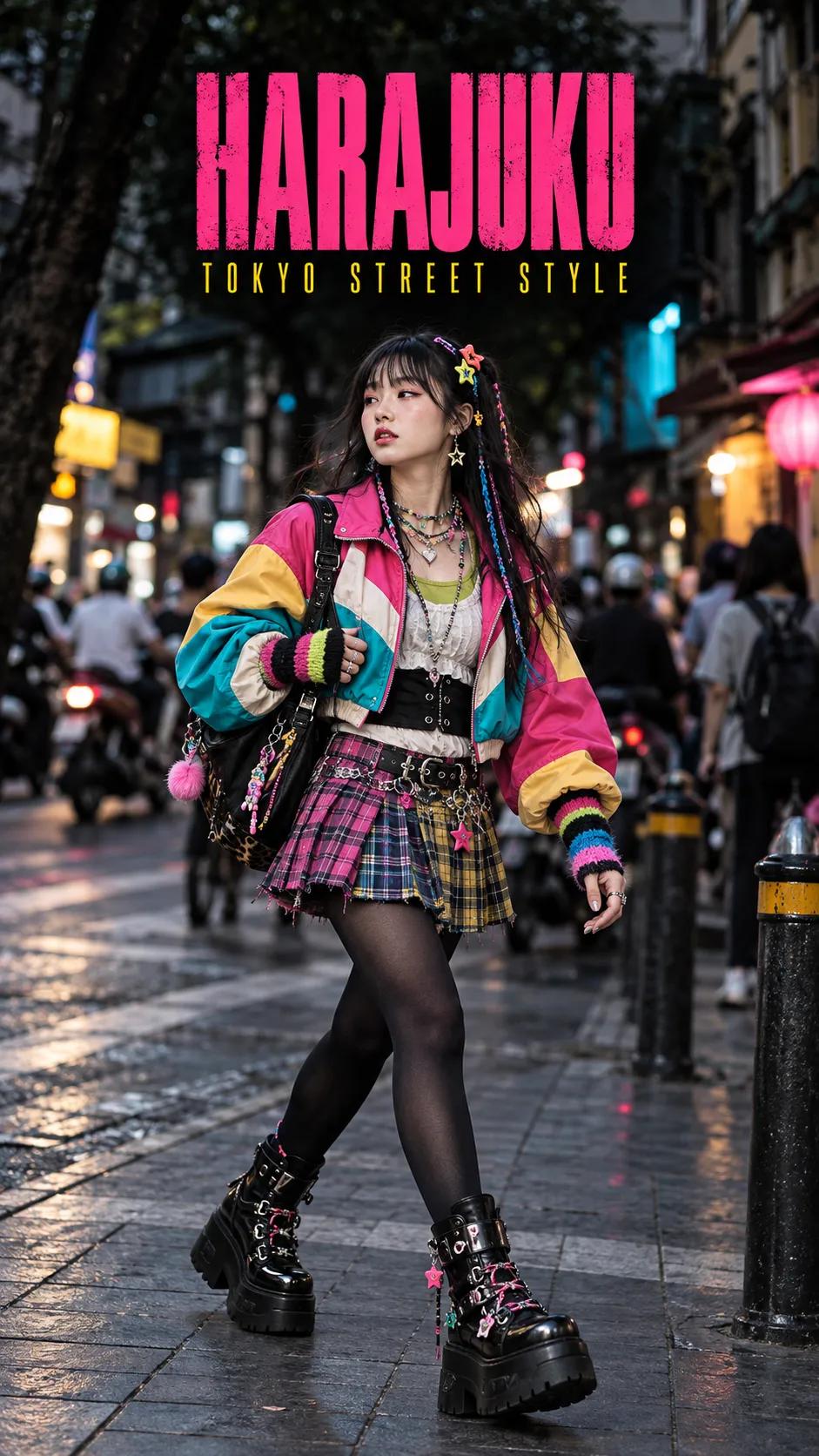
Harajuku style is not a uniform with a fixed formula. It broadly describes street fashion and subcultures associated with Tokyo's Harajuku district, where cute styling, Lolita, Decora, Goth, Punk, Visual Kei, vintage, streetwear and individual combinations coexist.
If you are searching for “what is Harajuku style,” begin with self-expression rather than ten compulsory purchases. Choose a visual direction, establish it through layers, color, texture, accessories and proportion, and keep the overall combination intentional.
Guide collection: Aesthetic Dictionary: A Fashion Style Directory
What Is Harajuku Style?
Harajuku is the area around Harajuku Station in Tokyo, long associated with youth fashion and subcultures. GO TOKYO describes street fashion ranging from cute and casual to extreme; JNTO highlights its relationship with streetwear and kawaii culture.
Accordingly, Harajuku fashion functions as an umbrella term rather than one silhouette. Outfits can be pastel, all black, Victorian-inspired, punk, cartoon-influenced or vintage. What connects them is personal interpretation of those influences.
Harajuku provides a setting for many Japanese fashion systems, rather than one style encompassing them all. Explore a dedicated guide for a particular branch's history and defining characteristics.
Why Isn't Harajuku a Dress Code?
Harajuku does not mean “the more colors, the better.” Lolita uses structured dresses; Decora concentrates accessories; Punk employs studs and tartan; Goth favors darker palettes; casual directions may draw on vintage, sneakers or layered basics.
Self-directed image-making is the shared principle. Even outfits that challenge mainstream conventions benefit from a hierarchy of base colors, focal pieces, repeated textures, visual weight and accessory placement. Connected decisions look considered rather than randomly unusual.
Harajuku is also a real place. Takeshita Street, Laforet, Cat Street and Omotesando bring teen trends, subcultures, vintage and designer fashion into proximity. Their interaction helps explain the area's diversity.
Three Ways to Read a Harajuku Outfit
Should the outfit feel cute, dark, punk, doll-like, playful or street-oriented? Choose a main direction before introducing secondary influences.
Where is visual detail concentrated: clothing layers, hair accessories, prints, jewelry or footwear? Equal density everywhere obscures the focal point.
Contrast can come from color, scale, texture or proportion: a fitted top with a full skirt, pastel with black, or soft knitwear with metal hardware.
These relationships are more useful than a checklist. Accessories can take a basic hoodie toward Decora; mesh, boots and makeup can give a black mini dress a Goth or Visual Kei-adjacent direction. The relationship between pieces establishes the reading.
Recognizable Harajuku Directions and Their Characteristics
Accessory density is central: hair clips, bracelets, socks, charms, bag decorations and repeated colors. The underlying silhouette generally stays readable so accessories can stand out.
Structured, voluminous dresses or skirts combine with blouses, headwear and coordinated shoes. This system has its own conventions and extends beyond cute lace dresses. The V&A presents Lolita as street style with multiple subcategories, distinct from cosplay.
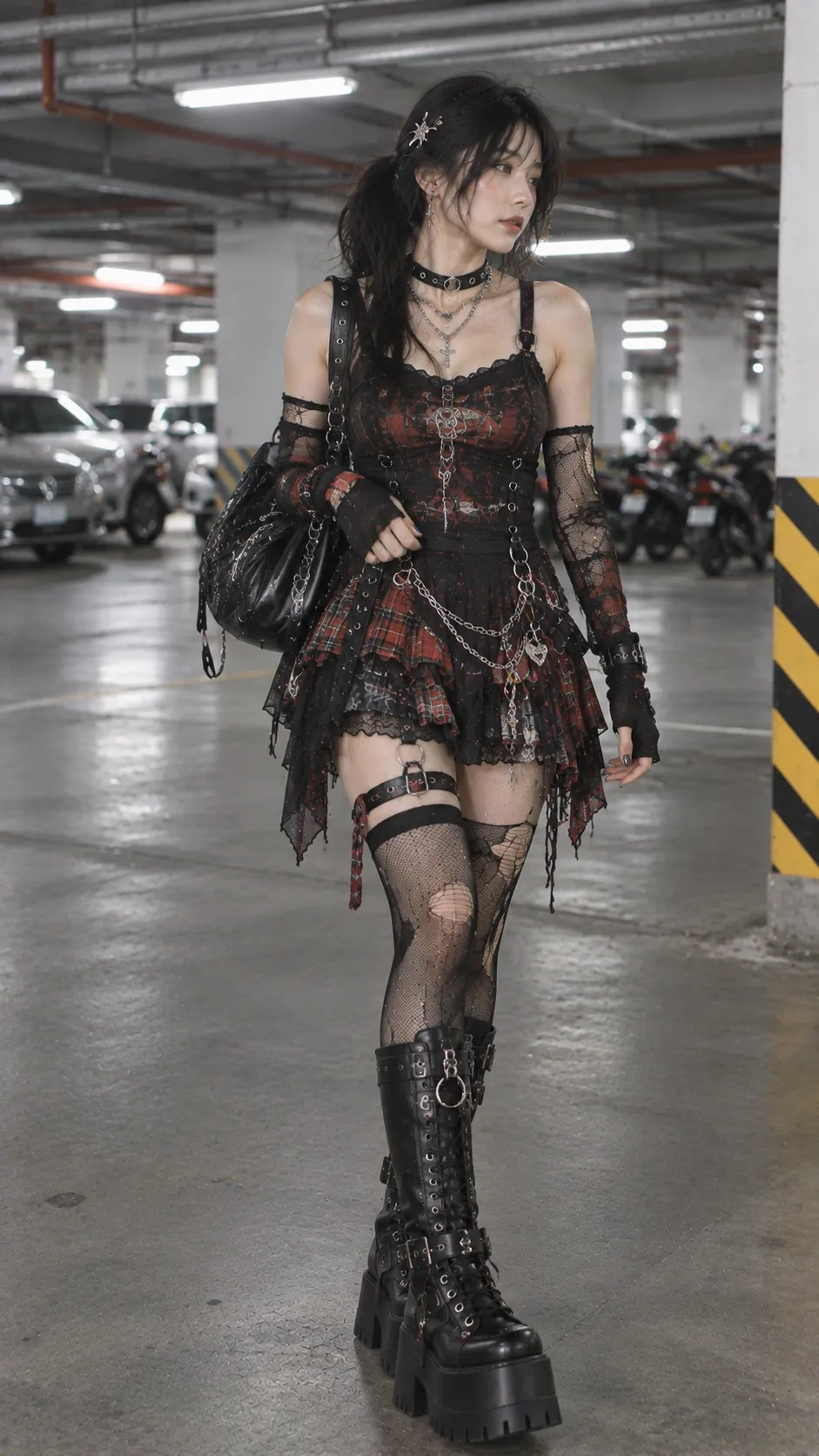
Band tees, plaid, distressed surfaces, studs, chains, leather-like textures and substantial boots create visual weight. Dark or red-and-black palettes often rely on hardware and silhouette for hierarchy.
Hair, makeup, theatrical silhouettes, tailoring, lace, hardware and glam-rock influences supply drama. For a dedicated introduction, explore What Is Visual Kei? , keeping the music-linked subculture distinct from this Harajuku overview.
Light colors, character references, soft knits, skirts, cute accessories and playful proportions define this direction. Cute need not mean infantile; structure and repetition keep the outfit coherent.
Vintage, sportswear, military references, denim, oversized outerwear, sneakers and platforms can combine around a shared direction. This adaptable area overlaps contemporary street fashion.
Six Harajuku Outfit Formulas with a Clear Structure
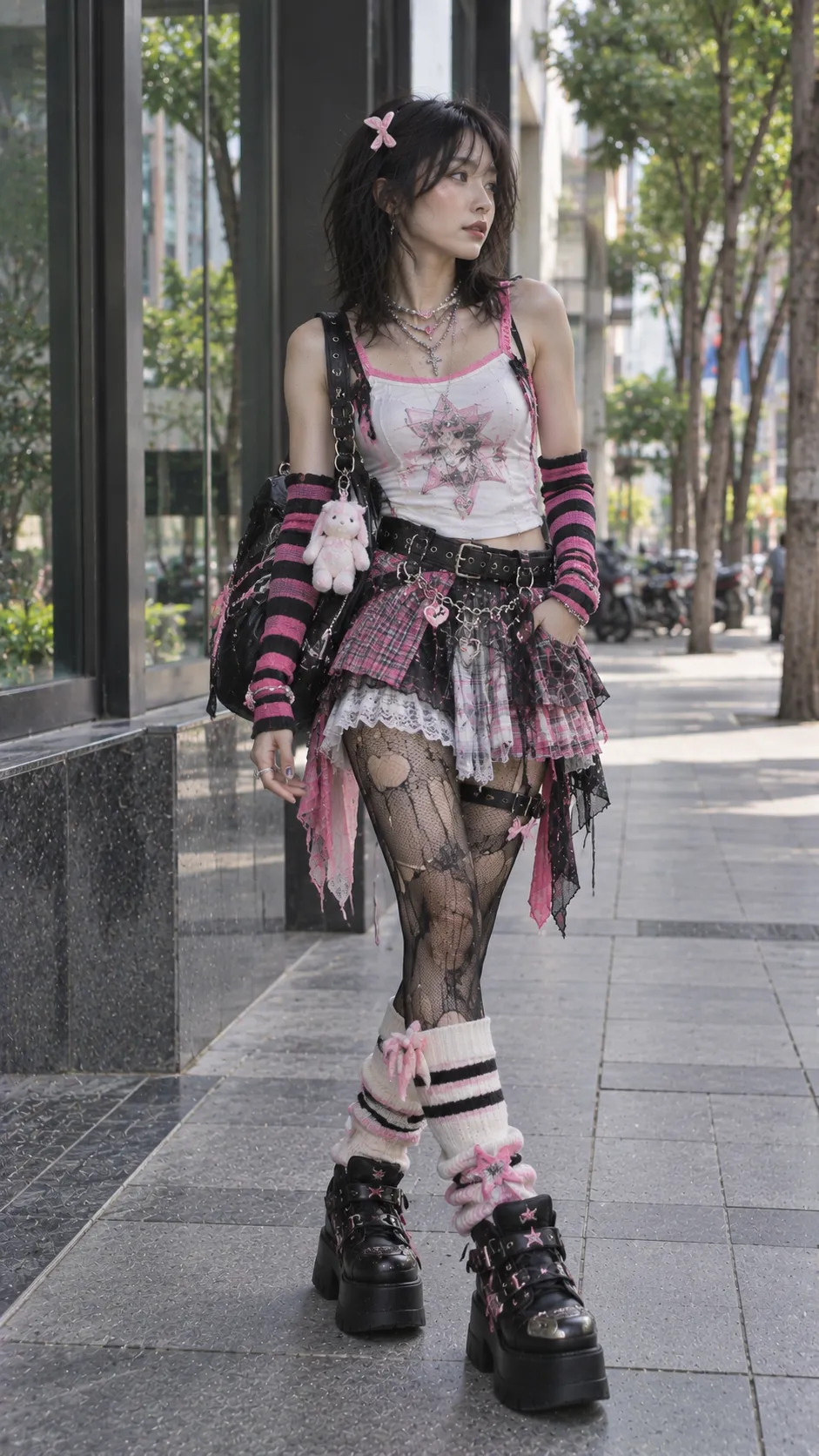
The graphic leads at the torso; the mini creates space; leg warmers connect to the shoes. Repeat one graphic color in socks or hair clips for cohesion.
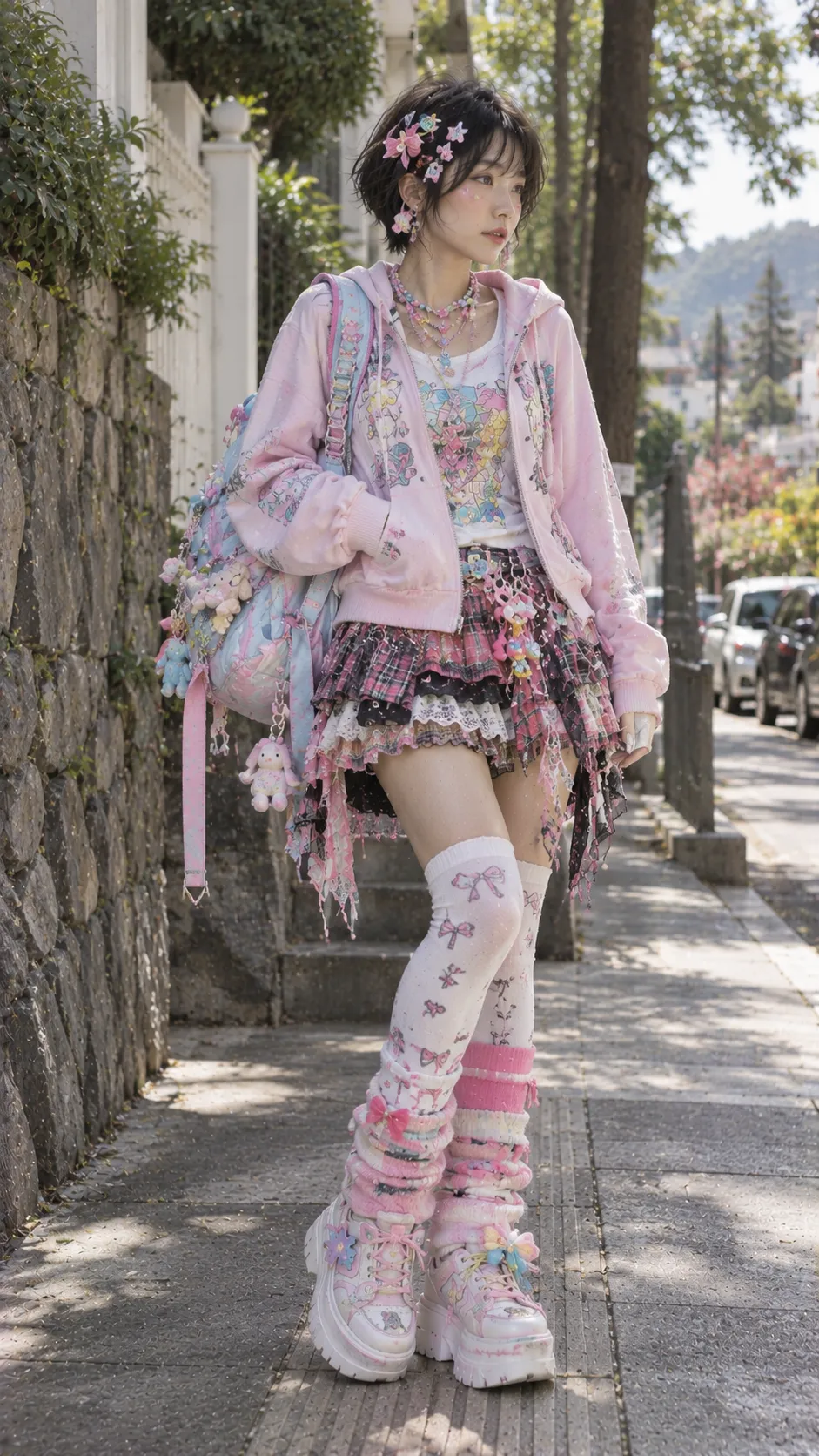
For colorful casual outings, cafés and photos.A hoodie creates upper volume while the skirt adds movement below. A charm bag gathers small details in one area rather than scattering them everywhere.
For Decora-adjacent styling and days requiring easy movement.Keep the top simple so tartan and hardware stand out. Boots balance the belt and anchor the legs, distinguishing the combination from an ordinary school-inspired outfit.
For a punk or goth direction.A more formal combination: skirt volume contrasts with the neckline and headpiece's vertical emphasis. Detailed garments reduce the need for extra jewelry.
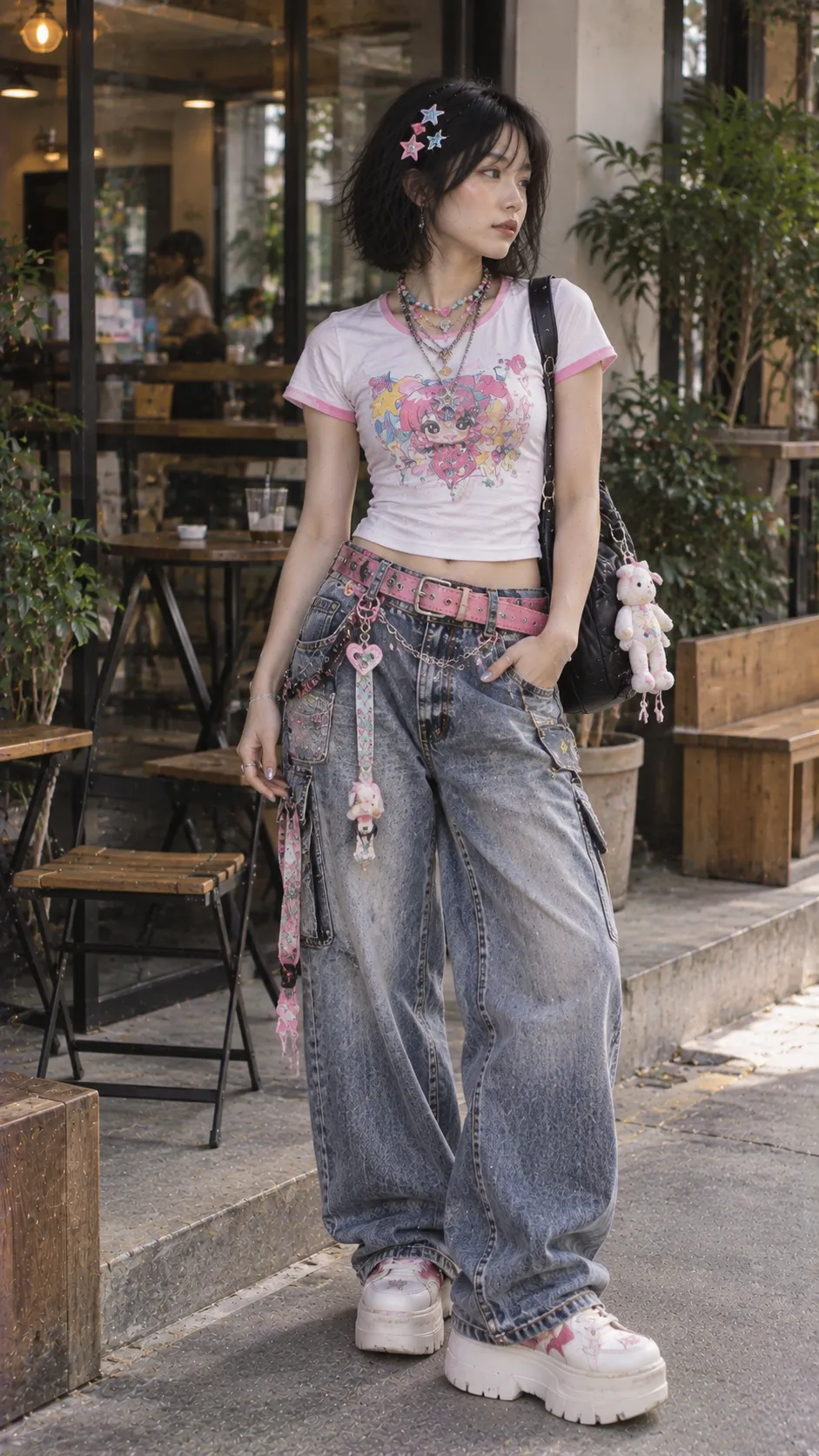
For Lolita-inspired styling; explore a specialist guide before describing an outfit as conventionally Lolita.An accessible street-oriented version. Wide denim provides a neutral base, with color concentrated in the belt and accessories. Substantial shoes remain visible beneath the hems.
For a Harajuku street mix.Mesh and arm warmers add layers without excessive torso bulk; tall boots frame the lower half. Keep two or three colors so textures remain readable.
For dark or alternative Harajuku styling.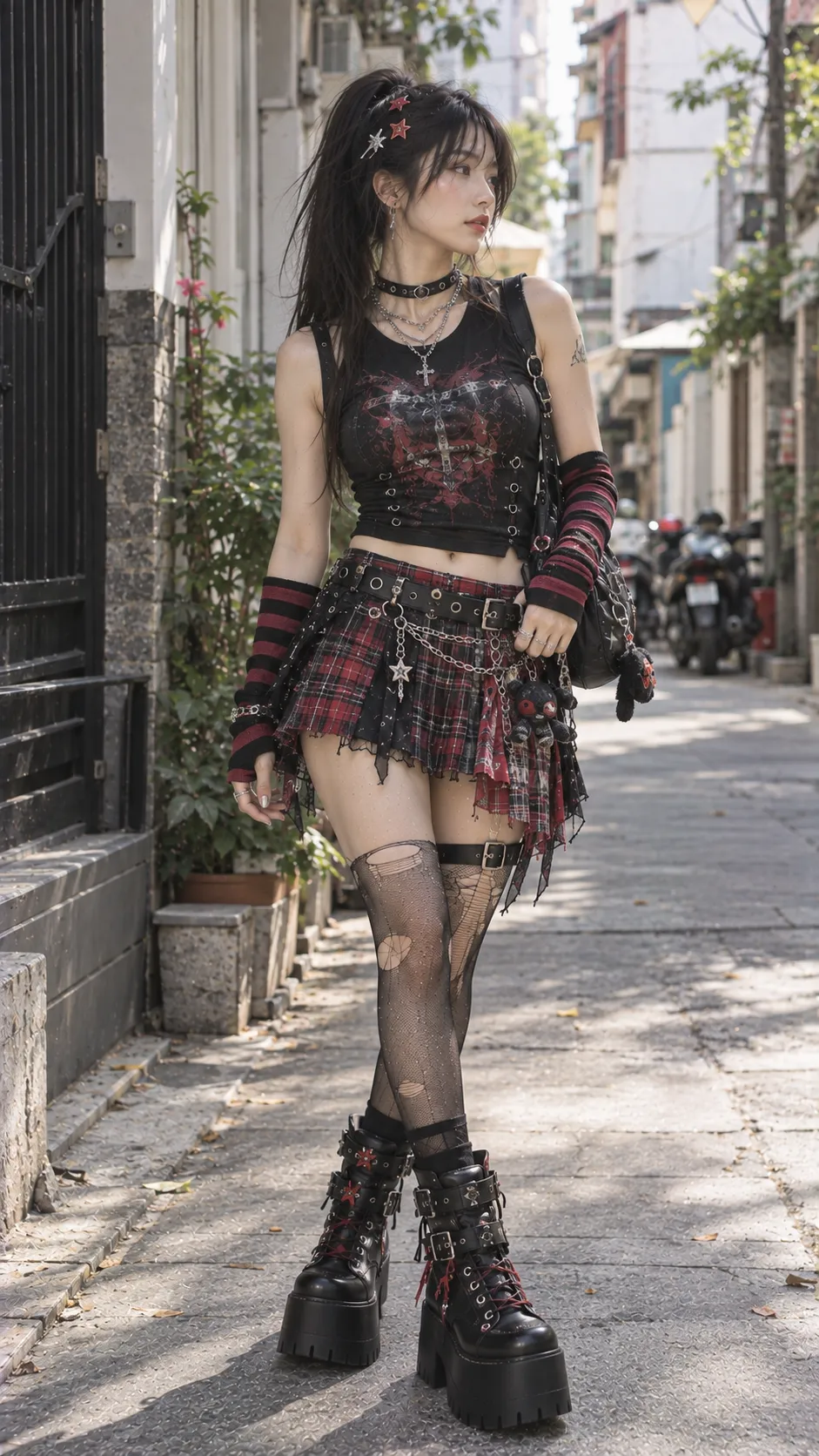
Layers, Color, Texture and Accessories: Why the Outfit Works
Before adding more items, identify whether identity, density or contrast needs attention. Adjusting one relationship often works better than adding several pieces.
How Does Harajuku Differ from Gyaru, Visual Kei and Streetwear?
| System | Main characteristic | Quick distinction |
|---|---|---|
| Harajuku style | Street-fashion ecosystem / umbrella | Multiple subcultures and combinations coexist without a single silhouette. |
| Gyaru | A distinct subculture | Hair, makeup, nails and beauty finishing play major roles across several internal branches. |
| Visual Kei | Music-linked fashion subculture | Theatrical drama, hair, makeup and glam-rock, gothic, punk or historical influences are more prominent. |
| Streetwear | Street-casual fashion system | Graphic tees, hoodies, cargos, sneakers and relaxed silhouettes often form its base. Harajuku encompasses considerably broader and more theatrical expressions. |
Shared mini skirts, platforms and hairstyling in Harajuku and Gyaru reflect overlapping items rather than identical identities. Gyaru has its own beauty system and cultural context. Likewise, streetwear can appear in Harajuku without representing all Harajuku fashion.
Harajuku introduces a Japanese street-fashion environment. For individual ways of dressing, explore Mori Kei, Ouji and Japanese Streetwear.
Harajuku Starter Wardrobe: Build Reusable Modules
Buying unusual items before considering combinations often creates difficulties. Start with modules: two wearable bases, two layers, substantial footwear and an accessory group that changes how they combine.
A fitted tee, wide denim and platform sneakers form a street base. Mesh sleeves and a chain belt add an alternative direction; colorful clips and a charm bag make it playful. Reuse the wardrobe rather than buying separate Harajuku costumes.
If you are unsure which direction interests you, explore Aesthetic Dictionary. Mixing becomes more intentional when you recognize the signals involved.
Five Harajuku Styling Mistakes That Create Visual Confusion
1. Confusing abundance with randomness
Multiple layers still need repetition. Repeated colors, motifs or textures connect the pieces.
2. Using too many focal pieces
A large graphic, tartan, fur, charm bag and huge platforms can compete. Choose one main focal point and two supporting elements.
3. Ignoring proportion
An oversized top, full skirt and large leg warmers put volume everywhere. Reduce one area or introduce visual space through a simpler stocking or an exposed interval.
4. Calling every Japanese outfit Harajuku
Harajuku does not replace all J-Fashion terminology. Gyaru, Mori Kei and Visual Kei have individual characteristics and contexts.
5. Copying a photograph without considering the occasion
Street snaps benefit from posing and styling. For everyday wear, lower shoe height, remove a layer or group accessories to retain comfortable movement.
References
These sources provide context on Harajuku and its subcultures. The styling framework and outfit formulas are Apocalypse Closet's editorial interpretation.
- GO TOKYO — All about visiting Harajuku: Harajuku, Takeshita Street and goth, Decora and punk street-fashion directions.
- Japan National Tourism Organization — Harajuku: the intersection of streetwear, kawaii culture and varied street styles.
- The Museum at FIT — Japan Fashion Now: youth-oriented street styles and Japanese fashion subcultures.
- V&A — Lolita fashion: Japanese street style: Lolita as street style with multiple subcategories, distinct from cosplay.
Frequently Asked Questions
What is Harajuku style?
Harajuku style broadly describes street fashion and subcultures associated with Tokyo's Harajuku district. It is an environment where different fashion expressions coexist and influence each other, rather than one dress code.
Is Harajuku style just colorful clothing?
No. It includes colorful Decora, Lolita, goth, punk, dark styling and street mixes. Color is one variable; identity, layers, density, contrast and accessories establish the whole.
How does Harajuku style differ from Gyaru?
Harajuku is an umbrella for varied local street-fashion expressions; Gyaru is a distinct subculture with its own beauty codes and internal branches.
Where should a beginner start with Harajuku style?
Choose a wearable base outfit and one main identity, then add a layer, a grouped set of accessories and substantial footwear. Increase complexity once those relationships are clear.