

What Is Hippie Style? Counterculture and Fashion
Hippie style is associated with late-1960s and early-1970s counterculture: relaxed silhouettes, flares, maxi skirts, loose blouses, secondhand clothing, handmade details, patchwork, embroidery, beads and less conventional dress codes.
If you are asking “what is hippie style,” look beyond flowers, fringe and round glasses. Its period anti-fashion spirit emphasized bodily freedom, reused clothing, handwork and mixed influences rather than one perfected silhouette.
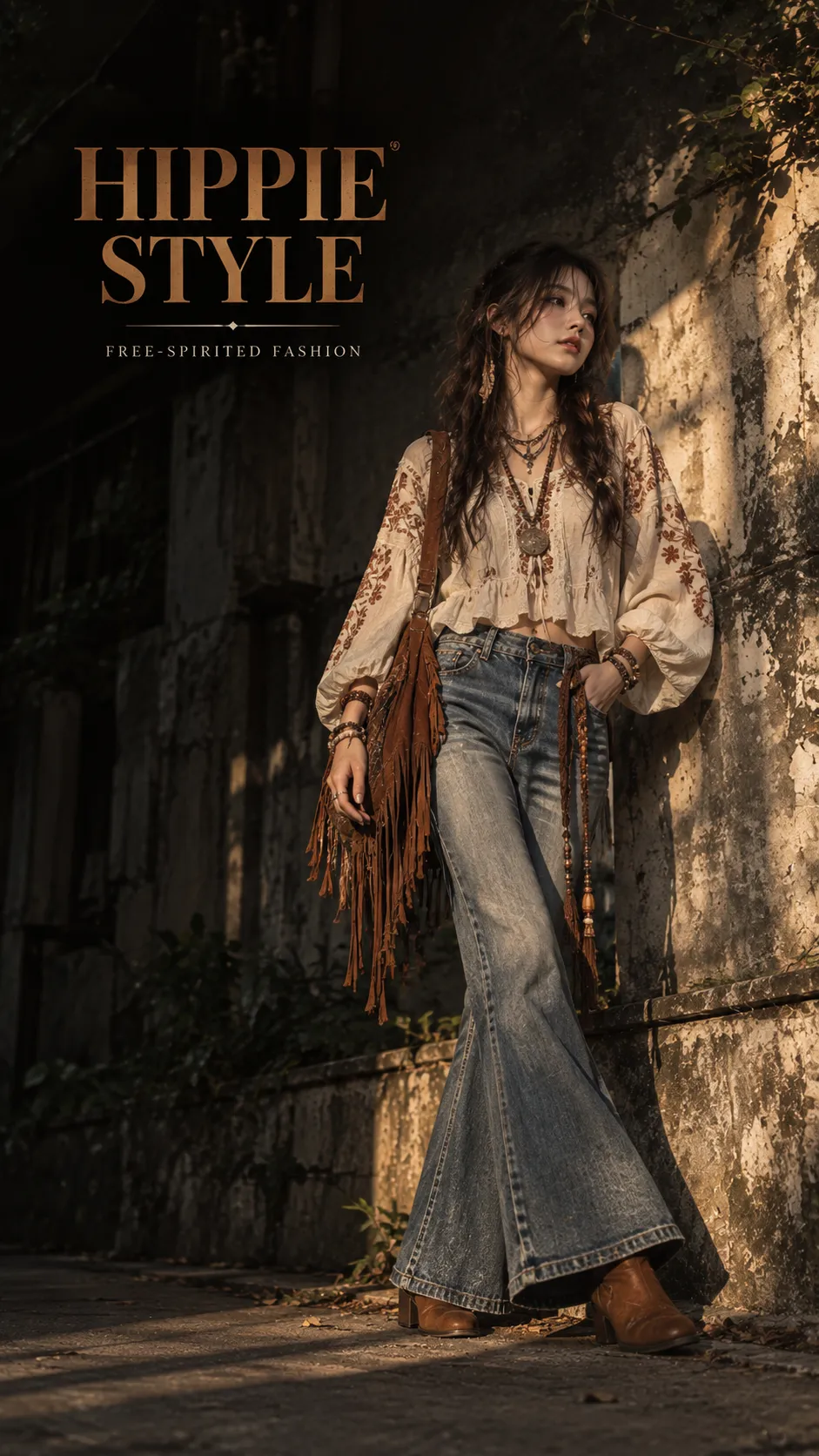
Guide collection: Aesthetic Dictionary: A Fashion Style Directory
What Is Hippie Style?
It favors movement, secondhand clothes, craft, layers, softer structure and less obedience to mainstream fashion conventions.
Those details may appear, but the vocabulary also includes worn denim, kaftans, Afghan coats, maxi skirts, beads, crochet, embroidery and flares.
FIT describes late-1960s hippie clothing through suede, headbands, kaftans, Afghan coats, beads, long skirts and secondhand pieces. The V&A also emphasizes long, loose layers and vintage as alternatives to mainstream fashion.
Hippie refers to more than garment shape. Contemporary inspiration can draw on silhouettes, materials and DIY rather than turning culturally specific symbols into costume accessories.
From Counterculture to Mainstream Fashion
Late-1960s hippie clothing contrasted with mid-decade neatness, futurism and structured forms. FIT places the maxi skirt around 1969 within this shift, alongside suede, headbands, kaftans, Afghan coats and secondhand clothes. The V&A describes mixing vintage and influences from cultures beyond the West.
In the early 1970s, patchwork, crochet, knitting, embroidery, beading and hand-painted fabric moved from craft settings into designer fashion. DIY and reuse belonged to the anti-fashion approach rather than serving only as decoration.
The Met describes Giorgio di Sant'Angelo's late-1960s and early-1970s designs through DIY and natural silhouettes created by wrapping, layering and tying rather than rigid tailoring. Think flow, craft and looseness rather than a compulsory shopping list.
Four Recognizable Hippie Codes
Maxis, loose blouses, wrap-like layers, wide sleeves and flares allow movement beyond rigid forms.
Crochet, embroidery, patchwork, beads, hand-dyed surfaces and details revealing handwork.
Secondhand garments, faded denim, worn leather or suede and imperfectly matched pieces. Patina can contribute to the appearance.
Florals, paisley, geometric patterns, earth tones and bright colors connect through shared colors or textures.
These relationships distinguish the direction from merely bohemian-looking clothing. A polished commercial floral maxi does not automatically communicate hippie context. Soft layers, craft, reused pieces or less tailored construction move it toward that vocabulary.
Hippie Silhouettes: Softness with Considered Proportions
Maxis, long vests, scarves and flares direct attention along the outfit's length.
Wide sleeves, boxy crochet, ponchos and loose layers create width. A waist, neckline or footwear anchor can provide structure.
Fringe, soft hems, flares and light fabric move with the wearer, supporting a fluid impression.
A loose blouse, full maxi, long vest and large fringed bag can obscure every break point. Keep one area clearer: define the waist under a blouse, crop or tuck the top above a full maxi, or shorten outerwear over wide jeans. Relaxed styling still benefits from hierarchy.
Six Wearable Hippie Outfit Formulas
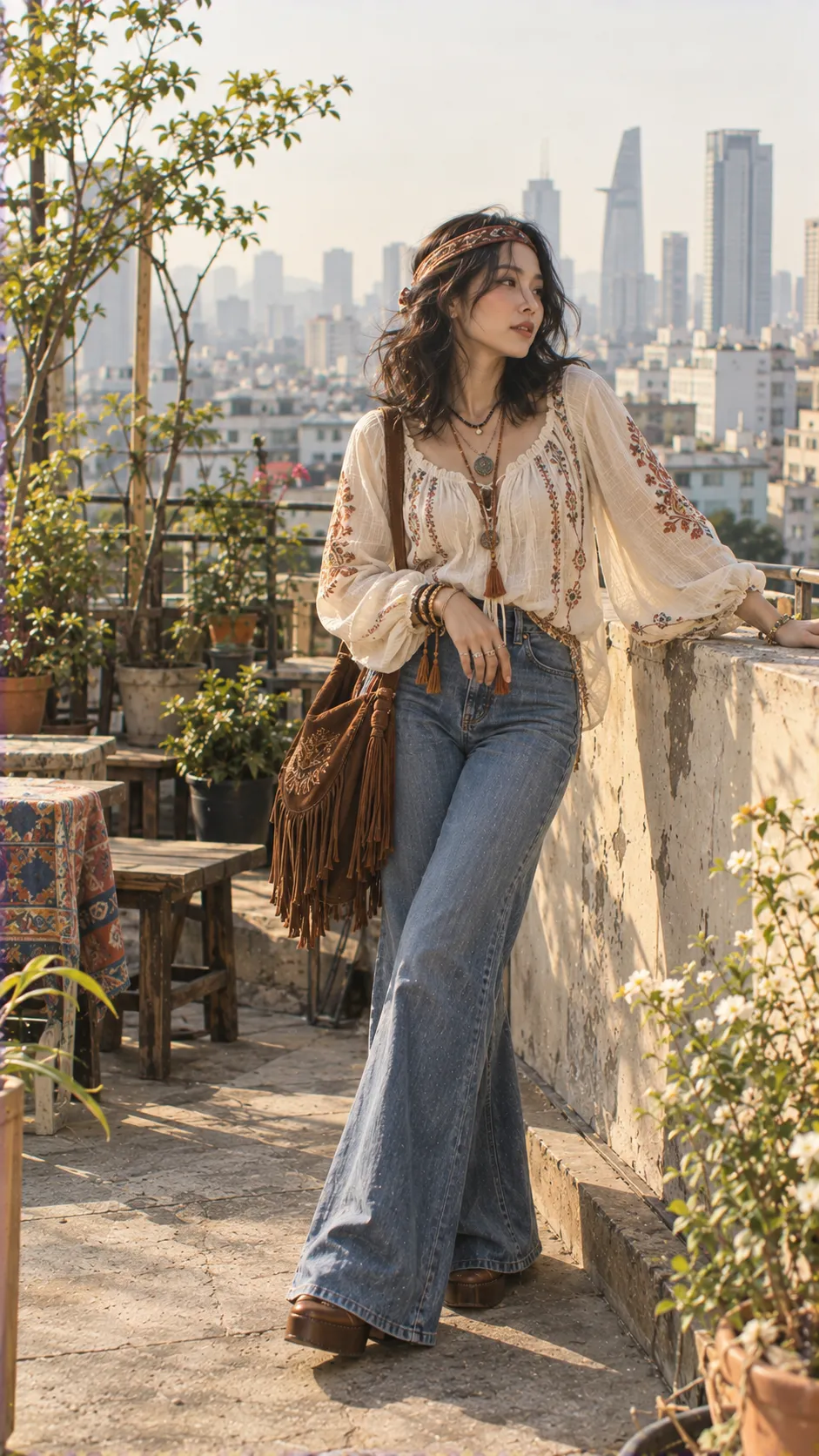
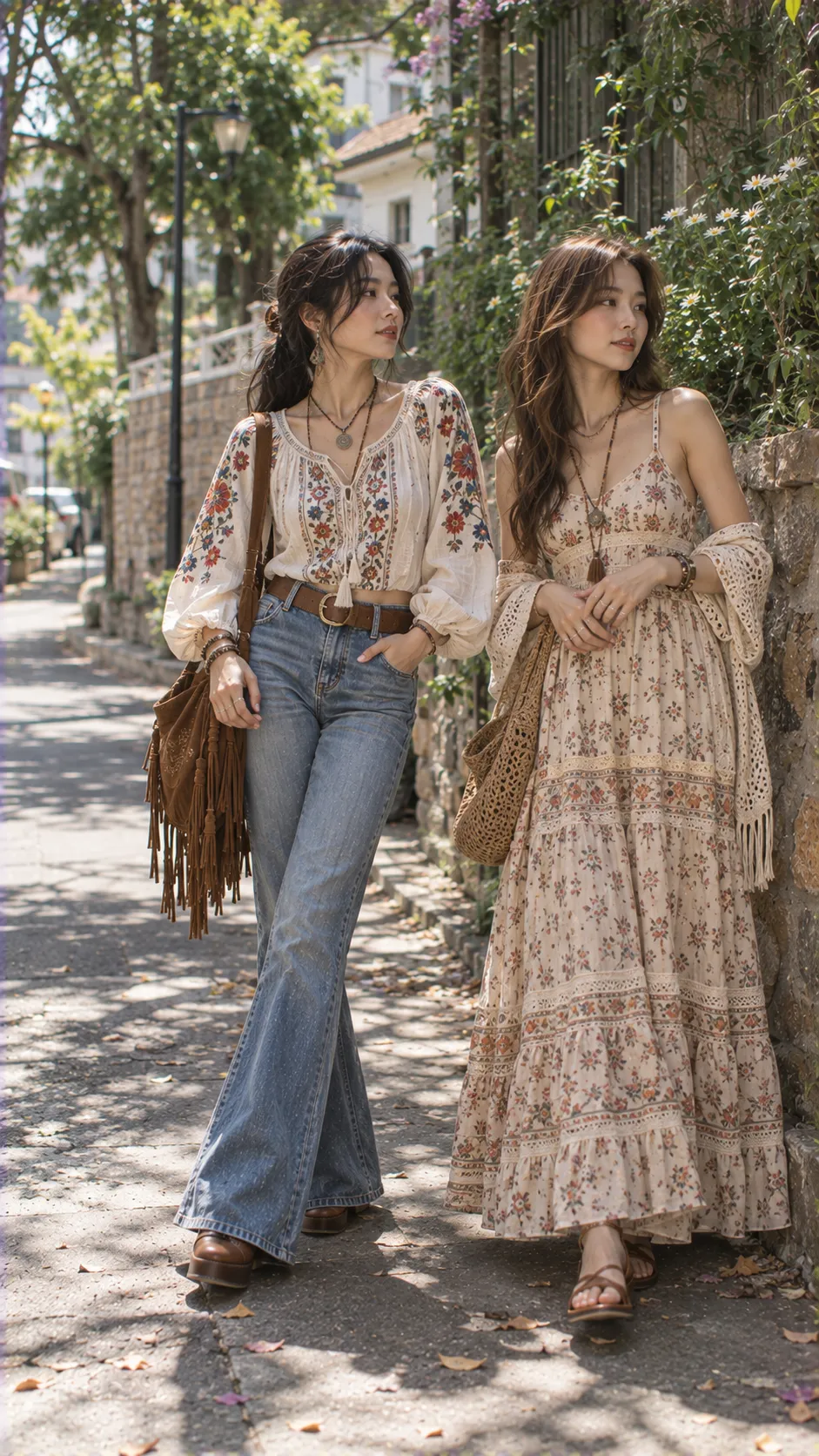
An accessible introduction. A soft top contrasts with structured denim; flares extend the leg line and boots help keep hems off the ground.
Direction: classic late 1960s and early 1970s.Concentrate handwork above and movement below. Cream, rust, olive or brown can soften the combination without extensive patterns.
Direction: craft-focused warm-weather clothing.The tee provides a familiar base; the vest supplies the historical reference. Small jewelry and a soft bag keep it from becoming a festival costume.
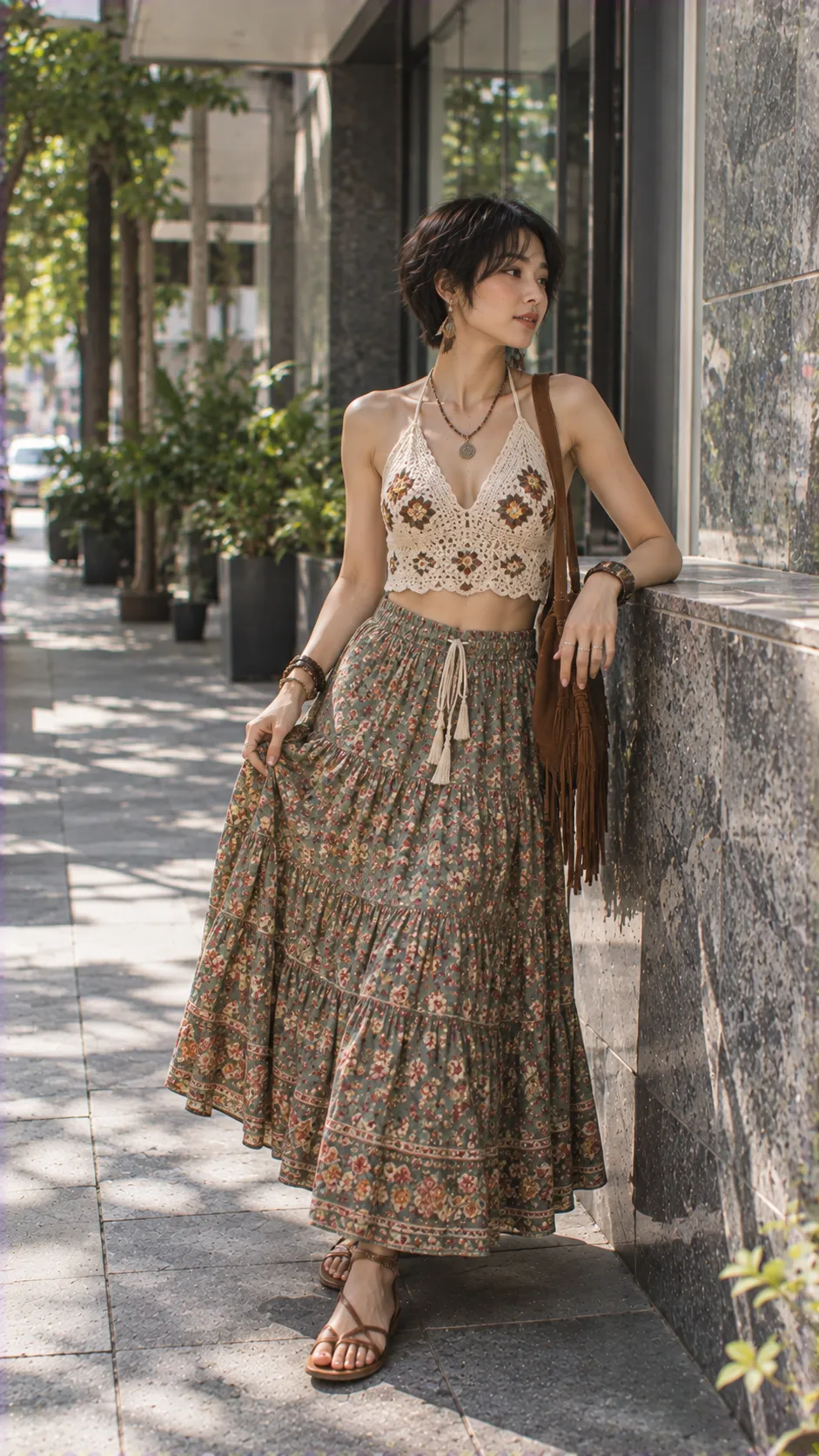
Direction: casual retro.A soft printed dress gains structure and a reused-clothing reference from denim. Restrain accessories so the print remains clear.
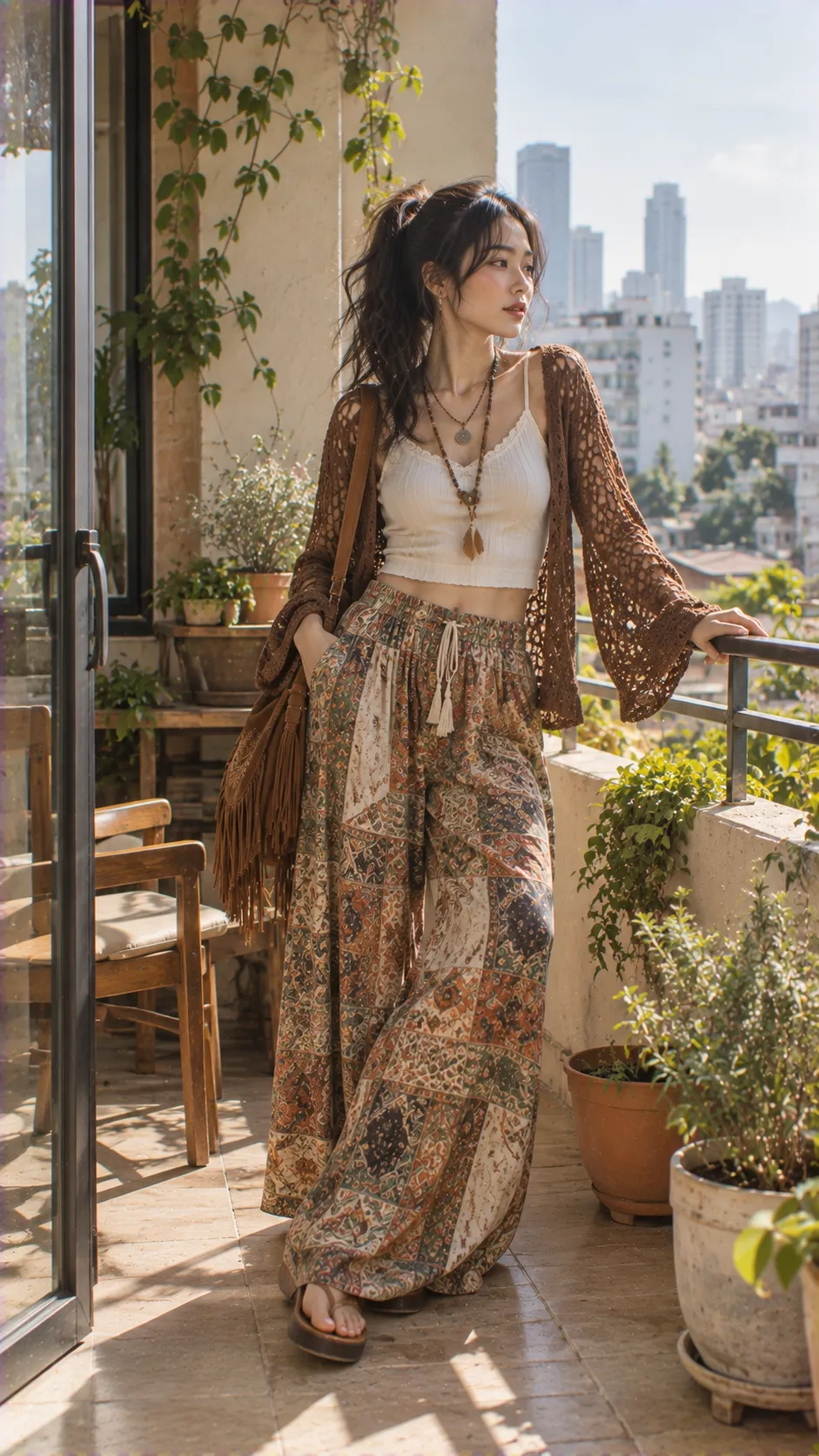
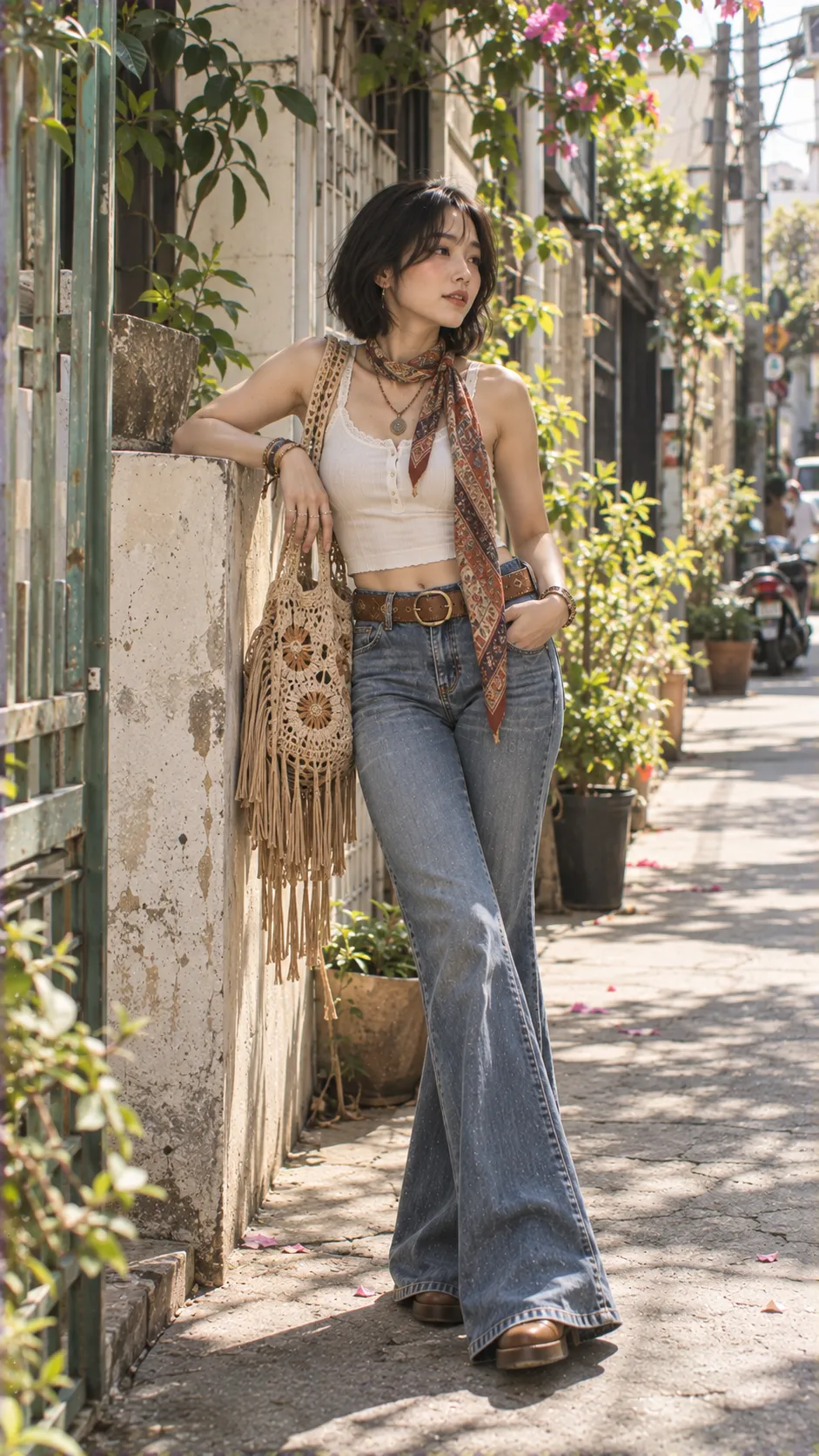
Direction: city-friendly.Let the bottoms lead, a neutral tank provide visual space and the cardigan add craft texture.
Direction: relaxed everyday dressing.A shorter alternative to a maxi. The vest and boots reference the late 1960s while a simple dress stays contemporary.
Direction: the transition from Mod toward hippie influences.In Vietnam's climate, prioritize light cotton, airy crochet and removable layers. Reserve heavy jackets or faux suede for suitable weather rather than enduring heat for an aesthetic.
Colors, Patterns and Materials beyond All-Brown Outfits
How Does Hippie Differ from Boho, Vintage and Cottagecore?
| Style | Focus | References | Quick distinction |
|---|---|---|---|
| Hippie | Late-1960s and early-1970s counterculture | Flares, maxis, secondhand pieces, craft and loose layers | Stronger anti-fashion, DIY and reuse context. |
| Boho Chic | A streamlined bohemian-inspired fashion interpretation | Flowing dresses, crochet, suede and layered jewelry | Often more polished, commercially styled and lifestyle-oriented. |
| Vintage | Clothing from or referencing earlier periods | Varies with the decade | Not synonymous with hippie: 1940s, 1950s or 1980s references can also be vintage. |
| Cottagecore | Rural romantic aesthetic | Small florals, linen or cotton, puff sleeves and prairie references | Centers idealized rural life rather than urban or music-linked counterculture. |
The Boho Chic guide on Apocalypse Closet develops softer, polished bohemian silhouettes; this page concentrates on hippie style and its 1960s–1970s anti-fashion context. For everyday bohemian inspiration, Boho may provide a more direct route.
Vintage style is much broader: a 1950s swing dress or 1980s blazer can be vintage without being hippie. Cottagecore shares floral and craft references with hippie clothing but has a more pastoral, domestic romantic mood. Distinguishing them avoids labeling every floral dress hippie.
Contemporary Hippie Inspiration without a Costume
Combine one or two historical references with a contemporary base: flares, an embroidered blouse and simple sneakers; a floral maxi and denim jacket; or a tank, printed trousers and crochet bag. Using every period symbol simultaneously can look like fancy dress.
Brown and beige are optional. A black tank, flares and olive crochet cardigan can work, as can a purple maxi with a faded tee. Shape and combination matter more than a preset social-media palette.
Prioritize reuse: secondhand denim, a vintage bag, an old scarf or a textured cardigan can connect with historical practice more closely than a one-photo purchase. Avoid reducing the entire movement to an idealized sustainable-living checklist.
If you already wear alternative clothing, explore What Is Alt Fashion?. Faded graphics, dark florals, distressed denim, leather-like boots and older jewelry can connect hippie references with an alternative wardrobe.
Six Hippie Styling Mistakes
1. Combining every symbol
Flowers, peace signs, headbands, round glasses, fringe and tie-dye together can become a theme rather than an outfit. Select one or two main references.
2. Letting volume erase all proportions
A full maxi, loose blouse and long vest need a neckline, waist or layer-length anchor.
3. Treating Hippie and Boho Chic as identical
They overlap, but hippie connects more directly to late-1960s counterculture; Boho Chic is a later fashion interpretation.
4. Mixing prints without a connection
Florals and paisley can combine through one shared color. Without a bridge, patterns may compete.
5. Using cultural symbols as costumes
Prioritize craft techniques and silhouettes. Understand ceremonial or identity-specific objects before using them as general fashion accessories.
6. Buying a fixed set rather than a wardrobe
Flares, soft blouses, crochet layers and vintage bags work across styles. Reusable modules can outlast a trend.
References
These sources contextualize fashion history; the outfit framework is Apocalypse Closet's editorial interpretation.
- Fashion History Timeline — 1960–1969: the late-decade shift toward hippie styling, maxis, suede, kaftans, Afghan coats, beads and secondhand clothes.
- Fashion History Timeline — 1970–1979: patchwork, crochet, knitting, embroidery and handwork in early-1970s fashion.
- V&A — An introduction to 1960s fashion: mixing long, loose layers and vintage within the hippy movement.
- The Met — Giorgio di Sant'Angelo, Dress, 1969–70: DIY, multicultural influences and silhouettes created by wrapping, layering and tying.
Frequently Asked Questions
What is hippie style?
Hippie style connects with late-1960s and early-1970s counterculture through relaxed silhouettes, flares, maxis, secondhand clothing, embroidery, crochet, handwork and freer layering.
How does hippie style differ from Boho Chic?
Hippie relates more directly to late-1960s counterculture and anti-fashion. Boho Chic is a later, often more polished and commercially adaptable bohemian interpretation.
Does hippie style require tie-dye?
No. Tie-dye is one reference. Flares, crochet, embroidery, maxis, suede-like textures and secondhand layers can also communicate the direction.
Which hippie-inspired piece should a beginner buy first?
Choose reusable flares, a soft blouse or a maxi first. Then introduce crochet, a vintage bag or textured jewelry.