

Japanese Streetwear: Silhouettes, Layers and Women's Outfits
Japanese Streetwear is not a uniform. It reinterprets vintage, workwear, skate, hip-hop, designer fashion and subcultures through silhouette, layering and considered selection.
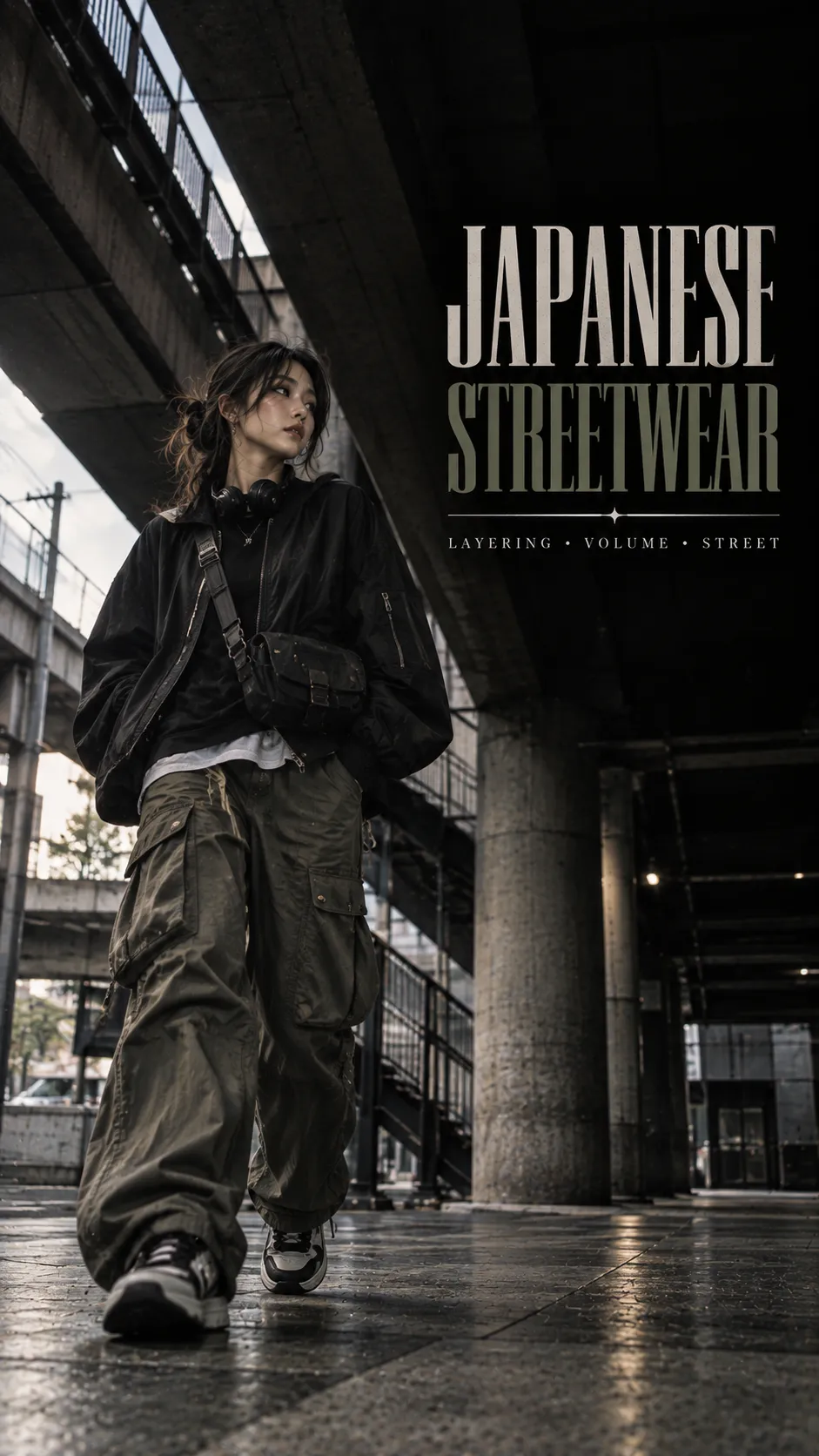
Guide collection: Aesthetic Dictionary: A Fashion Style Directory
What Is Japanese Streetwear?
Japanese Streetwear broadly describes Japanese street-oriented clothing influenced by youth culture, skate, hip-hop, vintage Americana, designer fashion, subcultures and Tokyo's distinctive layering practices. It extends beyond oversized shirts and Japanese sneakers.
A central feature is reinterpretation. An American military jacket might accompany Japanese trousers, technical sneakers and a designer bag; a graphic tee can combine with pleats, a workwear vest and vintage accessories. International references are rearranged through proportion, materials and detail.
The Museum at FIT's Japan Fashion Now exhibition explores Japanese street and subcultural styles alongside avant-garde designers, youth culture and J-Pop. GO TOKYO describes Harajuku as a longstanding street-fashion center encompassing cute, goth, Decora, casual and other expressions.
Tokyo Street Fashion Is an Ecosystem
Shibuya, Harajuku, Omotesando, Cat Street and Shimokitazawa do not produce one dress code. Neighborhoods, periods and communities support kawaii, Gyaru, punk, goth, designer, thrift, skate, sneaker, workwear and minimal directions.
Subcultures, kawaii, goth, Decora, experimental layers and youth fashion.
Backstreet streetwear, graphic identities, small labels, limited availability and reinterpreted Americana.
Youth trends, Gyaru, street-casual clothing and rapidly changing fashion.
Vintage, thrift, music references and eclectic casual clothing.
Japanese streetwear describes how varied influences are interpreted within Japan. For Harajuku's broader subculture ecosystem, explore Harajuku Style; this guide focuses on streetwear construction and combinations.
Ura-Harajuku: Why Does Backstreet Culture Matter?
Ura-Harajuku, the backstreets behind Harajuku's main routes, features prominently in accounts of 1990s Japanese streetwear. Small shops, labels and creators developed networks associated with limited runs, graphic identities, close communities and extensive reference research.
The useful lesson is not acquiring one logo but curation: selecting pieces for their story, fit, fabric, limited production or subcultural connection. Even simple outfits can have depth when every item has a clear role.
Four Japanese Streetwear Styling Principles
Multiple layers need not create confusion when each changes length, texture or proportion.
Six Women's Japanese Streetwear Outfit Formulas
A focal graphic, broad denim line and sneaker anchor establish an accessible base.
Entry-level.Three different lengths reveal layers without requiring numerous colors.
Tokyo street mix.Structured outerwear contrasts with a fitted inner layer; moving trousers soften the lower half.
Utility direction.Upper volume balances a short lower silhouette, a familiar relationship in women's street fashion.
Preppy–street crossover.Sneakers are optional. Loafers refine the finish while the jacket retains a street-oriented reference.
City casual.A vest introduces utility; the plain tee avoids excessive technical-costume detail.
Gorpcore- or tech-adjacent.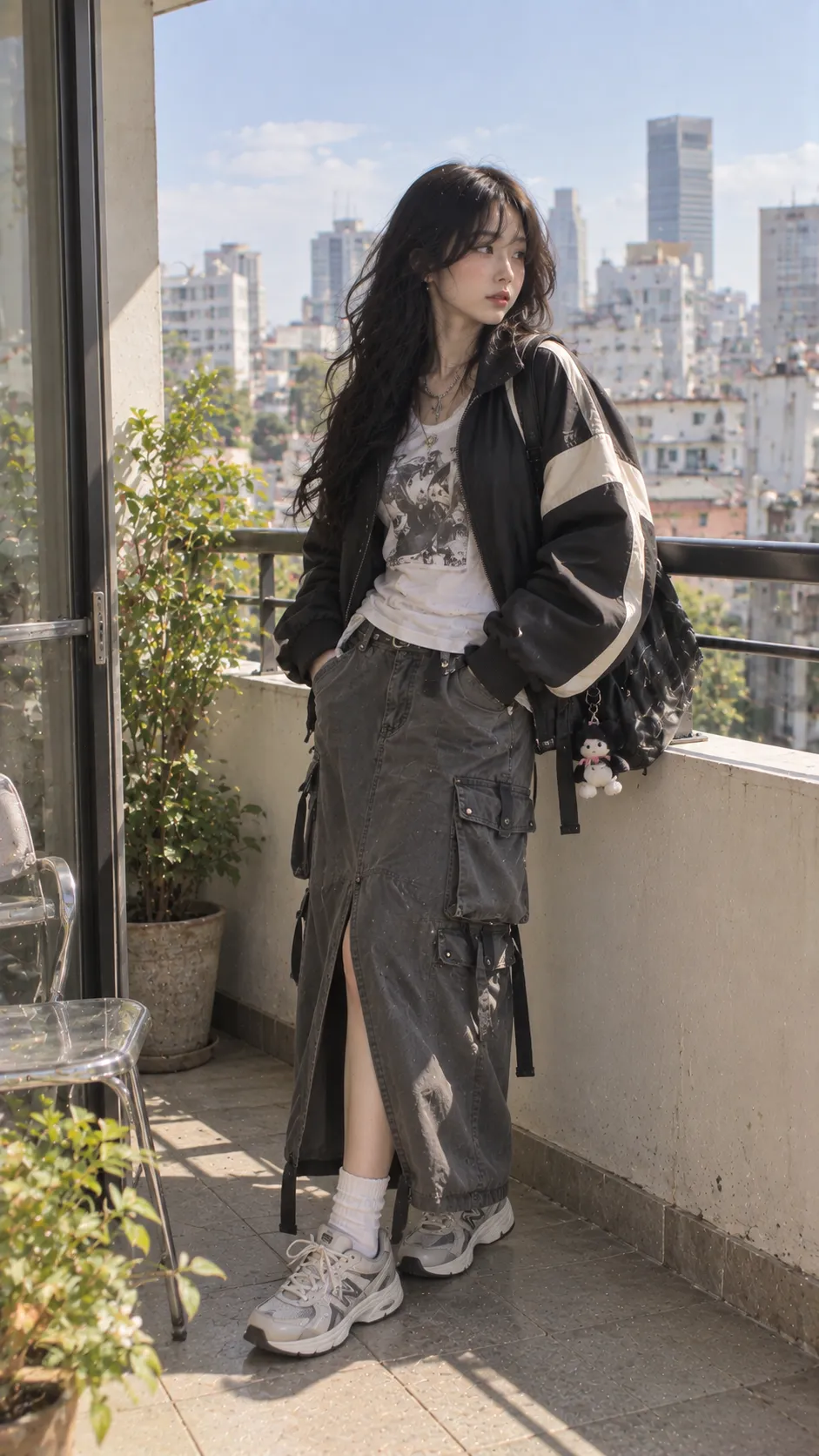
Layers and Silhouette: Why Copying Items Is Not Enough
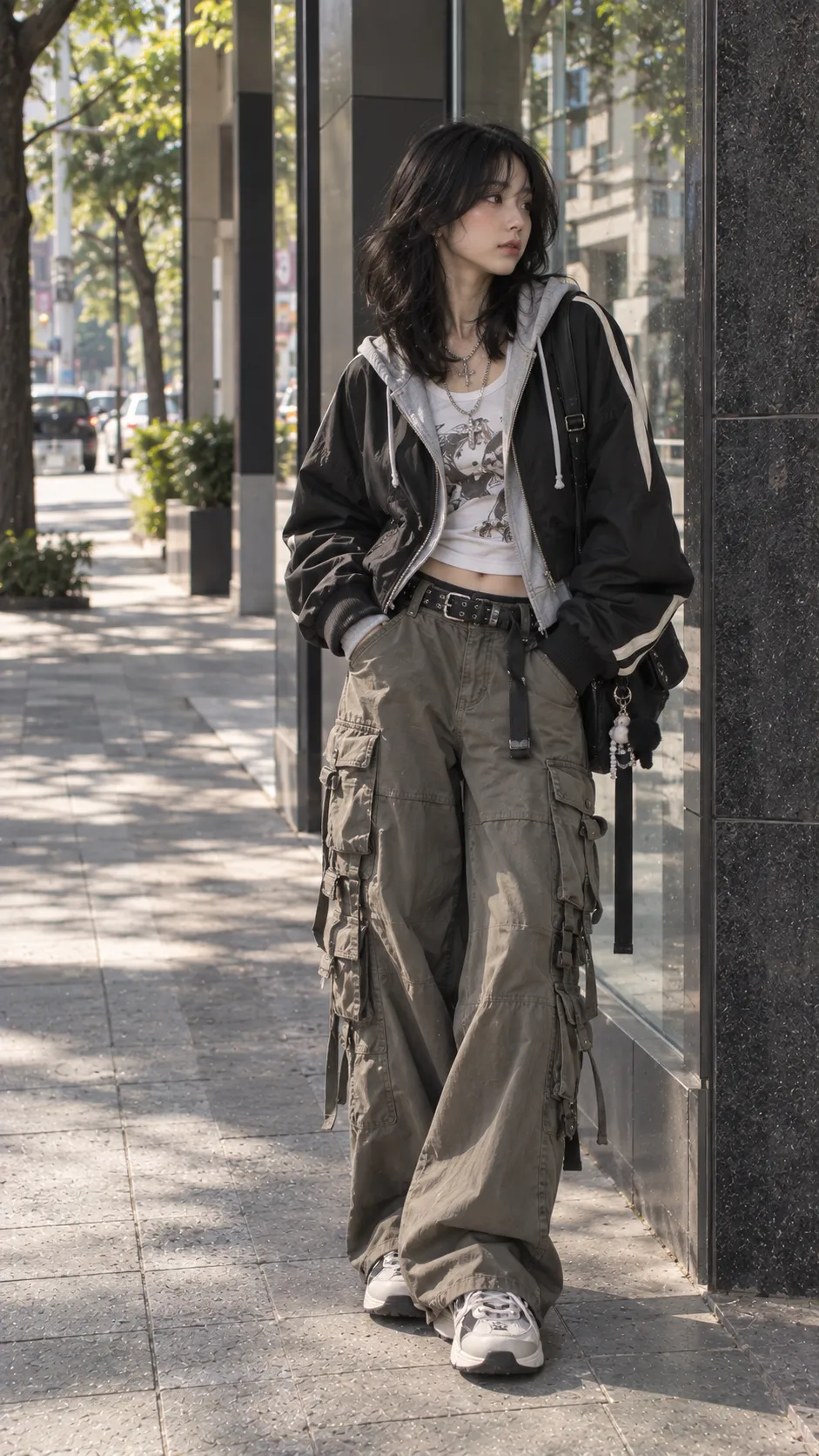
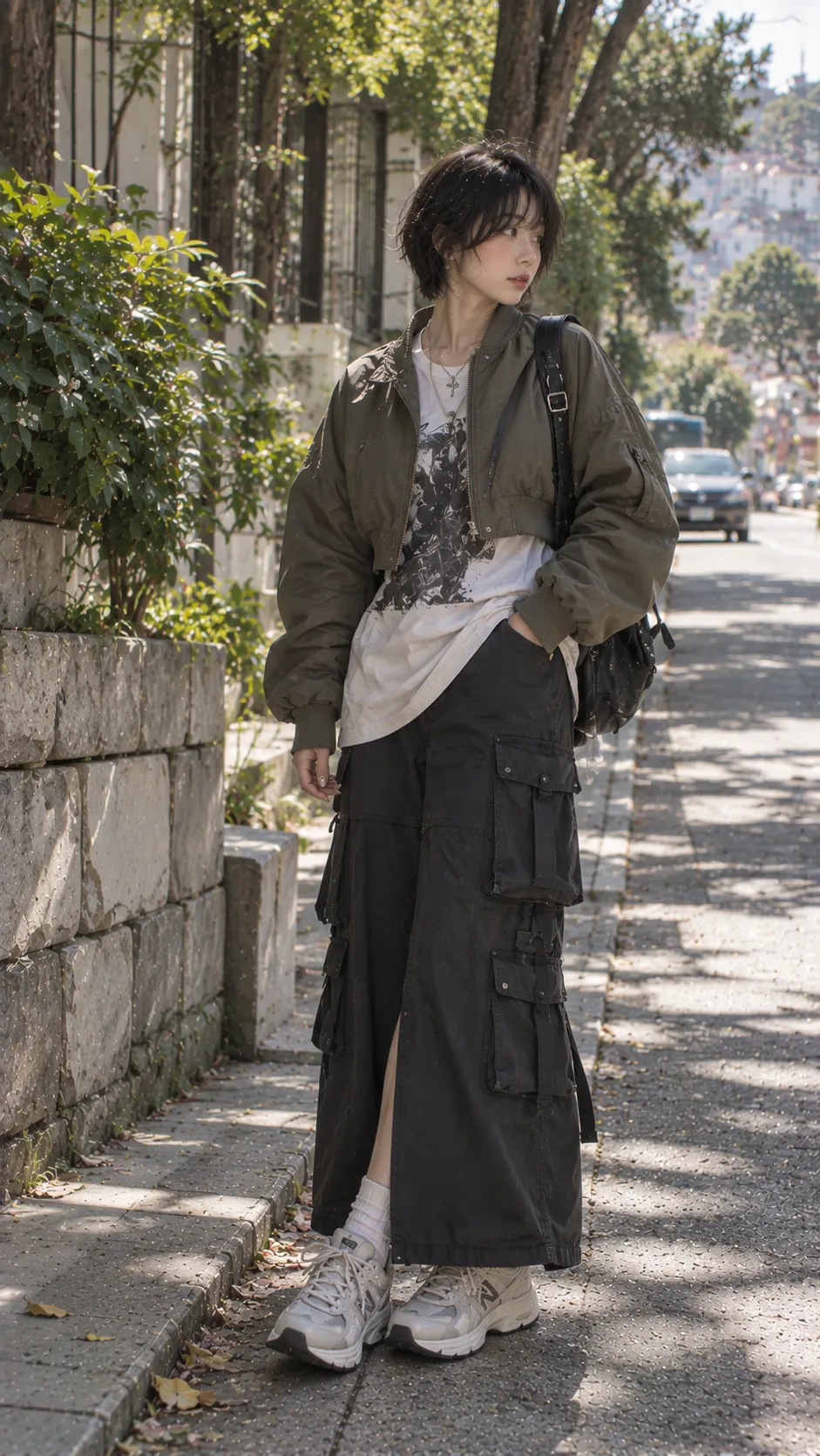
Identical bombers, cargos and sneakers can produce different effects when proportions change. Oversizing every piece may obscure the outfit. A useful framework is controlled imbalance: a boxy jacket with straight trousers, roomy knit with mini, long tee beneath cropped jacket, or wide trousers with fitted inner layer.
Moderate shoulder width with a clearer trouser line.
Lower volume balanced by a defined torso.
A long tee beneath shorter outerwear reveals layered structure.
Black, gray, olive, navy and denim can provide a quiet palette, leaving texture and shape to create interest. With a bright focal graphic, reduce competing surfaces.
How Does Japanese Streetwear Differ from Harajuku and Global Streetwear?
| System | Scope | Distinction |
|---|---|---|
| Japanese Streetwear | Streetwear developed or reinterpreted within Japan | Layers, curation and combinations of vintage, designer clothing and workwear. |
| Harajuku Style | A place-linked Harajuku street-fashion ecosystem | Includes Lolita, Decora, Goth and other expressions beyond streetwear. |
| Global streetwear | International street, sneaker, skate and hip-hop fashion | Broader scope without requiring Japanese context. |
Streetwear is global. Japanese streetwear is one contextual interpretation where imported American references, domestic labels, designer clothing and subcultures intersect. Harajuku Style is broader in a geographic and subcultural direction, encompassing systems that are not necessarily streetwear.
Vintage, Sneakers and Local Brands: Three Shopping Directions
Vintage adds a lived-in surface through faded denim, older sports jackets, military surplus or worn graphics. Age alone is insufficient: condition and fit still matter.
Sneakers often anchor the outfit but need not be limited editions. Match shape to trouser openings: very wide hems benefit from substantial soles or uppers; skirts and straight jeans can suit simpler shoes.
Japanese / local brands are worth considering for design and construction rather than an assumption that nationality establishes a style. Outfit relationships matter more than a brand's origin.
A Seven-Piece Starter Wardrobe
- One boxy graphic tee.
- One fitted neutral inner layer.
- One pair of wide jeans or relaxed trousers.
- One cargo or parachute bottom.
- One cropped or boxy jacket.
- One substantial sneaker pair.
- One clearly shaped crossbody or tote.
Explore several silhouettes with these before buying statement pieces. Within an existing alternative wardrobe, Visual Kei or Goth references can provide accents without overwhelming the streetwear foundation.
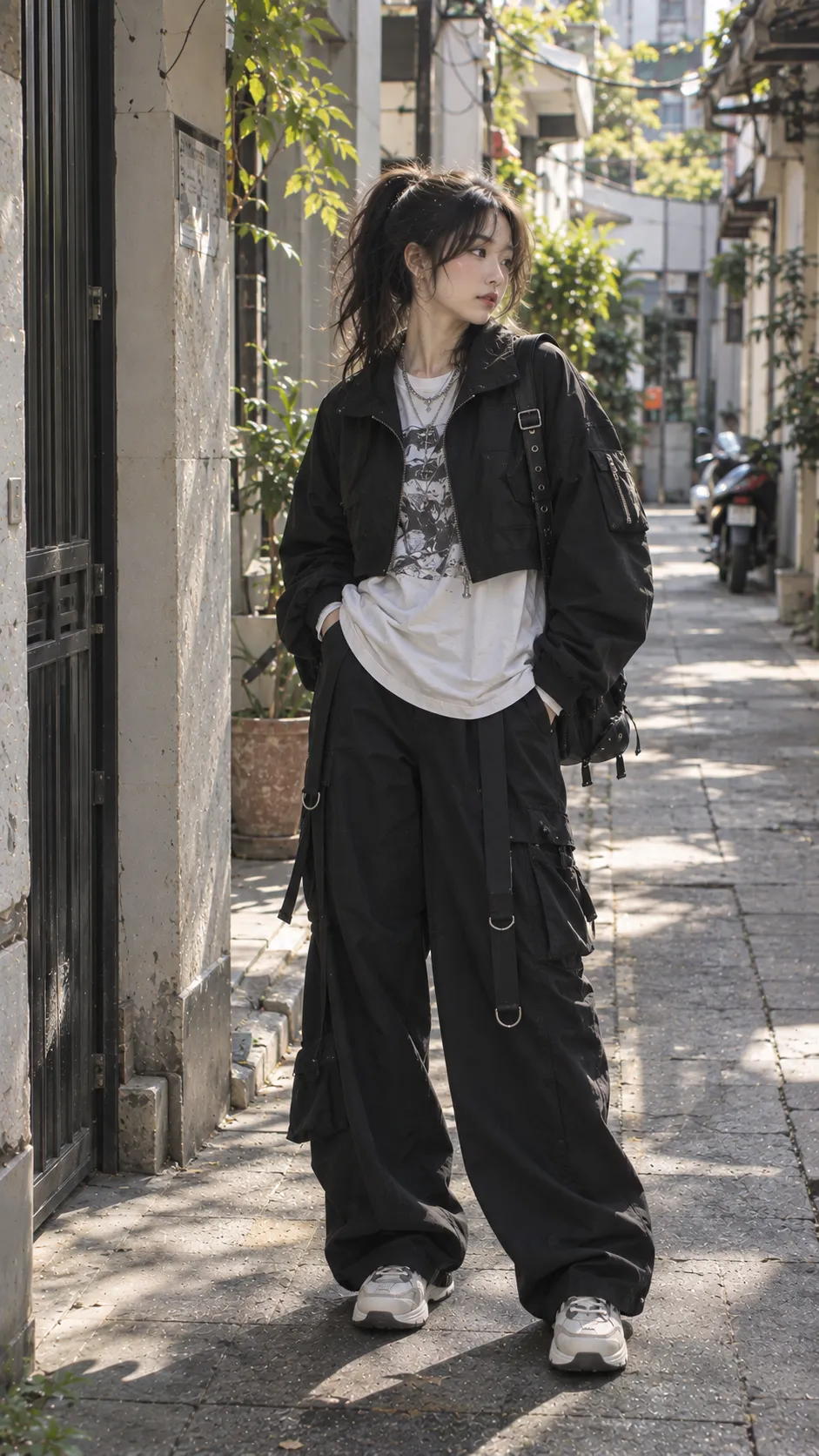
Wearing Japanese Streetwear in Vietnam
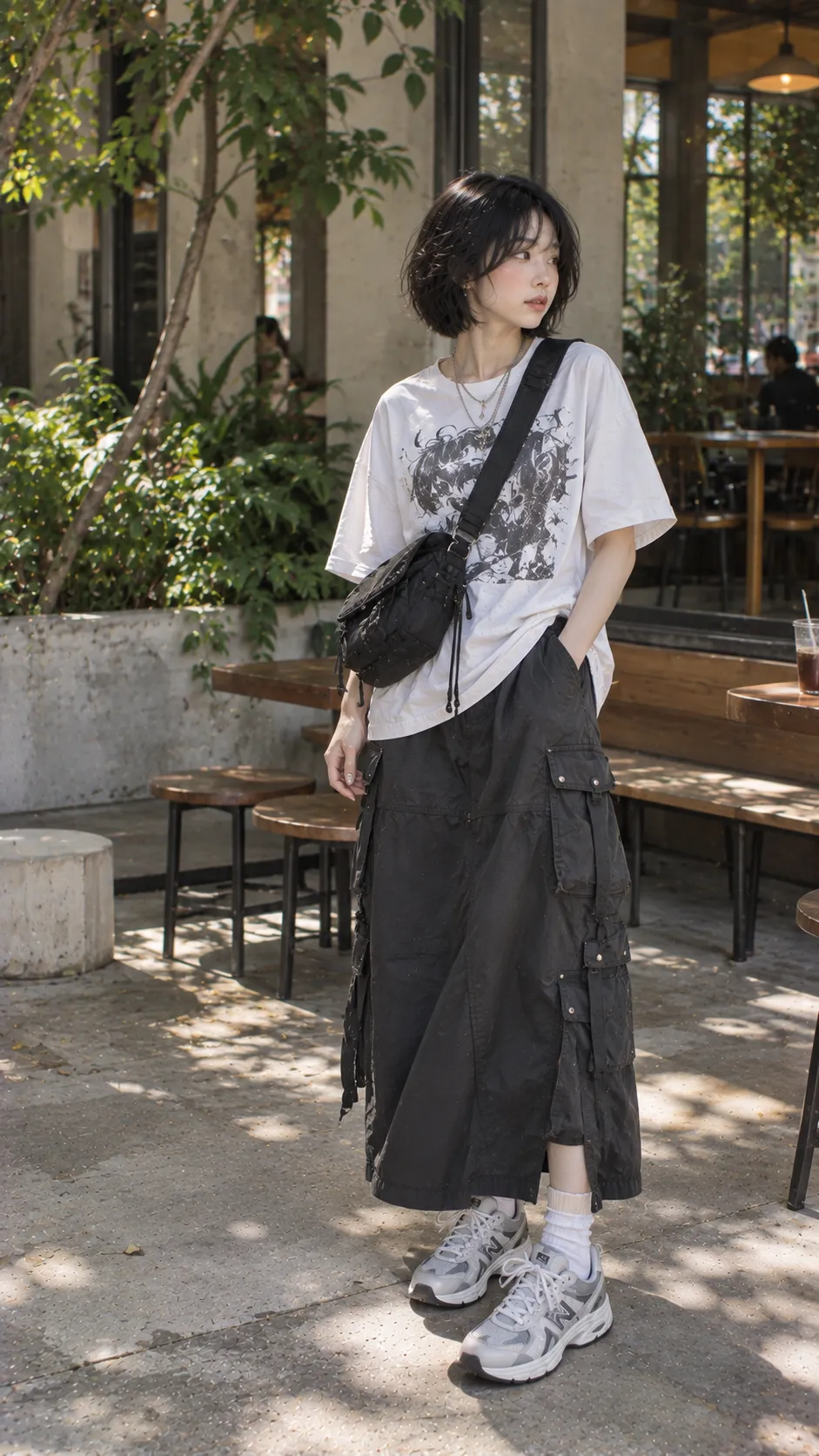
Tokyo-style layers can feel hot. Replace a hoodie beneath a jacket with a thin long tee, use a vest instead of sleeved outerwear, and consider lightweight nylon or ripstop. Choose breathable wide trousers and avoid excessive stacking in heat.
Reserve heavier bombers, knits and overshirts for evenings or air-conditioned settings. Proportion and selection can preserve the direction with fewer layers.
Brand Is Not Style: Reading Outfits beyond Hype
Two wearers can interpret one jacket differently through trouser width, shoe volume, layer length and bag placement. When studying a lookbook, mentally remove logos and read shapes first.
Divide the outfit into three roles: foundation (tee, trousers, skirt), structure (jacket, vest, overshirt) and signal (graphic, sneakers, bag, accessories). Sound foundations and structure remain recognizable when labels change. Expensive signals cannot repair confused proportions.
Secondhand Clothing and Patina
Vintage contributes more than nostalgia. Faded denim, washed cotton, aged nylon, softened leather and worn tees offer surfaces that contrast with new sneakers or technical bags.
Older does not automatically mean better. Inspect shoulders, zippers, hems, stains and brittle coatings. Moderate military-jacket volume can lead an outfit; excessive length or weight can disrupt it. On vintage tees, neckline and body length may matter more than graphic rarity.
Adapting Volume to Your Preferences
Shorter outerwear and higher-rise wide trousers can extend a leg line; substantial sneakers need not have high collars. Taller wearers may enjoy long tees, coats or several layer lengths. These are options rather than body-type rules.
Reduce shoulder drop or add lower volume to change balance. Straight or wide trousers with clear drape create different emphasis from hip-level cargo pockets. There is no required body type; distribute volume deliberately.
Street Snaps Compared with Everyday Outfits
Photographs may amplify trousers, jackets, shoes and layers for immediate visual impact. The same combination can feel heavy, hot or cumbersome during a full day. Reduce one area of volume and retain a jacket or footwear focal point.
Background also affects photographs. Dark monochrome can disappear against a dark setting. Texture, reflective details or one color accent can separate its outline without adding logos.
Six Japanese Streetwear Styling Mistakes
1. Buying logos before understanding silhouette
Branding cannot repair unsuitable fit.
2. Oversizing everything
Keep at least one controlled proportional relationship.
3. Equating Harajuku with Japanese streetwear
Harajuku includes numerous independent subcultures and broader expressions.
4. Adding excessive technical details
When function becomes the main identity, the outfit may approach Techwear.
5. Letting shoes disappear beneath trousers
Balance footwear against hem width and length.
6. Copying Tokyo winter layers in hot weather
Preserve visual references while adapting fabric.
References
Frequently Asked Questions
What is Japanese streetwear?
It describes streetwear developed and reinterpreted within Japan through youth culture, vintage, designer fashion, workwear, skate and subcultures.
Is Japanese streetwear the same as Harajuku style?
Not entirely. Harajuku is a broader street-fashion ecosystem including Lolita, Decora, Goth and other subcultures.
Do I need Japanese brands?
No. Silhouette, layers, textures and considered selection matter more than brand origin.
What should a beginner buy first?
A graphic tee, wide bottoms, boxy jacket, sneakers and bag provide an adaptable base.