

What Is Ouji Fashion? Japanese Prince-Inspired Style and Outfits
Ouji fashion is a Japanese fashion style drawing on princely imagery: detailed blouses, waistcoats, structured jackets, shorts or trousers, legwear and boots arranged as a coordinated outfit. Closely associated with Lolita and boystyle communities, it centers a trouser-based silhouette rather than a full skirt.
A top hat or crown is not the starting point. The composition depends on proportion, tailoring, neckline and footwear working together. Historical menswear references do not restrict who can wear the style; people of any gender can participate.
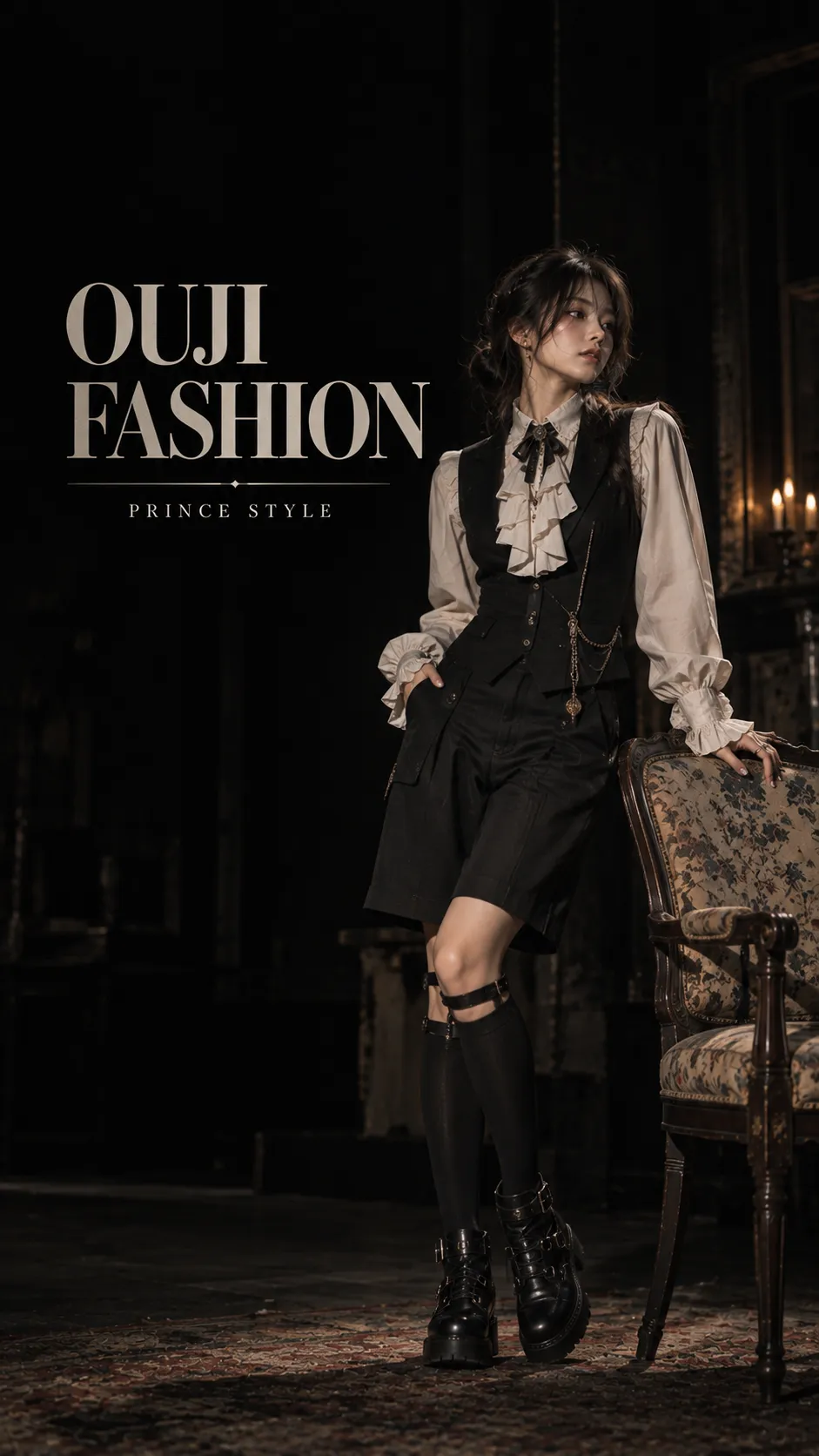
Guide collection: Aesthetic Dictionary: A Guide to Fashion Styles (Vietnamese)
What Is Ouji Fashion?
Ouji fashion —ouji means prince in Japanese—is an alternative Japanese fashion style organized around princely or youthful aristocratic imagery. Community terminology places it near boystyle and Lolita, sharing an emphasis on a complete coord , meaning a deliberately coordinated outfit.
Calling it simply male Lolita overlooks its distinctive composition and the diversity of its wearers. Lolita commonly emphasizes a skirt or dress supported by a petticoat; Ouji shifts the main structure toward shorts, breeches, pumpkin-shaped shorts or trousers, combined with a blouse, waistcoat, coat, legwear and shoes. The resulting silhouette can lean toward historical menswear or androgyny without imposing a gender requirement.
Ouji is not an exact reconstruction of one European period. Victorian, Rococo, aristocratic menswear, military, Gothic and fantasy references can be reinterpreted within modern Japanese fashion. Coherence matters more than claiming historical accuracy.
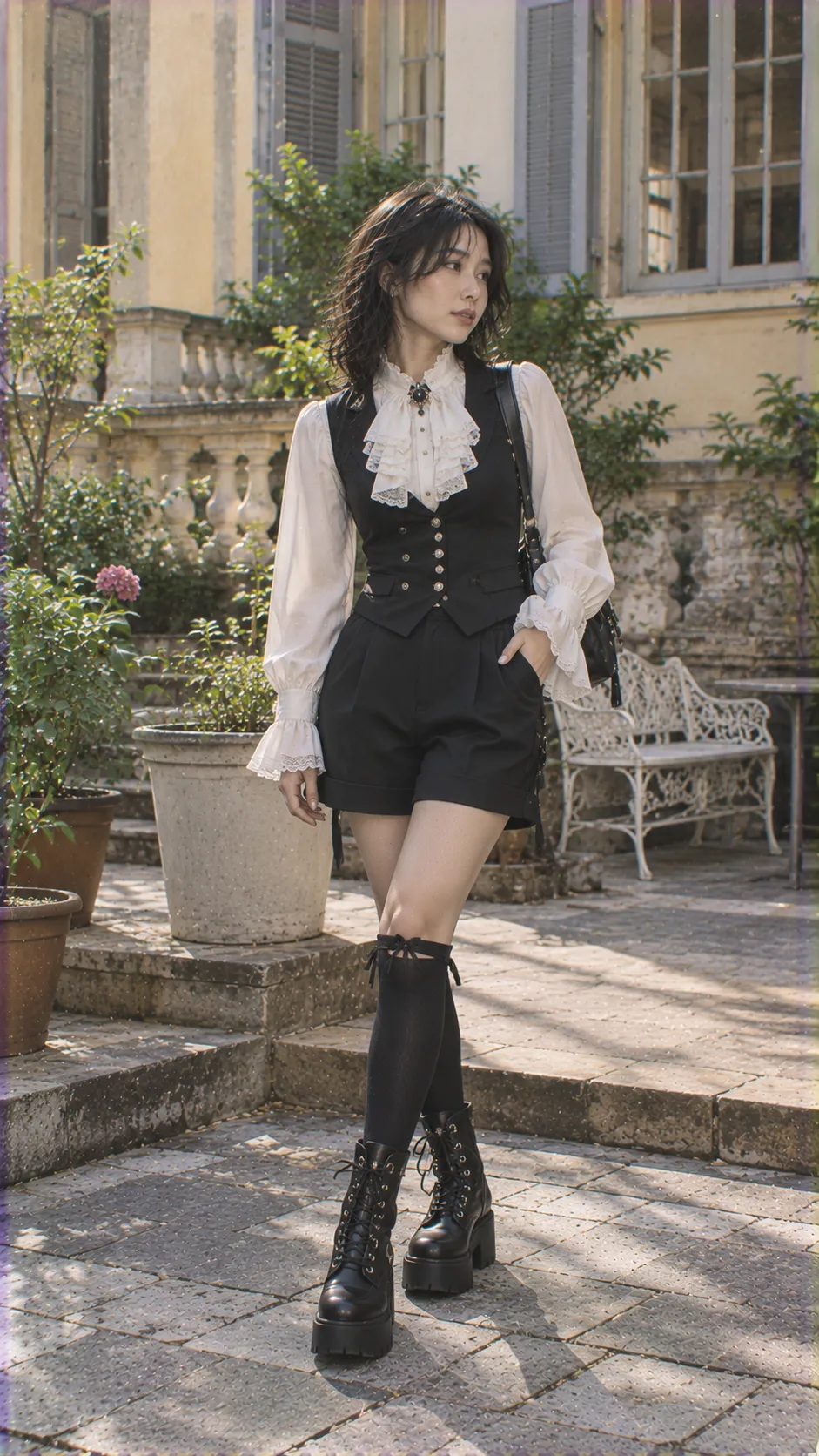
How Is Ouji Related to Lolita?
Both sit within Japanese alternative fashion and use deliberately coordinated blouses, lace, jabots, tailoring, headwear and accessories. Some labels produce garments associated with both, and communities, events and clothing sources can overlap.
The central difference is the characteristic silhouette. A full skirt often provides Lolita's main volume; Ouji places that emphasis in shorts, trousers and jackets. A petticoat is unnecessary. Resolve the line from shoulder to foot: trouser shape, hem and shoes can affect the coherence more than an omitted hat.
For a wider view of Japanese street-fashion communities, see What Is Harajuku Style? (Vietnamese). Harajuku accommodates many distinct styles; Ouji is one specific direction rather than a name for the entire setting.
Building an Ouji Silhouette
Consider three relationships before buying accessories. A relatively simple coordinate can communicate the direction when these work together.
A high collar, bow, cravat or jabot draws attention upward; a waistcoat or jacket defines the torso and supports the aristocratic reference.
Pumpkin shorts introduce rounded volume, breeches emphasize the knee area and straight trousers offer a longer line. The bottom is an active part of the silhouette rather than an invisible base.
Knee socks, tights and boots provide a deliberate lower finish. Modern athletic sneakers create a different reference, useful when a hybrid is intentional.
Core Garments for Prince-Inspired Styling
There is no absolute compulsory shopping list, but a versatile wardrobe can be organized around these roles.
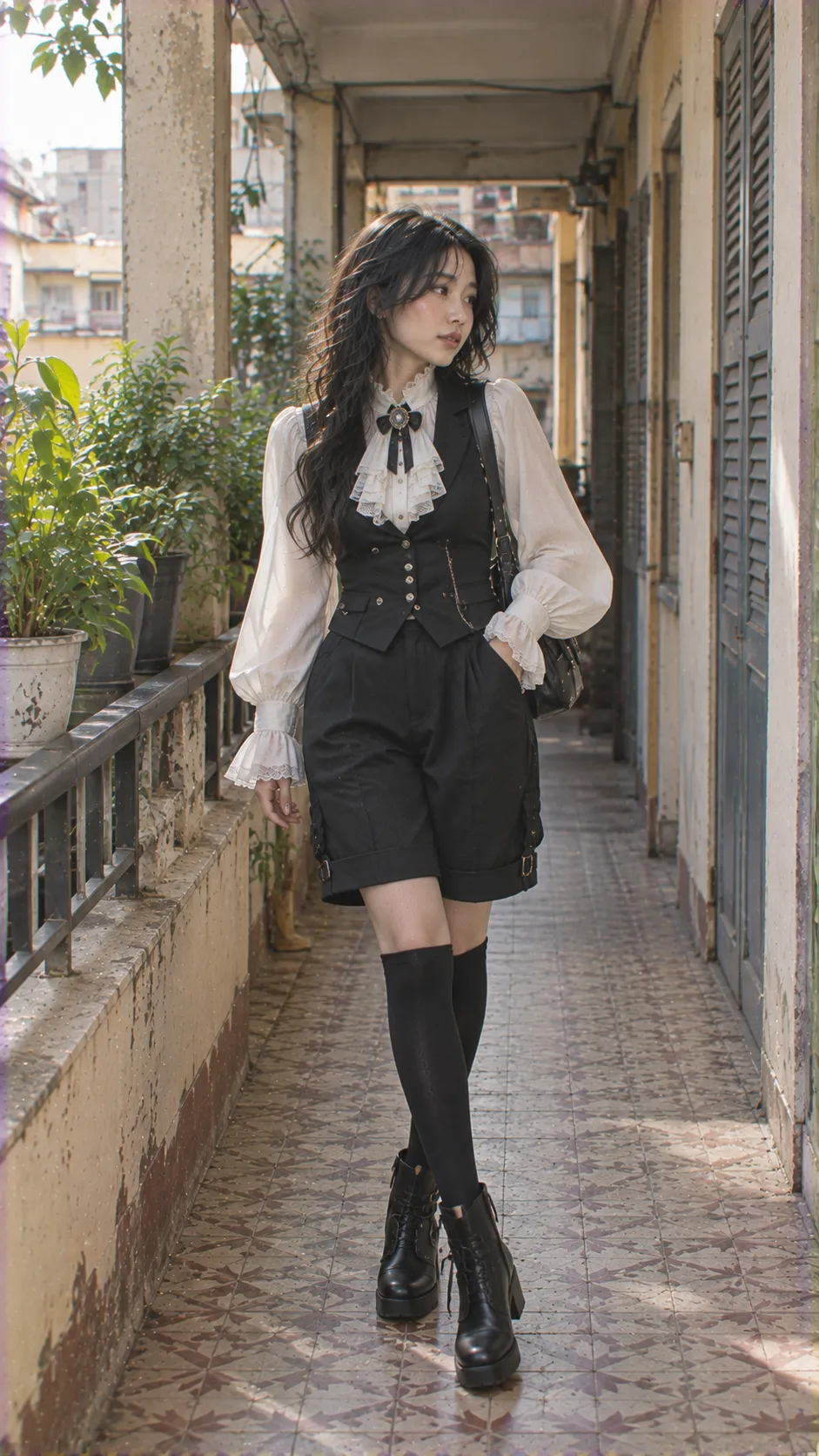
Classic, Gothic, Pirate and Military Ouji References
Navy, brown, cream and burgundy; tartan or smaller stripes; relatively restrained vests and jackets. These suggest a storybook-prince direction with less theatrical detail.
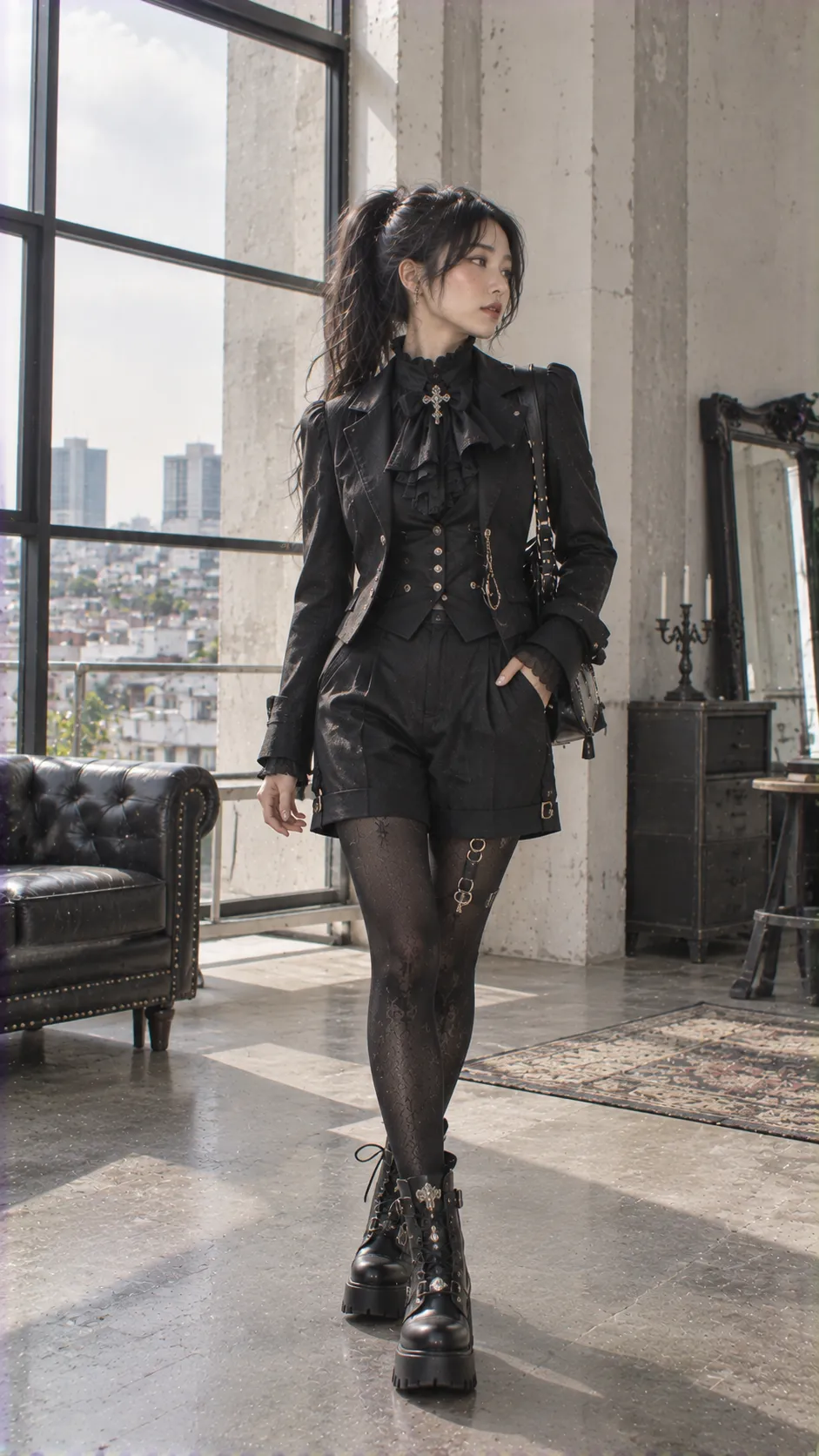
Black, charcoal and wine red, with velvet, lace, silver-colored hardware or a high collar. More drama can overlap visually with Romantic Goth, while the trouser-based princely tailoring remains the Ouji reference.
Full-sleeved blouses, jabots, longer coats, belts, boots and pirate references. A defined waist relationship can connect the more freely arranged volume.
Double-breasted jackets, braid, structured shoulders, boots and black, navy or red. Symmetry and repeated hardware emphasize the tailored outline. These are fashion references, not a reconstruction of a specific uniform.
Visual Kei can also use tailoring, ruffles, platforms and Gothic imagery, but its context differs. Visual Kei is associated with a music scene and performers' visual presentation; Ouji centers princely or boystyle coordination. They can share references without being synonyms.
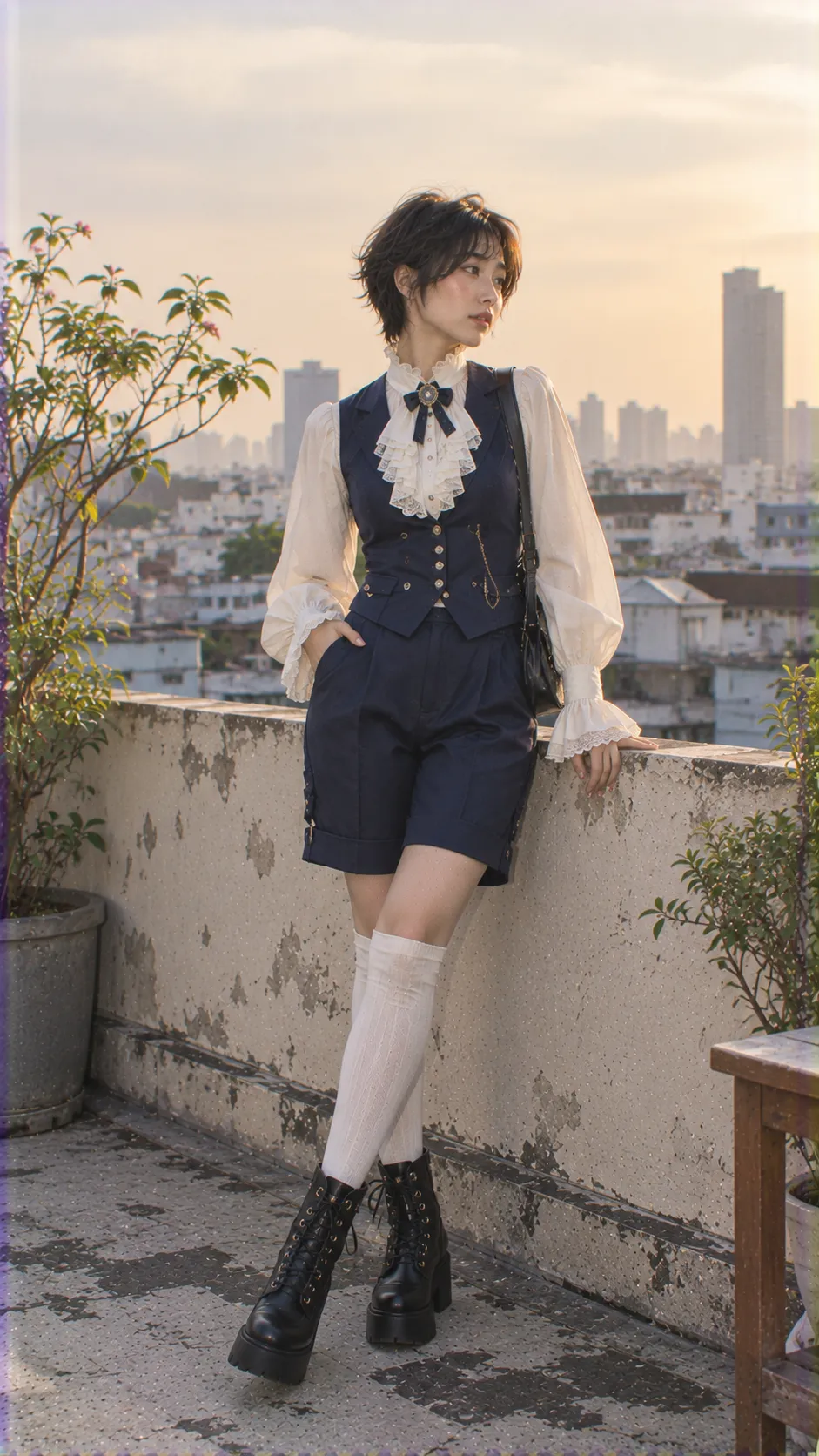
Five Ouji Outfit Formulas
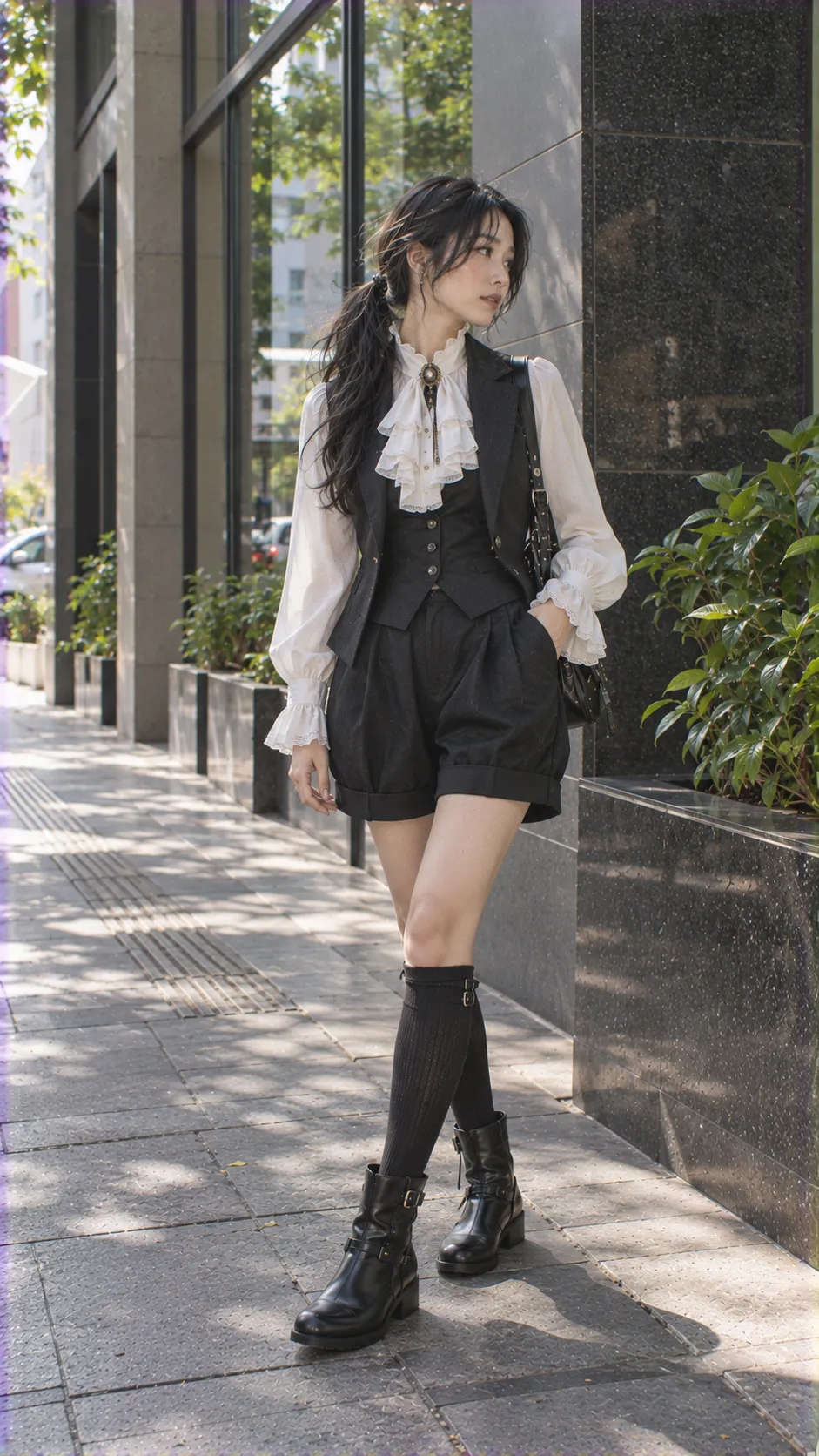
White blouse, black waistcoat, tailored shorts, knee socks and boots
Why it works: Black and white make the structure clear before decoration. The waistcoat divides the torso, shorts leave room for visible legwear and boots finish the line. Each piece has a distinct role.
Ivory blouse, navy vest, plaid shorts and brown boots
Why it works: Navy and brown soften the palette while plaid supplies a period-associated reference. A blouse with large ruffles can take smaller neckwear.
Black high-collared blouse, long vest, shorts, opaque tights and platform boots
Why it works: In monochrome, surfaces distinguish the layers: matte blouse, velvet vest and leather boots. Vary finishes instead of making every area glossy or laced.
Cropped double-breasted jacket, shirt, slim trousers and lace-up boots
Why it works: A strongly structured jacket can pair with simpler trousers. Repeat gold- or silver-colored trim selectively through buttons or a brooch.
Ruffled blouse, soft waistcoat, balloon shorts and low boots
Why it works: Rounded sleeves and shorts create softer volume while the vest clarifies the torso. Cream, dusty blue or gray give a lighter alternative to the Gothic palette.
Adapting Ouji for Everyday Wear
A complete coordinate need not contain a hat, jabot, coat tails and patterned socks together. One useful editorial starting point is two structural references and one decorative accent.
Try a high-collared blouse and tailored shorts with boots, or a vest and pleated trousers with a small neck bow. For a café or quieter event, a well-shaped plain shirt can replace elaborate ruffles; headwear is optional.
Adapt to Vietnam's climate. Several velvet layers may be unsuitable for hot, humid conditions. Consider lighter poplin or twill, less heavily lined vests and shaped shorts. Check weight, weave, lining and ease; fiber or fabric names do not guarantee ventilation. Retain the composition's hierarchy rather than every reference material.
For a softer, less formal Japanese-fashion direction with natural-looking layers, Mori Kei uses a different structure: soft layered volume and organic textures rather than princely tailoring.
Fit and Proportion for Different Bodies
Ouji is not limited to one body shape. Adjust the visual anchors according to your preferences: reduce sleeve puff if you want less shoulder emphasis, add shorts volume elsewhere, or change jacket length and pleat direction for a different hip line. A higher rise and shorter jacket can alter the apparent leg-to-torso ratio without requiring very short shorts.
For any size, a waistcoat with appropriate ease or a well-seamed jacket can clarify the silhouette more than an oversized coat that hides every division. If you want garments to occupy less visual space, try smaller prints, a more moderate collar or less substantial boots. These are optional proportional adjustments, not body-type restrictions.
Try the entire coordinate. Shorts may relate differently to a long coat; boots and knee socks may divide the leg at a different point than expected. Evaluate these relationships while sitting and moving, not just each garment separately.
Five Ways an Ouji Coordinate Can Lose Coherence
1. Starting with accessories instead of silhouette
A crown, cane, top hat or pocket watch cannot establish the relationship between an unrelated blouse, bottom and shoes. Arrange the shapes first, then decide which decoration supports them.
2. Defining Ouji only as male Lolita
That shorthand overlooks the distinct trouser-based silhouette and diverse wearers. People of any gender can wear Ouji.
3. Combining every historical reference
Exact reenactment is unnecessary, but a coherent theme still helps. A strong military-inspired jacket need not also take a pirate hat, steampunk goggles and Rococo bow simply because each looks historical.
4. Using unrelated casual trousers unintentionally
Skinny jeans or joggers can create an experimental hybrid. Tailored shorts or trousers are a clearer starting point when learning the core proportions.
5. Giving every detail equal weight
Large ruffles, brooches and chains alongside patterned vests and socks can compete. Choose a main focal point and quieter supporting details.
Frequently Asked Questions
What is Ouji fashion?
Ouji is a Japanese prince-inspired fashion style using blouses, waistcoats, jackets, shorts or trousers, legwear and shoes in a deliberate coordinate. Historical menswear and aristocratic imagery are references rather than exact reenactment requirements.
Is Ouji male Lolita?
That description is too narrow. Communities, brands and coordination practices can overlap, but Ouji has a distinctive trouser-based silhouette and is not restricted by the wearer's gender.
Does Ouji require shorts?
No. Knee-length shorts, breeches and pumpkin-shaped shorts are recognizable options; long trousers can also work, particularly in Classic, Gothic or Dandy-influenced coordinates.
Is Ouji the same as Visual Kei?
No. Both can use Gothic tailoring, ruffles and platforms, but Visual Kei has a music-scene and performance context, while Ouji centers princely or boystyle clothing coordination.
References
The preserved community references discuss boystyle and Ouji terminology. Retailer editorials offer coordination, wardrobe-change or alteration perspectives; they are not definitive histories, and the general Lolita articles do not establish every Ouji claim. Outfit formulas here are Apocalypse Closet's interpretations.