

What Is Mori Kei? Forest-Inspired Japanese Style and Outfits
Mori Kei is a Japanese fashion style often described through forest-girl imagery: loose clothing, lighter layers, natural colors and soft textures. It suggests a romantic forest setting, but beige, long skirts or lace alone do not define it. The central relationships are rhythmic layering, soft silhouettes and contrasting textures.
This guide focuses on Mori Kei clothing and wearable combinations. Fairycore, Fairy Grunge and Cottagecore appear for comparison and have separate guides.
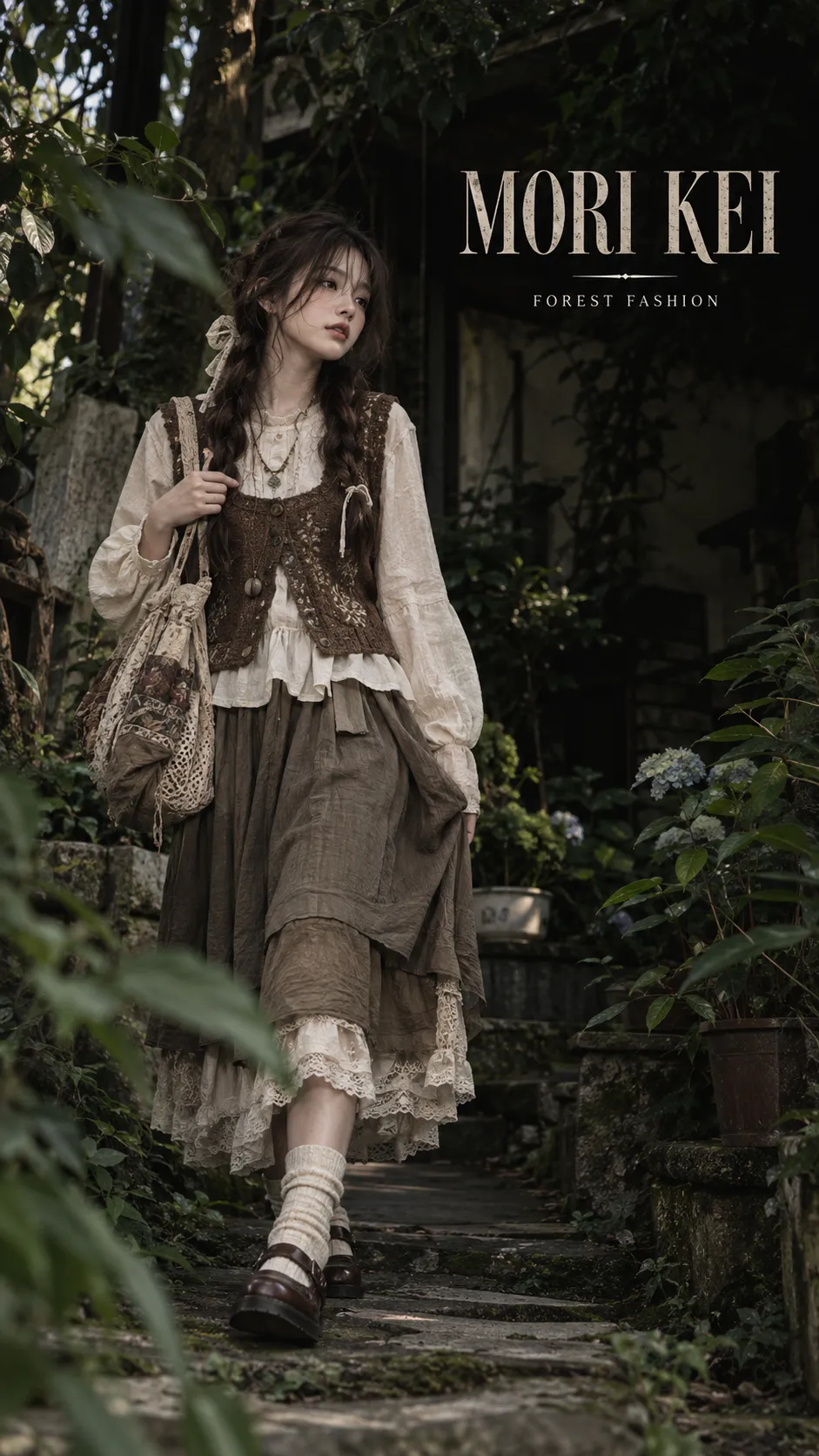
Guide collection: Aesthetic Dictionary: A Guide to Fashion Styles (Vietnamese)
What is Mori Kei?
Mori (森) means forest in Japanese. The style is also called Mori Girl , while Mori Kei is familiar in international discussions. Community accounts connect it with a 2006 Mixi group and its founder Choco, reportedly after a remark that her clothes resembled those of someone living in a forest. Treat that origin story as community history rather than a precisely verified single invention; the relaxed layered forest reference is more useful for understanding the clothing.
Tokyo Fashion's original Harajuku street photographs from 2009–2010 document earthy colors, knits, shawls, lace, layered garments, leg warmers and boots. They show everyday clothing organized into a soft, romantic composition, rather than requiring fantasy costume elements. These are dated examples, not proof of current prevalence.
Loose layers often soften the visible body outline, but their arrangement still matters: where the cardigan ends, where the skirt widens and how much visual weight the boots add. Identical layer lengths can merge into one block.
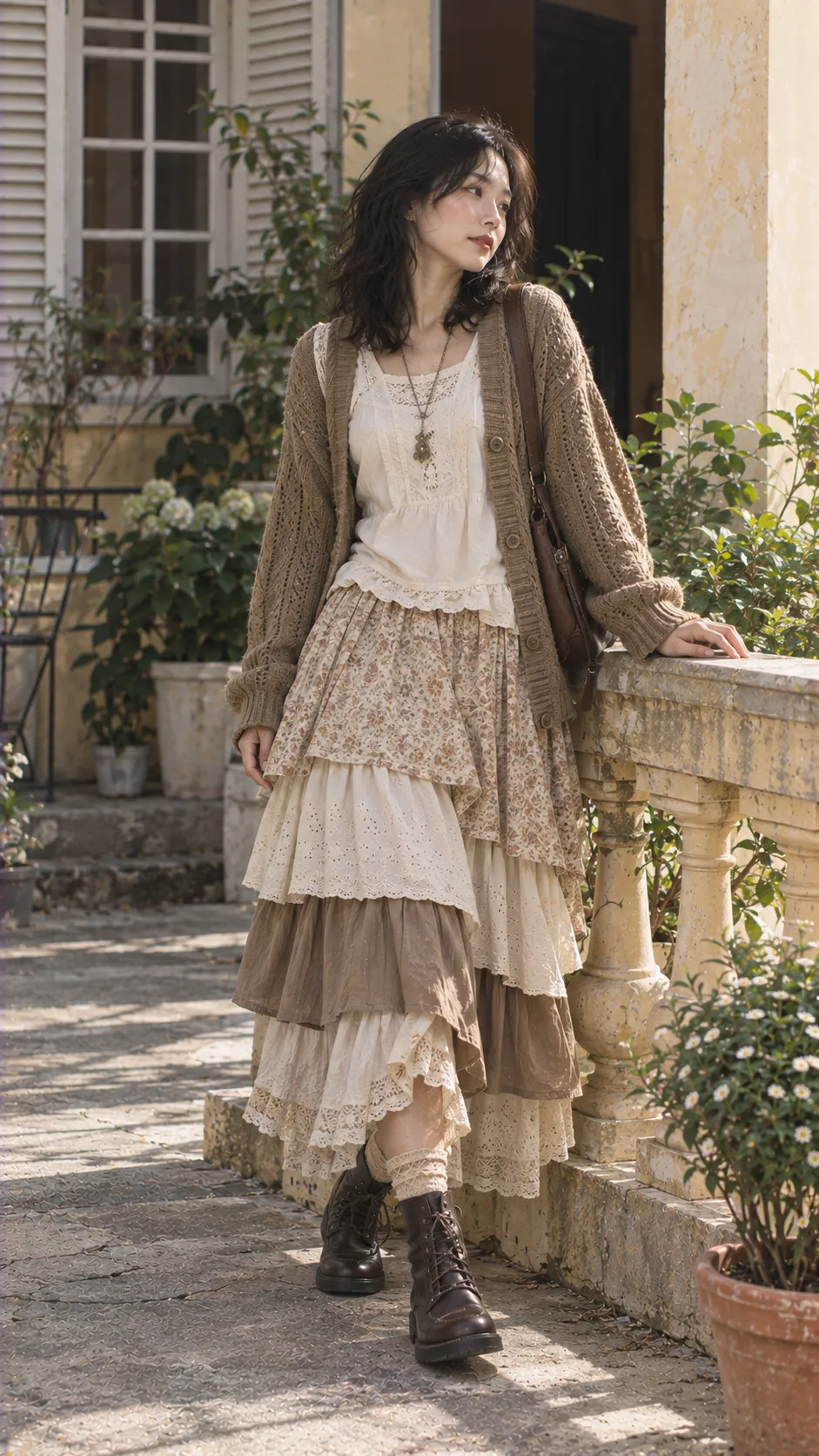
Layering Structure: Creating Depth without Excessive Bulk
The aim is not the greatest possible number of layers. Consider four possible roles, adapting them to the weather and your wardrobe.
Let selected areas remain visible: a blouse collar beneath a pinafore, a skirt hem below a cardigan or socks between skirt and boots. These small intervals create depth. An outer layer covering everything can hide the layering despite the added bulk.
Three Mori Kei Silhouette Levels
A blouse with a midi skirt or straight trousers and a fine cardigan. Natural colors and lower-profile shoes offer a restrained everyday starting point.
A dress or pinafore over a blouse with a vest or cardigan, plus selected socks, boots or a natural-textured accessory.
A blouse, dress, visible underskirt and shawl or vest. Distinct lengths and suitable fabric weights help keep the shapes readable.
These are editorial styling levels, not official categories. Lower-intensity versions are often easier for daily use. More elaborate layers can suit cooler conditions or photographs; reduce thickness in heat rather than chasing a garment count.
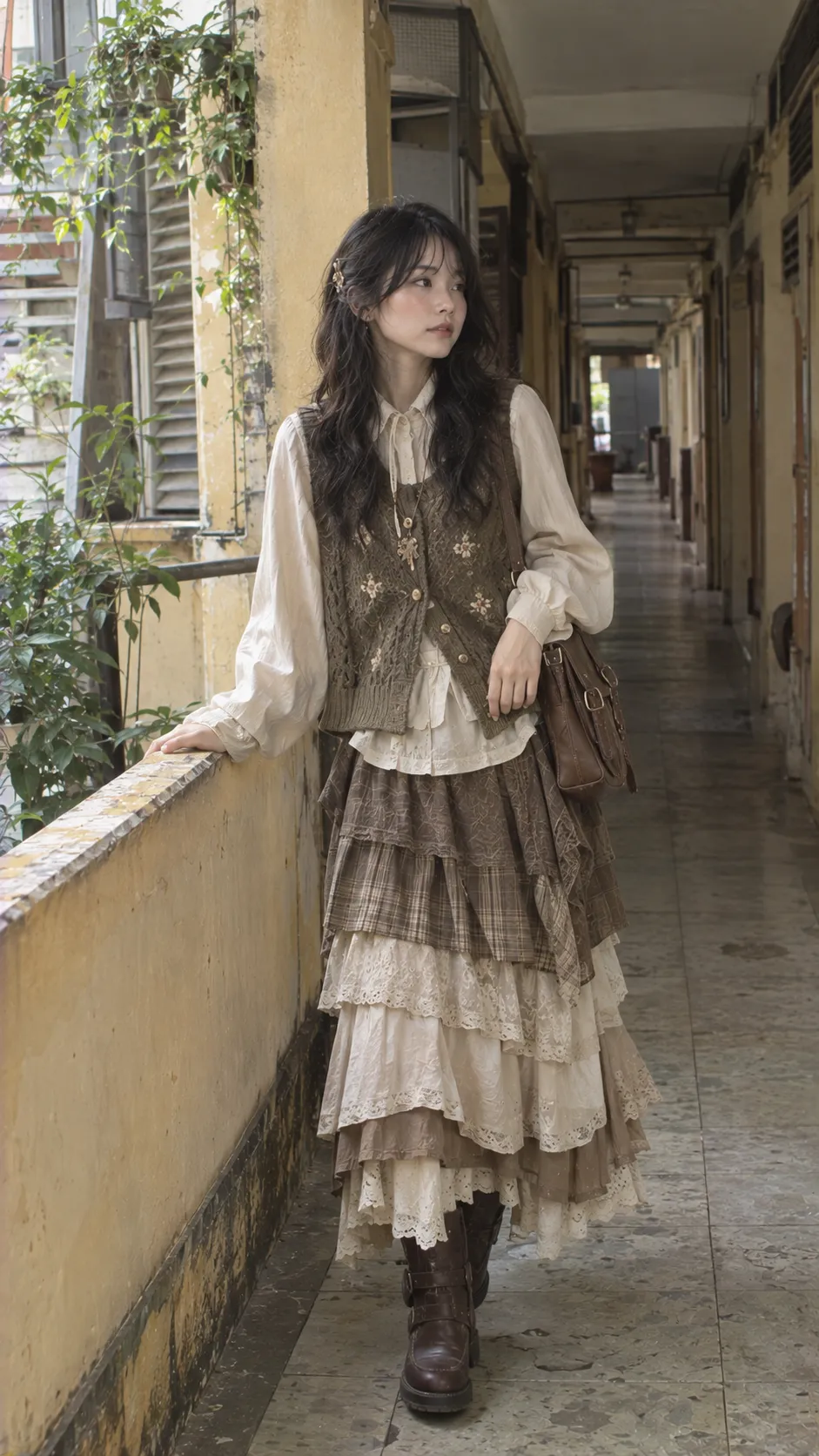
Six Mori Kei Outfit Routes
1. Lightly laced blouse, midi pinafore and ankle boots
Textured collar → simpler dress body → boots as an anchor.
A cream or ivory blouse with small lace details can sit under camel, olive or brown. Brown or taupe boots add visual weight beneath the dress. If the blouse is elaborate, reduce the necklace detail.
2. Loose dress, knit vest, crew socks and leather shoes
Long dress line → shorter vest → socks repeating a color.
The vest gives a broad dress a visible division. An upper-hip or shorter endpoint can clarify the proportions; texture in a related color preserves the soft palette.
3. Cotton top, tiered skirt and medium-length cardigan
Relatively compact base → moving skirt → cardigan's vertical line.
Skirt tiers add movement without requiring dense ruffles. A cardigan longer than the top but shorter than the skirt can leave three lengths visible, producing a romantic interpretation without literal fantasy details.
4. Oversized blouse, wide trousers and knit scarf
Upper and lower volume → a deliberate accessory endpoint.
Skirts are optional. Earth-toned wide trousers and a soft blouse create a relaxed outline. A scarf or close-lying crossbody can provide a reference point between the looser shapes.
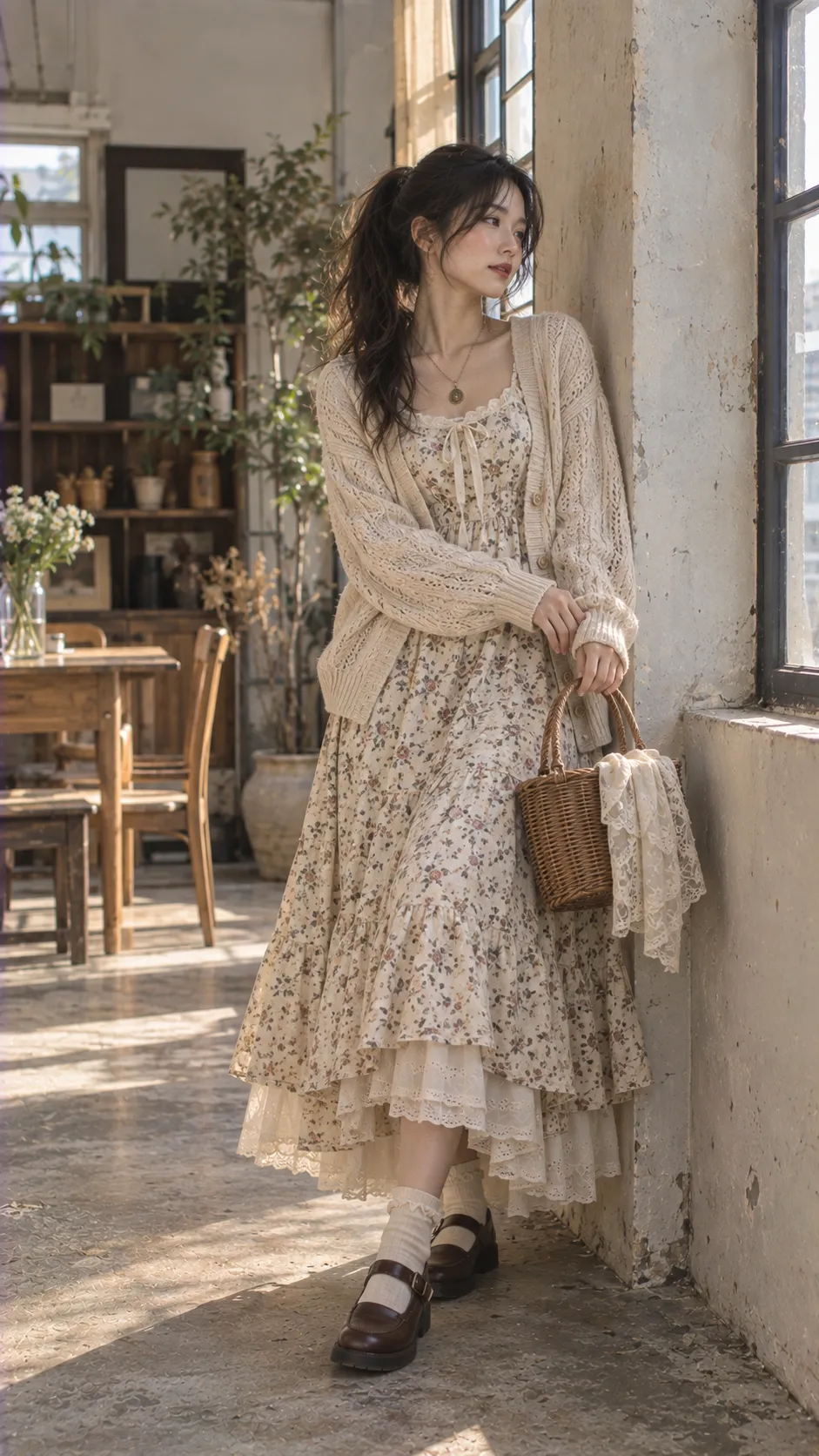
5. Floral midi dress, cropped cardigan and basket bag
Small pattern → shorter cardigan → natural-textured bag.
Muted small florals work with a cardigan visibly shorter than the dress. The basket bag can be the main accent, leaving shoes and jewelry simpler.
6. Cream dress, lace underskirt and light shawl
Pale monochrome → varied texture → a finishing shawl.
Let a small lace or cotton hem show below the dress, then add a fine shawl. Vary the density rather than stacking equally heavy lace, crochet and ruffles.
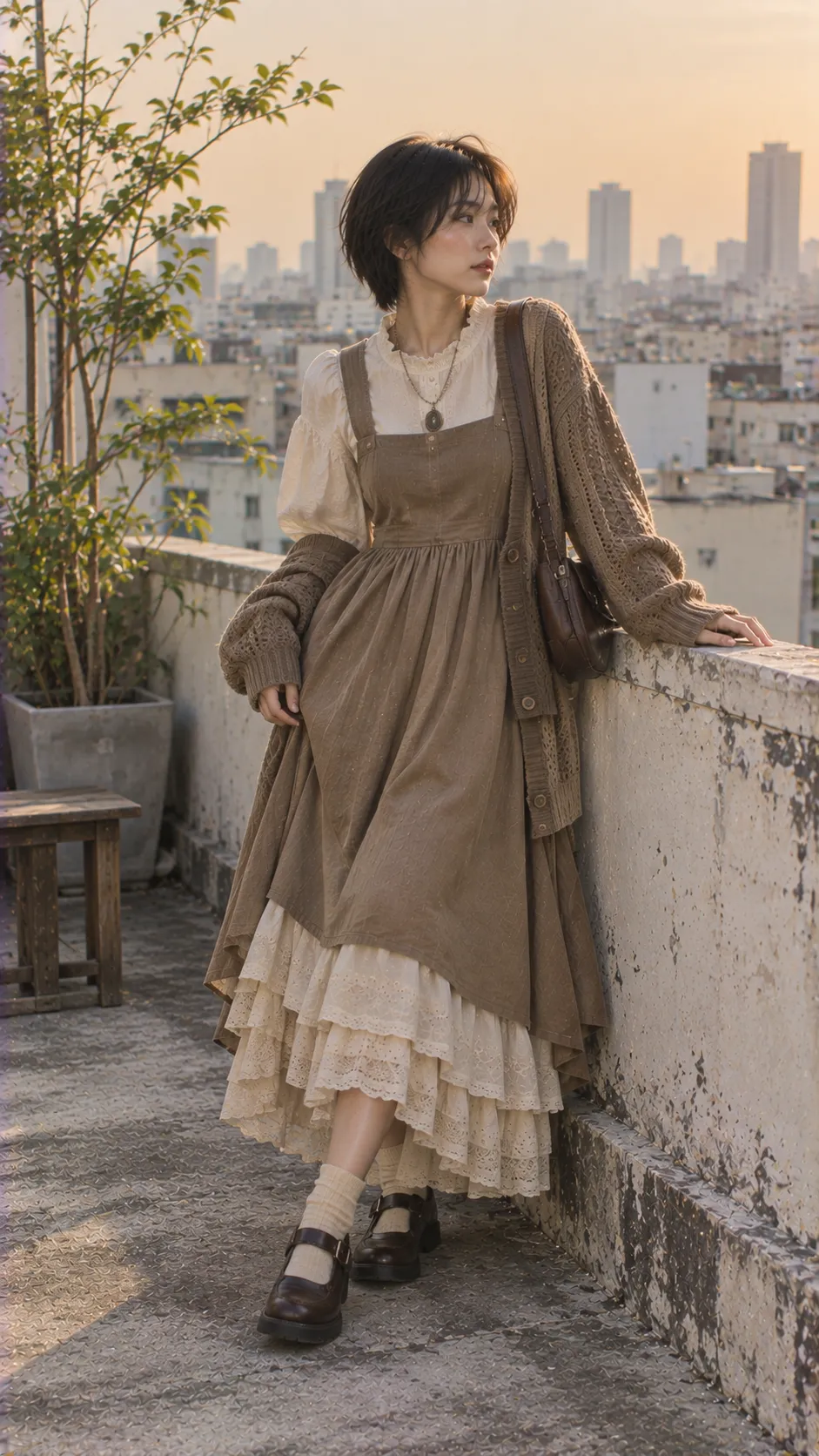
Colors and Materials beyond Earth Tones
Off-white, cream, beige, camel, brown, khaki, olive and muted navy are options. Dusty pink or faded blue can also work. The useful relationship is a harmonious palette rather than a strict rule that every color must resemble soil.
One optional composition guide is 70% neutral, 20% earth tone and 10% accent: cream dress, brown vest and dusty pink scarf, or beige blouse, olive skirt and burgundy socks. The proportions are a loose visual suggestion, not measurements or requirements.
Textures distinguish even a single-color outfit. Cotton, linen blends, soft knits, crochet, small-scale lace, fine corduroy or lighter wool can offer contrasting surfaces. Inspect weave, knit, finish and lining rather than assuming a fiber determines the result.
Shoes and Accessories beyond a Forest Costume
Lace-up boots, ankle boots, simple leather flats or Mary Janes in brown or taupe offer familiar visual anchors. Layered long hems may take more substantial shoes, while very heavy platforms shift the emphasis toward darker alternative references. Choose practical fit and ground clearance separately from the visual effect.
Natural-looking materials can suggest the setting without numerous symbols: a basket bag, scarf, knit hat, satchel, small pendant, hair ribbon or vintage-inspired brooch. Leaves, mushrooms, deer and flowers need not appear together.
Mori Kei versus Fairycore, Cottagecore, Fairy Grunge and Natural Kei
Whimsigoth also layers clothing but emphasizes jewel tones, celestial motifs and witchy Bohemian references. For moons, velvet and richer dark colors, Whimsigoth is the more specific guide.
Mori Kei in Hot Weather: Layer through Length rather than Bulk
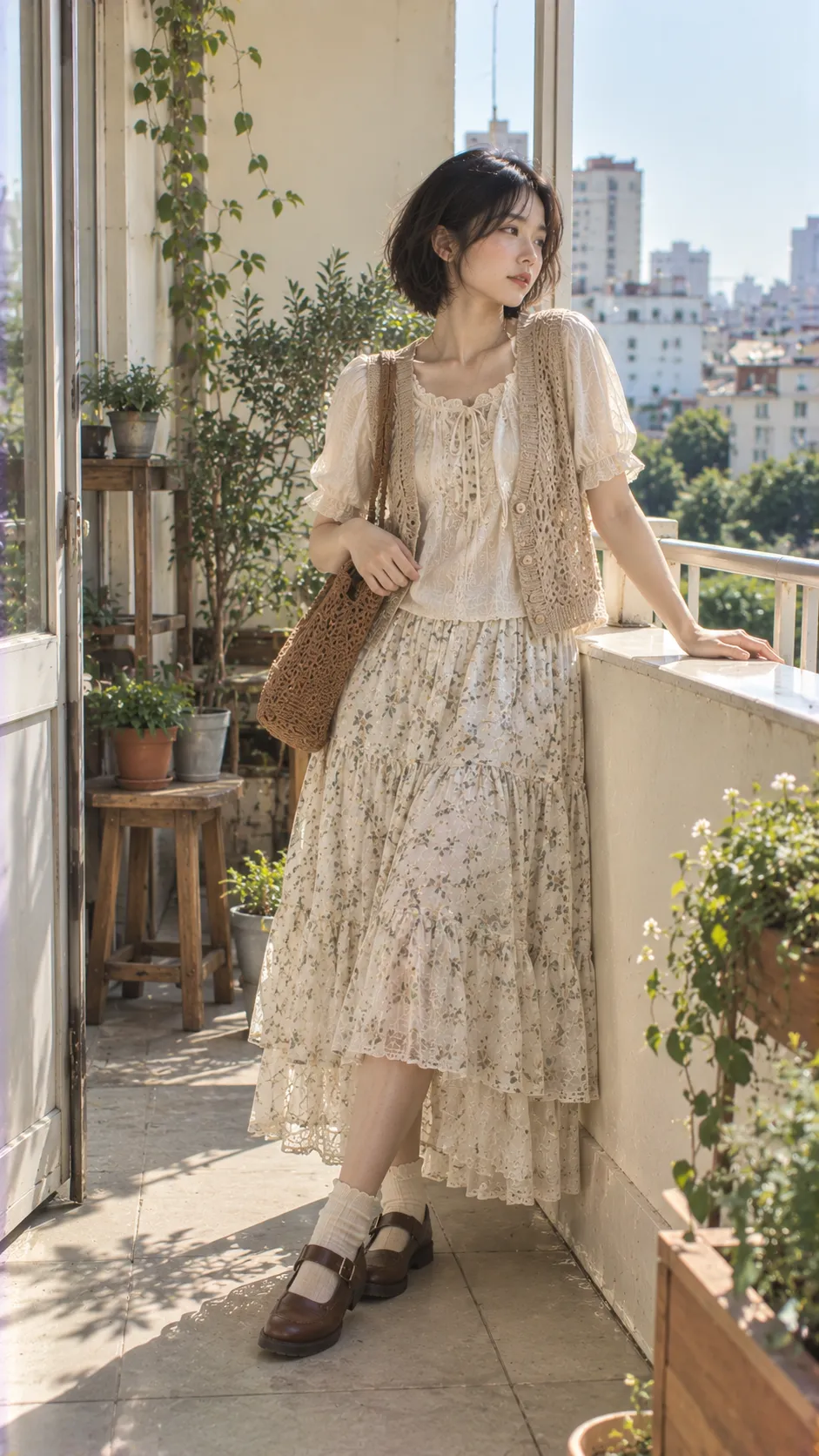
A sweater, cardigan and shawl together may be impractical in Vietnam's heat. Instead, use visible layers with appropriate weight: a sleeveless dress over a finer blouse, open crochet vest, visible skirt hem or small light scarf.
Consider lighter cotton, rayon, linen-blend or poplin garments, but check actual weight, weave, lining and ventilation; fiber names do not guarantee cooling. A vest can replace a cardigan, and flats or lower shoes can replace taller boots. The palette and layered proportions can remain.
Five common mistakes
1. Giving every layer the same length and width
Vary blouse, vest, cardigan, skirt and outer-layer endpoints to preserve depth.
2. Buying only beige clothing
Color alone does not create the style. Without surface and silhouette variation, an all-beige outfit can still look flat.
3. Competing lace, ruffles and crochet
Choose a leading texture and a quieter supporting one, leaving plainer fabric as visual rest.
4. Making every forest reference literal
A basket, mushroom charm, leaf necklace, flower crown and deer motif need not appear together. Suggesting the setting through materials is another option.
5. Recoloring Fairycore or Cottagecore without changing the structure
The distinction includes silhouette and layering: Mori Kei emphasizes relaxed Japanese forest-inspired layers, Fairycore nature fantasy, and Cottagecore rural romantic imagery. Shared colors do not make the terms interchangeable.
Frequently asked questions
What is Mori Kei?
Mori Kei is a Japanese fashion style associated with forest-girl imagery: loose silhouettes, visible layers, natural colors, knits, lace and everyday accessories such as boots, scarves or basket bags.
Does Mori Kei require skirts?
No. Wide trousers, a loose blouse, knit vest and natural-colored footwear can retain the relaxed layering and texture references.
How does Mori Kei differ from Fairycore?
Mori Kei puts greater emphasis on relaxed everyday layering, while Fairycore leans further toward fairy imagery, sheer movement and nature fantasy. Their garments can overlap.
How can I adapt Mori Kei for Vietnam?
Keep the palette and contrasting lengths while reducing thickness. Inspect lighter fabrics, open-knit vests and lower shoes for actual conditions and activities; a material label alone does not establish comfort.
References
The preserved community account of definitions and origins is Aesthetics Wiki — Mori Kei. It is a community reference, not a definitive primary history. Dated original street photographs provide direct examples in Tokyo Fashion — Mori Girl Fashion in Harajuku and Japanese Mori Girls in Wonder Rocket Fashion. The outfit routes and warm-weather adaptations are Apocalypse Closet's editorial guidance. The photographs support the visual examples, not every community-origin claim.