

What Is Old Money Style? Imagery, Clothing and Context
Old Money styling uses fit, surfaces and restraint to suggest a particular social image. It does not certify wealth, ancestry or quality, and need not become a literal costume.
Distinguish Old Money from New Money imagery, Quiet Luxury, Preppy and Dark Academia, then assess garment shapes, materials, colors and women's outfit combinations.
Old Money has a social meaning as well as an internet-fashion meaning. Reducing it to blazers, knits, shirts, trousers, loafers and bags misses the distinction. This guide emphasizes usable garment relationships and repeat wear rather than collecting every status-associated reference.
In this guide: we explain what Old Money means and how its traditional or Preppy references can be interpreted. For a separate focus on understated garment assessment, see What Is Quiet Luxury?.

Guide collection: Aesthetic Dictionary: A Guide to Fashion Styles
Old Money style is an internet-fashion interpretation of understated inherited-wealth imagery, often using tailoring, textured surfaces, restrained colors and traditional leisure references. A polo, blazer or logo alone does not establish it. Neither the appearance nor the label proves actual wealth or a garment's lifespan.
Assess shoulders, waistband, sleeves and hems with suitable ease. Tightness or maximum volume is not compulsory.
Wool-looking fabrics, structured cotton, linen, leather, suede or textured weaves offer visual depth. Inspect actual construction instead of treating any fiber, sheen or thickness as inherently superior.
Beige, cream, navy, brown, gray, white, black and burgundy are options. Related undertones can create a restrained composition; mixing temperatures is also possible deliberately.
Buttons, collars, pleats, edges, fastenings and accessories support the shape without requiring many simultaneous status symbols.
What is Old Money style?
In its social meaning, old money concerns inherited wealth across generations. As a social-media aesthetic, it packages imagined traditional clothing, education, leisure and elite-sport references. Distinguish these meanings: clothing does not establish education, ancestry, class or personal worth.
Recognizable visual references
To read Old Money styling, consider silhouette → material → palette → detail → footwear rather than one fixed shopping list. Their relationship creates the traditional restrained image; a blazer alone is insufficient.
A defined shoulder, suggested waist with ease, straighter trousers, A-line or midi skirt and relatively close-lying knitwear are possible references. The shape need not be fragmented by numerous details.
Navy, cream, ivory, camel, brown, gray, black, burgundy and moss can work. All-beige is optional; choose a palette whose relationships you like.
Textured cotton, linen, wool, knits, tweed, leather or suede provide different finishes. For Vietnam's climate, assess weight, weave, lining and ease rather than copying heavy cashmere or tweed. No fiber name guarantees cooling or quality.
Stripes, herringbone, houndstooth, argyle or smaller checks can serve as selected accents. Several strong patterns, logos and accessories together create a more elaborate interpretation.
Loafers, ballet flats, slingbacks, restrained sneakers or boots can support the composition. Choose fit, sole and construction for actual conditions rather than assuming a style guarantees comfort or grip.
A shaped bag, simple belt, watch, small earrings, scarf or moderately scaled glasses can finish the mood. They do not compensate automatically for unwanted garment fit or prove a price point.
A shirt, straight trousers and loafers can provide a simpler interpretation than a polo, blazer, scarf and multiple logos together. Check shoulder, waistband and surfaces as a composition. This is about your intended effect, not judging people by what their clothes cost.
Quiet Luxury, Preppy and Dark Academia differences
| Style | Emphasis | Visual vocabulary | Relationship to Old Money imagery |
|---|---|---|---|
| Old Money | Imagined continuity, tradition and restraint | Knitwear, tailoring, loafers, leather, traditional colors and tennis or equestrian references | The main reference of this guide, not evidence of actual social identity |
| Quiet Luxury | Understated cut, material and finishing cues | Clear silhouettes, quieter palettes and restrained detail | Can be more contemporary and need not use collegiate or country-club imagery |
| Preppy | School, campus and traditional leisure-sport references | Oxford shirts, polos, cardigans, pleated skirts and varsity or club details | Can use brighter or more graphic collegiate references; the vocabularies overlap |
| Dark Academia | Academic, literary and darker historical imagery | Tweed, shirts, vests, knits and deep brown, gray or black | Can emphasize heavier layers and more cinematic period references |
Old Money and Dark Academia can share tailoring, knits and traditional colors. Dark Academia often gives more weight to darker literary imagery, while Old Money styling foregrounds imagined restrained leisure. These are tendencies rather than exclusive rules. Quiet Luxury shares restraint but need not use elite-sport, campus or country-club references. Preppy shares polos, Oxford shirts, cardigans and loafers, while allowing a broader set of collegiate or schoolwear interpretations.
Old Money and New Money imagery
In social usage, old money and new money describe the background of wealth rather than official dress codes. Online fashion content sometimes turns them into opposing visual stereotypes: restrained inherited-status imagery versus conspicuous novelty, logos or statement pieces. These stereotypes are not reliable descriptions of real people, proof of wealth or a hierarchy of worth.
| Dimension | Old Money aesthetic stereotype | Online New Money aesthetic stereotype |
|---|---|---|
| Visual message | Familiar-looking possessions with little overt display | Highly visible or recognizable possessions |
| Branding | Smaller or less visible logos | Prominent logos or monograms as statements |
| Silhouette | Traditional, balanced garment references | More conspicuous novelty, changing trends or strong proportions |
| Color and surface | Tonal neutrals and quieter textures | Potentially stronger colors, reflective hardware or prominent surfaces |
| Shopping image | An emphasis on imagined continuity and repeat wear | An emphasis on novelty, recognition or statements |
Neither column establishes how a wealthy person actually dresses or which preference is better. A prominent sneaker logo may suit streetwear; a quieter blazer may suit another setting. Use the comparison to identify visual references, not to infer someone's finances or character.
A five-point garment inspection
Branding and the intended mood
Large logos, dense monograms or prominent accessories may change an understated composition toward luxury streetwear or a more graphic interpretation. That is a different chosen emphasis, not an error or a reliable signal of newly acquired wealth.
Instead of asking which brand is definitively Old Money, inspect construction, care, compatibility and actual wear. Claims about keeping shape or aging attractively require evidence from the garment and its use, not its aesthetic label.
Darker interpretations
Beige and white are optional. Black, charcoal, espresso, deep navy and burgundy can create a darker version through a defined blazer, pleated trousers, neat knit, suitable boots and a shaped bag. Retain the restrained garment relationships rather than relying on color alone.

Old Money styling need not be formal
The aesthetic need not be formal. A neat knit, suitable tee, restrained dark jeans, lightly pleated cotton trousers or simple sneakers can form a more casual version. Assess the combination's finish and ease rather than assuming a blazer is compulsory.
This overlaps with Smart Casual. Smart Casual concerns the occasion's requested formality; Old Money concerns a particular visual vocabulary. One outfit can serve both where the host's actual requirements permit it.
Five women's outfit formulas
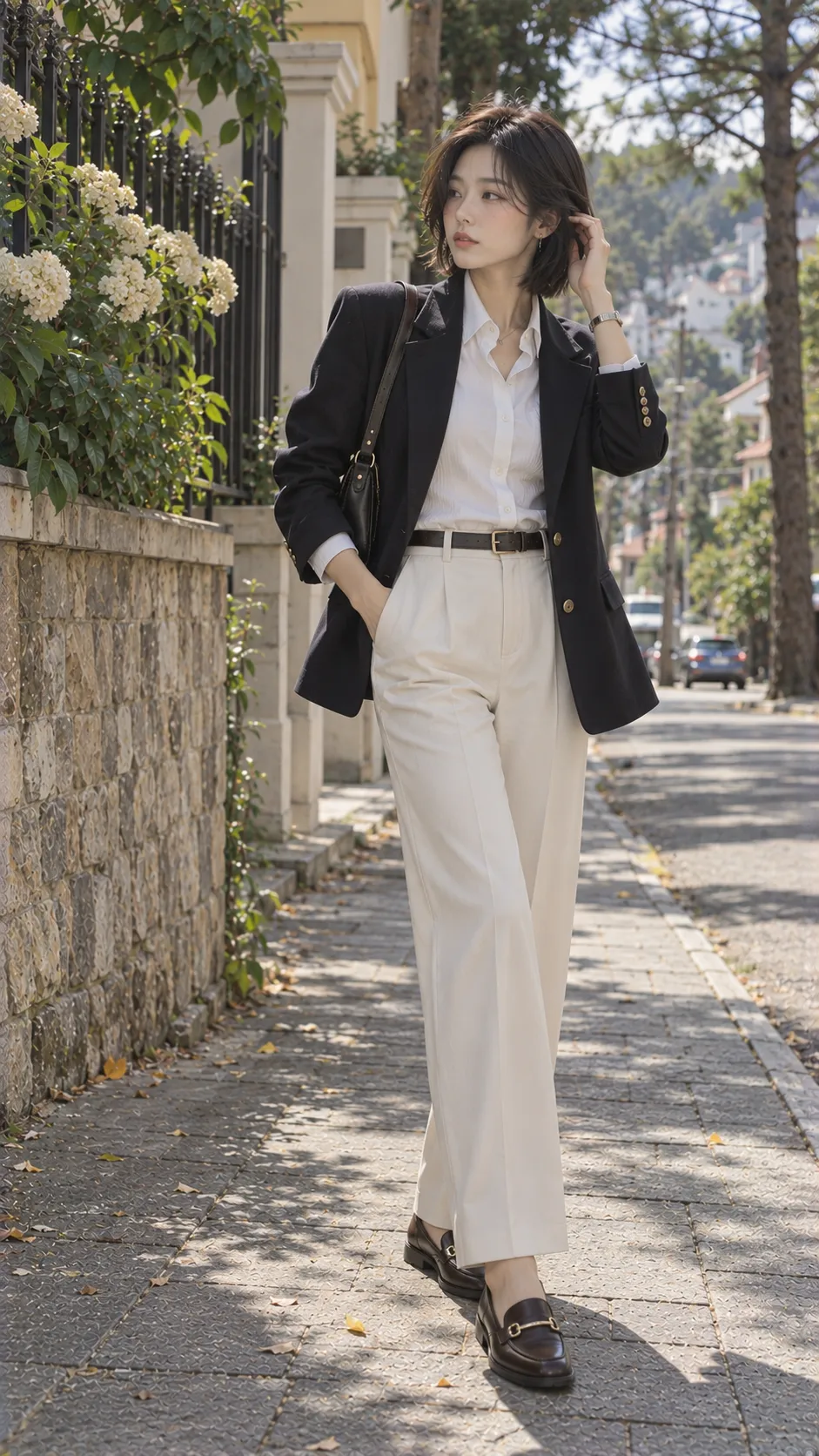
Searching for women's Old Money outfits can produce elaborate photographs unrelated to daily use. Start with two or three connected references and adapt to the weather and setting. The five routes below use different proportional relationships rather than repeating one blazer formula.
1. Knit polo, mid-rise straight trousers and loafers
The polo keeps a relatively compact but softer upper line; straight trousers continue vertically from the hips. Loafers provide a defined endpoint without requiring a full golf-themed ensemble. In heat, inspect lighter knits and trouser fabrics for actual weight, lining and ventilation instead of relying on cotton or wool-blend labels alone.
2. White or pale-blue shirt, A-line midi and ballet flats
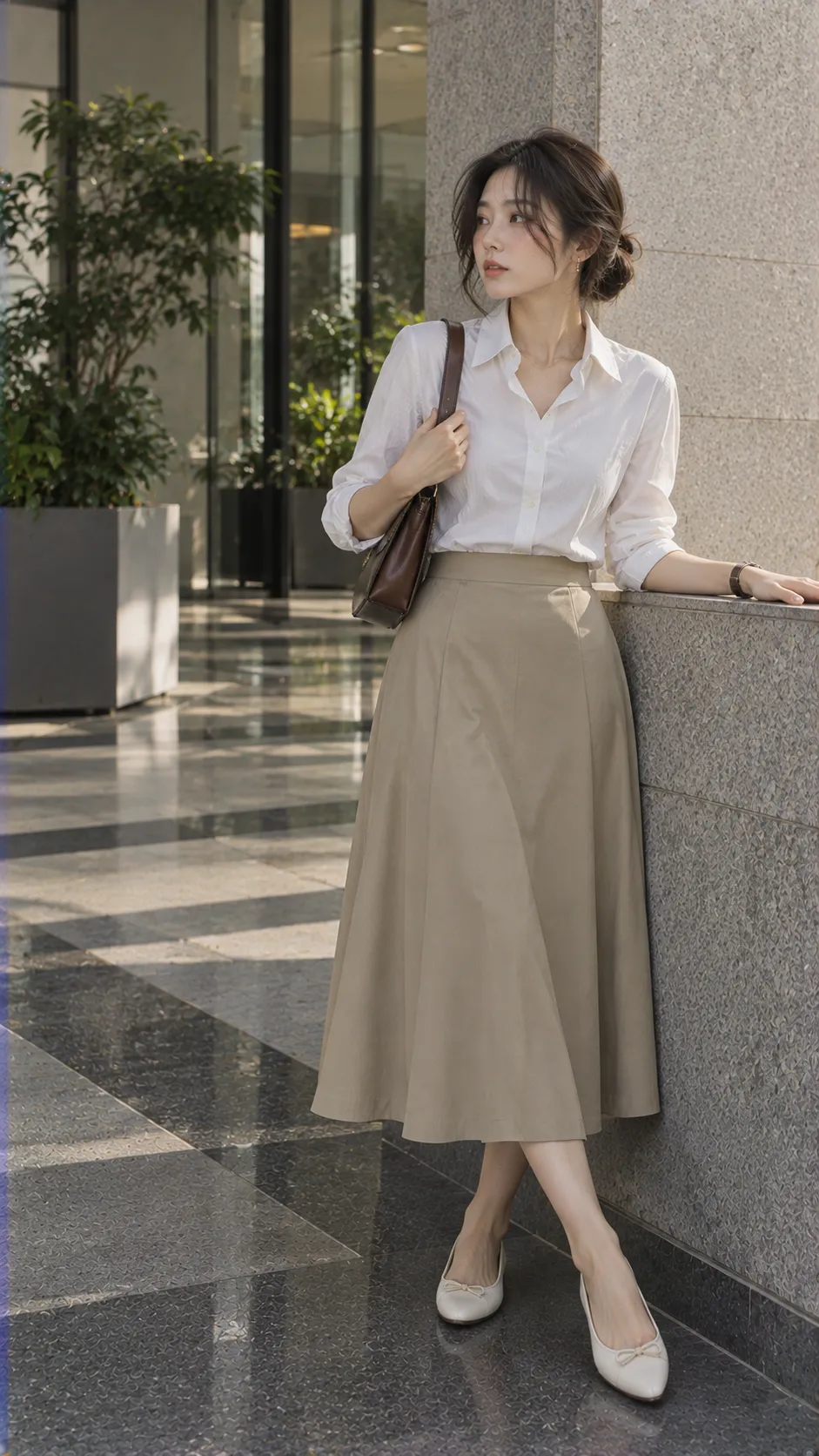
The shirt defines the shoulder while skirt volume opens below the waist. Flats create a different visual weight from loafers. A partial tuck or visible waistband can clarify the proportions of a looser shirt; neither is compulsory.
3. Linen shirt, tailored shorts, belt and suitable sandals or loafers
A less layered option for warmer conditions. Linen texture, a clear short hem or pleat and a belt establish separate roles without a blazer. Actual weave, weight and ease determine comfort; no fabric name guarantees cooling.
4. Fine cardigan, plain tee, dark straight jeans and loafers
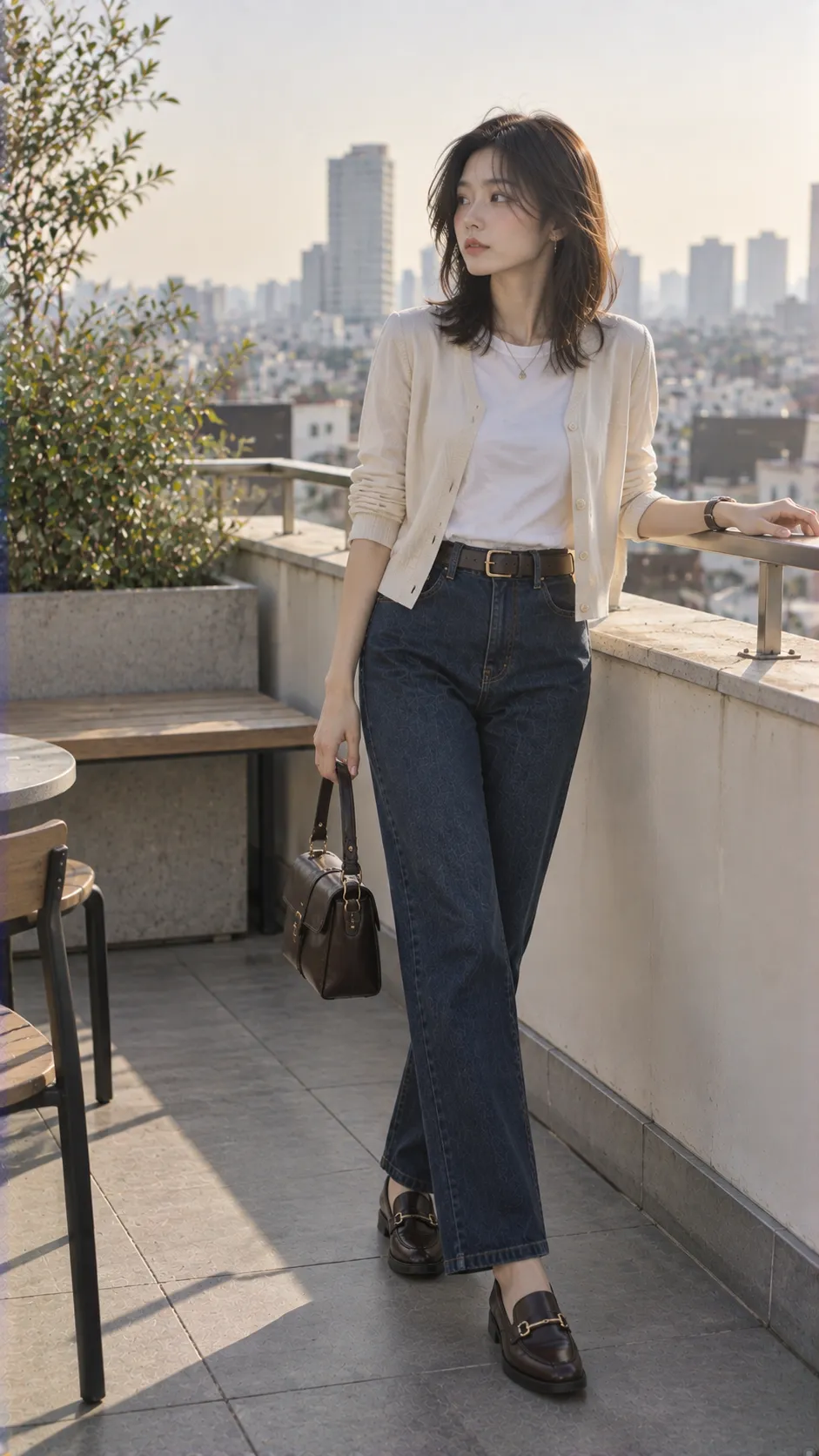
Denim makes the interpretation more casual while cardigan and loafers retain traditional references. Choose wash, distressing, rise and ease for the intended composition rather than treating the aesthetic as a formal dress code.
5. Softer blazer, suitable tank or tee, pleated trousers and restrained sneakers
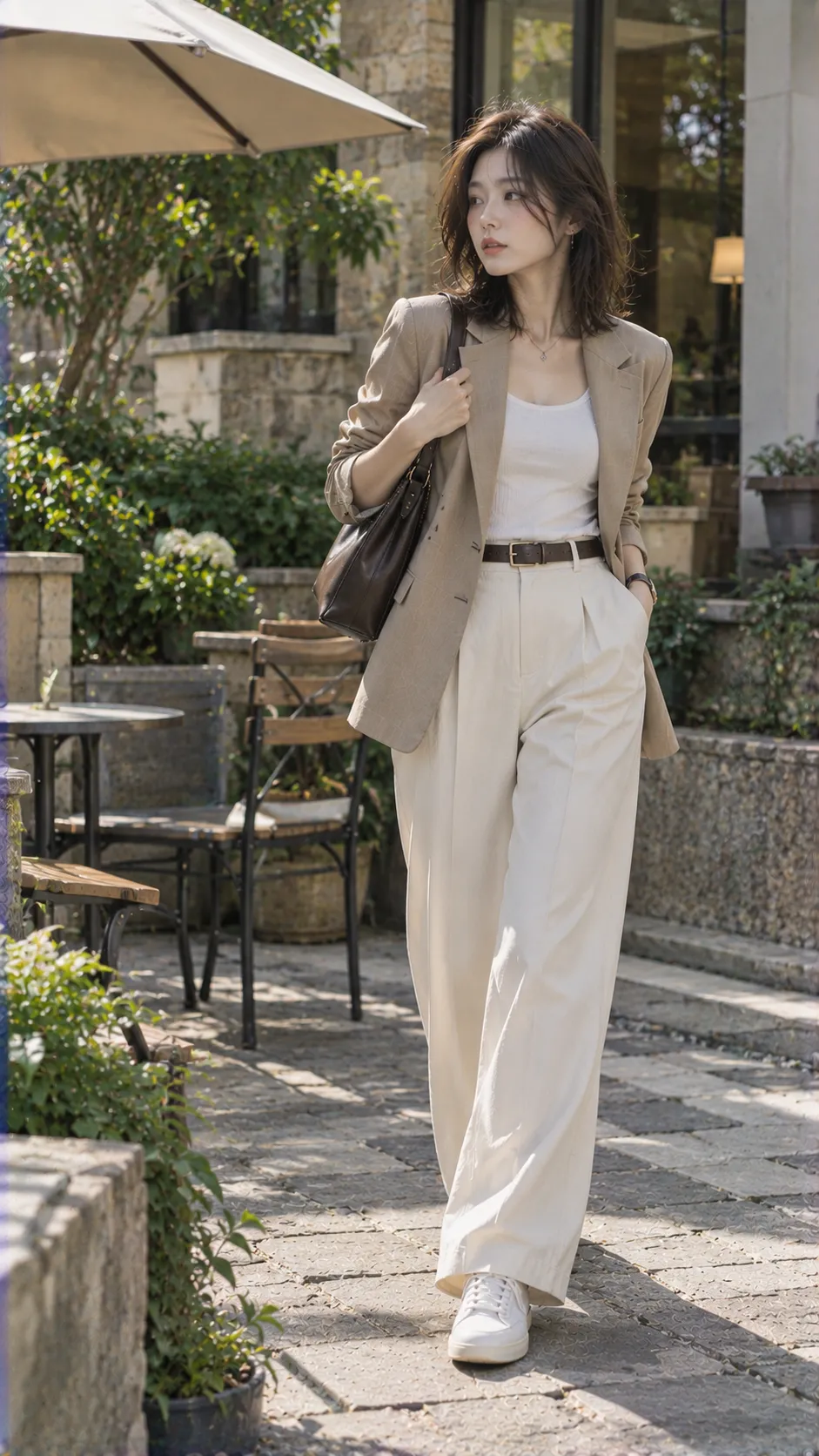
The blazer frames the shoulders, trouser pleats provide lower volume and the simpler top reduces formality. Choose sneakers for actual fit and use rather than assuming leather makes them more practical. A patterned blazer can take quieter trousers, bag and shoes.
A quick relationship to try: Balance a strongly structured piece with a softer or more casual one if you want a less theatrical result. Every Old Money-associated symbol need not appear together; use the degree of literal reference you actually want.
Shopping within your budget
A possible order of priorities
- Assess feasible fit changes before buying: hems, sleeves or waistband adjustments may help, depending on construction.
- Choose compatible colors already useful in your wardrobe.
- Consider one useful structured garment rather than several poorly suited trend pieces.
- Read care instructions, especially for wool, leather, lining and trims.
- Consider secondhand clothing when you can assess condition, fit and purchase terms. Prior ownership does not establish quality or authenticity.
The guide What Is a Capsule Wardrobe? helps turn compatibility into a practical system. The guide to leather clothing care covers garment-specific maintenance; care can help preserve condition but cannot guarantee a fixed lifespan.
When the outfit becomes more theatrical than intended
- Every garment is communicating a traditional or wealth-associated symbol when you intended a subtler result.
- The combination suits a photograph but restricts the actual day's activities.
- You chose beige only for the label despite preferring another palette or needing different garment roles.
- Decorative status references dominate while fit or practical footwear remains unresolved.
- The pieces cannot be separated into combinations you expect to wear, unless a dedicated occasion outfit was your deliberate aim.
For darker references: explore Dark Academia, Dark Feminine and structured compositions in the Closet (Vietnamese).
Conclusion: deliberate garment choices
Old Money styling borrows a restrained, traditional social image; it does not establish that identity. Assess fit, surfaces, seams, condition and useful combinations instead of buying only symbolic props. A simpler deliberate outfit can express the direction without implying superiority, actual wealth or guaranteed longevity.
Related topics: 1930s fashion, Ballet Flats, Women's Loafers, Ivy Style, Light Academia and Ouji Fashion.
References
The preserved sources offer dated editorial or retailer perspectives on the aesthetic. They are not proof of a wearer's wealth, a universal social history or a garment's performance:
- GQ — Why Is Gen Z So Obsessed With Old Money Style? — March 2025 commentary on the social-media label and its implications, not a current popularity forecast.
- Vogue — The Aesthetics, -Cores, and Microtrends That Defined 2023 — a dated retrospective on online fashion labels rather than a fixed taxonomy.
- UNIQLO Vietnam — Old Money Style: A Fashion Overview — a retailer's January 2026 interpretation. Its promotional quality or historical claims are not automatically adopted here; the original Vietnamese reference URL remains.
The outfit formulas and practical applications are Apocalypse Closet's editorial interpretation.
Frequently Asked Questions
What is Old Money style?
An internet-fashion vocabulary borrowing imagined inherited-wealth and leisure references through traditional garments, restrained colors and considered fit. It does not prove actual wealth, ancestry or quality.
Is Old Money the same as Quiet Luxury?
They overlap. Quiet Luxury emphasizes understated cut and finishing cues; Old Money adds more specific imagined heritage and elite-leisure imagery. Neither label guarantees garment performance.
Do I need designer clothing for Old Money styling?
No. Branding is optional. Inspect fit, surface, condition and compatibility rather than assuming a label or lack of a logo proves quality or social background.
Can Old Money styling use black?
Yes. Black, charcoal, deep brown or burgundy can support a darker interpretation through clear cuts, surface variation and selected details.