

What Is Light Academia? Colors, Outfits and Dark Academia Differences
Light Academia uses academic clothing references with a lighter treatment: brighter colors, less visually heavy textures, softer tailoring and a gentler overall contrast than many Dark Academia outfits.
It involves more than wearing beige. Connect palette, shape, texture and footwear into a composition; changing everything to cream alone may produce neutral minimal or Preppy clothing instead.
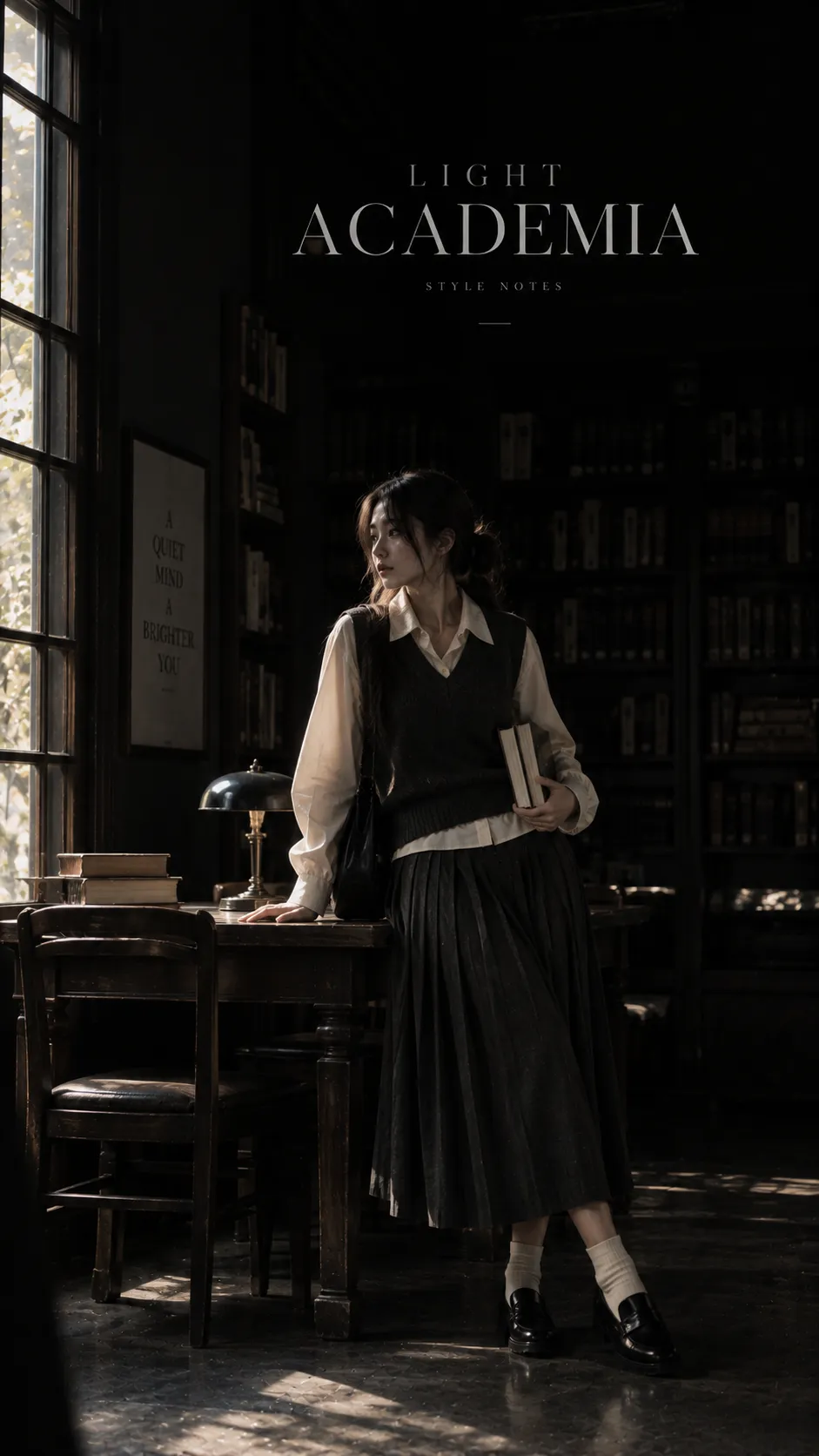
Guide collection: Aesthetic Dictionary: A Guide to Fashion Styles (Vietnamese)
What Is Light Academia?
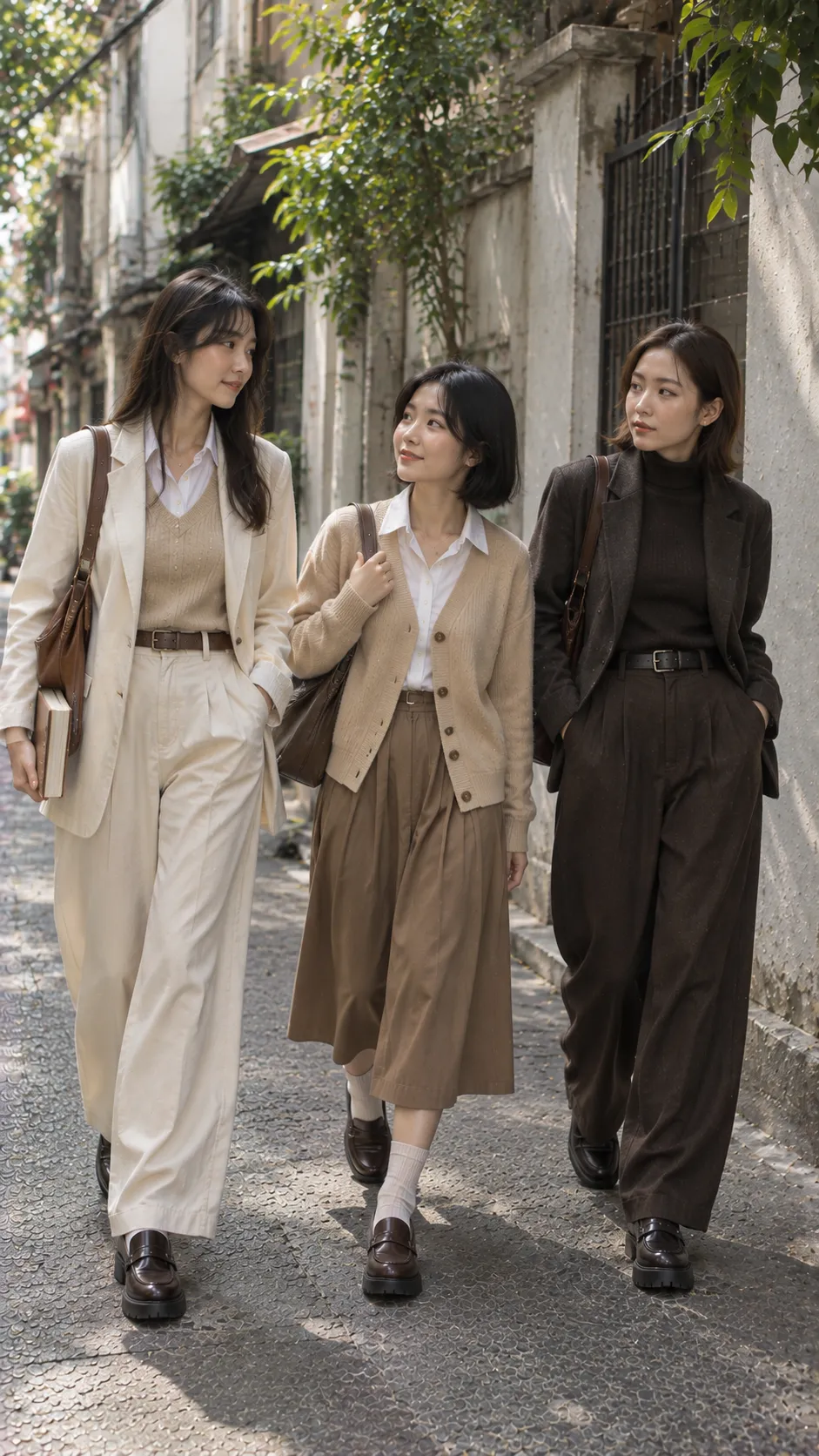
Light Academia is an internet fashion aesthetic using academic references—shirts, knits, blazers, pleated trousers, skirts, loafers and satchels—with a brighter, softer treatment. Dark Academia often emphasizes deep brown, charcoal, black and heavier-looking layers; Light Academia commonly favors ivory, cream, pale camel, beige, taupe and light gray. These are overlapping editorial descriptions, not fixed classifications.
It does not require a school uniform. Everyday interpretations can suit studying, libraries, cafés, museums or less formal work settings, subject to the actual setting's requirements. Instead of combining a tie, crested blazer, pleated skirt and knee socks, use one or two academic references with contemporary pieces.
Light Academia style also differs from simple minimalism through its visible textures and references. A white shirt, beige trousers and white sneakers might read as neutral casual. Loafers, a ribbed vest, brown belt and structured bag can introduce clearer academic associations.
Academic
Tailoring, knits, collars, pleats, loafers and related details establish the references.
Light
A brighter palette, lighter-looking surfaces, gentler contrast and less bulky silhouettes distinguish this approach from darker academic styling. Actual comfort depends on construction and fit.
For the uniform and Preppy background, read What Is Preppy Style? Using Uniform References without a Costume. Here those references are selectively adapted into Light Academia.
A Lighter Academic Mood Comes from Several Choices
Read three layers of the composition. First, silhouette: often straight, neat and slightly relaxed. Second, texture: cotton, linen blends, fine knits, suede, lighter tweed or fine wool. Third, detail: collars, pleats, small argyle patterns, belts, loafers, watches or structured bags. Inspect the actual cloth rather than inferring weight from its name.
If everything is extremely plain, the outfit may read as office casual; if every detail directly references a uniform, it may look theatrical. Let one layer carry a stronger academic reference while two remain quieter. A shirt and knit vest, for example, can pair with simple straight trousers and restrained accessories.
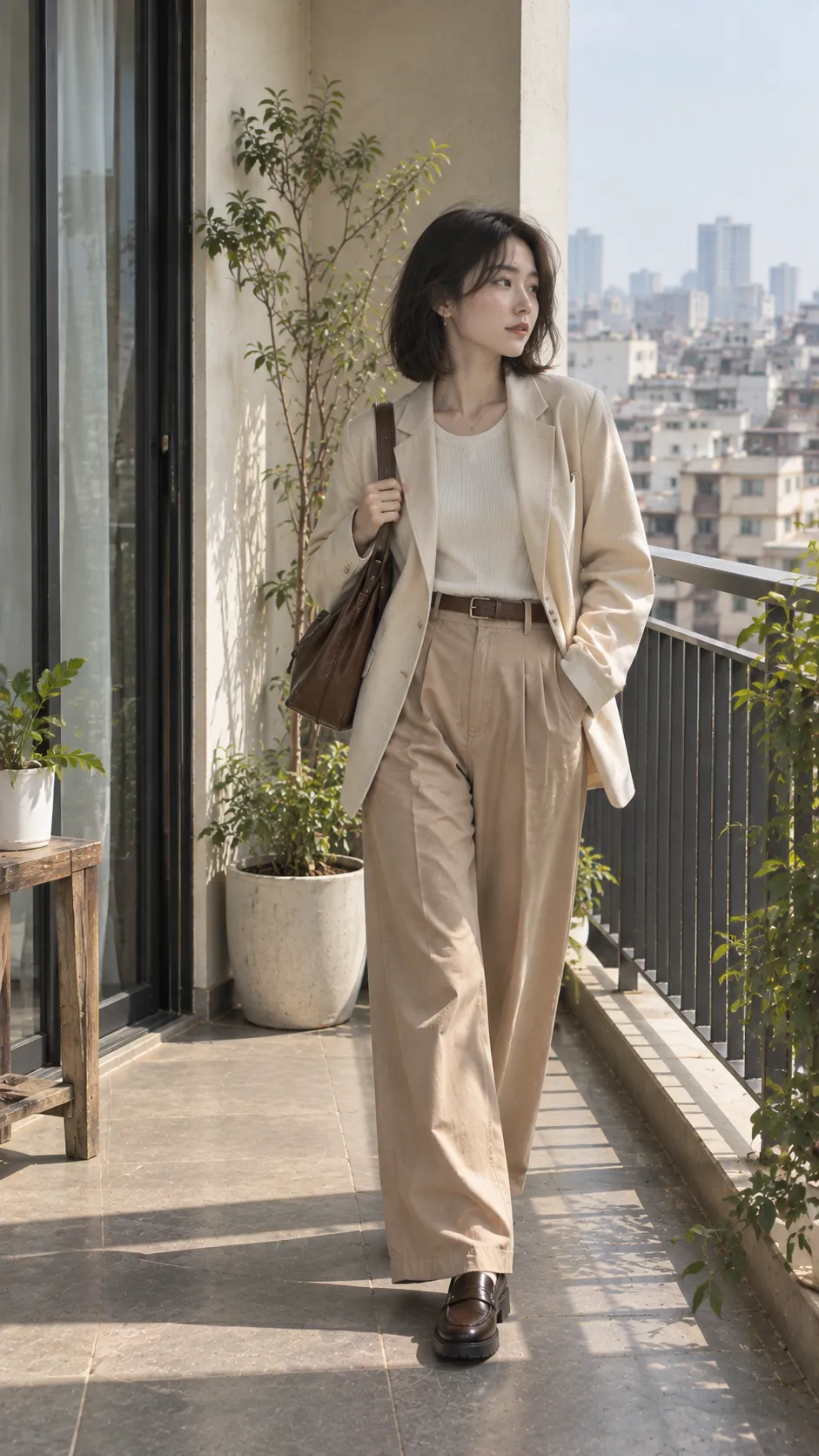
Proportions need not be extreme. A blazer may be slightly boxy without being very oversized; trousers can be wide-straight rather than enormous; a skirt can drape rather than stack into many tiers. This leaves space for texture and color.
A Light Academia Palette beyond All-Over Beige
Try two light neutrals, one medium neutral and a small accent: an ivory shirt, taupe trousers, camel belt and burgundy bag. Vary depth or texture if an all-beige composition feels flat.
Black is an option. Black loafers, a belt or charcoal blazer can give pale clothing a visual anchor. The balance matters: darker colors may occupy less area here than in a Dark Academia composition.
Optic white can feel sharper and more contemporary than ivory. Off-white or cream may connect more softly with warm browns, while white, gray and black provide a cooler interpretation. Neither is a mandatory formula.
Building a Light Academia Wardrobe by Role
Shop for missing roles rather than separate Pinterest images. A fourth blazer may add little if the actual gap is a versatile taupe bottom. A small group of six to eight compatible pieces can provide numerous combinations; use what already fits your wardrobe.
Four Outfit Routes by Occasion
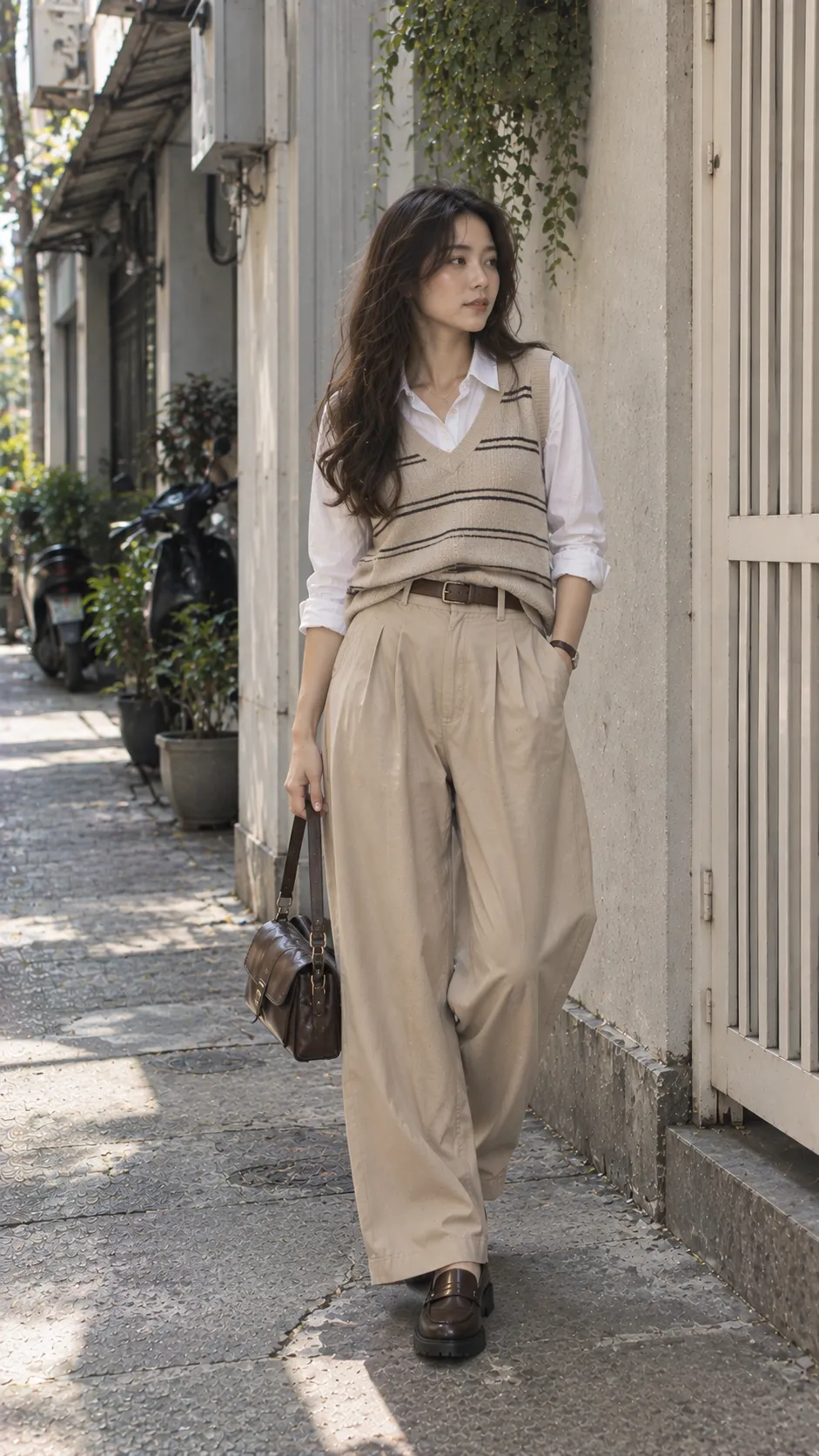
Shirt, knit vest, straight trousers and loafers
The vest establishes the academic reference without a blazer. Straight trousers keep the outline clear. If it is warm, remove the vest and retain a brown belt or another reference instead.
Fine knit, pleated trousers, light blazer and pointed flats
The silhouette approaches Business Casual, softened by knit and palette. Choose a blazer length that leaves the trouser line visible, and check the workplace's actual requirements.
Cardigan, white tee, straight denim and Mary Janes
Denim makes the interpretation more casual while the cardigan and shoes keep academic associations visible.
Mock neck, midi skirt, trench and ankle boots
The trench creates an outer vertical frame and the skirt adds movement. Brown, gray or burgundy can keep the palette lighter than an all-black version.
Footwear matters when the other pieces are restrained. For a garment-specific guide, see Women's Loafers: Styling beyond Officewear.
Light Academia versus Dark Academia
The guide What Is Dark Academia? Women's Alternative Outfit Ideas covers the darker direction in depth. This comparison marks the relationship without replacing that specialist article.
You can also combine the two: a cream shirt, charcoal trousers, brown loafers and dark blazer sit between them. A fixed label is unnecessary; identify which choices make the composition lighter or darker.
Light Academia in Warmer Weather: Keep the References, Reduce Layers
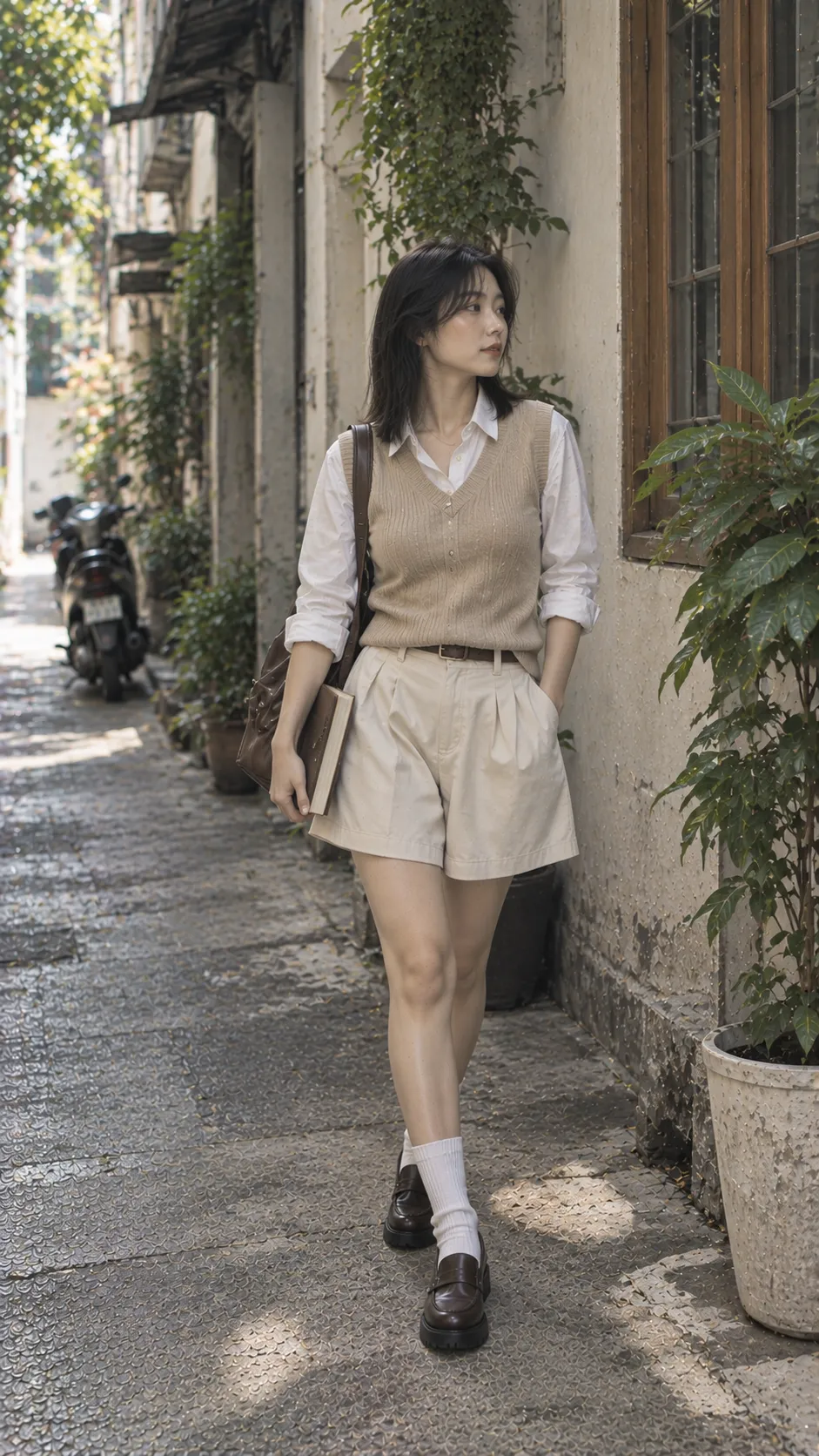
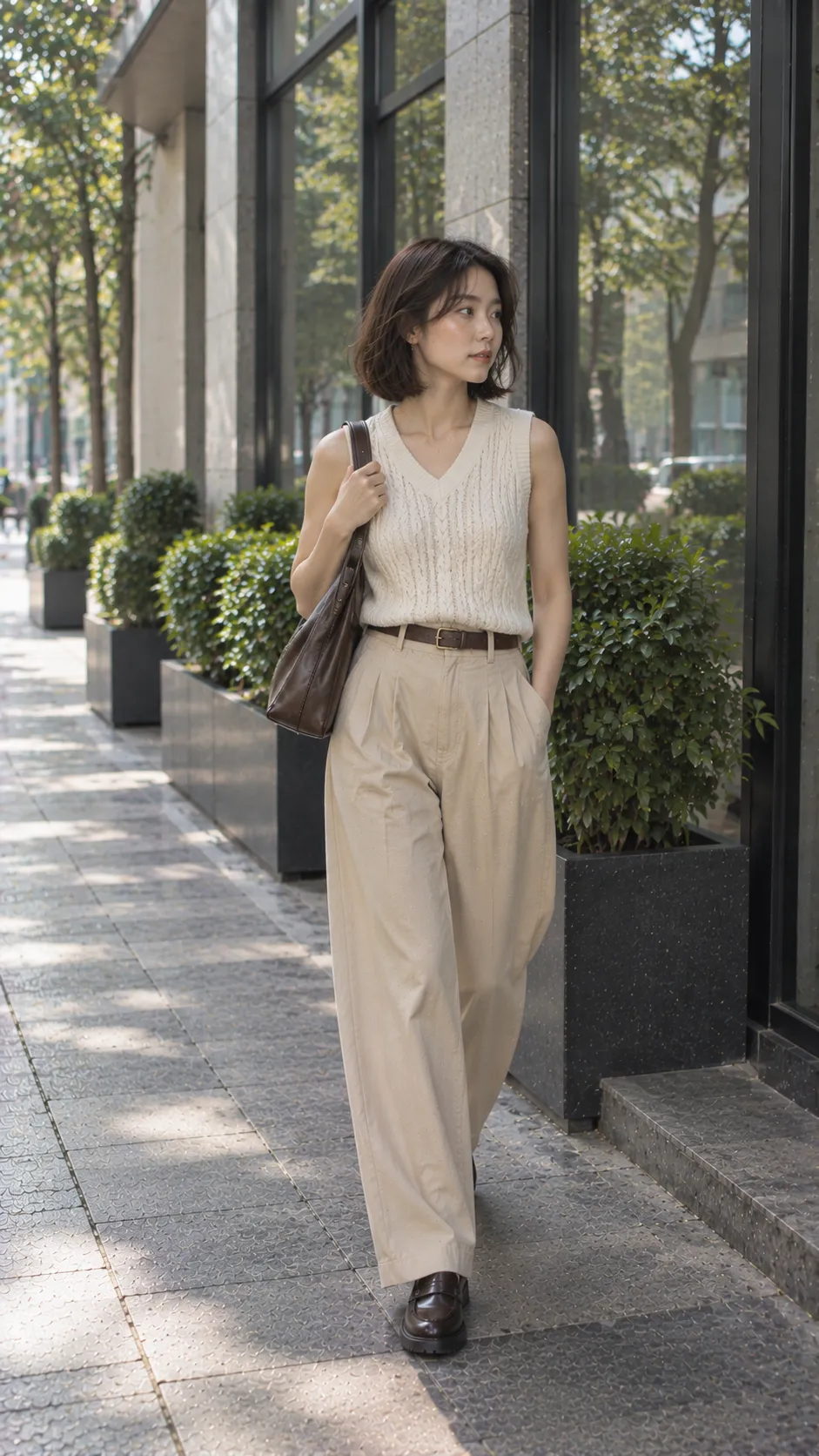
Three knitted layers are unnecessary in heat. A sleeveless knit, lighter shirt, suitably long pleated shorts or a light midi can retain the shapes. A brown belt and structured bag may provide references without extra layers; choose shoes for the actual walking involved.
A light color changes the visual mood but does not establish comfort. A thick cream fabric may feel warmer than a lighter dark one. Weight, weave or knit, lining, ease and conditions matter alongside fiber content. Prioritize ventilation and practical use rather than assuming a material guarantees cooling.
Reserve a blazer for an air-conditioned room if that suits your day. The underlying outfit should still feel complete when you remove it.
Six Choices That Shift the Aesthetic's Direction
1. Wearing only beige
Color alone does not establish the reference. Combine it with silhouette, texture and selected academic details.
2. Stacking uniform details
A tie, crested blazer, pleated mini, knee socks and loafers together become more literal. Keep a few references and use contemporary pieces elsewhere.
3. Very corporate tailoring
A sharp matching suit, high pumps and laptop tote may read as businesswear. A knit, softer-looking shoe or smaller bag can lower the formality where appropriate.
4. Heavy layers in hot weather
Adapt the wearing experience as well as the palette. Consider finer fabrics and removable layers, assessing their actual construction.
5. Strong alternative accessories
Large platforms, a harness or heavy chains change the visual emphasis. Retain an academic base with one alternative accent if you want a hybrid.
6. Treating Dark Academia as only a black version
Texture, visual weight and mood also differ. Adjust these relationships deliberately instead of mechanically swapping colors.
Adapting a Basic Outfit without Replacing Your Wardrobe
Begin with a white tee, jeans and sneakers. Try a shirt or fine-knit top for a collar or texture; keep the jeans and exchange the shoes for loafers or Mary Janes; add a cardigan, vest or light blazer if conditions allow. These are separate options, not three compulsory purchases or simultaneous steps.
If your wardrobe is mostly black, keep it. Black trousers can pair with ivory, camel and a gray cardigan; a black midi can work with cream knit and brown loafers. The light-to-dark ratio and surface treatment matter more than eliminating dark clothes.
Before buying, look for compatibility with at least three existing pieces. An oatmeal cardigan that works with shirts, tees, skirts and trousers can be more useful than an aesthetic-specific vest that serves one outfit. Build combinations rather than isolated costumes.
A 30-Second Outfit Check
If it reads as plain officewear, consider one academic reference: knit, loafers, pleats or a satchel. If it resembles a uniform, remove one literal detail and introduce straight jeans or contemporary trousers. If it feels uniformly beige, add brown, charcoal or burgundy. Adjust the composition before adding more layers.
References
These sources provide broader cultural and fashion context. The outfit system, palette and everyday applications are Apocalypse Closet's editorial guidance, not a formal historical taxonomy.