

1930s Fashion: Silhouettes, Clothing and Contemporary References
1930s fashion reintroduced natural waists and softer curves after the 1920s, alongside an enduring evening silhouette: long, fluid bias-cut gowns closely associated with Hollywood glamour.
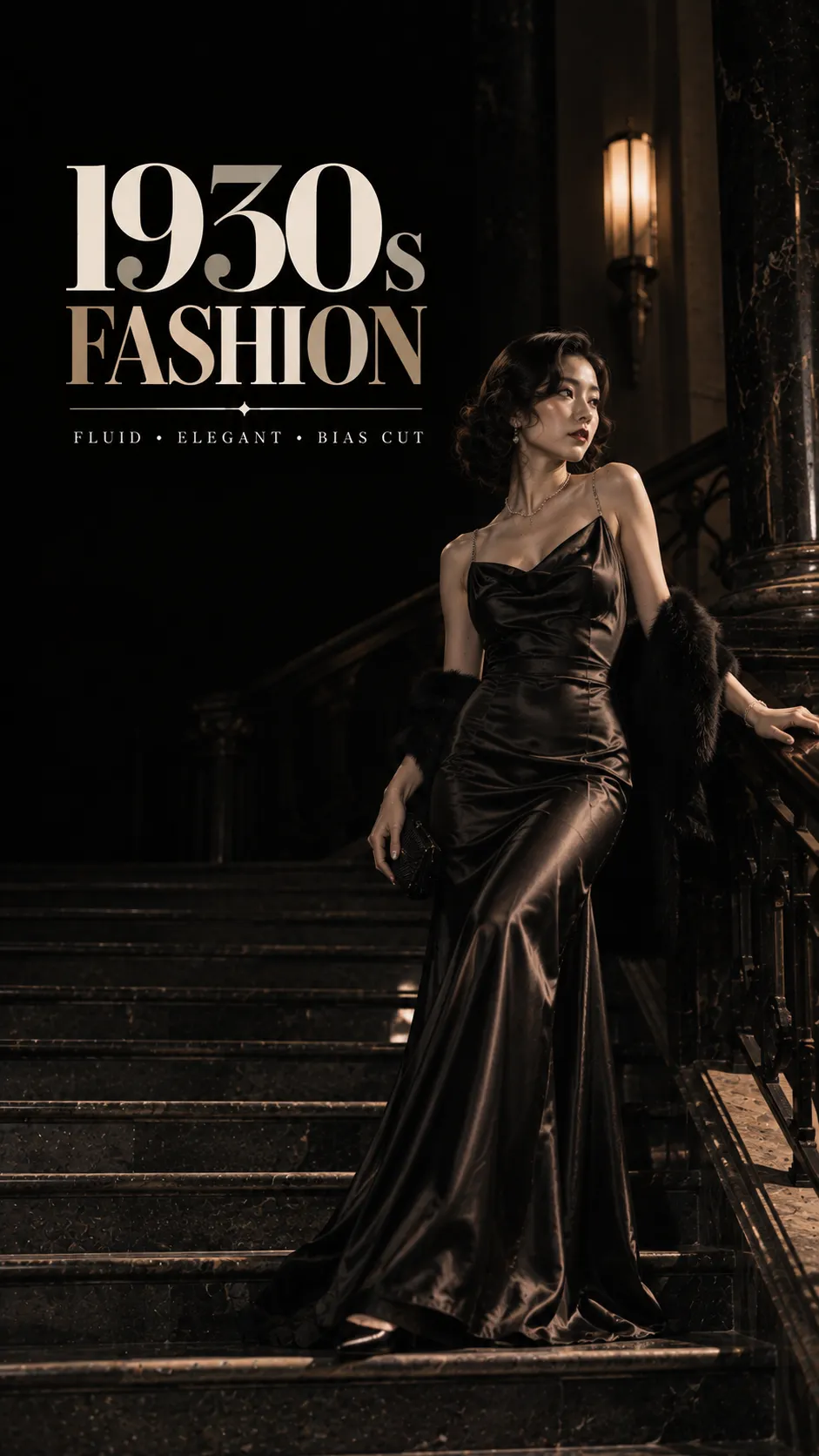
Guide collection: Aesthetic Dictionary: A Fashion Style Directory
What Is 1930s Fashion?
1930s fashion marks a move away from the straight, boyish garçonne silhouette of the 1920s. Natural waists returned, hems lengthened and slender, elongated torsos accompanied softer curves. FIT's Fashion History Timeline describes increasingly prominent shoulders within this changing silhouette.
The decade extends beyond Hollywood gowns. Daytime clothing included natural-waisted dresses, shoulder-defined suits, below-knee skirts, knits and practical separates. At night, low-backed satin bias-cut gowns created body-skimming lines without relying on heavily rigid shaping.
The 1930s have their own proportions and context. Compare New Look 1947 for postwar narrow-waisted, full-skirted shapes, or explore Vintage Style for a broader range of periods.
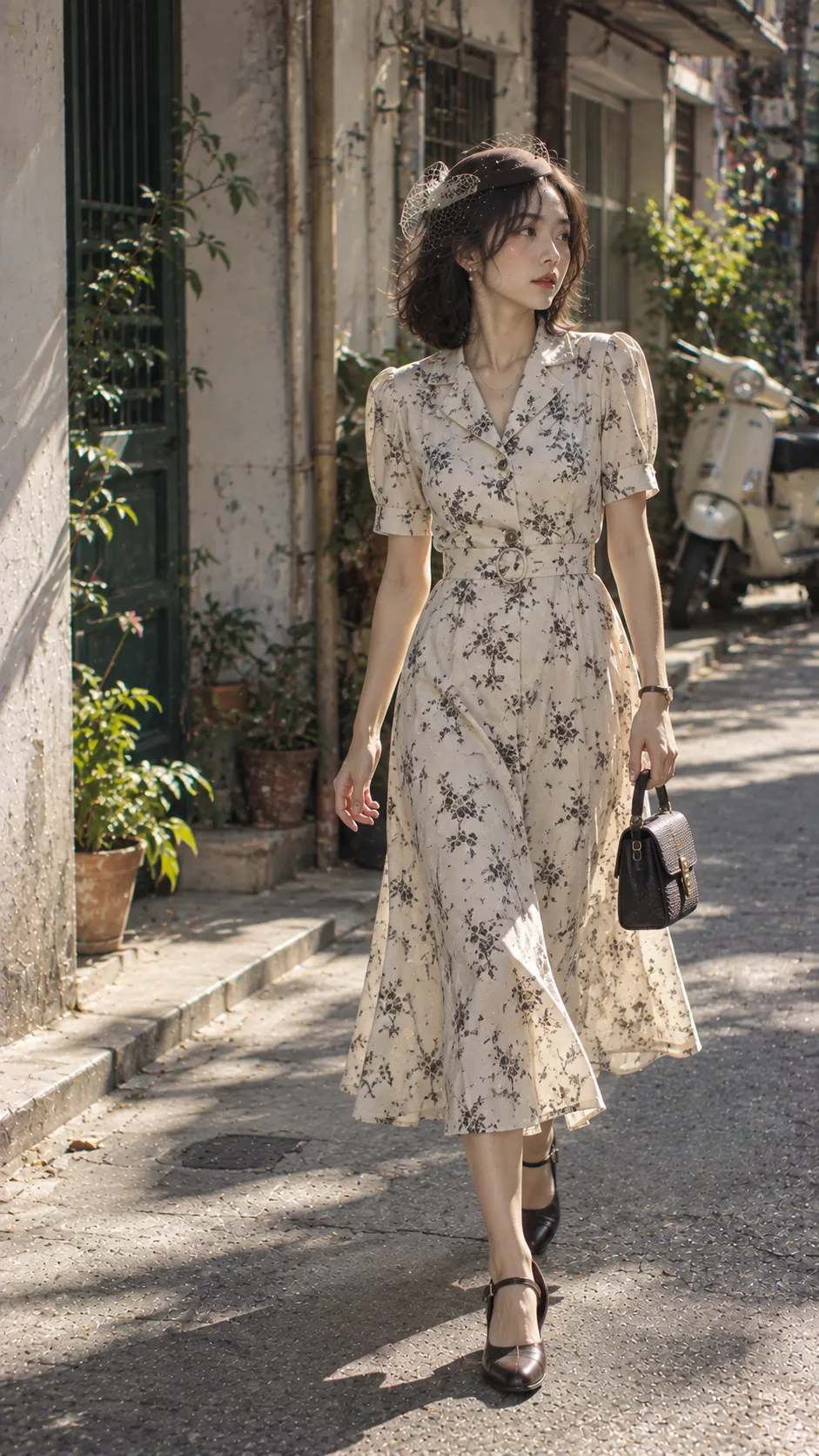
1930s Silhouettes: Long and Fluid Rather Than Very Full
Natural waists return with calf- or ankle-length skirts and softly body-skimming lines.
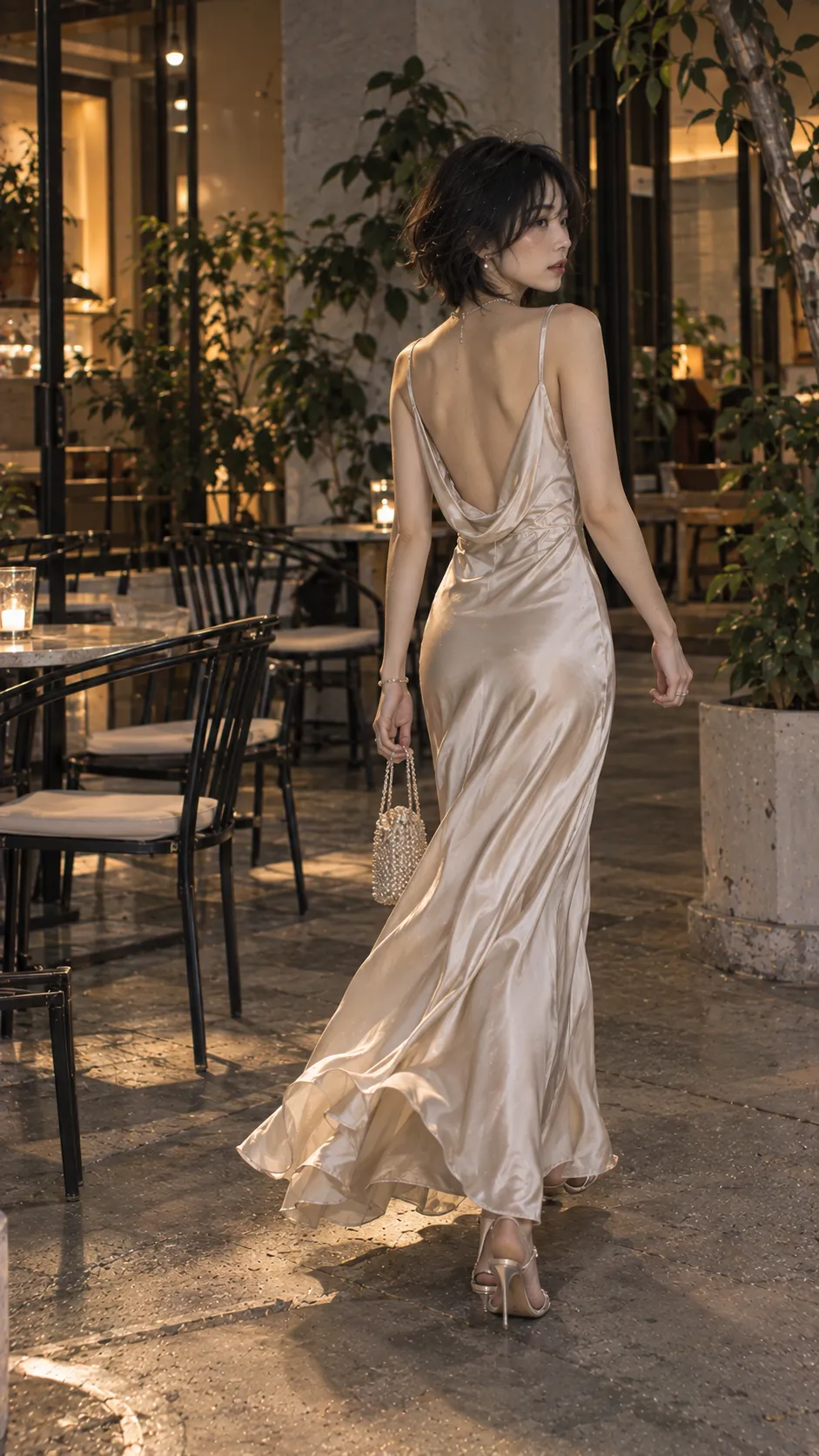
Bias cuts, backless gowns and streamlined glamour develop alongside increasing shoulder emphasis.
More defined shoulders, puff sleeves and structured daywear accompany clear, below-knee silhouettes.
The key relationship is the vertical line. The decade generally avoids postwar-style circular skirt volume. Even stronger shoulders accompany long, fluid or narrow lower shapes. Contemporary references can prioritize vertical seams, drape, controlled hip fit and below-knee hems over petticoat fullness.
Bias Cutting and 1930s Evening Glamour
Bias cutting places fabric diagonally, approximately 45 degrees to its grain, enabling greater give and body-skimming drape. Madeleine Vionnet experimented with it in the 1920s; the V&A describes her role in championing free-flowing garments shaped around the body.
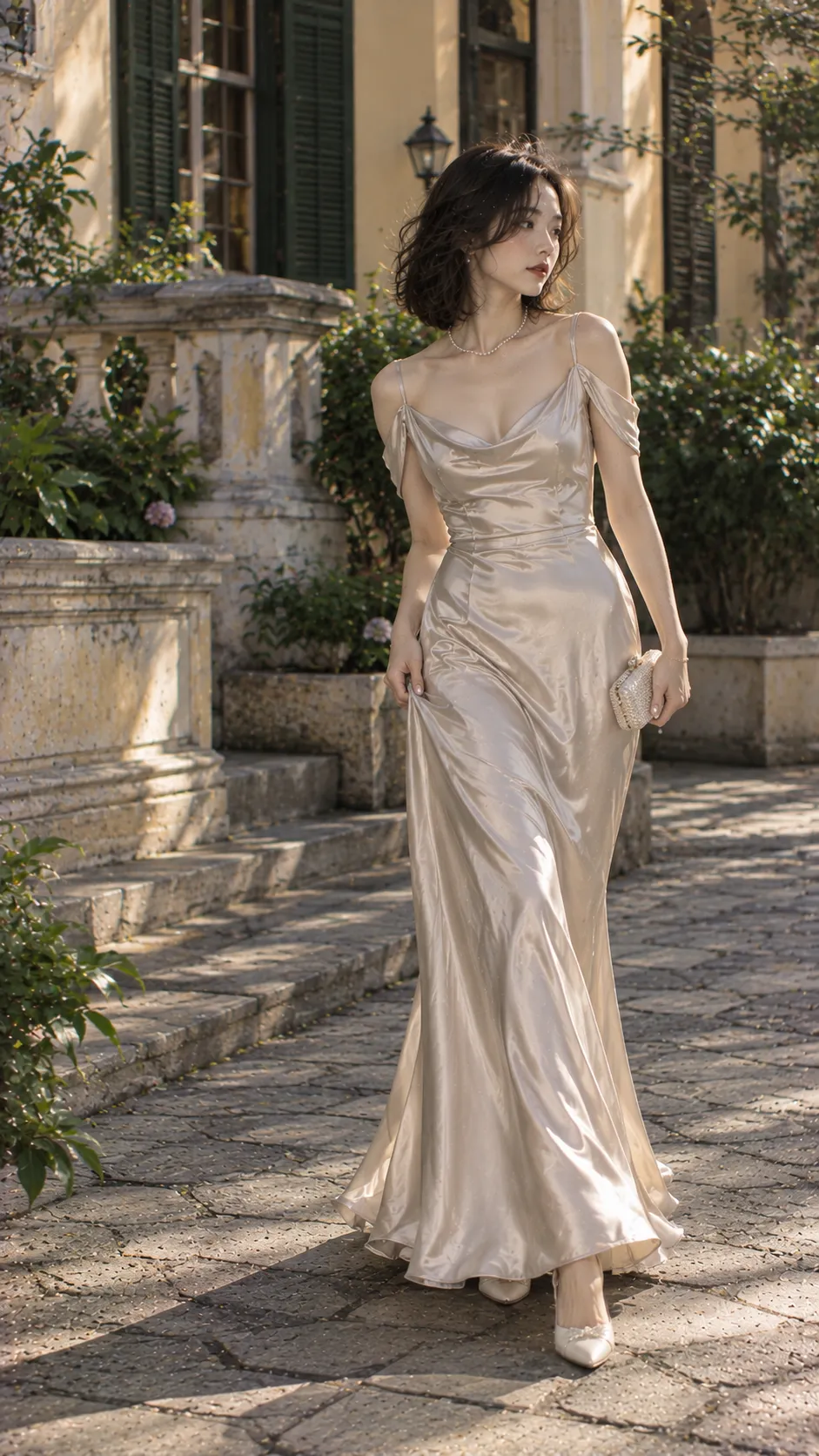
In the 1930s, satin or silk-like bias gowns became a recognizable evening image: fitted torsos, gently flared hems, low backs and light-reflecting surfaces. Hollywood's studio lighting and cinematic imagery helped popularize these effects.
Daywear: Considered Tailoring, Stronger Shoulders and Practical Elegance
The Great Depression created economic constraints without making all clothing purely utilitarian. Natural waists, below-knee skirts, blouses, suits, coats and hats retained attention to cut and finish. Paid work and practical daytime needs also shaped tailoring choices.
How Did Hollywood Influence 1930s Fashion?
FIT emphasizes cinema's influence during the decade. Stars and costume design supplied widely circulated images of eveningwear, hair, shoulders and glamour.
Art Deco also influenced surfaces and evening clothing. The V&A describes Jeanne Lanvin's 1930s dresses through long fluid forms, severe geometry and reflective satin. Soft garment lines could contrast with graphic, architectural detail.
Hollywood imagery should not imply that all 1930s clothes were luxurious. Practical daywear and evening fantasy coexisted.
A Quick Map of 1930s Fashion References
A return from the 1920s dropped waist.
Fluid, body-skimming shapes particularly associated with eveningwear.
Below-knee daytime skirts and floor-length evening gowns.
Growing stronger toward the decade's end.
Satin, low backs, sleek hair and considered accessories.
Geometry, sheen and graphic details in eveningwear and jewelry.
These are recurring references rather than a compulsory combination. A natural-waisted day dress with shoulder detail can suggest the period without satin or Art Deco decoration.
Six Contemporary 1930s-Inspired Outfit Formulas
Preserve the fluid line with fewer period accessories.
Restrained eveningwear.Natural waist and shoulder balance establish daytime references.
For cafés or suitable workplaces.Moving fabric below combines with a contemporary top rather than a complete replica.
Contemporary glamour.A soft print and contemporary shoes provide a restrained vintage reference.
Everyday vintage interpretation.Later-1930s shoulder references meet a contemporary palette.
Alternative tailoring.One geometric accent keeps the dress from becoming a themed party costume.
Evening look.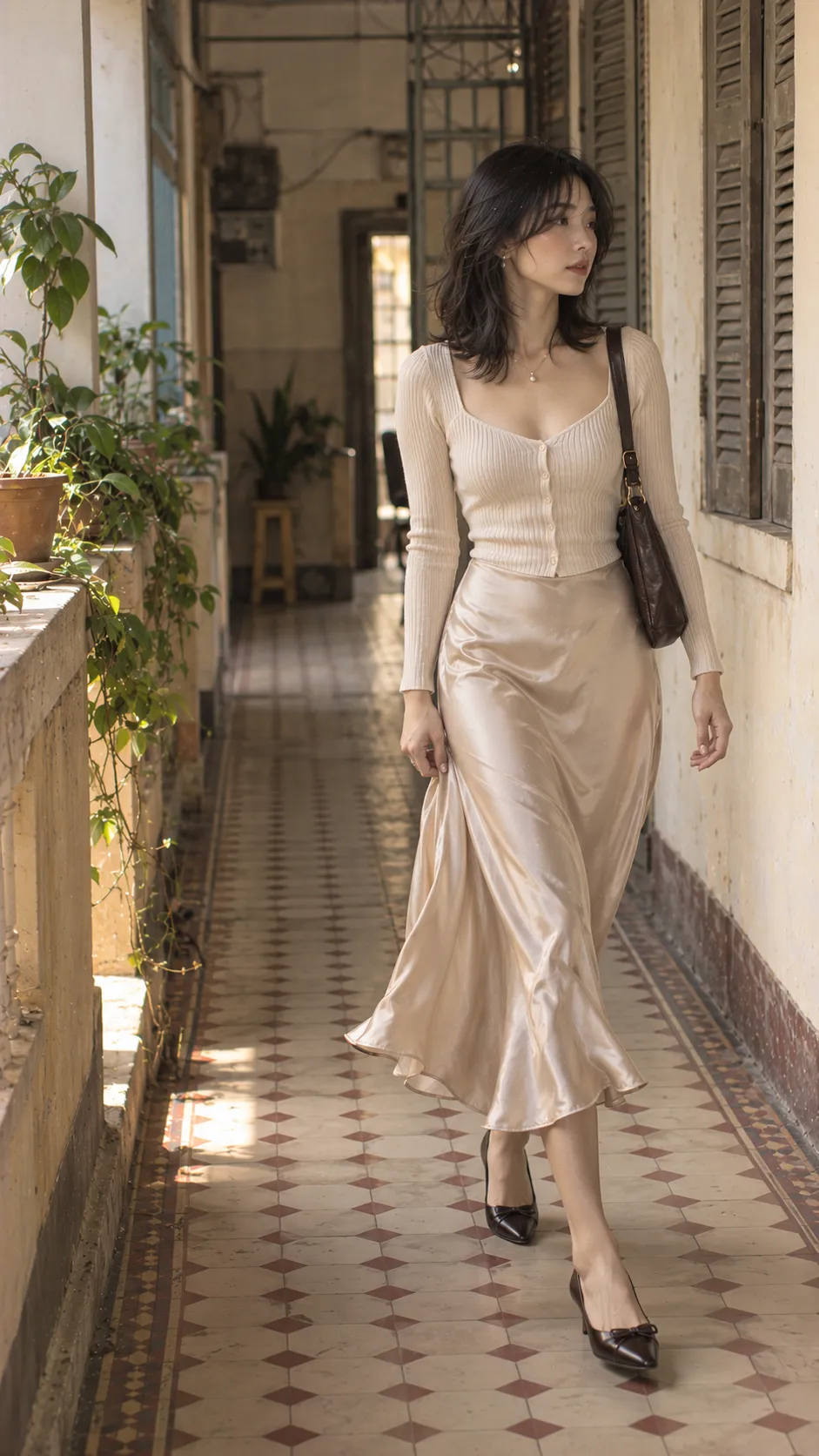
How Do the 1930s Differ from New Look 1947?
| Element | 1930s | New Look 1947 |
|---|---|---|
| Waist | Natural and defined, generally less extreme | More strongly narrowed waist |
| Skirts | Narrow or fluid midi and long shapes | Full skirts with substantial fabric and volume |
| Shoulders | Increasing definition later in the decade | Rounder or sloping in the Bar silhouette |
| Mood | Elongated lines and streamlined Hollywood glamour | Postwar opulence and constructed hourglass |
New Look 1947 is not simply a more luxurious 1930s silhouette. It changes the relationship between a narrow waist and full skirt. A fluid bias slip is not automatically New Look; a very full calf-length skirt and tightly defined waist do not represent the typical 1930s line.
Contemporary 1930s References without a Costume
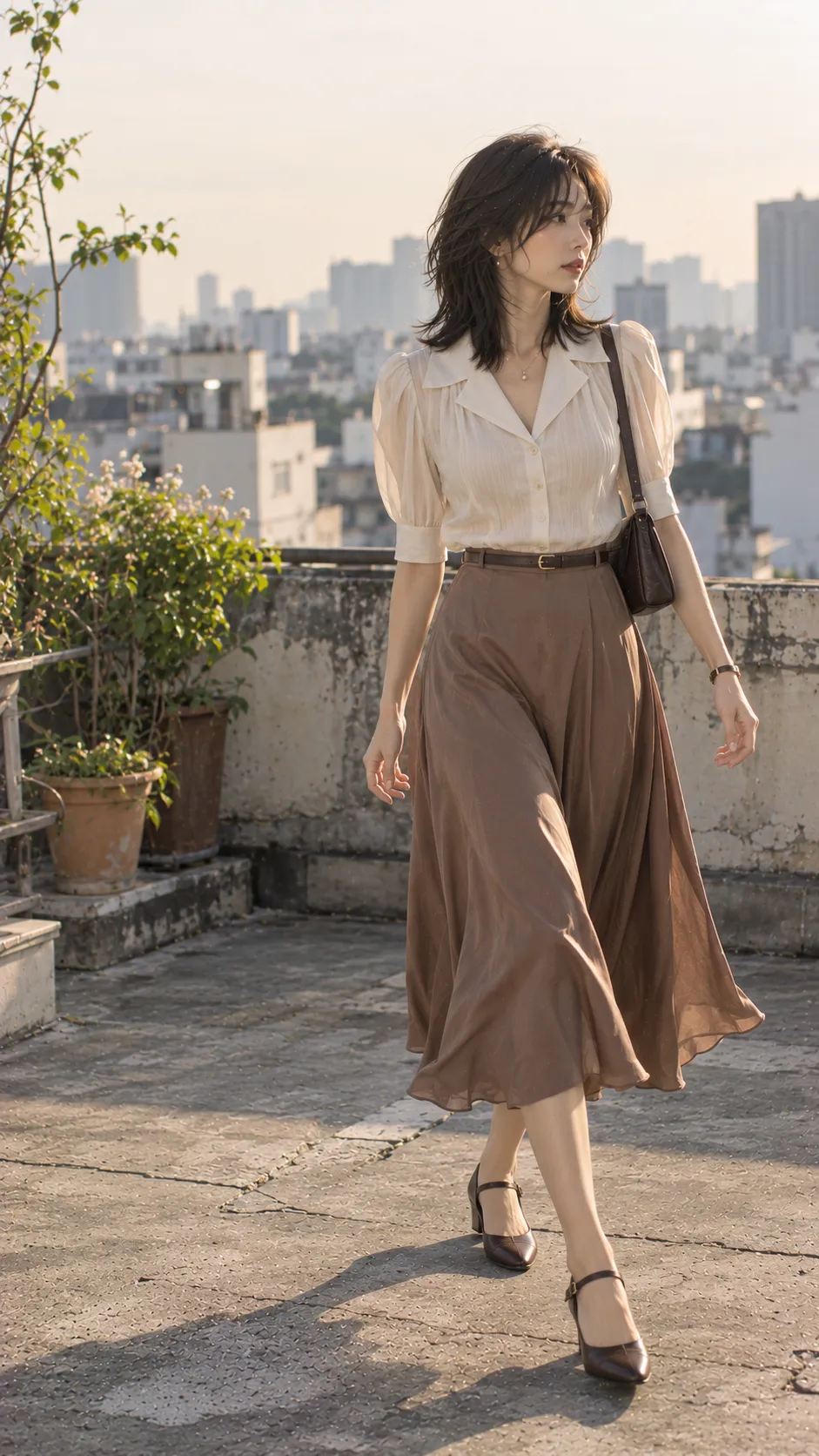
A practical framework is one historical silhouette + two contemporary pieces. Try a bias dress, leather jacket and simple sandals; a softly shouldered blouse, straight midi and modern tote; or a satin skirt, ribbed tank and loafers.
Hair need not reproduce full finger waves. A sleek side part, soft waves or low bun can suggest the mood. One Art Deco jewelry accent may suffice rather than repeating geometry across every accessory.
Black and gold are not the only options. Jewel tones, pastels, navy, brown, cream, red and vivid evening colors also belong to the period. Burgundy or emerald against neutrals offers an adaptable interpretation.
Choosing Materials and Fit
- Bias dress: look for drape rather than stiffness and check whether seams twist when worn.
- Midi skirt: choose a narrow or gently flared line rather than petticoat fullness for this reference.
- Blouse: moderate shoulder detail can work; very large balloon sleeves may suggest later decades.
- Blazer: combine light waist shaping with defined shoulders rather than an exaggerated power-suit outline.
- Heels: low or medium heels, T-straps and simple pumps offer period references with practical walking options.
Accessories: Small Details That Establish a Period
Hats, gloves, brooches, clutches, pumps and costume jewelry can quickly strengthen a historical reference. Select one or two for contemporary wear. A bias midi, small clutch and sleek hair may suffice without a hat, gloves, fur stole and full period jewelry.
Geometric Art Deco jewelry contrasts effectively with fluid eveningwear. The V&A's examples connect long, moving forms with angular decoration and reflective surfaces: soft garment lines, sharper accessory shapes.
Daywear Compared with Eveningwear
Daywear prioritizes natural waists, below-knee skirts, blouses, suits or knits, moderate shoulder definition and practical shoes. Eveningwear allows satin, low backs, bias drape and floor-length hems. Shorter hems and less sheen can adapt evening references to daytime; richer fabric or jewelry can dress up a daytime shape.
The distinction avoids reducing the whole decade to a Jean Harlow satin gown. Hollywood mattered, while everyday wardrobes also relied on practical dresses and separates.
Adapting the Reference to Vietnam's Climate
Heavy satin can feel warm; consider lighter draping fabrics such as rayon or viscose, depending on the weave and construction. Day dresses can use cotton blends, shorter sleeves and restrained shoulder details. A structured bag can replace gloves; considered hair can replace a heavy hat; low heels or loafers support longer wear.
Preserve lines rather than every historical material: a natural waist, midi hem, elongated drape, moderate shoulders and one geometric accessory can establish the reference comfortably.
A 1930s-Inspired Shopping Checklist
- Dress: check natural-waist placement; a dropped waist suggests a different period.
- Drape: look for movement when walking, rather than shine on a hanger alone.
- Shoulders: later-1930s structure can be clear, but very large padding may suggest the 1980s.
- Hem: midi or floor-length hems generally reference the period more directly than minis.
- Print: florals, dots and geometry work with clear silhouettes; avoid accumulating unrelated nostalgic motifs.
- Accessories: one period cue may be enough when the outfit already features bias drape or shoulder construction.
Six Common Styling Mistakes
1. Confusing the reference with 1920s flappers
The 1930s returned waists to a natural position and lengthened hems.
2. Confusing it with the 1950s
A typical 1930s line differs from postwar full-skirted hourglass volume.
3. Adding every vintage accessory
Hats, gloves, brooches, waves and period shoes together can become a costume.
4. Calling every slip dress 1930s
Consider cut, drape, waist and overall line.
5. Choosing excessively stiff or shiny satin
Fluid movement matters alongside sheen.
6. Ignoring changing shoulder shapes
Later-1930s shoulder structure helped anticipate 1940s fashion.
References
Frequently Asked Questions
What characterizes 1930s fashion?
Natural waists, elongated fluid silhouettes, below-knee hems, bias evening gowns, increasing shoulder emphasis and Hollywood glamour.
What is bias cutting?
Cutting diagonally across the fabric grain to create more adaptable drape, particularly important to 1930s eveningwear.
How do the 1930s differ from the 1950s?
Typical 1930s lines are sleeker and more fluid; a prominent 1950s direction uses narrower waists and much fuller skirts, alongside that decade's other silhouettes.
How can I reference the 1930s without a costume?
Pair one historical shape, such as a bias midi or natural-waisted dress, with two contemporary pieces.