

Leather Jacket and Clothing Care: Cleaning, Drying, and Storage
Leather care depends on the material, finish, moisture exposure, and cleaning instructions. Genuine leather, coated faux leather, and suede need different treatment.
Poor storage, unsuitable washing, and prolonged dampness can damage leather clothing as well as ordinary wear. A jacket, trousers, or boots may last for years, but durability depends on construction, material, and appropriate care rather than one universal routine.
This practical guide covers cleaning and storing leather and leather-look jackets, trousers, and boots to reduce avoidable cracking, discoloration, and damp odors. It cannot guarantee that either genuine leather or PU will never deteriorate.

Guide collection: Alternative Fashion Shopping: Sizing, Budgets, and Evaluating Shops (Vietnamese)
Identify the Material First
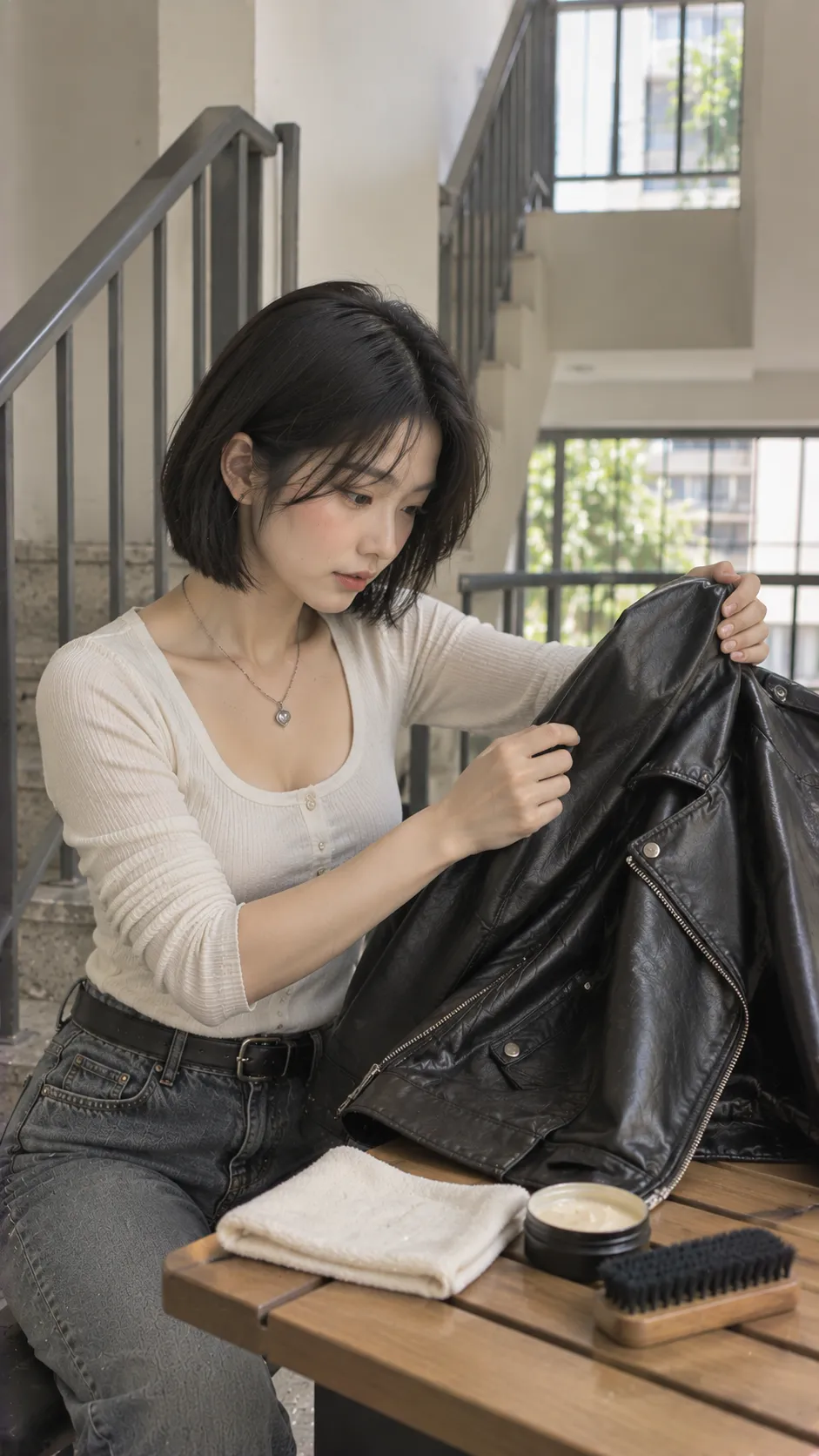
Smooth genuine leather may benefit from a compatible conditioner, depending on its finish and manufacturer instructions. PU or faux leather is a synthetic coating over a backing; ordinary leather conditioner is generally not its maintenance solution, and heat, repeated creasing, and coating degradation can cause peeling. Suede and nubuck have a raised nap that needs dedicated products and brushes rather than standard smooth-leather oils or creams.
Smell and surface texture offer imperfect clues, not reliable material tests. Genuine leather can have an artificial finish and faux leather can imitate grain closely. Check the composition label and seller or manufacturer information; do not assume the lining itself identifies the outer material.
Everyday Cleaning Without Unnecessary Washing

For compatible smooth finishes, remove dust with a soft cloth and use only the slight moisture allowed by the manufacturer's guidance. Pay attention to collars and cuffs, and follow separate lining instructions for boots. Deep cleaning after every wear is usually unnecessary and may stress the finish.
For suede, use the recommended suede brush gently. Avoid treating it like smooth leather with a wet cloth or ordinary conditioner. Some manufacturers specify dedicated cleaner with controlled moisture; follow that product-specific method rather than assuming all water contact is forbidden or harmless.
Dirt, Rain, and Oil Stains
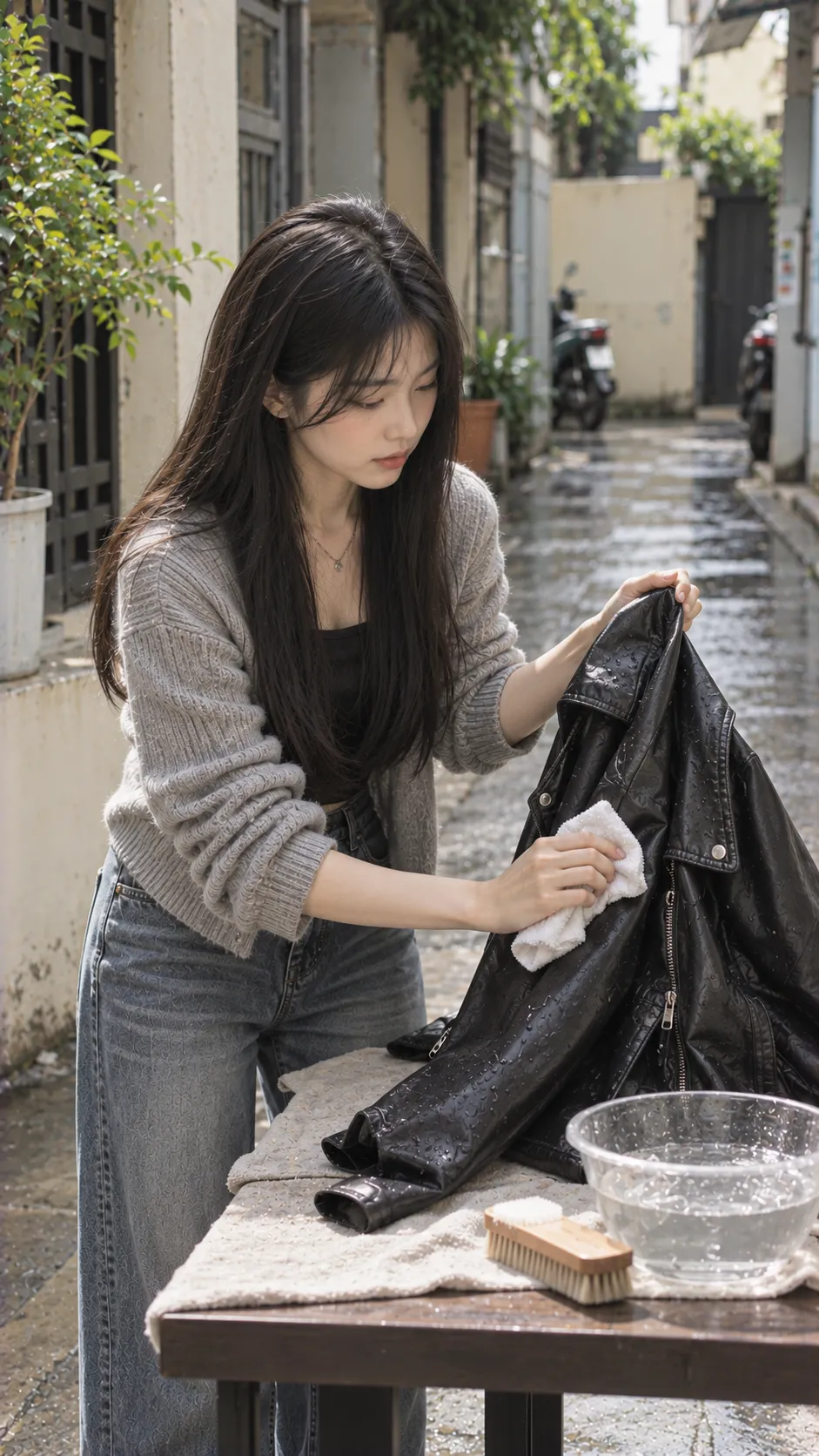
After rain, blot excess moisture and dry naturally away from hairdryers, radiators, and harsh sun. Support the shape where appropriate. Clean unprinted absorbent paper can help inside wet boots; avoid newspaper ink transfer and do not pack a jacket so tightly that airflow is blocked.
For oil or grease, blot without scrubbing. Household absorbent powders such as talc or baking soda are sometimes suggested, but can leave residue or alter a finish; they are not a universal treatment. Ask the manufacturer or a leather specialist before applying them, especially to valuable, suede, or unfinished leather.
For substantial stains or full cleaning, avoid machine washing or soaking unless the item's label explicitly permits it. A specialist can assess the finish, lining, and construction before selecting a method.
Storage Between Wears
Hang jackets on broad supportive hangers rather than narrow wire ones that concentrate pressure at the shoulders. Leave space between garments to reduce compressed creases.
Store leather trousers using a suitable padded hanger or another manufacturer-approved method. Clips can mark delicate finishes, so protect contact points. If folding is necessary, keep folds loose and avoid prolonged pressure along one crease.
Support boots with suitable shoe trees or clean paper and store them in a cool, dry place away from prolonged direct light.

Use breathable garment covers rather than sealing damp clothing in plastic. Airflow and a dry storage environment help reduce trapped moisture. A suitable moisture-control product can assist in a humid wardrobe, but should not touch or leak onto the garment or replace ventilation.
Dryness and Cracking
Dryness may appear as stiffness, dullness, or fine surface lines, though actual cracking can require specialist repair. For compatible smooth leather, patch-test a manufacturer-recommended conditioner and follow its application, dwell, and buffing instructions. Do not impose a universal 10–15-minute dwell time or two-to-three-month schedule on every leather finish.
Once a PU coating has cracked or peeled, ordinary conditioner cannot restore the original surface. Prevention focuses on appropriate temperature, reduced prolonged creasing, and avoiding excessive stress at elbows or knees. Material aging can still occur despite careful storage.
Odors and Mold
For damp odors, allow the item to air in a dry, ventilated place away from direct heat and sun. A contained odor-control sachet may be useful if approved for the material, but perfume can mask rather than remove the cause. Persistent odor needs investigation of moisture, lining, or mold.
If you see mold, isolate the item from other garments and seek material-specific professional advice. Diluted vinegar is a common household suggestion, but it can affect dyes or finishes and is not a universal leather treatment. Widespread or recurring mold needs specialist cleaning and correction of the damp storage conditions rather than stronger home chemicals.
Common Care Mistakes
A common mistake is using strong heat to dry wet leather quickly. It can damage the surface or shape; allow appropriate room-temperature drying instead.
Another is sealing clothing in plastic for months to exclude dust. Trapped moisture can create conditions favorable to mold before it becomes obvious.
A third is neglecting material-specific maintenance. Suitable smooth leather may need conditioning, while suede, patent finishes, and PU need different routines. More conditioner is not automatically better.
Care cannot stop all aging, but it can reduce avoidable damage from neglect and unsuitable treatment.
Care and Related Outfit Guides

For styling the pieces you are maintaining, read Women's Leather Jacket Outfits, Women's Leather Trouser Outfits and Women's Boot Outfits for compatible outfit formulas alongside the separate care guidance.
A useful leather piece earns its place through fit, durability, and repeated wear rather than price alone. Gentle cleaning when needed and appropriate storage support longer use, but a few minutes of care cannot guarantee a particular lifespan for every leather or coated material.
Related Closet Outfits
Explore these looks in the closet: Look #03 · White Graphic Crop and Wide Black Cargos (Vietnamese) (a Punk statement), Look #06 · Red Graphic Tee and High-Rise Black Shorts (Vietnamese) (boots and accessories), Look #44 · Black Mesh Top and Chain-Detail Shorts (Vietnamese) (Goth mesh and hardware), Look #04 · Brown Off-the-Shoulder Top and Frayed Ripped Jeans (Vietnamese) (a dark statement), Look #38 · Cropped turtleneck + ripped black jeans (Vietnamese) (a Punk statement).
Frequently Asked Questions
Can a cracked leather jacket be repaired?
Conditioner may improve the feel of suitable dry smooth leather, but it does not reverse broken fibers or guarantee repair of cracks. A specialist can assess restoration. Cracked PU coatings generally cannot be returned to their original condition with leather conditioner.
Can I machine-wash leather trousers?
Only if the item's specific care label permits it. Otherwise, use the recommended surface-care method or professional cleaning. Agitation, water, and unsuitable detergents can damage leather or coated fabrics.
How often should leather be conditioned?
Follow the material and conditioner instructions rather than one fixed interval. The original two-to-three-month or four-to-six-month examples should not override finish-specific advice. Inspect for dryness and use only compatible products; ordinary conditioner is not a default treatment for PU or suede.
How should I deal with damp odors?
Dry and ventilate the item appropriately and investigate moisture or lining problems. Do not rely on scented sachets to treat mold. If mold is visible, seek material-specific advice rather than automatically applying diluted vinegar, then address the storage conditions.