

What Is Ivy Style? Ivy League Clothing versus Preppy
Ivy Style is a campus-associated American clothing tradition using Oxford shirts, softer blazers, khakis, knits and loafers. This guide distinguishes Ivy's garment history from the broader modern Preppy vocabulary.
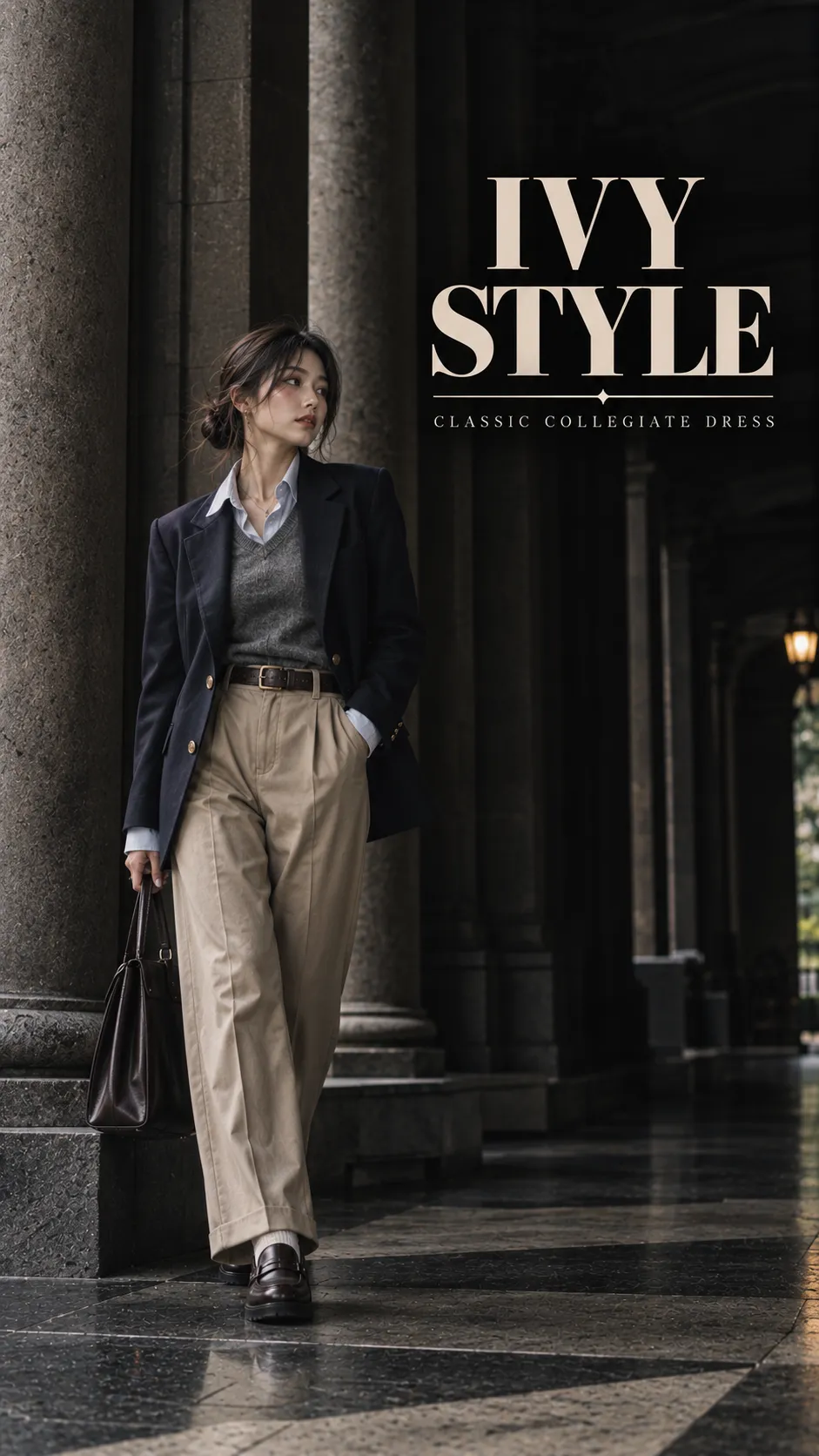
Guide collection: Aesthetic Dictionary: A Guide to Fashion Styles (Vietnamese)
What Is Ivy Style?
Ivy Style, or the Ivy League look, developed around American college campuses in the early twentieth century and became more clearly codified by mid-century. FIT's Ivy Style exhibition places its later traditional reputation alongside its earlier role in changing menswear. This is a clothing history, not evidence of the wearer's education or social background.
Familiar references include Oxford button-down shirts, tweed or navy blazers, khakis or chinos, penny loafers, Shetland-style sweaters, crewnecks, repp ties and lighter tailoring. The central relationship is relaxed tailoring: defined but less rigid than traditional formal business clothing.
This guide focuses on Ivy Style. The separate Preppy Style guide covers the broader collegiate and leisure vocabulary. Here the emphasis is Ivy's campus-associated garment history; modern Preppy interpretations can use a wider range of palettes, skirt combinations and schoolwear references. They overlap without being synonyms.
The Origins of the Ivy League Look
The exhibition Ivy Style at FIT, opened in 2012, traced the style to prestigious American college campuses in the early twentieth century. British menswear traditions were adapted into less formal student clothing; the exhibition describes the process and its later influence rather than identifying one uniform invention.
By mid-century, recurring tweed jackets, button-down shirts, khakis and loafers formed a recognizable vocabulary. These now-traditional pieces were once part of changing youth dress. Ivy subsequently circulated beyond campuses and influenced other communities and international menswear; its history is broader than elite students alone.
An Oxford shirt and sweater vest are therefore only part of the picture. Consider shoulder structure, lighter tailoring, textured cloth, shoes and their relationship within the composition.
Six Core Ivy Garment Roles
A button-down collar and textured Oxford cloth; worn alone or beneath a sweater or blazer.
Softer tailoring than many formal suit jackets, combined with khakis, gray trousers, restrained denim or a skirt.
A familiar casual trouser reference, often less formal than wool suiting. Actual cut and finish affect the result.
A recognizable Ivy shoe reference offering a slip-on alternative to lace-up dress shoes. Assess actual fit and construction rather than assuming greater comfort.
A textured layer, including over an Oxford collar. Choose weight for actual weather rather than historical fidelity alone.
Striped ties, crests, cables or varsity references can be used selectively. Emblems are optional.
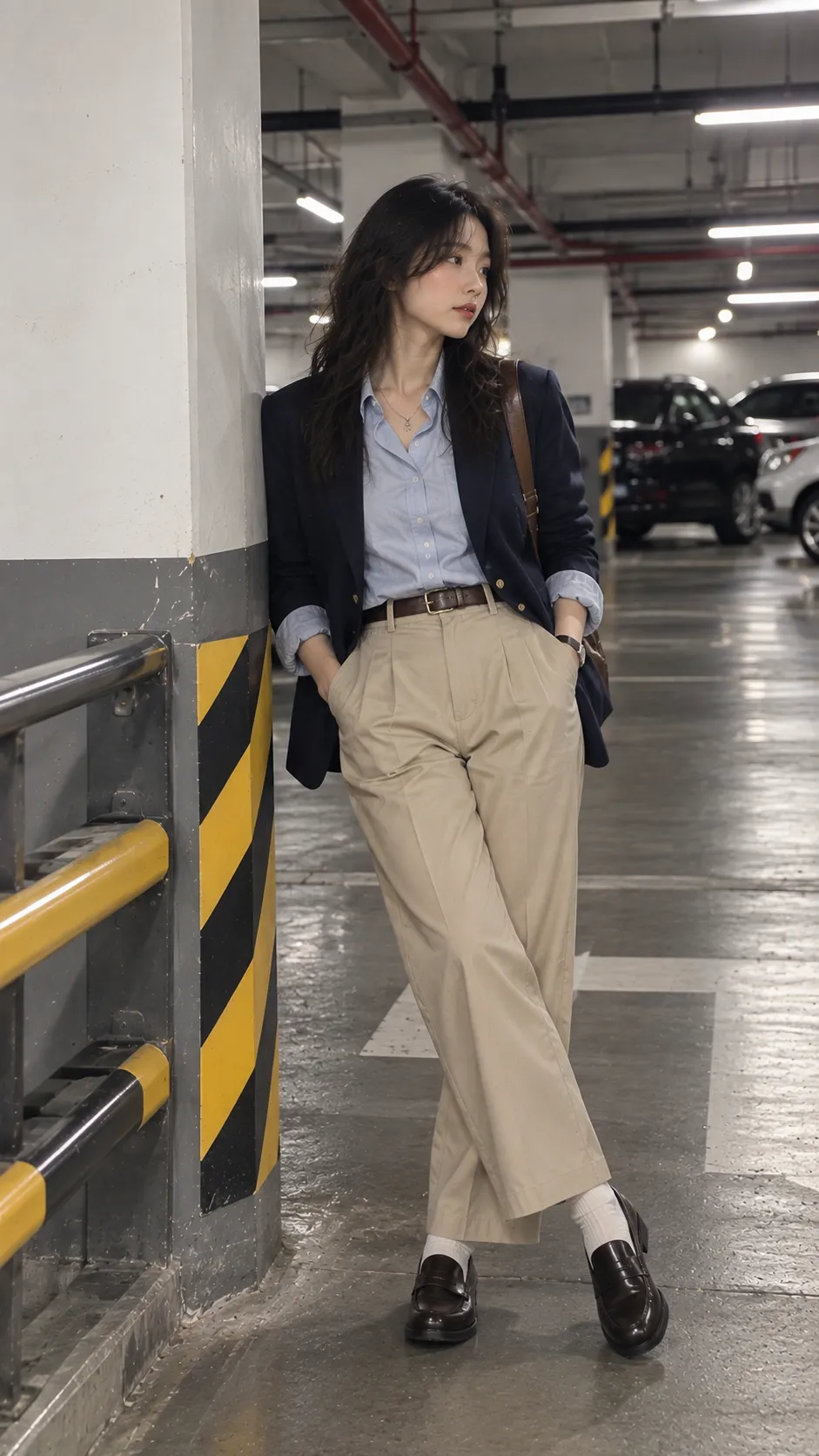
Women's interpretations can retain the references while changing proportions: a shorter or relaxed blazer, wide khakis, pleated midi, loafers and socks, an open collar or partial tuck. Historical menswear associations do not restrict the wearer's gender.
Ivy Style versus Preppy
| Dimension | Ivy Style | Preppy |
|---|---|---|
| Historical emphasis | American campus menswear from the early-to-mid-twentieth century | Broader preparatory-school, collegiate and leisure-inspired styling |
| Silhouette | Relaxed tailoring, natural-looking shoulders, khakis and loafers | Can include fitted pieces, skirts, coordinated knits or more literal schoolwear references |
| Palette | Navy, khaki, gray, Oxford blue, burgundy and forest green | Can extend into pastels, brighter collegiate colors and nautical references |
| Editorial emphasis | Garment history and restrained academic references | A broader contemporary lifestyle and schoolwear vocabulary |
A useful distinction: Ivy is an important historical reference within the wider Preppy vocabulary, but not every Preppy composition is specifically Ivy. A pink cardigan, pleated mini and bow headband can read as broader Preppy styling. An Oxford shirt, khakis, penny loafers and soft blazer provide more direct Ivy references without a schoolgirl theme. These are examples rather than rigid category boundaries.

Women's Ivy Style: Retain References, Adjust Proportions
Choose a historical menswear-associated piece as an anchor, then arrange waist, hem and footwear according to your preferences. Bows or minis are optional, not requirements for making the style appropriate for women.
Trousers, blazers, trenches and loafers can provide an interpretation beyond a literal student costume. Choose the degree of schoolwear reference deliberately.
Six Women's Ivy Outfit Formulas
A clear starting point. Rolled sleeves or a lighter tuck can reduce formality.
Possible settings: cafés, campus activities or work where permitted.The tee lowers formality while the blazer and trousers retain tailoring.
A possible Smart Casual interpretation, subject to the setting.Traditional upper-body references meet a shorter lower silhouette.
A Preppy-adjacent interpretation retaining Ivy garment references.Tweed leads the texture; a more compact top can balance wider trousers.
An option for cooler conditions, depending on actual fabric weight.The rugby top supplies a sporting reference while denim makes the combination more casual.
A weekend-oriented interpretation.The collar and socks retain collegiate associations while a midi changes the uniform-like proportions.
A softer interpretation with optional feminine references.
Ivy Colors and Materials: Traditional References in Modern Clothing
Navy, charcoal, heather gray, khaki, cream, Oxford blue, burgundy and forest green are useful options. They combine into layered academic references without a school logo or a claim to timeless superiority.
Textures do much of the work: Oxford grain, a loftier Shetland-style knit, tweed, structured chino cloth and polished-looking leather. A uniformly glossy surface creates a different impression. This concerns construction and finish; no fiber is automatically suitable or unsuitable.
Ivy Style versus Old Money
Old Money Style as a modern internet label often emphasizes imagined wealth, restraint and leisure. Ivy has a more specific campus-associated garment history and does not require appearing wealthy. Existing Oxford shirts, faded khakis and well-maintained older loafers can retain the references.
Old Money imagery can use linen, tailored trousers, polos, shoulder-draped knits, resort or equestrian details. Ivy shares garments but more specifically references American collegiate menswear. Neither the label nor the clothing proves actual ancestry, wealth or education.

Adapting Ivy for Vietnam's Climate
Heavy tweed and wool layers may be impractical in heat. Consider less heavily lined tailoring, lighter Oxford cloth or chinos and suitable knits. Inspect actual weight, weave, lining and ease: a cotton-linen label does not guarantee cooling. Retain the references rather than recreating New England weather.
An Oxford shirt, khakis and loafers can provide a workwear starting point where permitted. For leisure, try a rugby top or tee with a blazer. In heat, remove the jacket while retaining a collar, belt or shoe reference. Assess shoes for the actual route.
Ivy Style beyond the Campus
A relatively small vocabulary has been repeatedly recombined beyond its original setting, including in jazz-associated clothing, casual workwear and Japanese interpretations. FIT's exhibition presents this international reach. These examples do not make every later wearer or garment part of one uniform community.
A modern outfit need not recreate a student in the mid-1950s. Wide khakis, an unstructured jacket or a striped button-down can adapt the proportions while retaining textured surfaces and traditional shoe references.
An Ivy Garment Checklist beyond Logos
- Oxford shirt: Assess collar structure, shoulder placement and room under the intended knit.
- Blazer: A more natural shoulder and moderate padding retain a relaxed line. Choose length in relation to your bottom rather than treating hip coverage as compulsory.
- Khakis / chinos: Check cloth weight, sheen and drape. Straight or relaxed-tapered cuts offer possible starting points.
- Knit: Crewneck, cable or Shetland-inspired surfaces; choose a palette compatible with several existing bottoms.
- Loafers: A less substantial sole can support traditional proportions; platforms offer a more contemporary hybrid. Assess toe room, heel hold and practical use separately.
Ask whether cut, material and context still suggest the direction without the logo or crest. Branding is one possible reference, not a requirement or quality guarantee.
Can Ivy Combine with Alternative Fashion?
Yes. Use one direction as the base and another as an accent. A navy blazer, Oxford shirt and pleated mini can take chunky loafers, black tights or silver jewelry. A rugby top, dark straight denim and platforms can connect collegiate and alternative streetwear references.
Chains, harnesses, Gothic lace and varsity crests need not all appear together. Restrained footwear, jewelry or palette changes can retain the Ivy base; more dominant alternative details create a stronger hybrid by choice.
Six Common Ivy Styling Misconceptions
1. Ivy and Preppy are identical
They overlap, but Ivy has a more specific garment-history emphasis while Preppy is used more broadly.
2. School logos are compulsory
A crest is one signal. The style does not require campus merchandise or imply affiliation.
3. The blazer must be rigid
A natural-looking shoulder and relaxed tailoring provide a different reference from a sharply padded power suit.
4. Every garment should be oversized
Relaxed need not mean uncontrolled volume. Consider shoulders, hems and trouser break together.
5. Everything must be beige
Navy, burgundy, green, Oxford blue and gray offer alternatives to a uniform neutral palette.
6. Footwear is an afterthought
Loafers, casual derbies or defined leather shoes can reinforce the references; a different shoe can change the outfit's emphasis without being inherently wrong.

References
- Museum at FIT — Ivy Style: exhibition context for campus origins, mid-century codification and international influence.
- Museum at FIT — Exhibitionism: Ivy Style: garment examples including tweed jackets, button-downs, khakis and loafers. Everyday outfit formulas are this site's editorial adaptations.
Frequently Asked Questions
What is Ivy Style?
Ivy Style developed from early-twentieth-century American campus clothing and is associated with Oxford shirts, softer blazers, khakis, knits and loafers. It later circulated well beyond universities.
Ivy versus Preppy
Ivy emphasizes a specific garment history; Preppy is a broader collegiate, schoolwear and leisure-inspired vocabulary. The labels overlap rather than being exact synonyms.
Can women wear Ivy Style?
Yes. Its historical menswear references do not restrict gender. Adapt trousers, skirts, inner layers or blazer lengths according to your preferences.
Is Ivy the same as Old Money style?
They share some garments, but Ivy is more specifically campus-associated while modern Old Money imagery centers perceived wealth and leisure. Clothing does not prove either social background.