

What Is Business Casual? Women's Office Outfit Guide
Business Casual combines professional clothing with a more relaxed approach. This guide focuses on adapting women's outfits to an actual workplace's requirements and daily activities.
In this guide: we focus on Business Casual for work: less formal than a full traditional business suit while retaining a professional finish. For less formal dressing across a wider range of settings, see What Is Smart Casual?.

Guide collection: Aesthetic Dictionary: A Guide to Fashion Styles (Vietnamese)
Business Casual is a work dress code less formal than traditional business attire but more deliberately professional than everyday casual clothing. The permitted level of informality varies by employer, role and situation; the label alone does not establish an actual policy.
What is Business Casual?
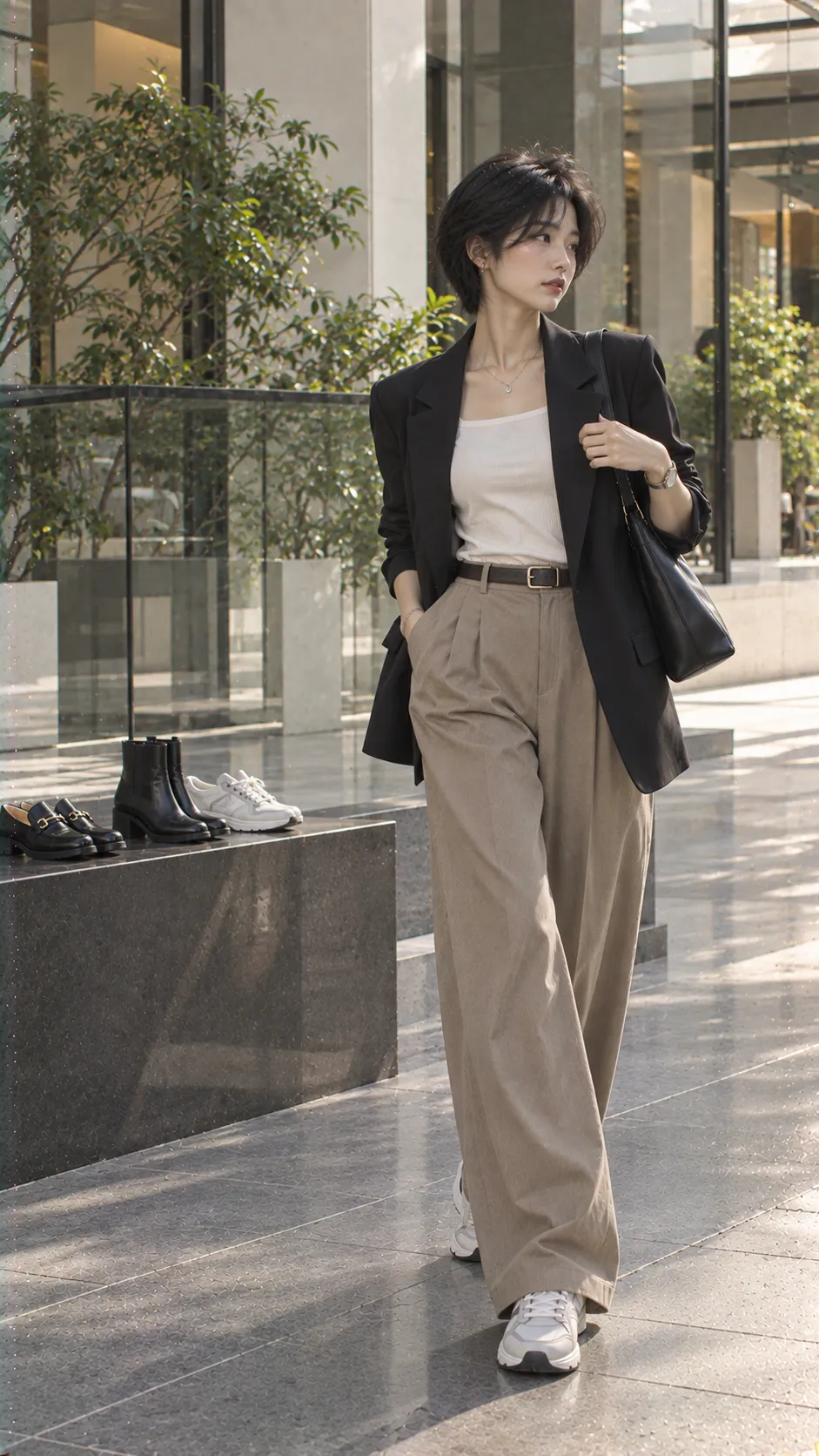
Business Casual combines familiar work clothing with a more relaxed treatment. Rather than a fixed uniform, it adapts to industry, role, the day's schedule and company culture. A composed outfit is useful, but appearance does not establish a person's competence or reliability.
Women's options can include blazers, shirts, suitable base tops, straight trousers, midi skirts and dresses. Dark jeans, boots or simple sneakers may fit some workplaces and be excluded in others. The aim is an intentional outfit within the actual requirements, rather than maximum formality.
What can women wear for Business Casual?
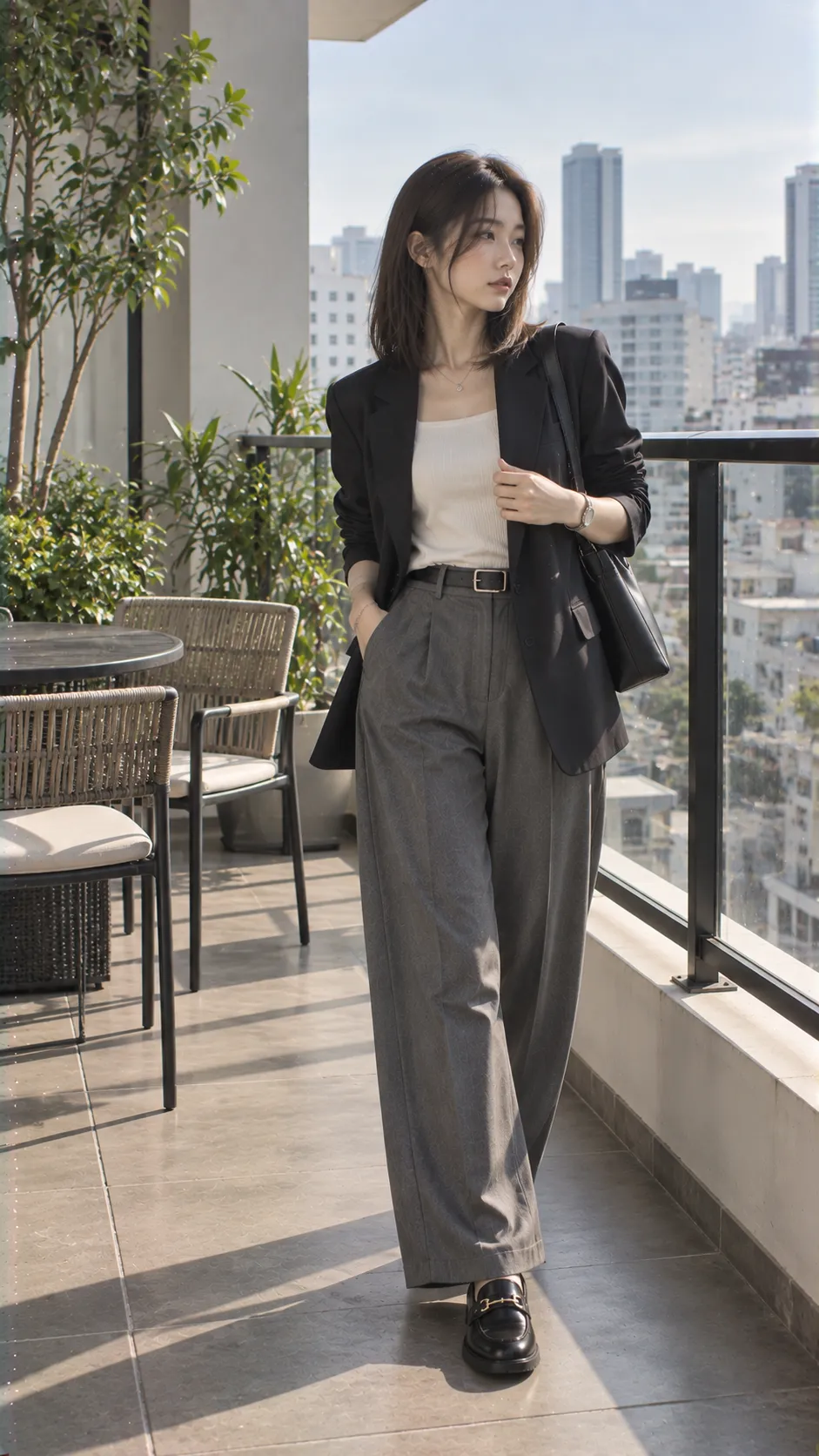
For a starting formula, balance a more structured garment with a less formal one. Five possible combinations are:
- Blazer, base top and straight trousers: A more structured starting point for meetings or client-facing work, subject to the applicable requirements.
- Shirt and dark jeans: An option where denim is permitted; consider a clean finish, suitable ease and no unintended distressing.
- Neat knit and tailored trousers: A softer alternative to a shirt while retaining workwear references.
- Midi dress and blazer: A relatively simple combination whose formality can change through shoes and a bag.
- Simple top and midi skirt: An alternative silhouette with a composed finish, checked for coverage and movement.
Loafers offer a familiar officewear reference. Clean boots or restrained sneakers may also work where permitted. Black, navy, gray, brown and cream are versatile palette options; a small personal accent can provide contrast without becoming the whole composition.
Business Casual does not mean one universal shirt-and-trouser set. Requirements can differ between workplaces even within technology, creative or financial roles. The traffic-light framework and workplace matrix below are editorial screening tools, not official permission lists.
Straight trousers, appropriately covered shirts or tops, neat knits, softer blazers and simple shoes can provide a base. Check whether loafers, boots or sneakers meet the actual policy.
Jeans, tees, cargo details, sleeveless tops, athletic sneakers, prominent accessories and oversized silhouettes require closer assessment of the setting.
Unintended transparency, large cutouts, disputed slogans, dirty shoes, distracting noise or clothing that restricts work can cause problems. Coverage and messages should be assessed against the setting, without judging bodies.
Business Casual versus Smart Casual
Smart Casual can apply to dinners, events, dates or creative settings as well as some workplaces. This guide uses Business Casual more narrowly for work. The categories overlap, and neither label automatically permits jeans: the host or employer, role and activities decide the appropriate interpretation.
| Dress code | Main purpose | Typical flexibility | Possible context |
|---|---|---|---|
| Formal Business | A more formal organizational or ceremonial appearance | Lower, subject to the stated requirements | Some senior meetings or conservative professional settings |
| Business Casual | A professional work outfit with room for ordinary tasks | Moderate, varying by employer | Daily work, client meetings or internal presentations |
| Smart Casual | A polished outfit adapted to the occasion | Broader, depending on host and setting | Dinner, networking, galleries or some creative offices |
| Casual | Everyday personal comfort and expression | Broader still, with setting-specific limits | Weekends and ordinary daily activities |
Four workplace variables
Can jeans be Business Casual?
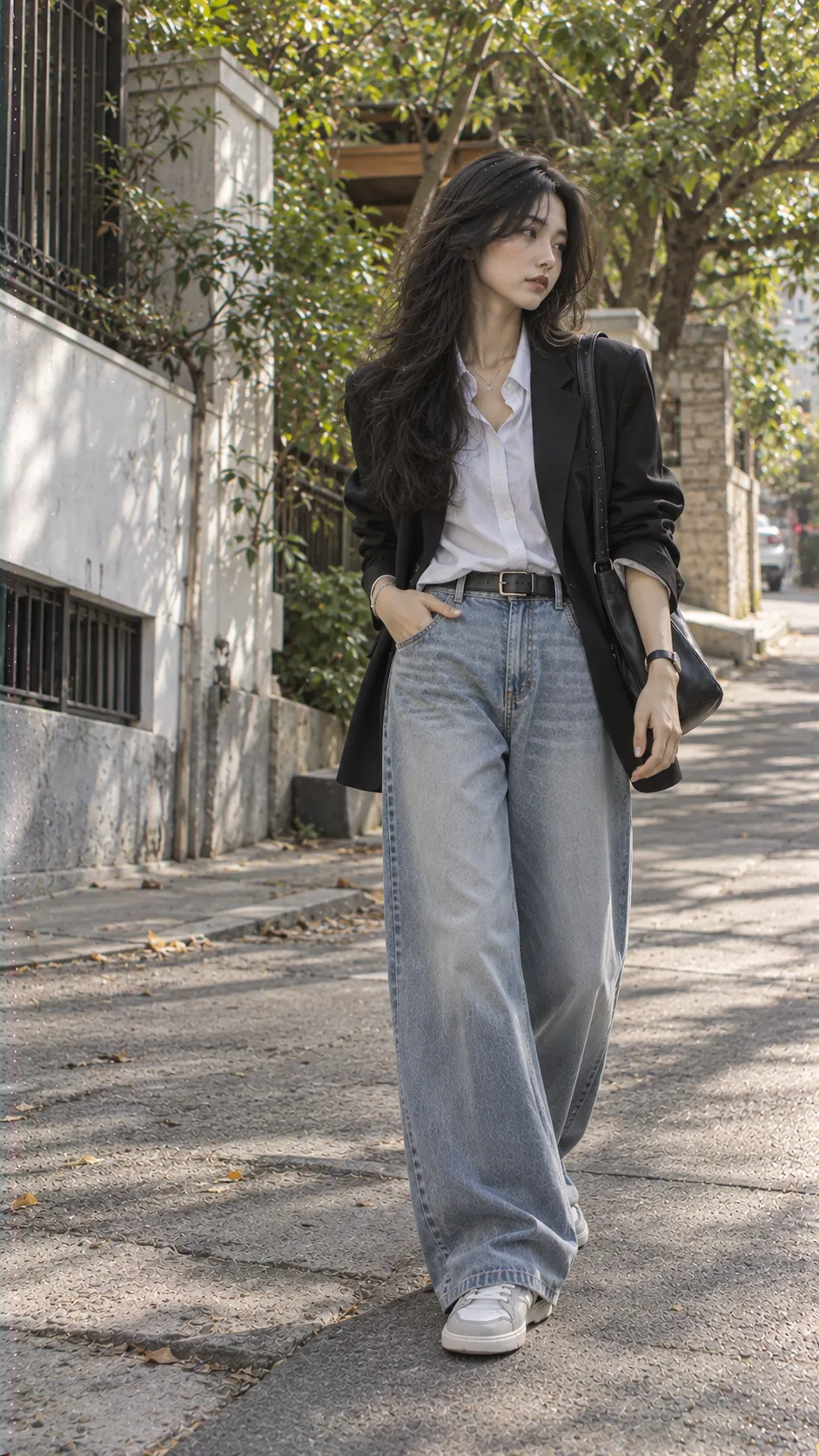
Jeans may work where permitted. Assess finish, movement and the other garments together. Darker, relatively plain straight or controlled-volume jeans can provide a quieter appearance than large tears, strong wash contrast or trailing hems. For baggy construction, the guide What Are Baggy Pants? explains waist, rise and length before you assess whether a pair suits your workplace.
Sneakers, boots and loafers: no universal office shoe
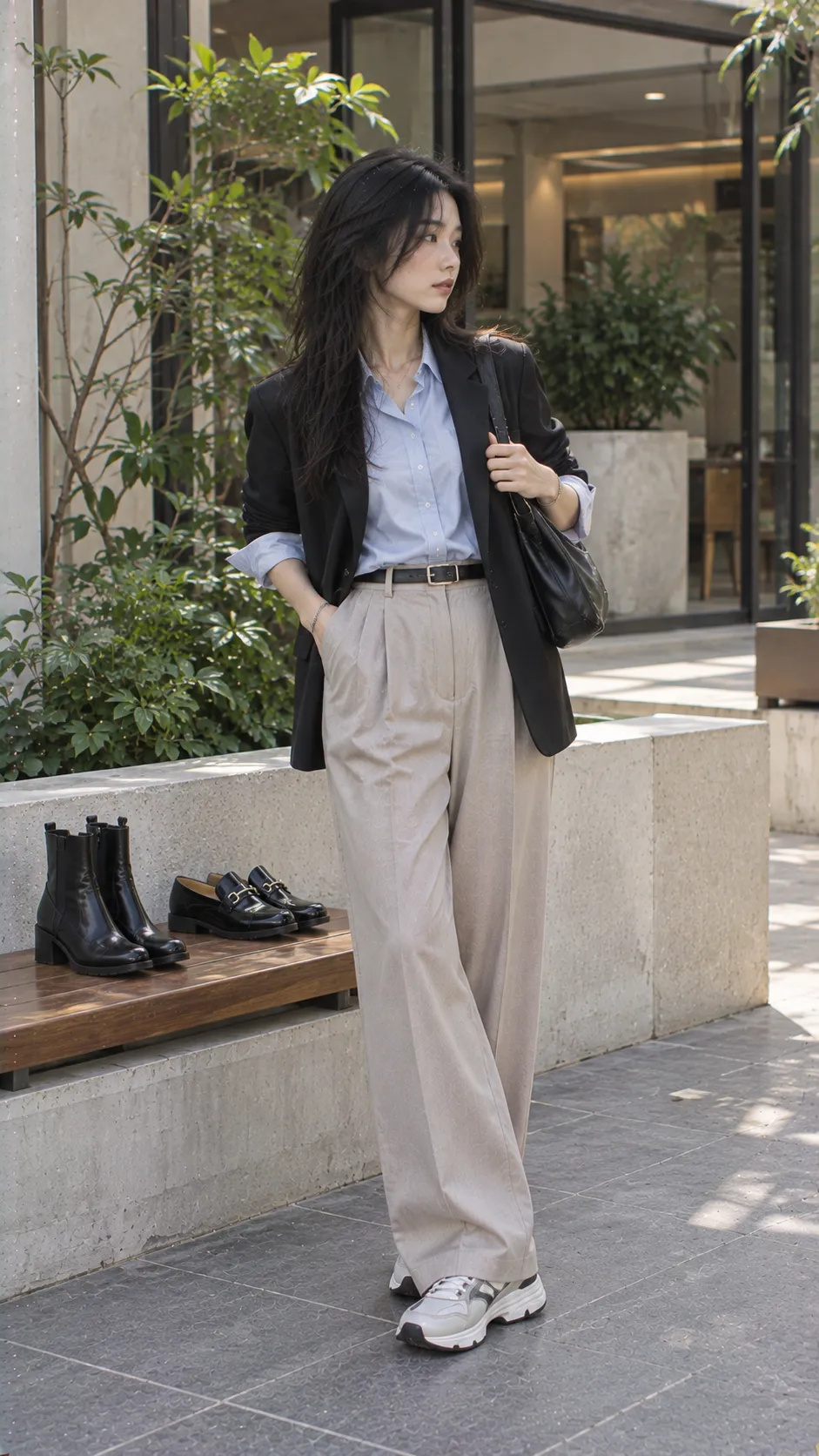
Clean, restrained sneakers may suit some offices. Matte-looking boots can provide structure, especially when trouser hems fall cleanly around them. Loafers are another option, not a requirement. Assess fit, sole, walking conditions and task-specific requirements separately from appearance; a style name does not establish grip or safety.
Can Business Casual use a dark palette?

A dark palette need not look visually heavy. Black, charcoal, navy and deep brown can remain distinct through texture and proportion. Try matte trousers with a textured cotton top, fine knit with a matte jacket, or one small silver accent instead of numerous chains.
Dark Feminine references can be adapted through coverage, ease and restrained detail where the setting permits. Streetwear proportions can also be moderated through simpler graphics and structured layers. For evaluating garment finish rather than relying on logos, see What Is Quiet Luxury?.
Cropped and sleeveless tops: assess the actual context
Assess three things with cropped or sleeveless tops: how coverage changes while sitting or reaching; whether the day involves clients or travel; and whether an outer layer will remain on. A high rise and blazer can alter coverage but do not automatically make a short top acceptable. Dress requirements concern the setting, not a judgment about the wearer's body.
Before Leaving Home
- Sit, bend and reach to check your intended coverage.
- Inspect opacity, creases and lint in ordinary light.
- Walk around to check hems, shoes, bags and accessories. A short check can reveal obvious issues, but does not prove all-day comfort.
- Read the day's schedule: meetings, client contact, travel or internal work.
- If uncertain about formality, consider a different shoe, layer or bag and confirm requirements if needed; replacing every garment may be unnecessary.
Five bridge pieces for a flexible wardrobe
Dark straight trousers, a softer blazer, a suitable base top, clean shoes and a structured bag can connect several existing garments. This may be more useful than building a completely separate office wardrobe. The guide to a capsule wardrobe helps identify actual gaps before buying.
A 90-second composition check
Too casual for the setting? Try a clearer structured line, then check the policy rather than assuming the change establishes permission. More formal than you intend? Remove a layer or choose a less formal shoe where the setting permits. Too plain for your preference? Keep one personal accent—silver, burgundy, a bag or eyeliner—instead of making every detail prominent.
Explore dress-code adaptations through existing outfits: see Dark Feminine (Vietnamese), Baddie Streetwear (Vietnamese) and assess adaptable looks in the Closet (Vietnamese).
Conclusion: reading your workplace
Business Casual relaxes some traditional businesswear conventions while remaining tied to a workplace. Read the employer's requirements, role, activities and actual culture; then assess fit, finish, coverage and shoes. There is no universally approved garment list, and a personal style can coexist with context-specific requirements without becoming a measure of competence.
Frequently Asked Questions
What is Business Casual?
A work dress code combining professional clothing with a more relaxed approach than traditional business attire. Its meaning varies with the employer and context.
What can women wear for Business Casual?
Possible combinations include a blazer, base top and straight trousers; knit with tailored trousers; a midi dress and blazer; or a simple top and midi skirt. A shirt and dark jeans can work where denim is permitted. Assess ease, coverage, finish and footwear for the actual setting.
How do Business Casual and Smart Casual differ?
Business Casual is specifically work-oriented in this guide; Smart Casual covers a wider range of polished occasions. They overlap, and the employer's or host's actual requirements take priority over either label.
Can women wear jeans for Business Casual?
Potentially, where denim is permitted. Check the finish, ease, distressing and how it relates to the other garments. A blazer does not override a no-denim requirement.
Can Business Casual use a dark style?
Yes, where the setting permits. Black, gray, navy or deep brown can work with clear proportions, suitable coverage, varied surfaces and one restrained personal accent.
Further reading: Women's Loafers and Power Dressing.
References
The preserved career guides provide general dress-code context, not the policy of a particular employer. The outfit framework and applications here are Apocalypse Closet's editorial guidance.
- Indeed — What Is Business Casual Attire? — general context and the importance of company-specific requirements.
- Indeed — Business Formal Attire — a reference for the more formal end of business clothing.