

What Are Ballet Flats? Balletcore and Alternative Outfits
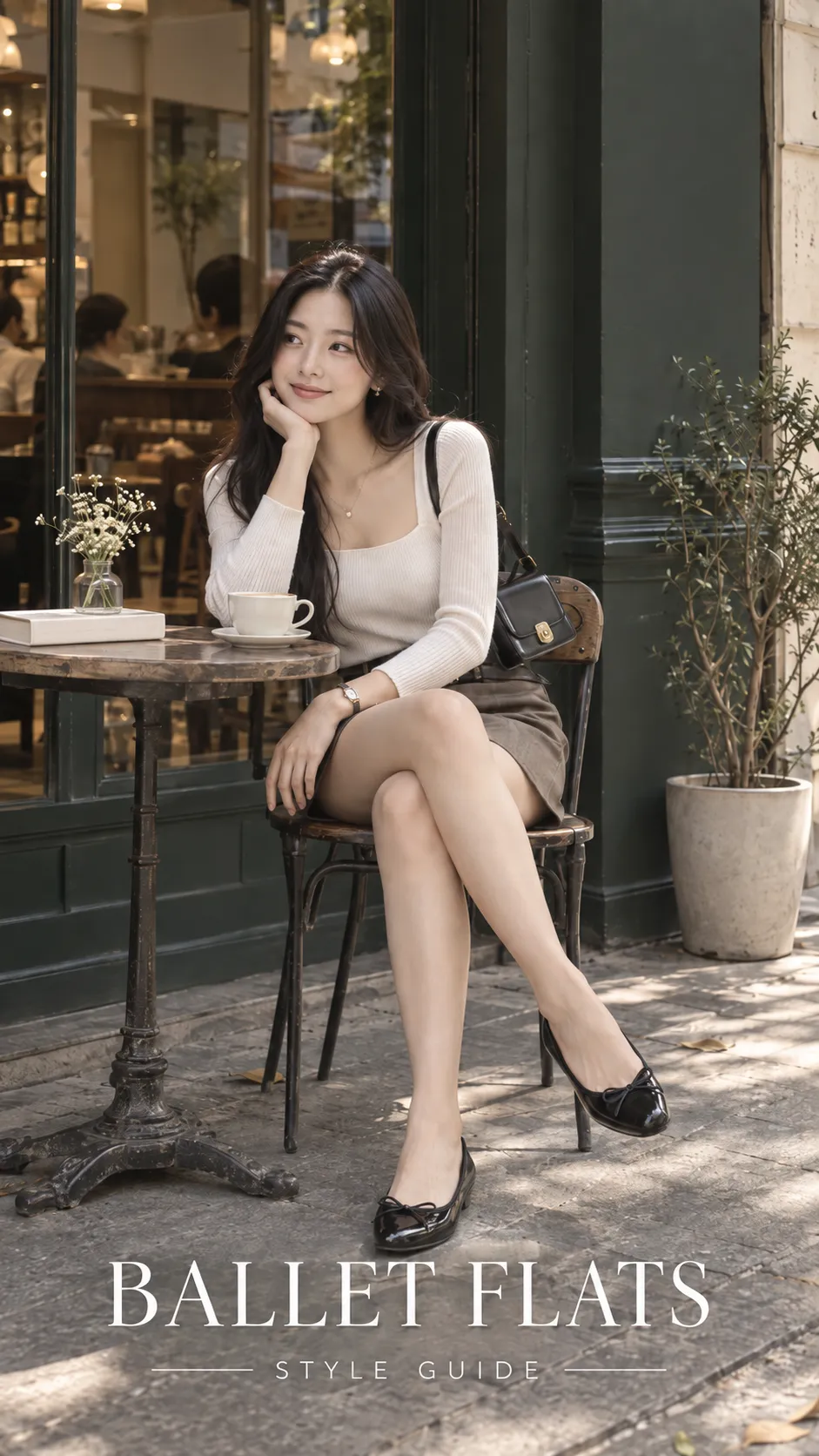
Ballet flats have a low, compact outline and a relatively open instep. The rest of the outfit determines whether that shape supports Balletcore, Preppy, Dark Feminine, or alternative styling rather than making it inherently sweet.
Inspect toe shape, vamp coverage, color, socks, and the weight of the bottoms. Changing one of these variables can alter how the same pair works in an outfit.
Guide collection: Women's Footwear Guides: Choosing Shoes for an Outfit
What Are Ballet Flats?
Ballet flats are low-soled, relatively compact shoes with a fairly open upper. In styling, their smaller visual weight distinguishes them from chunky loafers, sneakers, or boots.
That lighter outline works with skirts, dresses, or cropped trousers, but it can disappear beneath very wide long hems or beside substantial upper-body volume. Assess the bottom hem together with the shoe.
Use flats to change an outfit's visual weight. Dark structured garments or hardware above can contrast with a softer shoe below. Black, a more defined toe, or darker socks can also reduce the sweetness of a softer outfit.
For comparisons between footwear categories, explore Women's Footwear Guides: Choosing Shoes for an Outfit. This article focuses on ballet flats and their effect on proportions.
Read the Shoe Before Choosing the Bottoms
A deeper opening exposes more instep; a higher vamp creates a larger shoe area. Round, square, and slightly pointed toes create different endings. A bow adds one decorative reference, while buckles, studs, or plain dark leather can sharpen the finish. Toe shape alone does not establish fit or comfort; assess the actual shoe's available space and construction.
Flats need not imitate chunky footwear. Choose boots or loafers if more lower weight is the goal, or use flats deliberately for lighter ankles and contrast with structure above.
Short or cropped hems leave more room around the shoe. With ankle-length or longer bottoms, reveal the toe and keep the hem clear of the ground if you want the footwear readable.
Three Adaptable Ballet Flat Directions
Balletcore
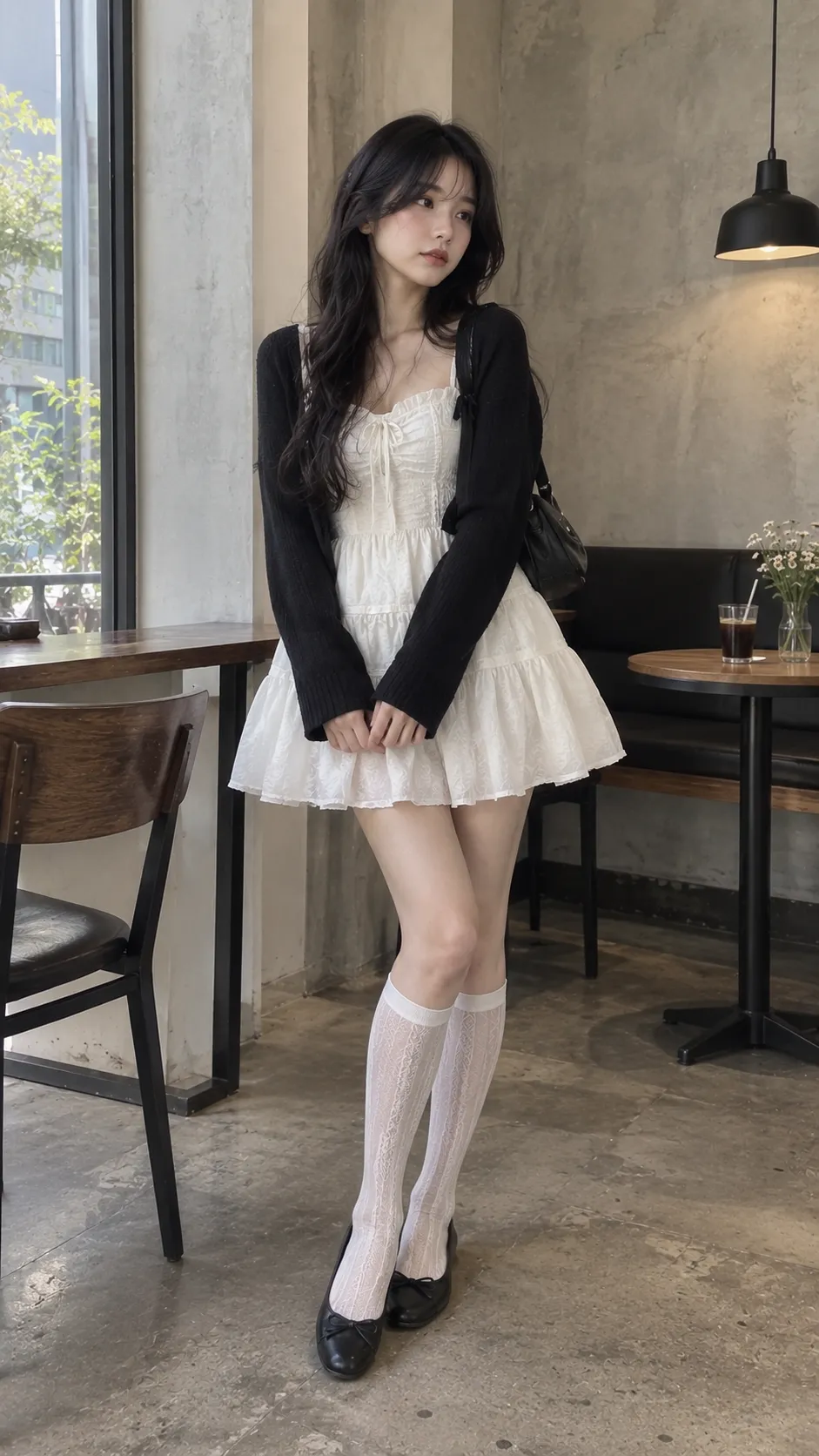
Skirts, cardigans, knit, fine socks, or leg warmers can support the reference. Lighter neutrals create one interpretation; black, gray, or burgundy creates a darker one.
Dark Feminine
Black flats with a defined toe can pair with a slip skirt, fitted top, sheer layer, or structured blazer. Sharper upper details contrast with lighter footwear.
Alternative / Soft Grunge
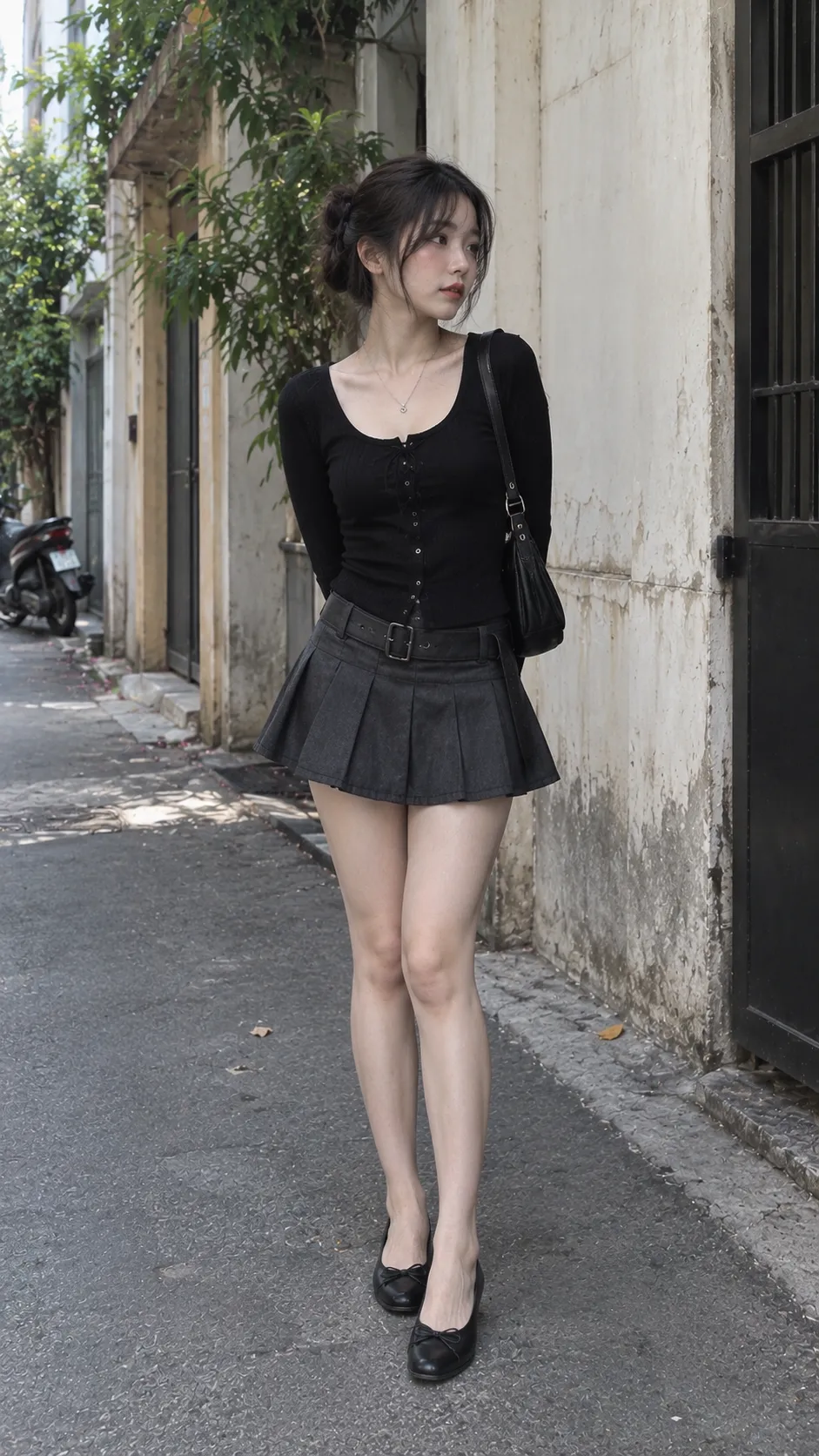
Try graphics, dark denim, contrast socks, a mini, or leather to create tension between softer shoes and rougher surfaces.
For the complete aesthetic rather than shoe styling, explore What Is Balletcore? Movement, Tulle, and Ballet Flats. The present article remains a footwear specialist rather than another Balletcore overview.
Ten Ballet Flat Outfit Formulas
Mini Skirt + Fitted Knit + Flats
The shorter hem leaves the flats visible; a compact knit keeps the upper area clearer and leaves room for an optional jacket.
Slip Skirt + Tank + Black Flats
Draping satin and flats create a softer lower area. Black changes the mood; a leather jacket can add a firmer contrast.
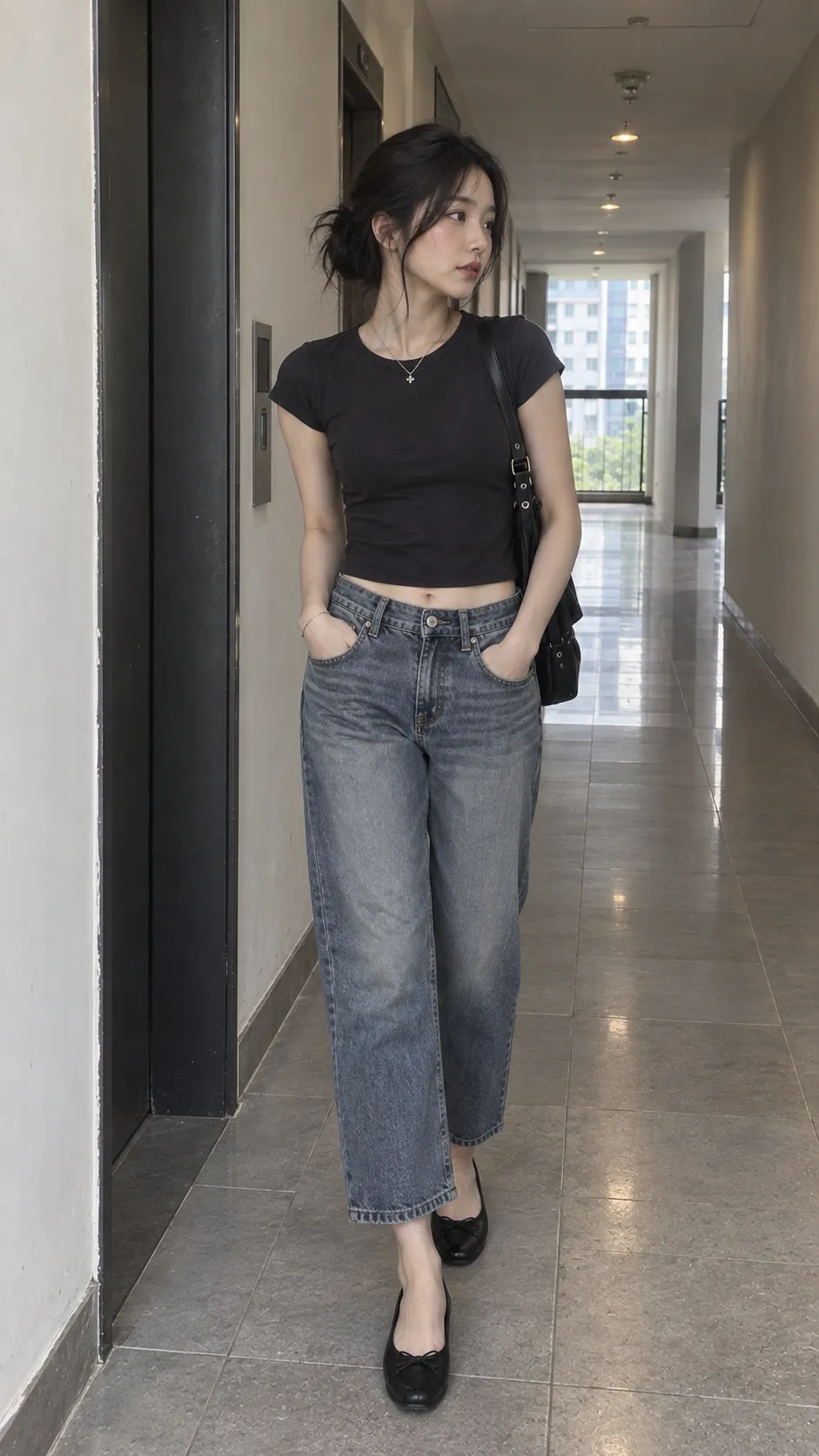
Cropped Straight Jeans + Baby Tee + Flats
Denim makes the shoes feel less exclusively ballet-inspired. Reveal the ankle or at least the toe so the footwear retains a visible role.
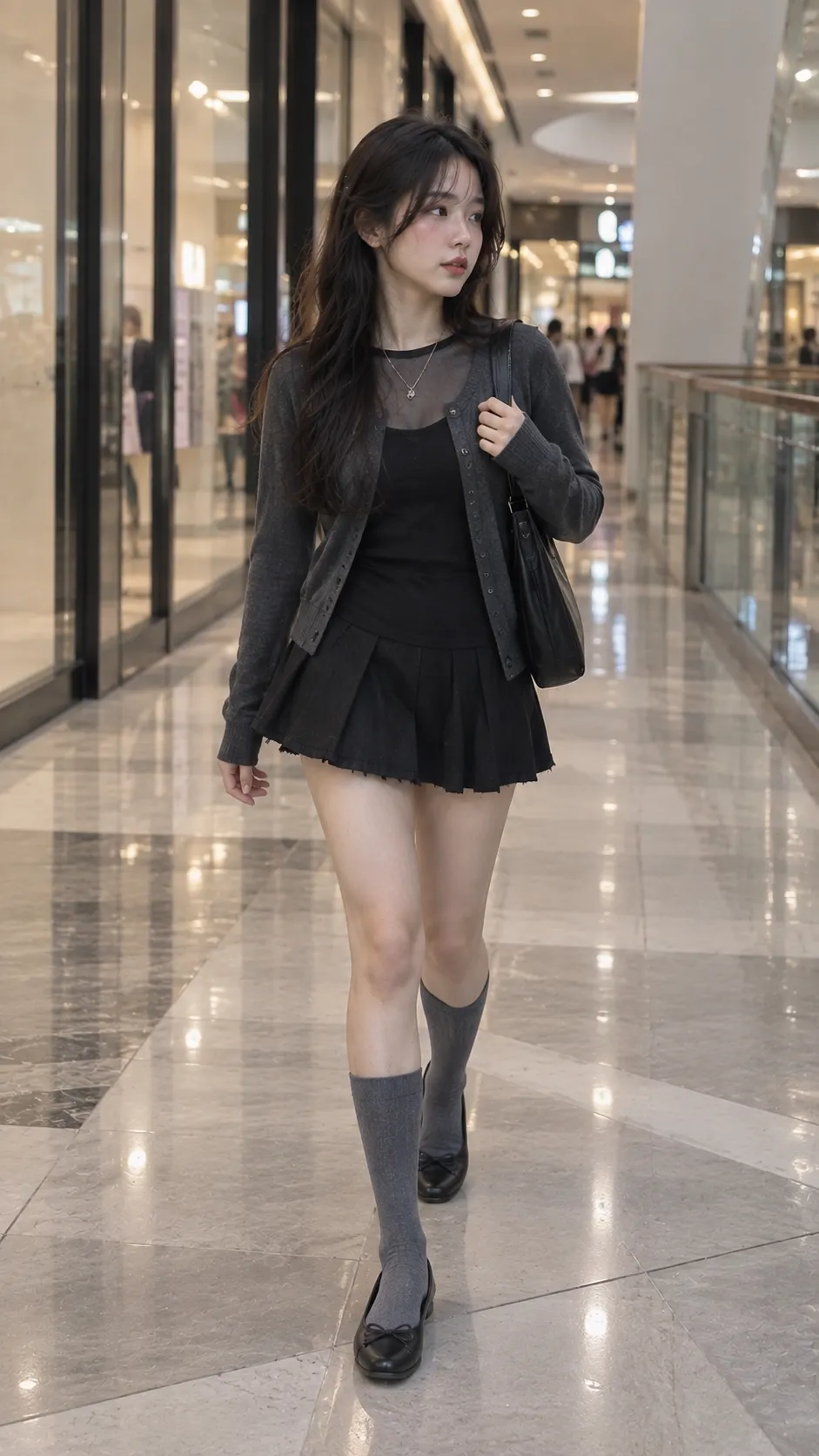
Pleated Skirt + Cardigan + Black Flats
A Preppy or Balletcore foundation. A darker cardigan, gray socks, or selected silver can reduce the complete uniform reference if desired.
Graphic Tee + Mini + Flats
Graphics contrast with softer footwear. With an oversized tee, a front tuck or defined waistband keeps the upper-lower transition visible.
Capris + Fitted Top + Flats
The capri hem leaves ankle space around low shoes. Top and bag choices can shift the result between minimal and 2000s references.
Bubble Skirt + Cropped Cardigan + Flats
The skirt supplies volume, while visible leg space keeps flats readable. A shorter cardigan reveals the waistband.
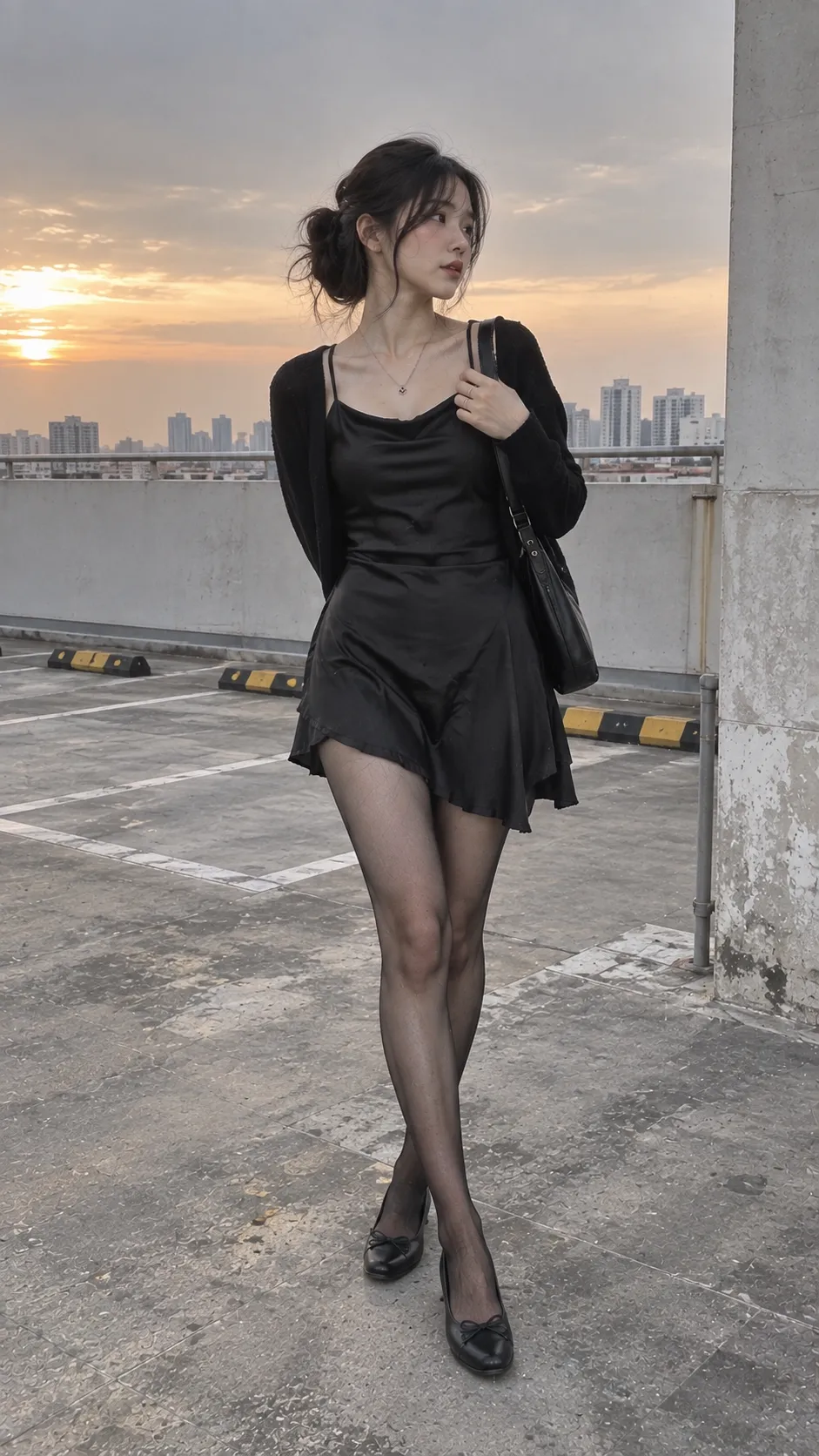
Short Black Dress + Pointed Flats
A lower shoe replaces heel height while retaining a defined toe. A clear neckline and selected accessories can support Dark Feminine references.
Boxy Blazer + Shorts + Flats
A structured shoulder contrasts with exposed leg space and a lighter shoe area.
Mesh Top + Camisole + Black Skirt + Flats
Mesh adds an alternative texture without requiring chunky shoes. Black flats or a small buckle can connect with the upper palette and details.
Socks Change the Ballet Flat's Visual Role
Bare ankles create one lighter finish. Socks add a horizontal break and enlarge the footwear cluster, shifting references toward Balletcore, Preppy, or alternative styling.
With higher socks, warmers, and a fuller skirt together, simpler shoes can leave the layers clearer. With bare ankles or very fine socks, a bow, buckle, or defined toe can supply the main footwear detail.
Why Black Ballet Flats Work in a Darker Wardrobe
Styling black flats provide a straightforward connection with dark tights, skirts, and trousers. Compared with a pastel or metallic version, black changes the mood while retaining the same compact shoe construction.
In all-black styling, different reflections distinguish leather, knit, denim, and satin. A small bow, fine strap, or buckle can supply the principal ankle-area detail without more hardware everywhere.
Black flats can retain softness beside a slip dress, bubble skirt, or fitted cardigan without adding the weight of combat boots. Color changes the mood while the footwear remains light.
Ballet Flats and Mary Janes: The Styling Difference
Mary Janes are defined by an instep strap; conventional unstrapped ballet flats leave that upper area more open. A strap adds a horizontal structural line. Hybrid designs exist, so inspect the construction rather than relying only on the product label.
Beside the same mini, a strap can strengthen Preppy or doll-inspired references, while an unstrapped flat can provide a quieter finish. Neither must lead the outfit; scale, color, and surface change the emphasis.
To compare the constructions, explore identifying and styling Mary Jane shoes. Assess strap position, fit, and toe outline alongside the flats.
Five Ballet Flat Styling Checks
1. A Hem Hiding the Whole Shoe
A low shoe can disappear beneath long wide trousers. Try cropped or suitable-length straight trousers, or leave a clear toe visible.
2. Heavy Clothing with an Unintentionally Small Lower Anchor
An oversized jacket, thick maxi, and extensive hardware can dominate the shoe area. Keep flats if that contrast is intended, or expose more ankle space or reduce another layer's volume.
3. Every Balletcore Cue Together
Bows, ribbons, warmers, tulle, cardigans, and flats can be combined, but one or two leading references provide an easier everyday starting point.
4. Socks Without a Proportion Check
Socks add horizontal lines. With a longer skirt and little visible leg, lower socks or close shoe tones can reduce segmentation if desired.
5. Expecting an Unstrapped Flat to Provide Mary Jane Structure
If an instep strap and more defined upper are the goal, compare Mary Janes. Choose the construction that supplies the role you actually want.
Frequently Asked Questions
What outfits are easiest with ballet flats?
Minis, pleated skirts, cropped jeans, capris, and shorter dresses leave space around the ankle or toe. Other lengths work when the shoe remains deliberately visible or hidden.
Do black ballet flats work in alternative outfits?
Yes. Dark denim, graphics, mesh, minis, gray socks, or leather can contrast with the lighter footwear.
Can you wear socks with ballet flats?
Yes. White adds contrast, black or gray retains a darker palette, and sheer socks introduce a finer, dressier texture.
Can ballet flats work with wide-leg trousers?
Yes. Check hem length so the shoe is not unintentionally concealed. Wide and long trousers can dominate a small footwear outline.
How do ballet flats differ from Mary Janes?
The Mary Jane instep strap adds structure and another horizontal line; conventional ballet flats are usually more open and unstrapped. Hybrids overlap, so inspect the actual design.