

What Is Heisei Retro? Japanese 1990s–2000s Nostalgia
Heisei Retro describes nostalgia for Japan's Heisei era, 1989–2019. Contemporary references often concentrate on the 1990s through the early or mid-2000s: purikura, Tamagotchi, flip phones, compact digital cameras, stickers, character goods, Gyaru, loose socks, mini skirts and platforms.
It is not one dress code. In fashion, it works as a library of remembered visual codes: select a few Japanese 1990s–2000s references and reinterpret them with contemporary fit. This guide preserves the individual identities of Y2K, Gyaru and Kogal.
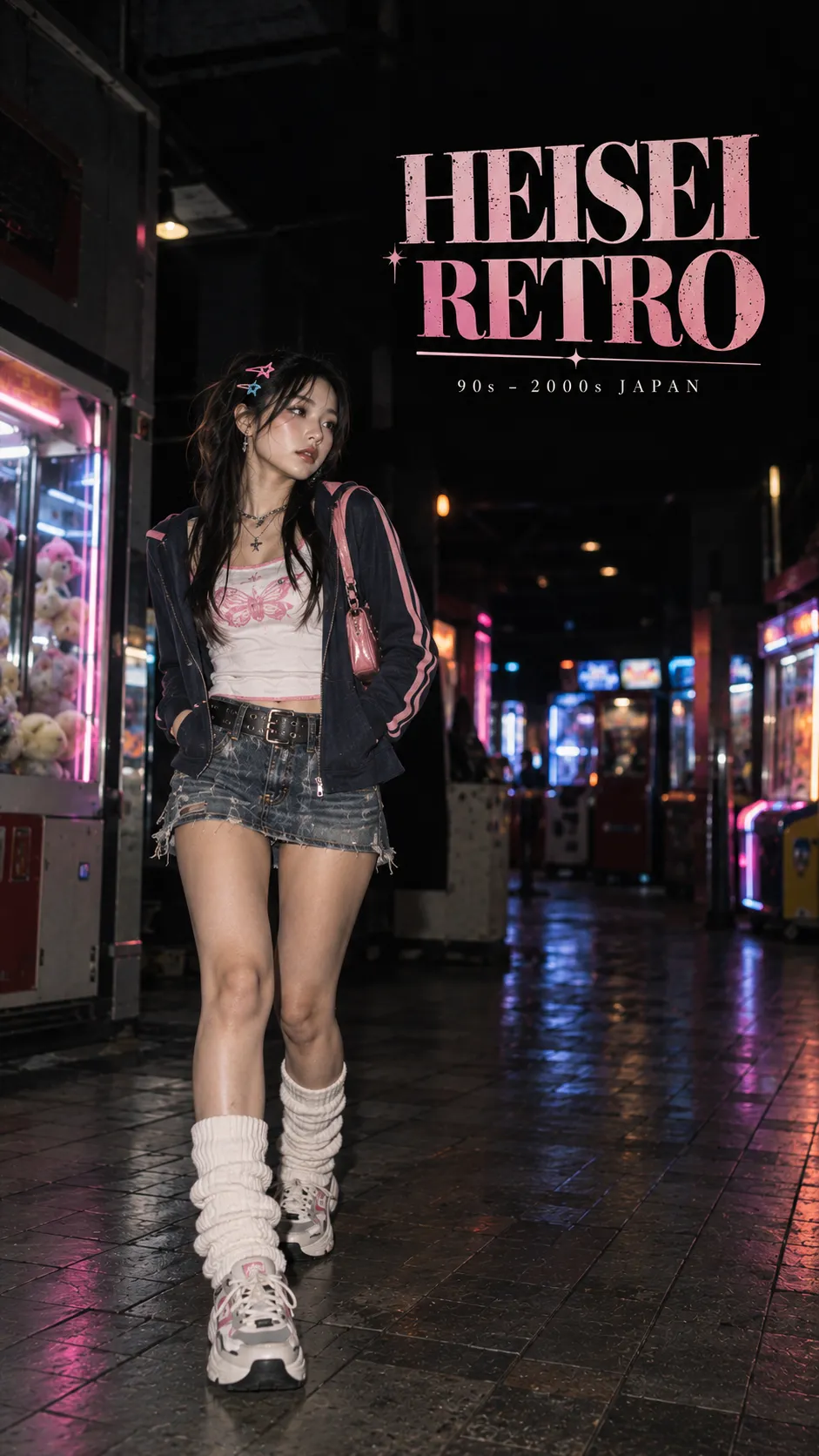
Guide collection: Aesthetic Dictionary: A Fashion Style Directory
What Is Heisei Retro?
Heisei (平成) was Japan's imperial era from January 8, 1989, to April 30, 2019. Heisei Retro revisits its objects, design and popular culture through nostalgia. Japaniche notes that although the era lasted over 30 years, many references concentrate on its earlier and middle years, especially the 1990s and early 2000s.
The same flip phone, purikura or Tamagotchi can prompt childhood memories for one person and feel newly retro to a younger viewer. A Japanese survey published in April 2026 reported high awareness within its sample; teenage respondents particularly selected purikura, loose socks, digital cameras, minis and platforms compared with older groups.
In fashion, Heisei Retro therefore functions as an umbrella of nostalgia that can include Kogal, Gyaru, Y2K-adjacent casual clothing, character accessories and other Japanese street-fashion references.
Which Periods Does It Revisit?
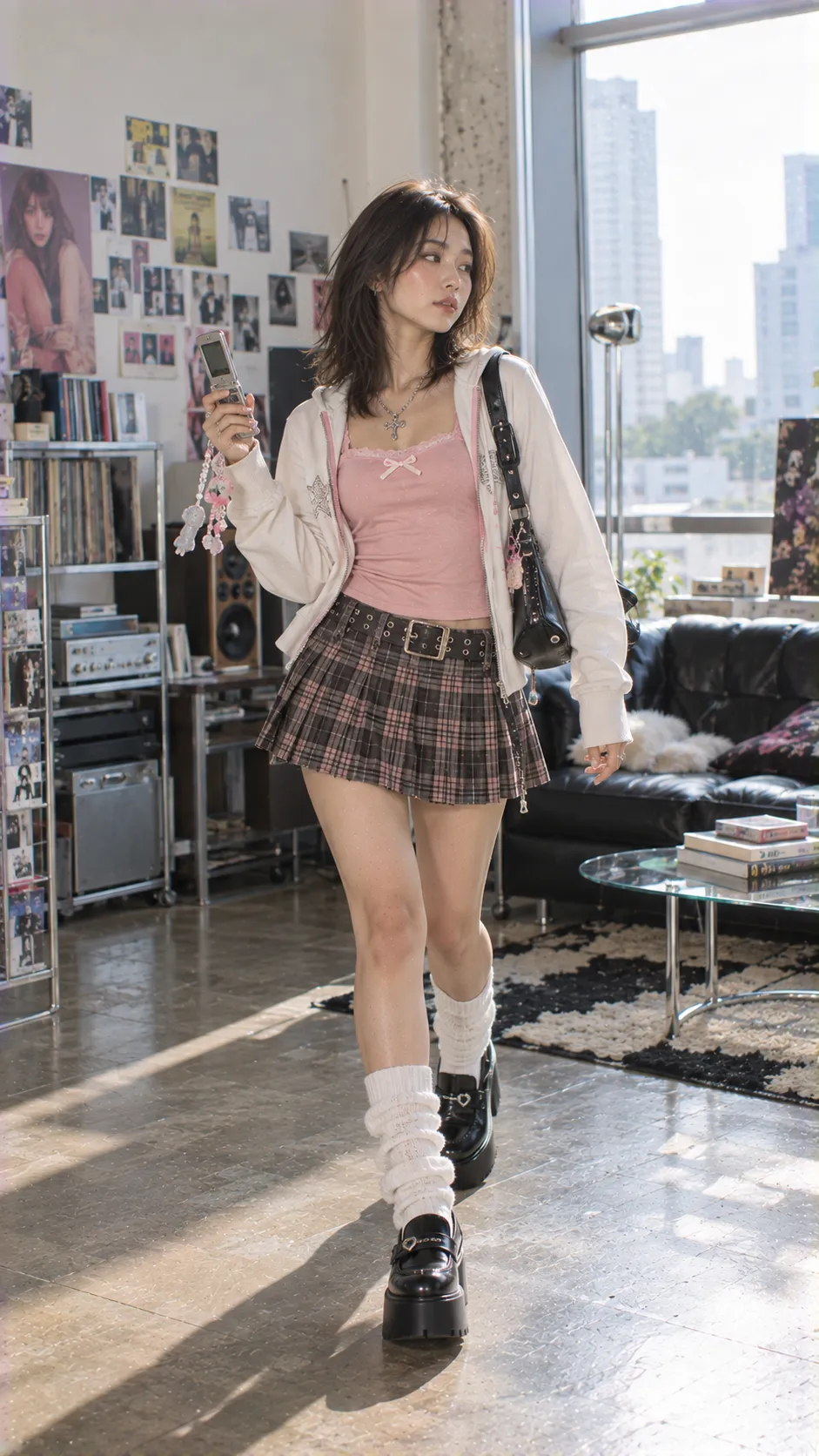
Loose socks, Kogal, platforms, early purikura, portable music, sticker culture and Shibuya or Harajuku street-fashion references.
Flip phones, compact digital cameras, glittering accessories, metallic details, baby tees, low-rise silhouettes and changing internet and mobile culture.
Character goods, colorful accessories, decorated phones, layered casual clothing, Gyaru variations and intersections of kawaii, street and mall fashion.
These are styling aids rather than rigid historical boundaries. Contemporary interpretations often combine years: 1990s-inspired loose socks can accompany a 2000s mini bag and compact camera.
Understanding Interest in Heisei Retro in 2026
Nostalgia can connect people with different experiences of the same object. Some twenty- or thirty-somethings remember sticker albums, purikura or character goods; younger viewers may discover their designs through comparison with today's smartphones. Remembering and first-time discovery can both support social-media interest.
Nippon Information's March 2026 survey of women aged 13–39 reported 90.1% awareness and 47.3% who had purchased related products or expressed interest. Teenage respondents also associated the topic with emotional nostalgia, photogenic qualities and fashion. These are dated, sample-specific findings, not a guarantee of current popularity; they help contextualize digicams, flash photography, stickers, mini bags and loose socks as image-making tools.
You need not remember 1998 to interpret its visual codes. However, using a specific name such as Kogal, Gyaru or Y2K calls for attention to that style's characteristics and context.
Five Fashion References
Two or three clear references often work better than all five. Platforms, loose socks and a pleated mini already provide substantial detail; excessive charms and metallics can compete.
Six Accessible Outfit Ideas
1. Cardigan + pleated mini + loose socks + platform loafers
Kogal reference → simple top → strong lower silhouette.
A clear 1990s direction. A plain cardigan and contemporary bag keep it an interpretation rather than uniform cosplay. For the specific uniform context, explore Kogal.
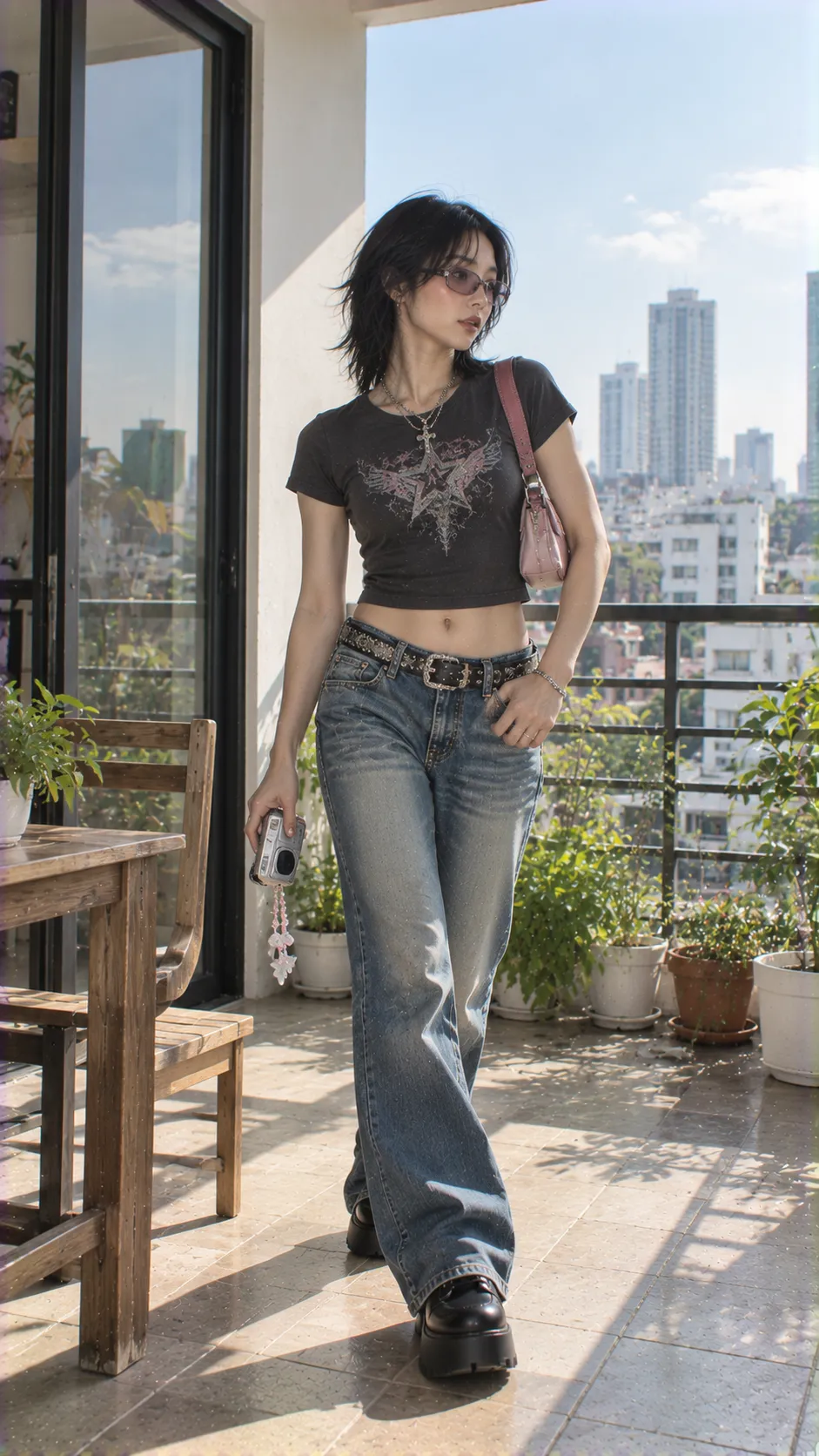
2. Baby tee + low-rise jeans + mini shoulder bag
2000s proportions → one shiny accessory.
A baby tee and low-rise jeans suggest the turn of the millennium. A silver bag or tinted glasses may suffice; extensive cyber details shift toward Cyber Y2K.
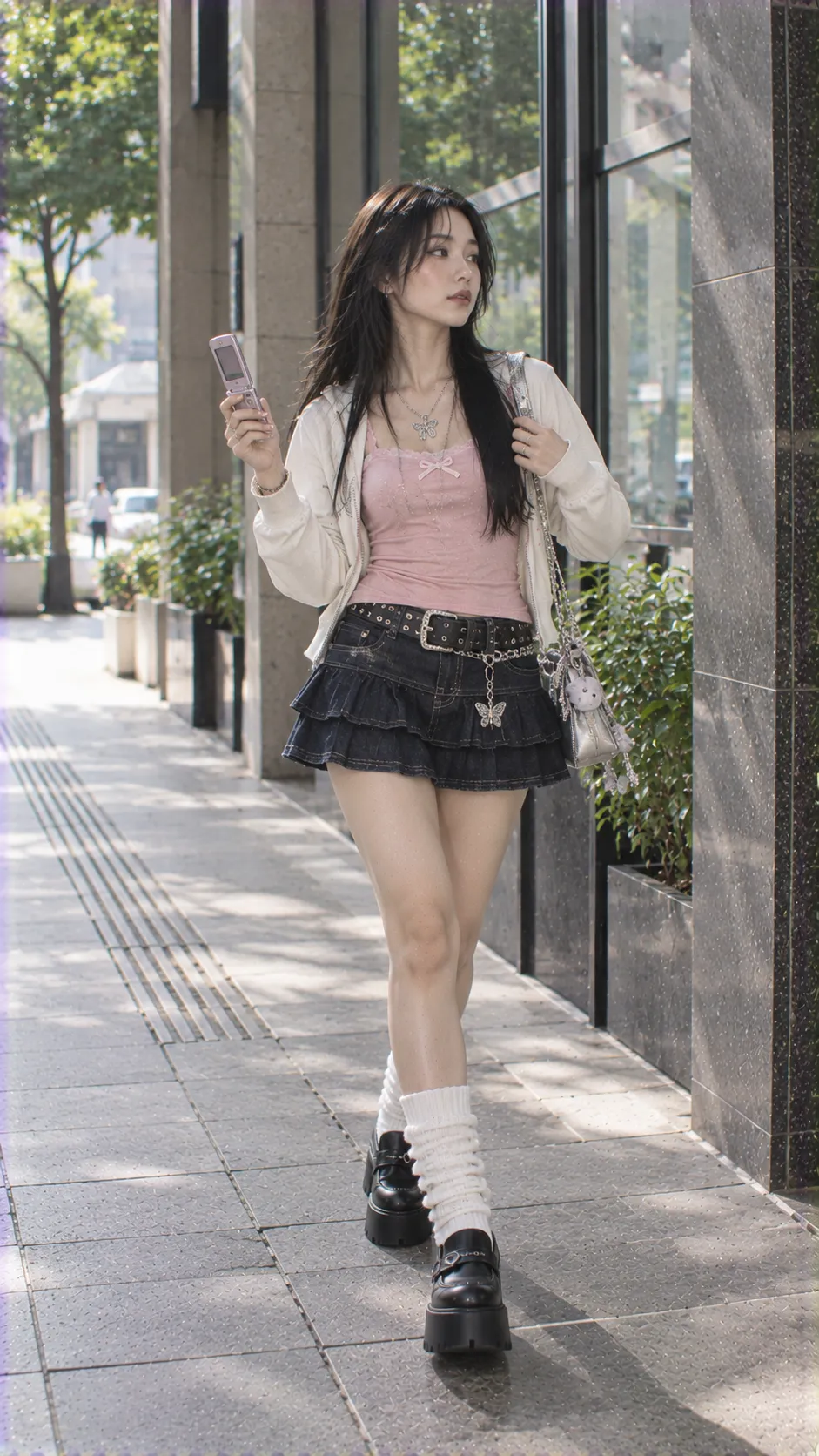
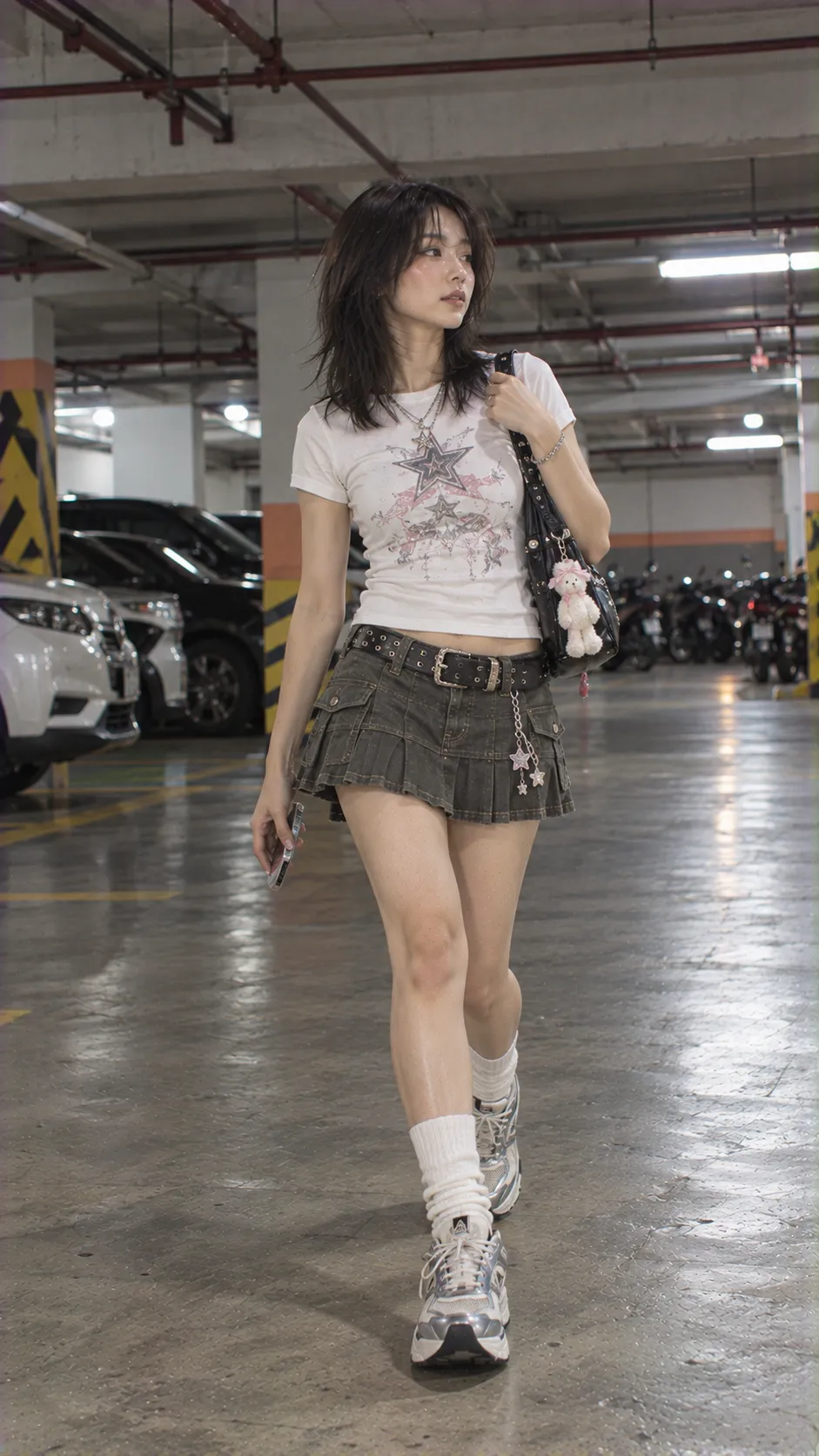
3. Graphic top + denim mini + platform sneakers
Pop graphic → neutral denim → substantial shoes.
Character, arcade or pop imagery suits this direction better than relying on luxury logos. It provides an accessible youthful interpretation without a costume effect.
4. Zip hoodie + mini skirt + colorful socks
Casual layer → short bottoms → nostalgic color.
A hoodie establishes street-casual clothing. Concentrate accent color in socks, a bag charm or hair clip to retain hierarchy.
5. Fitted knit + straight jeans + platform boots
Simple base → Gyaru-adjacent finish.
Hair, liner, a belt and boots can suggest Gyaru without elaborate makeup or tanning.
6. Dark tee + plaid mini + digicam + chunky shoes
Dark base → one retro object → one area of volume.
This suits Apocalypse Closet's darker styling. A digicam or wired earphones establish a period reference within a dark palette.
Compared with Y2K, Gyaru and Kogal
Colors, Materials and Accessories without a 2000s Costume Effect
Washed denim, jersey, light knits, nylon, moderately glossy faux leather, plaid and small metallic details suit this interpretation. Bright accents or dark neutrals both work. Let one or two deliberately dated details stand out: tinted eyewear, a silver mini bag, clustered charms, platforms or a phone strap.
Technology references evoke the era's analog-to-digital transition. Flip phones, digicams, wired earphones and handheld games can establish time more clearly than a logo. They remain optional; the outfit should work without its camera.
Wearing Heisei Retro in Vietnam: Keep References, Reduce Layers
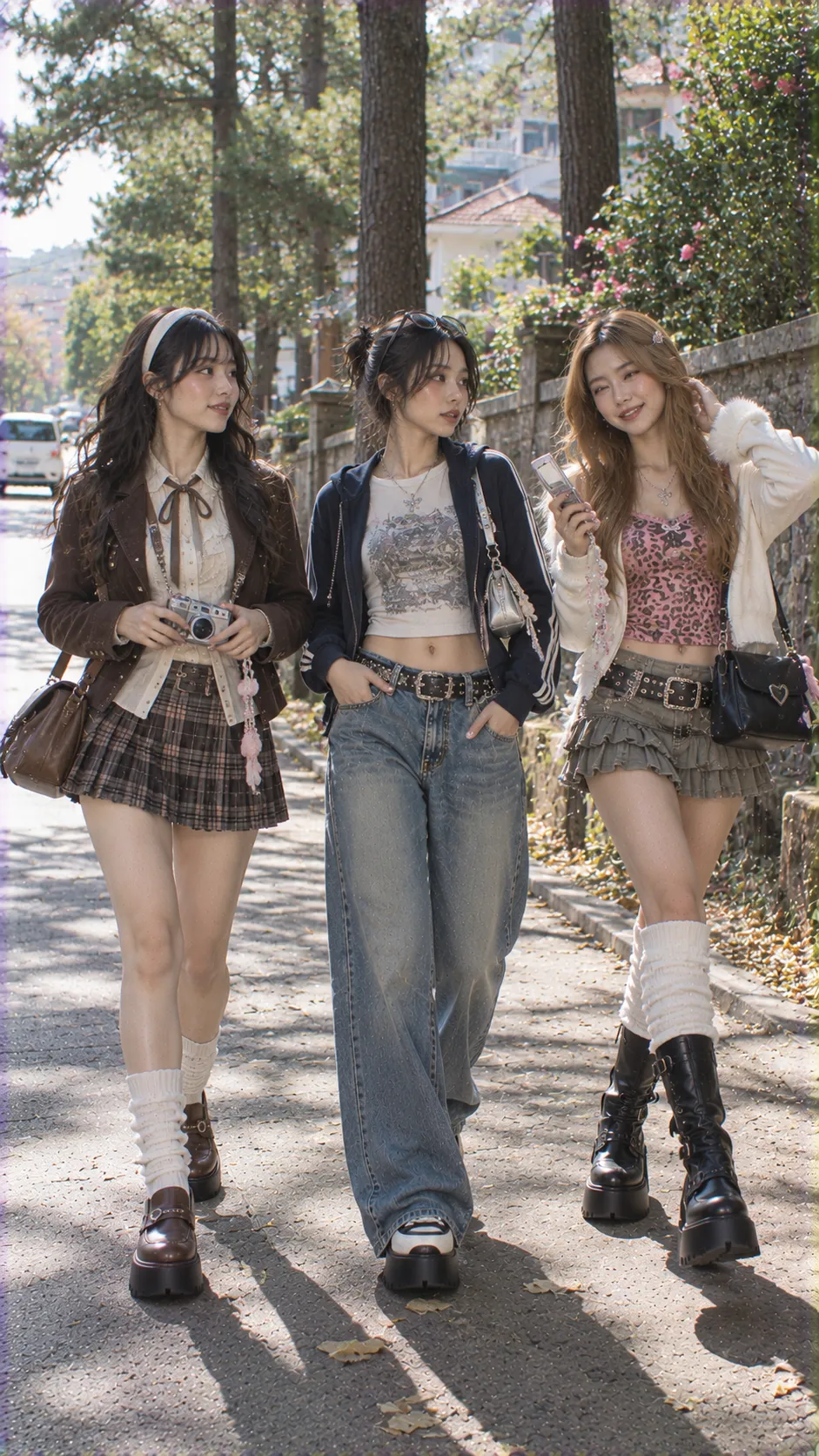
Japanese cold-weather examples can be unsuitable for heat. Retain minis, baby tees, lightweight cardigans, thin denim, socks and platform sneakers; omit heavy coats or knits. A fitted tee, skirt, socks and shoes provide enough structure.
For extensive walking, swap very high platforms for chunky sneakers. If loose socks feel too warm, try moderately voluminous crew socks. Recognizable details need not require sacrificing comfort to reproduce a photograph.
Five Common Styling Mistakes
1. Calling every Y2K outfit Heisei Retro
Heisei Retro is broader and more specifically Japanese in context. Chrome, low-rise clothing and sunglasses alone may suggest Y2K without establishing Heisei.
2. Combining every year from 1990 to 2010
Choose one anchor—1990s Kogal, 2000s pop, casual Gyaru or digital nostalgia—then add only a few references from elsewhere.
3. Relying on props while neglecting silhouette
Phones, cameras, charms and stickers cannot replace considered clothing proportions.
4. Copying Kogal or Gyaru without context
If one substyle is your actual interest, follow its dedicated guide rather than labeling every look Heisei Retro.
5. Assuming retro requires vintage purchases
New clothes can express period proportions, colors and accessories. Heisei Retro is an interpretation of an era, not a provenance requirement.
Frequently Asked Questions
What is Heisei Retro?
It describes nostalgia for Japan's Heisei era, 1989–2019, with many contemporary references concentrating on the 1990s through the early or mid-2000s.
Is Heisei Retro different from Y2K?
Yes. Y2K often centers turn-of-the-millennium fashion and futuristic imagery. Heisei Retro also encompasses Kogal, Gyaru, purikura, flip phones, character goods and everyday Japanese life.
Which items help create a Heisei Retro outfit?
Minis, platforms, loose or crew socks, baby tees, small shoulder bags, colorful charms, digicams and 2000s-inspired eyewear offer accessible references.
Is Heisei Retro a J-Fashion style?
It is broader than one J-Fashion style: a Japanese cultural nostalgia umbrella in which fashion plays a substantial part.
References
Definition and scope are cross-checked against Japaniche — Heisei Retro and Aesthetics Wiki — Heisei Retro. The dated 2026 interest figures and younger respondents' item choices come from Nippon Information — Heisei Retro Survey 2026.