

What Is Techwear? Evaluate Function Before Buying
Techwear means technical clothing: materials, construction, and features chosen to address actual needs such as rain, wind, perspiration, movement, or carrying belongings.
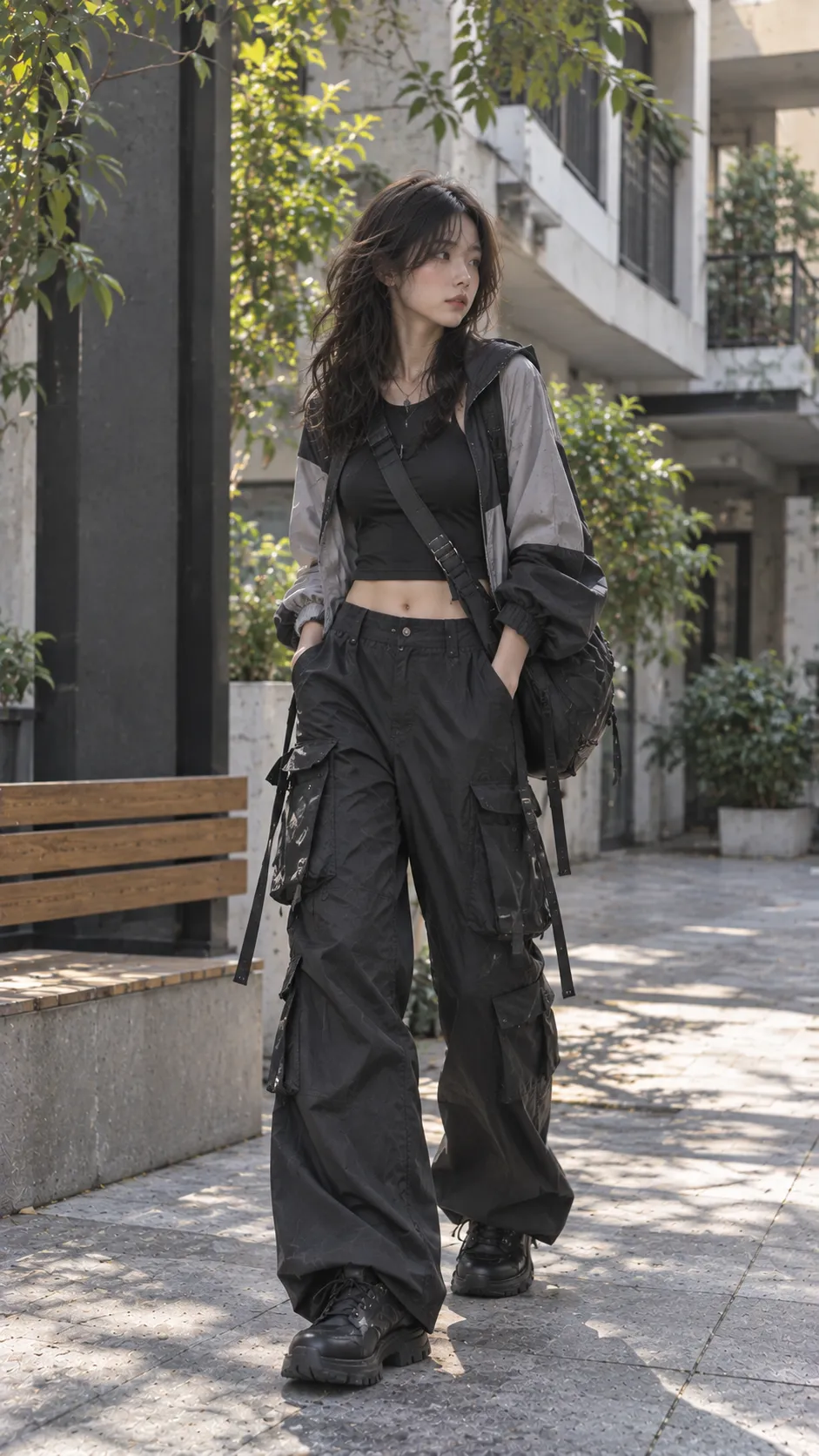
Black clothing, cargos, zippers, and straps can suggest the visual language, but functional value depends on what those features do in use.

Guide collection: Aesthetic Dictionary: A Guide to Fashion Styles (Vietnamese)
What Is Techwear? Function Before Aesthetic
Techwear need not resemble a futuristic uniform. It follows a function first approach: appropriate fabric, a cut that permits movement, usable pockets, and layers that work together. A darker, cleaner technical appearance may follow those choices rather than establish their performance.
Contemporary techwear can adapt outdoor, sportswear, and protective-clothing solutions for urban use. A light shell, articulated knees, and well-positioned pockets may provide more practical value than decorative straps over restrictive, poorly ventilated fabric or false pockets.
Five Features to Assess
Material → Construction → Movement → Storage → Weather. Consider color, hardware, and futuristic styling after these functional questions.
Photographs can sell a technical-looking aesthetic more easily than demonstrate performance. This guide offers an evaluation framework rather than only outfit formulas: what problem does the item solve, how is it built, and is that useful enough to justify its price?
Techwear Is Not Synonymous with Cyberpunk
| Term | Main focus | Possible overlap | Do not assume |
|---|---|---|---|
| Techwear | Functional materials and clothing systems | Dark colors, cuts, pockets, and hardware | A futuristic appearance is required |
| Cyberpunk | Futuristic urban or dystopian visual references | Black, neon, metallic details, and accessories | The outfit necessarily offers technical performance |
| Streetwear | Streetwear culture and communities | Roomier silhouettes, sneakers, and utility references | Specialist technical fabrics are compulsory |
If wide silhouettes and sneakers are the main appeal, explore What Is Streetwear?. Futuristic visuals, metallics, and club references may lean toward Cyberpunk or Dark Y2K. In this guide, techwear's defining concern is function that can be assessed in use.
Techwear Silhouettes Can Look Technical without Decorative Straps
Black, gray, olive, and navy can simplify layering, but dark colors are optional. Reflective trims, buckles, or specialized zippers should be evaluated for the actual role they serve. Read function before visual references.
Cuts may be fitted, straight, tapered, or wide while allowing movement at shoulders, elbows, hips, and knees. Panels, gussets, and adjustment points should support rather than obstruct activity. Hoods, collars, hems, and cuffs can affect weather exposure when appropriately constructed.
A Layering System for the Actual Climate
Layer Stack: From Skin Outward
- Base layer: manage perspiration and friction with suitable material; thickness is optional.
- Mid layer: provide insulation or spacing when needed; it may be unnecessary in heat.
- Shell: provide suitable wind or rain protection with appropriate ventilation and seam construction; not every shell filters dust or has the same protection.
- Carry system: pockets, slings, and attachments should distribute load without blocking movement.
Cold-weather layering is often impractical in humid heat. A suitable light ventilated shell, unlined trousers, and a stable sling may provide more value than a heavily insulated jacket with decorative straps. Choose layers for the actual conditions.
Read Water-Protection Claims Carefully
Water-resistant, water-repellent, and waterproof claims are not interchangeable. Surface beading alone does not prove prolonged rain protection: material barriers, seams, closures, condition, and test methods matter. Request the product's actual specifications rather than relying on a few drops shown in a sales video.
Useful Product Information
Fiber composition, weight, moisture-management claims, finishes, seam sealing, closure type, secure pockets, stretch panels, and care instructions help assess use. Vague high-tech, futuristic, or waterproof labels without supporting detail do not establish performance.
Pockets: Placement Matters More Than Quantity
Thigh pockets may be accessible while standing but swing against the legs during movement. Chest storage can pull the upper forward; bulky rear pockets can interfere with sitting. Check fastening security, opening size, lining, and whether a phone or power bank twists the garment when loaded.

Techwear Trousers: Cargos, Parachutes, or Another Construction?
Cargos emphasize patch or bellows pockets; parachute styling often involves lighter fabric, volume, and drawcords. Technical trousers can borrow either outline, but movement panels, materials, closures, and storage need a practical purpose. Sizing up solely for volume can leave a slipping waist or excessive crotch length that interferes with movement.
Read what cargo pants are, What Are Parachute Pants? and what oversized fit means before choosing trousers.
Three Adaptable Women's Techwear Routes
Route 1 — Hot-weather utility
A suitable moisture-managing tank or tee, nylon or cargo trousers with knee room, and a small sling can retain storage and movement without an insulating mid-layer. Select footwear for the intended walking rather than its heavy-looking sole.
Route 2 — Rain-ready commuter
Try a light base, a suitably specified hooded shell with ventilation, and trousers appropriate to wet conditions. Keep storage accessible beneath the shell and hems clear of standing water. A commuting system should address actual rain exposure, not simply display many zippers.
Route 3 — Minimal urban tech
A clean-lined jacket, trousers with articulation or suitable stretch, and streamlined sneakers can sit visually near streetwear. Construction makes the difference: remove accessories and ask whether weather protection, movement, or storage still serves a purpose.
Minimal Techwear Still Counts
A plain jacket with useful hood adjustment, secure pockets, appropriate closures, and ventilation may provide more technical value than a heavy, poorly ventilated buckle-covered design. Assess the garment without dramatic styling, filters, or lighting.
A Twenty-Minute Wear Check Before Keeping an Item
A Practical Check at Home
- Load the intended phone, wallet, or headphones and walk for around ten minutes.
- Sit, climb stairs, raise your arms, and rotate your shoulders.
- Check whether fastenings are usable, including one-handed access where relevant.
- Try suitable warm-room conditions without deliberately overheating to assess ventilation.
- Read care instructions. If you cannot maintain the material as directed, reconsider the purchase.
An Online Techwear Buying Checklist
| Need | Useful evidence | Warning signs |
|---|---|---|
| Weather protection | Material, seams, closures, and stated testing conditions | Only a water-beading demonstration |
| Movement | Panel or gusset details and movement video | Only static standing photographs |
| Storage | Actual pocket measurements and intended load | Many false or impractically small pockets |
| Adjustment | A clear purpose for cords, hems, or hoods | Long decorative straps that obstruct use |
| Care | Product-specific washing and any DWR-maintenance instructions | No material-care information |
Build gradually: start with usable technical trousers or an appropriate shell, then explore Baddie Streetwear (Vietnamese) for ways to keep an expressive outfit deliberate rather than overloaded.
Techwear as a Clothing System
Evaluate usefulness when weather changes, movement increases, sitting lasts longer, or belongings must be accessed quickly. If a feature does not improve your intended use, treat it as styling rather than paying more solely for a technical label.
Gorpcore and Techwear: Different Starting Points
Read the Gorpcore guide for outdoor clothing and trail footwear in streetwear without assuming the result must look Cyberpunk.
Techwear often starts with urban use: weather exposure, storage, movement, and interaction between layers. Gorpcore starts with outdoor references such as shells, fleece, hiking trousers, and trail shoes brought into everyday outfits. Both can use similar fabrics and functional pockets; Gorpcore tends to make outdoor references more visible, while some techwear interpretations emphasize a cleaner urban outline. Neither requires one fixed palette.
Explore related topics: Avant-Garde Fashion and Japanese Streetwear (Vietnamese).
References
The original article uses these sources for definitions, history and cultural or trend context:
- Vogue — Fumito Ganryu Spring 2024 Menswear — design context for functional clothing, ventilation, weather protection, and silhouette.
- Vogue — Meet Goopimade, the Taiwanese Brand That Spawned a Clone Army — urban-outdoor references, technical materials, and functional silhouettes in Asian fashion.
Styling and practical evaluation suggestions are Apocalypse Closet editorial interpretations informed by the site's outfit collection.
Frequently Asked Questions
What is techwear?
Techwear, from technical wear, prioritizes appropriate materials, weather protection, movement, storage, and functional clothing systems for actual use, often in urban settings.
How does techwear differ from Cyberpunk?
Techwear concerns clothing function and construction. Cyberpunk is an aesthetic and fictional reference system. A futuristic-looking outfit may lack tested technical performance.
Can techwear work in hot, humid conditions?
Yes, with suitable lighter materials, ventilation, fewer layers, and only the functions you need. Thick insulated systems may be impractical throughout a humid outdoor day.
Do you need many straps for techwear?
No. Straps without a useful purpose can add weight or obstruct movement. Prioritize usable pockets, appropriate closures and materials, and freedom of movement.