

1950s Women's Fashion: Silhouettes and Outfit Ideas
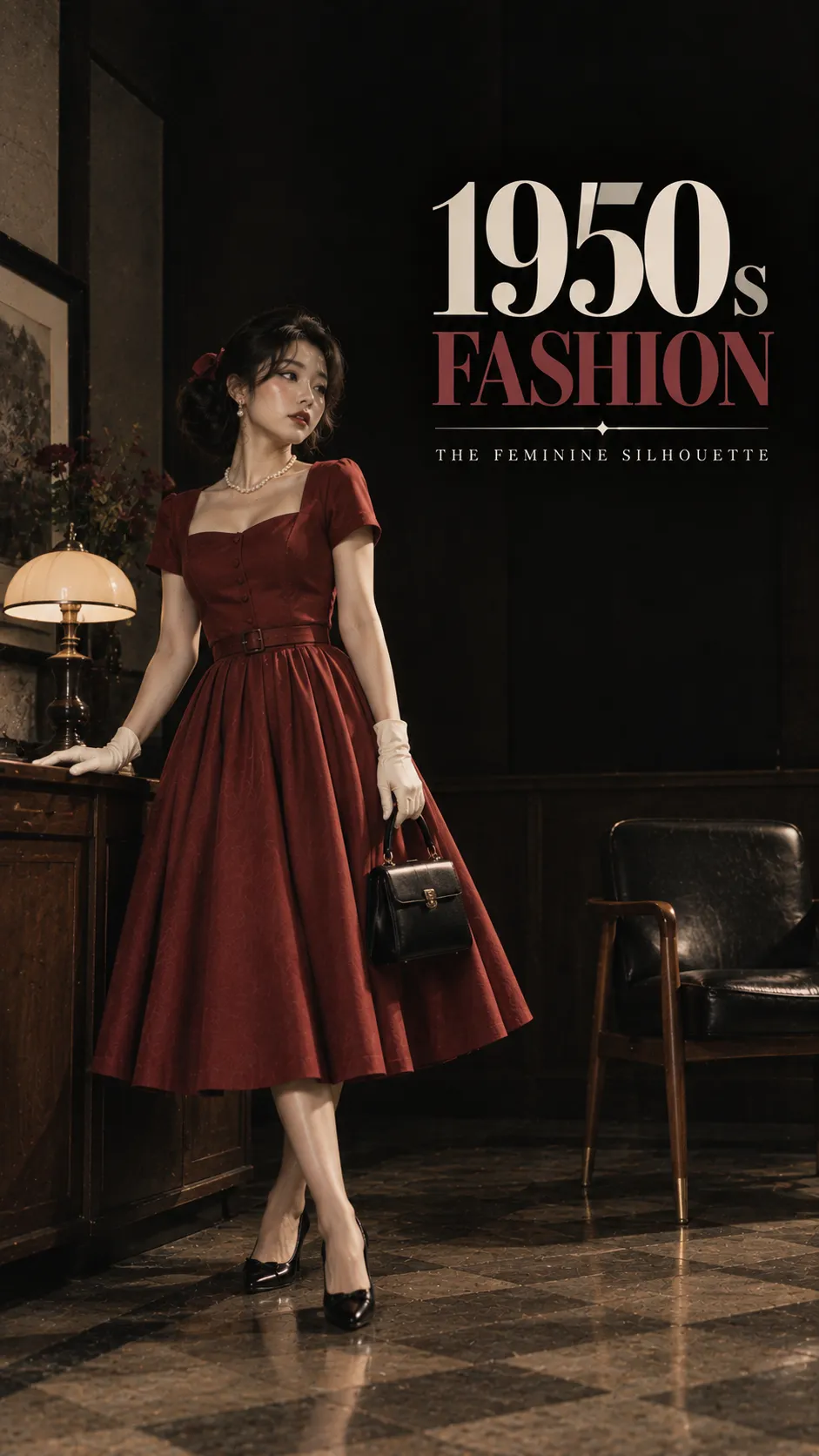
1950s women's fashion extends beyond full skirts and small waists. Dior's New Look strongly influenced the early decade, but pencils, sheaths, straighter suits, sportswear, pedal pushers, sundresses, poodle skirts and cocktail dresses also appeared. Later chemise and sack shapes reduced waist emphasis.
This guide covers the broader women's fashion landscape of the 1950s. For Dior's 1947 debut and the Bar suit specifically, explore the separate New Look specialist guide.
Guide collection: Aesthetic Dictionary: A Fashion Style Directory
What Characterizes 1950s Women's Fashion?
Defined waists and full skirts dominate popular memories of 1950s womenswear for understandable reasons. Dior's 1947 New Look placed soft shoulders, a shaped bust, narrow waist and long full skirt at the center of postwar couture. The Met describes its continuing influence throughout the following decade.
Yet one circle skirt cannot represent the entire period. FIT's Fashion History Timeline describes increasing variety: straight-cut suits, popular sheaths, Balenciaga's later chemise and less waist-focused designs, alongside expanding American sportswear.
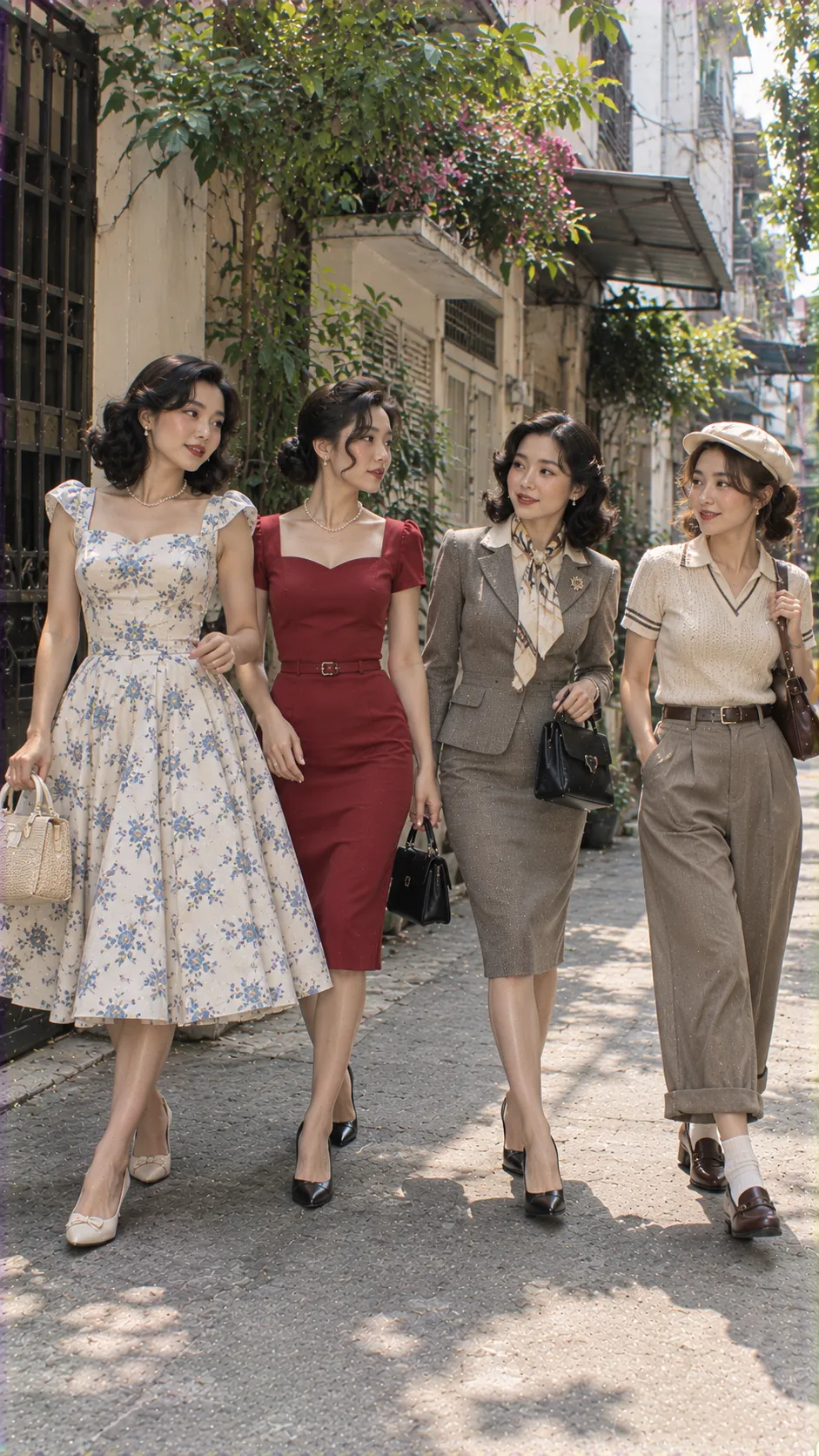
Read the decade as coexisting directions: couture hourglass, narrower pencil and sheath lines, tailored suits, casual sportswear and playful youth clothing.
Four Major Silhouette Families
A garment's context changes its effect. Full skirts contrast with simpler tops; pencils need appropriate ease and movement openings; chemises intentionally reduce waist definition. One cardigan can support very different silhouettes.
How Shapes Changed across the Decade
The Met identifies Balenciaga's 1952 work as a successful challenge to New Look proportions. The V&A describes the waist-free 1957 sack as anticipating later shifts and minis. The decade both celebrated and challenged the hourglass.
Daywear, Sportswear and Youth Fashion beyond Couture
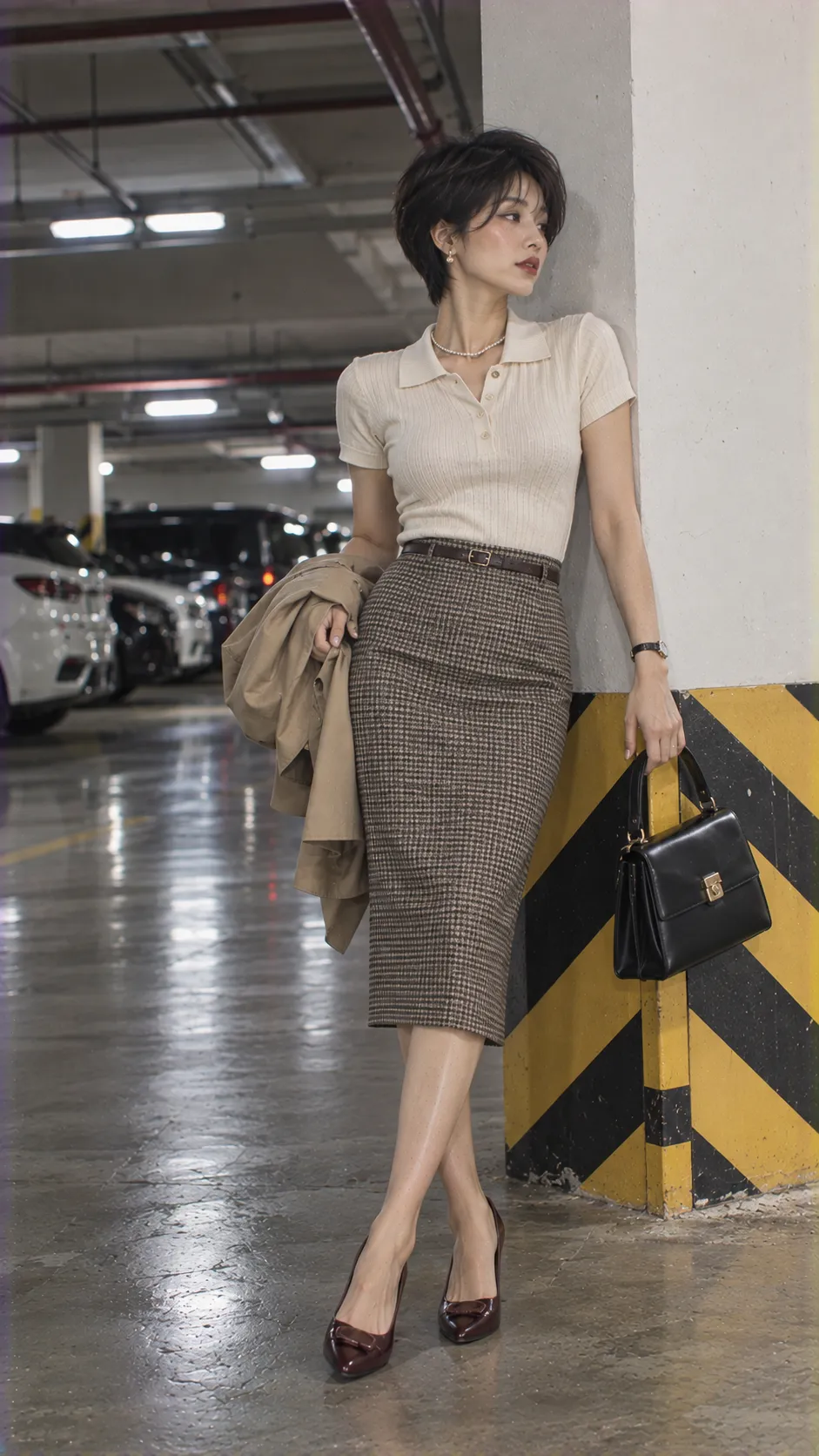
FIT describes continuing sportswear development. Claire McCardell and other American designers offered wrap dresses, pedal pushers, coordinated tops, playsuits and practical casual clothing. Slacks gained acceptance in some settings, though dress conventions generally remained more formal than today.
Poodle skirts became a familiar youth-fashion image. These felt circle skirts could feature varied appliques rather than only poodles and often accompanied fitted twinsets. They retained a defined waist and full skirt in a more playful casual interpretation.
Cocktail dresses occupied the space between day dresses and evening gowns, often shorter than gowns with richer materials or decoration. A wardrobe consisting only of full party dresses misses much of everyday 1950s fashion.
Dressing for Different Occasions
Occasion-specific conventions were more pronounced than today. FIT describes expectations of coordinated grooming and accessories. Practical day dresses might use cotton or wool; suits served formal daytime occasions; sportswear and slacks supported leisure; eveningwear increased sheen, structure and ornament.
Cocktail dressing illustrates the middle ground. Popular in postwar social life, these dresses combined day-dress-like lengths with silk faille, satin, embellishment or evening-oriented construction. Choose the level of formality before the silhouette. A fitted bodice and full cotton floral skirt can suggest daytime; black satin or taffeta changes the occasion.
Six Wearable Contemporary Interpretations
1. Fitted knit + full midi + pumps
Simple top → defined waist → substantial movement.
An immediately readable combination without requiring a large petticoat. Moderate skirt fullness preserves adaptable proportions. Explore Balancing a Flared Skirt.
2. White shirt + pencil skirt + low heels
Clear collar → vertical line → waist anchor.
A restrained interpretation without compulsory retro prints. A narrow belt or tuck defines the waist while low pumps continue the line.
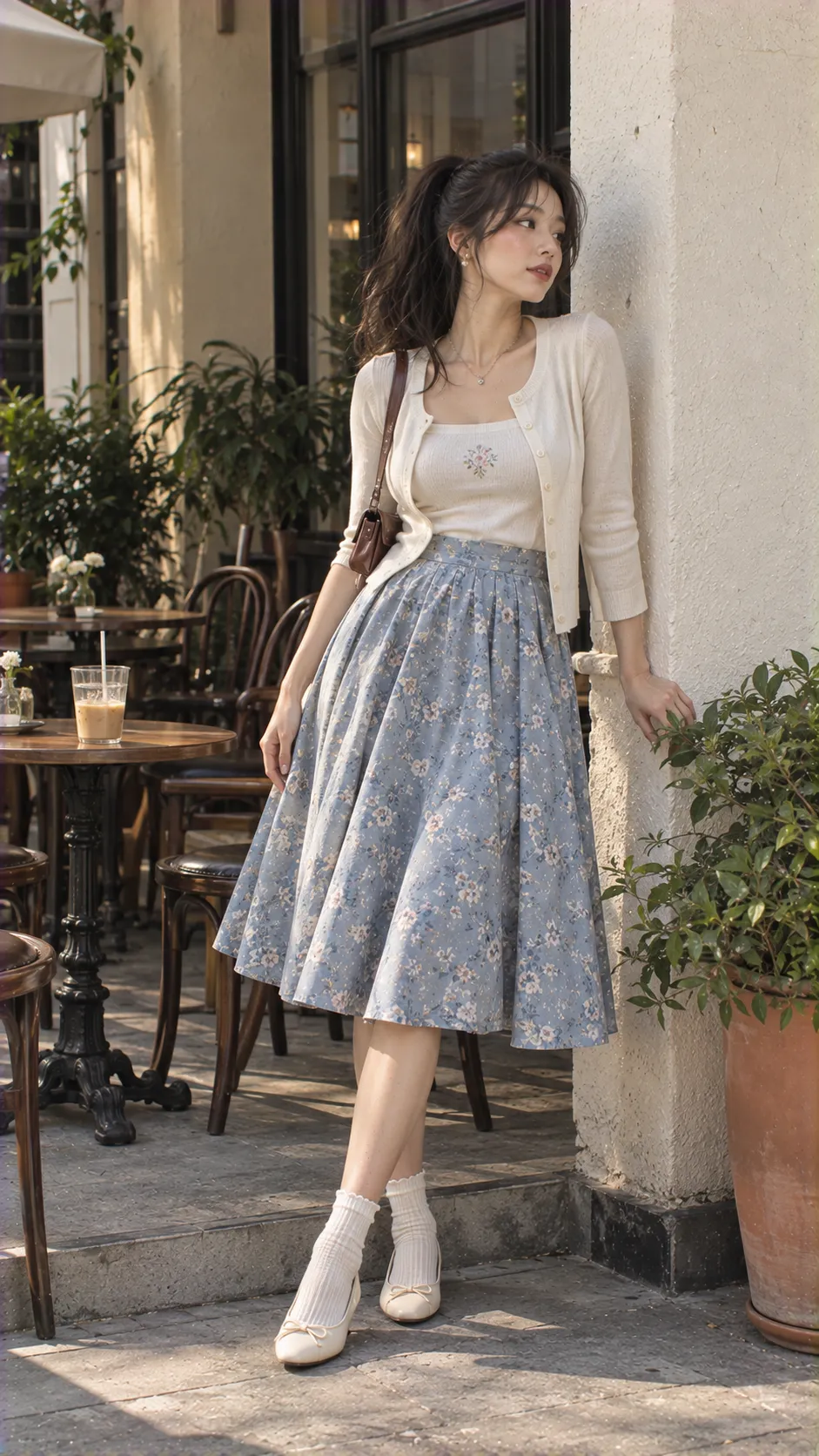
3. Cardigan + A-line midi + ballet flats
Soft knit → controlled skirt volume → light footwear.
An accessible contemporary outfit for cafés or suitable workplaces. For length and proportion, explore the Midi Skirt Guide.
4. Sleeveless sheath + structured bag
One clear line → coordinated accessory.
A sheath emphasizes vertical shape rather than fullness. Choose comfortable ease without forcing a historical body ideal.
5. Cropped trousers + knit top + loafers
Sportswear reference → practical footwear.
Pedal-pusher-inspired lengths evoke the period without skirts. Plain and striped knits both work.
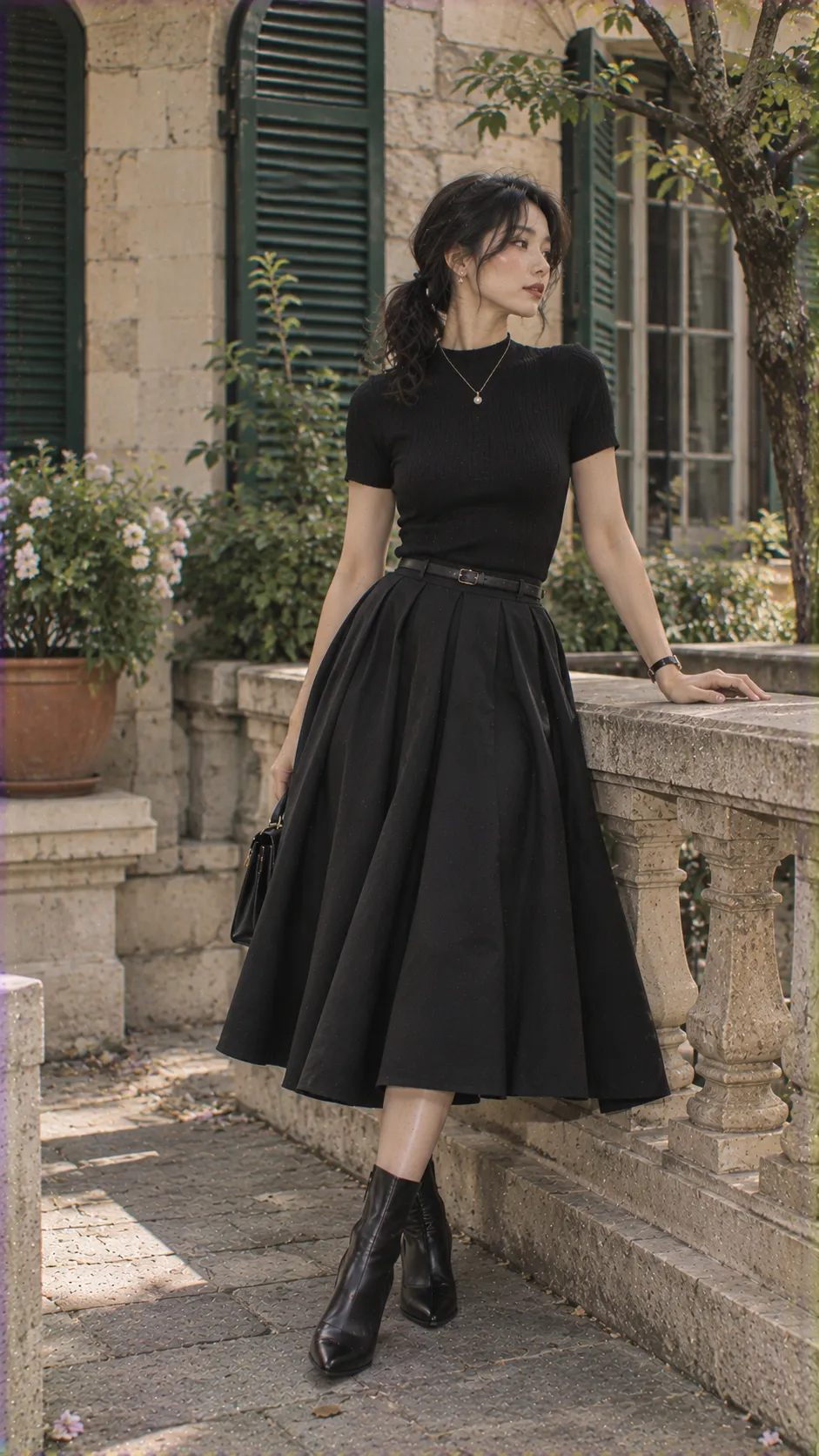
6. Fitted dark top + full black skirt + ankle boots
Historical proportions → Apocalypse Closet mood.
Preserve waist definition and volume while using black, burgundy and sharper footwear rather than reproducing a complete retro ensemble.
Colors, Prints, Shoes and Accessories
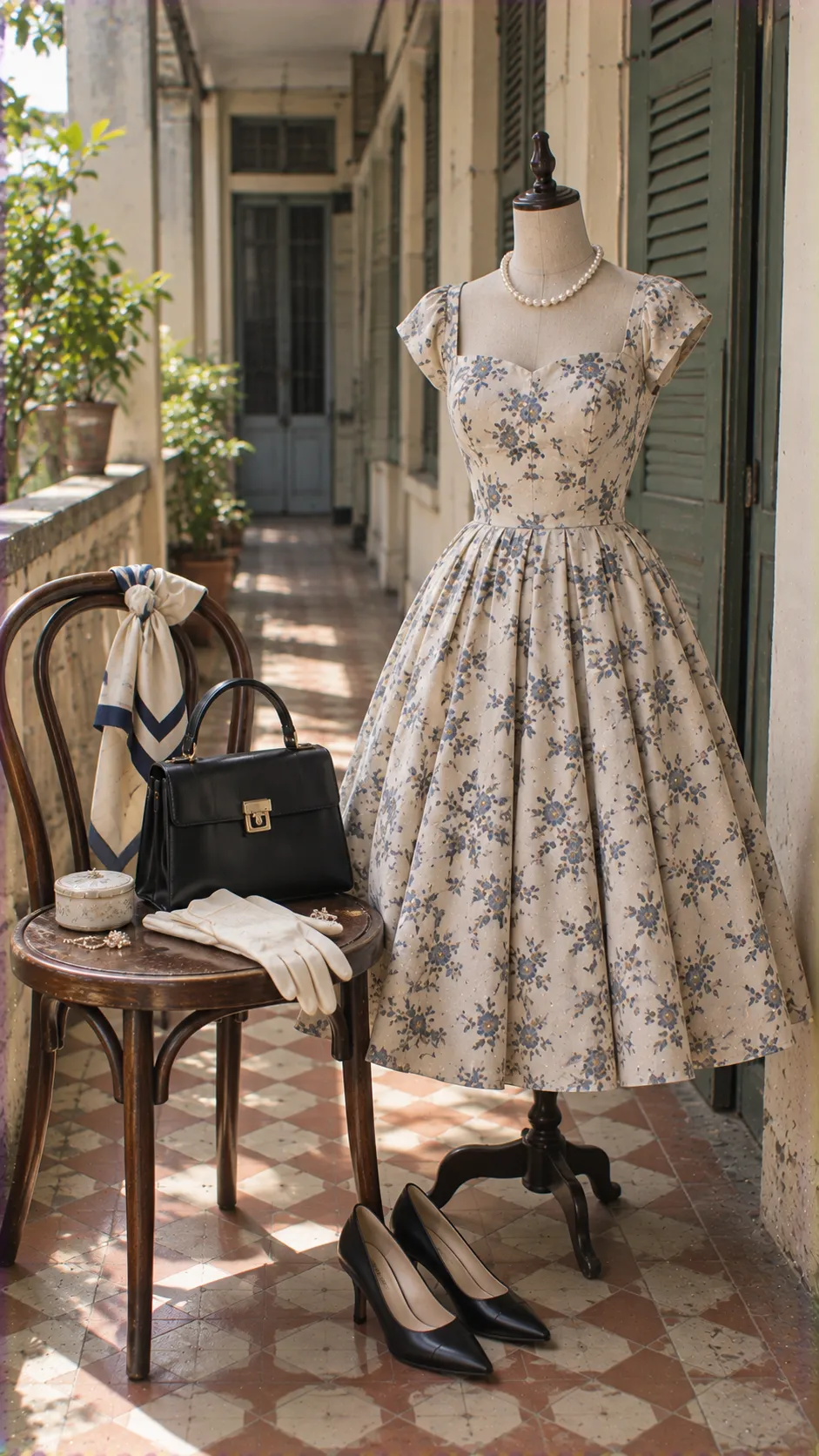
The decade was not exclusively pastel. Florals, plaid, stripes, polka dots, black, jewel tones and neutrals all appeared. Everyday prints and richer evening satin, taffeta, lace or embellishment served different occasions. One main pattern often suffices in a modern interpretation.
Pumps, ballet flats, loafers and patent shoes suit different shapes. Coordinated hair, makeup and accessories contributed to the period's considered presentation. Today, repeating one color or texture can provide cohesion without exactly matching bags, shoes and gloves.
Compared with New Look and Vintage Style
Classic Style Prioritizes enduring shapes and repeat wear rather than one historical period. Pearls or midis may appear in both without making their guide intents identical.
Five Common Styling Mistakes
1. Knowing only the poodle skirt
It is a youth-casual icon rather than the entire decade. Pencils, sheaths, suits and sportswear also matter.
2. Calling every full midi 1950s
Length alone is insufficient; waist, bodice, fabric, footwear and overall styling establish the relationship.
3. Forcing an hourglass body
Historical shapes often relied on foundation garments. Modern seams, belts and skirt volume can suggest contrast without body compression.
4. Overlooking later silhouettes
Balenciaga and other designers reduced waist emphasis. New Look alone cannot explain the decade's later developments.
5. Using every retro accessory
Pearls, gloves, scarves, cat-eye glasses, pumps and petticoats together can become costume-like. Choose one or two references with contemporary supporting pieces.
Frequently Asked Questions
What characterizes 1950s women's fashion?
Defined waists, full or pencil/sheath skirts, considered tailoring and coordinated accessories are prominent. Later chemise and sack shapes reduce waist emphasis.
Does a 1950s-inspired outfit require a full skirt?
No. Pencils, sheaths, suits, cropped trousers and sportswear also belong to the period.
Is 1950s women's fashion the same as New Look?
No. New Look was influential, but the decade also contained straighter forms, casual clothing and sportswear.
How can I reference the 1950s without a costume?
Keep one historical proportion, such as a fitted top and full skirt, with contemporary shoes, bags and makeup rather than every period accessory.
References
This guide cross-checks FIT Fashion History Timeline — 1950–1959, V&A — The Golden Age of Couture, The Met — Balenciaga Suit, 1952 and V&A — Introducing Cristobal Balenciaga.