

What Was Dior's New Look? The Silhouette That Changed Fashion in 1947
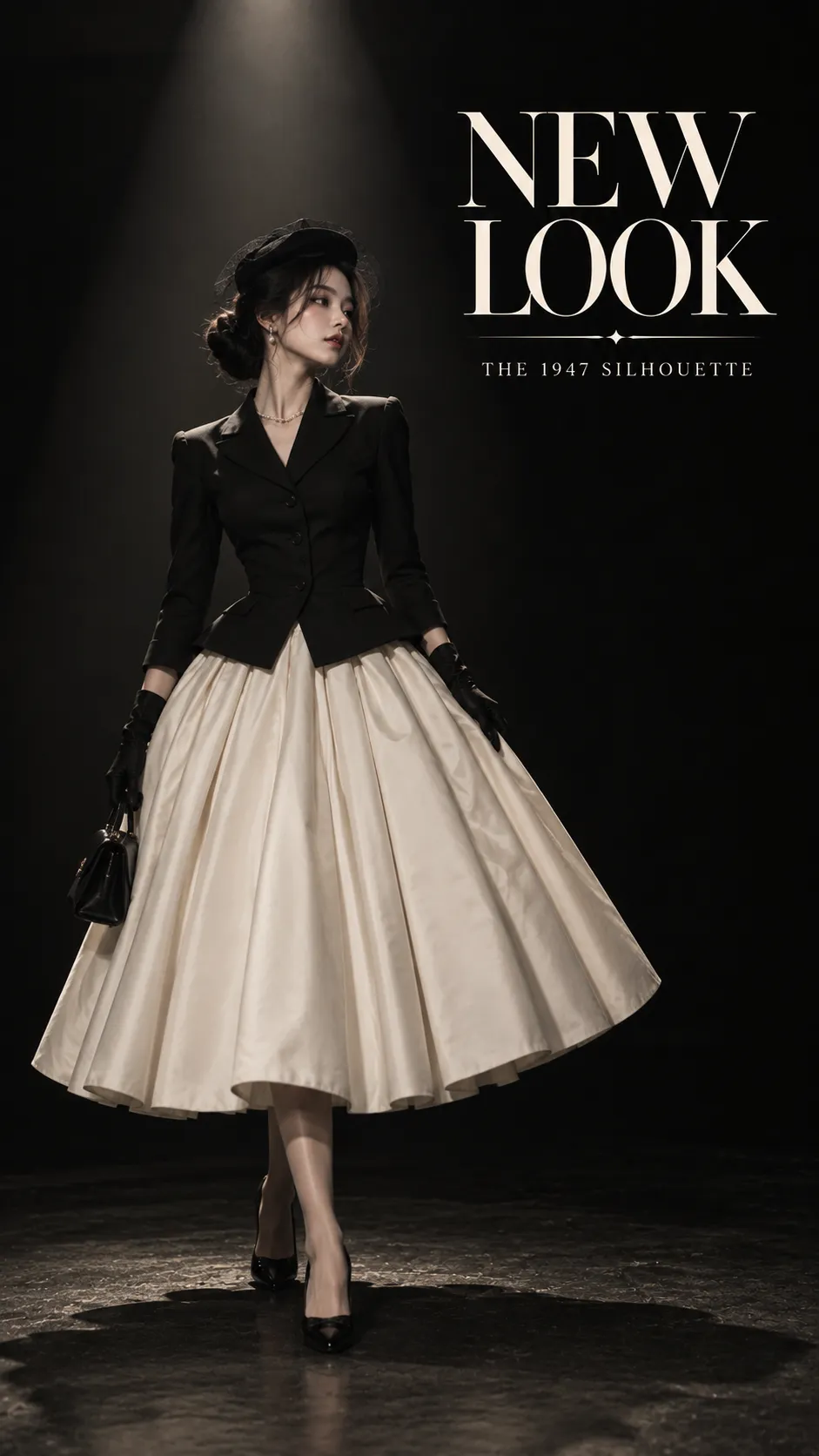
New Look fashion is associated with Christian Dior's first collection, presented on February 12, 1947, at 30 Avenue Montaigne in Paris. Dior named its two lines Corolle and En 8; New Look became the familiar label following Harper's Bazaar editor Carmel Snow's celebrated reaction. Soft shoulders, a shaped bust, a defined waist and long, full skirts established its silhouette.
This guide specifically examines Dior's New Look of 1947: its impact, Bar suit construction, postwar controversy and contemporary interpretation. The complete 1950s decade has a separate guide.
Guide collection: Aesthetic Dictionary: A Fashion Style Directory
What Was New Look Fashion?
Christian Dior presented the house's first collection at 30 Avenue Montaigne on February 12, 1947. Dior identifies the two lines as Corolle and En 8. New Look was not their official collective title; it became the popular name after Carmel Snow described the designs as having a new look.
The immediate distinction was not one print or color but the silhouette. The V&A describes sloping shoulders, a full bust, a defined waist and long full skirts. The Met's 1947 pieces also demonstrate close midriffs, emphasized hips and substantial skirts. Understand the proportions constructed by garments rather than simply a flared dress.
The Bar suit became a leading image of this idea. New Look nevertheless extended beyond one ensemble: its early shaping vocabulary quickly gained international fashion-press recognition.
What Made It Look New in 1947?
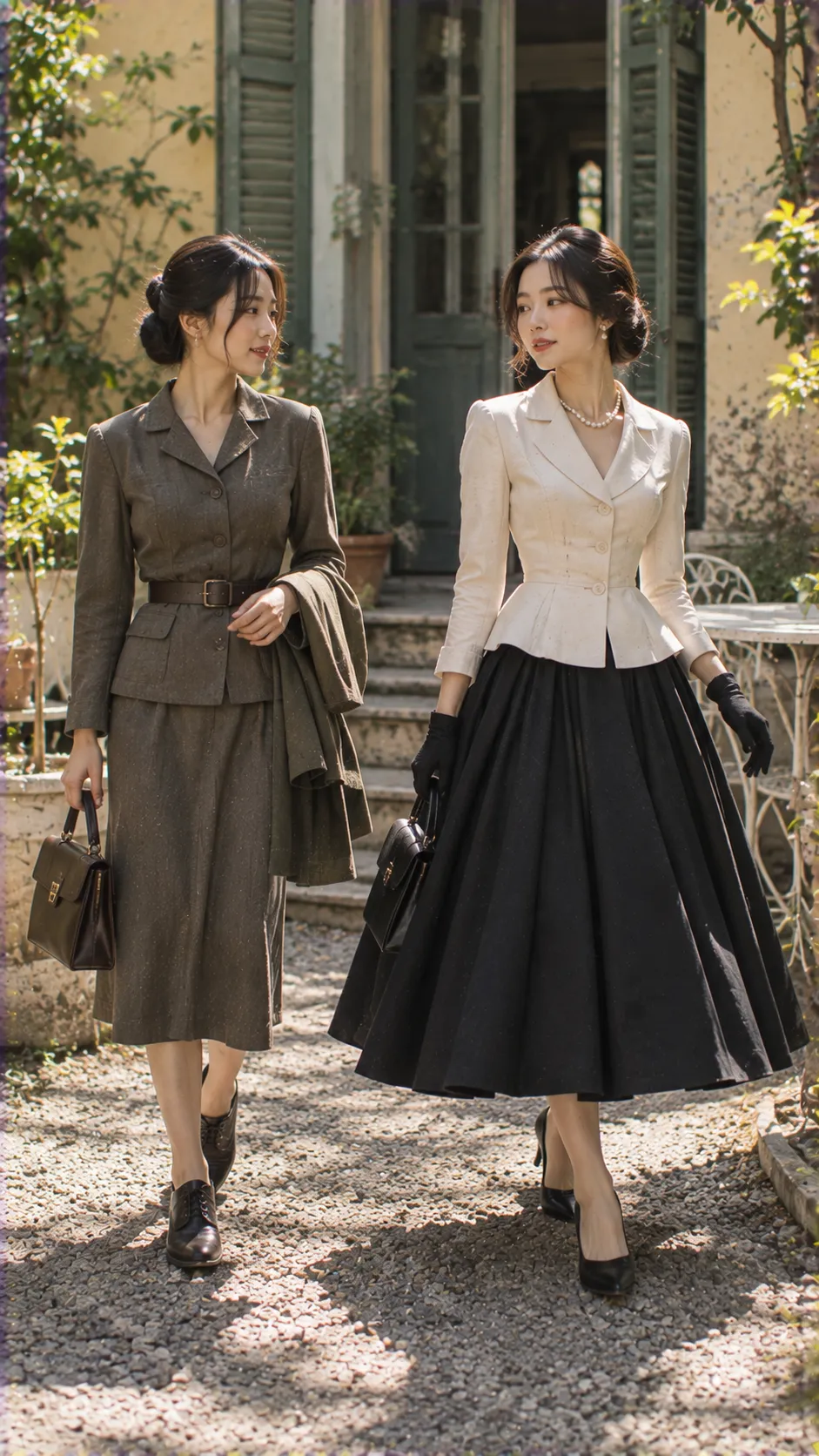
The V&A contextualizes the New Look after wartime shortages, fabric restrictions and practical silhouettes. Dior reintroduced a shaped torso, narrow waist, long skirt and generous fabric. This material and structural extravagance provoked both enthusiasm and resistance.
New did not mean without precedent. The Met connects the silhouette with late-19th-century corseted forms. Its timing mattered: after war and restrictions, Dior placed deliberately constructed, fabric-intensive clothing at the center of Paris fashion.
Five Relationships within the New Look Silhouette
Relationships matter more than individual garments. The shoulder and hip frame makes the waist appear narrower; a fitted upper half makes skirt volume more apparent. Without that contrast, a fitted jacket and midi skirt need not read specifically as New Look.
Why Did the Bar Suit Become a New Look Icon?
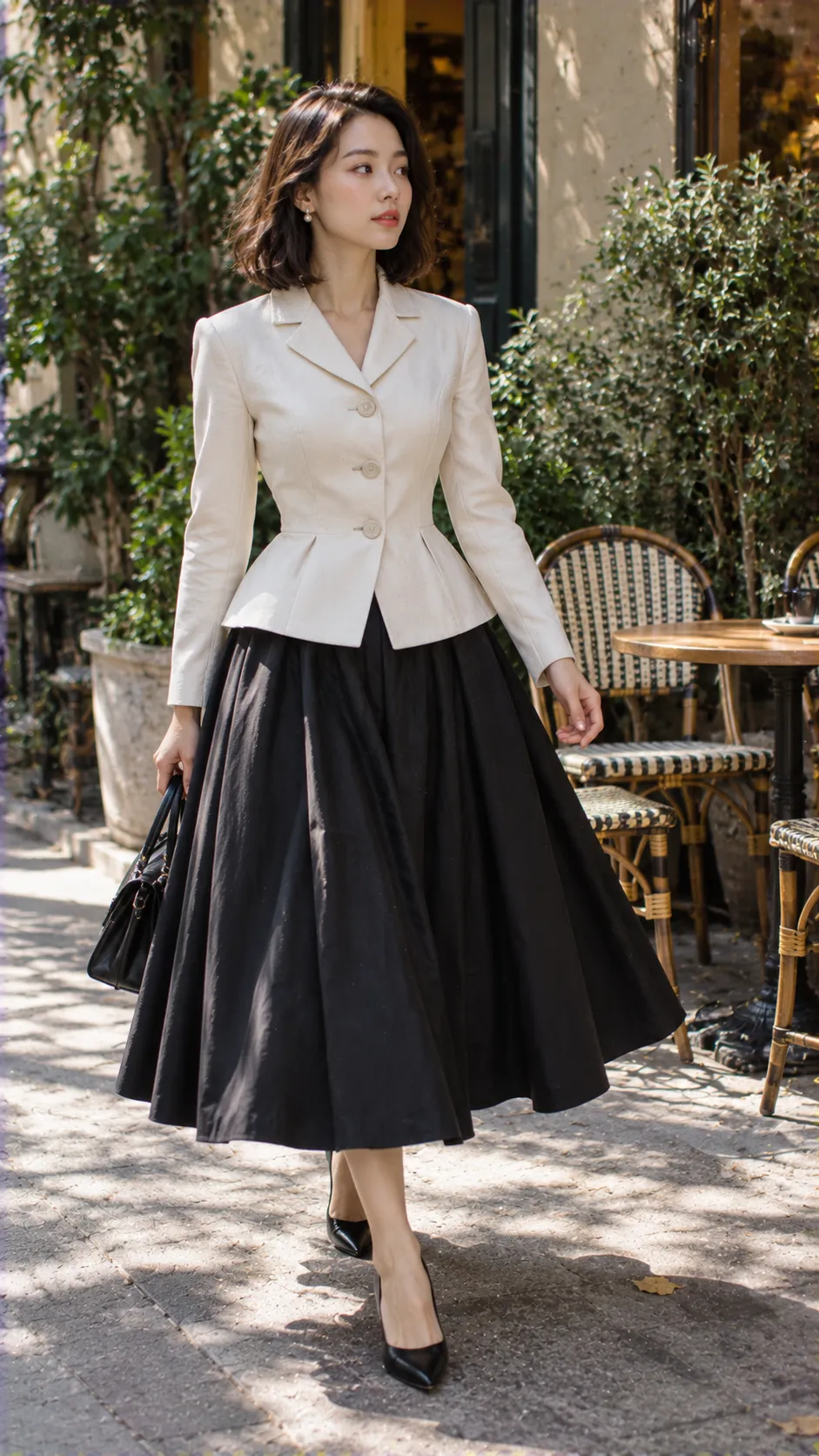
The Spring–Summer 1947 Bar suit appears in Dior, V&A and Met accounts of the New Look. A light shaped jacket with a clear waist and opening peplum accompanies a dark, long full skirt. It demonstrates the relationship between a sculpted upper half, narrow center and expanded lower half.
The V&A's examination highlights internal construction that holds the intended shape. An ordinary tight blazer does not necessarily reproduce this: the jacket coordinates shoulders, bust, waist and hips as one structure.
The Met holds a 1947 Bar ensemble; another Dior dress from that year demonstrates hip shaping through interlining, a close midriff and a full pleated skirt. Garments actively construct the outline rather than merely relying on the wearer's body.
Why Was the New Look Controversial?
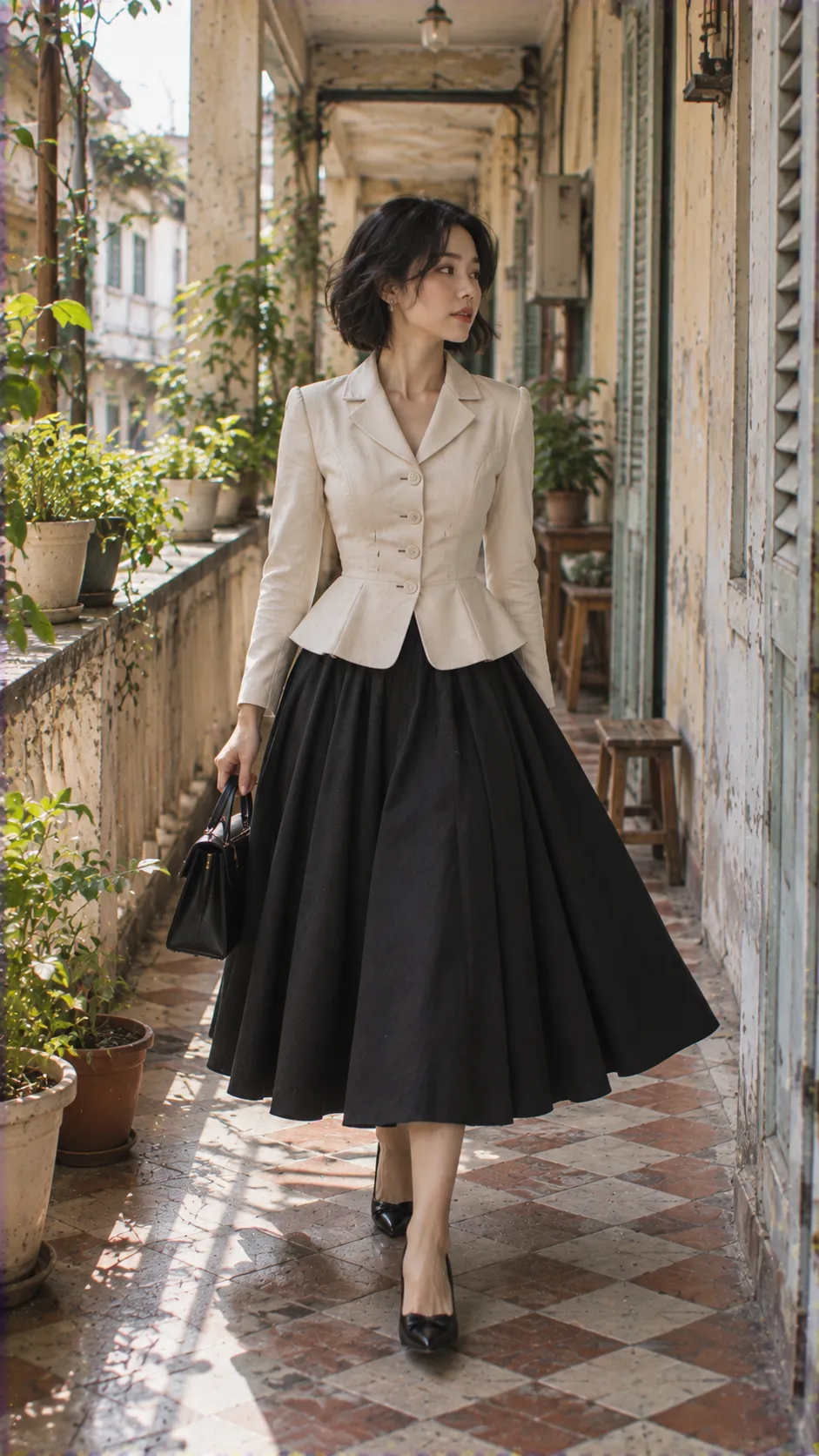
Fabric abundance and luxury also prompted criticism. The V&A describes resistance in London while rationing continued, including criticism from Britain's Board of Trade. The silhouette intersected directly with postwar economic and social circumstances.
Its structure could require substantial foundations compared with practical straight clothing. Contemporary viewers can recognize couture skill while questioning restrictive body ideals. Modern inspiration need not reproduce corseted waists or original volume; proportions offer a more flexible lesson.
Its Influence after 1947
The V&A places the debut at the beginning of a significant postwar couture period. Dior gained international prominence, and defined waists with full skirts became recognizable late-1940s and 1950s images. Yet the following decade contained many other designers, lines and silhouettes.
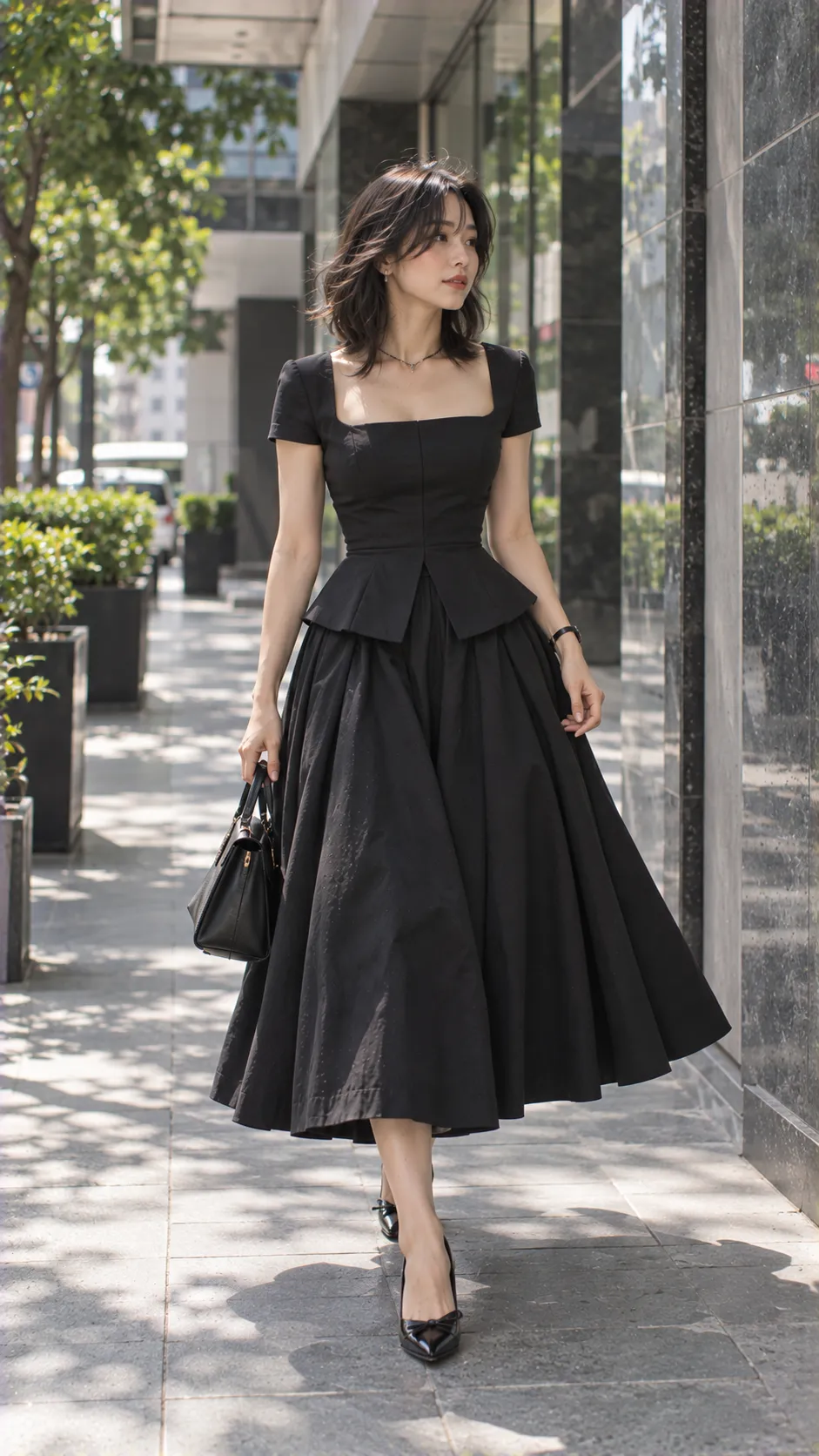
Contemporary New Look References without a Costume
Retain the proportions rather than reconstructing history. Rigid corsets, large petticoats and gloves are optional; establish a clear waist-to-skirt contrast.
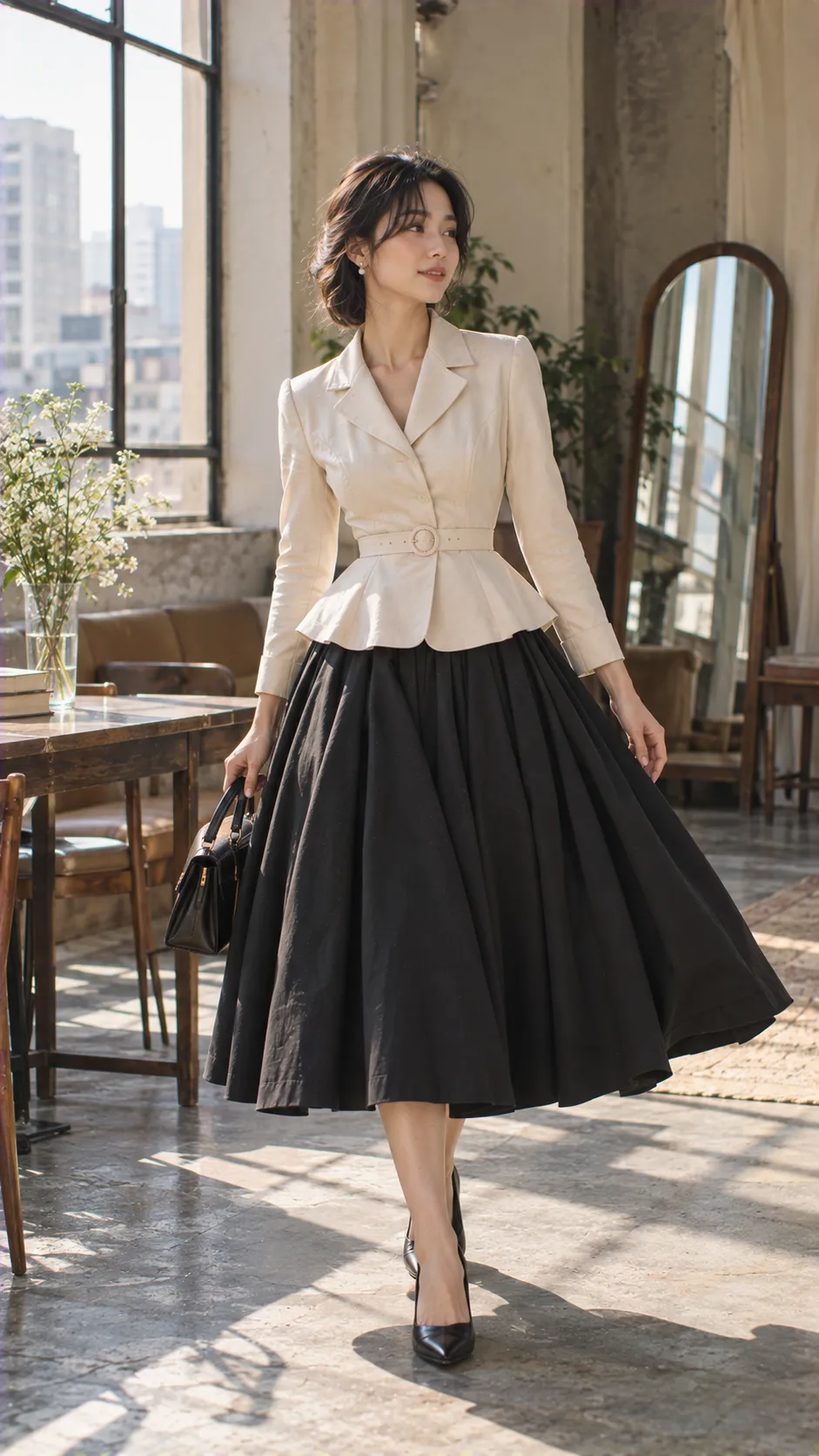
Structured jacket + midi skirt
Simple shoulder line → defined waist → skirt volume.
A seamed or lightly peplumed jacket with a moderately full midi suggests the Bar relationship. Simpler shoes can balance a very full skirt.
Fitted knit + full skirt
Simple top → clear waistline → skirt movement.
A jacket is unnecessary. A comfortably fitted knit and full skirt preserve the proportions. For controlling fullness, explore How to Style a Flared Skirt.
Belted dress + structured bag
One garment → waist definition → considered accessories.
A belted midi with an opening skirt offers a simplified interpretation. Avoid maximum volume in both sleeves and skirt if seeking a clearer outline.
Contemporary dark New Look
Fitted black top → midi volume → defined footwear.
Black, burgundy, boots and metal details bring historical proportions into an alternative wardrobe without reproducing an entire retro costume.
New Look Is Distinct from Vintage, 1950s Fashion and Corset Styling
A corset top is not automatically New Look. Waist shaping without corresponding lower volume may belong to another vocabulary. For contemporary corset outfits, explore Women's Corset Top Styling. Likewise, midi describes length rather than a historical identity; the Midi Skirt Outfit Guide addresses its individual shapes and footwear.
Four Common Misunderstandings
1. New Look was Dior's collection title
Dior named the lines Corolle and En 8; New Look became the popular label after Carmel Snow's response.
2. New Look is simply a flared skirt
Skirt fullness is one component. Shoulders, bust, waist, hips and jacket or bodice construction establish the whole.
3. New Look represents all 1950s fashion
Its influence was substantial, but other lines and forms coexist throughout the decade. Equating them obscures historical differences.
4. Wearing the reference requires an hourglass body
No. Seams, belts, peplums and skirt volume can suggest proportional contrast without body compression or a required body type.
Frequently Asked Questions
What is New Look fashion?
The popular name for the silhouette associated with Dior's first 1947 collection: soft shoulders, shaped bust, narrow waist and long full skirts.
When did Dior's 1947 New Look debut?
The Spring–Summer collection was presented on February 12, 1947, at 30 Avenue Montaigne, Paris.
What is the Bar suit's role?
An iconic 1947 Corolle ensemble, it demonstrates a waist-shaped jacket, expanded hips and long full skirt—the New Look's core relationships.
Why was the New Look controversial?
Its fabric use and luxury attracted criticism amid postwar constraints, including continuing British rationing. The V&A records initial Board of Trade opposition.
References
Dates and silhouette interpretation are cross-checked against Dior — The New Look, V&A — The Golden Age of Couture, V&A — Examining Dior's Bar Suit, The Met — Bar, 1947 and The Met — Dior Dress, 1947.