

How to Make a Fashion Moodboard You Can Actually Wear
A fashion moodboard is more than a collection of attractive pictures. It translates an aesthetic into wearable colors, silhouettes, textures and garments.
This guide develops an alternative or dark-fashion outfit board, then turns its references into practical combinations.
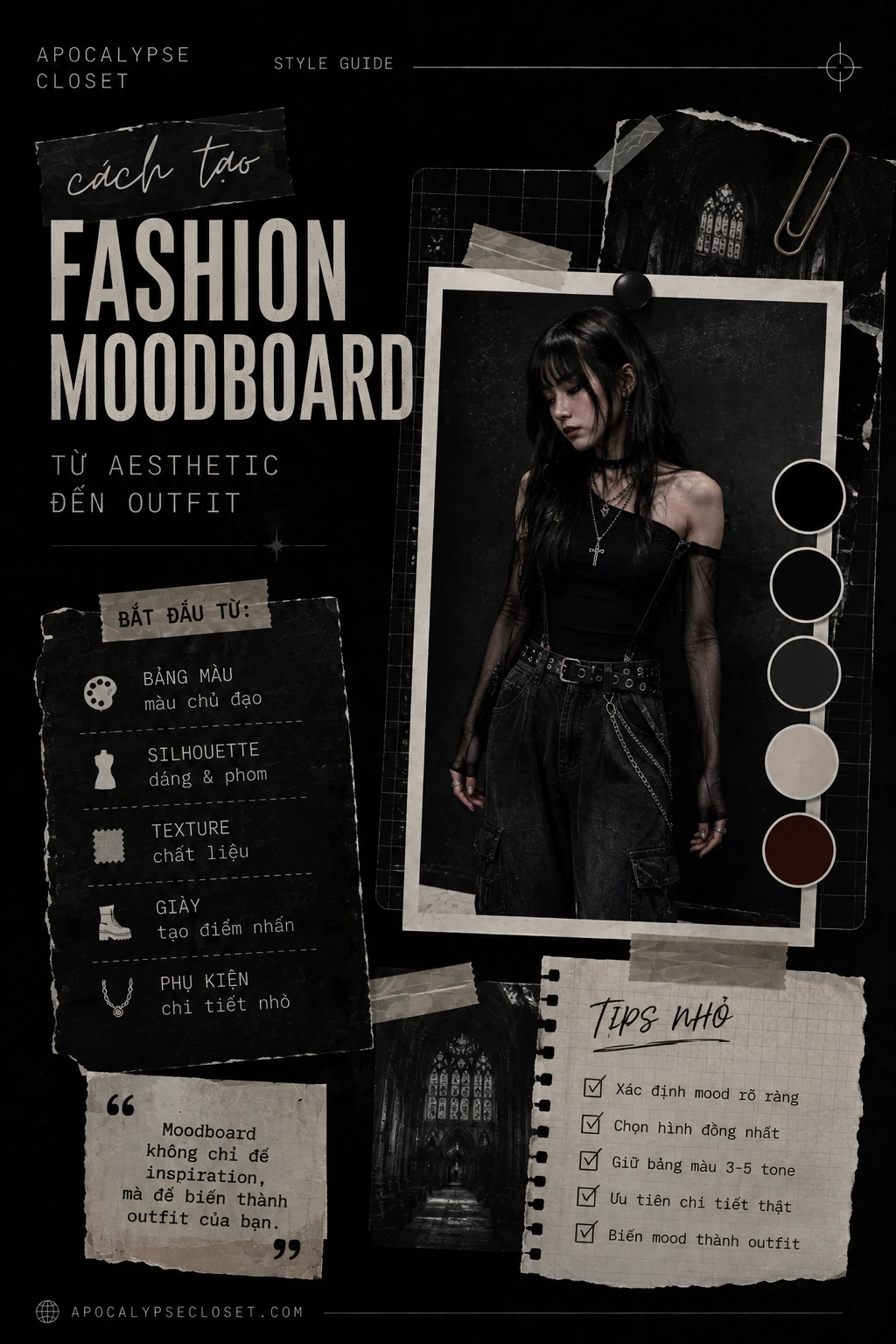
Guide collection: Aesthetic Dictionary: Fashion Style Reference (Vietnamese)
What Is a Fashion Moodboard?
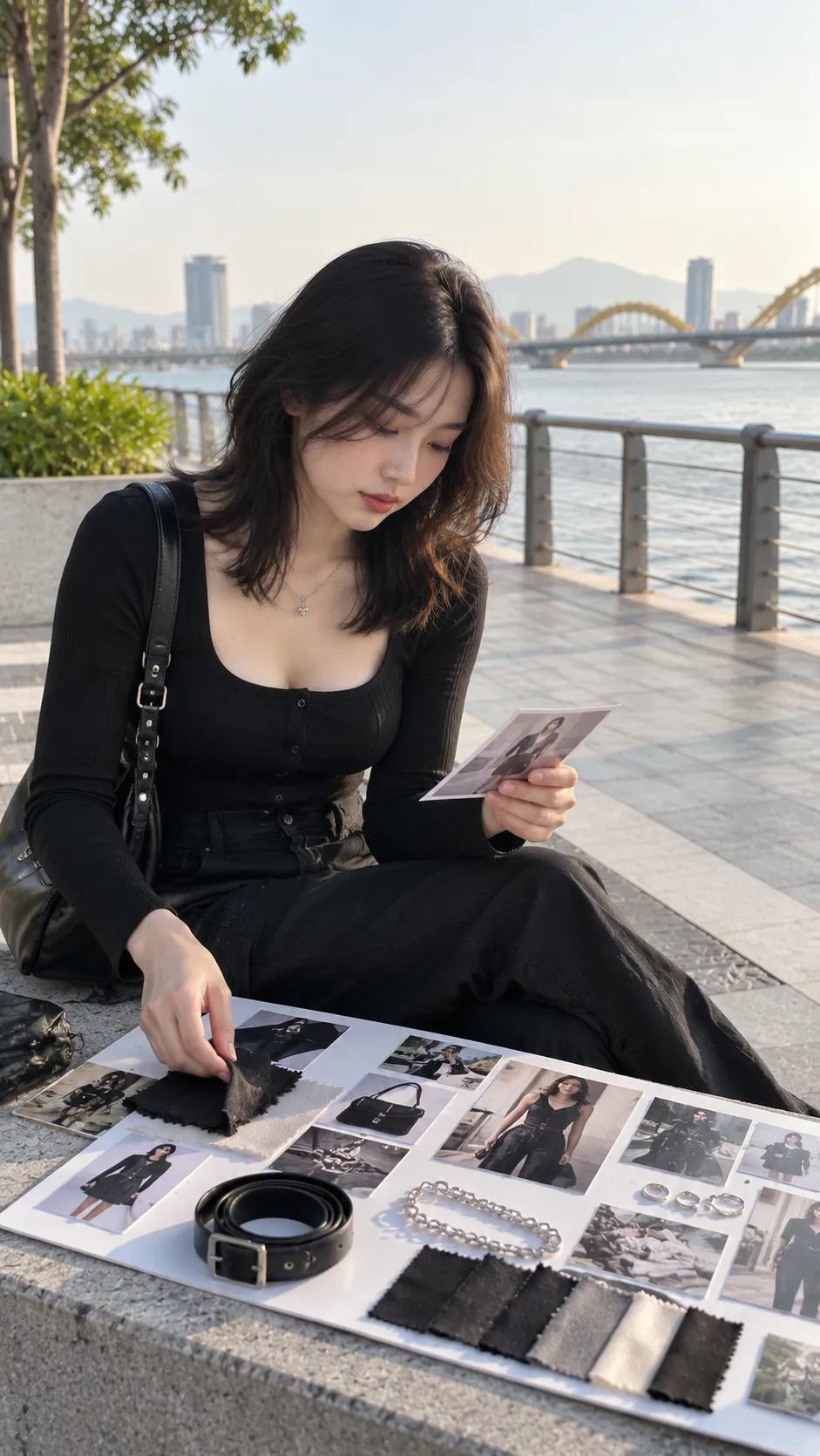
A fashion moodboard is a selected visual reference board that makes a styling direction understandable. Beyond a general feeling, it identifies recurring colors, silhouettes, fabric surfaces, footwear and bag proportions, and recognizable style details.
Unlike an unfiltered folder of saved images, a moodboard has been selected, grouped and explained. For a personal wardrobe, it should reveal outfit rules, clarify useful purchases and reduce impulse buying. This is an outfit-planning guide for alternative and dark fashion, rather than a professional collection-design workflow.
What Belongs on a Fashion Moodboard?
Full-body images convey a mood but may not explain its construction. Separate the references into useful layers.
| Layer | Look for | Selection question |
|---|---|---|
| Color | Three to five main and accent colors | Which colors cover large areas, and which appear only in accessories? |
| Silhouette | Fitted or loose shapes, lengths, waist placement and volume | Is the upper body fitted or roomy? Where is visual weight concentrated? |
| Texture | Leather, lace, satin, washed denim, mesh and knits | Which surfaces add depth even without color? |
| Garments | Tops, bottoms, dresses and outerwear | Which pieces recur and offer repeat wear? |
| Footwear and bags | Shoe volume, bag structure and hardware | Is the outfit grounded by substantial footwear? Is the bag soft or structured? |
| Details | Belts, chains, lace, buckles and jewelry | Which details identify the direction, and which simply decorate it? |
| Beauty and mood | Hair, makeup, lighting and attitude | Does this help identify the style, or mainly improve the photograph? |
You do not need seven separate sections. Make color, proportion, texture, garments and focal points clear enough to translate into real outfits.
Build a Fashion Moodboard in Seven Steps
1. Define a Goal with a Real Setting
Replace “dress better” or “try Goth” with a specific brief: Dark Feminine cafe outfits for hot weather; everyday Punk or Grunge without a costume effect; or eight distinct silhouettes from a black wardrobe. Context removes attractive but impractical references.
If you are unsure which aesthetic interests you, start with our alternative-fashion beginner’s guide, then check whether your saved references actually match the label you had in mind.
2. Collect 20–30 References Before Buying Anything
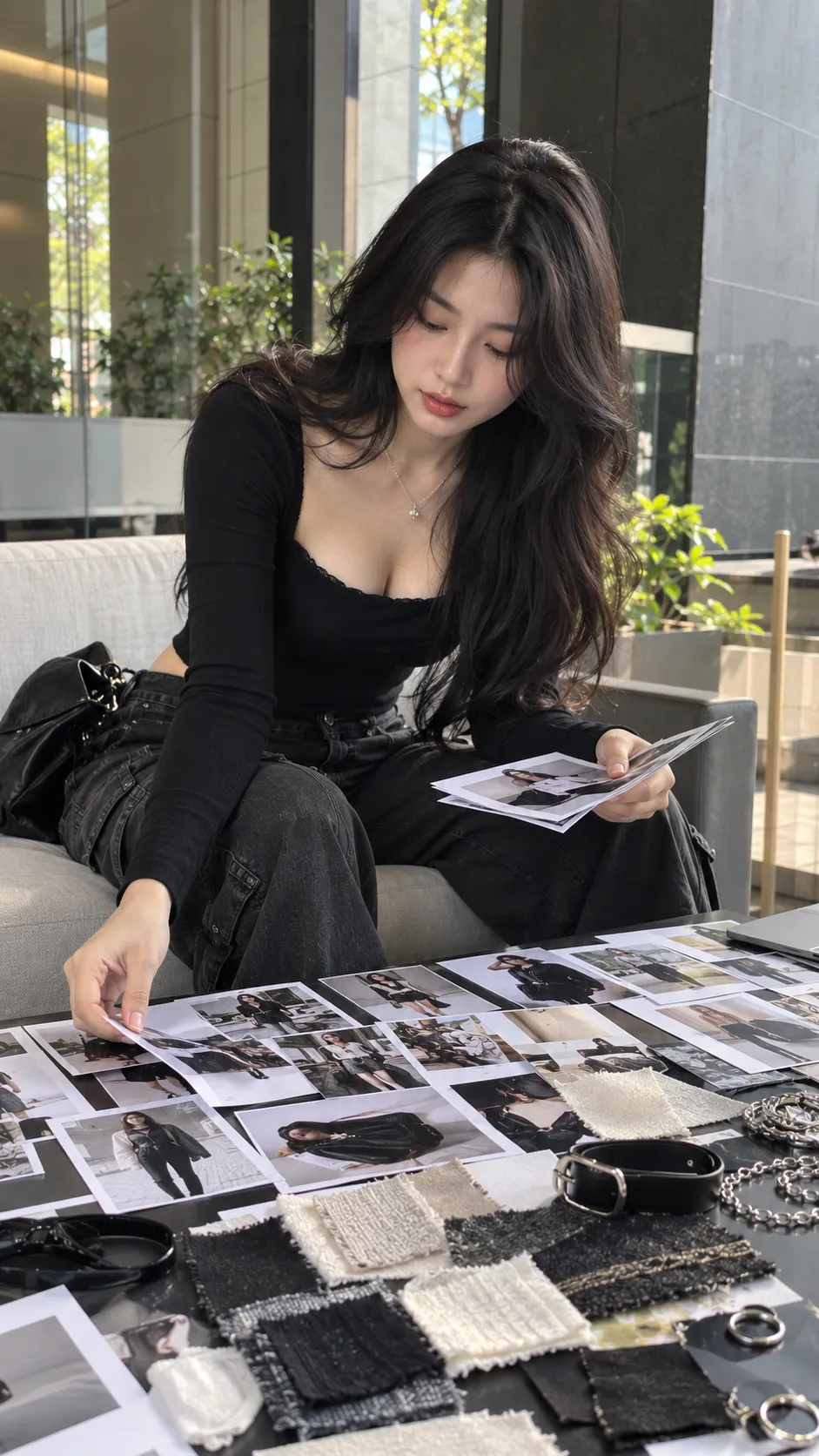
Initially, save freely: full outfits, fabric close-ups, shoes, bags, hair or a zipper detail. Stop once roughly 20–30 varied references reveal patterns; collecting should lead to analysis rather than continue indefinitely.
An image can be useful for one feature, such as lace against leather or a short top with long bottoms. Preserve its styling logic rather than copying the entire look.
3. Reduce the Board to 8–20 Core Images
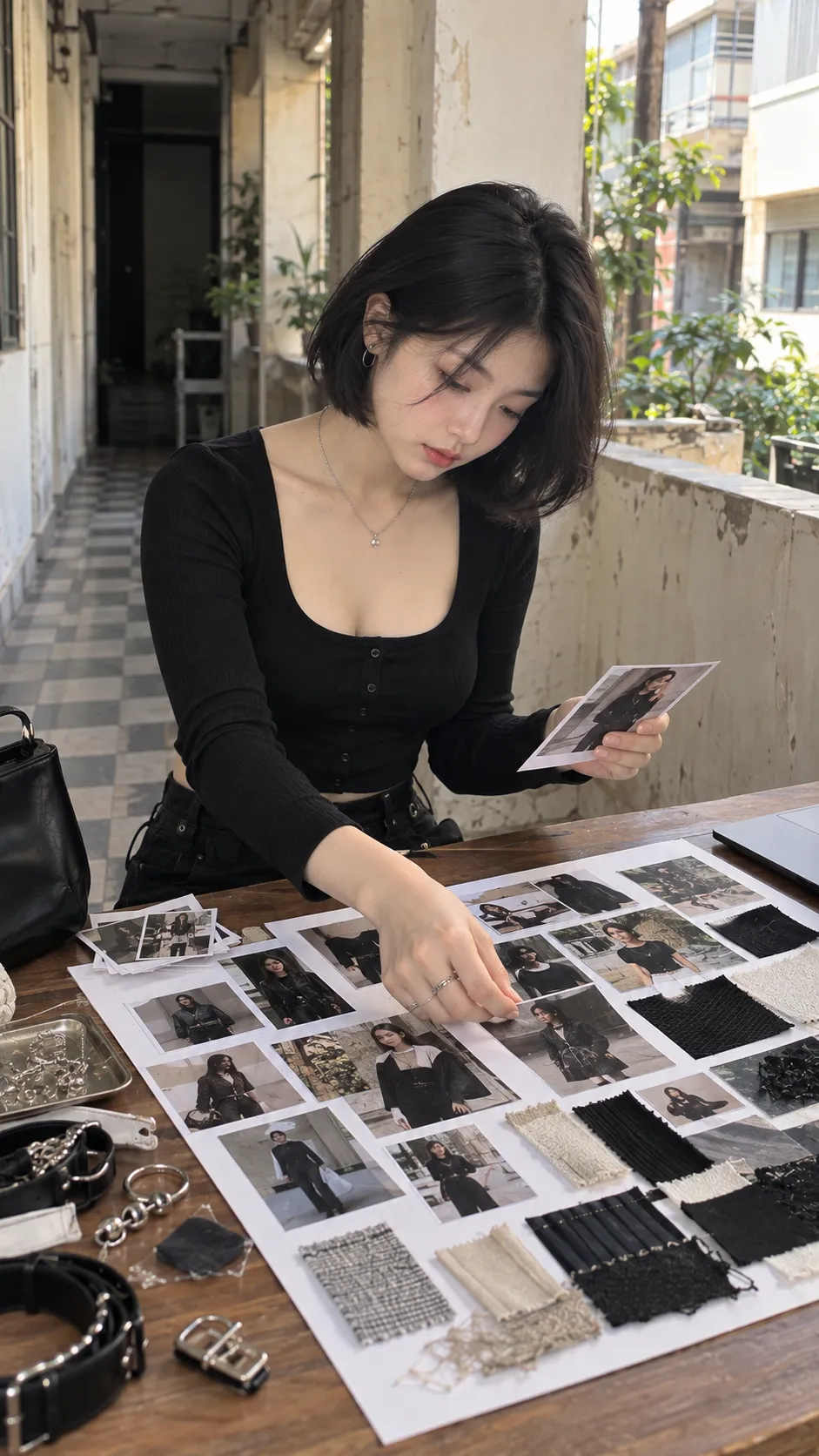
Remove duplicates first. Five similar black baby-tee and gray-cargo outfits may need only one or two clear examples. Then remove pictures whose appeal comes mainly from scenery, camera angle, model or color treatment rather than a wearable idea.
Each remaining image should represent a color, silhouette, texture, footwear choice, outfit formula or specific detail. Remove images whose purpose you cannot explain.
4. Read Color Proportions, Not Just Attractive Swatches
Five visible colors need not each occupy 20% of an outfit. Observe actual coverage. An illustrative dark board might use 60–70% black or charcoal, 20–30% gray denim or burgundy, and a smaller silver-toned hardware accent. This suggests which colors belong on larger garments and which on bags, belts or jewelry.
For all-black dressing, texture acts like another color layer: matte cotton, washed denim, leather and lace create variation within one palette.
5. Read Silhouette Through Lines and Volume
Temporarily ignore details and read large shapes. Where does the top end? Is the waist defined? Do trousers widen at the hips, thighs or hems? Is a skirt A-line, straight or fitted? How much weight do the shoes add?
If several references repeat a fitted top with loose bottoms, keep that principle rather than one exact garment. A fitted tee can replace a corset, or baggy denim replace cargo pants, while retaining the proportion.
6. Identify Textures and Recognizable Details
Choose two to four leading textures. A Dark Feminine board might combine satin, lace and leather; Punk or Grunge might use washed denim, leather and printed cotton; Goth-inspired references might favor velvet, lace and mesh. Then select one or two detail families, such as silver-toned jewelry, buckles, chains or ribbons.
A detail appearing once is not automatically essential. If the board retains its direction without it, treat it as an optional accent.
7. Write Three Outfit Formulas and Three Mood Words
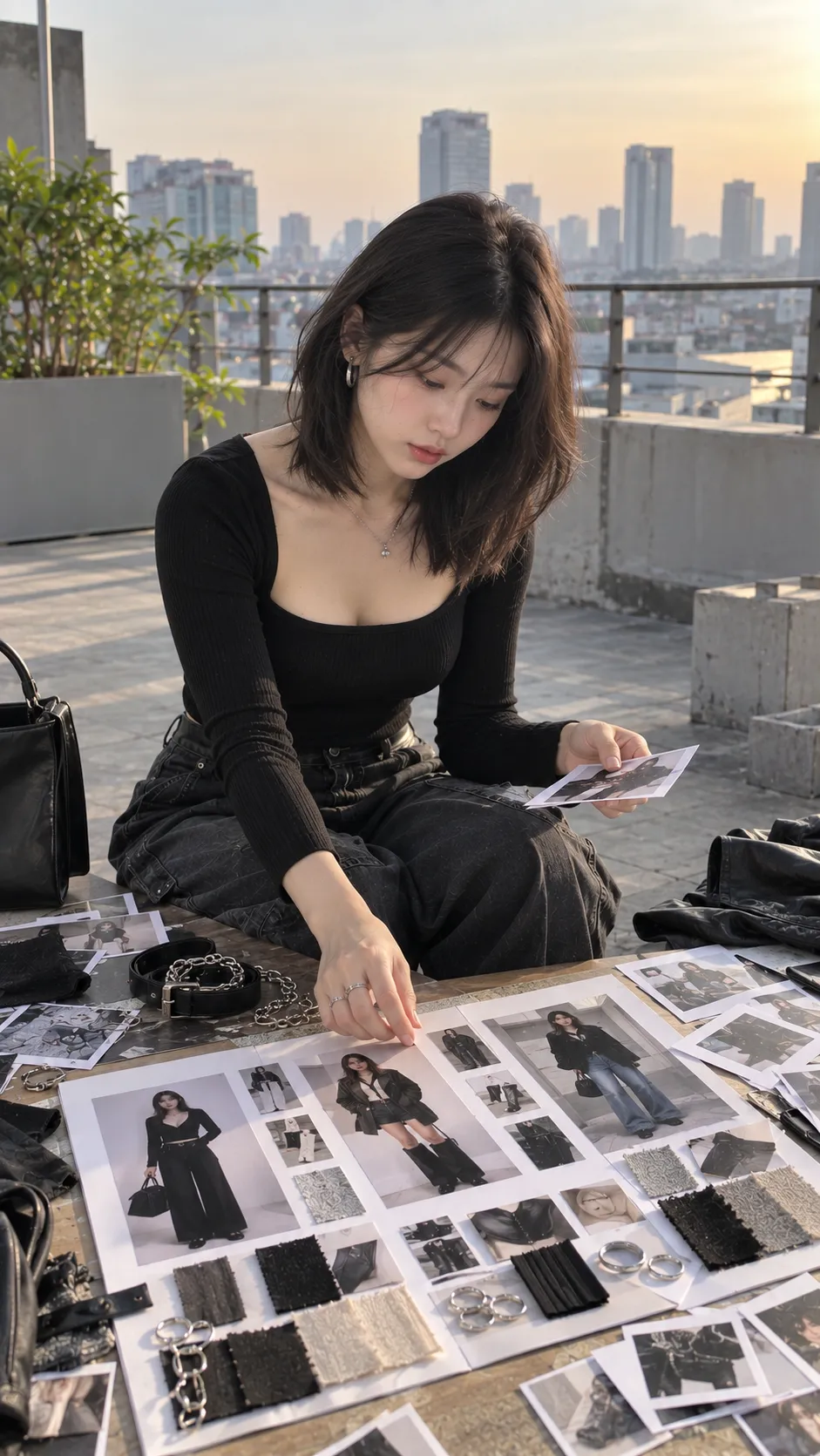
End with three wearable combinations: fitted top, wide-leg denim and platform boots; lace top, maxi skirt and ankle boots; graphic tee, mini skirt and combat boots. Add three descriptive words, such as “dark, sharp, feminine” or “worn, relaxed, heavy.”
The formulas test practicality; the words define the mood. A potential purchase that fits neither probably needs reconsideration.
Select References That Keep the Board Focused
Reference quality matters more than quantity. Ask what you are taking from each image; a precise answer makes it useful.
- Full-body photographs: read silhouette, proportion and footwear.
- Half-body crops: study necklines, layers, bags, jewelry and detail placement.
- Close-ups: examine texture, seams, hardware and fabric interactions.
- Individual product images: identify a garment’s shape without being led by a complete styled outfit.
- Atmospheric or non-fashion images: keep them only when they clarify color, material or mood. Architecture, film stills and landscapes should not replace outfit information.
A Quick Reference Test
Mentally remove the face, setting and caption. If you can still identify one specific styling reason to keep the image—top-to-bottom proportion, leather against lace, or footwear weight—it contributes useful outfit information.
Pinterest, Canva or Another Format?
No particular tool is required. Separate collecting from finalizing the board. Pinterest can collect references; Canva can arrange a page, palette and annotations; a freeform canvas such as Milanote can group ideas. An image folder and notes can also serve a personal project.
| Format | Useful for | Watch out for |
|---|---|---|
| Pinterest board | Discovering and collecting references | An expanding archive without a smaller final selection |
| Canva or collage | A compact page with a palette and notes | Spending more time decorating than analyzing |
| Freeform canvas | Grouping silhouettes, fabrics and details spatially | An endlessly expanding board without decisions |
| Physical board | Combining swatches, accessories and printed photographs | Slower revisions and a need for physical space |
A simple workflow is: collect → select a final board → write three outfit formulas → compare with your wardrobe.
Alternative and Dark-Fashion Moodboards
If several directions appeal, build a shared base such as wearable all-black, then create variations. This reveals which garments serve multiple styles and which are more specific.
Dark Feminine Moodboard
Look for defined waists or vertical lines, black or burgundy, satin, lace, leather and restrained jewelry. Soft textures against firmer materials or hardware create contrast. See Dark Feminine outfits.
Punk and Grunge Moodboard
Consider washed denim, graphic tees, plaid, leather, combat boots and silver-toned details. Punk references may appear sharper, while Grunge often feels worn and relaxed; these are styling tendencies rather than complete cultural definitions. Distressing alone does not explain the outfit. See women’s Punk hairstyles.
Goth Moodboard
Black is a starting palette. Examine lace, velvet, mesh or fishnet, skirt volume, necklines, platforms and jewelry alongside the cultural context. A black crop top and jeans may simply read as dark casual. Compare our Goth and Gothic guide collection.
E-Girl and Alt Girl Moodboard
Possible pieces include baby tees, mini skirts or cargo pants, mesh layers, platforms and silver-toned details. Choose an everyday or statement intensity instead of combining every cue at once. See E-Girl and Alt Girl (Vietnamese).
Turn Outfit References into Real Clothes
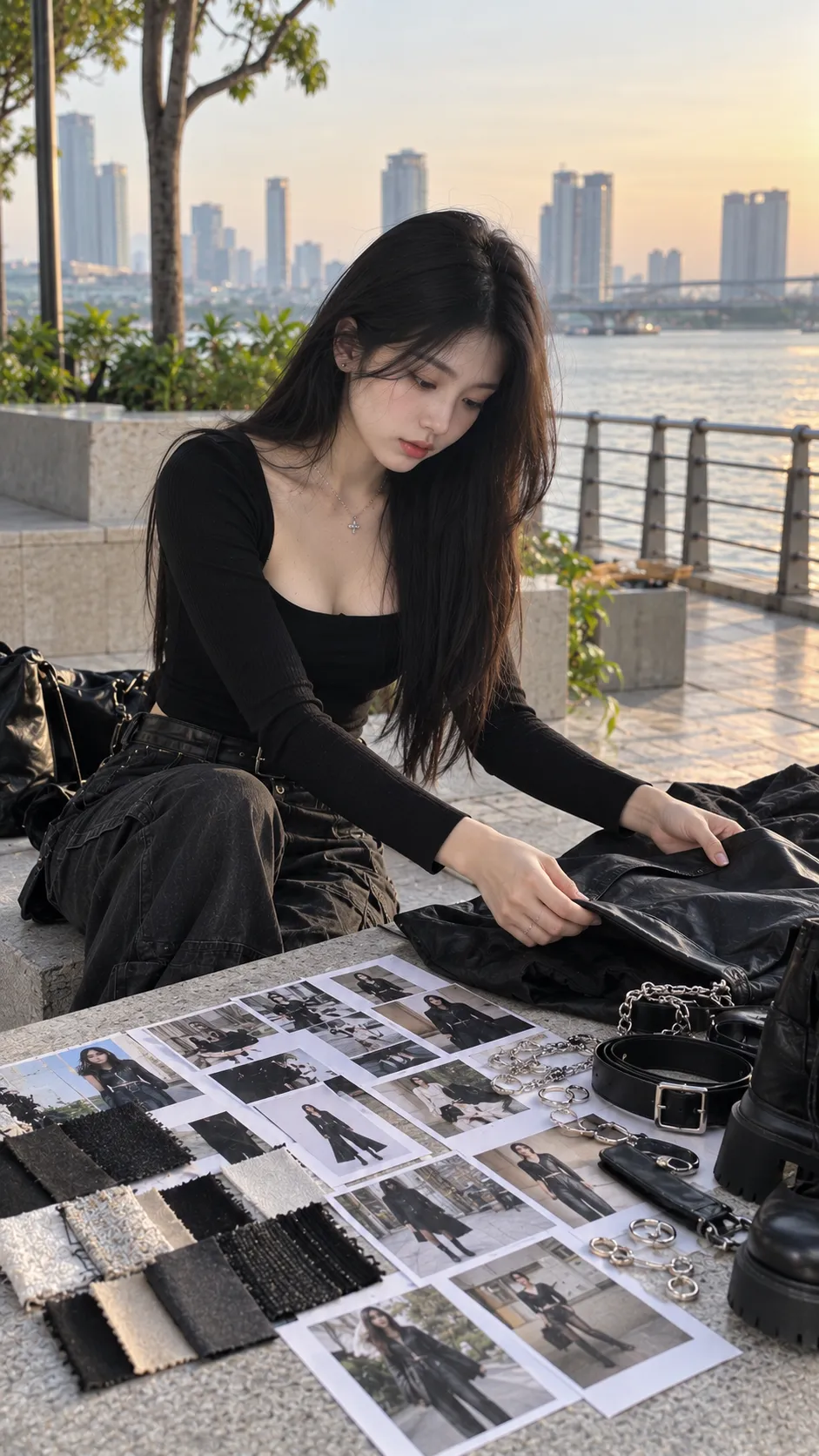
Compare the board with your wardrobe in three groups: already owned, substitutable, genuinely missing. If a fitted top you own provides the corset reference’s proportion, you may not need to buy a corset.
Use 70/20/10 as an optional check: mostly wearable foundations, a smaller share of defining silhouettes or textures, and a few identifying details. It is a planning prompt, not a rule.
Test a purchase against three outfits. A piece that only recreates one picture may offer less flexibility than one compatible with three existing combinations. This also relates to capsule wardrobes.
In Vietnam, add a climate filter. Heavy layers, leather and tall boots may be difficult to wear regularly. Retain cues through light mesh, jewelry, belts, color or removable layers; see women’s layering guide.
Audit the Board Before Shopping
Before making a shopping list, ask:
- Can I describe the board in one clear sentence?
- Have I identified three to five colors and their base or accent roles?
- Do at least two silhouettes recur?
- Are there two to four leading textures rather than competing surfaces?
- Do the footwear and bags support the outfit proportions?
- Are my three formulas actually different rather than renamed versions of one top?
- Can at least half the formulas begin with clothes I own?
- Does the board fit my weather, schedule and real settings?
If several answers are no, refine the board before buying. It supports shopping only once the missing garment categories are clear.
Seven Common Moodboard Mistakes
- An overly broad brief: combining Goth, Y2K, Clean Girl and Boho without identifying shared patterns.
- Saving only attractive photographs: the outfits contain no specific idea you want to use.
- Keeping repeated references: 100 images add little if they show one formula.
- Reading only color: two all-black outfits can express different styles through silhouette and texture.
- Copying complete outfits: buying one fixed combination instead of learning reusable principles.
- Ignoring your wardrobe: a board that requires every piece to be new needs another review.
- Never finalizing: without outfit formulas and actual wardrobe gaps, the board remains an inspiration archive.
Frequently Asked Questions
What is a fashion moodboard?
A fashion moodboard is a selected visual reference showing a direction’s colors, silhouettes, textures, garments, footwear, accessories and mood. For personal outfits, it should reveal styling principles and genuinely useful pieces.
How many images do I need?
Roughly 8–20 core images often reveal patterns. Collect more initially if useful, then remove duplicates and give each final reference a purpose.
Can I use Pinterest?
Yes. Use it to collect references, then make a smaller final selection. Record the palette, silhouettes, textures and three outfit formulas you intend to use.
Is Canva or Pinterest better?
Pinterest can serve discovery and collection; Canva can arrange selected references with notes and a palette. They can be consecutive steps rather than alternatives.
How does an aesthetic board differ from an outfit board?
An aesthetic board communicates a general feeling. An outfit board adds silhouettes, garments, footwear, bags, textures and combinations that translate into a wardrobe.
When is a board ready to guide shopping?
When you can describe its direction, identify colors, silhouettes and textures, write three formulas and name the pieces genuinely missing.