

Boho Chic Style: Texture, Proportion and Everyday Outfits
Boho combines drape, texture and a relaxed mood. A coherent outfit needs rhythm rather than every possible detail at once.
Boho Chic edits the movement and varied surfaces associated with Bohemian fashion into a more restrained everyday interpretation. Managing volume is more useful than piling on layers.
In this guide: wearable women’s Boho Chic, including hot-weather and Dark Boho variations, with enough structure for everyday settings.
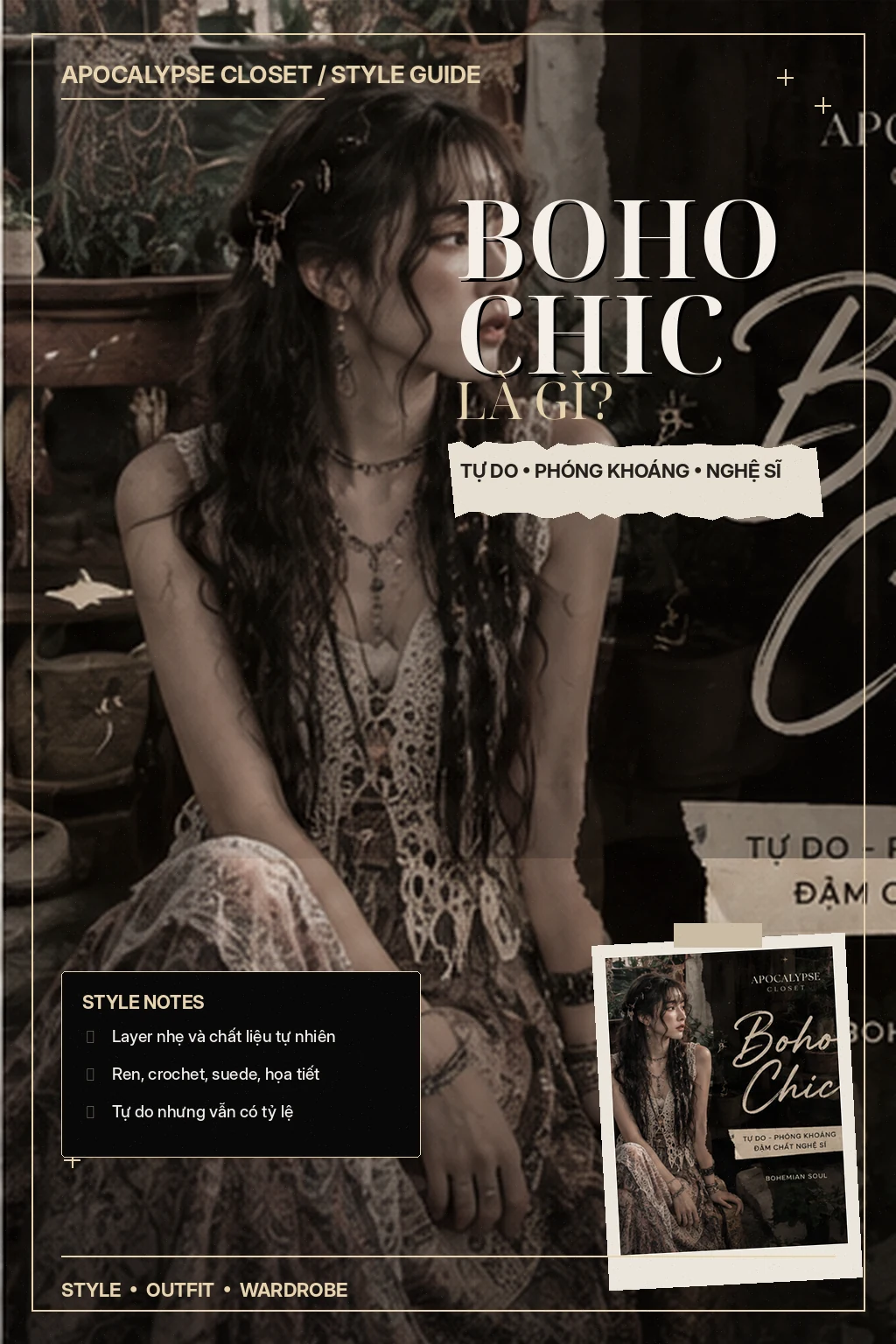
Guide collection: Aesthetic Dictionary: Fashion Style Reference (Vietnamese)
Boho Chic is an edited interpretation of Bohemian fashion: soft silhouettes, tactile or craft-like surfaces and relaxed accessories, organized for everyday proportions. Natural-looking textures are common, but specific fibers are not compulsory. Movement and a clear visual anchor help it remain wearable.
What is Boho style?
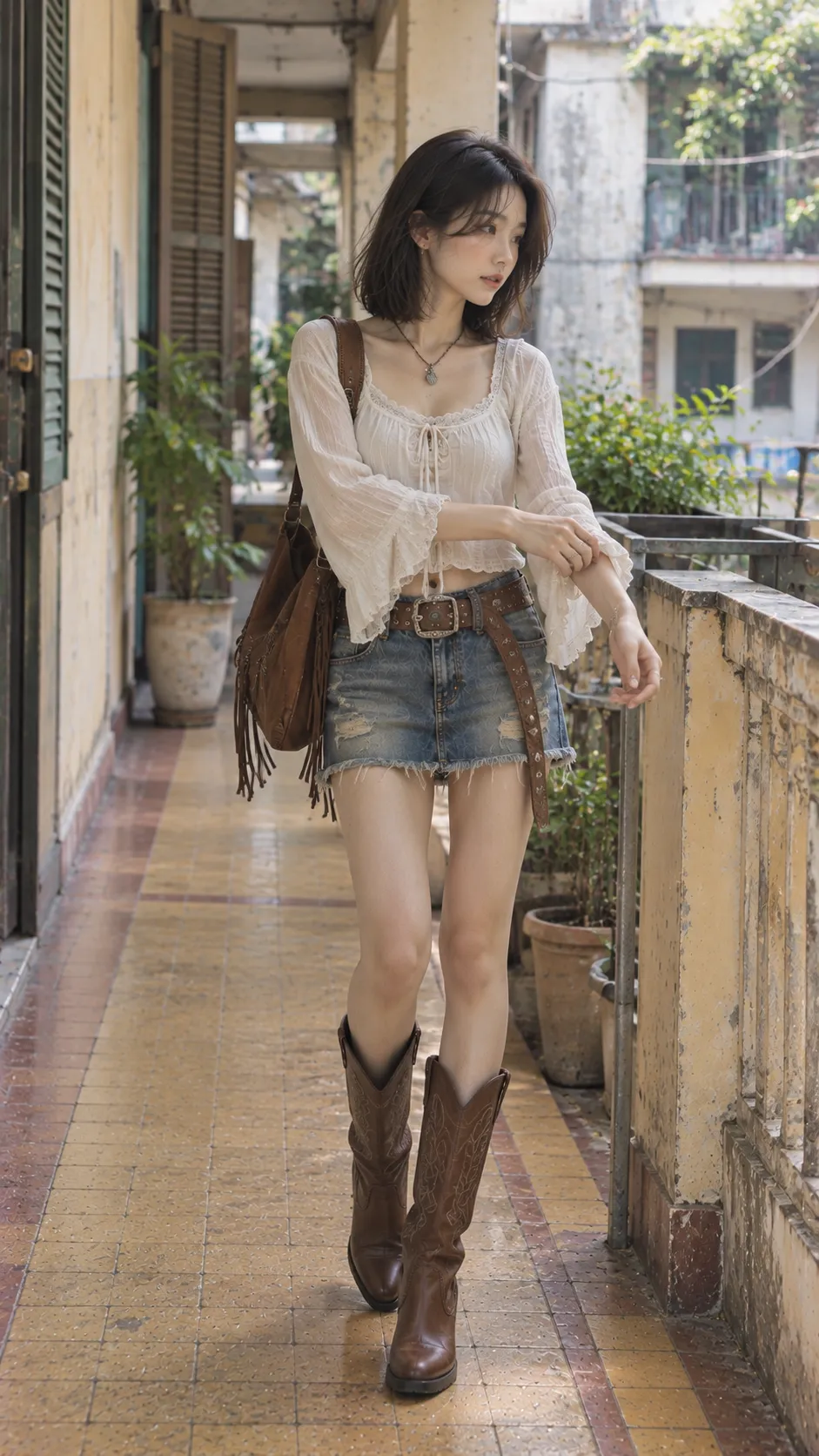
Common cues include long skirts, soft blouses, crochet, lace, suede, fringe, denim, small prints, layered jewelry and earthy colors. Combining all of them can create a festival-themed outfit. An edited interpretation selects fewer cues, considers fit and retains contemporary companions.
A plain tank, textured maxi skirt, sandals or boots and a belt can be sufficient. A wide-brim hat, several necklaces, fringed bag and crochet jacket need not appear together. Let texture remain visible rather than compete for attention.
Boho and Bohemian
Bohemian is a broader term with historical artistic and unconventional-lifestyle associations and many cultural influences. Boho is a common fashion shorthand. Here, Boho Chic means an edited version for city life, cafes, holidays or everyday wear rather than a universal definition of every Bohemian tradition.
Focus on drape, texture, earthy colors, craft details and jewelry choices you understand. Cultural symbols have particular meanings; avoid treating them as interchangeable exotic decoration.
Soft silhouettes with an anchor
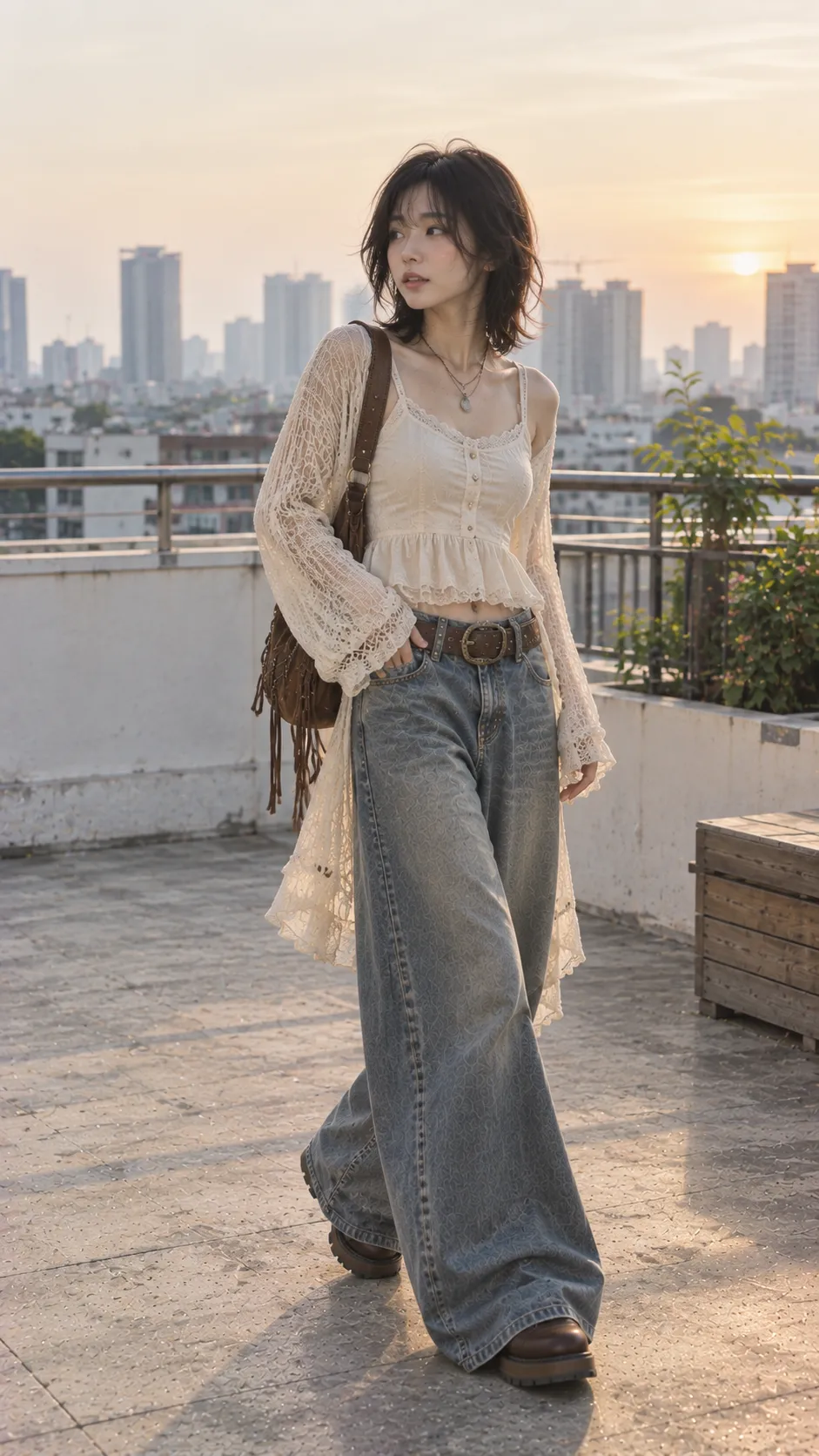
Several soft, loose pieces can obscure the silhouette. If you want more definition, choose one anchor at the waist, shoulders, neckline, wrists or legs. Pair a full maxi skirt with a neater top, a voluminous blouse with straighter bottoms, or a roomy dress with a defined waist detail.
Organize layers by role: a light base and one textured or moving outer layer. Crochet cardigans, light wrap-style layers, suede-look vests or denim jackets can work; one main outer layer may be enough in hot weather.
Materials and colors
Cotton, linen, crochet, lace, suede, denim, open knits, gauze and draping fabrics are familiar references. They describe a mix of fibers, constructions and finishes, rather than one required composition. Choose a tactile surface and suitable structure without assuming 100% natural fiber is compulsory.
Cream, brown, camel, olive, rust, burgundy, blue denim, dusty pink and black are common options. A monochrome cream or black outfit can still read as Boho through silhouette and texture; multiple colors are optional.
Frequently useful garments
- A draped maxi or midi skirt.
- A soft blouse with moderate sleeve volume, V-neck or tie neckline.
- A tank or camisole as a layering base.
- A crochet or open-knit cardigan.
- Flared denim or straight jeans with a worn-looking wash.
- A short vest, denim jacket or suede-look jacket.
- Ankle boots, simple sandals or loafers suited to the conditions.
- A soft leather or leather-look bag, shoulder bag or textured crossbody.
- Layered jewelry with a coherent metal finish or color family.
Eight outfit formulas
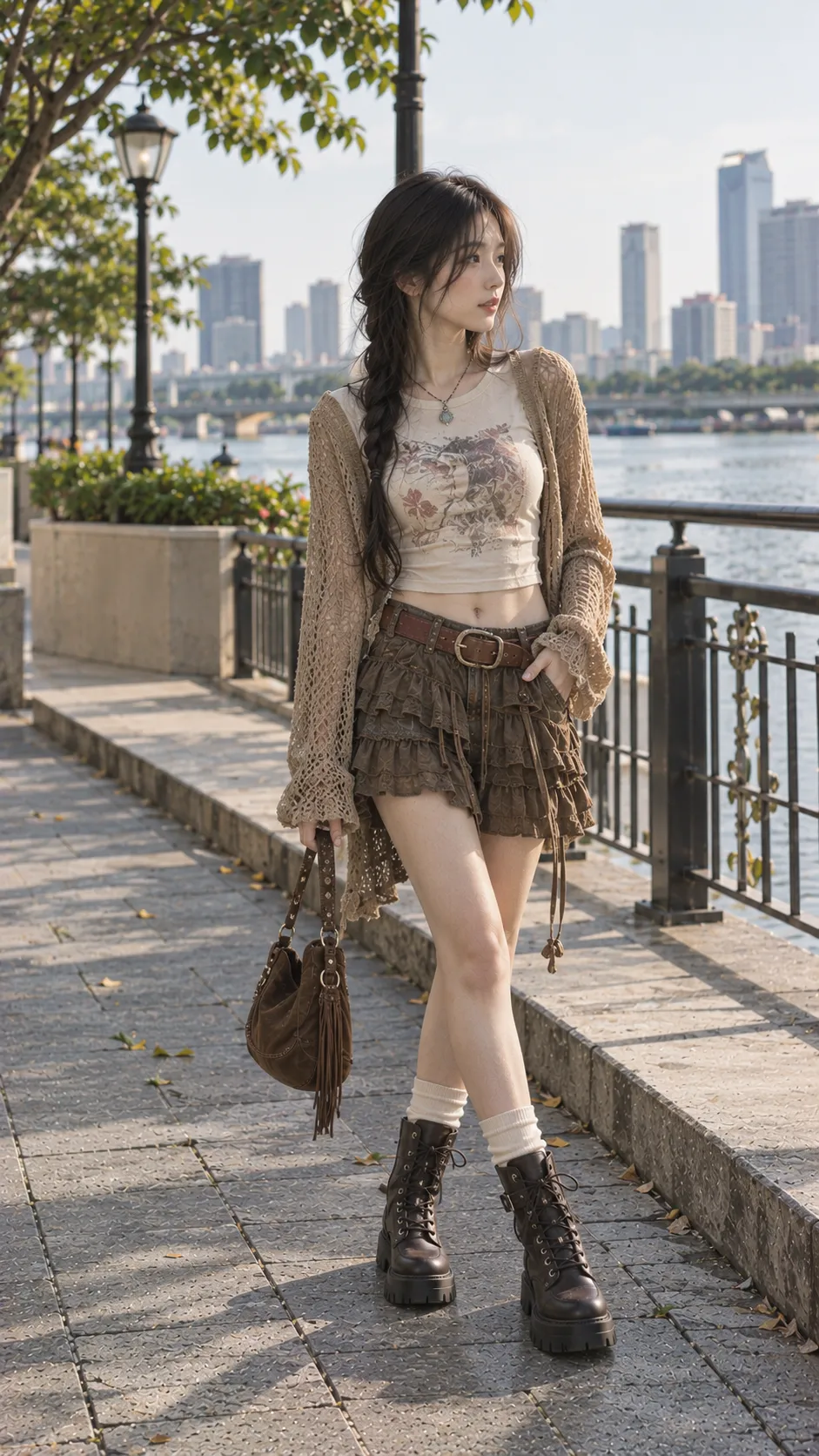
1. Fitted Tank, Maxi Skirt, Belt and Sandals A compact upper half balances moving fabric below; a useful warm-weather route.
2. Soft Blouse, Flared Jeans and Boots A recognizable 1970s reference that remains contemporary with restrained colors and accessories.
3. Slip Dress, Crochet Cardigan and Ankle Boots Suitable for an evening cafe, outing or cooler destination when the layers match the weather.
4. Baby Tee, Lace Skirt and Denim Jacket A more casual, youthful interpretation.
5. Camisole, Wide-Leg Linen Trousers and Long Necklace A light combination for a beach, resort or everyday city setting.
6. Faded Graphic Tee, Maxi Skirt and Combat Boots A bridge between Boho and Grunge that can reuse an alternative wardrobe.
7. Dark Floral Dress, Boots and Leather-Look Shoulder Bag A softer outfit with darker colors and a more grounded silhouette.
8. Short Vest, Tank, Jeans and Medium-Width Belt A relatively restrained city outfit with repeat-wear potential.
Hot-weather Boho Chic
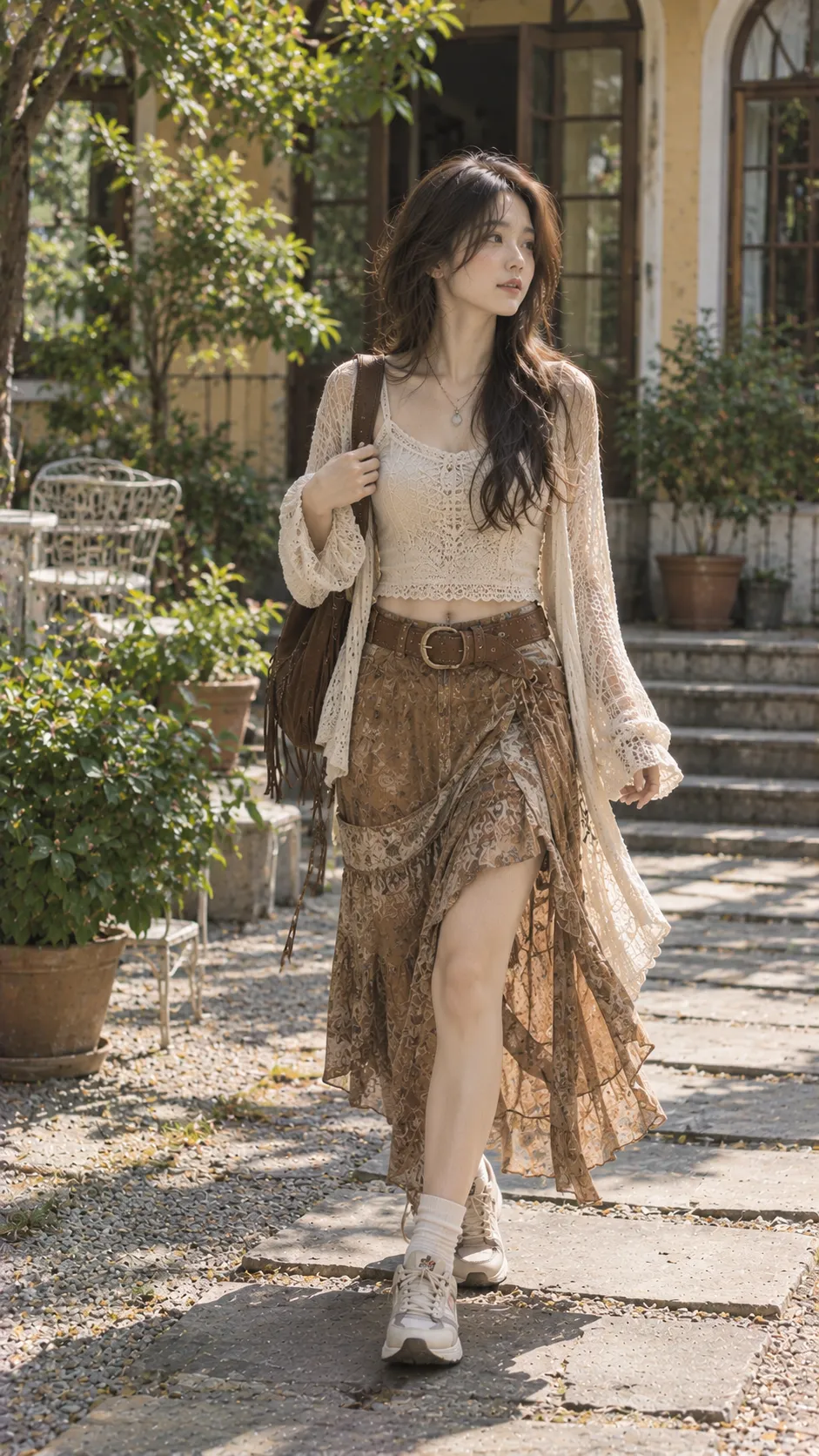
Choose one main texture rather than many layers: a suitably lined crochet skirt, lightweight cotton blouse or open-knit cardigan. Keep outerwear removable. Heavy suede, substantial knits and enclosed boots may be impractical for long outdoor walks in heat.
A compact bag, secure-strapped sandals, retro sneakers or ankle boots can be more practical than elaborate festival accessories. For air-conditioned interiors, bring a light cardigan and carry it when unnecessary. Boho depends on movement and surfaces rather than layer count.
Dark Boho, Whimsigoth and Fairy Grunge
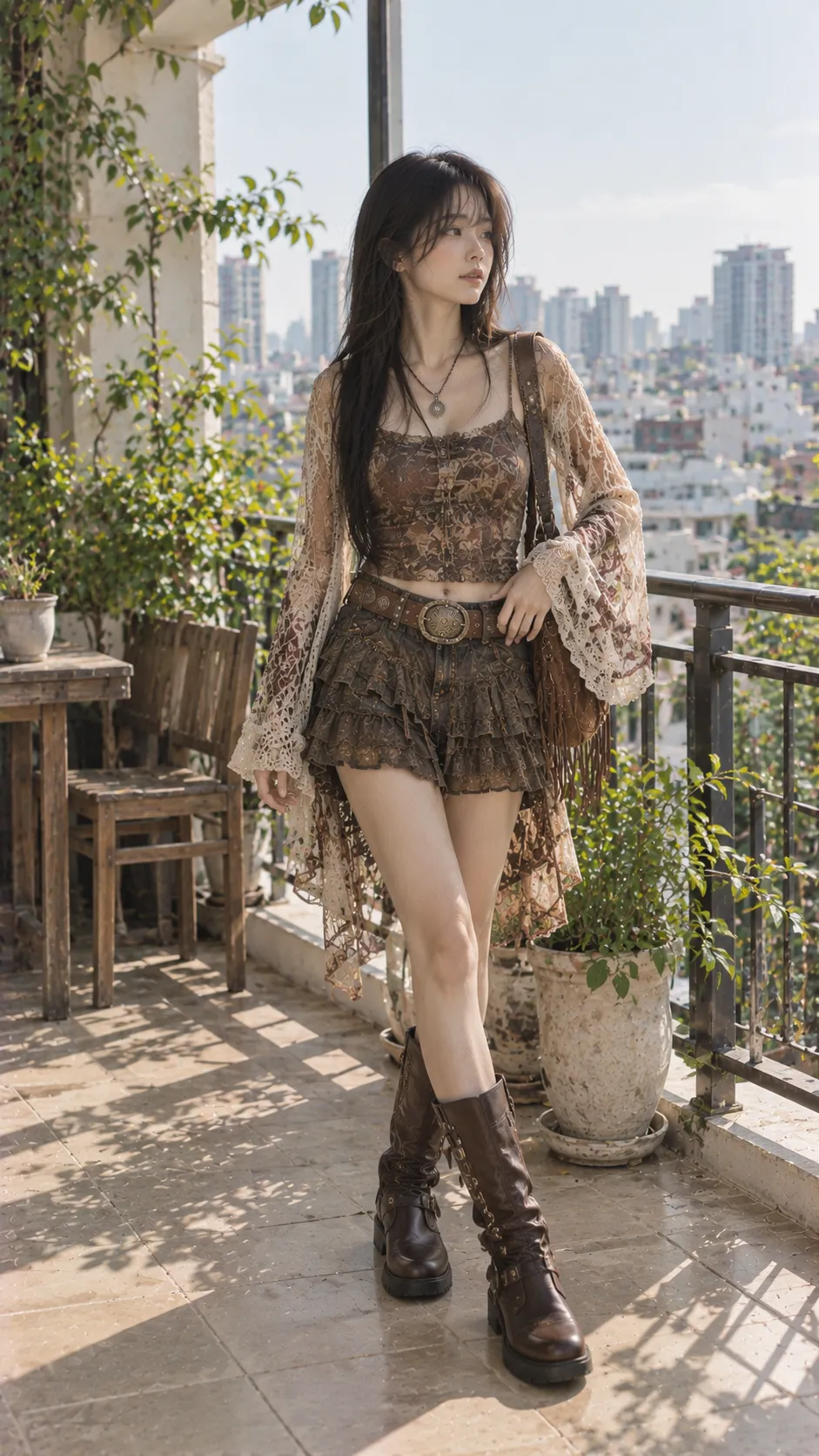
Dark Boho retains soft shapes with black, burgundy, olive, plum or dark brown, adding velvet, lace, oxidized-looking silver details or boots. This can overlap visually with Whimsigoth, which often uses jewel tones, celestial motifs and soft layers for a mystical mood.
Earthy textures, asymmetric skirts, lace and rougher surfaces can move the outfit toward Fairy Grunge. That direction often contrasts dreamlike details with heavier boots, distressing, mesh or deliberately irregular layers. Boho Chic generally reads as more relaxed and harmonized. These are editorial distinctions, not rigid classifications.
Volume and personal proportions
Height does not restrict maxi skirts. For a longer visual line, try a defined waist, a hem near the shoes and a top that does not cover too much of the skirt. If you prefer less volume at the hips, try fabric falling from the waistband instead of expanding there. If you prefer less shoulder volume, avoid emphasizing both sleeves and neckline simultaneously. These are optional effects, not body-shape rules.
For lighter layering, compare a camisole and thin wrap-style layer with a full blouse, heavy cardigan and vest. Choose the combination that provides your preferred movement and definition.
Organized accessory layers
Choose a related accessory family: silver-toned pieces and dark stones, muted gold and brown, or similar-toned beads. Two or three necklace lengths can create clearer hierarchy than several pieces at one level. A belt can anchor dresses or skirts; multiple rings may work best with a quieter neckline and ears.
Fringe is optional. A simple worn leather-look shoulder bag or woven bag can serve the outfit. A wide-brim hat can create a stronger festival reference; use it for a setting where it feels useful rather than as a requirement.
Build from your existing wardrobe
Begin with two pieces compatible with your wardrobe: a maxi skirt and textured layer, or a blouse and belt. Test them with existing tees, tanks, jeans, boots and sneakers. After several real wears, decide whether a third addition is useful.
An alternative wardrobe may already contain graphic tees, combat boots, black skirts, lace tops and washed denim. A cardigan, belt or warmer-toned accessory can shift those pieces toward Dark Boho without rebuilding from scratch.
Seven common styling mistakes
- Combining fringe, crochet, florals, a hat, necklaces and boots without hierarchy.
- Using broad volume everywhere when you want a visible anchor.
- Choosing heavy materials in heat, then needing to remove half the outfit.
- Relying only on earth colors without considering texture.
- Copying cultural symbols without understanding their context.
- Mixing numerous print scales without a connecting idea.
- Assuming Boho is only for tall or slender bodies.
For light luggage, reuse one bottom: a maxi skirt with a tank, baby tee or blouse, then vary footwear or a layer. A simple draped skirt with several combinations may serve better than a richly textured piece that works only once. Movement and proportion can carry the mood without constant additions.
For cafes, choose one main texture such as crochet or lace and keep shoes and bags restrained. For beaches or resorts, consider lightweight cotton or linen, maxi skirts, camisoles and secure sandals; assess accessories for sweat and movement. For evenings, try black, burgundy or dark brown with boots and one coherent jewelry layer. For travel, prioritize packability, manageable creasing and reuse: one skirt can pair with a daytime tank, afternoon tee and light evening knit.
Cafes, beaches, evenings and travel
Movement with structure
Keep one defined area, one leading texture and a coherent accessory family. Bring a relaxed Bohemian reference into a contemporary silhouette. A dark palette also creates natural visual connections with Whimsigoth and Fairy Grunge.
Explore related topics: Mori Kei.
References
These references provide historical and cultural context:
- Vogue — The Evolution of Boho Chic — the development of Boho Chic in fashion.
- Vogue — 1960s Fashion History Lesson — 1960s fashion context and Bohemian influences.
Styling suggestions are Apocalypse Closet editorial interpretations based on the website’s outfit collection.
Frequently Asked Questions
What is Boho Chic?
An edited Bohemian-inspired approach combining soft silhouettes, tactile surfaces, often earthy colors and relaxed accessories with considered everyday proportions.
Are Boho and Bohemian identical?
Bohemian is broader; Boho is common fashion shorthand. Boho Chic often describes a more edited everyday interpretation rather than every historical Bohemian tradition.
Which garments can I start with?
A maxi skirt, soft blouse, tank, crochet cardigan, flared jeans, boots or sandals, belt and selected layered jewelry offer adaptable starting points.
Can Boho Chic use black?
Yes. Dark Boho can combine black, burgundy, olive or plum with lace, velvet, knits and silver-toned details, connecting visually with Whimsigoth and Fairy Grunge.
Can a shorter person wear a Boho maxi skirt?
Yes. If you prefer a longer visual line, try a defined waist, a hem near the shoes and fewer horizontal layers. These are options rather than requirements.