

What Is Ulzzang Style? Korean Fashion and Women's Outfits
Ulzzang style today often describes youthful, visually clear and photogenic Korean-inspired casual outfits. Historically, however, ulzzang was not a clothing system: it emerged from early-2000s Korean internet culture around people gaining recognition for their appearance in online photographs.
To interpret ulzzang fashion style without imposing facial features or skin-color expectations, separate beauty culture from clothing. Concentrate on proportion, layers, color, texture, shoes and considered presentation.
Guide collection: Aesthetic Dictionary: A Fashion Style Directory
What Is Ulzzang Style?
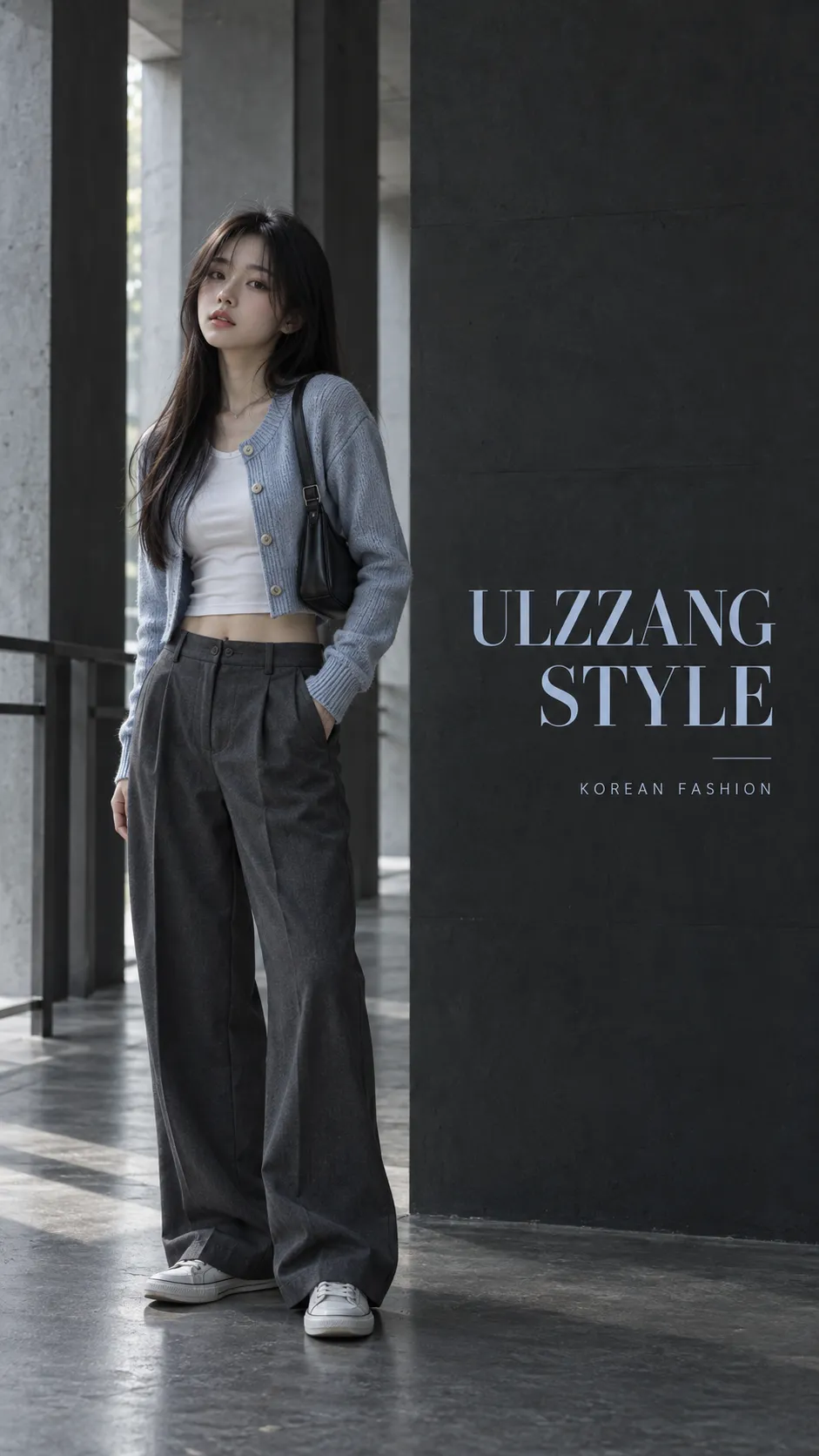
Ulzzang style is a common internet label for youthful Korean-inspired outfits with clear lines: cardigans, light knits, fitted tees, light shirts, moderately roomy hoodies, minis or pleated skirts, straight jeans, soft wide trousers, sneakers and compact bags. A defined area balances a relaxed one.
The term's origin matters. Ulzzang (얼짱) roughly means “best face” or “good-looking face.” Research published in Celebrity Studies describes its early-2000s emergence as young people posted photographs to online communities and sought recognition; prominent figures became known as ulzzang. Its foundation was internet beauty culture rather than a fashion movement with a manifesto and fixed dress code.
International searches for ulzzang style reflect a later clothing interpretation of those images. This guide uses that contemporary search meaning while preserving the historical distinction and avoiding the reduction of all Korean fashion to one aesthetic.
Where Did Ulzzang Begin?
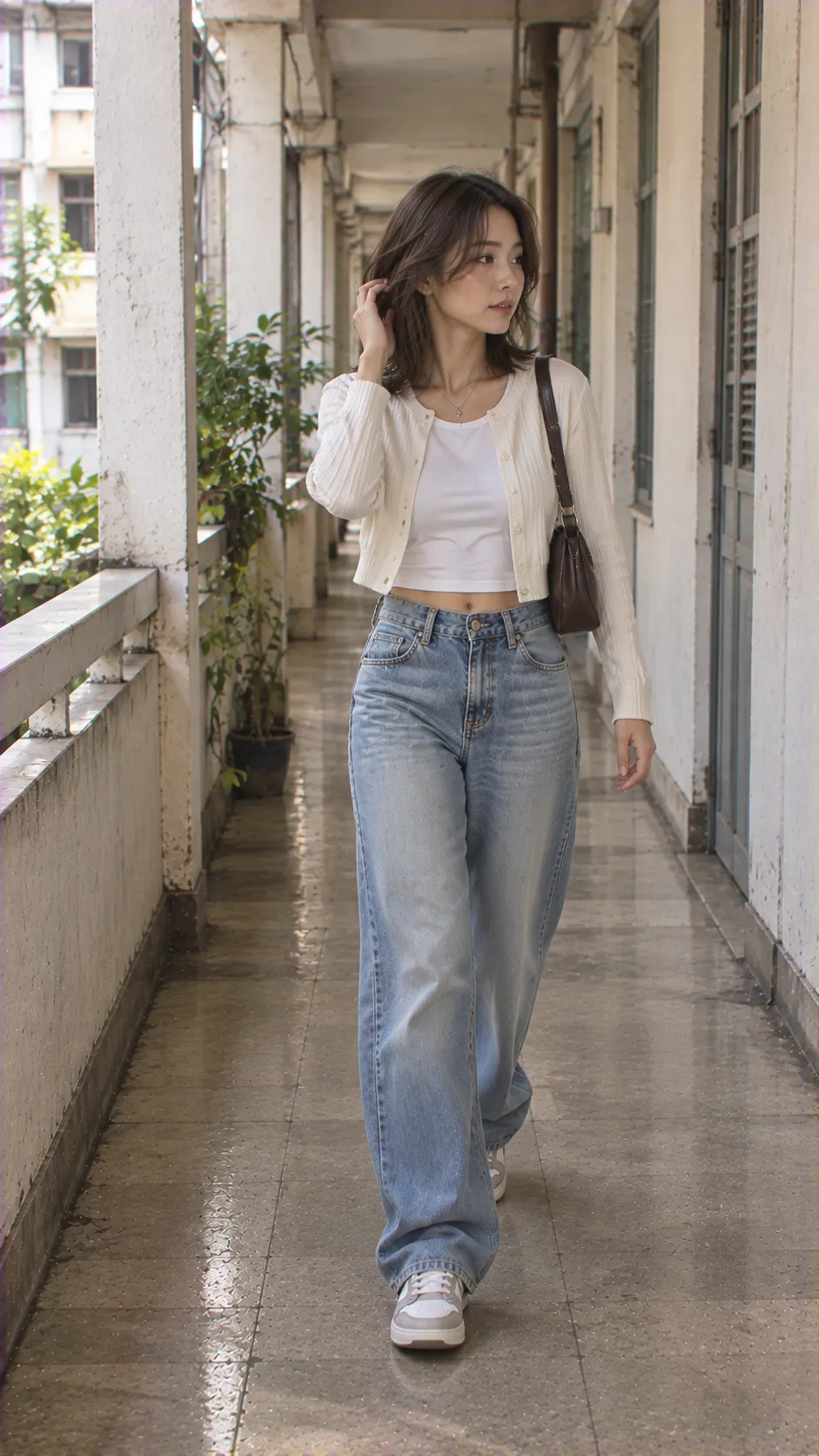
A 2003 article on Korea's Policy Briefing portal describes the term moving from online communities into offline life, alongside forums, digital photography, camera phones and self-produced personal images. It presents a youth internet phenomenon through which ordinary people could gain community attention and become recognizable figures.
Later, the phenomenon entered mainstream entertainment. Soompi has profiled actors and singers first recognized as internet ulzzang, with self-portraits and communities providing distribution. This helps explain why its internationally interpreted look emphasizes being photogenic : outfits can remain simple while reading clearly in a photograph.
From Beauty Culture to Ulzzang Fashion
International fashion usage translates a face-centered internet phenomenon into clothing choices. Accordingly, ulzzang fashion style there is no compulsory item; the relationship between clothing and overall presentation matters.
Clear necklines, moderate patterns, restrained layers and coordinated colors leave the face visible. Cropped cardigans with high-rise jeans, roomy hoodies with short skirts, or fitted tees with straight trousers create distinct short–long relationships. Considered proportions can make basic clothes communicate the reference.
Pale skin, a small face or large eyes are not requirements for wearing these outfits. Turning historical beauty ideals into clothing eligibility reinforces appearance-based exclusion. Fit, color, materials, shoes and accessories offer practical choices without body prerequisites.
Five Recognizable Clothing Codes
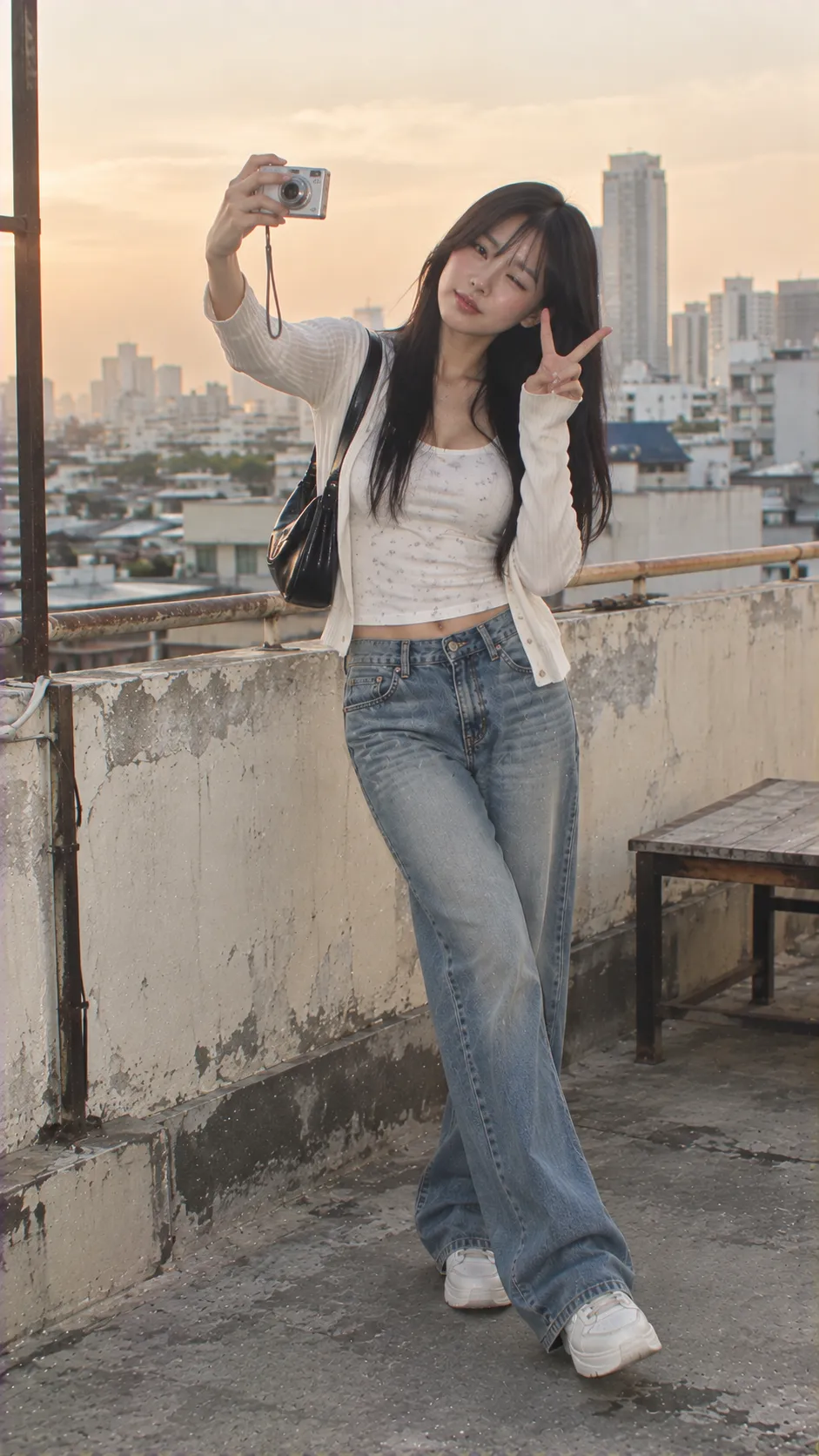
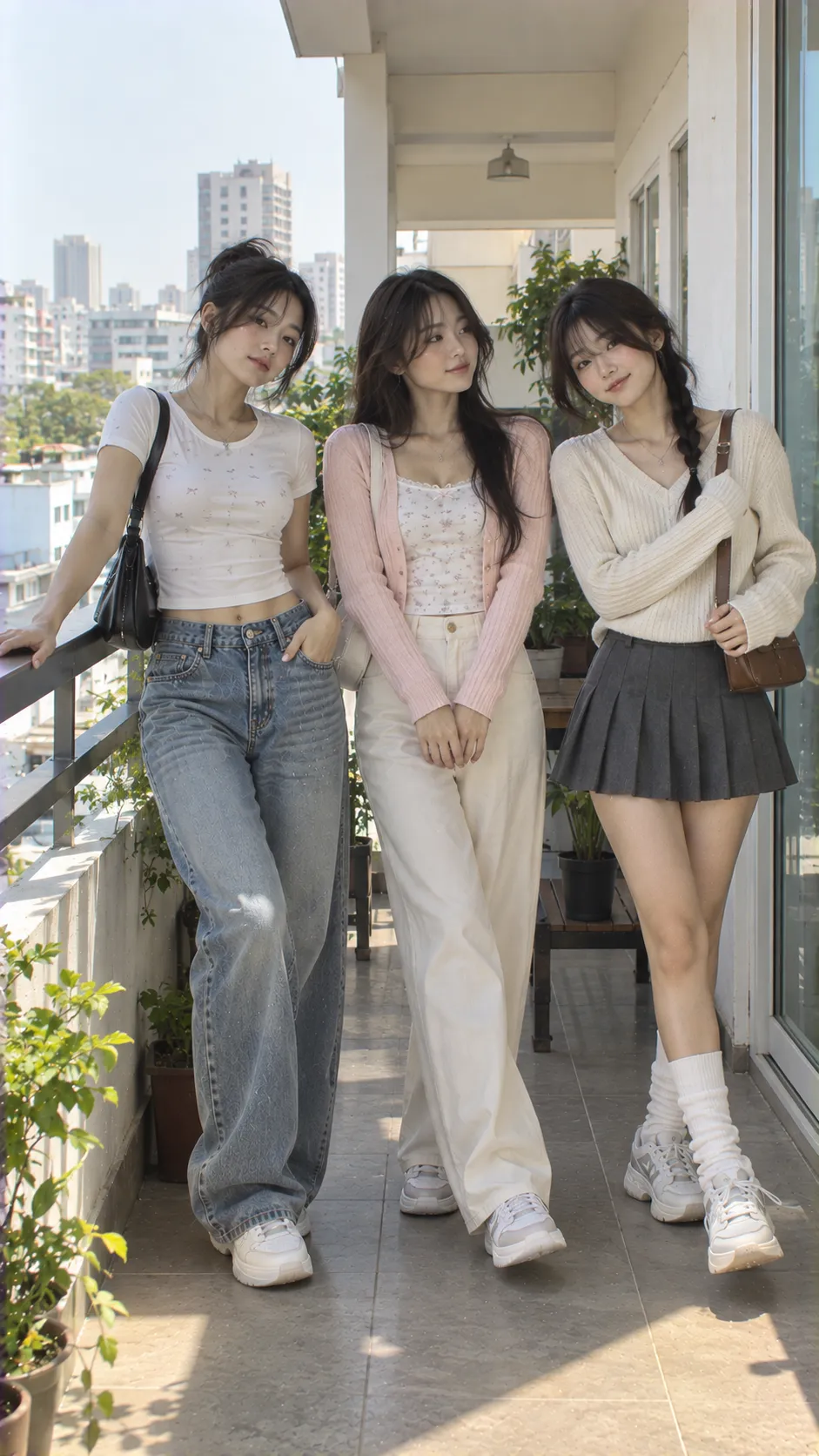
Fitted tees with straight jeans, roomy knits with minis, or short cardigans with high-rise trousers balance rather than repeat the same volume everywhere.
White, cream, gray, navy, denim blue, black and soft pastels create a coordinated base. Burgundy, cobalt or pink can supply one main accent.
Cotton jersey, light knits, denim, poplin and lighter wool blends generally combine more easily than numerous glossy or distressed textures.
Low-top sneakers, loafers, Mary Janes or simple ankle boots can support the outfit without becoming its main statement.
A compact shoulder bag, clip, cap, thin-framed glasses, short socks or small jewelry add rhythm without excessive decoration.
How Does Ulzzang Differ from Acubi, Clean Girl and Y2K?
Avoid using ulzzang for every outfit worn by a Korean person. Korean fashion encompasses streetwear, tailoring, avant-garde design, vintage, subcultures, luxury and workwear. Seoul's varied designers and small-scale production cannot be reduced to one pastel look.
Six Women's Ulzzang-Inspired Outfit Formulas
Fitted tee + straight jeans + sneakers
Why it works: a fitted tee anchors the torso, straight denim extends the leg line and low sneakers keep the finish light. White or cream with medium blue denim creates a brighter combination.
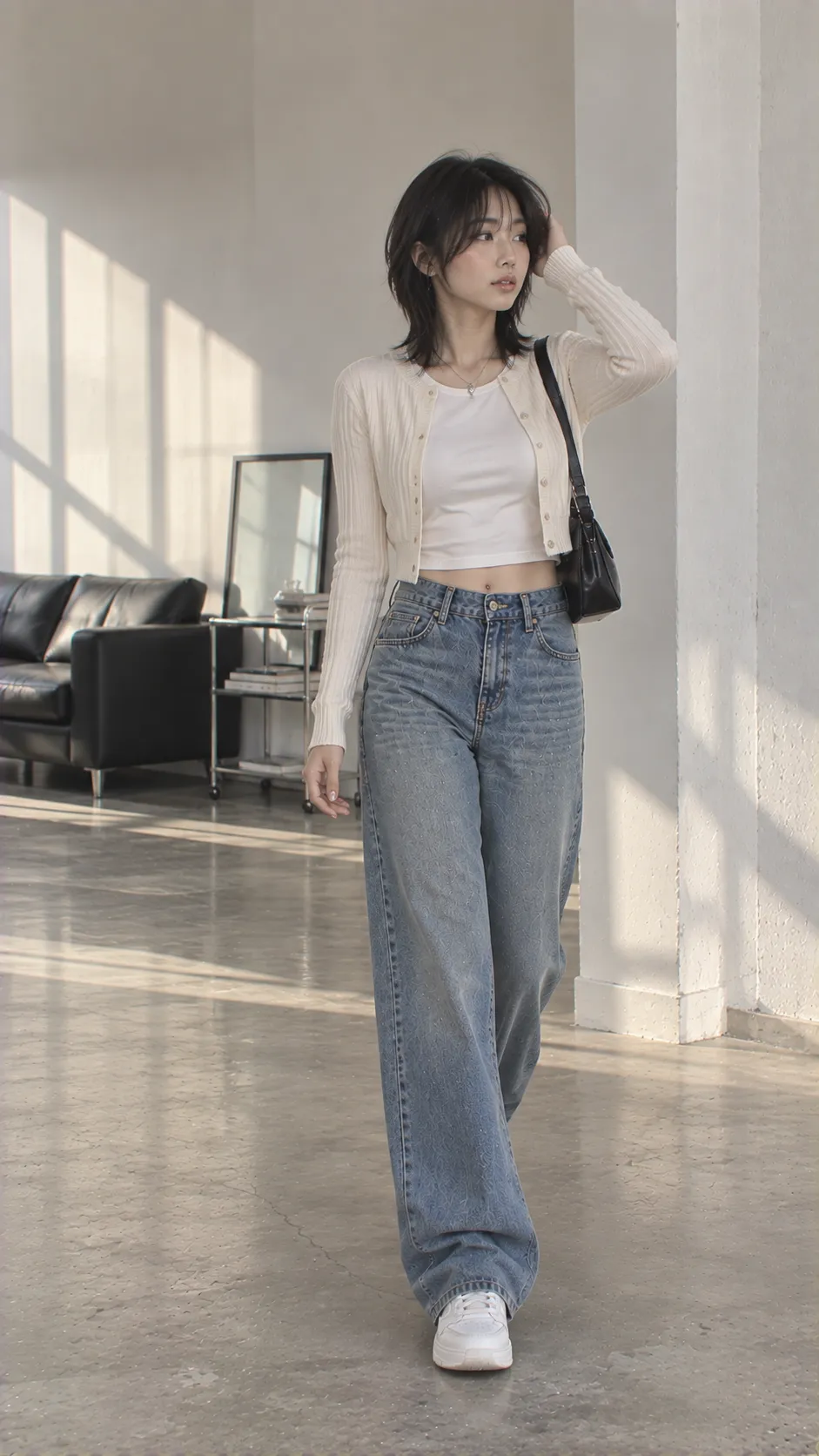
Short cardigan + camisole + high-rise trousers
Why it works: two upper layers create depth while the short cardigan reveals the waistband. Lightweight knitwear adapts better to heat and humidity.
Oversized knit + pleated mini + loafers or Mary Janes
Why it works: a short hem balances upper volume. Short or knee socks can introduce preppy references. A softly draped pleated midi offers a longer alternative.
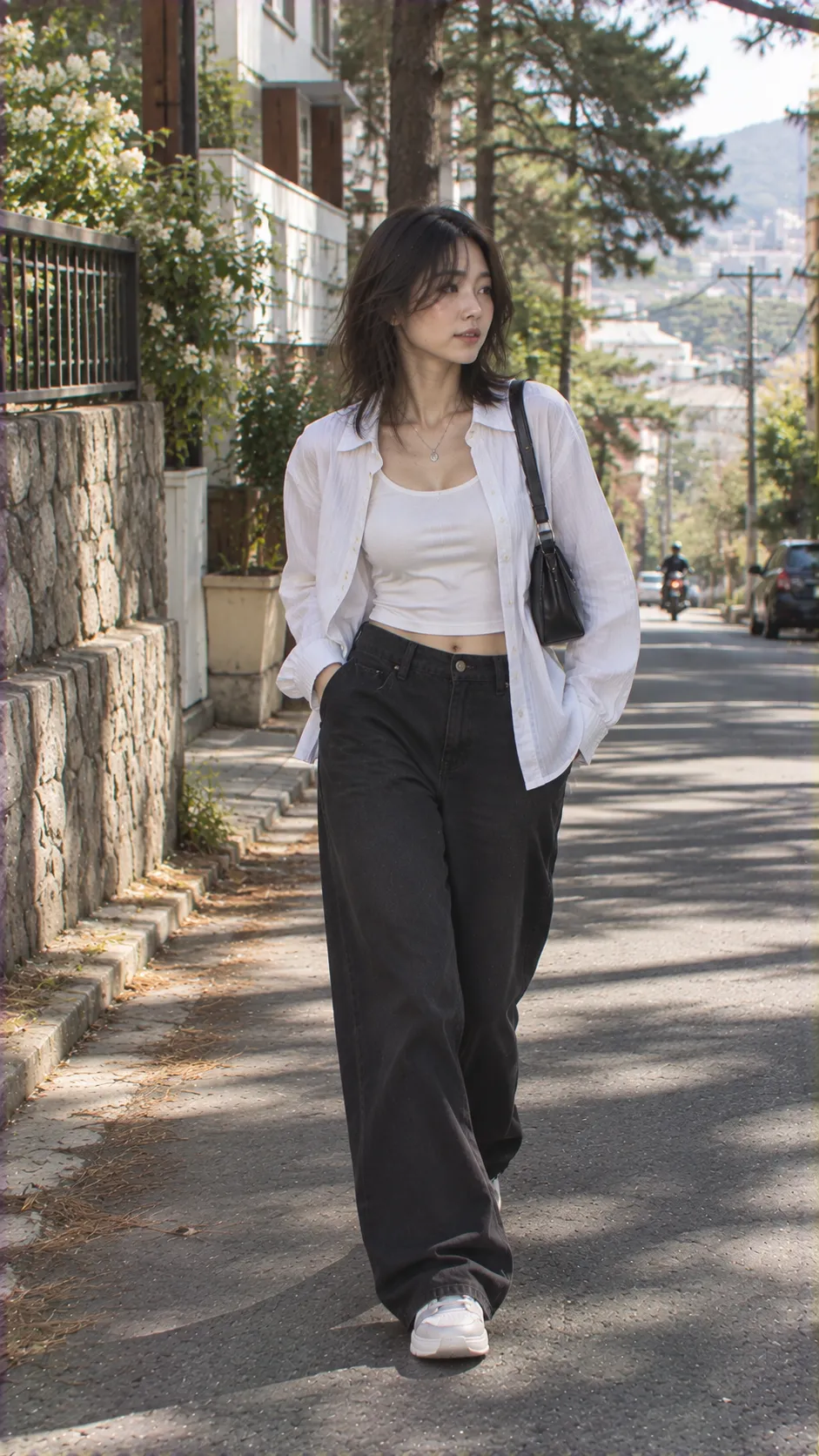
White shirt + tank + black wide-leg trousers
Why it works: an open shirt frames a fitted inner layer with vertical lines; wide trousers give a more mature casual interpretation. This can approach Casual Chic by replacing sneakers with loafers.
Moderately roomy hoodie + denim skirt or shorts + sneakers
Why it works: upper volume contrasts with simpler bottoms. A hoodie ending near the hips leaves more of the leg line visible than a very long version.
Baby tee + A-line midi + compact shoulder bag
Why it works: a short top balances a gently moving skirt, while a small bag concentrates detail near the waist. Sneakers feel casual; loafers or flats change the finish.
Adapting Ulzzang-Inspired Proportions
No body type is inherently suitable or unsuitable. Adjust the location of definition and the amount of volume according to your preferences.
Try mid- or high-rise bottoms, waist-length tops, cropped cardigans or partial tucks. Similar shoe, sock or trouser colors maintain continuity.
A-line or wide-leg bottoms add lower movement; soft-shouldered cardigans or overshirts shift some attention upward. These are optional visual choices.
A softly falling tee or tank, an open shirt or cardigan and a comfortable waistband provide vertical framing without tight compression.
Check actual fit rather than the model's photograph: shoulder placement, a rolling waistband, skirt drape and excess trouser fabric over shoes. These small adjustments contribute to a visually lighter outfit.
Colors, Materials and Accessories
Start with white, cream, gray, navy, denim and black, then optionally add powder blue, soft pink or butter yellow. Burgundy, forest green or red provide stronger accents without changing the underlying proportions. Pastels are optional.
Cotton, rib knits, thin cardigans, poplin and moderately structured denim layer readily. Leather, metallics or lace can provide one accent; extensive use shifts toward Y2K, Dark Feminine or other alternative directions.
Compact shoulder bags, totes, caps, glasses, clips, small hoops, socks and fine necklaces often suffice. Every K-pop-associated detail is unnecessary. Numerous bows, charms, warmers, platforms, graphics and layers can move the outfit toward a different aesthetic.
Five Common Styling Mistakes
1. Treating beauty ideals as clothing requirements
The term's appearance-centered history does not require pale skin, a small face or any particular body features. Keep the focus on clothing and self-expression.
2. Equating ulzzang with all Korean fashion
K-fashion is considerably broader. This label describes one image tradition rather than every Seoul outfit.
3. Wearing maximum volume everywhere
A roomy knit, wide trousers and long outerwear can erase definition. Keep one structured area or shorter layer.
4. Copying photographs without adapting to climate
Heavy layers, wool and boots may suit Korean autumn photos but feel impractical in Vietnam. Light knits, cotton, thin shirts and breathable sneakers can preserve proportions.
5. Combining too many aesthetic references
A mini, leg warmers, low rise, metallic bag, corset and chunky platforms may move toward Y2K or Acubi. Choose a main direction and borrow only a few supporting references.
Frequently Asked Questions
What is ulzzang style?
Ulzzang originally named people recognized for their appearance in early-2000s Korean photo-sharing communities. Contemporary international usage often describes photogenic Korean casual clothing with soft proportions, coordinated colors and restrained layers.
Is ulzzang an official Korean fashion style?
Not in the sense of a movement with a fixed dress code. Its foundation is internet beauty culture; the clothing label developed through later image interpretation.
Does ulzzang style require pastels?
No. White, gray, navy, denim and black work too. Pastels are one optional way to create a soft impression.
How does ulzzang differ from Acubi?
Ulzzang is a looser casual label; Acubi has more specific cool neutrals, fitted layers, cargos or low rises and minimal Y2K references.
References
These sources contextualize the term, early-2000s Korean internet culture and Korean fashion's international reach. Outfit formulas are Apocalypse Closet's editorial interpretation.
- Celebrity Studies — Performing whiteness: skin beauty as somatechnics in South Korean stardom and celebrity
- Korea Policy Briefing — Leave ulzzang as teenagers' culture (2003)
- Soompi — Which Celebrities Began Their Careers After Becoming Famous as an ‘Ulzzang?’
- South China Morning Post — Korean street style and micro-producers
- Hallyu Research Archive — K-beauty, Korean fashion and ulzzang imagery across Asia