

Chicano Style: Cultural History, Clothing and Women's Outfits
Chicano style is a fashion vocabulary connected with Mexican-American and Chicano culture, often expressed through structured volume, workwear, button-ups or flannel, draped trousers and considered accessories. Begin with proportions and cultural context rather than stereotypes.
This guide moves from zoot suits and pachuco/pachuca history to silhouettes, foundational pieces and five contemporary women's outfit interpretations.
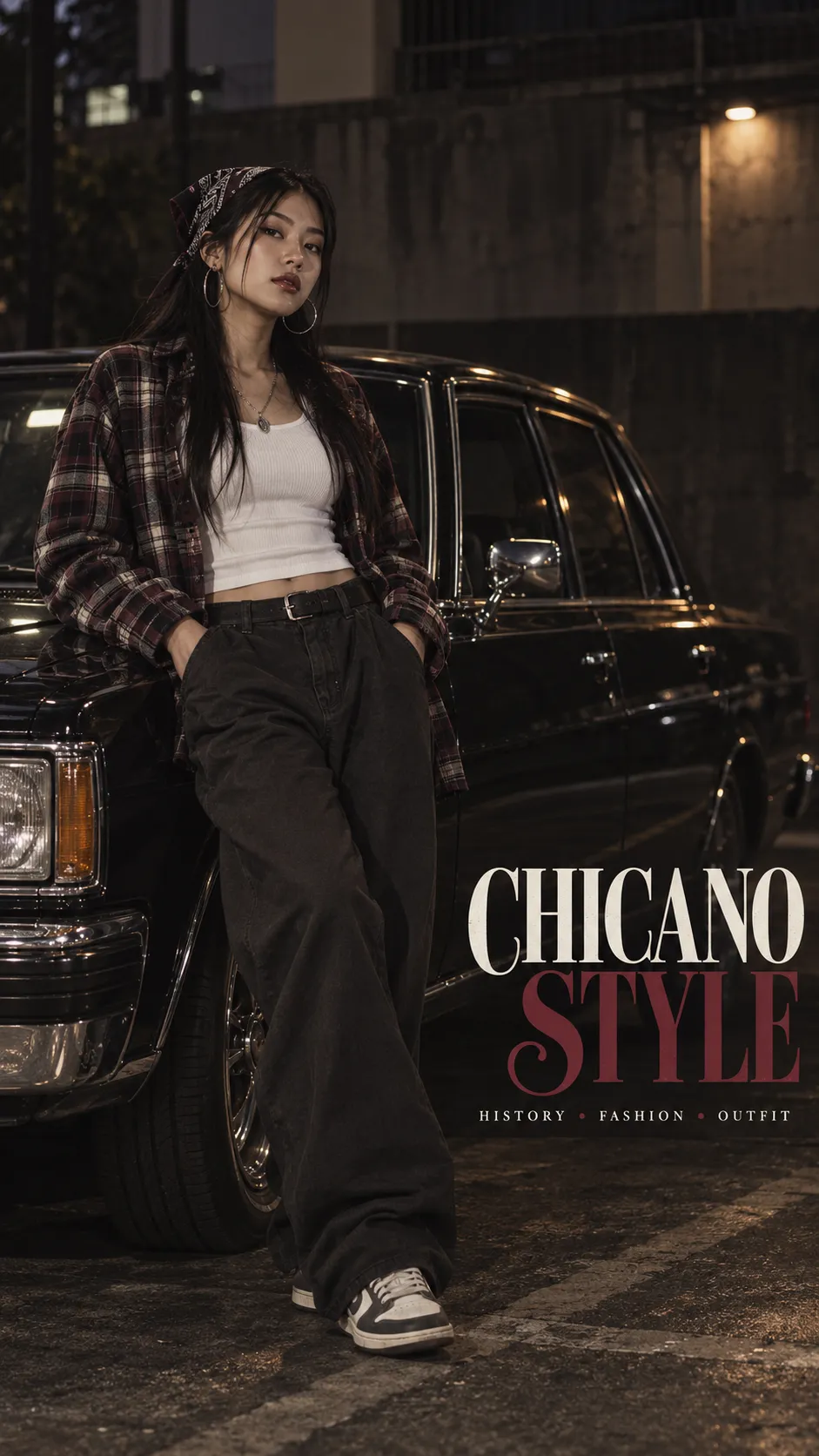
Guide collection: Aesthetic Dictionary: A Fashion Style Directory
What Is Chicano Style?
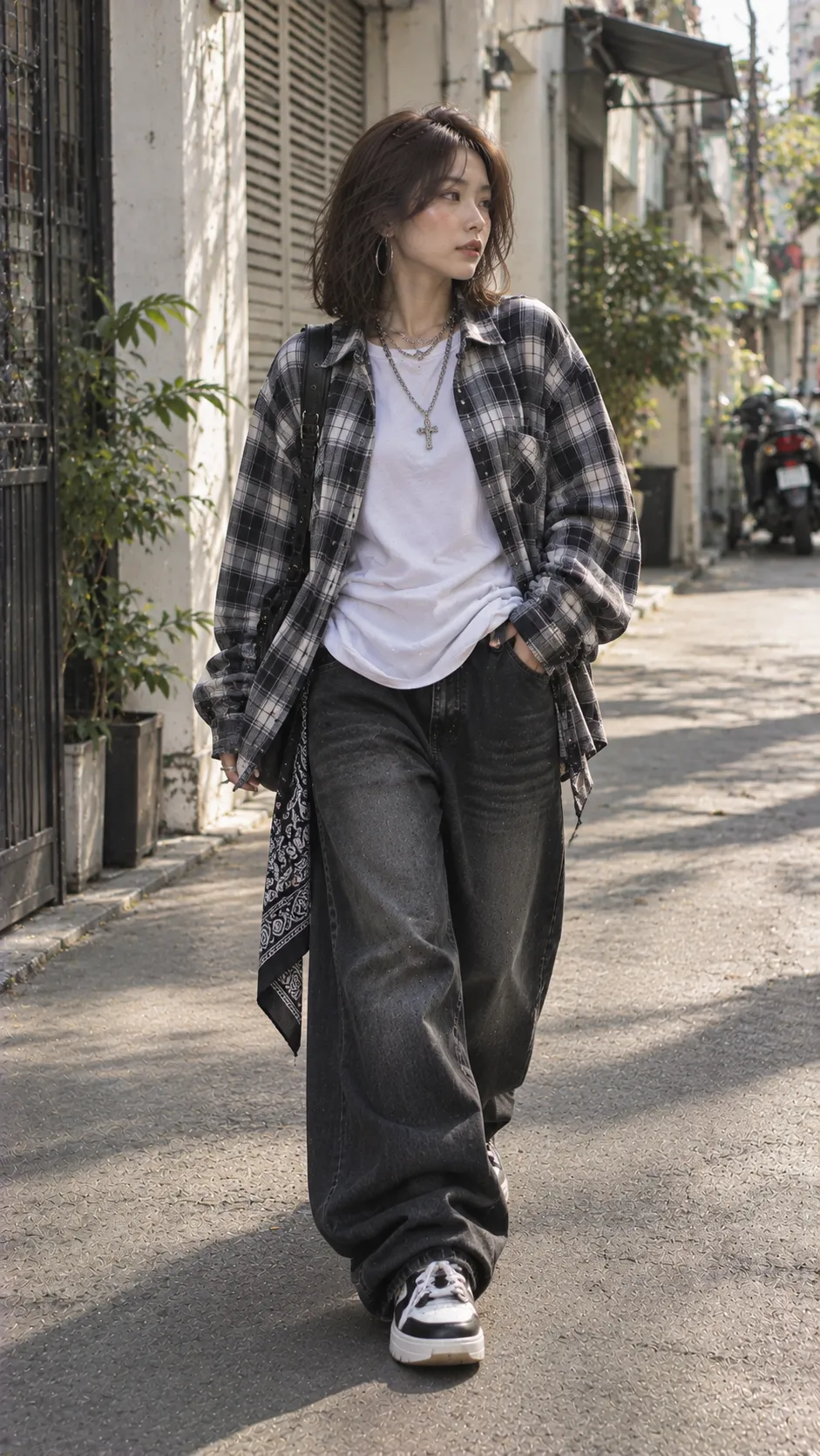
Chicano style in fashion often describes clothing inspired by Mexican-American and Chicano culture in the United States: controlled volume, workwear, shirts or flannel, draped mid- or high-rise trousers, denim, white tees or tanks, substantial shoes and selected accessories. Baggy clothing, a bandana and flannel alone overlook its cultural context and proportional relationships.
No single item defines the look. Consider the silhouette: a structured or layered upper half, room through the lower half, a readable waist and footwear that anchors the combination. Contemporary women's interpretations can retain these relationships without reproducing a historical image as a costume.
From Zoot Suits to Contemporary Chicano References
Zoot suits help explain the significance of volume. In the late 1930s and early 1940s, broad shoulders, long jackets and very full trousers tapering at the ankles became prominent across several US communities of color. PBS and Smithsonian describe their popularity among Black and Latino youth; in Los Angeles, they became closely associated with Mexican-American pachuco culture.
Remember that the zoot suit does not have one exclusively Chicano origin story. It circulated across communities, while pachuco and pachuca clothing became powerful expressions of Mexican-American presence and self-definition. During Los Angeles's 1943 Zoot Suit Riots, Mexican-American young people were attacked, with clothing used as a marker for targeting them.
Women's pachuca clothing also had multiple silhouettes. The Los Angeles Times describes pencil skirts with broad-shouldered jackets as well as wide trousers. Contemporary interpretation can learn from proportion and construction rather than reconstructing an entire 1940s outfit.
Reading Chicano-Inspired Outfits: Five Visual Relationships
Rather than asking whether an item is inherently Chicano, examine five relationships. An outfit may omit one or two while retaining a coherent overall direction.
Baggy jeans, work pants, wide denim or pleated trousers supply the main volume. Look for a deliberate fall from the hips rather than shapeless bulk.
Roomy shirts, flannel, jackets and button-ups frame the shoulders. Wearing them open reveals a vertical inner layer.
A close fit is optional. A tank ending near the waist, a partial tuck or a visible belt can define a break within the volume.
Structured leather sneakers, work shoes or compact boots remain visible beneath wide hems.
Hoops, a belt, glasses, a watch or a bandana may provide accents. Choose one or two rather than stacking every recognizable symbol.
For unfamiliar loose fits, explore What Is an Oversized Fit?. That guide addresses shoulders, length and ease; here, volume is a tool for constructing the silhouette rather than the entire identity.
Foundational Pieces for Women's Outfits
Plain white or black tees, ribbed tanks, fitted tees or lightly printed baby tees. A simple base leaves room for the outer silhouette.
Roomy button-ups, flannel, work shirts or boxy jackets. Open fronts reveal two vertical lines around the inner layer.
Baggy denim, work pants, pleated trousers or other wide-leg cuts. Prioritize deliberate drape and manageable hems.
A belt, hoops, glasses, watch, small bag and structured shoes. These finish an established silhouette rather than repairing unsuitable proportions.
Wide jeans provide a familiar starting point. For length, rise and top proportions, explore Women's Wide-Leg Jeans Outfits. For pocketed workwear bottoms, use Women's Cargo Pants Outfits as the item-specific guide.
Five Contemporary Women's Outfit Formulas
These are adaptable directions rather than uniforms. Choose proportions for your preferences, weather and occasion.
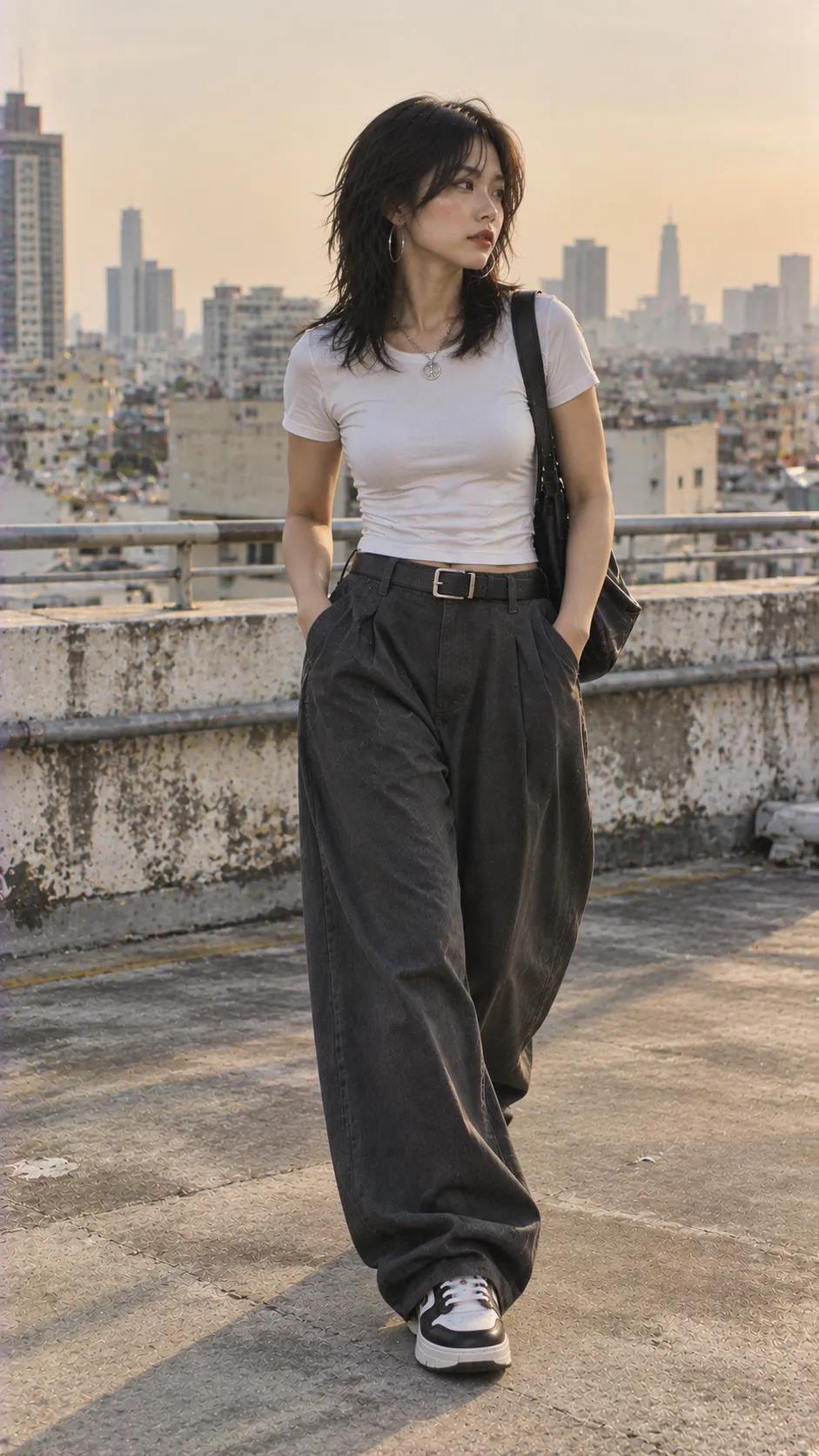
White tee + baggy work pants + belt + sneakers
Why it works: a simple white top creates a compact bright area, wide trousers carry most visual weight and the belt marks the waist. Structured sneaker uppers and soles balance the hems.
Best for: classes, cafés and active days. A fitted tee can add greater torso definition while retaining the trousers and belt.
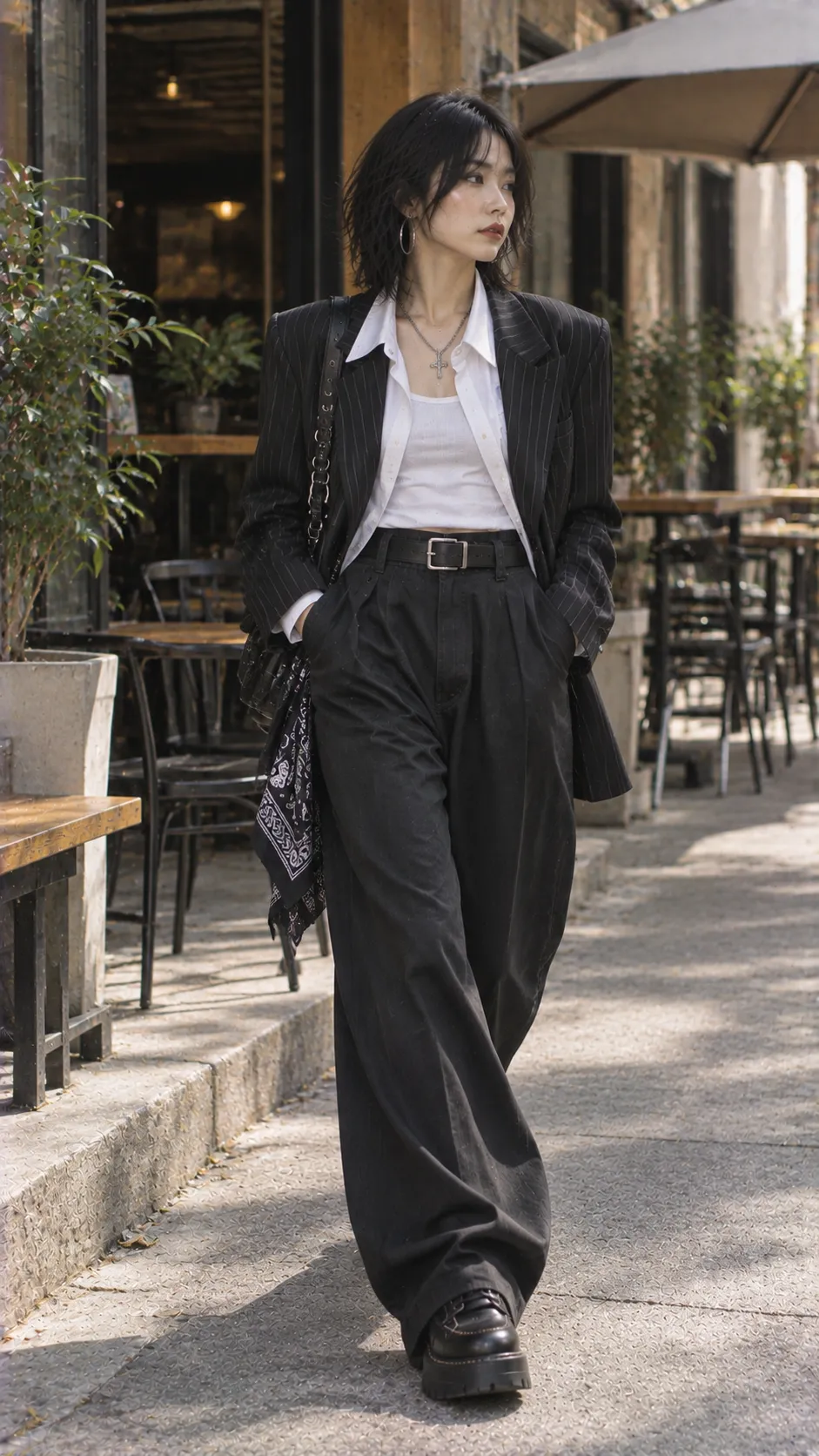
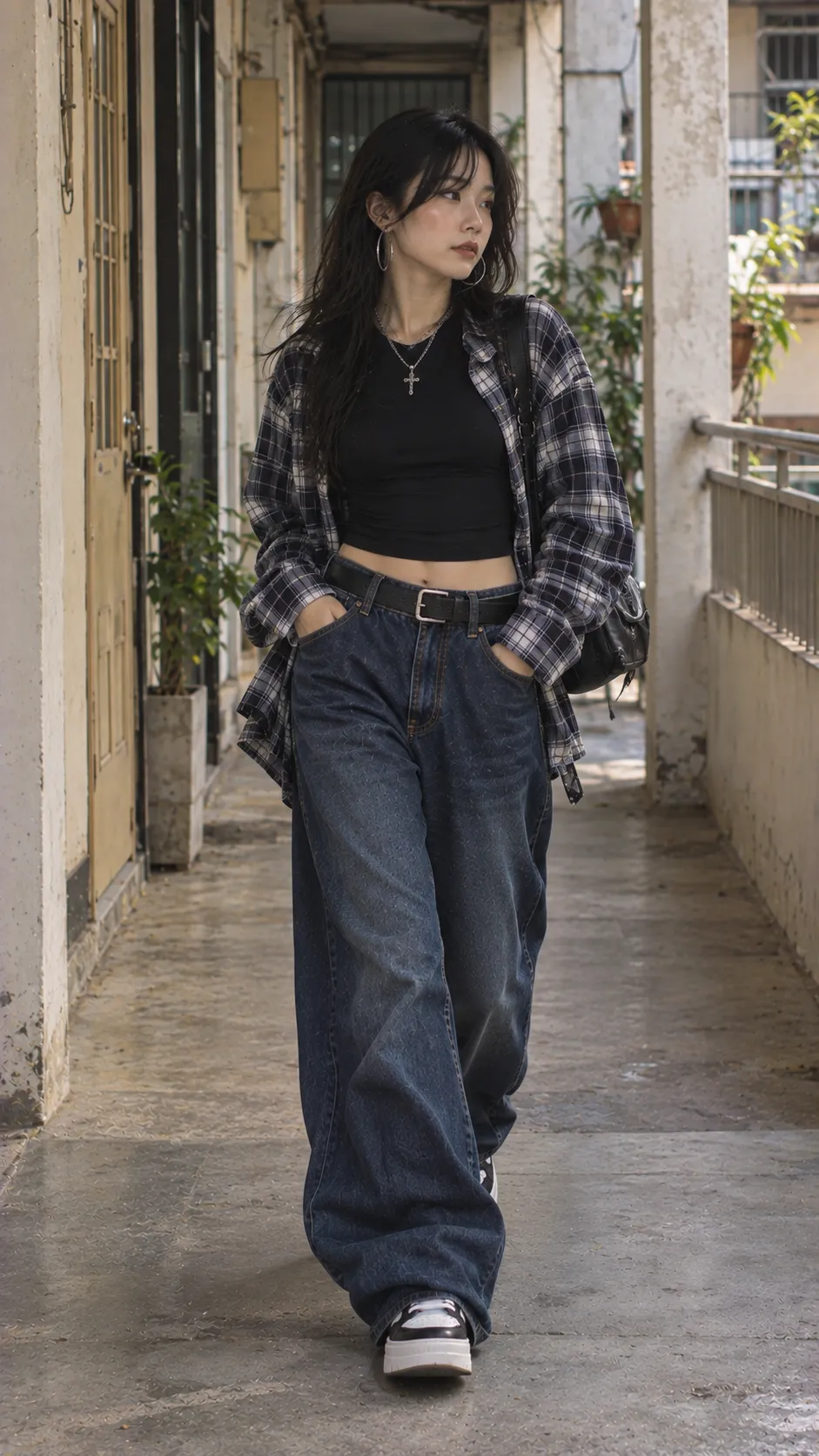
Tank + open button-up + pleated trousers + hoops
Why it works: the tank establishes a vertical line, the shirt frames it and draped trousers extend the silhouette. Hoops provide a small accent near the face without competing with the shirt.
Best for: evening cafés, outings or a more clearly referenced yet restrained outfit.
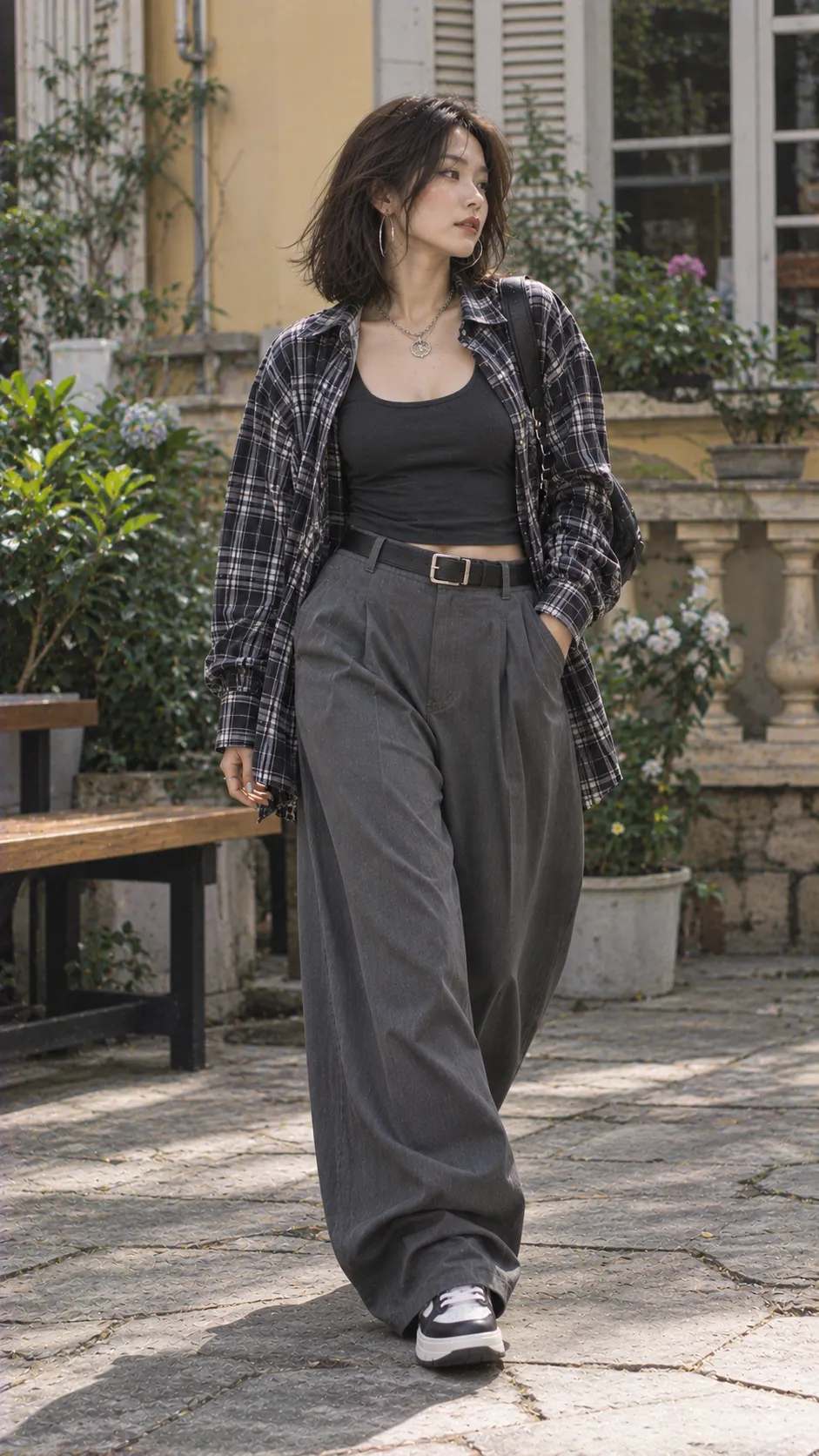
Fitted tee + baggy denim + flannel overshirt + low-profile sneakers
Why it works: a shorter fitted tee balances draped denim. Flannel adds movement without needing to extend past the knees. Keep other pieces plain when plaid is prominent.
Best for: everyday wear using pieces already in your wardrobe.
Boxy jacket + monochrome base + wide trousers + work shoes
Why it works: this emphasizes structure. Square shoulders frame a continuous inner color, wide trousers continue the lower volume and work shoes provide a substantial finish.
Best for: cooler weather, evenings or a more mature presentation.
Dark baby tee + high-rise wide jeans + belt + waist-tied oversized shirt
Why it works: the rise and short tee emphasize a longer leg line; a tied shirt adds hip volume while leaving the waist readable. It introduces layers without wearing two full upper garments all day.
Best for: warm weather, outdoor photos or days requiring removable layers.
Color, Texture and Layers: Fewer, Clearer Decisions
There is no compulsory palette. White, black, charcoal, navy, olive, beige, indigo and washed blue often make shapes easier to read. Red, burgundy or deep blue can concentrate in flannel, a cap or a small detail.
Assign textures roles: cotton jersey as a base, denim or twill through trousers, flannel as a layer and a small polished shoe or belt surface to finish. Too many strong textures obscure the focal point.
A useful layering principle is varying where the hems end. A waist-length tank, slightly longer shirt and different jacket hem reveal depth rather than one uninterrupted wall of fabric.
Shoes and Accessories: How Much Is Enough?
Very slight shoes can disappear beneath wide trousers. Leather or skate-style sneakers, work shoes and compact boots often provide a clearer finish. Visual weight does not mean maximum sole height; keep footwear sufficiently present beneath the hem.
Give accessories an order: hoops near the face, a belt at the waist, glasses or a watch as an accent. A bandana is an optional accessory, not proof of cultural identity. Avoid combining large chains, bandanas, tattoo prints, dark glasses and stereotyped makeup as a shortcut.
For broader street-oriented dressing rather than a specific Chicano reference, explore What Is Streetwear? for graphic tees, sneakers, cargos and its other branches.
Cultural Inspiration without Turning Identity into a Costume
Chicano describes Mexican-American cultural and historical identity, extending far beyond an aesthetic. For outfit inspiration, learn from silhouette, workwear, layering and proportional balance.
Imitated tattoos, gang gestures or stereotyped makeup are unnecessary. They can turn styling into caricature. Focus on draped trousers, substantial outer layers, structured shoes and one or two personally meaningful accessories.
Do not equate Chicano style with gangster style. Pachuco clothing was historically criminalized in media and official discourse; PBS and historical research describe how conspicuous dress became a pretext for discrimination against Mexican-American youth. Context explains why the clothing carries significance beyond a visual trend.
Five Common Styling Mistakes
1. Oversizing every piece
Baggy clothing still needs structure. Equally long, wide shirts, tees, jackets and trousers can merge into one shape. Keep a waist anchor or a simpler inner layer.
2. Treating a bandana as proof of Chicano style
One accessory cannot establish an entire fashion vocabulary. Fix the silhouette before adding more signals.
3. Defaulting to generic streetwear
Graphics, cargos and chunky sneakers may simply read as streetwear. For this particular reference, consider button-ups, workwear, draped trousers or denim and clearer layers.
4. Reproducing a complete historical image
Zoot suits and pachuca history provide context rather than a cosplay checklist. Translate shoulder, waist and trouser relationships into contemporary garments.
5. Ignoring trouser length
A slight break or controlled stacking can look deliberate; excessive dragging weakens the outline and complicates movement.
Frequently Asked Questions
What is Chicano style?
In fashion, it commonly describes Mexican-American and Chicano-inspired structured volume, workwear, shirts or flannel, baggy trousers or denim, simple inner layers and considered accessories.
Do women's Chicano-inspired outfits require baggy trousers?
No. Straight trousers, a pencil skirt with a structured jacket or moderately wide denim can work. Relationships between shoulders, waist, bottoms and shoes matter more.
Are Chicano style and streetwear the same?
Not entirely. They may share loose fits, sneakers and workwear, but Chicano style has specific Mexican-American and pachuco/pachuca history. Streetwear contains many other influences.
References
These sources contextualize history and culture; the outfit framework is Apocalypse Closet's editorial interpretation: