

Acubi Style: Korean Minimal Y2K References and Outfits
Acubi styling combines a restrained palette with contrasting proportions, Y2K references, and altered basics: fine layers, cutouts, asymmetric lines, or visible garment edges.
This guide reads the silhouette, layers, and surfaces so you can compare existing pieces before buying additions. The examples are styling interpretations, not a rigid test that every outfit must pass.

Guide collection: E-Girl / Alt Girl: Outfit and Dark Y2K Guides
Black, gray, off-white, washed denim, or cooler brown provides one starting range. A darker or desaturated palette is a reference rather than a compulsory uniform.
A clearer upper outline or fine close layer contrasts with baggy trousers, softer cargo pants, or a straighter skirt.
A strap, neckline, mesh sleeve, inner hem, or outer edge becomes part of the composition.
A fastening, buckle, fine strap, cutout, narrow frame, or silver-toned detail can add interest without occupying every area.
The Acubi Club Association
The name Acubi is associated with Korean label Acubi Club. CNA Lifestyle describes the brand's layered basics, softer knitwear, and muted presentation becoming a wider styling shorthand. This guide uses that context without treating all Korean street style as one category or assuming that a brand's products are required.
Calling it simply minimal Y2K leaves out some useful distinctions. Shorter tops and roomy bottoms supply one period reference; washed surfaces suggest softer Grunge connections, while cutouts and asymmetric basics alter familiar garment lines. These are overlapping interpretations, not a fixed historical formula. Compare Soft Grunge styling for that adjacent reference.
Three Styling Influences
The influences need not appear in equal amounts. An outfit can emphasize simpler lines or stronger Y2K references while leaving enough visual space for smaller details.
Acubi and Broader Y2K References
| Feature | Acubi | Broader Y2K possibilities |
|---|---|---|
| Color | Muted neutrals in this Acubi interpretation | Bright color, metallic surfaces, or prominent logos may appear |
| Detail | Selected small fastenings, asymmetric lines, or altered basics | More prominent decoration, graphics, or accessories are possible |
| Silhouette | Defined and roomy areas with deliberate separation | A broad range, including lower rises and shorter hems |
| Mood | Restrained and urban in this guide's interpretation | Potentially more playful or pop-oriented |
The guide to Y2K style covers the wider reference; the Dark Y2K comparison provides another connection for darker wardrobes. These labels overlap rather than operating as exclusive categories.
Start with the Silhouette
One approach contrasts a defined or finely layered upper section with a roomier, longer lower one. If several areas are simultaneously prominent, decide which contrast you want to lead. A shorter top, very full trousers, large shoes, and several accessories are choices, not all necessary ingredients.

Layers as Visible Lines
Layering can supply lines rather than warmth: an inner neckline, mesh sleeve, offset hem, or fine strap changes the upper structure. Fine layers may reduce bulk, but actual ventilation still depends on their fabric and the conditions.
The guide to The women's layering guide explores length relationships. For this interpretation, choose each visible edge deliberately rather than adding fabric solely to increase the number of layers.
Palette and Surfaces
Black and gray provide a base, but surfaces can separate similar colors: rib, jersey, washed denim, mesh, matte woven fabric, or selected metal details. Off-white and concrete gray offer alternatives to a stronger black-and-white contrast.
Price does not establish the result. Inspect flat zippers, untwisted straps, fabric recovery, and unstrained seams. A labelled trend piece with unsuitable construction may be less useful than a basic you already own.
Five Outfit Formulas
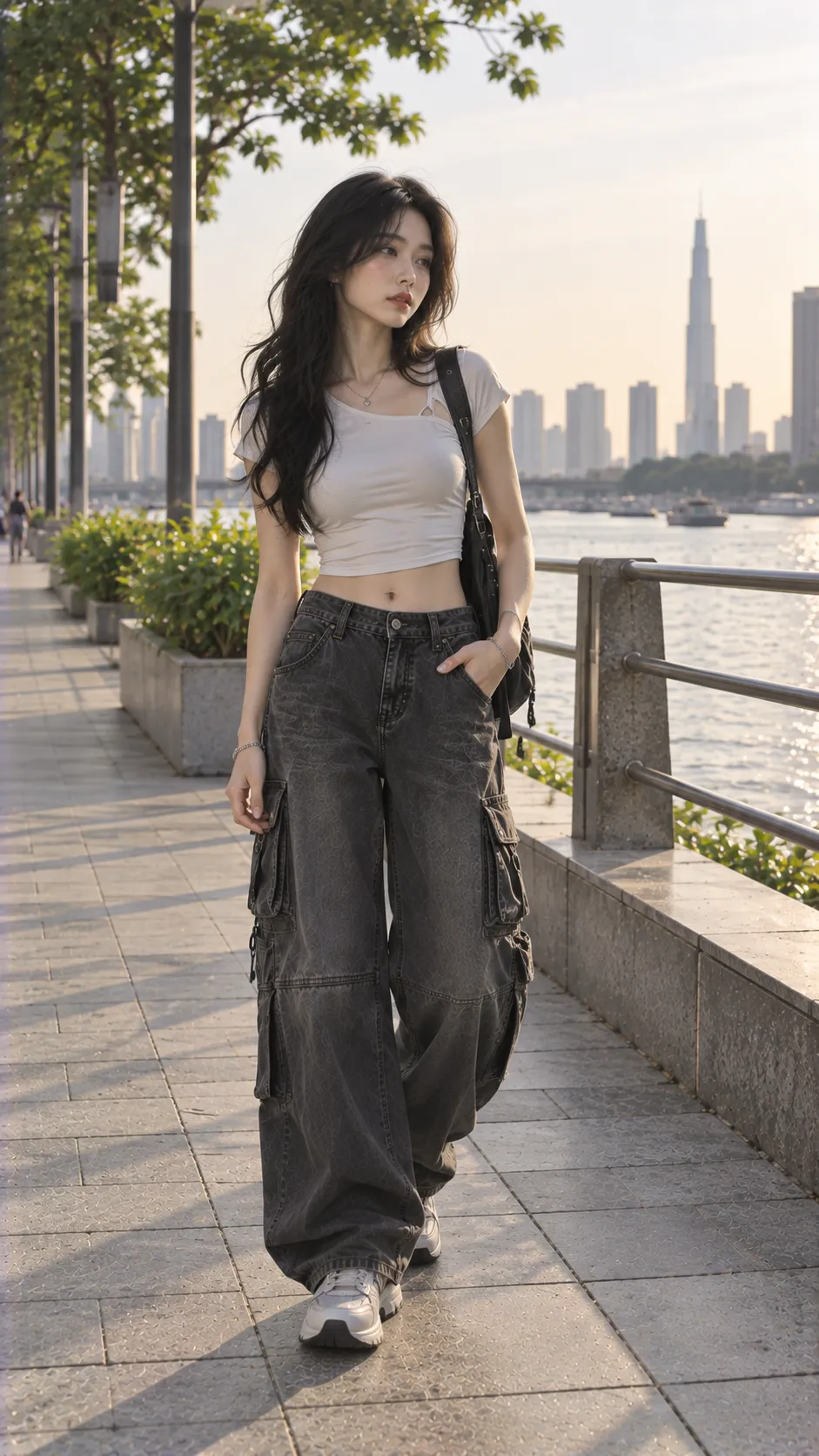
Instead of stopping at a list of labelled items, compare why their lengths and volumes work together, so you can substitute pieces.
1. Baby Tee + Washed Baggy Jeans + Lower-Profile Sneakers
The shorter upper section contrasts with roomier denim. Compare the actual shoe shape and hem clearance for your plans. If pockets or wash should lead, a quieter top gives them space rather than adding another large focal point.
2. Tank + Fine Cardigan + Straight Trousers
The tank edge, cardigan neckline, and fastening line create several boundaries without requiring thick layers. Inspect the actual knit or jersey and how it drapes. The women's layering guide explains how visible gaps and hems organize combinations.
3. Asymmetric Top + Simpler Cargo Pants + Boots or Sneakers
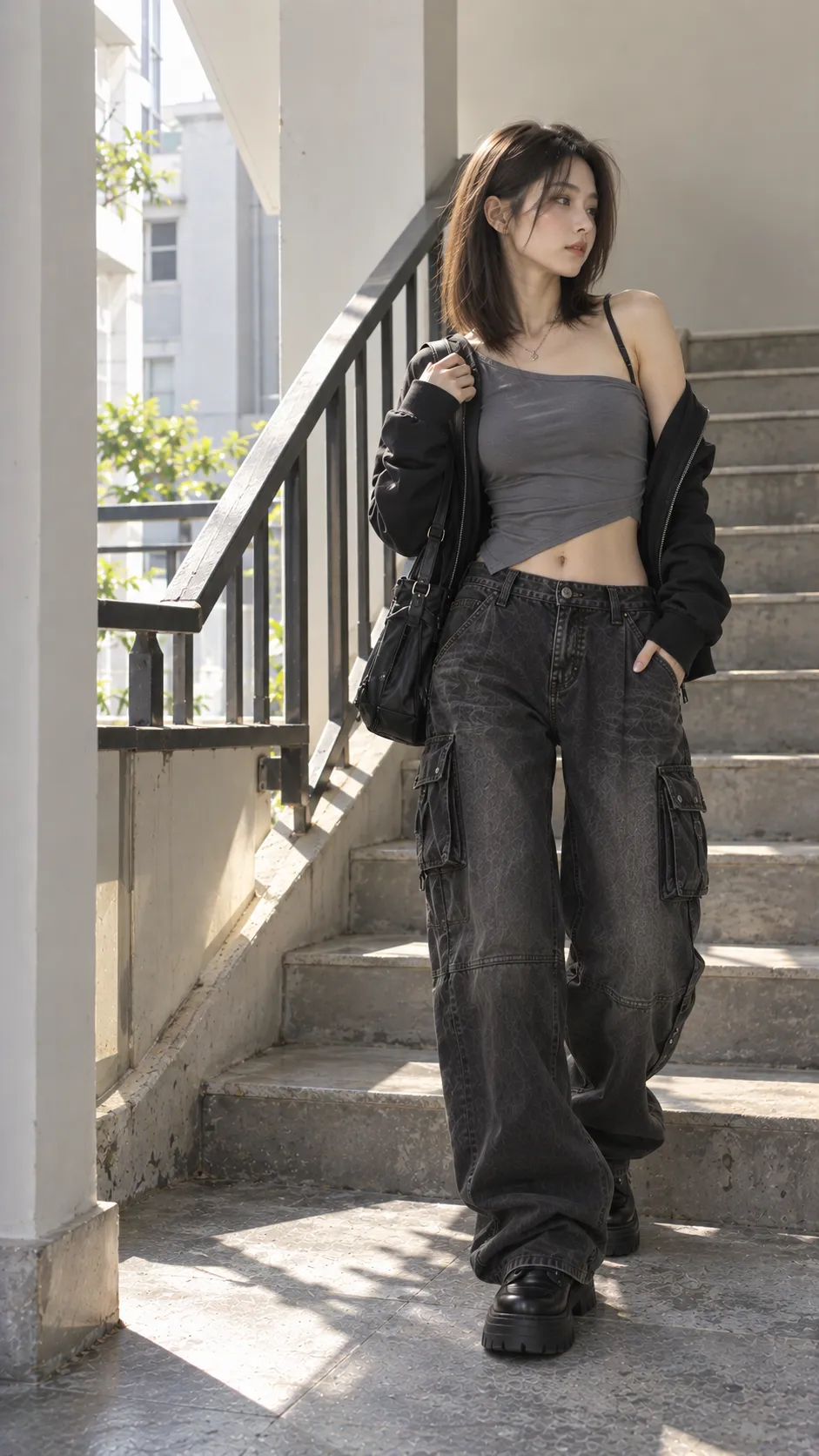
If the top supplies the altered line, flatter pockets and a falling trouser leg offer a quieter base in gray, olive, or washed black. Boots and sneakers change the visual weight; comfort depends on the actual pair. For further comparisons, read women's cargo-pants outfit ideas .
4. Fitted Long Sleeves + Straight Maxi Skirt + Selected Metal Details
The longer skirt creates a continuous lower line, while the top defines the upper section. A ring, necklace, or fastening can provide a selected highlight. This offers another interpretation if you prefer a longer top or more coverage than a short crop.
5. Roomy Zip Hoodie + Defined Base + Moderately Wide Trousers
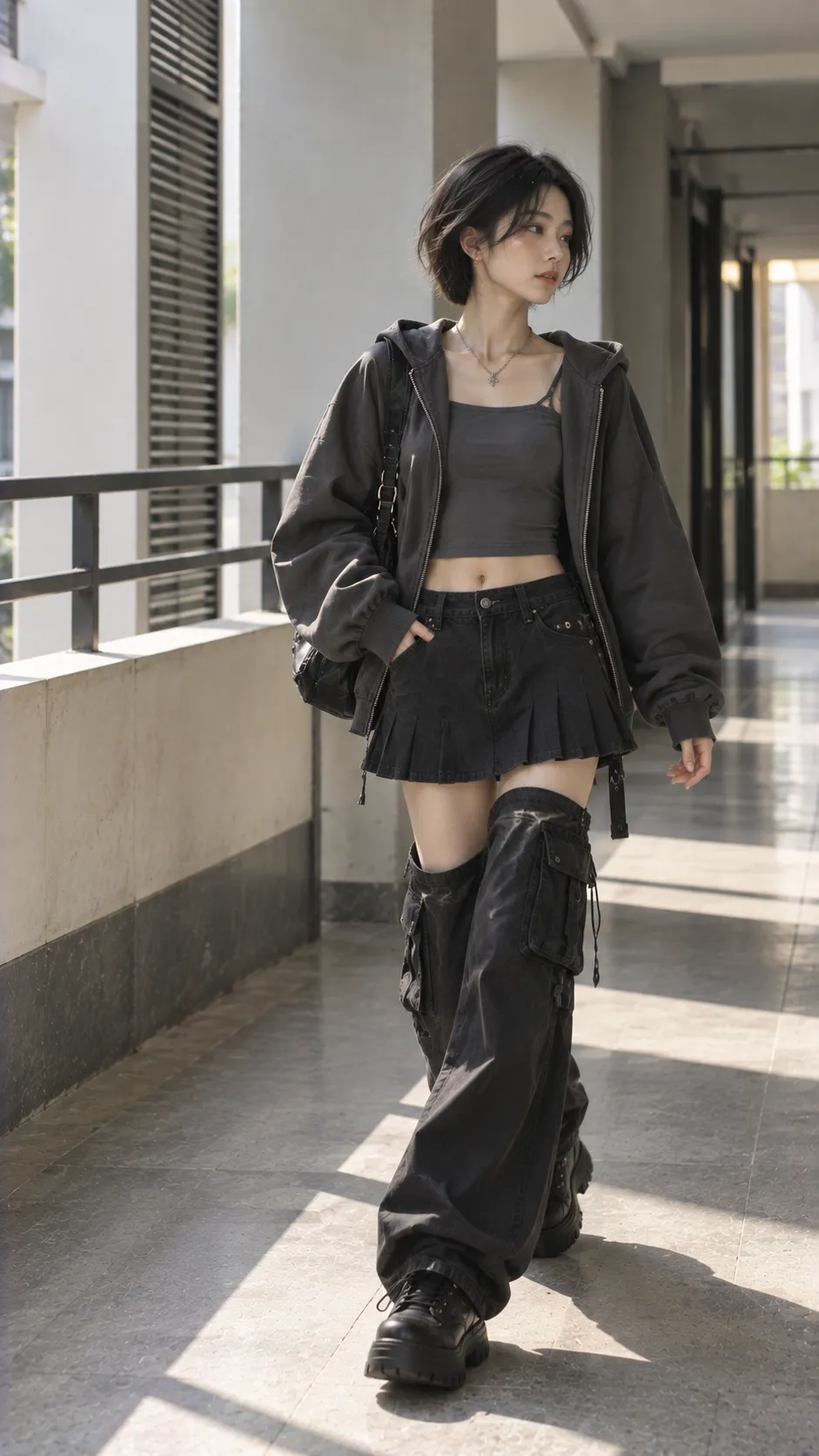
Opening a hoodie reveals the inner top and creates vertical edges. Compare its length against the trousers and the amount of volume you want overall. This can adapt existing streetwear pieces rather than requiring a new coordinated set.
Choose Proportions for Your Body
Acubi references do not require one height or body shape. Compare trouser length, rise, and the preferred distribution of room. A longer defined top, vertical opening, or different neckline can replace a short crop. Use the reference proportions as choices rather than trying to reproduce a model's body.
- Do the colors relate in the way you want?
- Is there a deliberate close/roomy or short/long relationship?
- Does the layering supply useful visible lines?
- Are altered details concentrated where you want attention?
- Does the silhouette still communicate your intention without extra accessories?
Adapt Layers for Vietnam
A cold-weather hoodie-and-knit photograph need not be copied into Vietnam's warmer conditions. Compare lighter layers and their actual construction: fine jersey, a suitable mesh section, a lighter cotton top, or different woven trousers. A visible neckline or hem can provide layering without several complete heavy garments.
In heat and humidity, reassess layer count, lining, ventilation, and the route. Lighter neutrals change the palette if desired. Test actual walking footwear rather than assuming sneakers, loafers, or boots are comfortable by category. Add a suitable removable layer for indoor cooling when needed.
Start with Existing Pieces
Start with a Few Reusable Pieces
- Baggy trousers or washed denim with dimensions that suit your intended silhouette.
- A suitable base: tank, baby tee, longer sleeves, or asymmetric neckline.
- An optional fine visible layer such as mesh, bolero, cardigan, or another tank.
- A selected metal detail or smaller shoulder bag if it adds something you want.
- Footwear you already own, assessed against the trouser hem and actual activity.
The guide to The baggy-pants definition guide helps assess a foundation garment. A darker existing wardrobe may already provide several of these components without replacement purchases.
Four Common Styling Problems
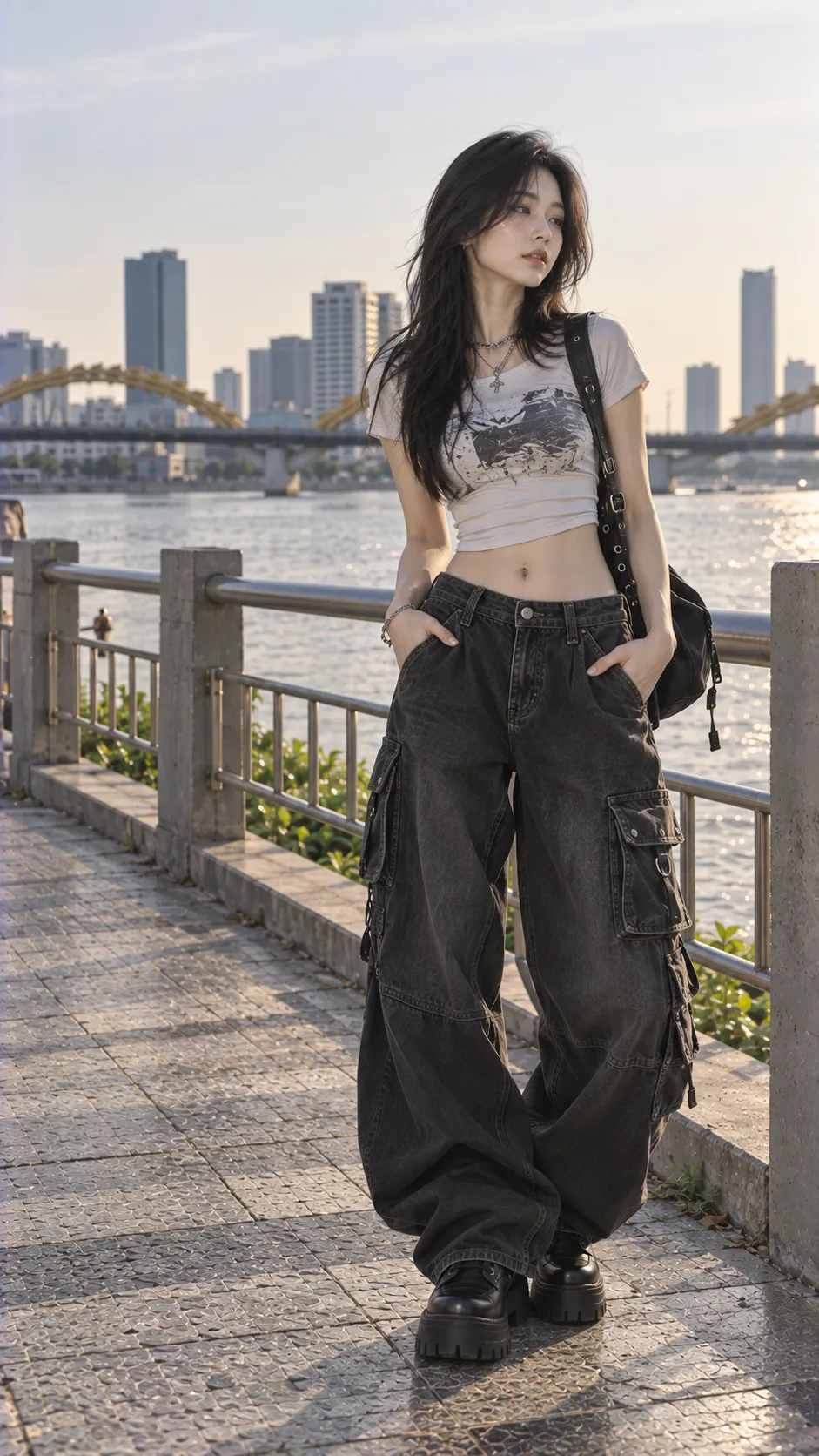
- Every piece competes for attention: cutouts, many pockets, substantial boots, narrow glasses, and chains can all lead. Select the details you want to emphasize.
- Copying items without their length relationships: the same garment types create different effects with another top hem or trouser length. Compare those before adding accessories.
- Similar surfaces blur together: washed denim, rib, mesh, or selected hardware can separate an otherwise similar palette. A simpler cotton outfit remains a valid choice.
- Treating lower rises and crops as obligations: a mid-rise, longer defined top, or open vertical layer can retain the proportion contrast and palette you want.
Build a Reusable Wardrobe
If a lookbook introduces you to the label, translate it into a usable wardrobe sequence: inspect existing basics, compare lengths and dimensions, and identify one actual gap. This is more useful than buying unrelated trend-labelled pieces at once.
Explore Nearby References: open E-Girl / Alt Girl (Vietnamese) and compare darker palettes, roomy denim, and finer layers within the Closet (Vietnamese) for that adjacent reference.
A Clear Composition before More Purchases
This guide interprets Acubi through restrained composition, Y2K references, and altered basics. Start with silhouette, then add visible edges and selected details. Several well-related existing pieces can communicate that direction without every widely shared item.
Related references: Heisei Retro (Vietnamese) and Ulzzang Style (Vietnamese) for that adjacent reference.
References
These sources provide context for the name and its fashion descriptions:
- CNA Lifestyle — What is Acubi? How the Korean fashion aesthetic became Gen Z's biggest style trend — reporting on Acubi Club, Korean context, and contemporary styling descriptions.
- ELLE Vietnam — What Is the Acubi Trend? — an account linking minimalism, Y2K, and subversive basics.
The outfit formulas and practical adaptations are Apocalypse Closet editorial suggestions. Reference images illustrate related proportions, not a mandatory Acubi uniform.
Frequently Asked Questions
What is Acubi style?
Here it describes a restrained styling vocabulary combining Y2K references with fine layering, asymmetric lines, cutouts, or altered basics. The label is associated with Korean fashion and Acubi Club, but its interpretations extend beyond one brand.
Is Acubi identical to Y2K?
The labels overlap. This guide uses Acubi for a more restrained palette and selected altered details, while the broader Y2K collection contains more visual directions.
Is a crop top required?
No. Longer defined tops, tanks, fine cardigans, and asymmetric layers provide other ways to work with the proportions. Choose coverage and lengths for yourself.
Can Acubi references work within a black wardrobe?
Yes. Compare black, gray, off-white, and washed denim through differing surfaces, garment volume, and visible layer edges.
Complete-Outfit References
Use these looks to compare complete outfits. A related E-Girl example is not proof of a single definitive Acubi classification.


