

Women's Alternative Layering: Proportions, Texture, and Six Outfits
Layering organizes clothing by length, thickness, and visual emphasis. Effective layering gives each piece a clear role.
Alternative layering involves more than wearing several items together. It builds outfit depth through proportions, length, thickness, texture, and visible space between layers. When those elements work together, individual layers remain readable without excessive weight. Otherwise, volume, color, and focal points compete.
Think of layering as a system: the base establishes a manageable silhouette, the middle adds texture or emphasis, and the outer layer shapes the overall outline. Every outfit does not need all three; the framework helps identify what each piece contributes.
In this guide: explains women's alternative fashion layering: proportions, thickness, length, and avoiding bulk. For a broader guide to black outfits, read Women's Black Outfits with Shape and Depth (Vietnamese).

Guide collection: Punk / Grunge: Style and Outfit Guides (Vietnamese)
What is layering style?
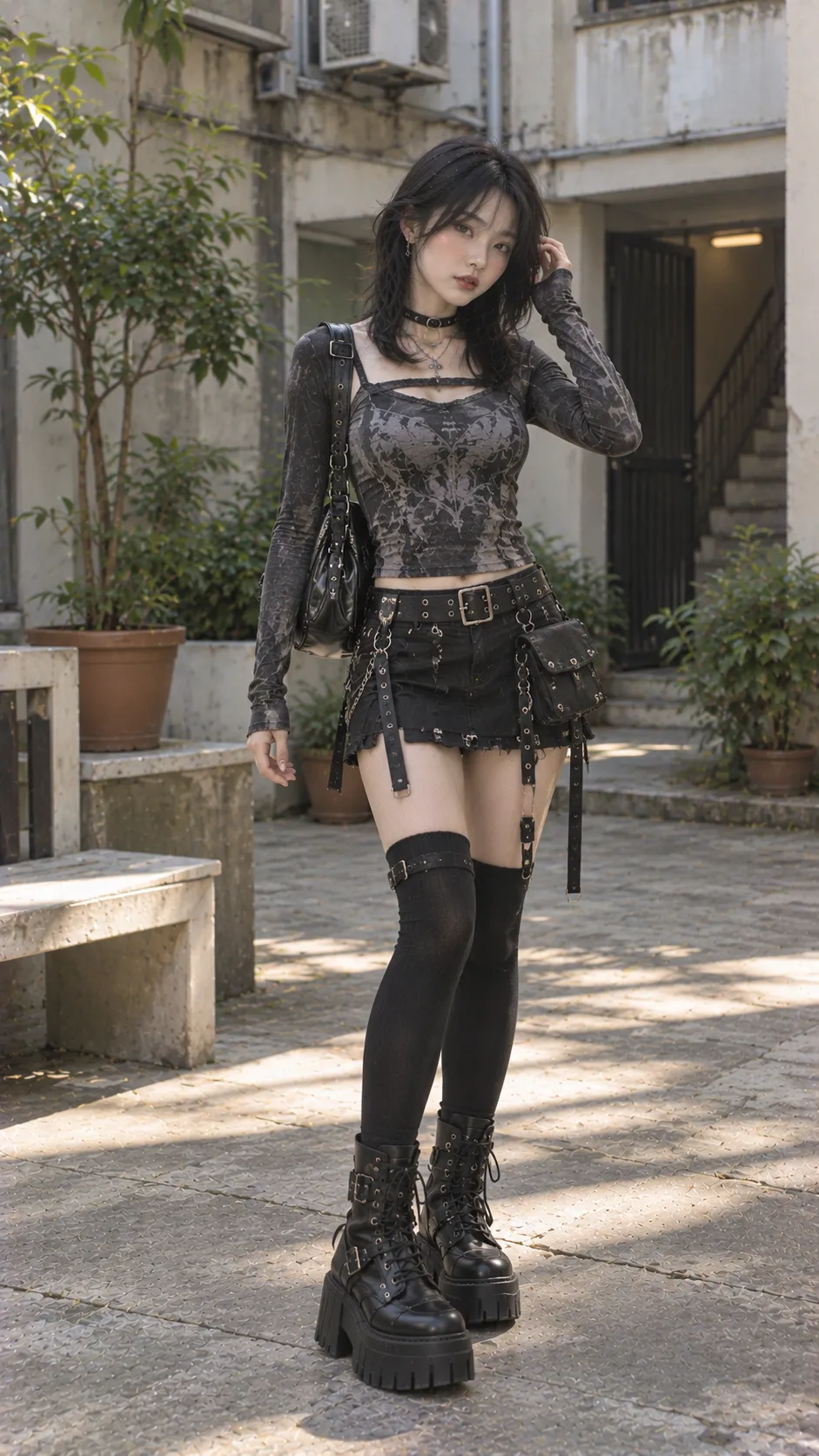
Palette, length, and texture strongly influence a layered outfit. Resolve these before adding more pieces; attractive individual garments do not automatically form a coherent combination.
Begin with a dominant color and one or two supporting shades, or keep the layers within a neutral range. Black, charcoal, and off-white, or black with deep brown, can be easier to read than a statement color on every layer. The goal is to keep color from competing with the layer structure.
There is no rule that every inner layer must be shorter than the next. Deliberate separation between hems matters more. A long shirt can show below cropped knitwear, and a short jacket can frame a longer base. Three hems at the same point can form a thick block; extreme differences at every layer can fragment the outfit.
Effective layering depends on the visual space between layers rather than the number of garments.
Texture produces visible depth. Several similarly smooth, matte surfaces may merge, while sheer mesh, a matte top, and a reflective leather jacket remain distinct.
The Base, Middle, and Outer Framework
A useful layering framework assigns three basic roles: base, middle, and outer. It is a way to assess each garment's job rather than a requirement to wear three layers.
A helpful starting principle is thinner and more fitted near the body, with more room or structure outside. This is not absolute, but it helps avoid forcing a wide garment under a tight jacket and creating bulk at the shoulders, underarms, and waist.
Five Practical Women's Layering Principles
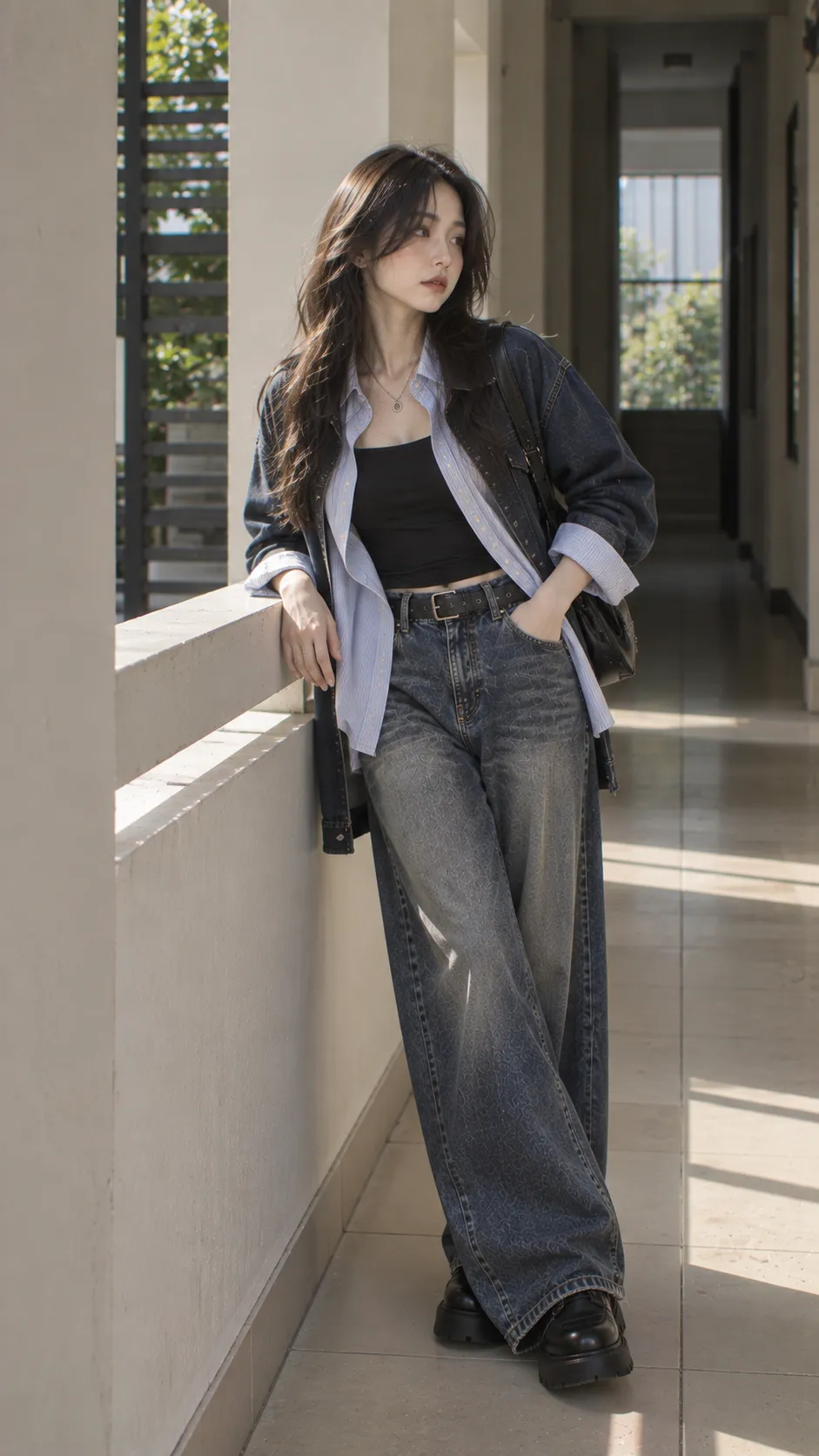
- Give each layer a role. A piece should change silhouette, texture, coverage, color, temperature, or function. Otherwise, it may simply add bulk.
- Avoid making every layer oversized by default. A fitted base can anchor a boxy outer layer. If you prefer a wide base, a cropped outer layer can preserve a readable frame.
- Create at least one deliberate visible gap. Striped sleeves below a tee, a shirt hem below knitwear, or mesh at the neck or shoulders can establish the layering clearly.
- Use texture contrast. Matte with sheer, cotton with leather, knitwear with satin, or denim with mesh can create more depth than identical surfaces. One or two main contrasts are often enough.
- Check the outfit without its outer layer. If removing your jacket indoors leaves the outfit feeling unfinished, adjust the middle layer. Practical layering should work as pieces are added or removed.
E-Girl Layering: Playful with a Clear Structure
E-Girl layering can look spontaneous and deliberately messy, but visible structure helps the result feel coherent.
A familiar formula uses striped long sleeves under an oversized graphic or band tee, worn loose or partly tucked. The stripes show at the arms and sometimes the hem, creating an apparently accidental combination that is still deliberate.
Simpler dark mini skirts, black shorts, or skinny jeans can balance the upper detail. Visible thigh-high or ankle socks add another reference near the boots. Platforms or Mary Janes complete the proportions.

Dark Feminine Layering: Fewer Pieces with More Presence
Dark Feminine styling may need only a corset over a top or a long trench over a light dress. Each layer can make a substantial visual change without requiring additional garments.
The useful principle is fewer layers, with each making a clear difference. A corset defines the waist; a blazer or trench establishes shoulders and vertical movement; sheer fabric contrasts with opaque surfaces. If removing a layer barely changes the proportions, texture, or emphasis, it may be unnecessary.
One readable formula is a black slip or bodycon dress, a corset, and a blazer or trench. The dress forms the base, the corset anchors the waist, and the outer layer supplies a vertical frame.

Goth Layering: Drama and Texture
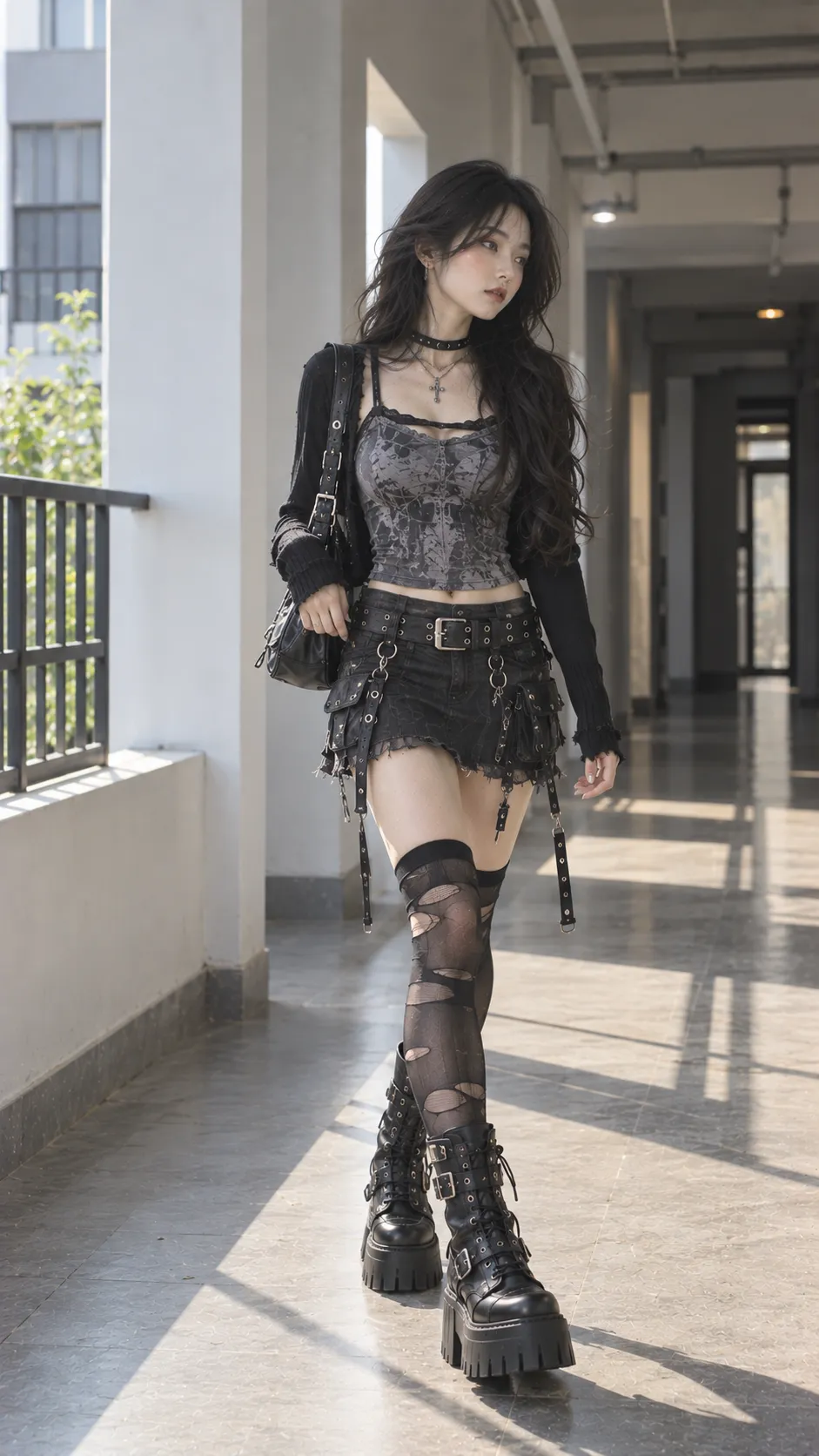
Goth layering can embrace drama: lace, velvet, and a long coat may share an outfit. A coherent palette and recurring motifs help connect the complexity.
Shared references might include lace, velvet, sheer fabric, silver hardware, high necklines, or asymmetrical hems. Every piece need not be labeled Goth, but connections in color, surface, or detail help. A graphic hoodie can participate when its print, shape, or accompanying accessories support the same visual direction.
Hems can create additional movement: asymmetrical edges, varied lengths, or a sheer outer layer extending below an opaque base. These techniques introduce complexity without relying solely on accessories.
Punk and Grunge Layering: Deliberate Dishevelment
Punk and Soft Grunge layering can appear casual while using deliberate choices. A flannel tied at the waist adds lower-body volume and texture without covering the torso. A loosely draped leather jacket or exposed shirt hems can introduce asymmetry.
The pieces need not align perfectly, but each should contribute something. A tied flannel shifts the outline at the waist; a jacket worn loosely changes the shoulder silhouette. Layering can therefore describe how clothing is worn as much as which pieces are selected.

Six Wearable Women's Layering Formulas
Begin with these blueprints and adapt the colors, materials, and accessories. The differences lie in the proportions and each layer's rolerather than garment names alone.
1. Mesh Long Sleeves, Graphic Tee, and Wide Trousers
Fitted mesh keeps the inner layer manageable, a graphic tee adds a visual plane, and wide trousers place volume below. With an oversized tee, a visible waistband can prevent a continuous wide block from shoulders to feet. This is an accessible E-Girl or Alt direction.
2. Tank or Crop Top, Open Shirt, and Cargos
A shorter base creates a break at the waist, an open shirt supplies vertical lines, and cargos add lower volume. A lightweight removable shirt makes the formula adaptable to warm weather.
3. Long Sleeves, Slip Dress, and Boots
Visible sleeves and neckline add depth beneath the dress's vertical shape, while boots anchor the silhouette. Choose mesh for a more Goth or E-Girl emphasis, or a plain fitted top for a quieter result.
4. Shirt, Corset, and Blazer
The shirt supplies the collar and sleeves, the corset defines the middle, and an open blazer creates an outer frame. With three structured upper layers, simpler straight trousers or a restrained mini skirt can balance the outfit.
5. Baby Tee, Zip Hoodie, and Leather Jacket
The baby tee forms a fitted base, the hoodie adds a soft casual layer, and the jacket provides a firmer shell. A thinner, not overly long hoodie reduces shoulder bulk. Reserve this combination for cooler weather, evenings, or strongly air-conditioned spaces.
6. Long Sleeves, Oversized Tee, and a Waist-Tied Flannel
The upper layers introduce Grunge or Punk references while the flannel adds waist volume without heating the torso. With both a wide tee and wide trousers, show the wrists, ankles, or waistband to establish a visual break. See how to style grunge outfits for women for a closer exploration of this direction.
Layering in Vietnam: Practical Adaptations
Vietnam's warm, humid conditions can make heavy layering uncomfortable, but lighter fabrics and removable pieces offer alternatives.
Mesh, sheer fabrics, and lightweight woven layers can create depth without a thick jacket. However, thin fabric does not automatically feel cool. Check airflow, how the fabric feels against skin, and whether layers can be removed outdoors. In humid heat, an open lightweight cotton or linen shirt, or airy mesh, may be more practical than a thick hoodie.
Think of layering as an adjustable systemrather than a fixed set for the whole day. Test the outfit with the jacket removed so it still works in a café, classroom, or office.
Explore related topics on the site: Styling Women's Leather Jackets (Vietnamese) for the outer layer, What Is E-Girl Style? for broader E-Girl context, and essential alternative-fashion accessories for finishing details that complement the layers.
Six Layering Mistakes and Practical Fixes
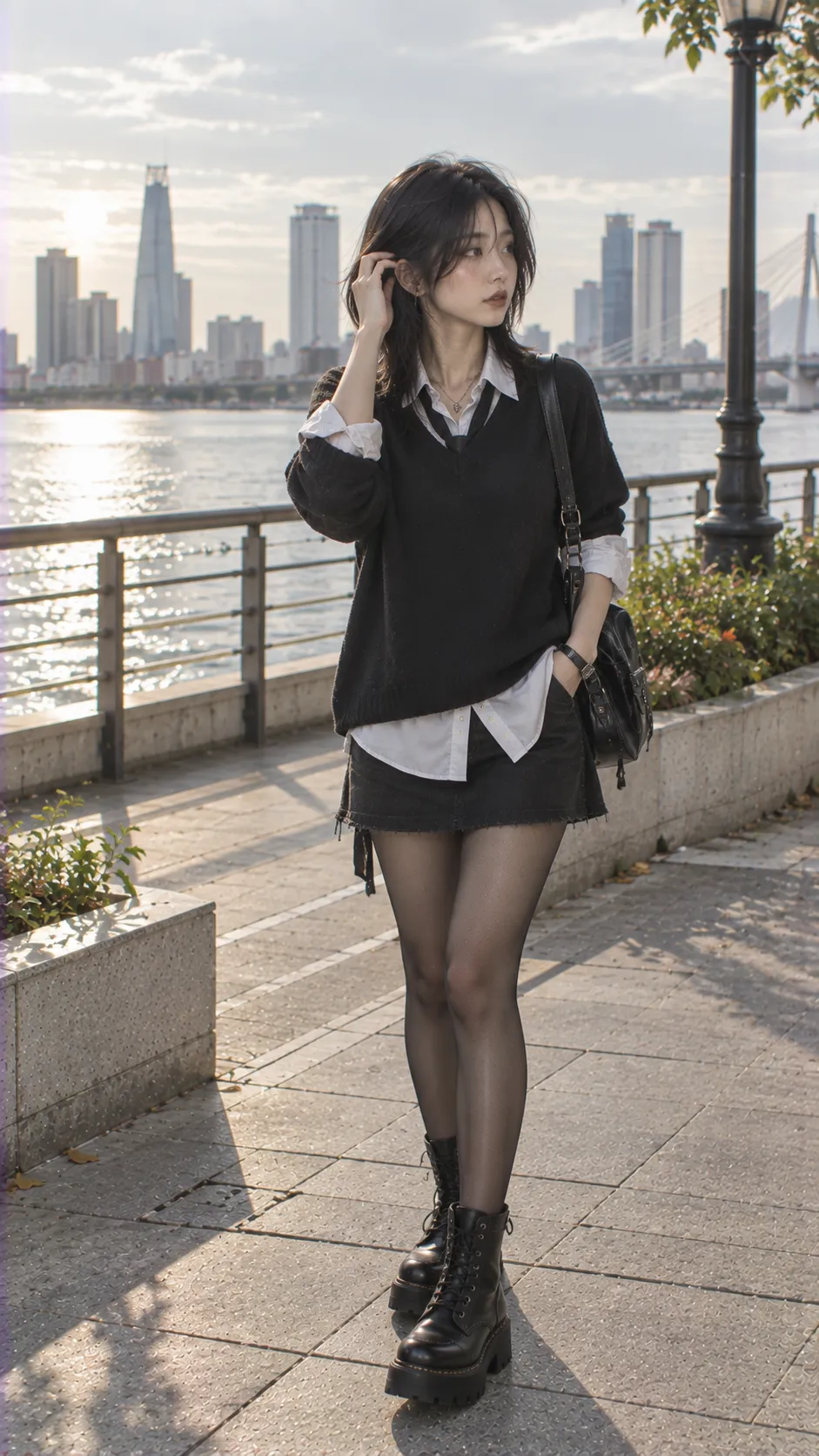
For a mainly black wardrobe, layering also helps prevent flatness. Read how to style all-black outfits (Vietnamese) for a closer look at surface contrast, proportions, and accessories in all-black outfits.
Related Closet outfits
Explore these looks in the closet: Look #43 · Black cropped graphic top + plaid skirt (Vietnamese) (E-Girl: black graphic crop top and plaid skirt), Look #03 · White cropped graphic tee + wide black cargo pants (Vietnamese) (a Punk statement), Look #44 · Black mesh top + chain-detail shorts (Vietnamese) (Goth: black mesh top and chain-detail shorts), Look #04 · Brown Off-the-Shoulder Top and Frayed Ripped Jeans (Vietnamese) (a dark statement), Look #17 · Black Graphic Tee and Blue Baggy Jeans (Vietnamese) (chunky streetwear).
References
These sources inform the layering framework, managing bulk, and the roles of individual layers:
- Woolmark — The Three-Layering System — base, middle, and outer roles in functional layering.
- Lookiero — Layering in fashion: the guide to styling layers with ease — proportions, textures, and assembling outfits layer by layer.
- The Guardian — How to do layering — avoiding bulk and using layers as a flexible wardrobe system.
Alternative outfit formulas and adaptations for Vietnam's climate are Apocalypse Closet editorial suggestions based on the site's wardrobe and outfit examples.
Frequently Asked Questions
How can I wear several layers without looking bulky?
Start with a thin, manageable base and allow more room or structure outside. Choose a clear dominant color, expose intentional differences between hems, and avoid making every layer oversized. Each layer should change texture, proportion, coverage, or function.
Which layering fabrics work for hot weather in Vietnam?
Try lightweight bases and removable outer layers such as thin cotton or linen shirts, airy mesh, light cardigans, or suitable windbreakers. Airflow depends on fiber and fabric structure, so thinness or mesh alone does not guarantee comfort. Save thicker combinations for cooler evenings or air-conditioned spaces.
Can shorter or slender people wear layered outfits?
Yes. Choose the areas you want to emphasize rather than applying body-type prohibitions. For a streamlined vertical effect, concentrate volume in one area, expose a waistband or wrists, and avoid several thick hems ending together. A cropped jacket over a longer base or a fitted base under a wide jacket can both work.
How does E-Girl layering differ from Dark Feminine layering?
E-Girl often uses playful combinations such as striped sleeves under graphic tees, mesh under crop tops, or patterned socks above boots. Dark Feminine often uses fewer layers with a strong structural effect, such as a corset over a top or a trench over a dress. The former can feel playfully chaotic; the latter more controlled.
Explore more: browse 136 expressive women's outfits on the Apocalypse Closet homepage for additional looks and styles.