

Alternative Fashion for Beginners: Five Practical Styling Steps
Alternative fashion for beginners does not need to begin with buying a complete aesthetic set. A more economical starting point is to review your wardrobe, identify silhouettes you enjoy, add one effective key piece, and then introduce accessories or layers.
This is a five-step action guidefor wearing alternative fashion in everyday life — at school, at a café, with friends, or in a creative workplace — rather than only assembling a reference-board outfit.
In this guide: shows you how to start styling alternative fashion from your existing wardrobe. For definitions, origins, and branches such as Goth, Punk, Grunge, or E-Girl, read What Is Alt Style? (Vietnamese).

Guide collection: Aesthetic Dictionary: A Guide to Fashion Styles (Vietnamese)
The Five-Step Map: Start Before You Shop
Beginners often see a finished outfit and try to buy every piece. That can become expensive before you understand which part you actually enjoy. Break the outfit down into silhouette, foundation pieces, a key piece, texture and accessories, and wearing context.
| Step | Question to answer | Useful result |
|---|---|---|
| 1. Choose a direction | Do you prefer streamlined, oversized, dark feminine, or layered shapes? | One foundation silhouette |
| 2. Review your wardrobe | Which existing pieces can you use? | Three to five foundation items to keep |
| 3. Select a key piece | Which piece changes the overall impression most? | One leading item |
| 4. Add references | Which accessories, makeup, shoes, or layers are enough? | One or two recognizable details |
| 5. Check practicality | Can you walk, sit, ride, and wear the outfit again comfortably? | An outfit that works in daily life |
You do not need to become Goth or E-Girl in a day. Move your existing outfits gradually toward the direction you enjoy.
Step 1: Choose a Silhouette Before an Aesthetic Label
Before asking which aesthetic you belong to, look for repetition in saved outfits. If your favorites combine wide trousers with fitted tops, you may be drawn to a fitted top and wide-bottom proportionrather than one specific subculture. Repeated references to dark skirts, lace, boots, and a defined waist suggest a feminine silhouette with visual weight.
Many aesthetics share items. Combat boots appear in Goth, Punk, Grunge, and Baddie outfits; wide jeans occur in Dark Y2K, Nu Metal, and Streetwear. One garment does not determine the style — the surrounding volume, materials, and accessories shape the result.
- For a streamlined, sharp look: try a fitted top, straight jeans or trousers, a structured blazer or jacket, and a few clear accessories.
- For a wide street-oriented look: try a graphic tee, cargos or baggy jeans, a hoodie or bomber, and substantial sneakers or boots.
- For dark feminine styling: define the waist or shoulders, use dark skirts or trousers, and introduce lace, sheer fabric, matte leather, or small metal details.
- For more visible alternative layering: combine mesh, striped layers, tees, skirts or cargos, and boots, giving each layer a role in proportion or texture.
It is fine not to know the label yet. Use the Aesthetic Dictionary (Vietnamese) to name the direction later; begin with the silhouette.
Step 2: Review Your Wardrobe Before Shopping
Replacing the whole wardrobe can be costly. First, sort existing clothing into three groups: usable foundations, pieces you can adjust, and pieces that no longer work. Tees, wide jeans, straight trousers, tanks, cardigans, older blazers, and dark sneakers can all form a foundation.
If you already have wide-leg jeans (Vietnamese), you may not need another pair simply because a listing calls them alternative. Your jeans can change direction with a fitted top, metal belt, and boots; a black blazer can move toward Dark Feminine or Alt/Grunge depending on its companions.
A Ten-Minute Wardrobe Review
- Choose three bottoms you actually wear: jeans, cargos, skirts, or trousers.
- Choose five tops that mix easily: tees, tanks, baby tees, long sleeves, or knits.
- Place your shoes together and assess which have enough visual weight to balance the outfits.
- Group metal accessories, belts, bags, and glasses separately.
- Photograph basic combinations before shopping so you can identify specific gaps.
You may discover that one particular item is missing rather than an entire aesthetic. For a restricted budget, see An Alternative Wardrobe on VND 1 Million (Vietnamese) for purchase priorities.
Step 3: Choose One Effective Key Piece
A key piece changes how the outfit reads. It need not be the most expensive item. Platform or combat boots, well-shaped cargos, a leather-look jacket, corset top, mesh top, or well-proportioned graphic tee can each serve this purpose.
A useful beginner guideline is: give each outfit one main statement piece. Heavy boots, many trouser straps, and a busy graphic can compete. Substantial boots with simple jeans and a well-fitting tee may communicate an alternative direction more clearly because each part has space.

When shoes are the key piece, consider more than sole height. Trouser width, skirt length, and upper-body volume need to balance them. Read Styling Women's Boots (Vietnamese) for more on boot shafts, soles, and bottom proportions.
Step 4: Direct the Mood with Accessories, Layers, and Makeup
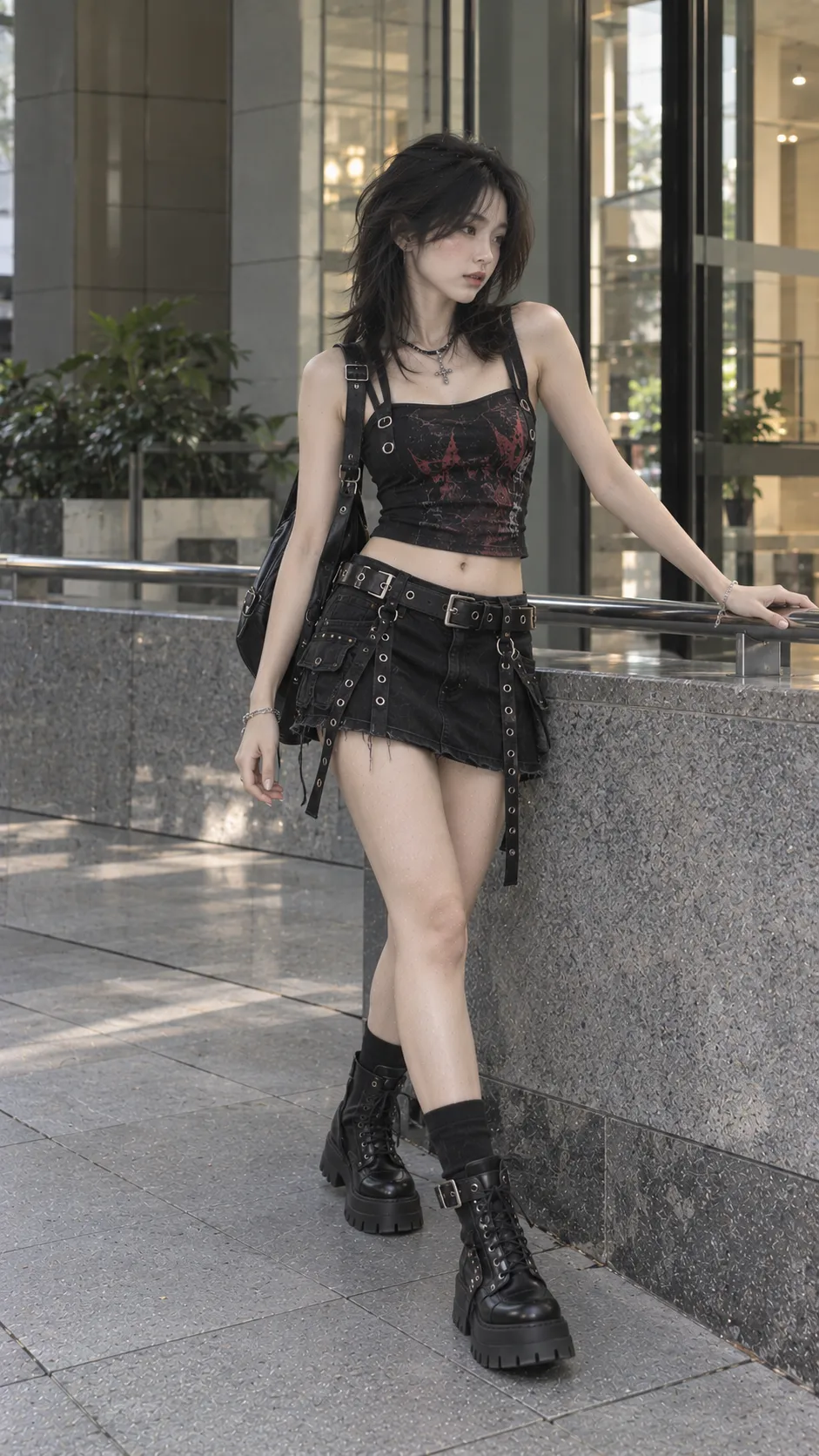
Accessories offer a smaller commitment than new clothing. A tee and jeans can move toward Punk or Grunge with a belt and boots, toward E-Girl with striped or mesh layers, or toward Dark Feminine with silver jewelry and sharper makeup.
More accessories do not automatically create a stronger alternative outfit. Try one major detail and one smaller detail: with a studded belt as the main accent, use a simpler necklace; with a thick chain necklace, keep the bag and rings quieter. The Alternative Fashion Accessories Guide provides options rather than a requirement to wear everything together.
Layers also need a purpose: sleeves beneath a tee add pattern, mesh under a tank adds depth, and cardigans or overshirts change the silhouette. Read Women's Layering Guide for controlling each layer's length.
Makeup is a finishing choice, not a requirement for qualifying as alternative. Eyeliner, a dark lip, or one contrasting eye detail can be enough. When clothing is elaborate, makeup can play a supporting role.
Step 5: Check Proportions, Texture, and Context
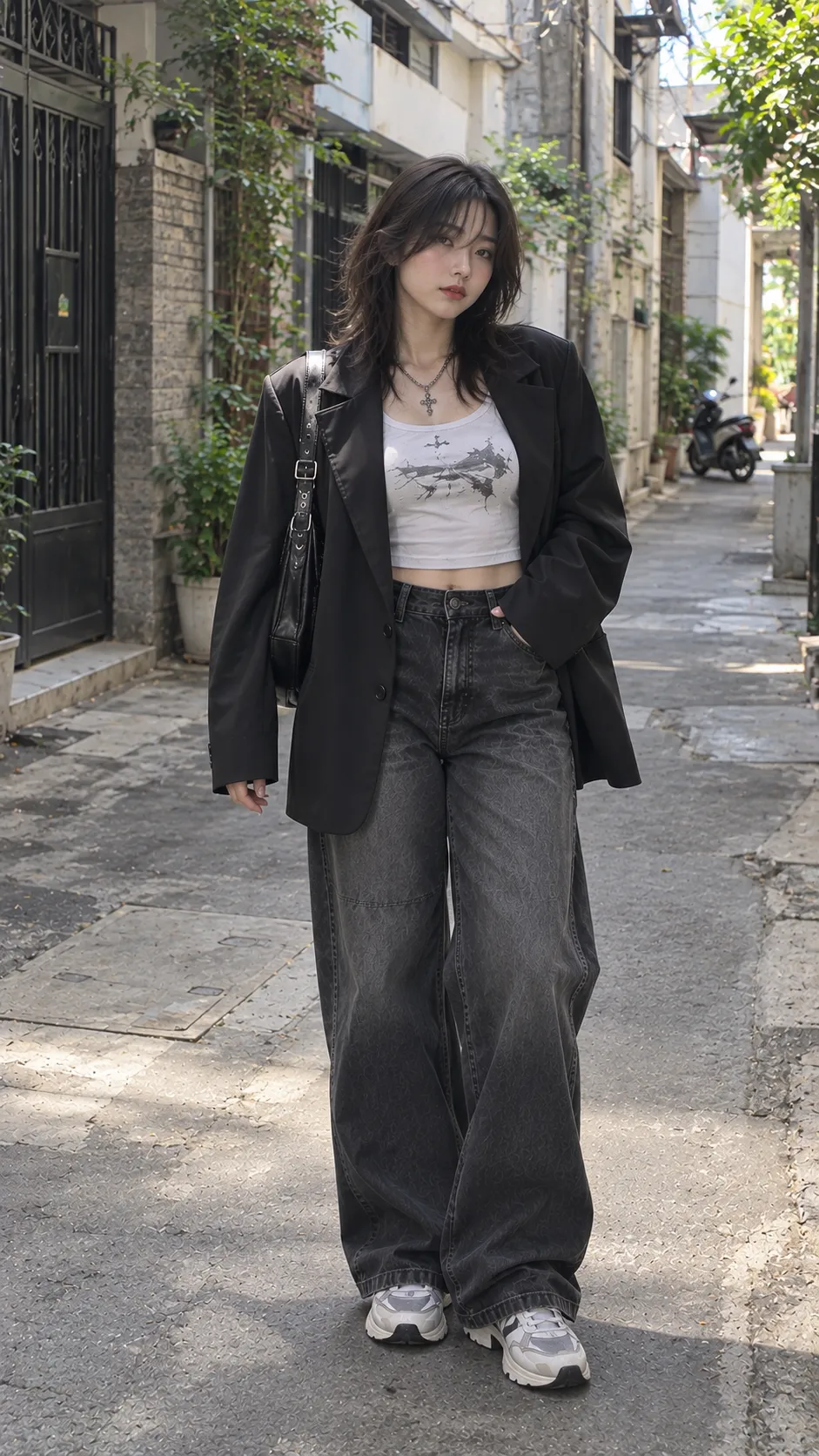
This step turns a collection of appropriate items into a deliberate outfit. Check proportions, surfaces, and statement intensity.
- Proportions: when both top and bottom are wide, create a break with a partial tuck, belt, cropped length, or visible wrists or neckline.
- Texture: all black can feel flat when every item is plain cotton. Mix washed denim, knitwear, mesh, matte leather, or metal for depth. See also how to style all-black outfits (Vietnamese).
- Statement intensity: choose one area to lead the eye. A large graphic does not need a competing belt, boots, necklace, and bag.
- Context: the outfit must work for the time you spend wearing it. School involves sitting, café visits involve movement, concerts call for stable footwear, and motorbike journeys need layers that do not catch.
A useful alternative outfit holds together while standing, sitting, and moving. Constantly adjusting a top or skirt suggests a fit issue.
Four Accessible Alternative Outfit Formulas
These formulas deliberately include mainstream pieces so you can use your current wardrobe.
1. Fitted Tee, Wide Jeans, Boots, and a Silver Belt
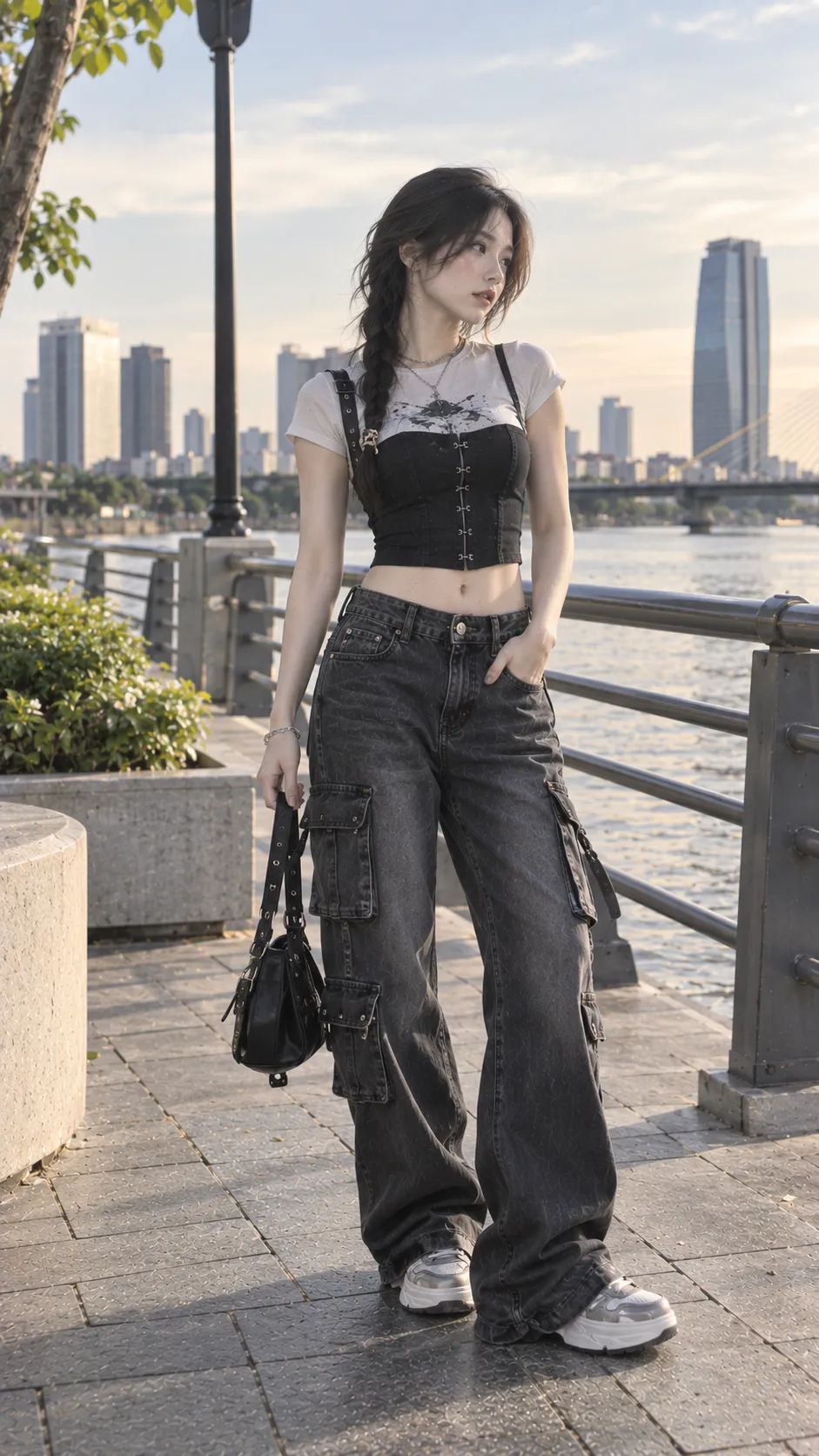
A fitted top defines the upper body, jeans add lower volume, boots anchor the outfit, and the belt connects the two halves. It is a repeatable beginner formula.
2. Graphic Tee, Cargos, Chunky Sneakers, and a Small Chain
This direction overlaps with Streetwear, Grunge, and Nu Metal. The graphic leads the eye, cargos add structure, and chunky sneakers balance the trouser width.
3. Tank Top, Mini Skirt, Cardigan or Overshirt, and Ankle Boots
Depending on texture, this can lean toward E-Girl, Soft Grunge, or Dark Feminine. The tank and skirt form a streamlined base, the outer layer adds depth, and boots anchor the lower half.
4. An All-Black Base, One Texture, and One Metal Accessory
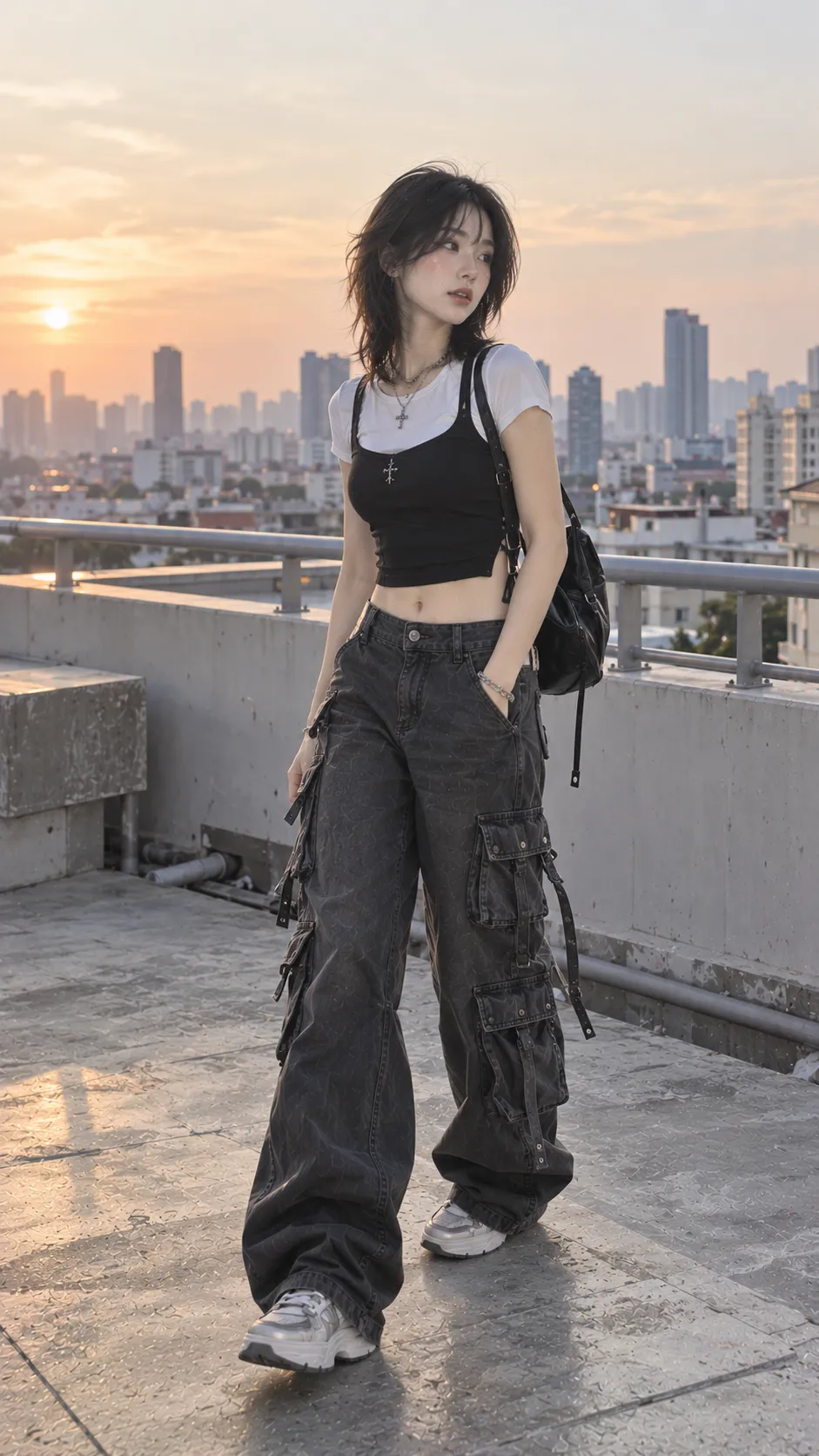
Start with a black tee or tank and black bottoms. Add one texture — mesh, leather-look fabric, or washed denim — and one metal accent.
What Should You Buy Next?
If you need another piece, prioritize how often you will wear itrather than how alternative it looks in a product photo.
| Priority | Item | Reason |
|---|---|---|
| 1 | Versatile bottoms | Establish the silhouette and work with multiple tops |
| 2 | Suitable shoes or boots | Change the visual weight of the outfit |
| 3 | A versatile layer | A bomber, cardigan, overshirt, or jacket adds depth |
| 4 | Accessories | A smaller purchase can shift the mood between aesthetics |
| 5 | A highly distinctive statement piece | Buy once you can identify at least three outfits for it |
When shopping online, especially for corsets, wide trousers, and boots, look beyond S, M, or L. Compare your measurements with the individual listing's size chart. Read Choosing Alternative Clothing Sizes Online (Vietnamese) for a dedicated sizing guide.
Six Common Beginner Mistakes
- Buying a complete photographed set: the image may work while its pieces are difficult to mix with your wardrobe.
- Using too many alternative references: chains, fishnets, graphics, platforms, and a choker can become an item checklist.
- Looking only at black clothing: the color alone does not create effective proportions.
- Ignoring fit: excessively long trousers, loose heels in boots, or an incorrectly sized corset reduce comfort.
- Copying the aesthetic without studying its logic: the items may match the reference while proportions, texture, and intensity do not.
- Shopping for an imagined future self: if you have never worn mini skirts, ten-centimeter platforms, or corsets all day, try a less demanding version first.
The aim is to experiment at a manageable cost: begin with accessories, a layer, or one key piece before investing further.
Wearing Alternative Fashion in Vietnam
Hot, humid weather makes many overseas reference outfits impractical to copy exactly. Retain the proportions and texture through thin mesh, overshirts, structured cotton, and shoes suited to your walking distance.
For motorbike travel, choose removable layers, manageable straps and chains, and bottoms that do not drag. In the rainy season, very high platforms with slippery soles may be impractical; traction and how materials dry matter alongside appearance.
Keep the visual language: a clear silhouette, a useful texture, and a focal detail. Multiple layers in midday heat are not necessary to express alternative fashion.
Related Closet Outfits
Explore these looks in the closet: Look #43 · Black cropped graphic top + plaid skirt (Vietnamese) for E-Girl graphics and skirt proportions; Look #07 · Black tube top + black parachute trousers (Vietnamese) for a street-oriented direction; Look #03 · White cropped graphic tee + wide black cargo pants (Vietnamese) for a Punk statement; Look #04 · Brown Off-the-Shoulder Top and Frayed Ripped Jeans (Vietnamese) for a dark feminine direction; and Look #44 · Black mesh top + chain-detail shorts (Vietnamese) for the combination of mesh and hardware in Goth styling.
Frequently Asked Questions
What should alternative fashion beginners buy first?
Review your wardrobe before buying a complete set. Choose a versatile piece that changes your outfits meaningfully, such as well-shaped bottoms, substantial boots or sneakers, or a useful layer. Add accessories once your preferred direction is clearer.
Does alternative fashion have to be all black?
No. Black is an accessible foundation, but blue or gray denim, brown, wine red, olive, off-white, and other colors also work. Silhouette, texture, and combinations matter more than making every item black.
How can I tell whether I prefer Goth, Grunge, E-Girl, or Dark Feminine?
Save around 15–20 outfits you would actually wear and look for repetition: fitted or wide shapes, few or many layers, recurring textures, and repeated shoe types. Those patterns are more useful starting points than choosing a label first.
How can I avoid a costume effect?
Keep much of the outfit familiar, then add one key piece and one or two details such as boots, a belt, mesh, or jewelry. When every item is a statement, the result can feel more like recreating a character than developing a personal wardrobe.
Explore more: start with expressive women's outfits on the Apocalypse Closet homepage to browse more looks and style directions.