

What Is Rockabilly? Music, Style and Outfit Ideas
Rockabilly is first a form of rock and roll that emerged in the United States in the 1950s, combining country influences with rhythm and blues. Rockabilly style developed around that musical world: denim, leather, bowling shirts, fitted knits, swing skirts, polka dots, bandanas and retro footwear.
For everyday dressing, choose a direction—rebel denim or pin-up and swing—and adapt its fit, proportions and accessories. A complete 1950s costume is optional.
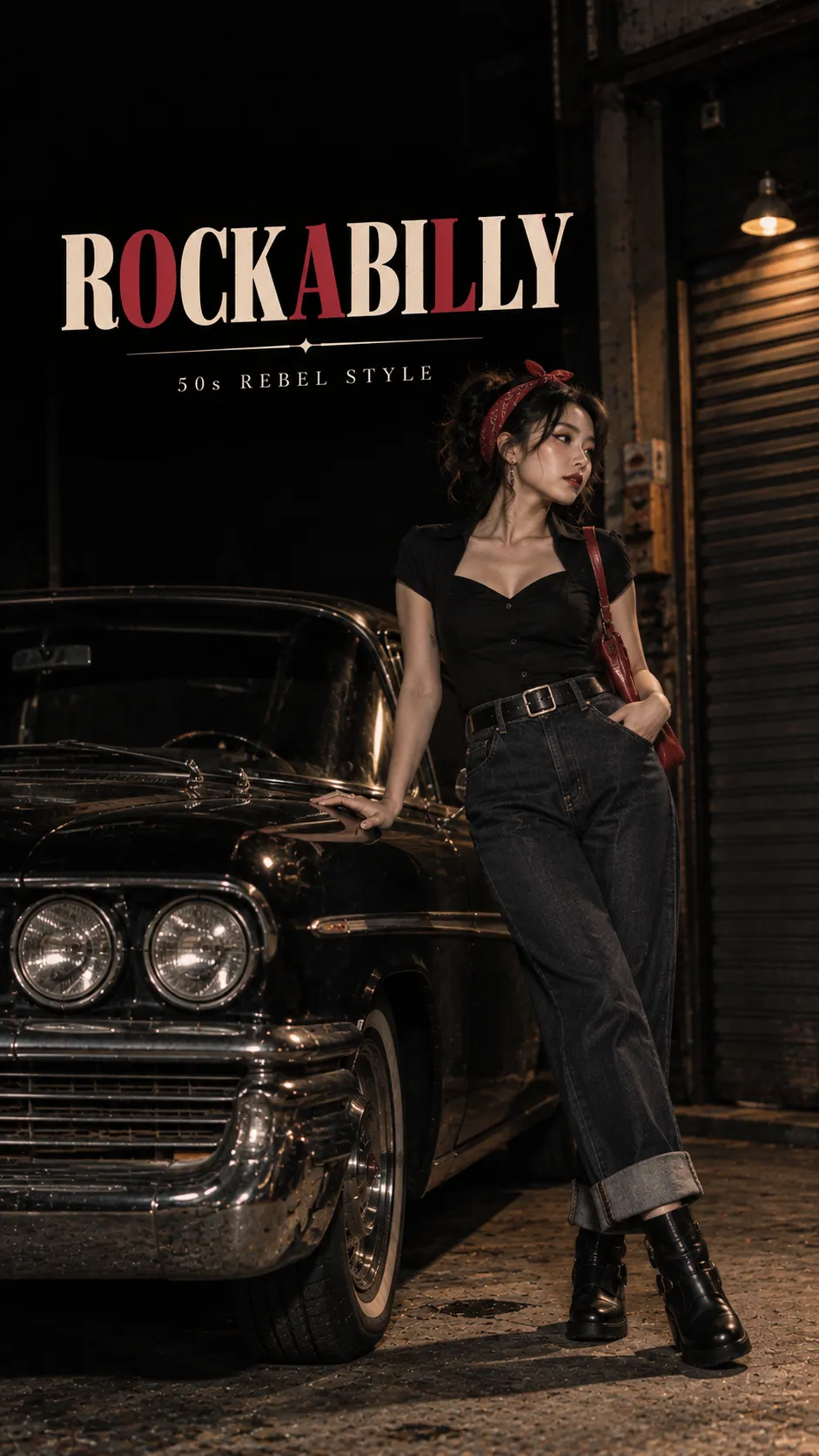
Guide collection: Aesthetic Dictionary: A Guide to Fashion Styles (Vietnamese)
What Is Rockabilly?
Rockabilly is an early form of rock and roll associated with the American South in the early-to-mid-1950s. Its name combines rock with hillbilly, reflecting country and rhythm-and-blues influences. Sun Records recordings and artists including Elvis Presley, Carl Perkins and Jerry Lee Lewis are frequently associated with its early context; this is a brief orientation rather than a complete account of the genre.
Rockabilly clothing is not an official uniform devised by one designer. Its references include musicians, 1950s youth, greaser imagery, pin-up styling and period wardrobes. This helps explain two different but connected directions: denim, leather and tees on one side; swing dresses, pencil skirts and halter tops on the other.
The connecting references include a defined waist, retro footwear, deliberate hair or accessories and a rock-and-roll context. A vintage dress alone can read as broader period-inspired clothing rather than specifically rockabilly.
From Music to Rockabilly Style
FIT's Fashion History Timeline describes jeans, white T-shirts and leather jackets within 1950s youth and rebellion, alongside film and music influences. Mainstream womenswear also emphasized waists, full or pencil skirts and coordinated accessories. Later rockabilly styling drew on these different visual sources.
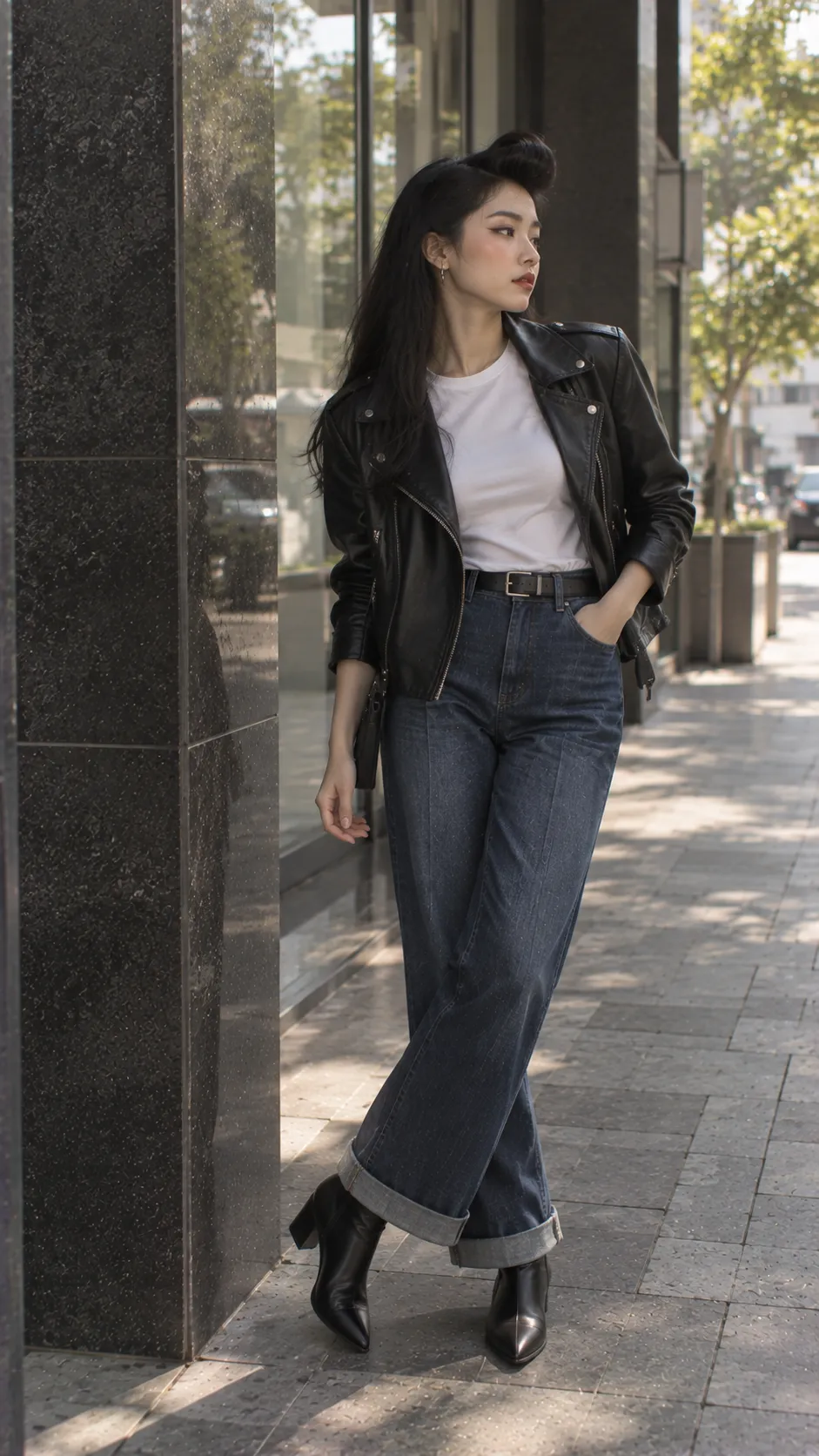
A women's rockabilly wardrobe can therefore include both a biker jacket and a swing dress. There is no need to choose a rigid feminine or tomboy identity; use related era and music references to connect the composition.
Denim / leather / workwear
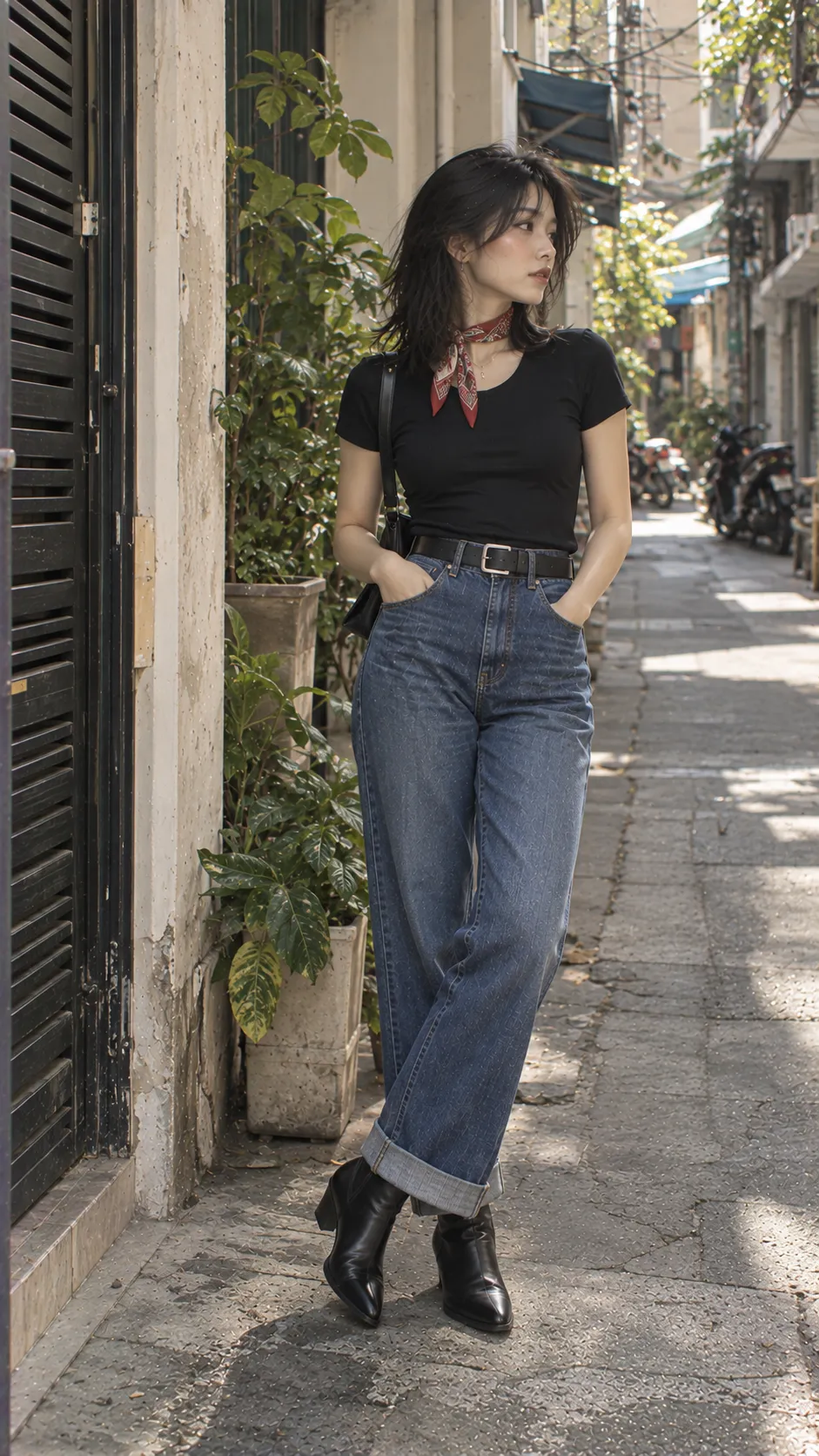
Fitted tees, cuffed jeans, leather or denim jackets, plaid or bowling shirts and boots. Practical lines and relatively compact proportions bring this route closer to greaser references.
Waist / swing / curves
Halters, sweetheart necklines, pencil or circle skirts, swing dresses, red lips, heels or Mary Janes. The apparent waist anchors this silhouette; no particular body shape is required.
Six Visual References That Suggest Rockabilly
High rises, belts or waist seams clarify the torso-to-leg relationship, including in denim outfits.
Dark indigo, cuffed hems and straight or high-rise jeans can make the period reference clearer than heavily distressed washes.
Biker jackets, bowling shirts and mechanic-style shirts introduce familiar rock-and-roll references.
Polka dots, gingham, plaid, cherries or narrow stripes. One main pattern gives the references space to read.
Mary Janes, pumps, brogues, creepers and ankle boots are options. Simple modern sneakers can also work.
A bandana, cat-eye sunglasses, scarf or victory-roll-inspired styling can provide a single clear accent. These references span wider vintage styling too.
Six Women's Rockabilly Outfit Formulas
White fitted tee, high-rise jeans, leather jacket and boots
Why it works: The tee keeps the torso compact, the rise defines the waist and the leather adds a rebel reference. Cuff the jeans enough to show the boots without creating an awkward stack.
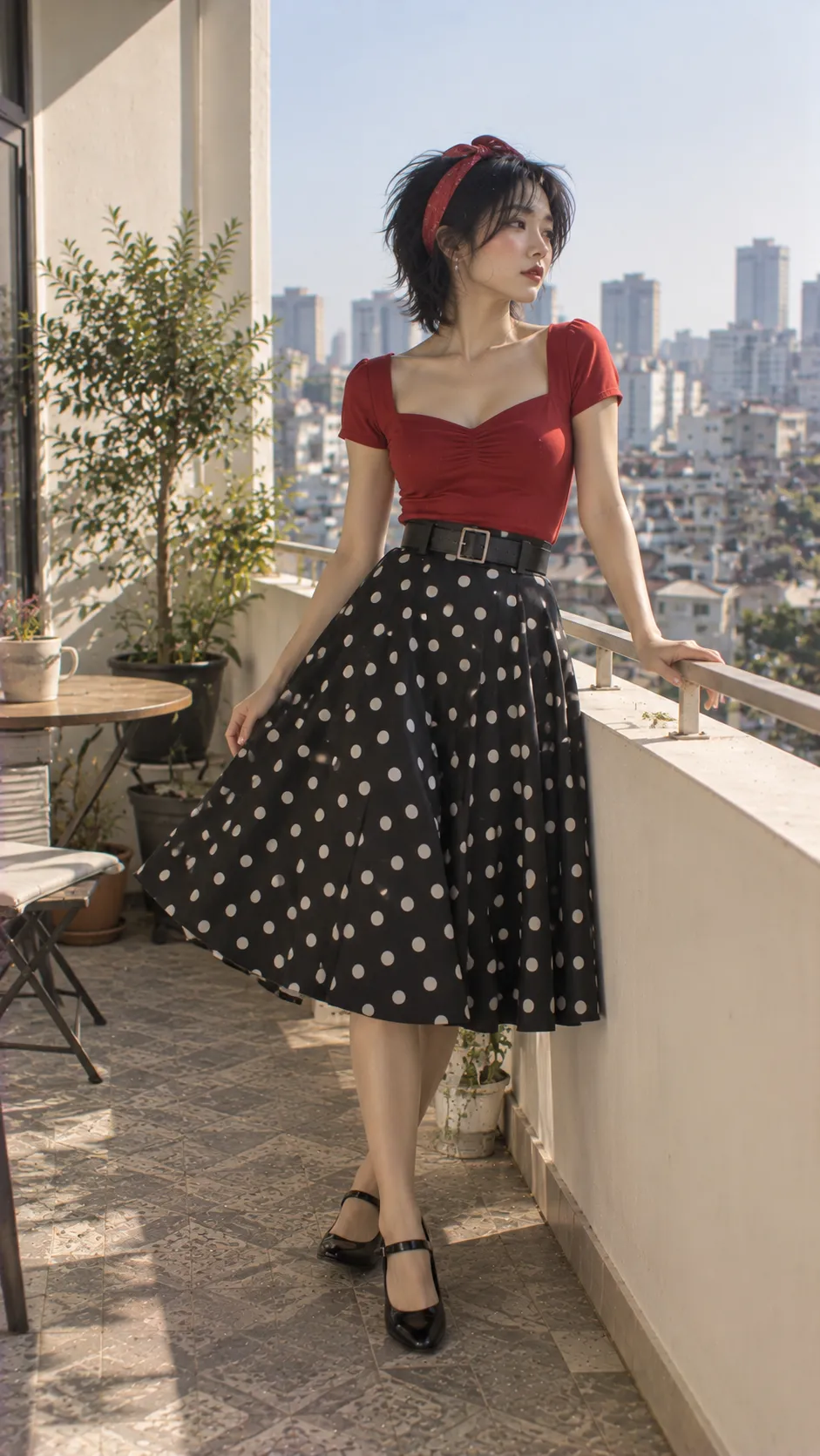
Fitted knit, circle skirt, narrow belt and Mary Janes
Why it works: The contrast between a compact torso and a full skirt recalls 1950s proportions. Solid colors create a less theatrical version.
Halter top, pencil skirt, pumps and a small scarf
Why it works: An open neckline and narrower skirt emphasize the silhouette. For daily use, consider a lower heel and a skirt with sufficient ease or stretch for sitting and walking.
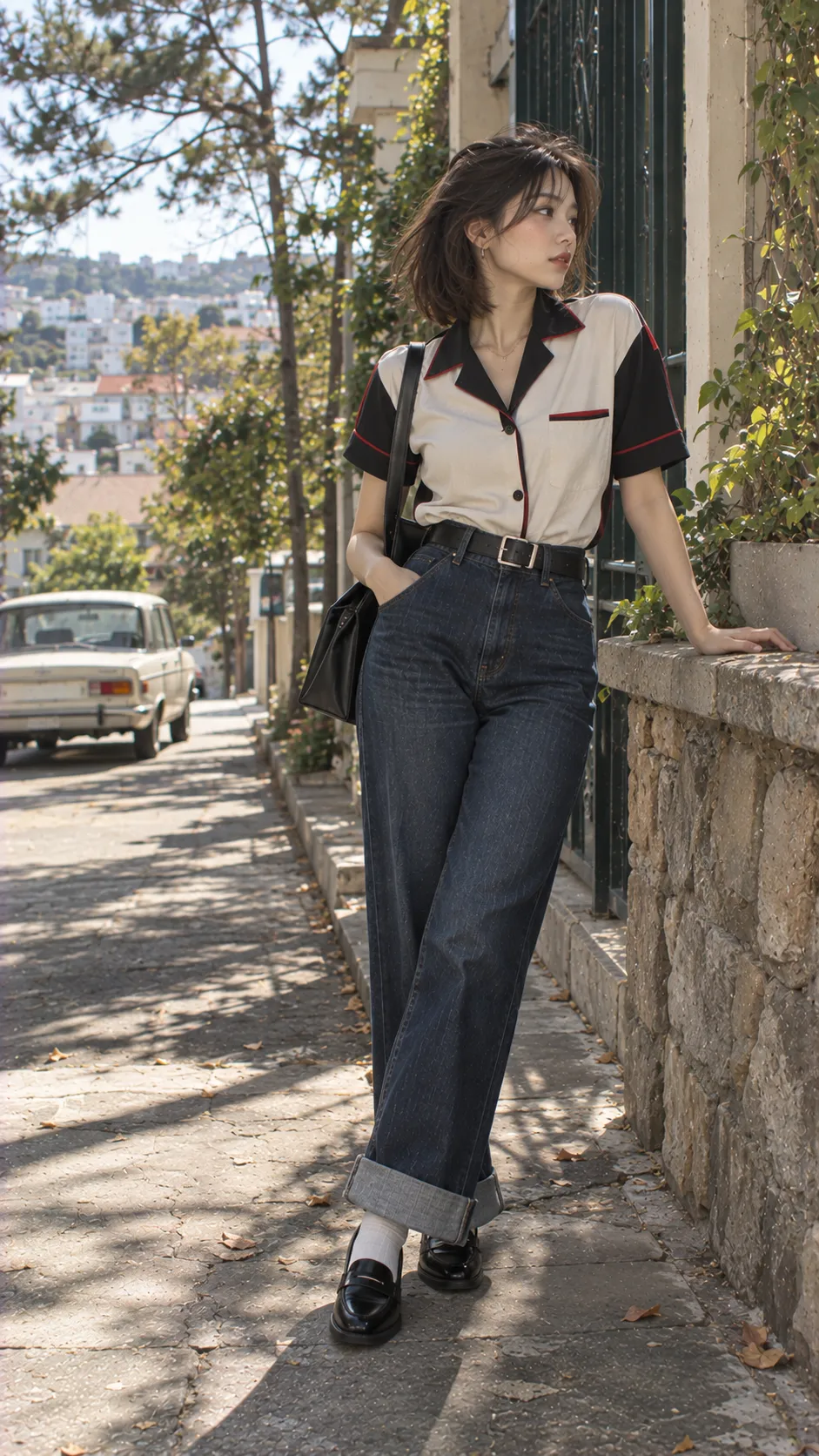
Bowling shirt, straight jeans, belt and loafers
Why it works: Contrast panels or embroidery provide a retro reference while jeans and loafers keep the rest simple. This is an adaptable unisex route.
Gingham cropped shirt, high-rise shorts and canvas sneakers
Why it works: Gingham suggests retro styling, the rise defines the waist and sneakers make the composition more casual. Actual fabric weight and construction determine suitability for Vietnam's heat.
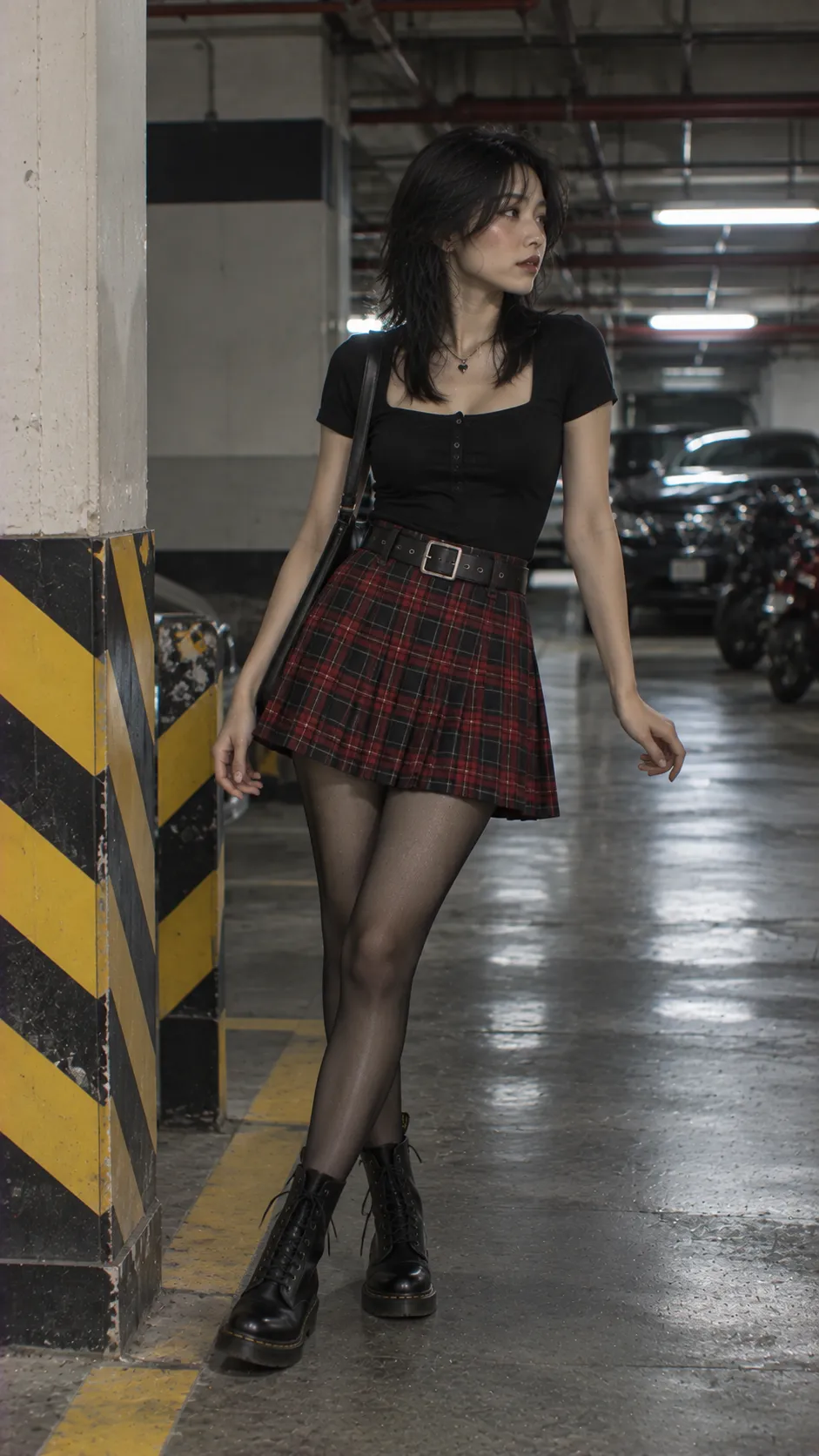
Black fitted top, red plaid skirt, tights and creepers or boots
Why it works: A darker palette retains plaid, waist definition and retro footwear. Stronger horror graphics and Punk hardware move the references toward Psychobilly, although a garment alone does not establish a musical affiliation.
Color, Texture and Pattern: Controlling the Retro References
Familiar colors include black, red, white, cream, navy and dark indigo. Red and black are not compulsory. Olive, mustard, teal and dusty pink can work when the garment shapes carry the era reference.
Try surface contrasts: textured denim with a cotton tee, lightly glossy leather with matte knit, or a cotton swing skirt with a leather belt. All-over shiny vinyl or patterns on every piece create a more theatrical effect; choose it deliberately rather than assuming it is required.
Give strong patterns breathing room. A polka-dot skirt can pair with a plain top; an embroidered panel shirt can sit over simpler jeans. The visual hierarchy helps the outfit read beyond a themed photograph.
Adapting Rockabilly Style for Today
A lighter poplin circle skirt can replace a heavier one. A denim or faux-leather jacket is another visual option, but neither material name guarantees a cooler garment: inspect weight, lining and ventilation.
Victory rolls, winged liner and red lips need not appear together. A hair scarf or cat-eye frames can supply the reference alone.
Rockabilly does not require one skirt length. An A-line mini, swing midi or pencil skirt can work with the intended waist relationship.
Balance a bowling shirt with simple trousers, or a printed skirt with quieter footwear. This makes the references easier to combine for everyday use.
Rockabilly versus Vintage, Greaser and Psychobilly
Vintage Style (Vietnamese) is much broader, drawing on the 1920s, 1950s, 1970s or other periods. Rockabilly has a narrower connection to 1950s rock and roll and the communities around it.
Greaser refers to overlapping 1950s youth and rebel imagery: leather, denim, white tees and slicked hair. It intersects with rockabilly's rebel route without being an exact synonym. Psychobilly developed later, combining rockabilly with Punk and horror references. Leopard print, studs, creepers, skulls and graphics often appear in its clothing, though these are shared references rather than an exclusive uniform.
For a broader period overview, see 1950s fashion (Vietnamese). Here that context explains the relationship between rockabilly clothing and rock-and-roll culture.
A Rockabilly Starter Wardrobe: Eight Versatile Pieces
Start with pieces that move between rebel and pin-up outfits rather than buying only a strongly themed swing dress. Versatility makes the style easier to wear beyond photographs.
Dark or medium indigo with a clean or lightly cuffed hem connects modern casual clothing with retro proportions.
White, black, red or narrow stripes can create a compact torso against jeans or a swing skirt. Fitted should still allow comfortable movement.
A large petticoat is optional. A defined waist and moderate fullness can establish the reference.
Leather offers a strong rebel reference. A lighter denim jacket may be easier in warmer conditions, depending on its actual weight and lining.
Wear it buttoned, open over a tee or tied at the waist. It can serve more combinations than a novelty dress.
Loafers, ankle boots, Mary Janes or simple canvas sneakers: choose the route you expect to wear most, then assess fit and walking comfort.
A belt can establish the waist relationship even in a very simple outfit. Tight compression is unnecessary.
A bandana, cat-eye sunglasses or small scarf can supply an era reference without several competing accents.
Hair, Makeup and Footwear: Adjusting the Intensity
Victory rolls, pompadours, red lips and winged eyeliner appear across rockabilly's visual references. For daily dressing, consider hair and makeup an intensity control. A swing dress, pumps and polka dots can work with contemporary hair; plain jeans, a tee and boots can take a bandana or a small eyeliner detail.
Shoes change the emphasis: Mary Janes and pumps suggest pin-up; boots and creepers strengthen the rebel direction; loafers soften it into retro casual; canvas sneakers make it more everyday. Balance their visual weight with the hem. A full circle skirt and very substantial shoes create a heavier lower outline, while cuffed jeans can accommodate more boot volume.
Chrome-colored details, a belt buckle, small hoops or retro sunglasses may be enough. Cherry earrings, a dice bag, scarf, brooch and hair flower together create a more heavily themed composition. A few deliberate references can communicate the direction clearly.
Five Common Rockabilly Styling Mistakes
1. Using every retro symbol together
Cherry print, polka dots, a bandana, cat-eye glasses, red lips and poodle motifs can create a costume-like composition. Select one or two main signals if you want a quieter result.
2. Losing the musical context
A swing dress alone may read as general 1950s-inspired fashion. Denim, leather or a bowling shirt can strengthen the visual connection, while learning about the music provides the cultural context.
3. Relying on very modern skinny proportions
Extremely skinny jeans and a crop top may obscure the period reference. Straight or high-rise jeans and cigarette trousers offer alternative lines; choose rather than force the effect.
4. Trying to force a pin-up body shape
A tiny waist or particular curves are not prerequisites. Use rises, belts and skirt volume to arrange proportions without trying to change your body.
5. Treating vintage and secondhand as interchangeable
Secondhand describes prior ownership; vintage concerns age and period, while vintage-inspired style can use newer clothes. Rockabilly refers to a musical and cultural context. These concepts overlap without replacing each other.
Frequently Asked Questions
What is rockabilly?
Rockabilly is an early form of American rock and roll from the 1950s, combining country influences with rhythm and blues. Its clothing references grew around rock-and-roll imagery, Greaser, pin-up and wider period fashion.
Do women's rockabilly outfits require a full skirt?
No. Try a rebel route with jeans, a leather jacket and boots, or a pin-up route with a swing skirt, pencil skirt or halter top.
How does rockabilly style differ from vintage style?
Vintage style spans many periods. Rockabilly is more specifically connected to 1950s rock and roll and its cultural references.
Can rockabilly work in Vietnam's heat?
Reduce layers with a lighter bowling shirt, fitted tee, cotton skirt or high-rise shorts and suitable sneakers or loafers instead of a heavy leather jacket. Check actual fabric weight, lining and conditions rather than assuming a fiber or shoe type guarantees comfort.