

What Is Oversized Fit? Shape, Sizing and Proportion Before Buying
What does oversized mean? Oversize describes clothes deliberately made roomier than a conventional body-following fit. Shoulders, torso, sleeves or trouser legs are expanded to create a relaxed silhouette, often associated with streetwear. Deliberate design matters: it is not simply choosing an arbitrary garment several sizes larger.
Practical questions include which size to choose, how shorter proportions work, whether roomy outfits must look untidy, and how oversized differs from one-size sizing. These distinctions matter when shopping online.

Guide collection: Baddie Streetwear: Outfits, Styling and Guides (Vietnamese)
What is oversized fit?
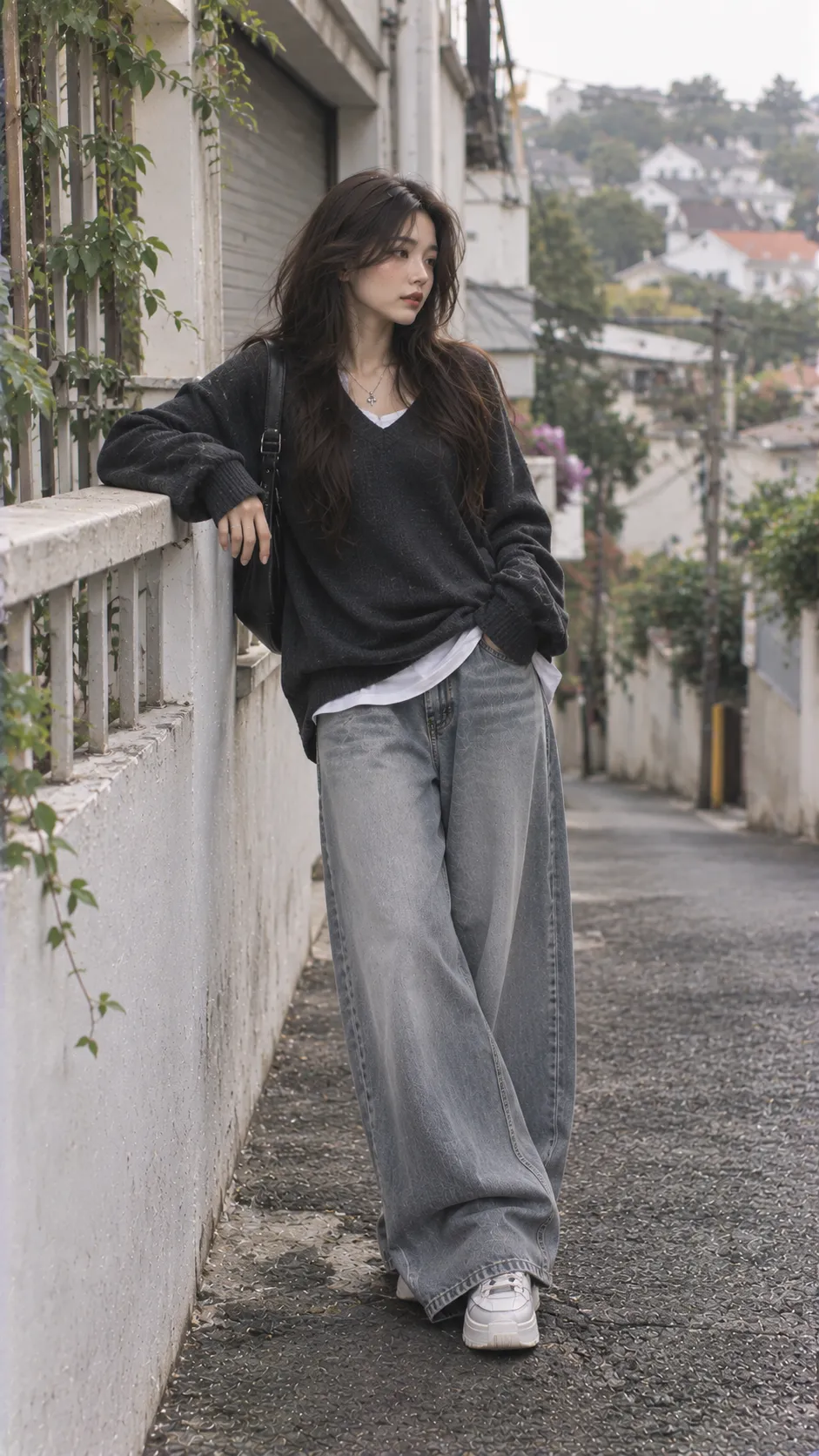
Oversized fashion expands a basic shape while considering shoulder placement, length, drape and relationships between sections. Tops may have dropped shoulders, broad bodies, larger sleeves and space around the torso. Trousers can combine wide legs and comfortable rises with hip shaping that avoids unnecessary bunching.
It is a design language rather than a size label alone. Two medium tops can fit very differently as regular and oversized designs. A regular XL worn by someone usually choosing M may instead create an oversized neck, misplaced armholes or excessive length without the intended shape.
Designed volume retains structure; an unsuitable size can add width without the same organization.
Oversize, oversized, relaxed and boxy
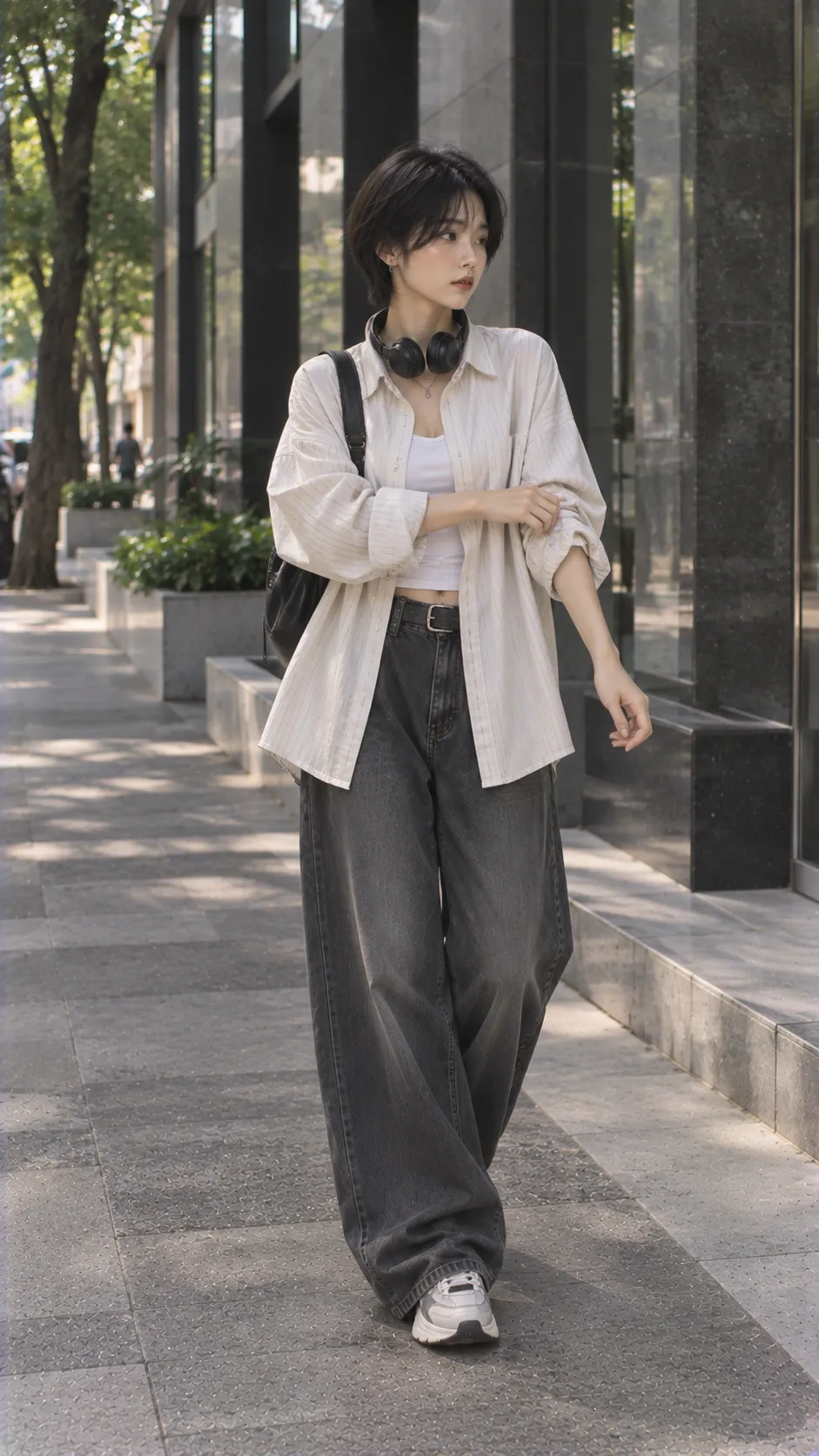
Vietnamese retailers often use oversize, oversized and labels meaning roomy fit in similar ways. Oversized is the English adjective; oversize is also used as a local fit label. Measurements and real wearing photographs matter more than the chosen label.
A roomy fit is a broader idea. Relaxed fits may add moderate ease, boxy fits emphasize width and often shorter bodies, and loose fits add space without necessarily dramatic dropped shoulders. Oversized designs generally enlarge selected areas more visibly.
| Term | Main characteristic | Shopping consideration |
|---|---|---|
| Regular fit | Conventional body proportions | Compare with body and garment measurements |
| Relaxed/loose fit | Moderate additional ease | Useful everyday comfort and layering |
| Boxy fit | A wider, often shorter body | Check garment length |
| Oversize | Deliberately expanded shoulders, body or sleeves | Read finished garment measurements rather than size letters alone |
Oversized vs. one-size and plus-size
One-size or freesize describes a retailer's size offering, not necessarily the cut. The same one-size top can be fitted on one wearer, loose on another and too tight on someone else. It does not guarantee designed oversized proportions.
Plus-size describes sizing for bodies beyond a retailer's conventional range. Such garments can have regular, slim or oversized cuts. Oversized and plus-size are not interchangeable because one describes silhouette and the other a sizing range.
Recognizing designed volume
Look at shoulders first. Dropped seams can sit below the natural shoulder while the neckline remains stable and armholes do not twist. The body should have clear room without rotating, and larger sleeves should still have intentional cuffs or endpoints.
Then assess drape. Heavy cotton, denim, fleece or twill holds more volume; thin jersey, rayon or soft knits can fall closer to the body. The same chest width can therefore create markedly different impressions.
Five Fit Checkpoints Before the Size Label
A small model or deliberate pose can make an ordinary top look very roomy. To distinguish designed oversized fit from sizing up, consider these five details.
No single number of extra centimeters defines the result. Equal chest widths can look different with different shoulders, lengths and materials.
Why streetwear uses volume
Streetwear often emphasizes movement, attitude and shapes visible at a distance. Roomy tees, hoodies, jackets and trousers provide space for artwork and silhouettes. They also accommodate tees beneath hoodies, hoodies beneath jackets, or fitted tanks beneath wider layers.
In dark streetwear, volume can support black, grey, silver and strong textures. A plain roomy black top gains a clearer role beside cargo pants (Vietnamese), boots, a smaller bag and silver details within an organized silhouette.
Is oversized necessarily unisex?
Not necessarily. Oversized describes cut; unisex (Vietnamese) describes design or marketing intended for more than one gender. Roomier unisex cuts can accommodate varied bodies, but unisex clothing also comes in fitted shapes. Some women's oversized garments still use specifically proportioned shoulders, necklines, waist shaping or lengths.
Oversized on shorter proportions
Shorter people can wear oversized fits. Assess top length, sleeve length and whether the lower half retains a clear leg line. A moderately roomy boxy top ending near the hip can be easier to organize than a much longer one, depending on your desired result.
Wide tops do not require tight bottoms. Wide trousers or cargos can work with a visible waistband, crop, partial tuck, drawcord or defined shoes. The aim is not necessarily to look smaller, but to keep the outfit's structure legible.
Choosing a size online
Before choosing S, M or L, measure a garment you like laid flat: chest width, shoulders, body length and sleeves. Compare those with the product's finished garment measurements rather than assuming your usual M requires an oversized L. A design already cut generously may lose its intended neckline, armhole, sleeve or length balance if increased further.
For tops, prioritize chest width, body length and shoulders. If dropped-shoulder measurements are absent, examine flat lays and model photographs. For trousers, assess waistband, seat, thigh, rise and inseam or overall length. Enough thigh room should coexist with a stable waist; excessive tightening can bunch the hips.
A One-Minute Shopping Check
- Does the seller list body measurements or garment measurements? They are different.
- Are the model's height and worn size provided?
- Where will the hem fall on your body: hip, below hip or mid-thigh?
- Does the fabric hold volume like heavy cotton, or drape like softer jersey or knitwear?
- Will chest and armhole room accommodate your intended inner layers?
- Are real photographs or flat lays available to check shoulders, neck, hem and seams?
A one-size listing described only as suitable for a 40–60 kg range cannot reliably show where a garment will be roomy. Ask for garment dimensions or choose clearer listings. Our guide to choosing alternative-fashion sizes online (Vietnamese) explains comparing an existing garment before purchase.
Four Ways to Style Oversized Clothes with Clear Proportions
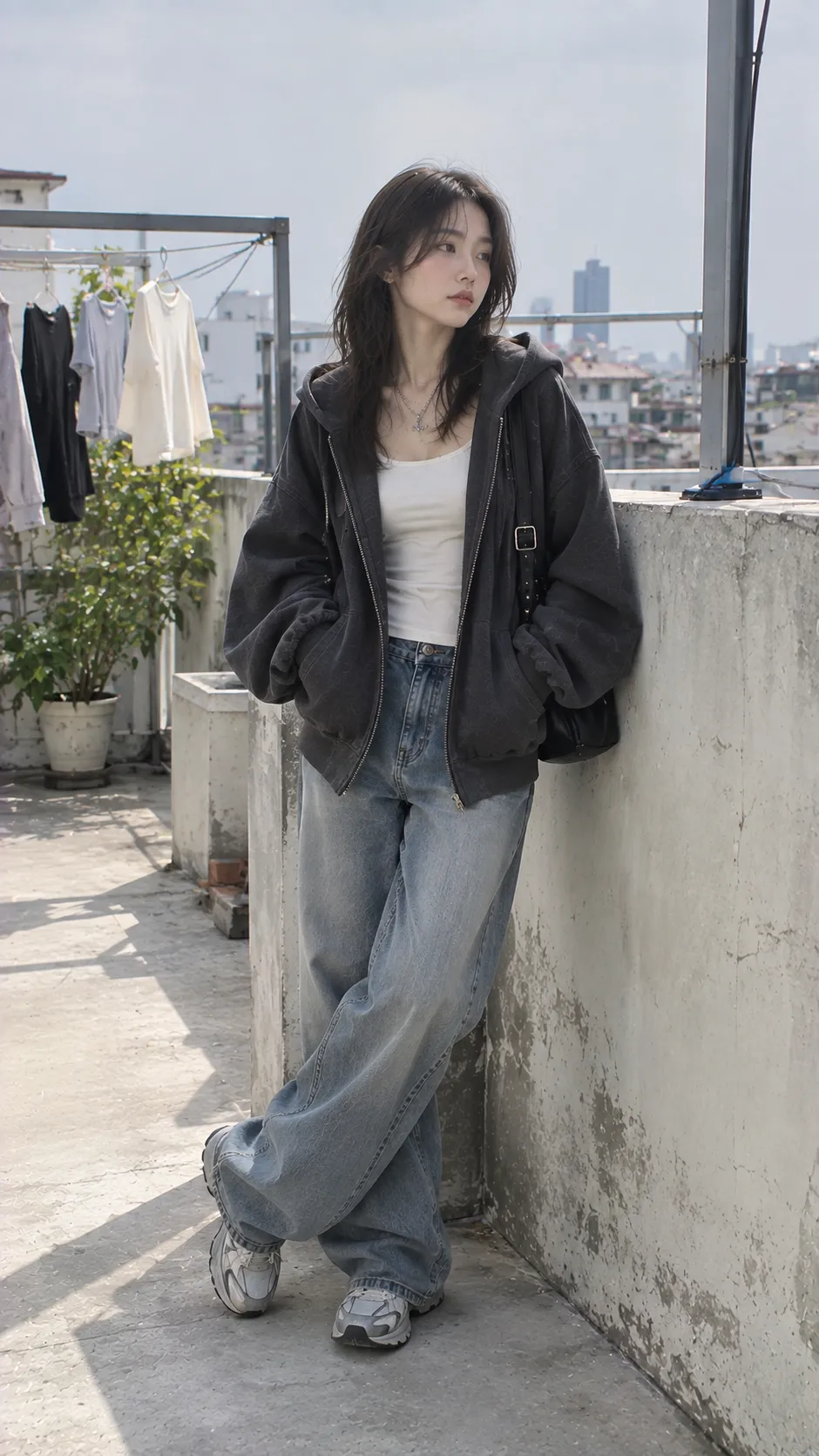
Loose above and fitted below is one option rather than a law. A roomy outfit remains clear when its beginnings, endpoints and visual weight are organized. These four approaches handle volume differently.
1. Roomy Top + Compact Bottom
An oversized tee or hoodie with straight jeans, mini skirt or narrower trousers concentrates volume above. With a long top, retain some visible waistband or lower hem unless a continuous shape is intentional.
2. Volume Above and Below with an Anchor
Roomy tees can meet cargos or wide jeans through a defined waistband, well-placed hem, diagonal bag or substantial shoes. Trouser length matters: excess fabric gathering over slim sneakers can overload the lower half. Explore what tops go with women's wide-leg trousers (Vietnamese).
3. Boxy Top + Defined Waistband
A wider top ending near or above the hip leaves more of the leg line visible. A mid or higher waistband becomes a visual division while dropped shoulders retain the relaxed character.
4. Roomy Outer Layer + Compact Base
An overshirt, bomber or hoodie can frame a fitted tank or baby tee, giving the eye an inner line while volume remains outside. For hoodie-specific hem, hood and shoe choices, see how to style oversized hoodies for more detail.
Materials Determine Whether Volume Stands or Falls
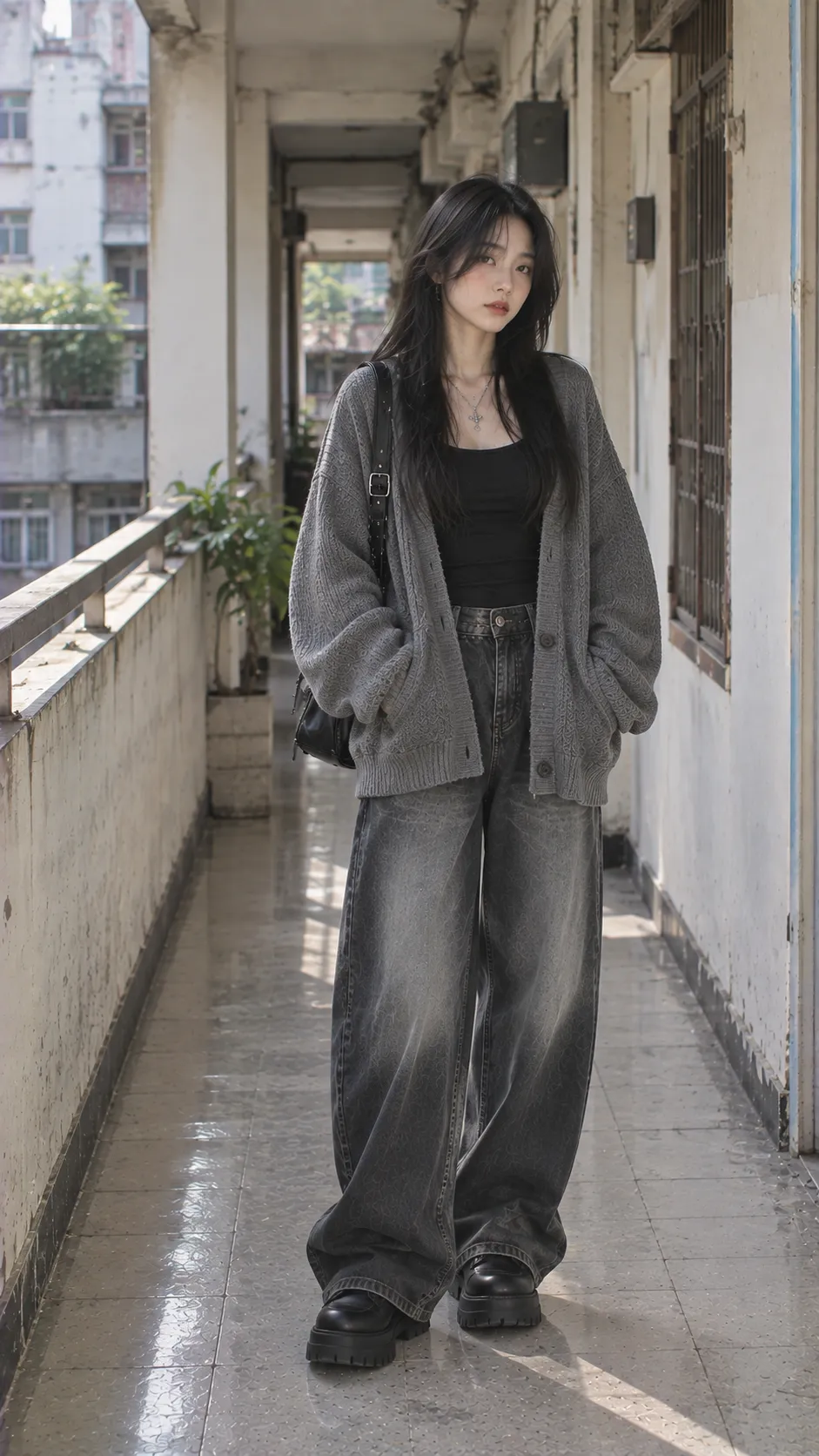
Heavy cotton, denim or twill holds distance from the body, while thin jersey, rayon or soft knit falls toward it. When judging photographs, consider whether folds stand in larger planes or flow around the wearer, not only the listed size.
Oversized is not automatically cooler in Vietnam's humidity. Wide heavy cotton, fleece or several layers can feel warmer than a thin relaxed fit. For daytime outdoors, prioritize airflow and fewer layers, using width or shoulder shape to establish volume. Add removable overshirts, cardigans or light jackets for cooler rooms or evenings.
Dark fabric surfaces may absorb more solar energy in direct sun, but actual comfort depends on construction, airflow and fit. For dark streetwear, lighter black or grey fabrics, less daytime fleece, and visual weight in accessories or shoes can replace reliance on thick cloth.
Common mistakes
Every layer long, wide and ending together: a deep top hem, long jacket and stacked trousers can create one continuous block. Try a shorter endpoint, open jacket, visible waistband or adjusted trouser length without necessarily switching to fitted clothes.
Only increasing a regular-fit size: too much sizing up can enlarge necklines, lower armholes and extend sleeves without an oversized pattern's balance. A deliberately cut garment can offer clearer structure.
Ignoring fabric weight: very thin cloth drapes differently from stiffer model images; heavy fabric can add more shoulder, sleeve and torso volume than expected. Choose for the silhouette rather than the label alone.
Footwear too slight for the intended balance: if both halves are roomy, more defined shoes can finish the silhouette. Moderate sneakers or boots may help, but platforms are not compulsory: this is a visual relationship rather than an item rule.
What to try first
Start with one repeatable piece with clear measurements, such as a tee, hoodie, jacket or wide trousers. Add cargos, shoes and accessories according to your chosen direction.
For roomy outfit references, explore Baddie Streetwear (Vietnamese), E-Girl (Vietnamese) or Punk/Grunge (Vietnamese). Try one versatile oversized piece, then develop the other items around its proportions and your preferred aesthetic.
Volume with clear proportions
Oversized fit means deliberate enlargement rather than an accidental size mismatch. It retains structure, drape and clear relationships. Assess finished dimensions, materials and wearing photographs, then keep at least one visual anchor when styling.
It can be a useful dark-streetwear foundation because it layers and recombines with cargos, boots, graphic tees and silver accessories. One well-shaped piece can be more useful than several disconnected garments chosen only for width.
Frequently Asked Questions
Should I size up for an oversized fit?
Not automatically. Compare the design's finished measurements with a garment you like rather than adding one or two sizes by default.
How does oversized differ from loose fit?
Loose fit generally adds ease for movement, while oversized designs enlarge selected shoulders, body, sleeves or lengths more visibly for an intentional silhouette.
Can shorter people wear oversized clothing?
Yes. Assess length, a waistband or other stopping point, and shoe presence so the body and outfit structure remain legible. Choose the proportions you prefer rather than following a height prohibition.
Are oversized and one-size tops the same?
No. Oversized describes shape; one-size describes a size offering and does not guarantee suitability or a roomy result on everyone.
Must oversized tops be paired with tight trousers?
No. Wide trousers, cargos or baggy jeans can work with anchors at waistband, hem, layers or footwear. A loose-top, compact-bottom combination is simply an accessible option.
Outfit References
Use these looks to study whole outfits. Open each one for its pieces and combinations.


