

What Is Avant-Garde Fashion? Concept, Silhouette and Outfits
Avant-garde fashion involves more than unusual clothes, numerous layers or asymmetry. The central idea is a visual concept: changing how the body is read through silhouette, proportion, structure, negative space and material.
This guide starts with the concept before the individual garment. Learn when a detail serves the idea, when it adds clutter and how to bring experimentation into everyday outfits while keeping a clear personal direction.
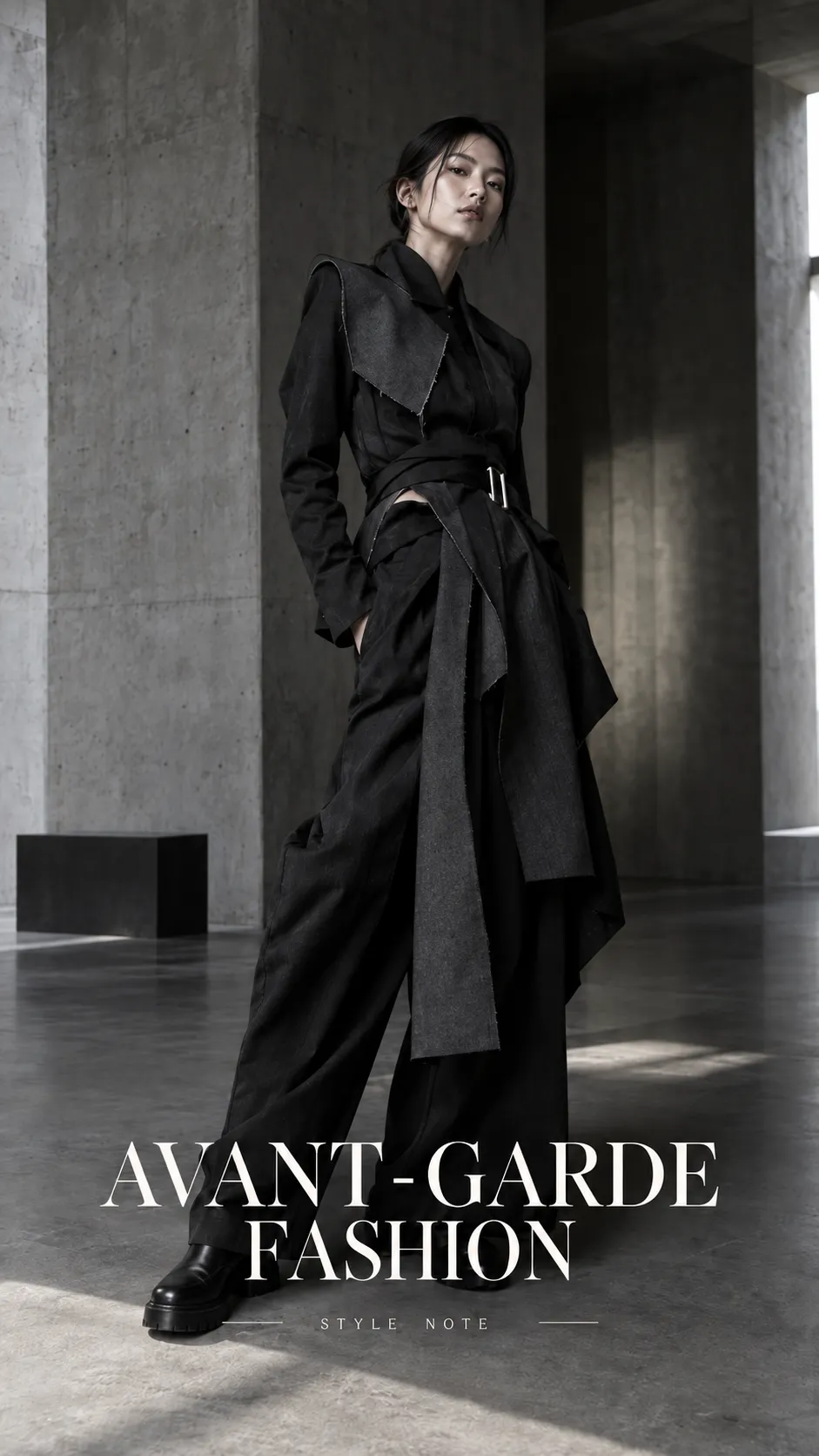
Guide collection: Aesthetic Dictionary: A Guide to Fashion Styles (Vietnamese)
What Is Avant-Garde Fashion?
For practical styling, avant-garde fashion means prioritizing experimentation and ideas over familiar formulas. An outfit might disrupt proportions, relocate the apparent waist, extend sleeves, enlarge shoulders, stagger layers or suggest a new shape around the body. In this guide's approach, the unfamiliar details work best when their relationship remains readable.
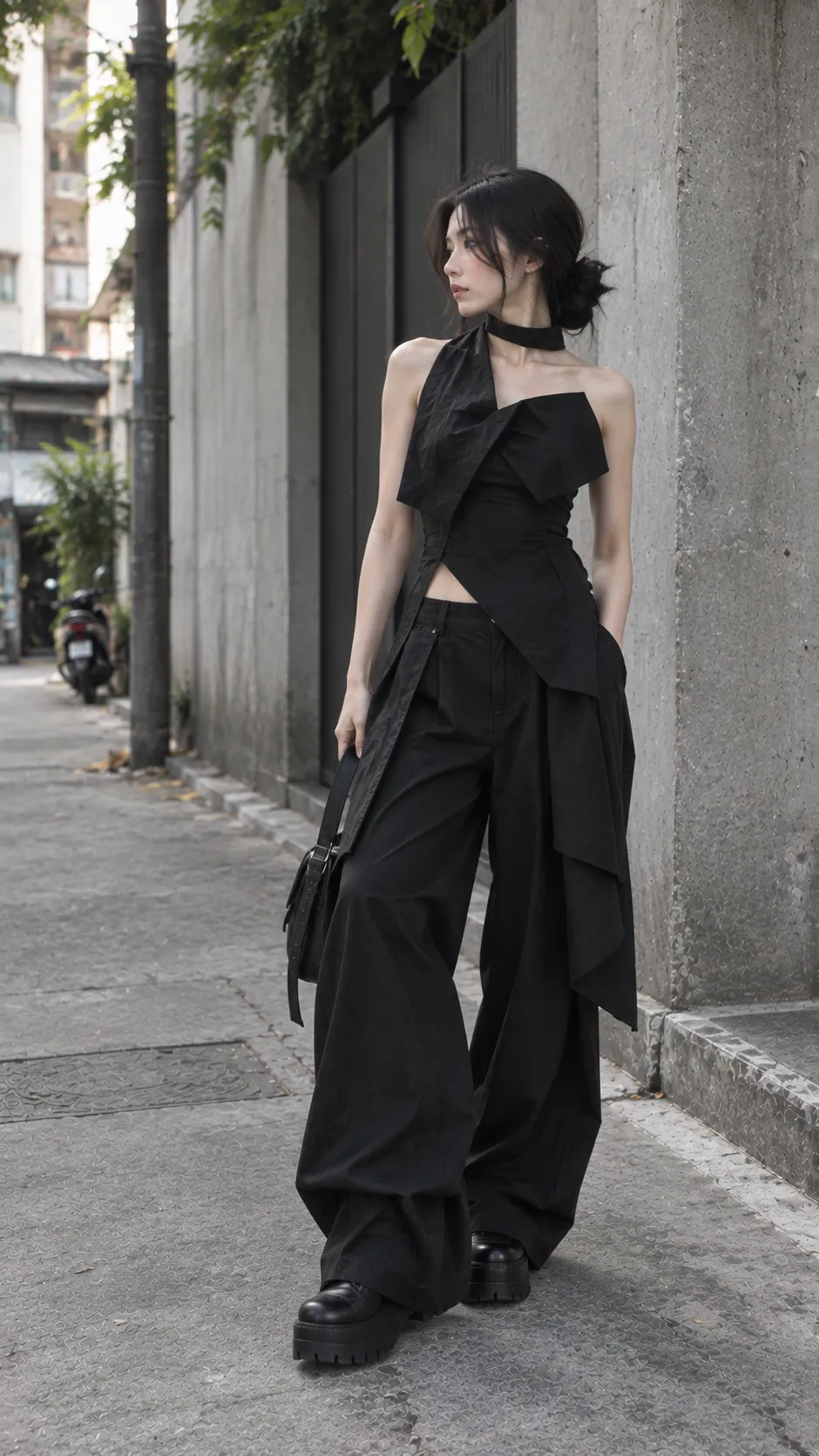
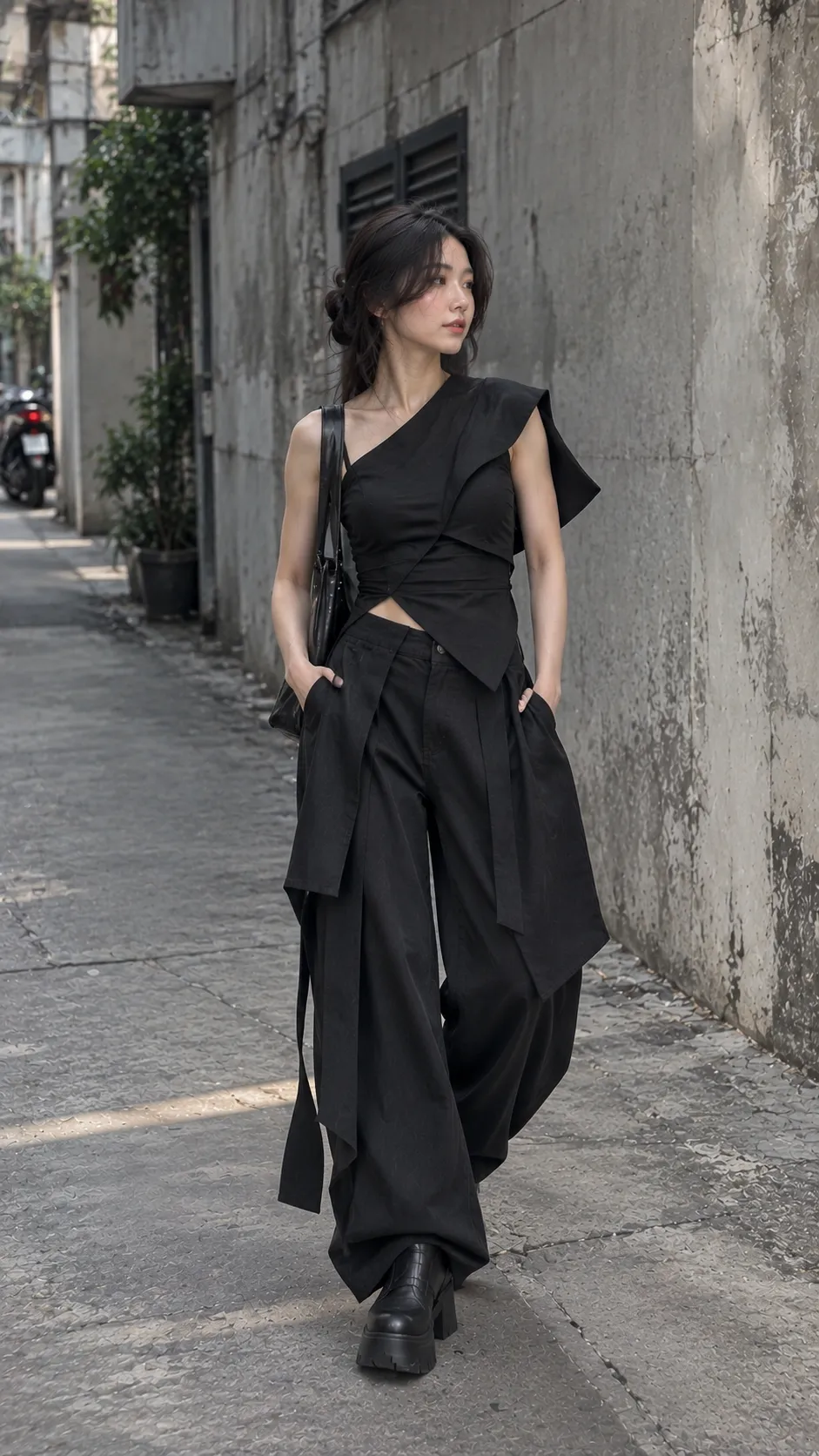
That explains why two all-black outfits can look very different. A black tee, trousers and boots may simply be monochrome. Structured shoulders, an asymmetric torso, extremely wide draped trousers and geometric boot toes ask the eye to reconsider the proportions; the concept is affecting the silhouette.
Avant-garde style does not require copying a runway look exactly. Runway presentations can push an idea to an extreme. Everyday adaptations often reduce that intensity: retain one unusual structure as the focal point and use the other pieces to make it legible.
How does it affect proportion, movement, space or texture? Without an answer, the avant-garde label alone will not improve the composition.
For the broader context of styles outside mainstream conventions, see What Is Alt Style? Understanding Alternative Fashion. That is the wider overview; this article focuses on experimental form.
Concept before Garments: Making an Unusual Outfit Coherent
Start with a short description: architectural shoulders over a moving lower half, a continuous vertical line from shoulder to shoe, or softness inside a rigid outer frame. Treat it as a creative brief that helps exclude attractive pieces pointing in a different direction.
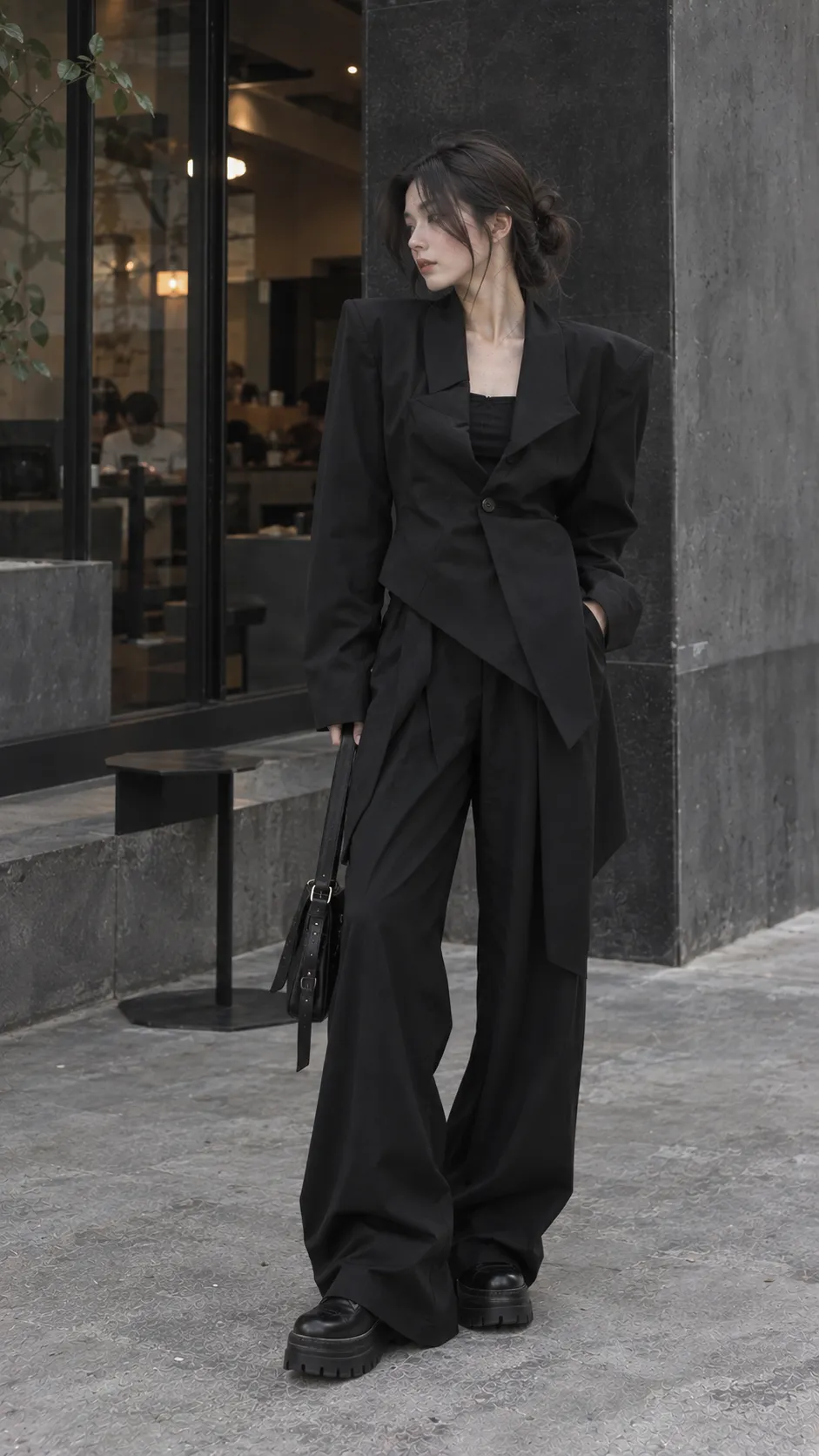
For architectural shoulders, a structured blazer or short cape can be the focal point. Keep the lower half relatively clear with straight trousers, a column maxi skirt or wide trousers without many pockets. Adding a corset, harness, large belt, heavy chains and heavily buckled boots together can obscure the main idea.
A useful concept survives substitutions. A structured blazer could become a cropped padded-shoulder jacket; straight trousers could become a column skirt. The relationship between the shapes remains even when the garments change.
Choose a verb: elongate, enlarge, compress, cut, offset, repeat or contrast. Add a piece when it supports that action. This creates a reason for experimentation beyond novelty alone.
Four Ways to Read an Avant-Garde Silhouette
Proportion gives a monochrome outfit depth. Black can make adjacent shapes merge, increasing the importance of edges and surface contrast. Stand back or photograph the silhouette: if it reads as an undifferentiated column, adjust volume or length before adding accessories.
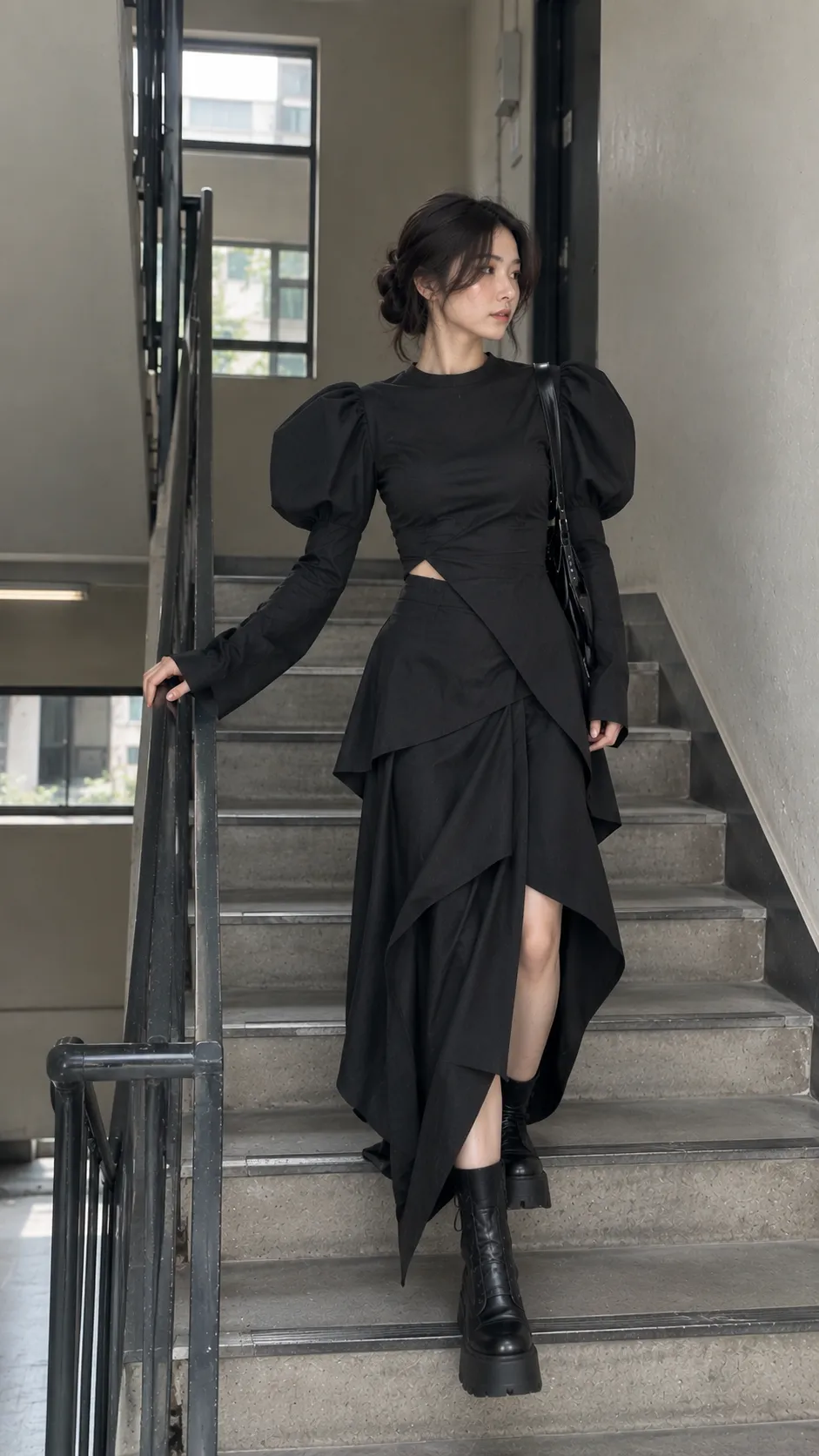
Texture Creates Depth within a Narrow Palette
A limited palette lets texture do some of color's work. Matte cotton beside coated cloth, lofty knit beside smooth leather, transparent mesh beside heavier wool, or satin beside suiting can establish distinct surfaces without changing the concept. Actual finish and construction matter more than the fiber name.
Try three surface roles: a matte base, one structured material and one reflective accent. A black cotton top, wide pleated trousers and metal belt illustrate the approach. Adding a leather jacket, patent boots, chains and chrome bag as well can make every surface compete.
Materials also affect movement. Some hold a shape while standing; others reveal their drape while walking. If the idea depends on drape, walk, sit and turn in it. The changing outline is part of the design, rather than an issue visible only in a still photograph.
Seven Wearable Avant-Garde Outfit Experiments
Strong-shouldered blazer, close-fitting tank and long straight trousers
Make the shoulders the main enlargement. The tank keeps the middle calm; trousers establish a vertical line. Boots or pointed shoes can continue that line without competing with the shoulder.
Asymmetric top, column skirt and ankle boots
An offset neckline can provide the upper-body movement. The column skirt keeps the lower half clear, avoiding repeated asymmetry everywhere.
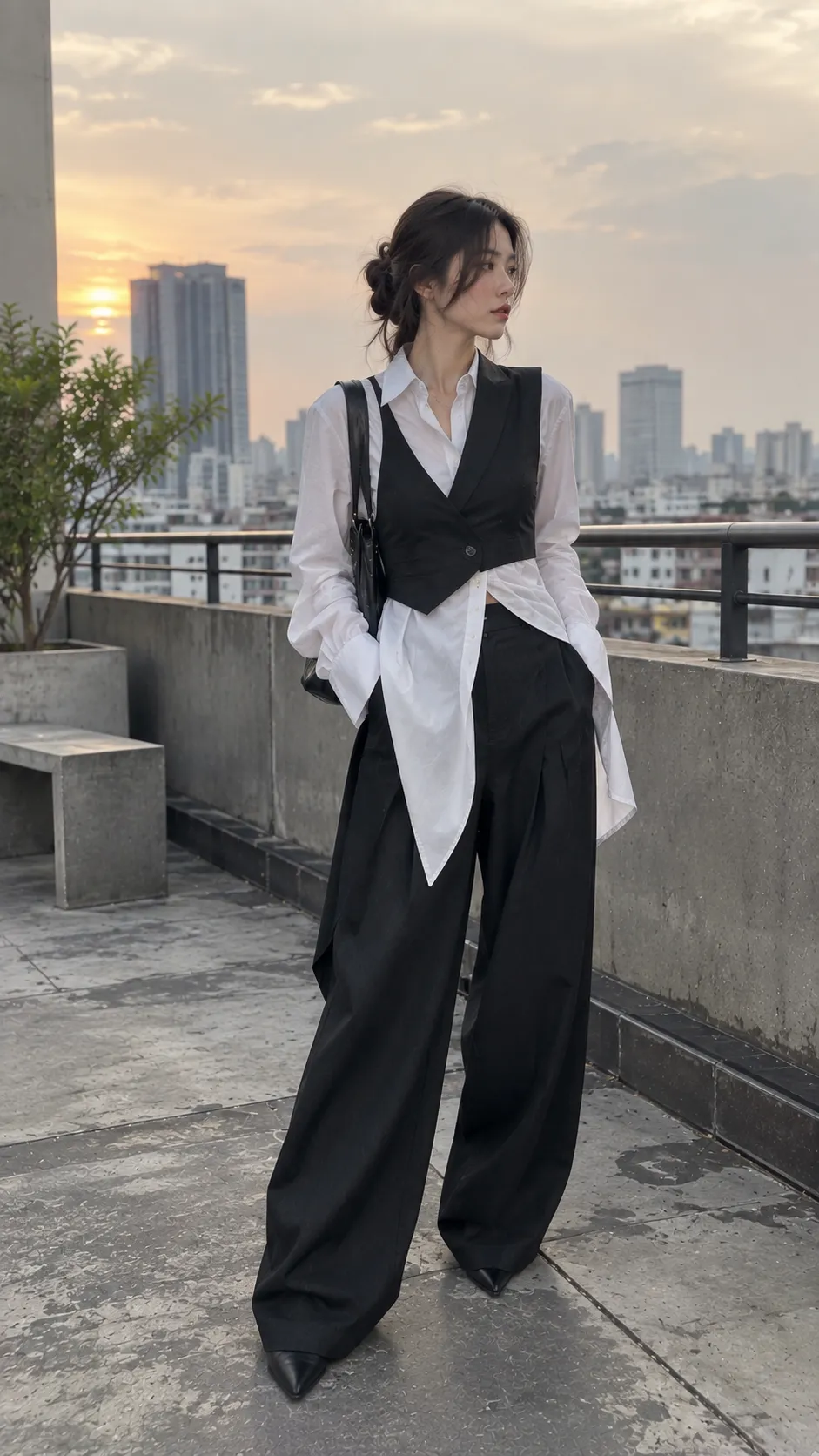
Long shirt, cropped vest and wide trousers
Two contrasting lengths make the layers readable. The short vest compresses the torso visually while the shirt extends downward; wide trousers continue the movement.
Fitted base, long sheer layer and combat boots
The base makes the body's outline legible while the transparent layer changes its outer boundary. Visually substantial boots balance the light layer.
Boxy jacket and a skirt over trousers
A skirt over trousers changes the apparent structure of the hips and legs. A consistent palette directs attention toward construction rather than color blocking.
Long coat, short top and high-rise trousers
The coat creates a vertical outer frame; the top-to-waist relationship introduces a smaller horizontal break. The long/short contrast needs little additional detail.
Black monochrome and one sculptural accessory
A simple base can support a geometric bag, oversized collar or structured belt as the focal point. One clear statement often communicates more than several competing ones.
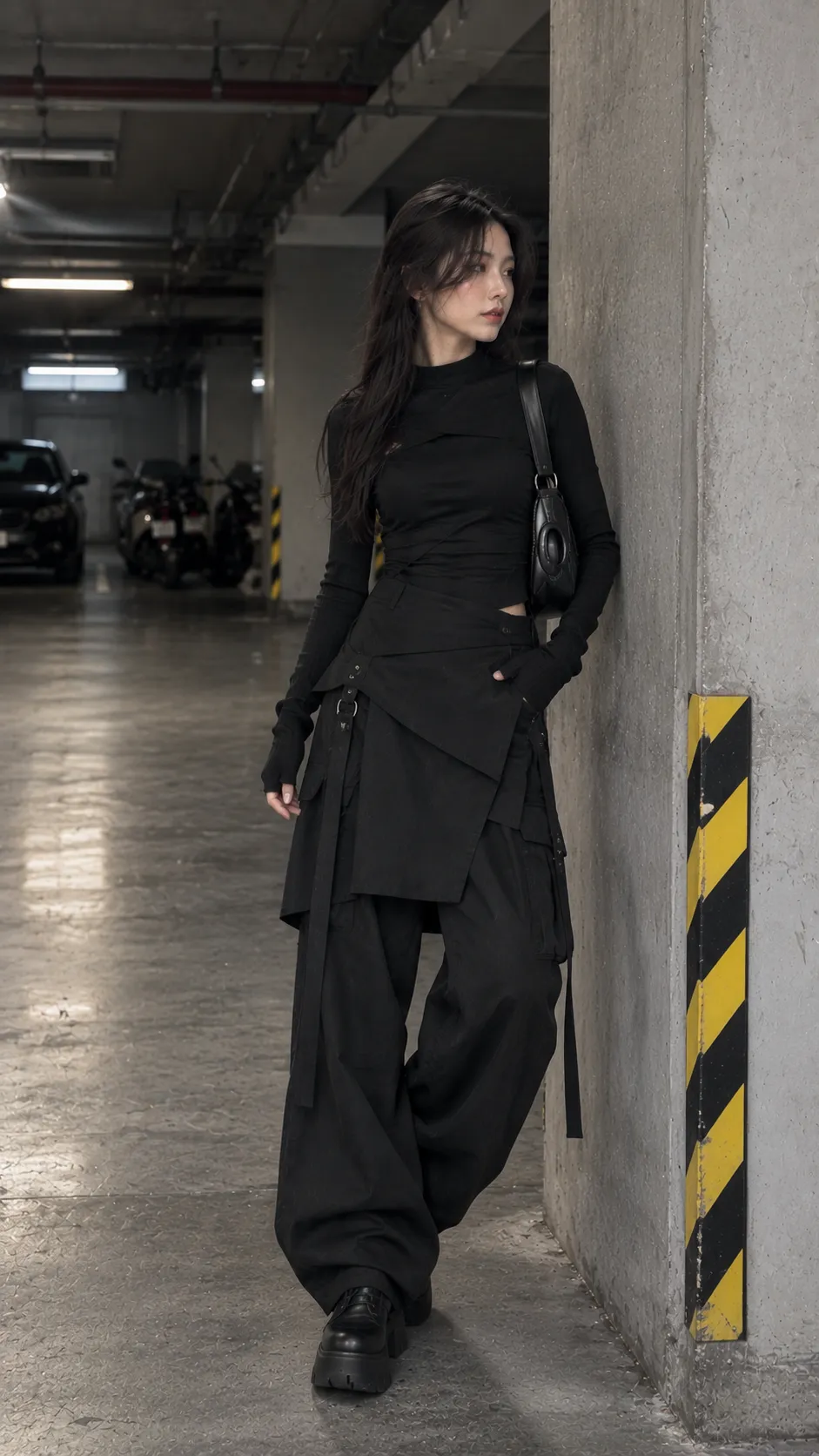
Bringing Avant-Garde Ideas into Everyday Outfits
Reducing intensity need not remove the concept. Keep one unfamiliar variable and make the rest familiar. A sculptural jacket can sit over a plain tee and straight trousers. Extremely wide pleats can pair with a fitted top. A long sheer focal layer can work with straightforward shoes and a bag.
For classes or a café, check sitting and movement: sleeves should clear tables, hems should clear the ground and layers should stay where intended. An interesting design that prevents quick walking or carrying a bag may suit a photograph better than your day's activities.
For an evening or event, increase one element: length, shine or graphic makeup. Retain a hierarchy. If there are three prominent details, decide which reads first, which second and which functions as background texture.
A moodboard helps because the relationships between shapes matter more than garment names. The guide How to Create a Fashion Moodboard: From Inspiration to Real Outfits (Vietnamese) shows how to extract repeatable ideas from references instead of copying an entire look.
How Does Avant-Garde Differ from Alternative Fashion Generally?
Alternative fashion is a broad umbrella encompassing Goth, Punk, E-Girl, Visual Kei, Dark Y2K and other styles outside mainstream conventions. Avant-garde need not identify one subculture; it describes experimentation with form and ideas in design or styling.
A Goth outfit can be avant-garde when it strongly changes the silhouette. A minimal white outfit can also qualify through unusual construction. Conversely, familiar alternative garments do not automatically create an experimental composition when their proportions remain conventional.
When exploring several aesthetics, use the Aesthetic Dictionary (Vietnamese) as a terminology map. Return here for the specific relationship between concept and form.
Six Ways a Concept Outfit Can Lose Clarity
1. Every garment makes a statement
Large details across jacket, top, trousers, shoes and bag can erase the focal point. Reducing competing signals may strengthen the idea.
2. Asymmetry everywhere
An offset line needs a more regular reference to make it visible. Diagonal necklines, hems, belts and layers together can leave no stable comparison.
3. Using black to conceal unresolved proportions
Monochrome does not automatically create depth. If shapes merge, change the length, volume or texture first.
4. Copying a single runway photograph
Extract the principle: enlarged shoulders, a lowered waist, transparent layers or repetition. Choose pieces that apply it to your wardrobe and circumstances.
5. Ignoring movement
Trailing trousers, obstructive sleeves and sliding layers can work in a photograph but hinder daily use. Check movement before deciding on the outfit.
6. Calling everything unusual avant-garde
Every outfit does not need that label. Recognizing an Alt, Goth or minimal outfit with an unusual detail can clarify the direction you actually want to develop.
A Quick Check: Is the Outfit Experimenting with Form?
Photograph the silhouette from a distance, optionally in black and white, and identify the shape drawing your eye. If only the quantity of accessories stands out, return to volume, length or negative space. A clear idea should remain legible when color and decoration are reduced.
Try keeping three garments and changing just one proportion: lengthen the outer layer, replace slim trousers with very wide ones, or exchange a symmetrical top for an offset hem. A substantial change in character from one geometric adjustment shows the concept working through form.
References
These sources provide context, terminology and historical examples. Outfit formulas and everyday adaptations are Apocalypse Closet's editorial interpretations.