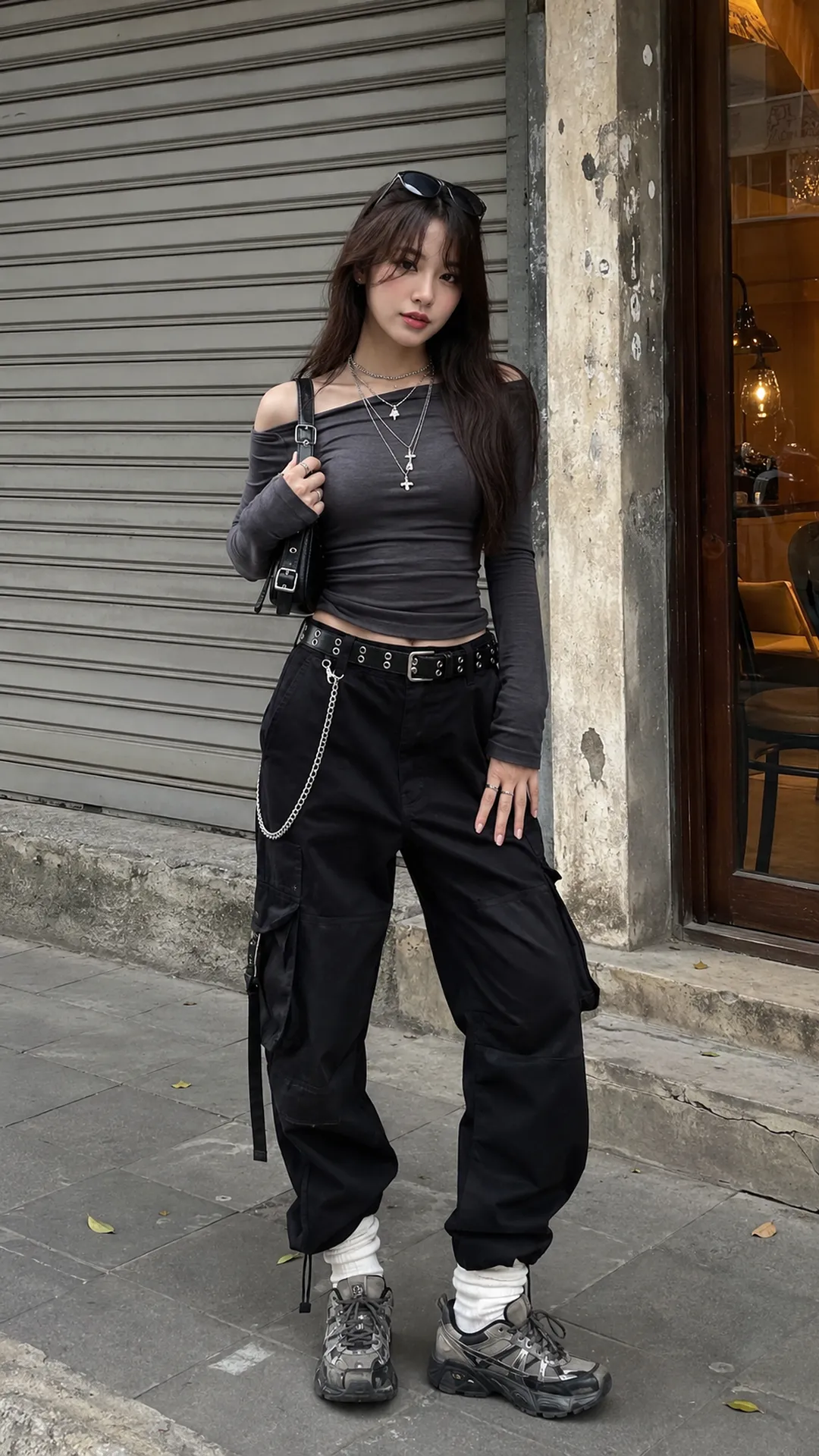
What Are Parachute Pants? Shape, Fabric, and Fit
Understand parachute pants, compare cargo, jogger, and baggy construction, and check waistband, rise, fabric, hems, and measurements before buying online.
Parachute pants create visible volume and movement in photographs. An unsuitable pair can also leave the crotch too low, add unwanted bulk, or stack excessively at the hem. This guide examines construction and sizing; the separate outfit specialist covers combinations.
In this guide: understand what parachute pants are through their fuller shape, lighter fabrics, and size checks. For a cargo-material comparison, see nylon versus twill cargo pants.

Guide collection: Baddie Streetwear: Outfit and Styling Guides
Parachute pants in this contemporary styling context usually combine roomy legs, comparatively light fabric, and adjustable waistbands or hems. Cargo pockets may overlap with the category, while jogger-style cuffs can also appear. Inspect the actual construction rather than expecting mutually exclusive labels.
Parachute, Cargo, Jogger, and Baggy Compared
| Category | Typical identifying feature | Possible materials | What to reassess |
|---|---|---|---|
| Parachute | Roomy legs, lighter-looking fabric, and often adjustable waist or hems | Nylon, polyester, or other woven fabrics | Unwanted gathering, warmth, or hem stacking |
| Cargo | Prominent patch or bellows pockets | Twill, nylon, denim, and other fabrics | Pocket position and added hip or thigh volume |
| Jogger | Usually tapered legs and a gathered or cuffed ankle | Fleece, jersey, nylon, or other fabrics | Whether the fabric and finish suit the planned setting |
| Baggy | Intentional room around hips, thighs, or legs | Denim, twill, cotton blends, and other fabrics | Rise, crotch placement, and leg length |
If the pockets are your main interest, read what cargo pants are. For roomier hip and thigh construction, read what baggy pants are. Parachute designs offer another way to explore volume and fabric movement.
Five Construction Clues
Online names can overlap: parachute, nylon cargo, balloon pants, and wide joggers may describe related products. Photographs, measurements, materials, and adjusters provide more useful evidence than the name alone.
Many contemporary examples build volume through gathering and fabric quantity rather than dense denim or twill. Watch a walking video to see whether the actual drape matches what you want.
Elastic, drawstrings, or bungee-style adjusters can change the wearing position. A conventional button-and-zip design may still share the silhouette; no single fastening definitively determines the category.
Drawstrings or gathered hems can switch the lower shape from open width toward a balloon outline. Not every pair includes an adjustable hem, but it is a useful feature to inspect.
Nylon, polyester, and ripstop constructions can be matte, reflective, or rustling. The Vietnamese commercial label often translated as parachute fabric does not identify exact fiber, weave, coating, or performance.
A pair can combine cargo pockets with parachute-style volume. Read the fabric, silhouette, and adjusters together rather than treating pockets as a required or disqualifying feature.
A common confusion: roominess alone does not establish the category. Baggy describes volume, cargo emphasizes pocket construction, and jogger usually describes a tapered, cuffed shape. Contemporary parachute styling often combines lighter fabric, fuller volume, and adjustable shape. Real garments can belong to more than one description.
Does Light Fabric Mean Cool Fabric?
No. Low weight does not establish ventilation. A dense weave, coating, or lining can change how a thin fabric feels in humidity. Check construction, lining, fit, and expected exposure. Unlined or mesh-lined versions are possibilities to assess, not guarantees of coolness.
Listen to the Fabric as Well
Some woven surfaces rustle noticeably. That may fit your styling preference or be distracting in a quiet classroom or office. A product video with genuine movement sound can help you decide.
Nylon, Polyester, and Ripstop
These terms describe different features. Nylon and polyester identify fiber families; ripstop describes a reinforcement construction, often visible as a grid, intended to limit tear propagation. It is not a fiber name or a promise that fabric cannot tear. Both nylon and polyester ripstop exist.
| Listing term | Useful information | What it does not establish |
|---|---|---|
| Nylon | The fiber family; finished fabrics vary widely in weight and feel | Coolness, waterproofing, or performance without further construction data |
| Polyester | A fiber family used across many fabric weights and finishes | Ventilation without weave, coating, and lining information |
| Ripstop | A reinforcing grid within the fabric construction | Whether the fiber is nylon, polyester, or something else |
| Parachute fabric | A broad commercial description rather than a complete specification | Exact composition, ventilation, or water resistance |
For warm and humid conditions in Vietnam, look beyond thinness. Compare weave density, lining, finish, leg room, and the planned duration outdoors. A lighter coated or lined fabric may feel less ventilated than a heavier but more open construction.
Compare Measurements Before Sizing Up
The pattern already contains intentional ease. Sizing up can change waistband support, crotch depth, and hem length before producing the desired volume. Compare relaxed and stretched waistband, hips, thighs, rise, and inseam with a suitable pair you own. Letter sizes alone provide less certainty.
One useful starting point is to check the least adjustable area. A drawstring changes the waistband but cannot create more hip or thigh room. Conversely, even wide legs do not guarantee that a limited-stretch waistband will pass over your hips.
Model photographs provide context rather than a measuring method. Height, wearing position, and footwear change apparent length. Actual rise and inseam measurements are more informative than the model's size label alone.
A Practical Fit Test
- Walk, use a step, and sit: check for pulling or catching at the crotch.
- Compare gathered and open hem positions if both are intended for use.
- Put your actual phone in the pocket and assess waistband stability and drape.
- Check back coverage and opacity in comparable lighting while moving.
- Wear the intended shoes to assess hem clearance.
Assess Rise and Crotch Placement Together
A lower waistband changes the visible torso section, while a higher one creates another division. Neither label establishes comfort or stability. Compare front and back rise, crotch placement, and the actual worn position on your body rather than predicting fit from a model with different proportions.
Choose the Proportions You Want
No body shape is excluded. Shorter wearers can compare inseam, rise, and hem gathering. If you want less hip emphasis, try flatter pockets or a different drape. If you want more volume, compare a fuller fabric while keeping the waistband stable. These are visual choices, not body requirements.
Darker Parachute Pants in Streetwear

Black, concrete gray, olive, dusty brown, or a silver-toned detail offers a darker streetwear palette. Decide where the main volume sits. A shorter or open jacket gives one approach; a larger outer layer can use a defined inner top instead. The guide to intentional oversized fit explains how pattern volume differs from unsuitable sizing.
Once you have assessed the garment and want combinations, continue to parachute-pants outfits for women for tops, layers, footwear, and activity-based formulas.
Contemporary Parachute Pants Have Several Shapes
The name covers lower-rise gathered versions, utility-pocket hybrids, straighter legs, and cuffed variations. Useful common references are comparatively light fabric, roomier silhouettes, and created or adjustable volume.
. Two similarly named listings may therefore fit differently. Inspect where the volume sits and how the hem works rather than seeking one mandatory shape.
Information to Request Online
| Request | Why it helps |
|---|---|
| Relaxed and fully stretched waistband measurements | Assess support, access over the hips, and pressure at the wearing position |
| Front and back rise | Compare likely waistband and crotch placement |
| Inseam | Compare leg length more precisely than total length alone |
| Composition, finish, and lining | Investigate feel, warmth, opacity, and sound without assuming performance |
| Walking and sitting video | Observe movement, gathering, and hems |
| Size-exchange terms | Check the seller's actual current policy before ordering |
A Reason to Consider the Pair
It matches the lighter, fuller streetwear shape you want and provides enough construction and measurement information. Reassess listings that show one fixed pose, omit measurements or lining information, or leave adjusters' function unclear.
Compare Complete Silhouettes: open the Baddie Streetwear collection (Vietnamese), compare cargo and baggy references, and save combinations in the Closet (Vietnamese).
A Deliberate Shape, Beyond Extra Fabric
Parachute pants in this guide combine a roomy silhouette, comparatively light fabric, and often adjustable volume. Choosing a pair means checking waistband, rise, fabric, hems, sound, and movement rather than simply buying the largest size. The useful shape is the one that behaves as you intend during actual wear.
Frequently Asked Questions
What are parachute pants?
In contemporary styling, they commonly combine roomy legs, comparatively light fabric, and adjustable waistbands or hems. Exact constructions vary and can overlap with cargo or jogger features.
How do parachute and cargo pants differ?
Cargo emphasizes utility pockets; parachute styling emphasizes fabric movement, fuller legs, and often adjusters. One garment can combine both descriptions.
Should you size up in parachute pants?
Not automatically. Compare actual garment measurements and the intended pattern ease. A larger size may lower the waistband or crotch and add unwanted length.
Can shorter people wear parachute pants?
Yes. Assess inseam, rise, and gathering with the actual shoes. Choose the volume and proportions you enjoy while keeping hems clear.
Are parachute pants always nylon?
No. Designs can use polyester, blends, or other fabrics. Ripstop describes reinforcement construction, so check the actual fiber, weave, coating, and lining rather than a broad fabric label.
Outfit References
Use the looks to compare complete outfits; open each reference to inspect its pieces and combinations.