

What Is Ganguro? Gyaru, Makeup and Fashion
Ganguro was a prominent late-1990s direction within Japanese Gyaru culture, recognizable through deep tanning, bleached or light-dyed hair, contrasting eye makeup, mini skirts, thick-soled footwear and an intensively finished appearance.
Ganguro does not represent all Gyaru. If Gyaru is the broader subculture, Ganguro is one branch or period whose striking visual codes outsiders often mistakenly apply to the entire scene. This specialist guide examines Ganguro, Ganguro Gyaru and Ganguro makeup.
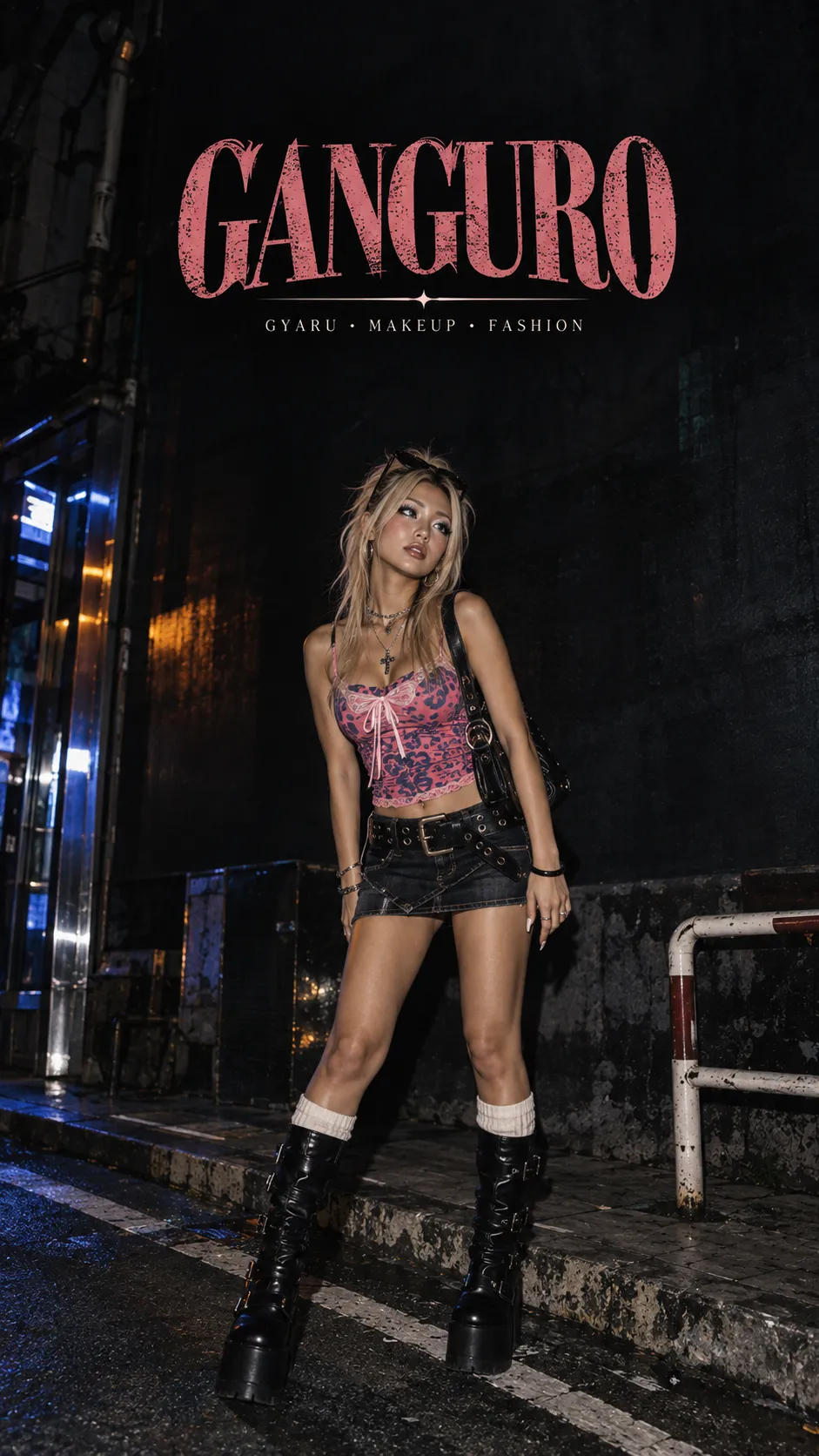
Guide collection: Aesthetic Dictionary: A Fashion Style Directory
What Is Ganguro?
Ganguro developed within Japanese Gyaru street fashion and became especially recognizable in the late 1990s. A retrospective on egg magazine describes repeated coverage of deeply tanned girls with golden hair and conspicuous makeup in 1998–1999, when Ganguro became a striking Shibuya image.
GO TOKYO describes SHIBUYA109 as a center of Gyaru subculture and recalls dyed blonde hair, tanned skin, mini skirts and unusual makeup among its associated visual signals. Understand Ganguro within Shibuya's Gyaru environment rather than as an entirely detached aesthetic.
Ganguro's defining relationship is contrast. Darkened skin contrasts with light hair and bright or white accents around eyes and lips, while substantial shoes and silhouettes balance the look. Opposing visual elements work together rather than one item establishing the style.
Where Does Ganguro Fit within Gyaru?
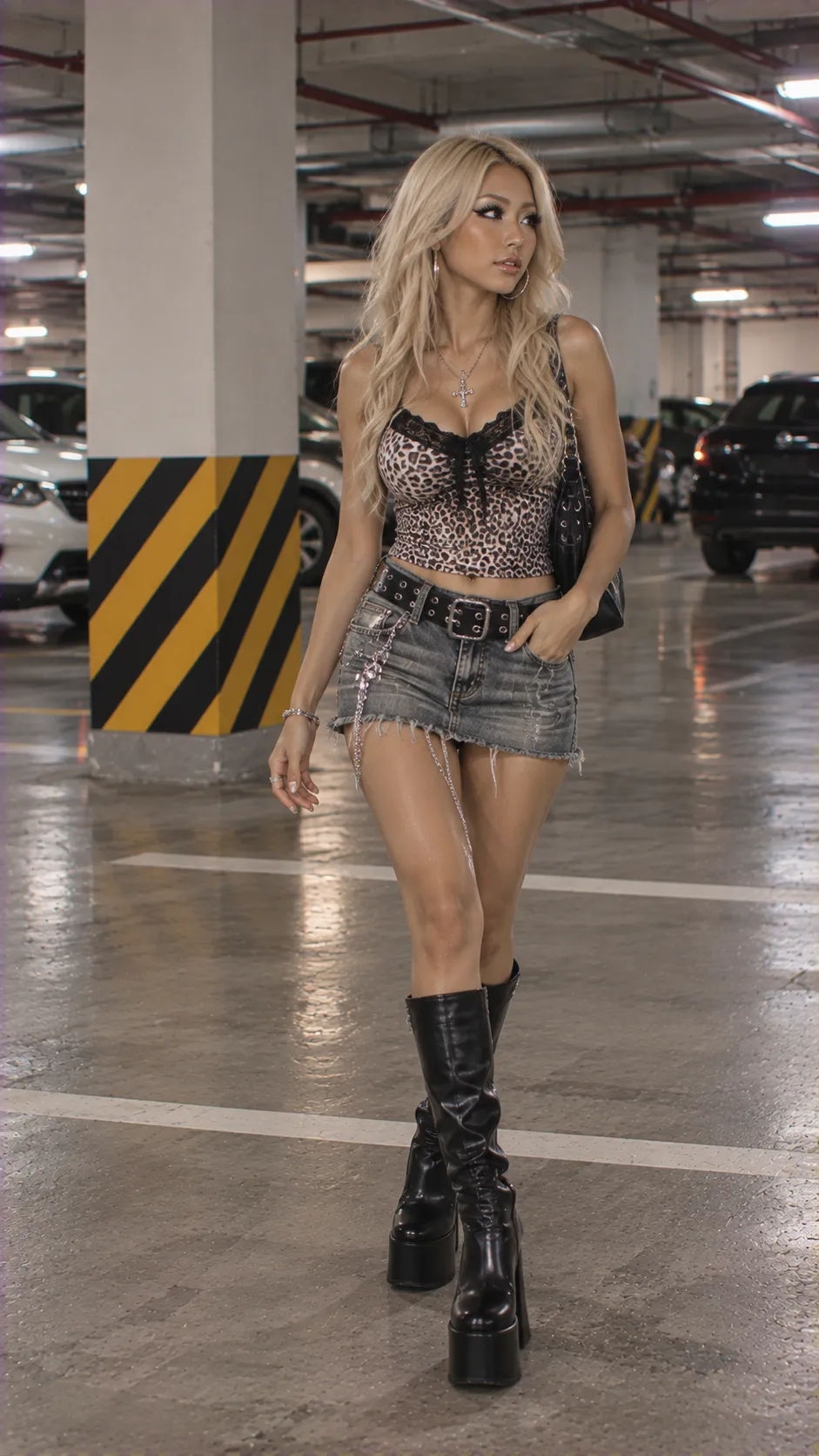
Gyaru is considerably broader than Ganguro. Apocalypse Closet's Gyaru overview distinguishes Kogal, Ganguro, Hime Gyaru, Amekaji and Onee. Ganguro occupies a particularly intense part of that spectrum, with immediately visible beauty codes.
Ganguro is one Gyaru branch, rather than all Gyaru or simply Japanese Y2K. Compare Kogal, Amekaji and Hime Gyaru for differences in hair, makeup and clothing.
Five Recognizable Ganguro Signals
Deep tanning historically provided contrast for bright eye makeup and light hair.
Blonde, very light brown or heavily bleached hair, often with pronounced volume and styling.
Dark liner, lashes, bright areas around the eyes and sometimes lenses establish contrast.
Mini skirts, loose socks or exposed-leg contrast direct attention downward.
Platform boots or chunky shoes balance visually strong hair and makeup.
Read a Ganguro look vertically: hair → eyes → complexion contrast → mini or bottoms → platforms. Reducing one element may call for a change in proportion or color elsewhere. This allows a lighter Ganguro-inspired interpretation without copying the entire historical appearance.
How Does Ganguro Makeup Use Contrast?
Tanning was prominent historically. Contemporary interpretations can use suitable bronzing makeup or complexion products rather than seeking a tan through UV exposure.
Black liner and lashes create a dark frame; highlights or white shadow introduce bright areas. Light–dark contrast makes the eye design more graphic.
Lighter-looking brows often avoid competing with bright hair and eye makeup, preserving the face's visual hierarchy.
Light or pale nude lips can continue the contrast without requiring fully white lips in a contemporary inspired look.
Ganguro makeup can be misread as heavy bronzer plus white eyeshadow. Preserve structure instead: defined eye framing, placed highlights, balanced brows and hair color connected to the outfit. Makeup works with clothing rather than functioning as isolated face paint.
Ganguro Fashion: Balance Makeup with Clothing
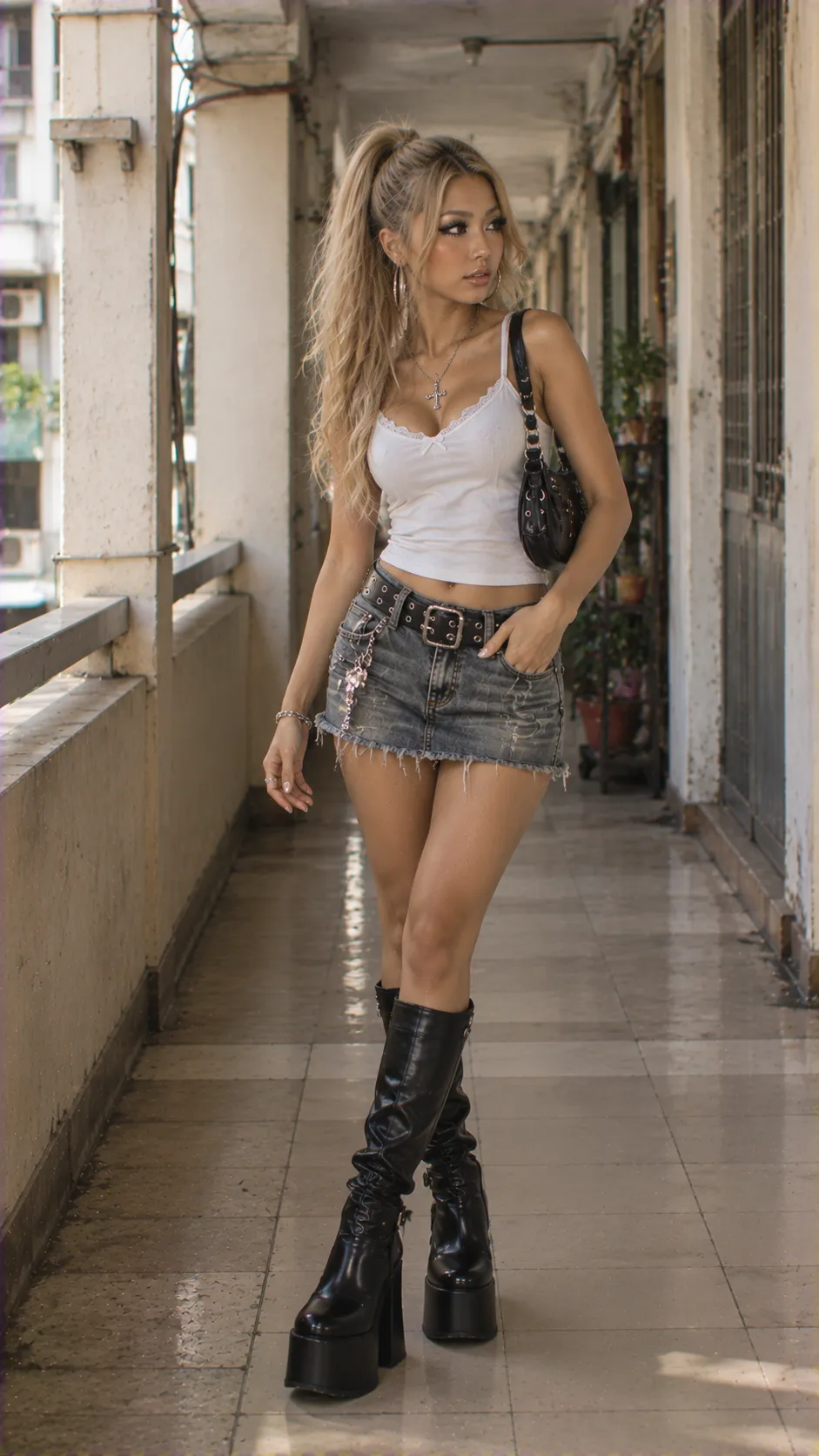
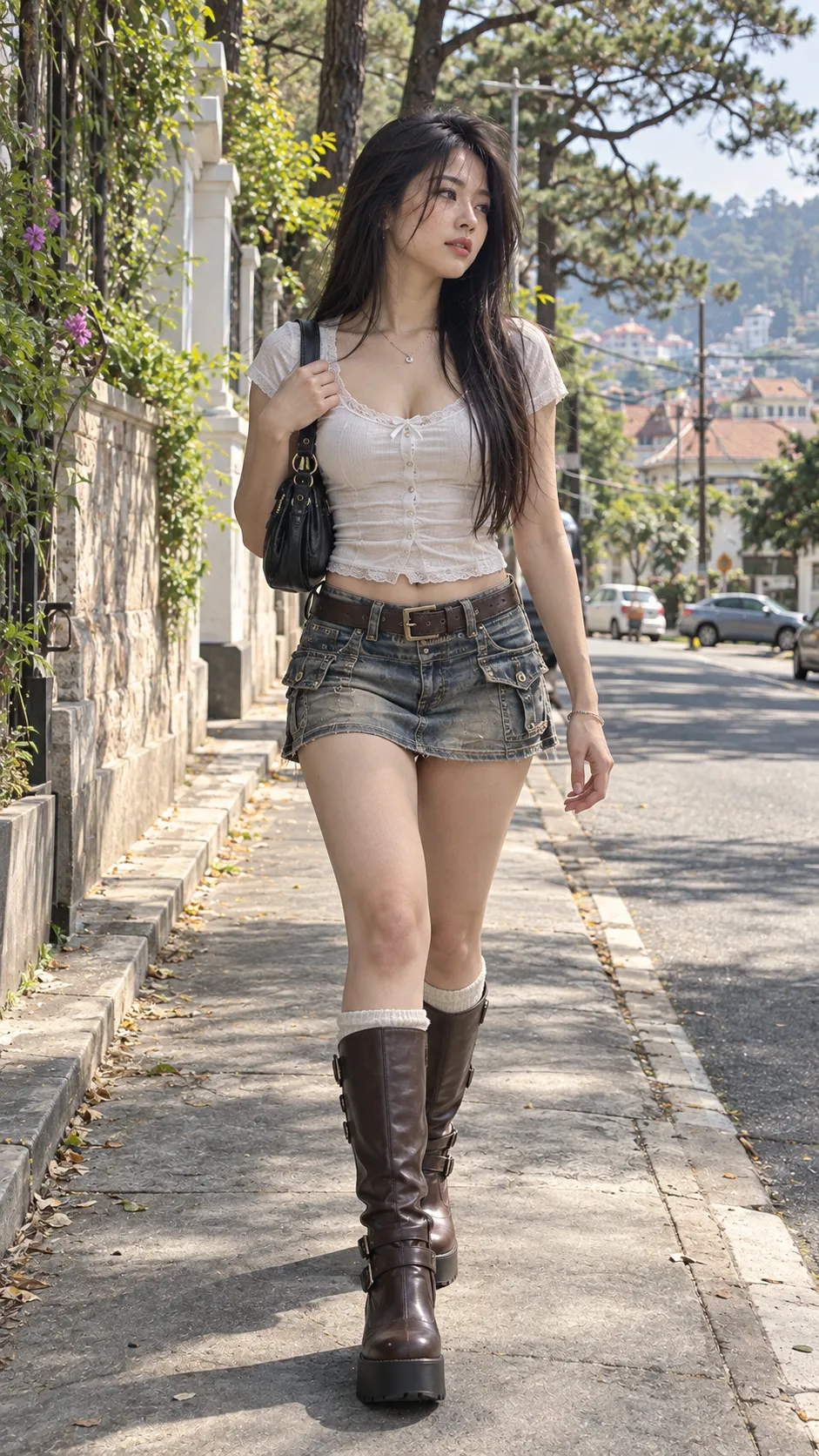
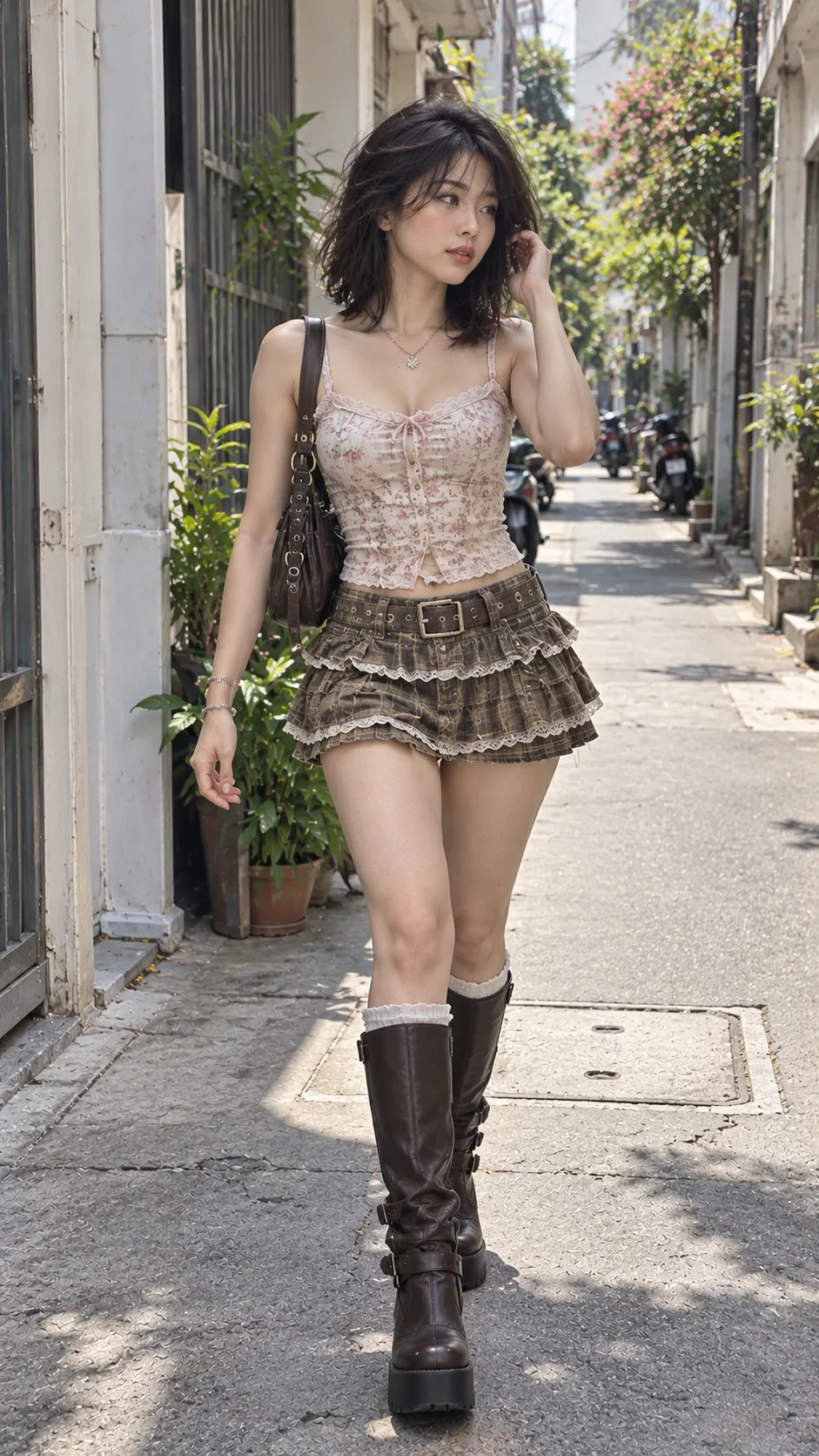
Strong hair and makeup need an equally considered silhouette. Minis, fitted tops, cropped jackets, substantial platforms and a visually present bag distribute weight from head to foot.
Magazine egg retrospectives mention golden hair, strong tanning, white eye makeup, loose socks with school-uniform styling and chunky boots. These are historical signals rather than compulsory ingredients for every Ganguro look; their relationship within a specific period matters.
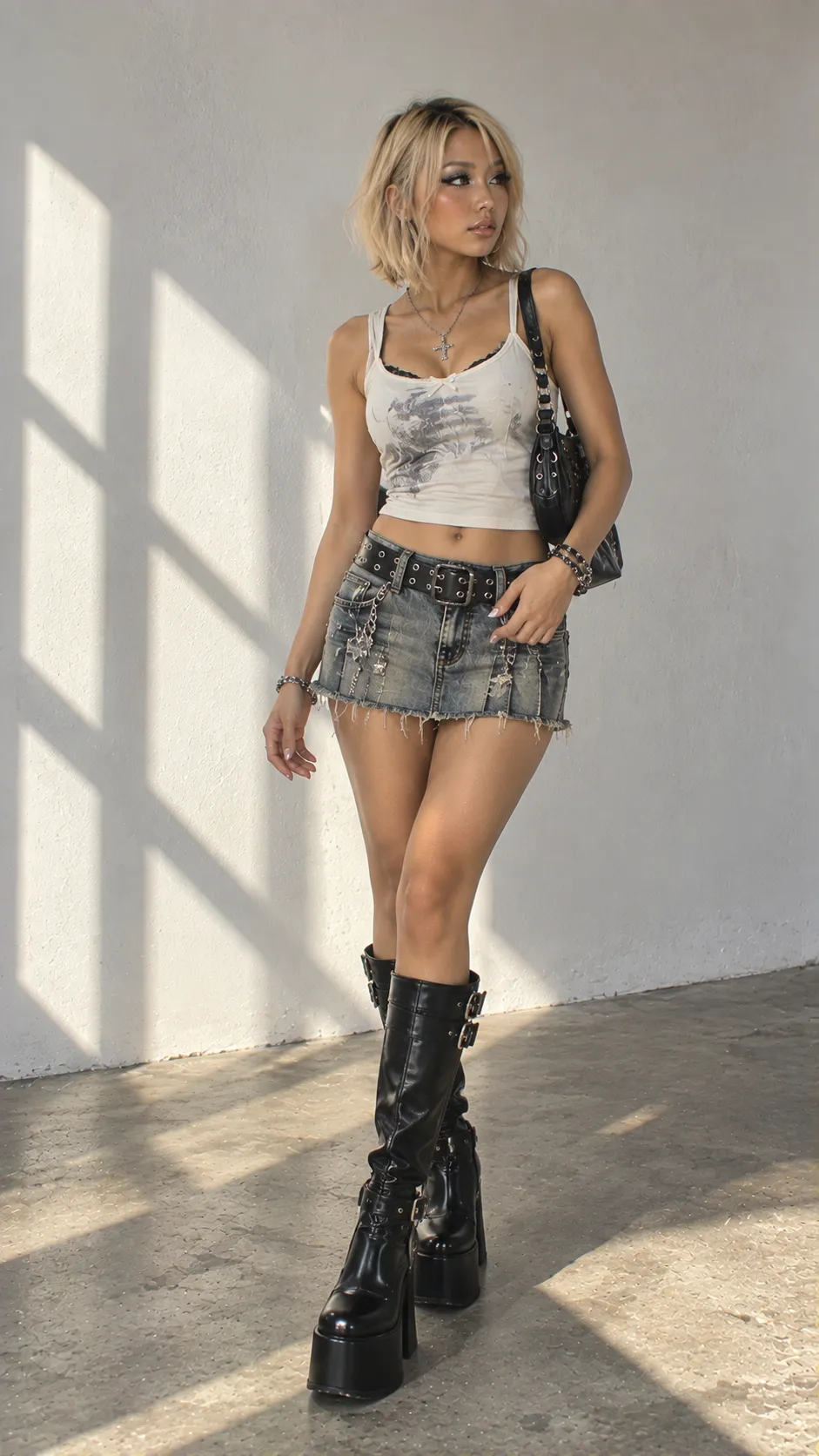
Six Accessible Ganguro-Inspired Outfit Formulas
White connects with eye highlights, denim stays wearable and platforms balance hair and makeup. Add hoops and a shoulder bag.
Intensity: an accessible starting point.The camisole supplies the main color against a black base. Loose socks add ankle volume that connects to substantial footwear.
Intensity: a light school and street reference.The print already stands out, so restrain accessories. Keep hair and makeup as the main contrast rather than adding competing patterns.
Intensity: late-1990s maximalism.The cropped length defines the waist, pleats add movement and tall boots balance voluminous hair.
Intensity: suited to photographs.A contemporary interpretation with a simple upper half, color in the bottoms and a metallic finish. White eye accents can be softer.
Intensity: a wearable city look.Washed denim adds retro texture, the dress creates a continuous line and platform sneakers retain weight with less height than tall boots.
Intensity: casual Ganguro-inspired styling.These are inspired combinations rather than a Ganguro uniform. Historical recreation requires period-specific street snaps, magazines and context. For current wear, prioritize proportion, comfort and repeated color.
Are Ganguro, Yamanba and Manba the Same?
Do not treat the terms as interchangeable. Ganguro became prominent in the late 1990s; Yamanba is commonly described as a more extreme development, with deeper tanning, stronger white makeup and more intense accessories and color. Later Manba developed its own variations of these features.
Yamanba and Manba are related to Ganguro but have distinct makeup and visual conventions. Compare contrast, hairstyling and characteristic details rather than grouping everything as one style.
Extremity does not determine authenticity. Ganguro need not become Manba to count. Period-appropriate hair, complexion contrast, eye makeup, a mini silhouette and platforms can already communicate a clear reference.
Contemporary Ganguro Inspiration without a Costume Effect
Reduce intensity by keeping light hair with less volume, replacing stark white eyeshadow with cream or champagne highlights, and choosing lower, easier-to-walk-in platforms. These adjustments move a street-snap recreation toward an everyday outfit.
For temporary hair contrast, consider clip-in streaks, a wig or bright accessories. If you prefer your natural complexion, shift contrast to eyes and clothing. Describe that interpretation as Ganguro-inspired rather than a complete historical recreation.
Think in a beauty–silhouette–footwear triangle. Strong beauty styling can balance simpler clothing; strong clothing and platforms can accommodate quieter makeup. Maximizing all three approaches editorial styling or historical recreation rather than ordinary daily wear.
Six Mistakes When Understanding or Styling Ganguro
1. Calling all Gyaru Ganguro
Ganguro is only one part of Gyaru. Use the Gyaru overview for the broader picture.
2. Focusing only on skin color
Hair, eyes, complexion, silhouette and footwear form a contrast system. Tanning alone cannot establish the style.
3. Using UV to recreate an aesthetic
This is unnecessary. Tanning beds and deliberate cosmetic UV exposure carry health risks; use suitable makeup for a temporary visual effect.
4. Applying white makeup without structure
Place bright accents to define eye shapes. Broad, uncontrolled application can resemble costume makeup.
5. Treating Ganguro and Harajuku as synonyms
Harajuku style is a broad place-linked street-fashion ecosystem; Ganguro relates more specifically to Gyaru and Shibuya.
6. Copying images without context
Ganguro has a particular youth-fashion history. Identify whether you are recreating a period, reinterpreting it or borrowing one visual reference.
References
These sources provide Ganguro and Gyaru history and UV-safety context. The styling framework is Apocalypse Closet's editorial interpretation.
- Fa-So-La AKIHABARA — egg magazine and Gyaru history: a retrospective on strong tanning, golden hair, white eye makeup and chunky boots in 1998–1999.
- GO TOKYO — SHIBUYA109: SHIBUYA109's place in Gyaru subculture and Shibuya youth fashion.
- Hiroshima University / National Diet Library — 日本のストリートファッションのギャル文化: academic material on Gyaru culture within Japanese street fashion.
- World Health Organization — Ultraviolet radiation: advice to avoid artificial tanning devices and excessive UV exposure.
Frequently Asked Questions
What is Ganguro?
Ganguro is a Japanese Gyaru substyle or fashion direction, especially prominent in the late 1990s through deep tanning, light hair, contrasting makeup and platform footwear.
Is Ganguro part of Gyaru?
Yes. Ganguro belongs within Gyaru but does not represent the entire subculture, which includes numerous branches and levels of styling intensity.
Does Ganguro makeup require a very dark base?
Not for an inspired interpretation. Keep your natural complexion and place contrast in eyes, hair and clothing; describe the result as Ganguro-inspired.
How does Ganguro differ from Harajuku style?
Ganguro is a specific Gyaru branch or period strongly associated with Shibuya. Harajuku is a broader street-fashion ecosystem containing multiple subcultures.