

What Is Amekaji? American Casual in Gyaru Fashion
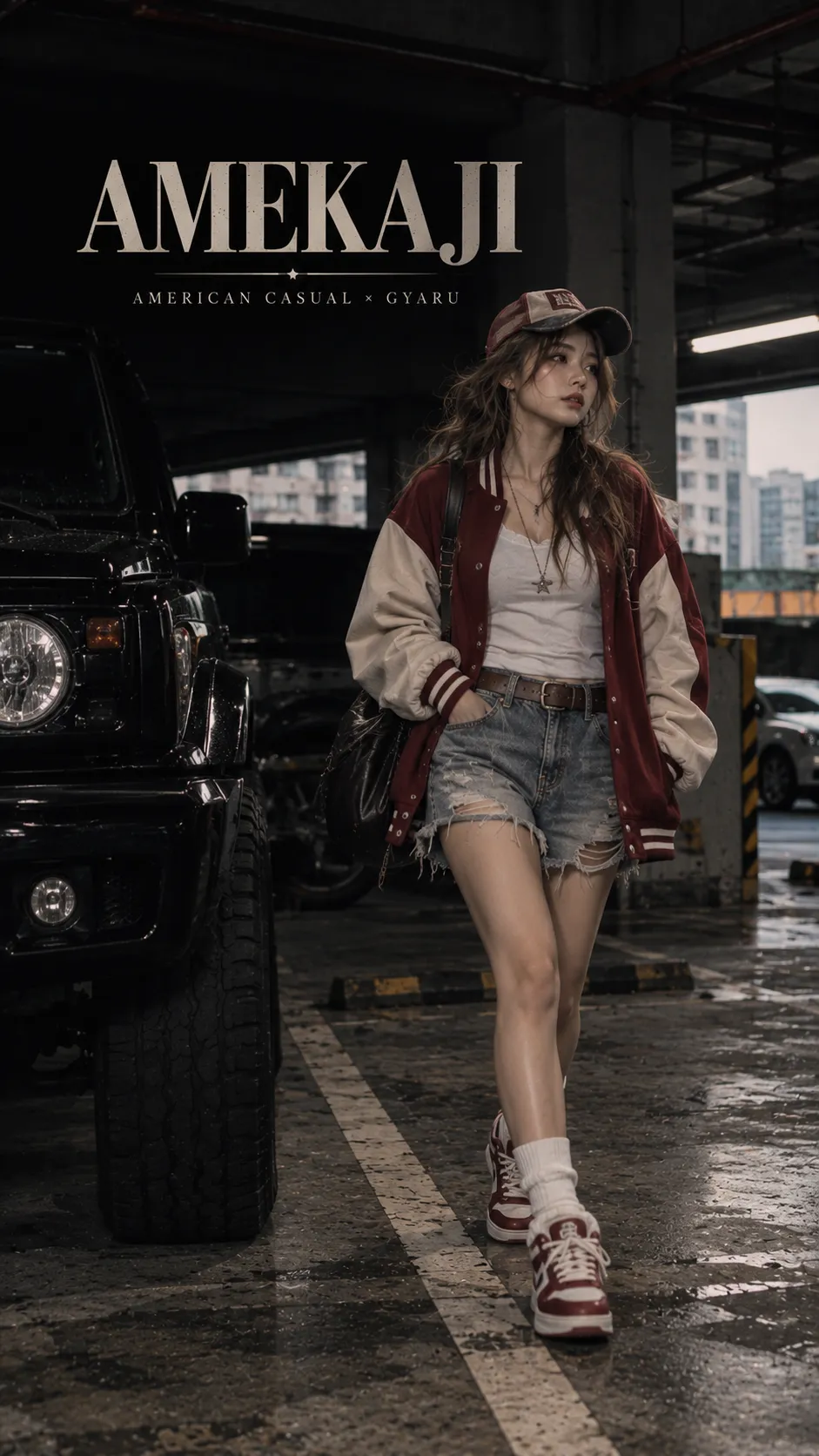
Amekaji brings relaxed, sporty American casual clothing into Gyaru. Easier to wear than many glamorous branches, it still needs a considered beauty finish to distinguish it from ordinary casual dressing.
Guide collection: Aesthetic Dictionary: A Fashion Style Directory
What Is Amekaji?
Amekaji shortens “American casual.” Within Gyaru, it combines everyday Americana references—denim, plaid, striped tees, varsity pieces, hoodies, caps, sneakers and casual bags—with Gyaru hair, makeup, nails and proportions.
Outside Gyaru, the term also broadly describes Japanese interpretations of American casual, workwear, military and collegiate clothing. This guide specifically addresses Amekaji Gyaru rather than a general menswear history, explaining how denim and a tee can become Gyaru through beauty styling and finishing details.
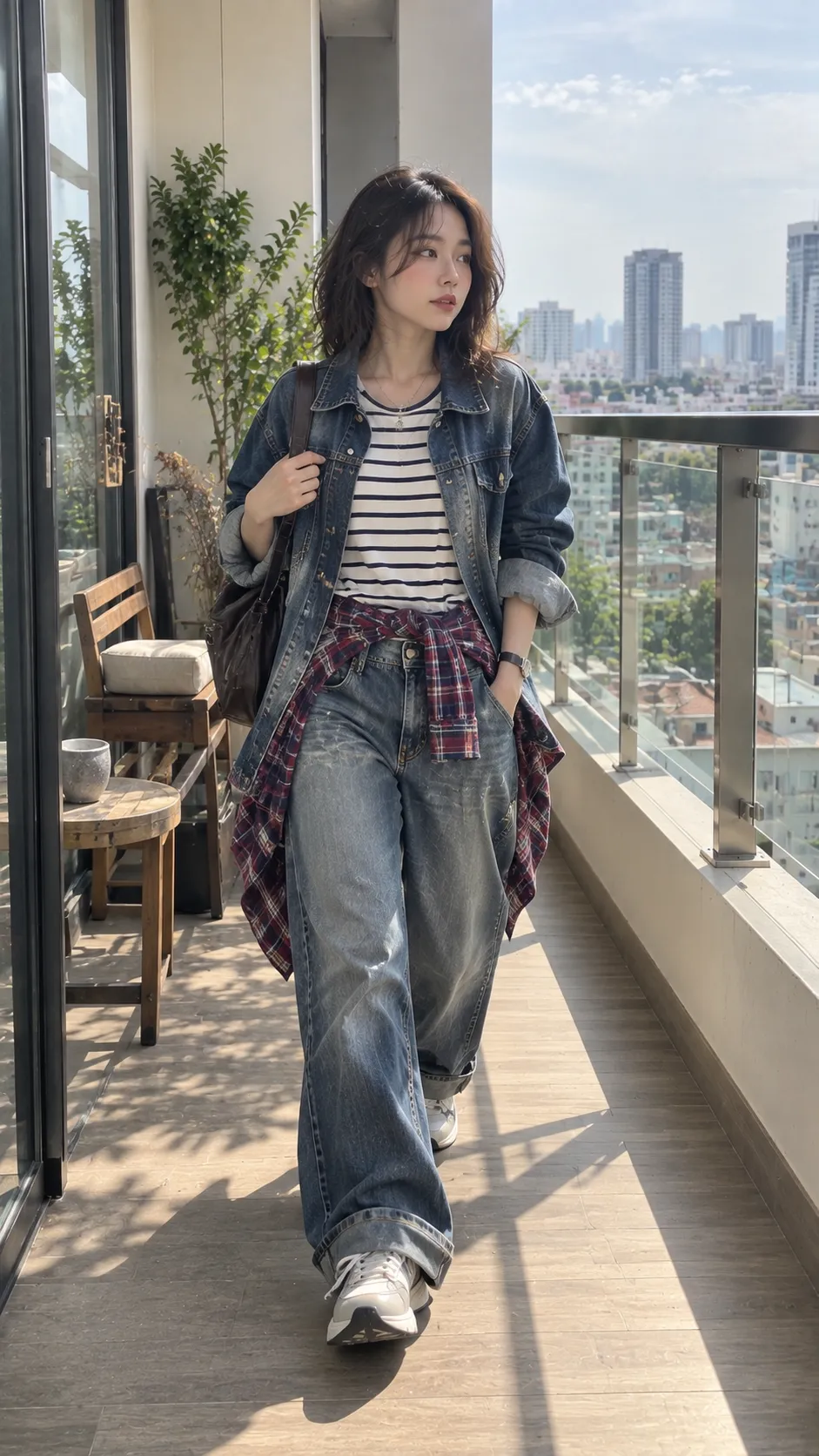
A study indexed by the Korean Citation Index describes the Amekaji look as American workwear reinterpreted within Japanese fashion. Gyaru communities give that casual base a brighter, more finished expression through loose tops, denim, plaid, caps, sneakers, graphics, light or curled hair, lashes and considered accessories.
Where Does Amekaji Fit within Gyaru?
Gyaru is the wider umbrella. Ganguro emphasizes contrast, Kogal uses uniform references and Hime Gyaru takes a princess direction. Amekaji gives casual Americana a gal interpretation, providing an accessible entry for people who prefer less elaborate dressing.
Tees, hoodies, denim, shorts, varsity jackets, plaid shirts and sneakers.
Voluminous hair, lashes, nails, bags, jewelry and coordinated color.
Collegiate, sporty, West Coast, workwear or casual street influences.
Loose tops with short bottoms, fitted tops with wide denim, or layered shirts with minis.
Without Gyaru finishing details, the outfit can become ordinary casual or Japanese streetwear. That distinction is central to this guide.
Four Recognizable Amekaji Codes
Gyaru Online describes a similar relationship: denim, stripes, plaid, sneakers, hoodies and varsity details form the base, while curls, lashes, nails, bags and proportions establish the gal direction.
Amekaji Silhouettes: Relaxed with Clear Proportions
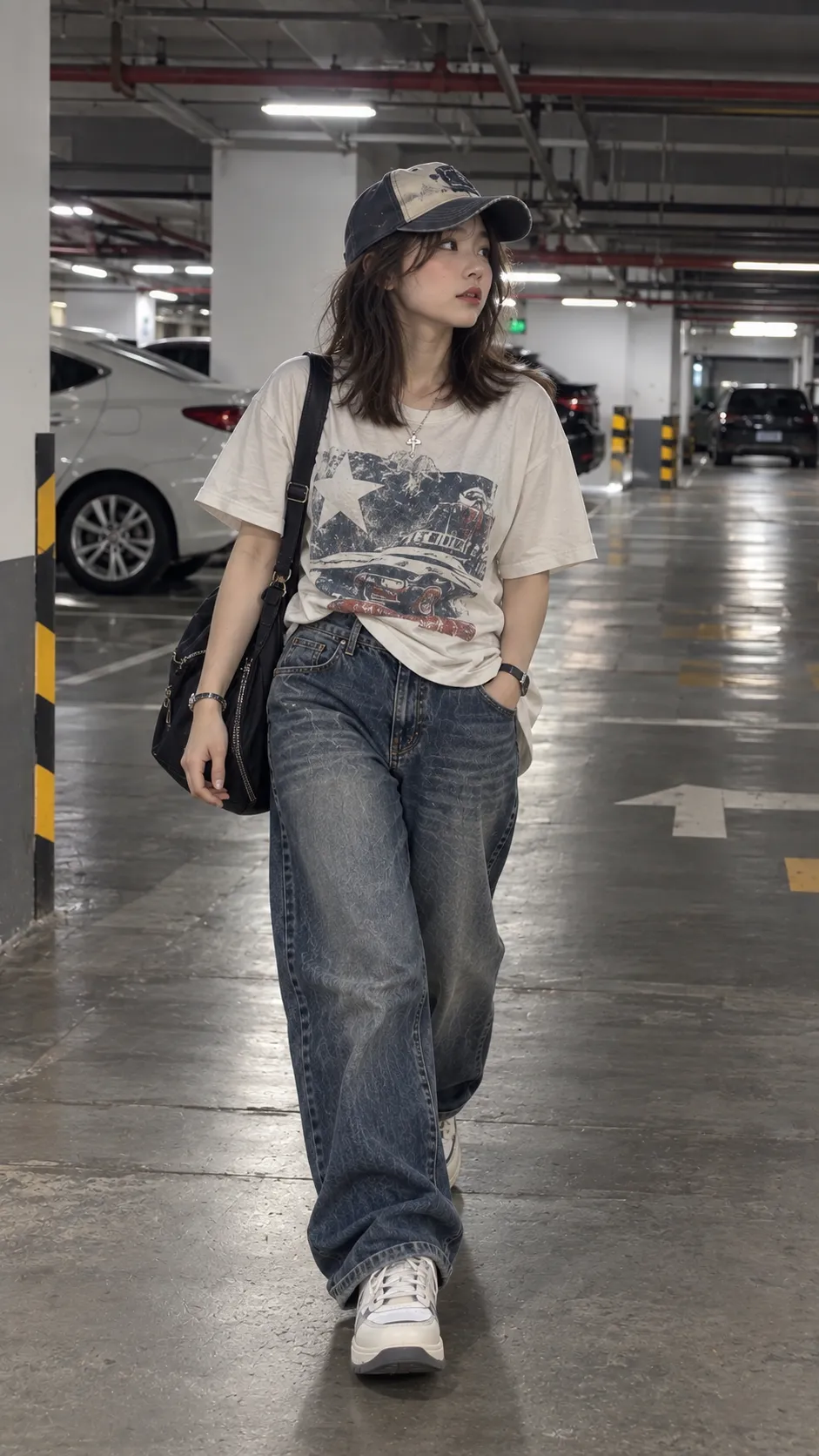
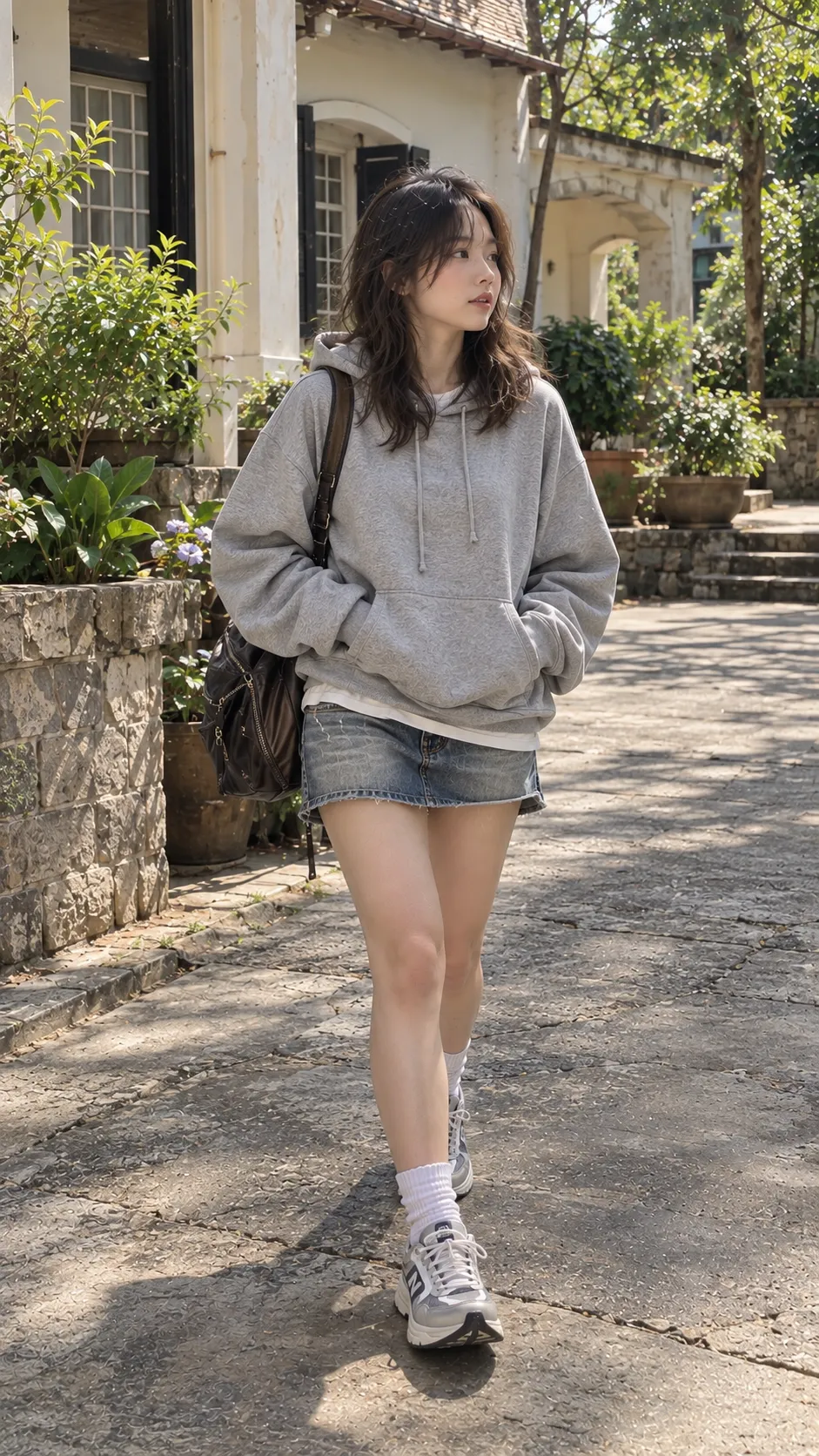
Amekaji accommodates looser clothes than many Gyaru branches, but avoid maximum volume everywhere. Keep one anchor: a loose tee with a denim mini, a hoodie with shorts, a fitted tank with baggy jeans, or an oversized varsity jacket with a fitted inner layer.
Balance a roomy top with shorter or narrower bottoms and visible space around the legs.
Pair baggy denim with a cropped or fitted top to retain torso definition.
Different shirt or jacket lengths reveal the outfit's structure.
Six Amekaji Outfit Formulas
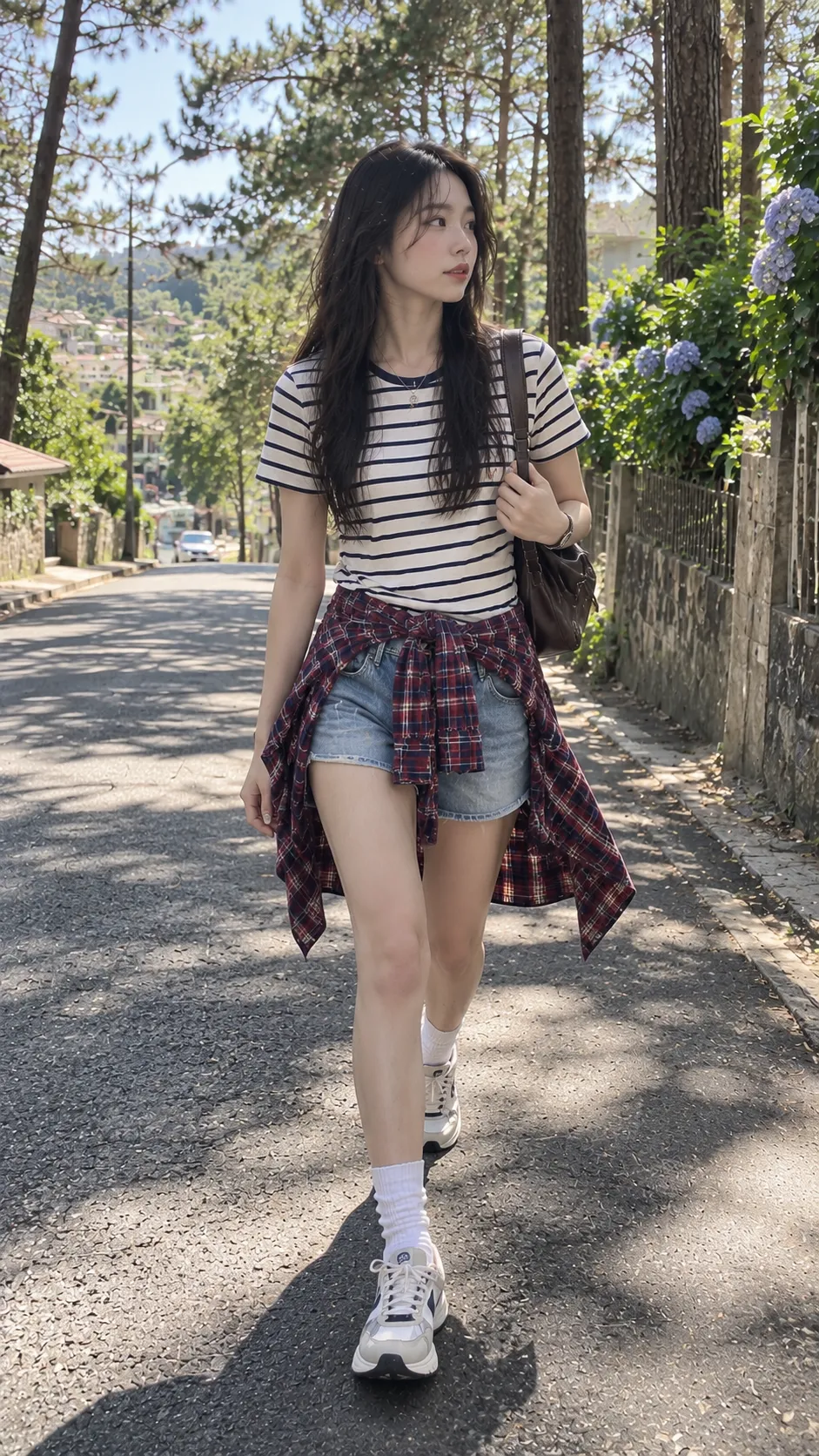
A starter combination: stripes lead, plaid supports as a layer and denim stays neutral.
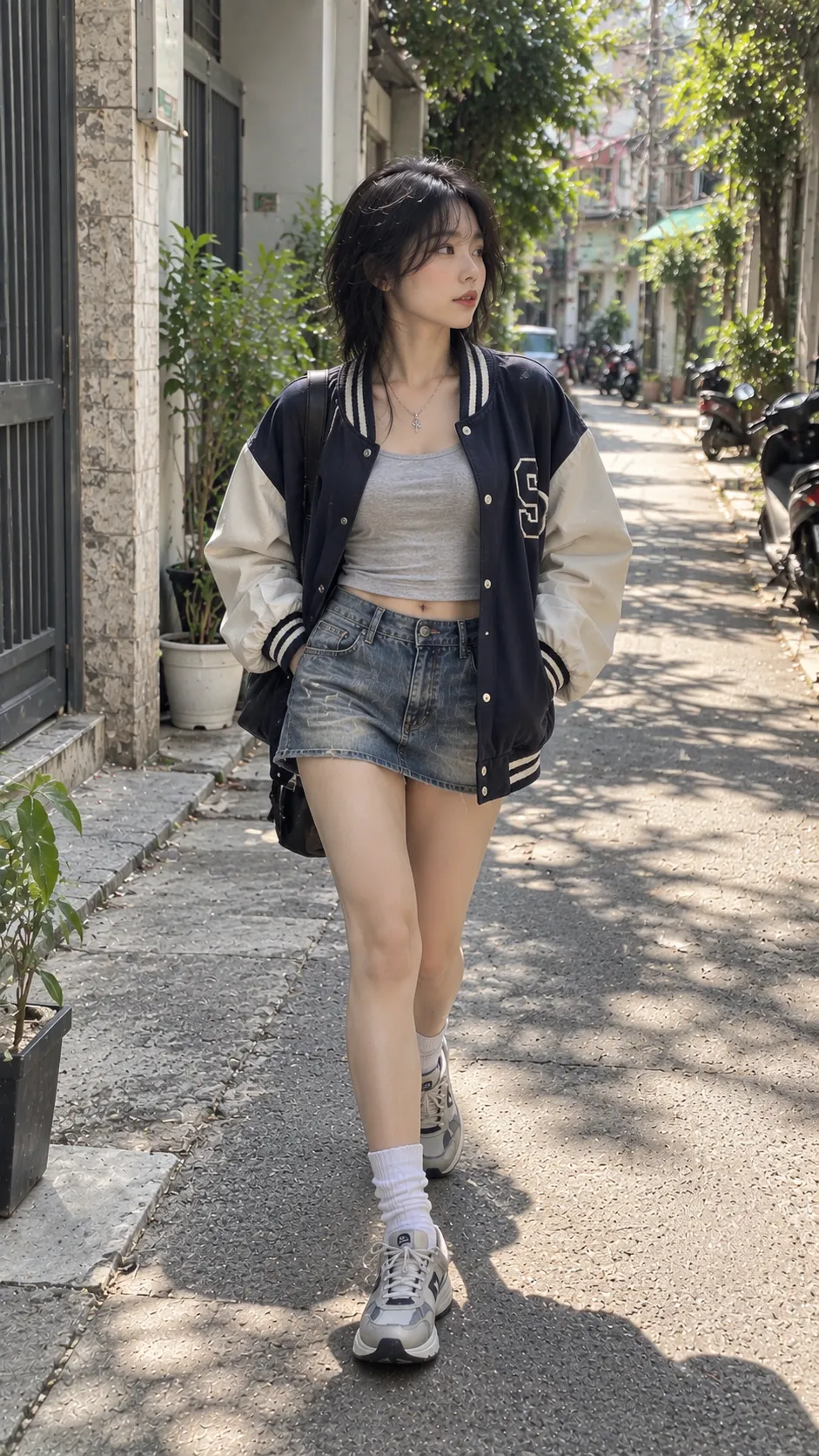
Best for: cafés, classes and weekends.The jacket supplies collegiate references while the tank defines the waist.
Best for: sporty Gyaru.The graphic and cap suggest casual Americana; platforms provide visual weight.
Best for: a street-oriented Amekaji direction.The mini balances hoodie volume; socks connect shoes to the leg line.
Best for: accessible casual dressing.An open overshirt adds a layer without hiding the waist; the bag and earrings establish a gal finish.
Best for: city outings.White brightens the base; sneakers repeat a stripe color.
Best for: spring and summer.Every piece need not carry an American motif. One varsity jacket or plaid shirt is often enough; let other items support proportion and beauty styling.
Hair, Makeup and Nails: Giving Casual Clothing a Gyaru Identity
Amekaji is generally less elaborate than Hime or Ganguro, but beauty styling still matters. Soft curls, a blowout or a voluminous ponytail can frame defined eyes with lashes, liner and optional lenses. Glossy or nude-pink lips complement the casual base.
Nails need not have elaborate 3D decorations. Short or medium lengths, color blocking, stars, stripes or simple gems can work. Hoops, a small layered necklace or bracelets add polish without full glamour.
How Does Amekaji Differ from Casual, Streetwear and Ametora?
| System | Foundation | Distinction |
|---|---|---|
| Amekaji Gyaru | American casual + Gyaru | Denim, plaid and sport references with gal hair, makeup and nails. |
| Casual | Everyday clothing | No subculture-specific finish is required. |
| Streetwear | Street, sneaker and graphic culture | Does not inherently use a Gyaru beauty system. |
| Ametora | Japanese interpretations of American Traditional and Ivy | Oxford shirts, blazers, khakis and loafers; a more tailored presentation. |
This also distinguishes the guide from Streetwear. Graphic tees and sneakers may overlap, but Amekaji Gyaru needs gal finishing and casual Americana references. Ametora and Ivy place greater emphasis on preppy tailoring.
Amekaji Colors and Textures: Keeping the Gal Finish
Amekaji often uses brighter, approachable colors compared with darker or glamorous Gyaru branches, but a rainbow is unnecessary. Start with denim blue, white, gray, navy or khaki, then add one or two accents such as red, yellow, pink or green. Repeat stripe or varsity colors in sneakers, a cap or bag.
Denim supplies casual Americana, cotton jersey feels sporty, plaid flannel offers a soft layer and nylon outerwear adds street references. When combining three textures, let one dominate. Denim shorts, a cotton tee and plaid shirt are easier to read than simultaneous double denim, plaid, a shiny bag and chunky jewelry.
Amekaji need not look glossy, but it should look considered. Washed, faded or oversized clothes contrast with carefully styled hair, lashes, nails and a bag. This balance between relaxed garments and a polished wearer gives the branch character.
Wearing Amekaji in Vietnam: Adapt Americana to the Heat
Reference outfits often use thick hoodies, flannel and denim jackets that can be impractical in Vietnam's heat and humidity. Preserve the visual references while changing materials: thin cotton shirts instead of heavy flannel, denim shorts instead of full jeans, varsity tees instead of jackets, or a lightweight plaid shirt tied at the waist.
Keep shoes practical. Platform sneakers may suit a full day better than heavy boots while retaining visual weight; colored crew socks or high-tops preserve sporty references. A cap, tote or crossbody can have a practical role outdoors. Choose sunglasses for suitable protection as well as appearance.
For cafés or evening outings, add a cropped denim jacket over a fitted tank and mini. For daytime, a striped tee, shorts and sneakers can suffice, with beauty styling and accessories completing the direction. Amekaji adapts well to lower intensity.
Does Amekaji Require One Body Type or Kind of Femininity?
No. Casual separates and adjustable proportions suit different preferences. A loose tee and comfortable-length shorts can provide coverage; a cropped top with high-rise denim emphasizes the waist; a short hem with platforms creates a longer vertical line; softer varsity shoulders change the upper outline.
Avoid relying on excessive size everywhere. With a hip-covering top, keep the lower silhouette clearer; with wide jeans, shorten or lightly tuck the top. Rolled sleeves, an open jacket, a waist-tied shirt or a different bag position can adjust proportions without another purchase.
Amekaji can feel sporty, cute or somewhat tomboy while retaining Gyaru through beauty styling. Strong nails and lashes are optional; softer makeup can pair with more deliberate hair, earrings and bags. No fixed level of girlishness is required.
An Amekaji Shopping Checklist
- Denim: check rise, leg width and wash against at least three tops you already own.
- Plaid shirt: choose colors that repeat in existing sneakers, a cap or bag.
- Varsity jacket / hoodie: check shoulders and body length; excessive length can conceal the mini or other bottoms.
- Sneakers: seek appropriate visual weight and comfortable prolonged wear; platforms are optional.
- Bag: a compact crossbody, shoulder bag or sporty tote can work when its proportions suit the outfit.
- Accessories: shop in coordinated groups. A compatible cap, earrings and bracelet can connect an outfit better than five unrelated items.
Imagine three combinations before buying. If a piece works only in one Pinterest outfit, it may be a prop rather than a useful wardrobe addition. Amekaji should make clothes easier to combine instead of creating fixed sets.
A Six-Piece Amekaji Starter Wardrobe
- One versatile striped or graphic tee.
- One denim jacket.
- Denim shorts, a mini or wide jeans.
- One plaid shirt.
- One substantial pair of sneakers.
- One bag or cap that reinforces casual Americana.
Start with pieces usable outside Gyaru, then add hair, makeup, nails and accessories. Reusable casual clothing makes this a more economical approach.
Five Amekaji Styling Mistakes
1. Calling jeans and a tee Amekaji Gyaru automatically
Without a gal finish, the outfit remains ordinary casual.
2. Layering too many patterns
Stripes, plaid and large graphics can compete. Choose one focal pattern.
3. Wearing volume everywhere
Keep one area fitted or shorter to establish proportions.
4. Forgetting footwear
Sneakers or casual boots anchor the look; overly slight shoes can weaken its visual balance.
5. Mixing Hime or Ganguro references without intention
Ganguro and Hime Gyaru have their own beauty and silhouette conventions. A strong borrowed detail may disrupt relaxed Americana if it has no supporting role.
References
Frequently Asked Questions
What is Amekaji?
Amekaji means American casual. Within Gyaru, it combines casual Americana with gal hair, makeup, nails and styling.
Is Amekaji part of Gyaru?
In this guide, yes: Amekaji Gyaru is a Gyaru substyle. The term also has a broader meaning within Japanese menswear and casual fashion.
What do you wear for Amekaji style?
Common pieces include denim, stripes, plaid, varsity clothing, hoodies, graphic tees, shorts, sneakers, caps and casual bags.
How does Amekaji differ from Ganguro?
Amekaji emphasizes relaxed casual Americana; Ganguro emphasizes deep tanning, light hair and intense makeup contrast.