

Buying Women’s Bomber Jackets: Fit and Listing Checks
Assess a women’s bomber by body length, volume and shoulder placement. The bomber label alone does not establish the fit or shape you want.
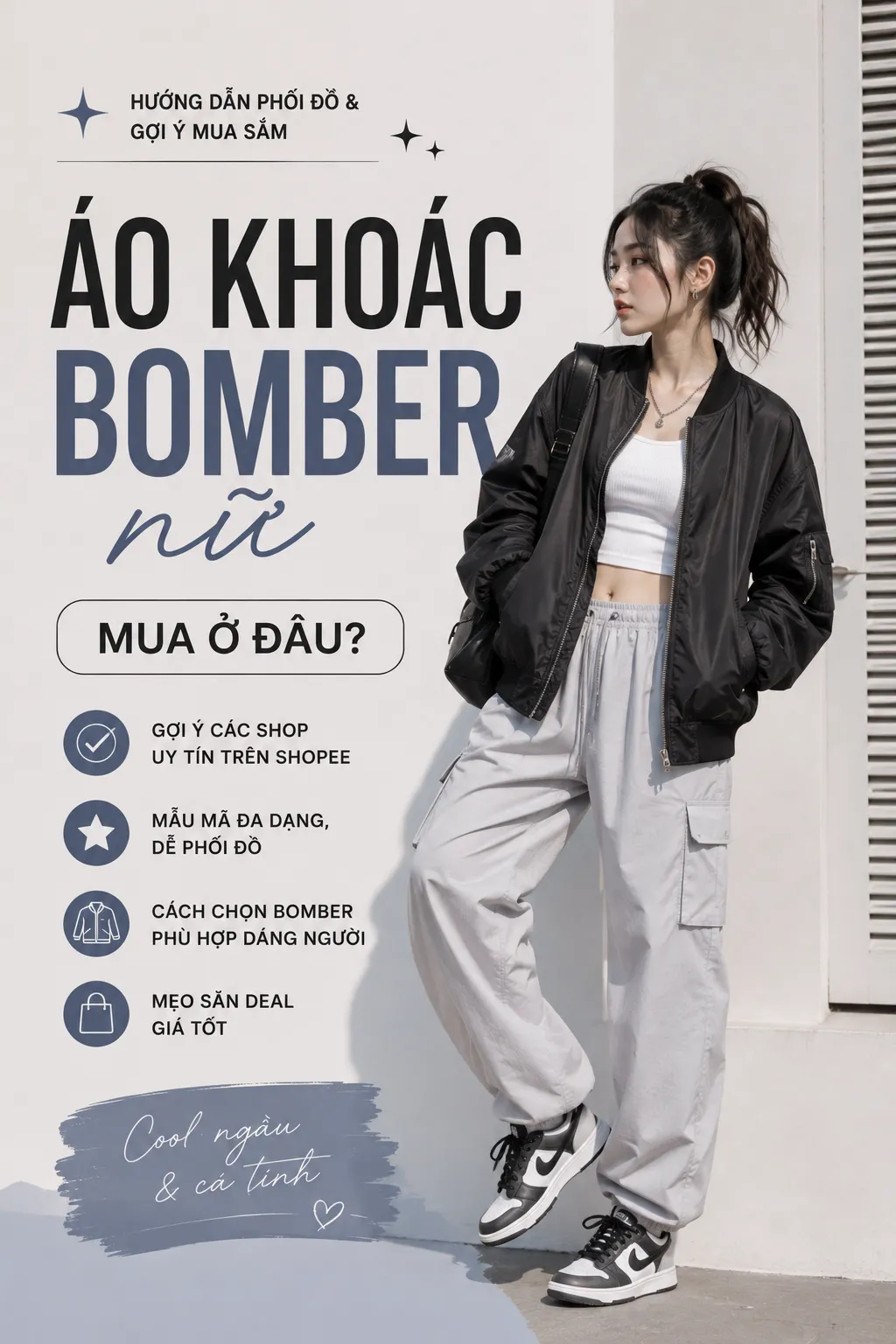
Guide collection: Women’s Tops Guides: Cut, Layers and Styling
Compare intended use → shoulder and body volume → ribbing → shell and lining → listing evidence → current returns. Choose intentional volume and comfortable movement rather than relying on a puffed-up model photograph.
Identify the jacket type first
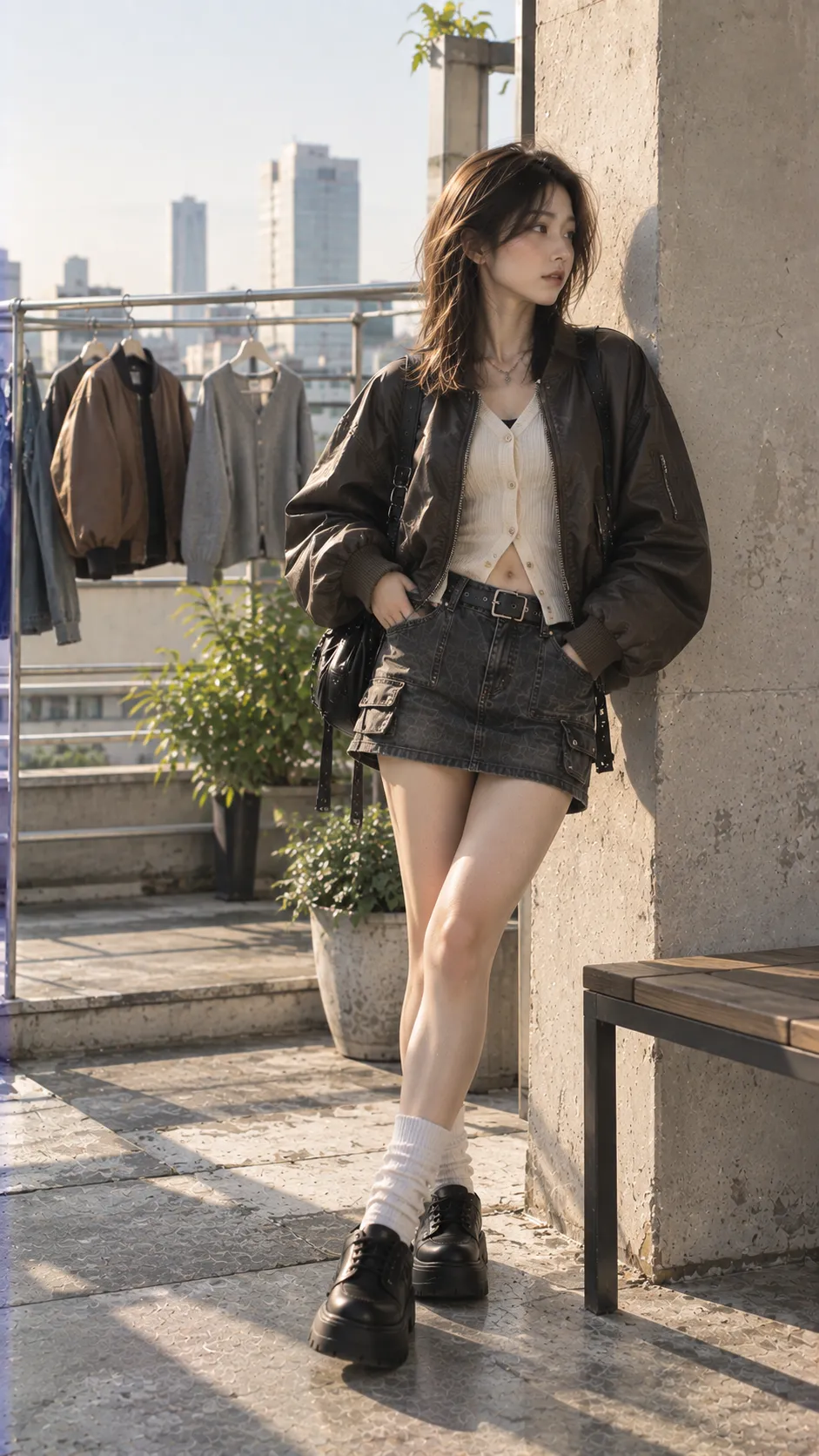
Search results can mix rib-collar bombers, varsity jackets, hooded windbreakers, boxy jackets and zipped cardigans. Their shoulders, volume, insulation and sizing differ. Identify the construction first so that an accurately described delivery also meets your intended silhouette.
A familiar bomber design has a central zip, relatively short body, roomy sleeves and ribbed cuffs and hem, although designs vary. Cropped and boxy versions offer useful Baddie or alternative proportions. Varsity jackets often use collegiate details and different sleeves or fastenings; windbreakers prioritize wind protection only where their actual construction supports it.
Choose a shopping channel
| Channel | When to compare it | What to inspect |
|---|---|---|
| Marketplace | Comparing several cuts, colors and prices | Actual images, finished measurements, weight, lining and current exchange conditions |
| Streetwear shop | A particular boxy, cropped or unisex cut | Construction and model-specific measurements beyond lookbook styling |
| Local label | A particular pattern, hardware or offered aftercare | Finished dimensions, production timing and actual fastening-service terms |
| Vintage or secondhand | An older surface, cut or worn character | Ribbing, zip, lining, musty odor and visible deterioration |
Marketplaces can support comparisons, but product names are broad. A local label or streetwear shop may provide more pattern detail; verify the specific chart, especially for a unisex cut. With secondhand pieces, inspect ribbing and lining alongside the upper.
Read four fit points
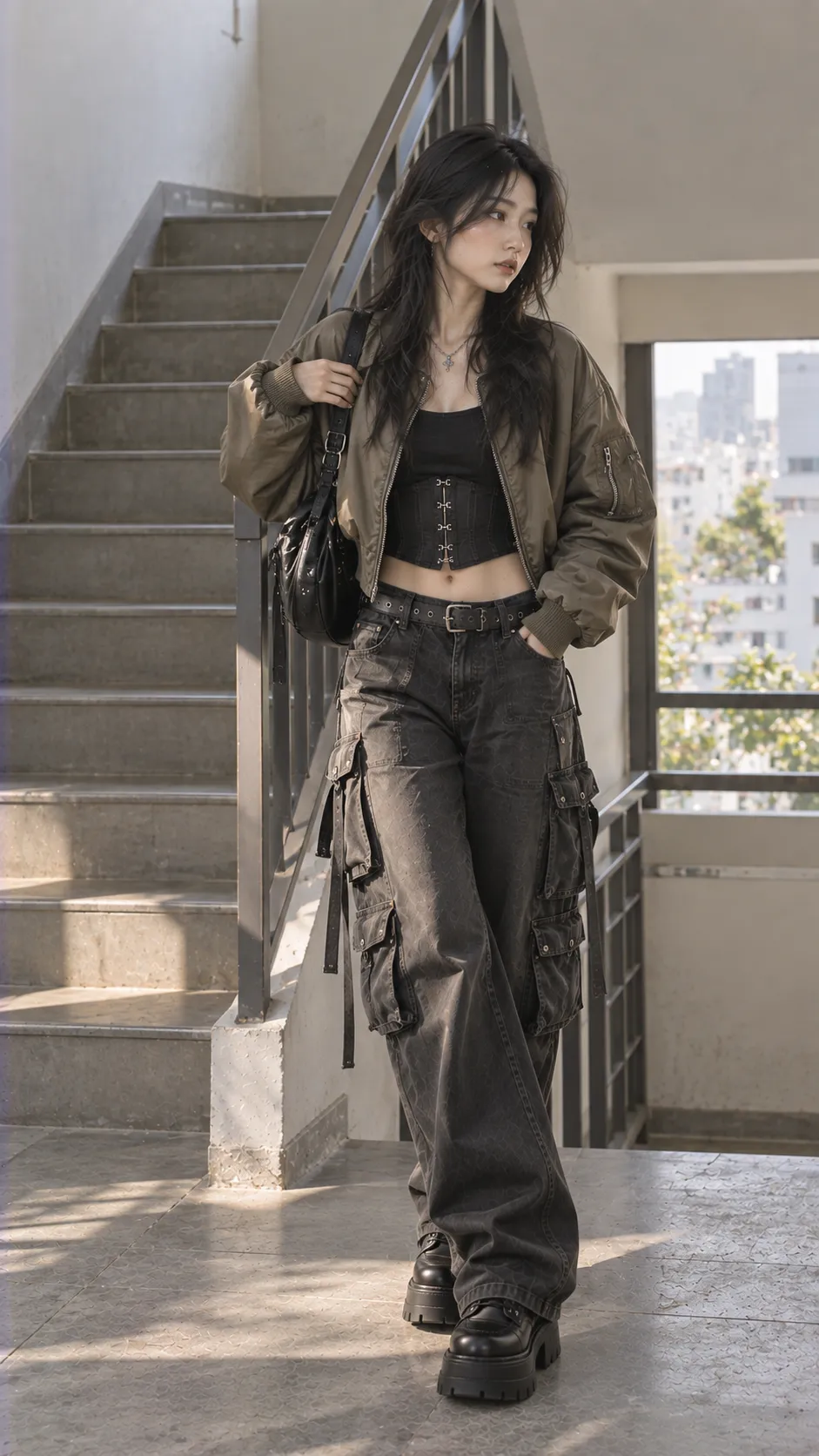
Look #21 illustrates a short white bomber and full sleeves contrasting with a black crop and wide trousers. It is a proportion reference, not a reason to buy two sizes larger. For the difference between a drafted roomy cut and sizing up, see what oversized fit means.

Inspect the ribbing
Ribbing at collar, cuffs and hem repeatedly stretches during use. Inspect even knit lines, wavy edges, joins and tension around the waist. Wear and recovery vary by yarn, construction and care; photographs cannot predict lifespan.
During a permitted secondhand inspection, gently check recovery without overstretching. For new items, look for repeated post-wash reports of twisting, tight cuffs or exposed elastic threads rather than rely on studio appearance.
Choose fabric for climate and use
| Material or construction | Possible role | What to assess |
|---|---|---|
| Nylon or polyester | Can create a light, smooth shell; wind resistance depends on weave, coating and seams | Noise, ventilation, static and coating condition |
| Twill | Can provide a matte, defined shape, depending on weight and finish | Weight, shoulder stiffness and creasing |
| Leather or leather-like surfaces | A stronger surface contrast for dark outfits | Flexibility, coating condition, odor, lining and material-specific care |
| Quilting | Can add insulation and visible volume, depending on filling and construction | Desired bulk, aligned stitching and suitability for warm conditions |
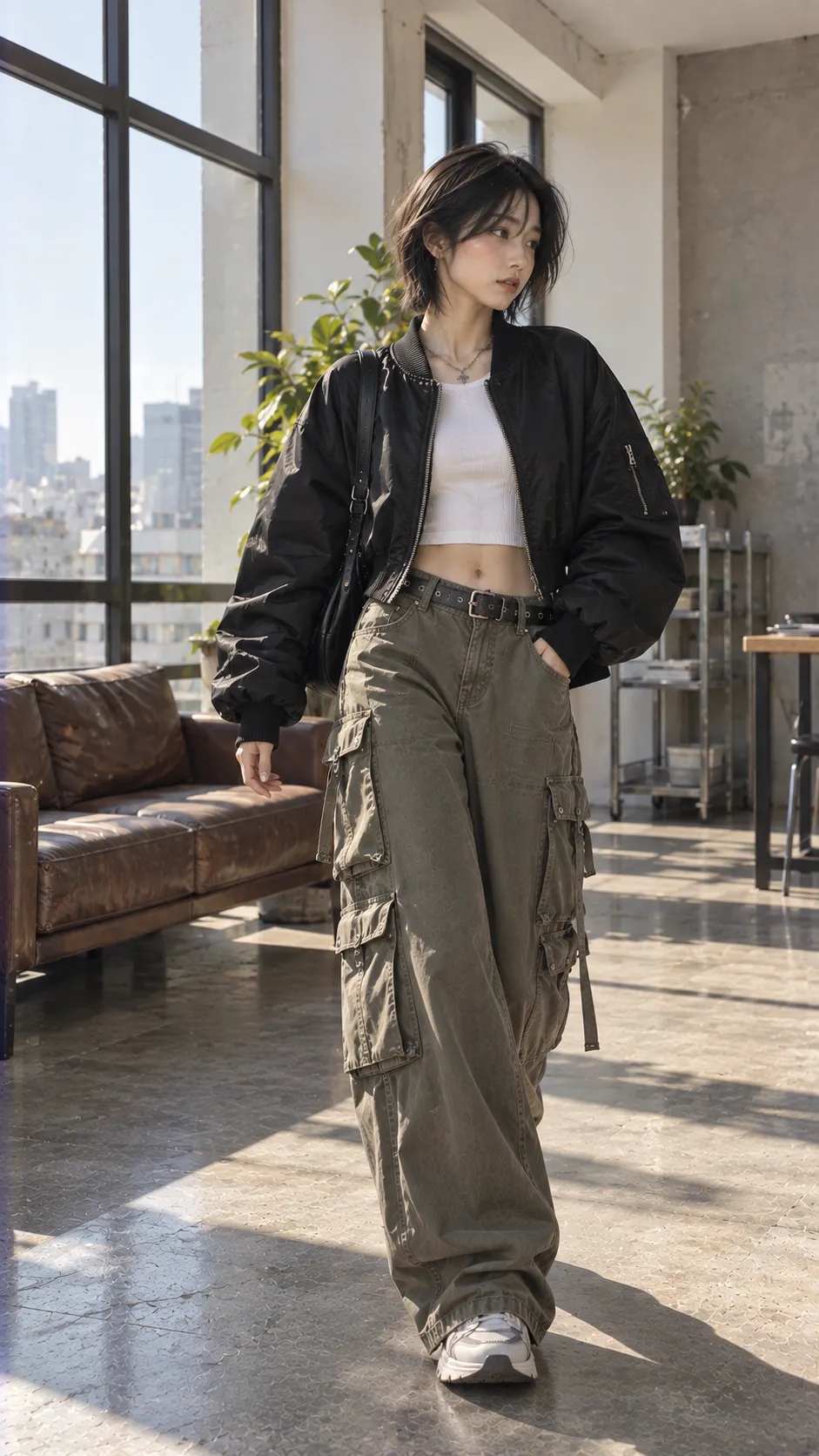
In humid heat, a lined bomber may get little use if it feels too warm. Ask for garment weight and shell/lining details where available. Fabric weight alone does not establish ventilation. For functional claims about weather protection, storage or materials, see what techwear is to distinguish substantiated function from decorative technical cues.
Compare measurements rather than sizing up automatically
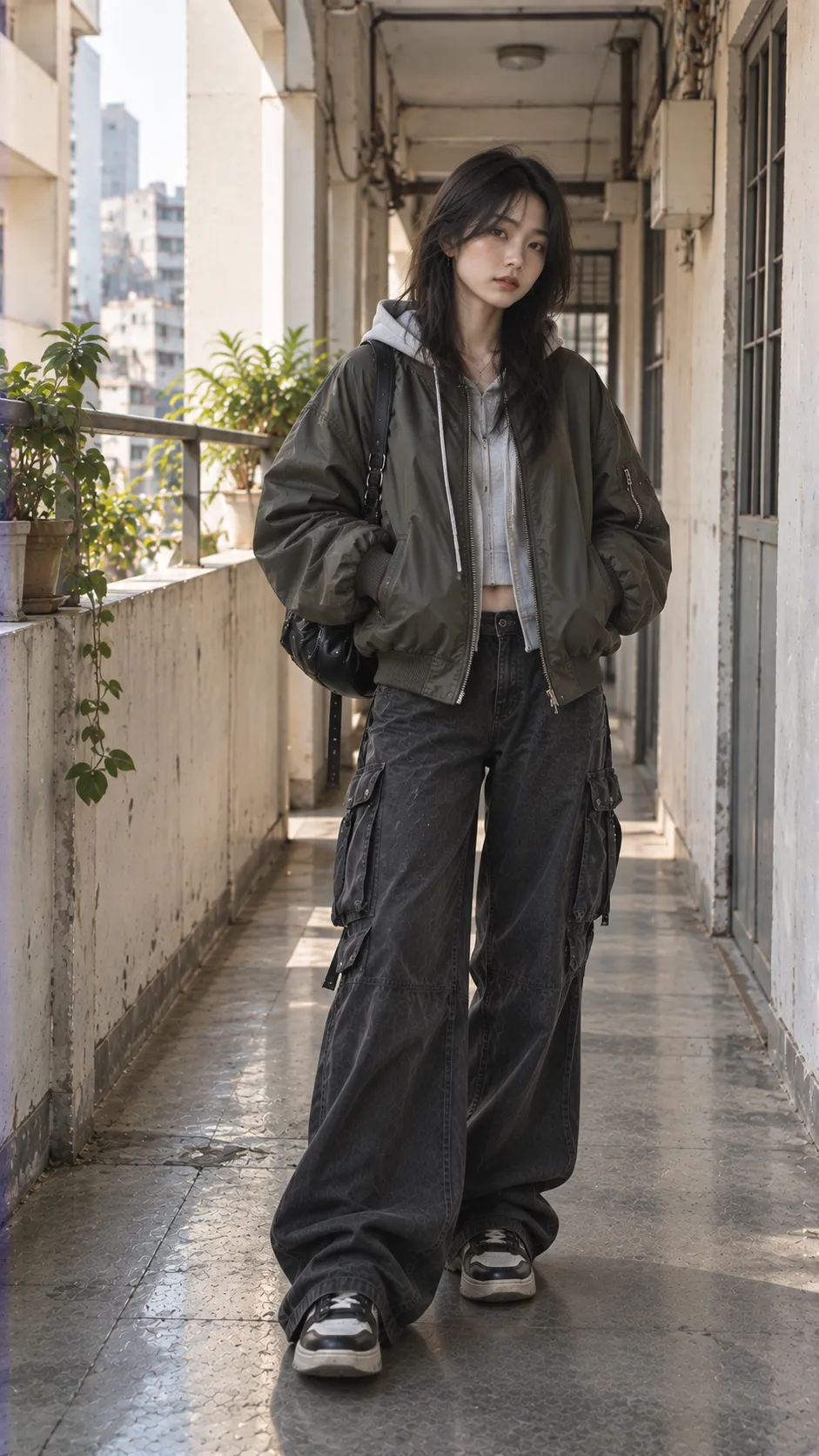
A bomber may already include substantial ease. Automatic sizing up can lower shoulders, lengthen sleeves and move the ribbed hem. Compare shoulder width, chest, sleeve and body length with a jacket that fits. Ask for centimeters if only weight guidance is provided.
A unisex label does not specify dimensions. Check the actual shoulder and sleeve measurements, including intended drop. For hoodie layering, compare a fitting layered jacket or account for the hoodie’s volume rather than only measuring the bare body.
A two-minute listing check
- Front, side, back and fastening views.
- Finished shoulder, chest, sleeve and body measurements.
- Shell, lining, weight and ribbing information.
- Relevant customer views with worn size and measurements where available.
- Clear current exchange deadlines and conditions.
- Only heavily styled front images without a back view.
- One unexplained chart for several visibly different patterns.
- Only premium or thick wording without lining detail.
- Repeated reports of stuck zips, stretched ribbing or unsuitable sleeve length.
- Unanswered measurement or return questions.
Read repeated issues with context about the exact item and wearer. A recurring fastening problem offers more construction information than generic praise for appearance or delivery, but does not prove the cause or future batch quality.
Compare value beyond price
Neither price level guarantees appropriate fit or quality. Compare actual construction, intended use, likely repeat outfits and current exchange costs rather than treating a higher price as proof of better ribbing or zips.
Try naming two existing trousers or skirts that work with the jacket. For a Baddie allocation plan, see Baddie outfits below VND 700,000 to choose a leading garment without buying several disconnected pieces.
A 90-second checkout checklist
- Identify the jacket type. Cropped, boxy, varsity-inspired, light shell or quilted?
- Compare four measurements. Shoulders, garment chest, sleeves and body length.
- Inspect the ribbing. Check consistency, tension and attachment seams.
- Find back and lining views. Do not decide from one front photograph alone.
- Read critical reviews. Look for repeated zip, sleeve, ribbing or color issues.
- Read current exchanges. Check deadlines, tags, try-on conditions and delivery costs.
For complete outfit references: explore the Baddie Streetwear collection (Vietnamese) or Closet (Vietnamese) to compare jacket length with roomy trousers, crop tops and accessories. Images do not verify an individual listing or current stock.
Conclusion: assess fit and finishing
Choose a channel providing usable measurements, multiple views, shell/lining and ribbing information, relevant fit reviews and acceptable current returns. Marketplace, streetwear, local-label and secondhand purchases each need their own checks.
Avoid automatic sizing up or copying one model’s volume. Compare standing, sitting and reaching within the seller’s try-on terms; a brief check does not establish all-day comfort. For the broader style context, see what streetwear is and Sporty Chic for different outfit directions.
Frequently Asked Questions
Where should you buy a bomber if size exchange matters?
Compare the specific product’s measurements, actual views, relevant fit evidence and current exchange conditions. Neither a marketplace nor local-label category guarantees an exchange or better fit advice.
Should you buy your usual bomber size or size up?
Do not increase automatically. Compare shoulders, garment chest, body length and hem tension with your intended base layer and movement. Change size or cut when the measurements show a mismatch.
How do light-shell, twill and leather-look bombers differ?
They can differ in structure, weight and surface, but actual weave, finish, lining and construction matter more than the broad label. No fiber name alone establishes wind resistance or comfort. Choose for conditions and use.
Which bomber listings deserve more checking?
Missing rear views, finished dimensions or lining/ribbing information leave uncertainty. Repeated fastening or fit complaints deserve context and closer assessment rather than an automatic seller judgment.