

Buying Women’s Leather Jackets: Materials, Fit and Sellers
When asking where to buy a women’s leather jacket, identify what you need first: several comparable cuts, verified material information and aftercare, a particular fashion silhouette, a secondhand design or custom measurements. Then assess fabric, dimensions, seams, lining and current exchange terms.
This guide considers Vietnam’s climate and online-shopping context. If you already have the jacket and need combinations, see women’s leather-jacket outfit ideas.

Guide collection: Women’s Tops Guides: Cut, Layers and Styling
Where Can You Buy Women’s Leather Jackets?

No channel is best for everyone. For several comparable fashion cuts, marketplaces or online clothing shops may be useful. For specific leather information, repair options and aftercare, compare leather specialists’ actual services. Local labels, resale and custom makers offer other possibilities, each requiring product-level checks.
Do not rely on a shop name alone. Assess each listing through close views, material information, measurements, construction and current terms. For the wider wardrobe purchase, see alternative-fashion shopping (Vietnamese).
Choose a Channel for Your Actual Needs
| Channel | When to compare it | What to examine |
|---|---|---|
| Marketplace | Comparing several cuts and online listings | Actual images, movement views, measurements, material details, recent relevant reviews and exchange terms |
| Fashion shop or local label | A particular contemporary silhouette or styling concept | Actual fit versus lookbook styling, lining, hardware and weight |
| Leather specialist | Detailed material advice, repair or aftercare where offered | Specific leather type and finish, substantiated information, seams and current service terms |
| Vintage or secondhand | An older cut, aged surface or distinctive design | Mold, odor, cracking, peeling, corrosion, lining and cleaning needs |
| Custom maker | Individual dimensions or controlled design details | Fitting samples, material specification, alteration agreement and completion timing |
Choose intended wearing frequency, conditions and wardrobe role before the seller. These affect the useful cut, construction and weight more than a premium label.
Ten Checks Before Buying a Women’s Leather Jacket
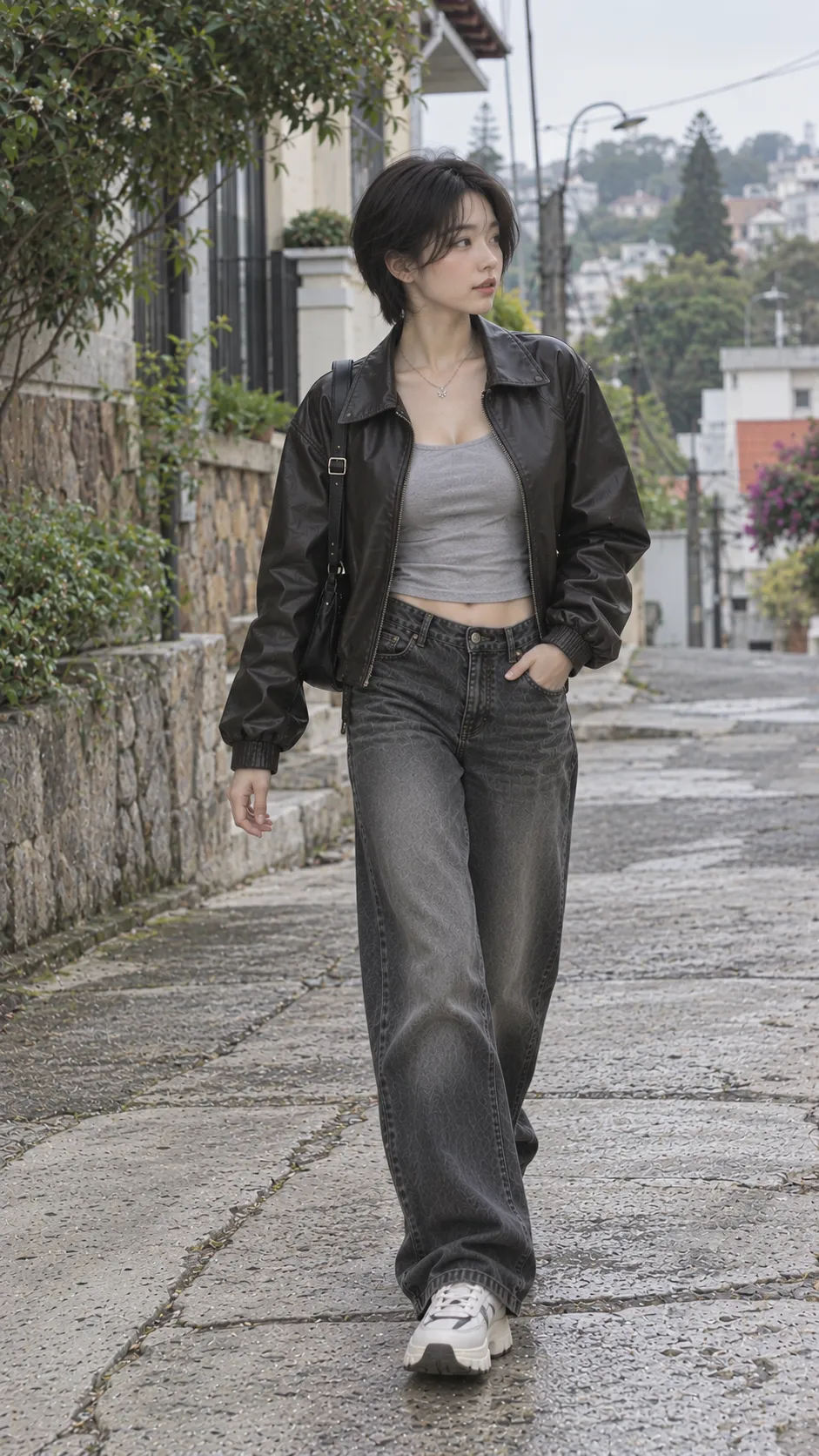
- Material description: identify genuine leather, PU-coated fabric or another specific synthetic construction. Leather wording alone is insufficient.
- Surface: seek close views of sheen, grain, folds and reflected light. Appearance alone does not reliably authenticate the material.
- Lining: assess its composition, construction and finish, as it affects movement, feel and thermal comfort alongside the upper.
- Shoulders and armholes: check where the jacket sits and whether its pattern allows intended movement. Biker and blazer shoulder placement can change the overall shape.
- Zips, snaps and hardware: inspect attachment, alignment and operation where shown. Low weight alone does not establish poor quality; visible misalignment or weak attachment merits assessment.
- Stress seams: inspect underarms, shoulders, side seams, pocket bases and fastening attachments. Consistent stitching and reinforced construction offer useful evidence without proving lifespan.
- Body and sleeve length: cropped, hip-length and oversized designs give different proportions. Compare centimeters rather than S/M/L alone.
- Pockets: check whether they are functional, their depth and their opening position for your actual use.
- Current exchanges: limited-stretch jackets can be hard to adjust after purchase. Read fit and defect terms before ordering; stretch differs by construction.
- Storage and care: consider hanging space, humidity, use and the maker’s directions. See leather clothing care for general principles, applying the instructions for the exact upper and finish.
Genuine Leather, PU and Other Synthetics: What Suits Your Use?
| Material group | Possible strengths | What to consider | Useful decision context |
|---|---|---|---|
| Genuine leather | Some well-made leathers can age and be repaired with appropriate care; not every finish develops the same patina | Weight, cost, moisture sensitivity, finish and suitable care vary | For someone whose routine and storage can support the specific garment |
| PU-coated fabric | A range of cuts and finishes; weight and price vary | Coatings can deteriorate or peel depending on formulation, age, heat, moisture and storage | An option when its actual fit and construction meet your intended use |
| Other synthetics | Several different substrates, coatings and surface effects | Synthetic alone does not identify composition or performance | For a buyer willing to compare the specific material information |
| Suede or suede-like surfaces | A matte textured appearance | Genuine suede and synthetic imitations need different care; inspect stain and water sensitivity for the actual material | For a buyer choosing texture with suitable care and storage |
Genuine leather is not automatically better for every use, and a synthetic label does not establish quality. Compare weight, lining, fit, repairability and expected care rather than promise a lifespan. After the buying decision, explore Punk / Grunge (Vietnamese) or Dark Feminine (Vietnamese).
Choose the Jacket Cut for Its Role
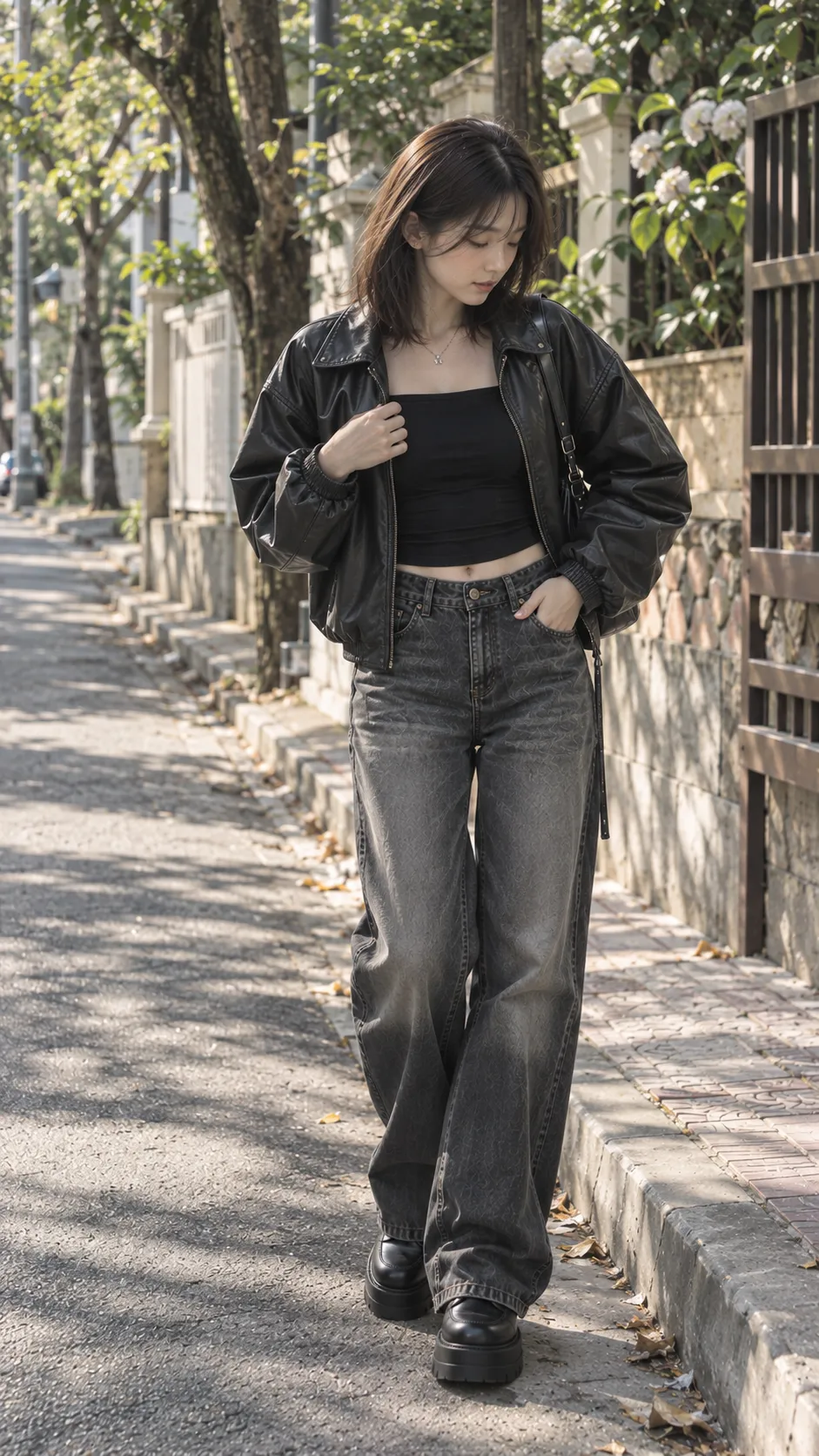
| Cut | Silhouette | When to consider it | What to try |
|---|---|---|---|
| Biker jacket | Defined shoulders, cut lines and often prominent hardware | A leading jacket for Punk, Grunge or alternative outfits | Shoulders, armholes, collar rigidity and fastening placement |
| Cropped leather jacket | A shorter body making a break near the waist or upper hips | Contrast with roomy trousers or skirts | Hem position and back coverage when raising the arms |
| Leather blazer | Lapel and vertical lines with soft or structured shoulders | Dark Feminine, tailored or office-inspired styling, where the setting permits | Lapels, shoulder fit, front drape and comfortable buttoning |
| Oversized jacket | Room at shoulders and body for a deliberate layer | Streetwear, Grunge or layering over a hoodie | Sleeve length, intended shoulder drop and upper-arm ease |
Oversized does not simply mean buying two sizes up. A drafted roomy cut considers shoulders, armholes, sleeves and body together. A larger regular size may lengthen sleeves without giving the proportions you want. Prioritize finished garment measurements. For combinations after purchase, see women’s leather-jacket outfit ideas.
Measure and Check the Fit
For an online comparison, measure a jacket that fits: shoulder width, flat chest, sleeve, upper arm and body length. Use the seller’s matching convention and allow for your intended base layers. Height or weight suggestions remain secondary.
A suitable fit need not be close-fitting
For a hoodie or knit underneath, allow enough chest and upper-arm ease. A fitted cropped cut still needs comfortable shoulders and armholes. In a blazer, check the buttoned front; in a biker, reach forward to assess upper-back movement.
Reasons to reassess size or cut
- Strong horizontal tension at the chest fastening while standing relaxed.
- Armholes pulling hard when reaching forward.
- An unwanted deep shoulder drop without enough sleeve room for the intended layer.
- Sleeves covering most of the hands when body length is suitable; the pattern proportions may be the issue.
- A collar or lapel standing away unexpectedly because the shoulder or chest fit differs from the pattern’s intended shape.
Can a Lower-Priced Jacket Be Useful?
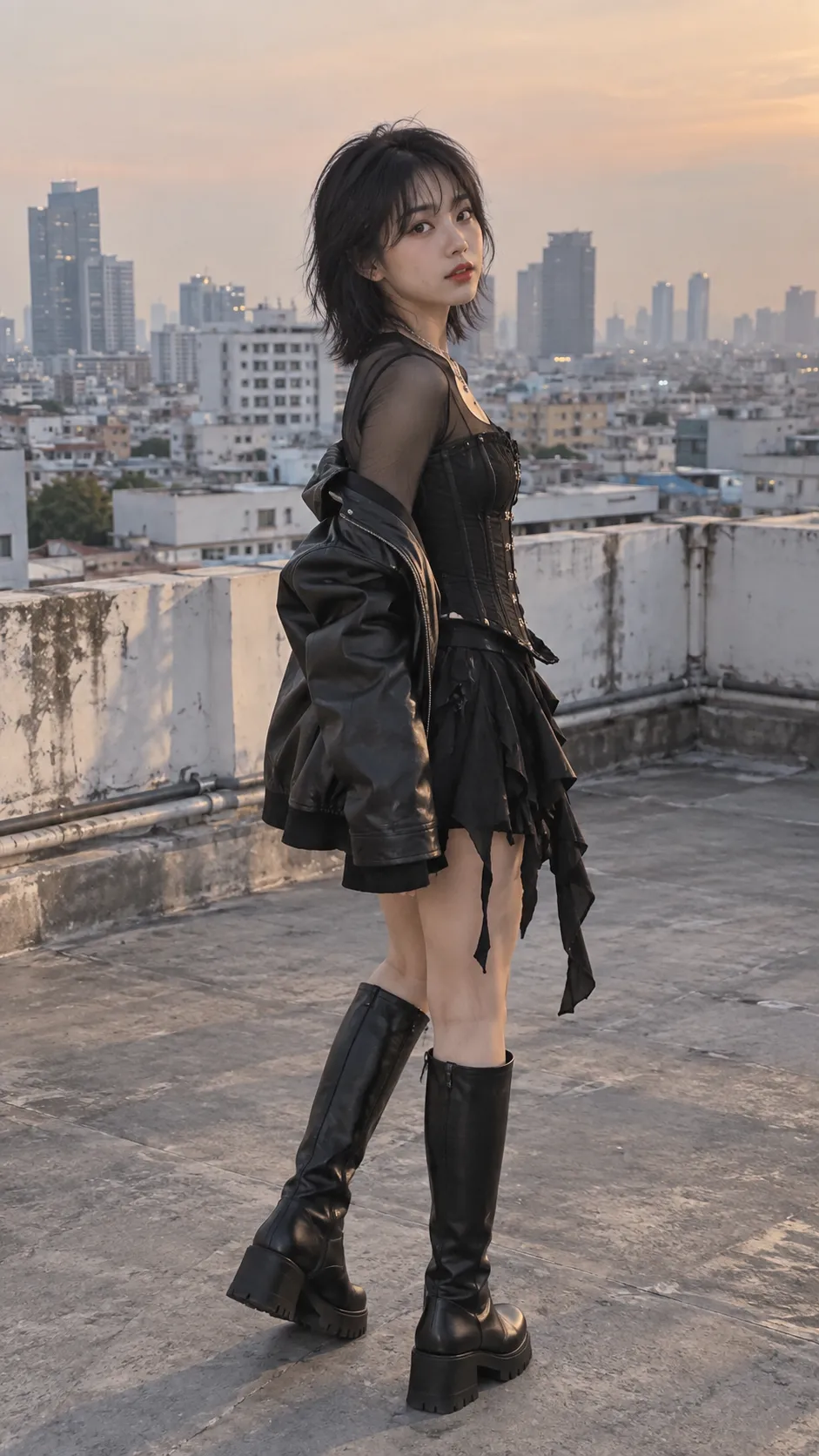
Neither a low nor high price establishes usefulness. For PU and synthetics, inspect coating, lining, closures and seams. For frequent wear, include construction, repair and storage needs; for an occasional style experiment, fit and acceptable current returns still matter. No particular offer is verified here.
Compare an Online Jacket Listing Step by Step
A photograph is insufficient alone. Assess the following evidence:
- Read material and measurements before the marketing title. Premium or soft-leather wording does not specify substrate, finish or construction.
- Find several views: front, back, sleeves, collar, zips, lining and pockets. Missing views leave part of the construction unassessed.
- Use movement video where available: it can clarify stiffness, drape and surface reflection, though it does not establish material identity or long-term performance.
- Read contextual reviews: look for measurements, fit, thickness, odor and observations after use rather than an average rating alone.
- Check measurements and current returns: seek shoulders, chest, sleeves and clear fit or defect conditions.
- Compare image and description consistency: identical images paired with contradictory material descriptions create uncertainty. Do not infer authenticity from images alone or assume every reused image proves misconduct.
Avoid automatic sizing up. Layering requires room at chest and upper arms; a dropped shoulder is a separate pattern choice. One larger size may not solve both.
Inspect the Jacket Before Removing Tags
Retain tags and packaging while trying the intended base layers, subject to current return conditions.
- Observe surface and odor: document unusual strong odor, sticky areas, cracks or inconsistent patches. These observations do not identify a chemical or health cause.
- Operate zips gently: they should run without catching the lining or needing excessive force.
- Compare symmetry: check lapels, pockets, sleeves and seams with the garment laid flat, allowing for intentional asymmetric design.
- Move and sit: reach forward and upward and sit to assess shoulders, underarms, back and closures. Stop if the fit is uncomfortable; a brief check cannot prove all-day comfort.
- Document problems promptly: clear photographs or video can help communicate an issue within the applicable return window.
If the jacket fits but combinations are unclear, try existing clothes before buying a whole matching set. The women’s tops guide collection can connect this item with related styling options.
Buying a Jacket for Vietnam’s Climate
In humid heat, actual weight and lining matter. Consider whether the jacket works open, allows arm movement and suits the conditions in which you will wear it. Follow material-specific storage directions, avoid prolonged damp and excess heat, and use appropriate support. Genuine leather and PU age through different mechanisms; neither a label nor a price predicts the garment’s lifespan.
Frequently Asked Questions
Should you choose genuine leather or PU?
Compare the actual garment, intended use, care and storage. Genuine leather and PU offer different constructions and finishes, but neither guarantees quality, comfort or durability. Fit, lining, seams and repair options matter too.
What should you measure for an online jacket purchase?
Compare shoulders, chest, sleeves and body length with a fitting jacket. For layers, include upper-arm or armhole information where available and use the same measurement convention.
What should you check first on a lower-priced jacket?
Read material details, then inspect surface, lining, shoulder and underarm seams, closures and current exchange terms. Price is one part of the decision rather than proof of performance.
How do biker jackets and leather blazers differ?
Bikers often emphasize hardware and cut lines. Blazers emphasize lapels, shoulder structure and vertical front lines. Individual designs vary, so inspect the actual garment.
Should you size up once or twice for an oversized look?
Not automatically. An oversized pattern can redistribute shoulder, armhole, sleeve and body room. Compare finished dimensions and intended ease rather than a fixed size increase.